-
-
Our logo
-
Our IDEA
-
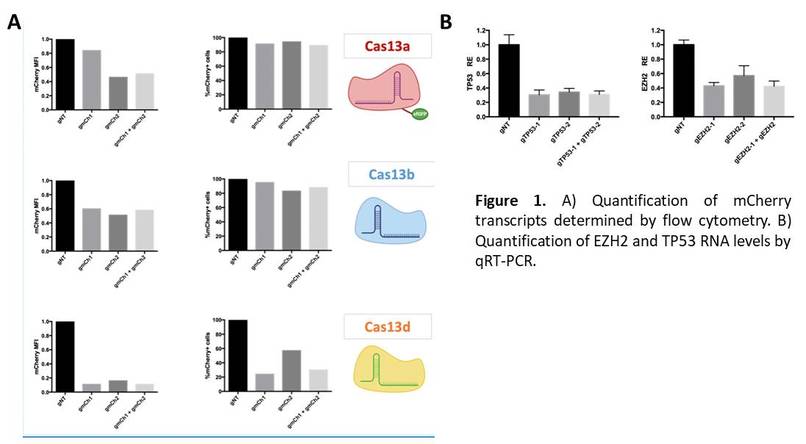
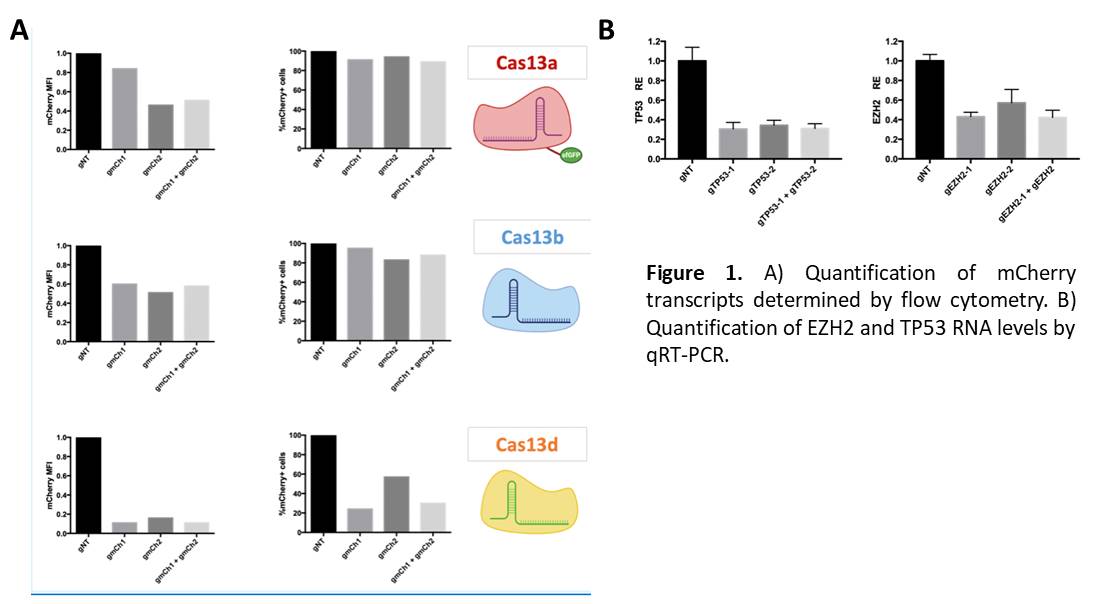
Figure 1. A) Quantification of mCherry transcripts determined by flow cytometry. B) Quantification of EZH2 and TP53 RNA levels by qRT-PCR.
CRASHCOVID
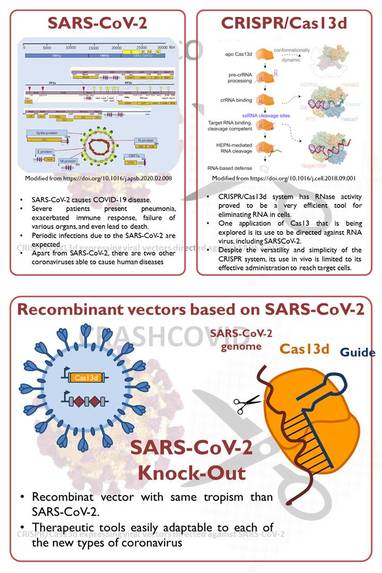
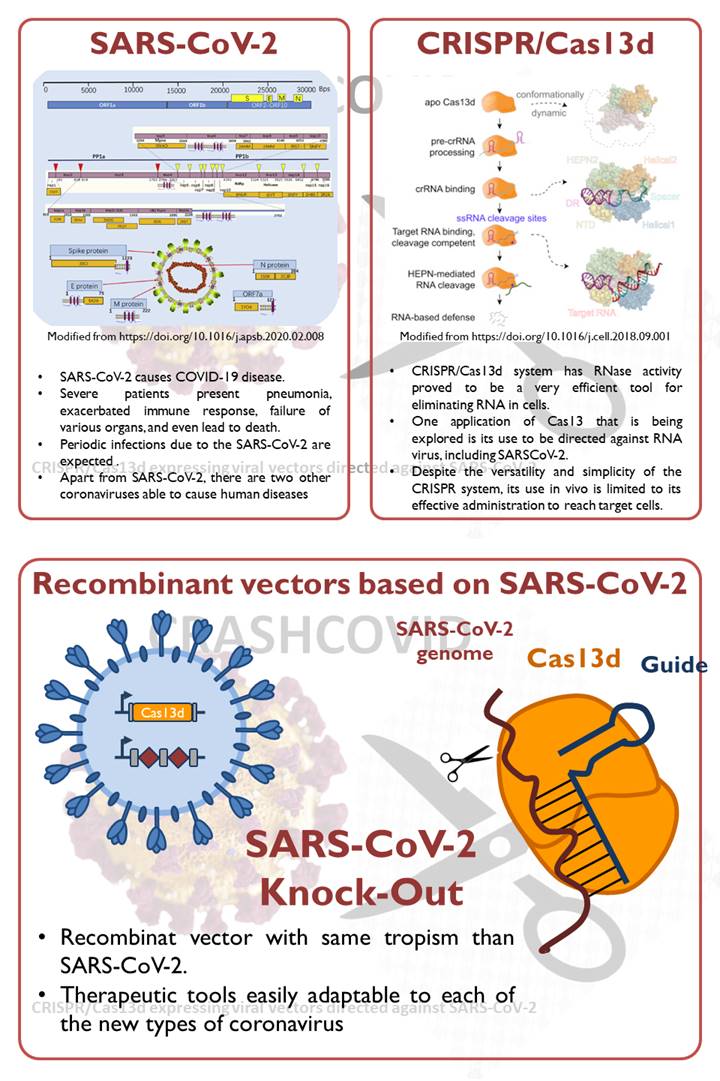
Here, we propose the recognition and elimination of SARS-CoV-2 viral genomes from infected cells of patients suffering COVID-19 through gene editing. We present the use of recombinant viral vectors based on SARS-CoV-2 itself, for the delivery of the CRISPR/Cas13d gene editing tools directed against the coronavirus genome. This idea constitutes a highly specific therapeutic approach for the removal of the viral genome present in the infected cells, which could give rise to a reduction in the host’s viremia, facilitating an antiviral response in the patient. By using recombinant SARS-CoV-2 vectors for the delivery of the CRISPR/Cas13d, we intend to address only the cells naturally infected by the pathogen, increasing the specificity of the approach, since these vectors will have the same tropism as the wild type SARS-CoV-2. In parallel, we aim to explore the potential of adenoviral vectors to deliver Cas13d system against SARS-CoV-2, since these viral vectors have been already approved for its clinical use in pulmonary diseases.
The problem: treat COVID-19 patients
The entire world is facing a pandemic caused by SARS-CoV-2. This virus has infected more than 2.8 million people worldwide with over 200,000 deaths since December 2019 (updated on April 24th, 2020). Unfortunately, there is no treatment for more severe cases. Thus, it is expected a significant increase in the number of deaths in the coming months, before a vaccine is developed. Despite the expected control of this pandemic, periodic infections due to SARS-CoV-2 are expected in the near future. Apart from SARS-CoV-2, there are two other coronaviruses able to cause human diseases, such as SARS-CoV and MERS-CoV, which caused different epidemics in 2002 and 2012 respectively. Consequently, coronaviruses, SARS-CoV and similar ones constitute a major risk to human health worldwide. Therefore, it is required to develop therapeutic tools that are easily adaptable to each of the new types of coronavirus that pose a risk to people. This project will lay the generation of gene editing tools against SARS-CoV-2 viral genomes and fast adaptation of these tools to new SARS-CoV-2 variants or new pathogen coronaviruses that may appear.
COVID-19 disease can present symptoms from mild to very severe. Symptoms may include loss of smell, fever, cough, and shortness of breath. The most severe patients can present complications such as pneumonia, exacerbated immune response (cytokine storm), failure of various organs, and even lead to death. Consequently, a prompt therapeutic intervention is needed for these severe cases. An elimination of the whole SARS-CoV-2 viral burden or a reduction of it might prevent the COVID-19 decline in these patients. Additionally, a reduction of the viral burden might imply a significant reduction in the patient’s recovery time, which makes shorten in the hospitalization, and consequently, health system decongestion. Consequently, any innovative therapy lead to eliminate or reduce SARS-CoV-2 specifically in the infected cells from the patient is needed urgently.
Our solution
We intend to develop a strategy based on recombinant viral vectors, such as a replication viral vector based on the SARS-CoV-2 itself and on Adeno-associated viral vectors, as a platform to deliver CRISPR/Cas13d therapeutic tools in cells infected by the SARS-CoV-2 virus.
Coronavirus 2 of severe acute respiratory syndrome (SARS-CoV-2) belongs to the Coronaviridae family of viruses. This family of viruses is characterized by having its genome formed by a long positive single-stranded chain of RNA of approximately 30Kb (1). The genome of Coronaviruses family presents a series of characteristics, such as: i) a highly conserved genomic organization, with structural and accessory genes that appear in an invariable order (5´-Replicase-S-E-M-N-3´), and where the replicase gene occupies two thirds of the coding region; ii) expression of non-structural genes due to changes in the reading pattern; iii) different enzymatic activities encoded by a large polyprotein replicase-transcriptase (2); and iv) gene expression by 3' nested synthesis of subgenomic mRNAs. SARS-CoV-2 is the cause of COVID-19 disease, a disease that can present symptoms from mild to very severe. The most severe patients can present complications such as pneumonia, exacerbated immune response (cytokine storm), failure of various organs, and even lead to death. Currently, there is no specific treatment against COVID-19, so the development of new therapeutic tools against SARS-CoV-2 is of utmost importance.
The CRISPR system (Clustered Regularly Interspaced Short Palindromic Repeats) is proving to be an exceptional tool for genome editing and whose potential is constantly increasing (3 10). The CRISPR system and its associated genes (Cas) is present in both archaea and bacteria and constitutes an adaptive immune system directed by RNA, this system is useful in defense against viruses and other pathogens. The operation of this system is based on: i) adaptation, insertion of invading DNA fragments into a CRISPR array, flanked by pairs of direct repeats; ii) expression, transcription and processing of the CRISPR array for the production of mature CRISPR RNAs (crRNA) and associated genes (Cas) that can interact with the genome of the invading organism; iii) interference, homology matching between the crRNAs with the genome of the invading organism and generation of breaks by some of the Cas enzymes in the invading genome. The best known and widely used CRISPR system is the one associated with Cas9, which is capable of producing double breaks in the DNA double helix (dsDNA) in a highly specific way. More recently, the system associated with the Cas13 gene has been described, with RNase activity (4, 7), which is proving to be a very effective tool both for detection (5, 12) and for RNA cutting and editing (6, 3, 7, 5). One of the first applications of Cas13 that is being explored is its use to be directed against RNA virus genomes. Even more recently has been demonstrated effective against SARS-CoV-2 itself (8, 22), and thus, it could be implemented as a therapeutic tool against these viruses (9, 2, 10, 14). Potentially, thousands of crRNAs directed against the SARS-CoV-2 genome can be designed, both specifically, reaching the species level (SARS-CoV-2), and more broadly, being able to cover an entire viral family (i.e. Coronaviridae). These previous studies establish how the use of this new system can constitute a valuable tool in the treatment of different pathologies associated with RNA viruses and open the way to its possible implementation as a therapeutic strategy to fight against SARS-CoV-2.
Despite the versatility and simplicity of the CRISPR system, its use in vivo is limited to its effective administration to reach target cells. The use of nanoparticles and viral vectors is currently being explored, but their specificity to the target cell may be limited. Recently, the expression ACE2, the main cellular receptor for SARS-CoV-2, has been described, which would imply that cells from different tissues could be infected by the virus (11 26). On the other hand, SARS-CoV-2 has been identified in different types of samples from patients affected by COVID-19, which would indicate a tropism of the major virus and not limited to lung tissue (12, 27), which is why, that the generation of vectors with a specificity similar to the SARS-CoV-2 virus becomes more important, since it is possible to direct the therapeutic tools to tissues different from the lung, whose could serve as a reservoir for the virus in the patient, and limiting the action of the therapy. In this project, we propose using vectors developed from the virus that causes the disease to deliver CRISPR/Cas13d therapeutic tools towards cells infected with SARS-CoV-2. Consequently, CRISPR/Cas13d therapeutic tools will reach the same cell types that are naturally infected by SARS-CoV-2, constituting the most specific tool for therapy. In parallel, adenoviral vectors (AdVs) will also be designed, since their tropism to pulmonary epithelium cells (13, 24) is similar to SARS-CoV-2 virus. The AdVs present a great capacity as gene transfer vectors and that is why its clinical use is already approved for some lung diseases (https://clinicaltrials.gov/), which is the most affected organ in severe COVID-19 patients.
SARS-CoV-2 has a large genome, and only a third of it contains structural genes, which is why it is estimated to have a packaging capacity of up to 6kb if used as a recombinant vector (14, 16). This ability to host exogenous sequences would be sufficient for cloning CRISPR/Cas13d therapeutic tools. There are already previous approaches to generate coronavirus-based vectors (15, 16, 19). On the other hand, the SARS-CoV-2 genome has recently been sequenced and cloned into plasmids (17, 21), which are now available to the scientific community (http://www.addgene.org/collections/covid-19-resources/#sars-cov-2), and will allow the tools proposed in this project to be developed more quickly. We will follow a similar strategy using SARS-CoV-2 and introducing CRISPR/Cas13d therapeutic tools directed against coronavirus RNA. Therefore, we propose to develop a replication defective vector based on the SARS-CoV-2 itself, as well as the development of AdVs vectors, as a platform for administration of CRISPR/Cas13d therapeutic tools in cells infected by the SARS-CoV-2 virus.
Preliminary results
The Cas13 family is made up of at least four subtypes, including the enzymes Cas13a, Cas13b, Cas13c and Cas13d (3, 5, 6, 7, 18, 28, 19, 20, 35, 36). Cas13 enzymes can be programmed to bind and cut RNA, constituting powerful platforms for RNA manipulation. Preliminary studies by the group of Dr. Rodriguez-Perales (CNIO) and other laboratories seem to indicate that the Cas13d enzyme, especially RfxCas13d (6 3), has a higher RNA cutting activity than the other known Cas13. In addition, Cas13d has a smaller size than the rest of Cas13 gene, consequently Cas13d is cloned easily into the proposed recombinant viral vector. Figure 1 shows the efficiency of Cas13d system to target mRNAs of an exogenous protein (mCherry) and endogenous genes (EZH2 and TP53). This experiment was carried out in vitro on HEK293T cells and was validated by qRT-PCR and Flow Cytometry. Therefore, we will focus on the use of the Cas13d enzyme, given its greater effectiveness and smaller size, as previously discussed.
Aims
We have four main objectives for the development of the project:
1) Generation and validation of CRISPR/Cas13d therapeutic tools directed against the SARS-CoV-2 genome. 2) Development and validation of replication defective vectors based on SARS-CoV-2 for the expression of the CRISPR/Cas13d therapeutic tools. 3) Development and validation of alternative adeno-associated viral (AAV) vectors for the expression of expressing the CRISPR/Cas13d therapeutic tools. 4) Test of the recombinant viral vector vectors developed to deliver CRISPR/Cas13d therapeutic tools targeting SARS-CoV-2 in vitro and in vivo.
Workplan
We propose the following work plan to achieve the objectives of this project:
We propose the following work plan to achieve the objectives of this project:
1) Generation and validation of gene editing tools based on Cas13d targeting SARS-CoV-2 genome: 1.1) Design of different crRNAs directed against highly conserved regions and without complex secondary structures of the SARS-CoV-2 genome. 1.2) Evaluation of the efficacy of the Cas13d system with the different crRNAs or combinations thereof (in array format) to target plasmid expressing different sequences of SARS-CoV-2 genome in cell lines (HEK293T, VeroE6, Calu-3 or H1299, among others). 1.3) Evaluation of the efficacy of the Cas13d system with the different crRNAs or combinations thereof (in array format) to reduce or eliminate SARS-CoV-2 viral mRNA in infected cell lines.
Deliverable: Select effective crRNAs to target the SARS-CoV-2 genome in cell lines infected with the virus.
2) Development of a replication defective vectors based on SARS-CoV-2: 2.1) Cloning of Cas13d and the expression cassette of the most effective crRNAs directed against mCherry (already tested in CNIO) or against the SARS-CoV-2 genome, developed in point 1, in transfer plasmids between the 5'UTR and 3'UTR-polyA regions of the SARS-CoV-2. 2.2) Generation of accessory plasmids containing the structural proteins of SARS-CoV-2. 2.3) Evaluation of the capacity to assemble recombinant viral vectors based on SARS-CoV-2 in HEK293T, VeroE6, Calu-3 or H1299 cells transfected with the transfer plasmid and accessory plasmids. 2.4) Assess the transduction capacity of vectors based on SARS-CoV-2 that express Cas13d and crRNA against mCherry in transgenic cell lines expressing the mCherry protein (HEK293T-mCherry, VeroE6-mCherry, Calu-3-mCherry or H1299-mCherry).
Deliverable: Assess the capacity of production and targeting efficiency of the recombinant viral vector based on SARS-CoV-2.
3) Development and validation of alternative AAV vectors to express the CRISPR/Cas13d therapeutic tools. 3.1) Generation of AAV vectors to express Cas13d and the most efficient crRNAs and evaluation of their production and transduction capacity in HEK293T and VeroE6 cells. 3.2) Evaluation of the transduction capacity of AAV vectors expressing Cas13d and crRNA against mCherry in transgenic cell lines expressing the mCherry protein (HEK293T-mCherry, VeroE6-mCherry, Calu-3-mCherry or H1299-mCherry).
Deliverable: Develop a recombinant AAV vector to express the CRISPR/Cas13d therapeutic tools.
4) Assessment of the recombinant viral vectors against SARS-CoV-2 in vitro and in vivo: 4.1) Transduction of permissive cell lines and primary lung cells infected with SARS-CoV-2 with the recombinant viral vectors carrying the CRISPR/Cas13d therapeutic tools, and evaluation of the production of wild virus SARS-CoV-2. 4.2) Administration of the recombinant viral vectors carrying the CRISPR/Cas13d therapeutic tools in a mouse model susceptible to being infected with SARS-CoV-2 (such as the commercially available K18-hACE2 mice (21) and evaluation of the viral burden.
Deliverable: Reduction or control of the viremia of SARS-CoV-2 by the recombinant viral vectors carrying the CRISPR/Cas13d therapeutic tools in vitro and in vivo.
Who we are and what we have done during the weekend
First of all, we have made a very interesting project using recombinant viral vectors, even SARS-CoV-2 itself, and gene editing to fight the virus. Thank you for this wonderful weekend.
My name is Oscar Quintana-Bustamante. I am working at the Differentiation and Cytometry at CIEMAT (Madrid, Spain). My research career is focused on Hematopoietic Stem Cells and the treatment of inherited diseases through gene therapy. My expertise is developing gene editing approaches to correct hematopoietic and hepatic diseases. I am involved in the lentiviral gene therapy clinical trial to correct Pyruvate Kinase Deficiency, which is coordinated by Dr. José Carlos Segovia. During this amazing weekend, I have learnt a lot from all my team mates about nanoparticles and SARS-CoV-2. During this amazing weekend, I have learnt a lot from all my team mates, and I have tried to coordinate and contribute to all our crazy ideas to help COVID-19 patients to deal with the disease.
José Carlos Segovia,I am the head of the Differentiation and Cytometry at CIEMAT (Madrid, Spain). I have focused my research in the study of hematopoietic stem cells (HSCs), in their interaction with viral pathogens, their ex vivo manipulation, and in the gene transfer of HSC, with the objective of developing gene therapy protocols for the treatment of genetic diseases. I focussed on the development of gene therapy for Pyruvate Kinase Deficiency (PKD). I obtained the orphan drug designation by the EMA and FDA for an additive gene therapy drug for PKD, which is being in a first-in-human gene therapy trial for PKD. Recently, I have applied the new gene editing technologies, the next frontier in gene therapy, to the treatment of PKD, and also to other diseases, such as Primary Hiperoxaluria and Congenital Dyserythopoietic Anemia. In this initiative, I have contributed with my practical vision of leading projects to fix our proposal to the planned aims, and I have suggested and developed about the recombinant viral vector technology.
Sandra Rodríguez-Perales, I am is Head of the Molecular Cytogenetics and Genome Editing Core Unit at the Spanish National Cancer Centre (CNIO, Madrid). I have a broad background in Genetics and Molecular Cytogenetics, with specific training and expertise in Genome Engineering. My research interest is focused on increasing the knowledge about the role of chromosomal rearrangements in cancer development and progression and, the discovery of new therapeutic targets and strategies through the use of genome engineering using the CRISPR system. I am working in projects with an innovative edge trying to develop and valorized translational products. During this weekend, I have contributed with my knowledge of the biology of different organs and gene editing to elaborate the most precise and safe way to target SARS-CoV-2 with recombinant viral vectors.
Raúl Torres-Ruiz, I am a Staff Scientist at the Molecular Cytogenetics and Genome Editing Core Unit at the Spanish National Cancer Centre (CNIO, Madrid). My research career is focused on the development of genome engineering tools broadly applicable to studying and treating human genetic diseases. Delivery of gene editing tools is perhaps one of the key barriers to widespread use of the genome editing technologies. I have been involved in several research projects to engineer viral delivery systems that can be combined with genetic editing nucleases such as ZFN, CRISPR systems (Cas9 & Cas13). My expertise in molecular biology, gene editing and recombinant viral vector technology has help to envision our innovative project to target SARS-CoV-2, which all of us think possible.
Lucía de Juan Ferré, I am Director of Centro de Vigilancia Sanitaria Veterinaria” (VISAVET), Director European Union Reference Laboratory for Bovine Tuberculosis, and Associate Professor Vet School, Universidad Complutense de Madrid (UCM, Madrid, Spain). I have been the Head of the Mycobacteria Unit since 2014. Currently, I am professor in the Vet School (UCM) and director of the VISAVET Centre and the European Union Reference Laboratory for Bovine Tuberculosis. I am an advisor for the Spanish Ministry of Agriculture, Food and the Environment regarding the eradication programme for bovine tuberculosis. In this proposal I have contributed with my expertise and facilities to advice in the handling and housing of SARS-CoV-2 infected mice as a COVID-19 animal model.
Sara Fañanás Baquero, PhD student at CIEMAT (Madrid, Spain) under the supervision of Dr. Óscar Quintana and José C. Segovia, graduated in Biotechnology and specialized on Human Virology. For the last years, our team has developed new approaches based on CRISPR/Cas9-therapeutic genome editing, and we have implemented a new system for the treatment of Pyruvate Kinase Deficiency based on CRISPR/Cas9 and AAVs. I am very driven and eager to do my best. I enjoy learning and obtaining knowledge from my surroundings, as well as cooperate with other enthusiastic scientists that want to give a hand in this crisis. Thanks for giving us the opportunity to meet!
Maria Garcia Bravo, I am working in the Unit of Differentiation and Cytometry of the Division of Hematopoietic Innovative Therapies at the CIEMAT (Madrid, Spain). I participate in projects fundamentally aimed at characterizing the capacity of extrahepatic cells to regenerate the liver and their potential therapeutic application in hereditary metabolic diseases of hepatic origin. These works involve the development of cellular reprogramming protocols and the development of the gene correction technology. I have collaborated in the development of numerous viral vectors with the aim of modeling or correcting diseases. During this weekend, my contribution was important to raise the best strategy to deliver the CRISPR system to the different organs.
Impact of our project to the crisis
The present project aims to treat COVID-19 through the most innovative therapeutic tools based on gene editing and recombinant viral vectors. SARS-CoV-2 has infected more than 2.8 million people worldwide with over 200,000 deaths since December 2019 (updated on April 25th, 2020). Unfortunately, there is no treatment for more severe cases, with what is expected a significant increase in the number of deaths in the coming months, before an expected vaccine is developed. But despite the expected control of this pandemic, periodic infections due to the SARS-CoV-2 are expected in the near future. Apart from SARS-CoV-2, there are two other coronaviruses able to cause human diseases, such as SARS-CoV and MERS-CoV, which caused different epidemics in 2002 and 2012 respectively. Consequently, coronaviruses constitute a major risk to human health worldwide. Therefore, it is required to develop therapeutic tools that are easily adaptable to each of the new types of coronavirus that pose a risk to people.
We proposed the use of recombinant viral vectors based on replicative defective SARS-CoV-2 or AAV viruses to deliver CRISPR/Cas13d therapeutic tools directly in the infected cells of a COVID-19 patient. The tropism of this innovative therapy will be similar to the wild type SARS-CoV-2, consequently the patient may reduce SARS-CoV-2 viral burden in the most infected tissues, in addition to eliminate potential reservoir for the virus from which the disease could re-emerge.
The necessities in order to continue the project
The project would be implemented by three research groups in collaboration: 1) Differentiation and Citometry Unit (CIEMAT. This group has tremendous expertise in gene therapy, viral vectors development and gene editing, and in fact, it is pioneer in the development of an international pase I/II clinical trial based on the use of lentiviral vectors for the treatment of Pyruvate kinase deficiency. 2) Molecular Citogenetic and Genomic Engineering Unit (CNIO) specialized in the Cas13 tools development. 3) VISAVET laboratory (UCM), skilled in the study of human pathogens and animal models, and that manage a P3 laboratory with the capacity of stabling animals.
Despite the experience of these three groups, the project will require additional personal and budget, since none of the three groups have been previously focused on coronavirus field. In addition, our project will need both a group specialized in Coronavirus to understand better and quicker the SARS-CoV-2 biology, and a group immunology expert group to discriminate the pros and cons of using recombinant viral vector based on the SARS-CoV-2 itself, will they work a potential vaccine? Or on the contrary, will they worsen the condition of the patients and AAV vector will be the most suitable delivery system?
Furthermore, even if the objectives of this project are achieved, these therapeutic tools developed against SARS-CoV-2 cannot be used during the current crisis. But these innovative tools may be used in potential health crises due to SARS-Co-V or other coronaviruses in the near future.
The value of your solution(s) after the crisis
SARS-Cov2 has come to stay, and this project constitutes an innovative and rationale approach that might result efficient not only for the actual crisis, but for the next to come. With the development of a leading technology able to eliminate RNA viral genomes, we could respond quickly and efficiently to new pandemics affecting humans, animals or plants. The applications of this technology are tremendous.
References
- A. R. Fehr, S. Perlman, Coronaviruses: an overview of their replication and pathogenesis. Methods Mol Biol 1282, 1-23 (2015).
- S. G. Sawicki et al., Functional and genetic analysis of coronavirus replicase-transcriptase proteins. PLoS Pathog 1, e39 (2005).
- G. J. Knott, J. A. Doudna, CRISPR-Cas guides the future of genetic engineering. Science 361, 866-869 (2018).
- O. O. Abudayyeh et al., C2c2 is a single-component programmable RNA-guided RNA-targeting CRISPR effector. Science 353, aaf5573 (2016).
- M. J. Kellner, J. G. Koob, J. S. Gootenberg, O. O. Abudayyeh, F. Zhang, SHERLOCK: nucleic acid detection with CRISPR nucleases. Nat Protoc 14, 2986-3012 (2019).
- S. Konermann et al., Transcriptome Engineering with RNA-Targeting Type VI-D CRISPR Effectors. Cell 173, 665-676 e614 (2018).
- W. X. Yan et al., Cas13d Is a Compact RNA-Targeting Type VI CRISPR Effector Positively Modulated by a WYL-Domain-Containing Accessory Protein. Mol Cell 70, 327-339 e325 (2018).
- T. R. Abbott et al., Development of CRISPR as a prophylactic strategy to combat novel coronavirus and influenza. bioRxiv, (2020).
- C. A. Freije et al., Programmable Inhibition and Detection of RNA Viruses Using Cas13. Mol Cell 76, 826-837 e811 (2019).
- H. Li et al., CRISPR-Cas13a Cleavage of Dengue Virus NS3 Gene Efficiently Inhibits Viral Replication. Mol Ther Nucleic Acids 19, 1460-1469 (2020).
- F. Qi, S. Qian, S. Zhang, Z. Zhang, Single cell RNA sequencing of 13 human tissues identify cell types and receptors of human coronaviruses. Biochem Biophys Res Commun, (2020).
- W. Wang et al., Detection of SARS-CoV-2 in Different Types of Clinical Specimens. JAMA, (2020).
- A. H. Rosewell, P; McConnell,R; Dang,D; Vetrini,F; Grove, N; Palmer, D; , M. B. Finegold, A; Ng, P, Effi cient Transduction of Alveolar Type II Epithelial Cells in Nonhuman Primates by Helper-Dependent Adenovirus 5-Fiber 35 Chimeric Vectors. Molecular Therapy 19 S108 (2011).
- L. Enjuanes, Coronavirus Replication and Reverse Genetics. Current Topics in Microbiology and Immunology 287 (2005).
- C. Perez-Shibayama et al., Dendritic cell-specific delivery of Flt3L by coronavirus vectors secures induction of therapeutic antitumor immunity. PLoS One 8, e81442 (2013).
- H. Shen et al., Towards construction of viral vectors based on avian coronavirus infectious bronchitis virus for gene delivery and vaccine development. J Virol Methods 160, 48-56 (2009).
- D.-K. Kim et al., A flexible genome-scale resource of SARS-CoV-2 coding sequence clones. (2020).
- O. O. Abudayyeh et al., RNA targeting with CRISPR-Cas13. Nature 550, 280-284 (2017).
- D. B. T. Cox et al., RNA editing with CRISPR-Cas13. Science 358, 1019-1027 (2017).
- S. Shmakov et al., Diversity and evolution of class 2 CRISPR-Cas systems. Nat Rev Microbiol 15, 169-182 (2017).
- P. B. McCray, Jr. et al., Lethal infection of K18-hACE2 mice infected with severe acute respiratory syndrome coronavirus. J Virol 81, 813-821 (2007).
Built With
- gene-editing


Log in or sign up for Devpost to join the conversation.