-
-
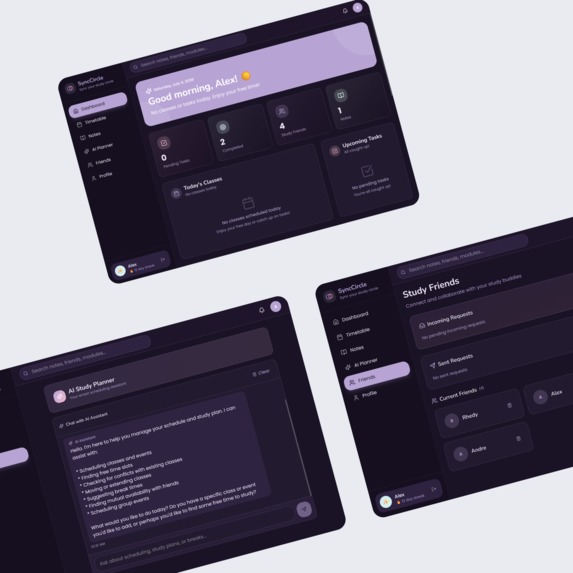
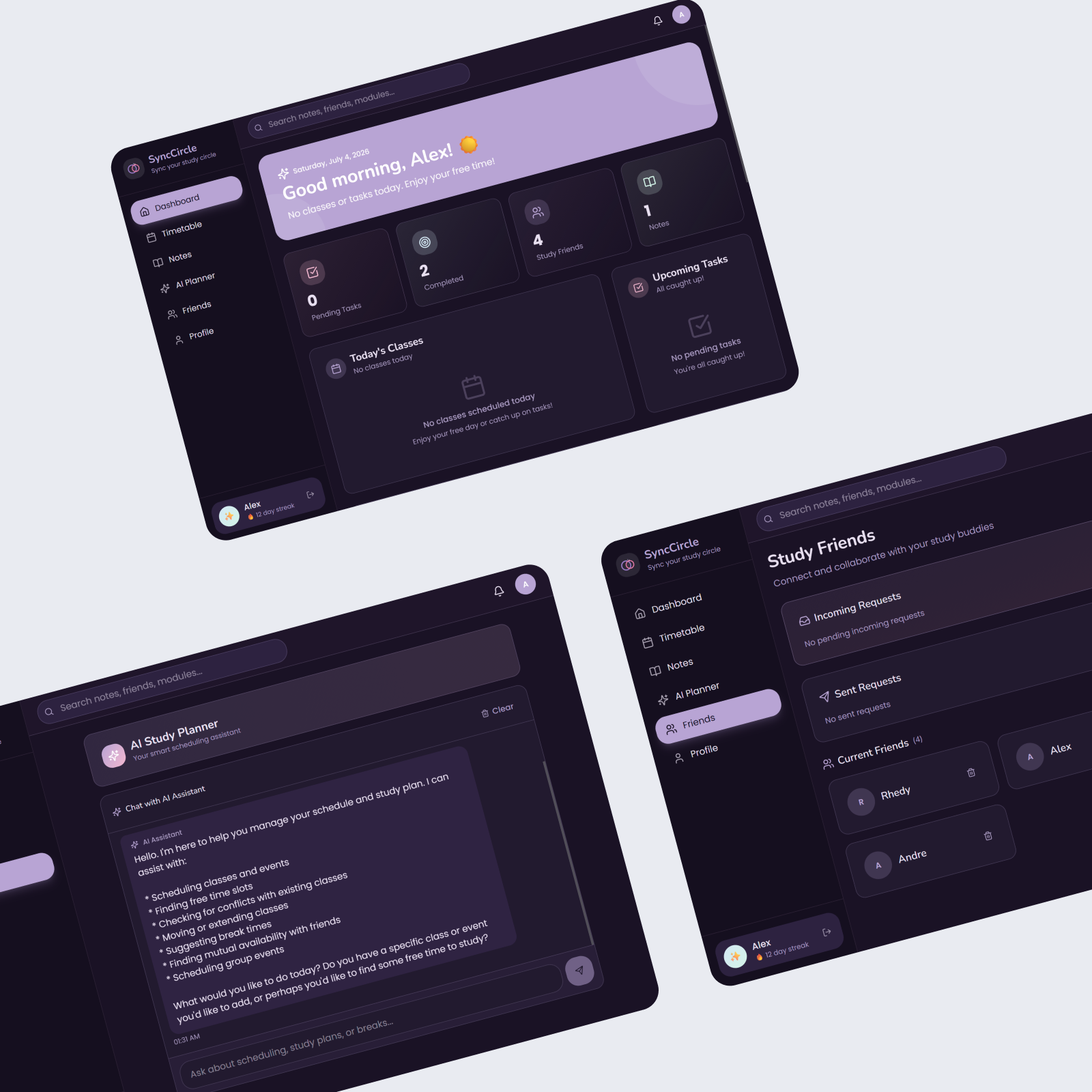
Dashboard, AI planner, Friends Tab
-
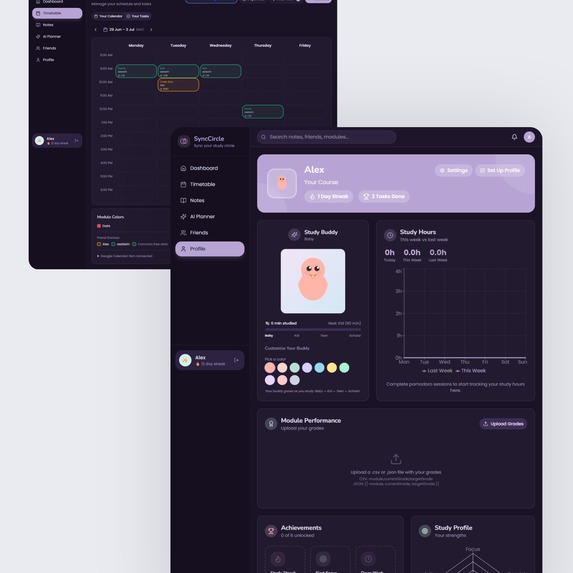
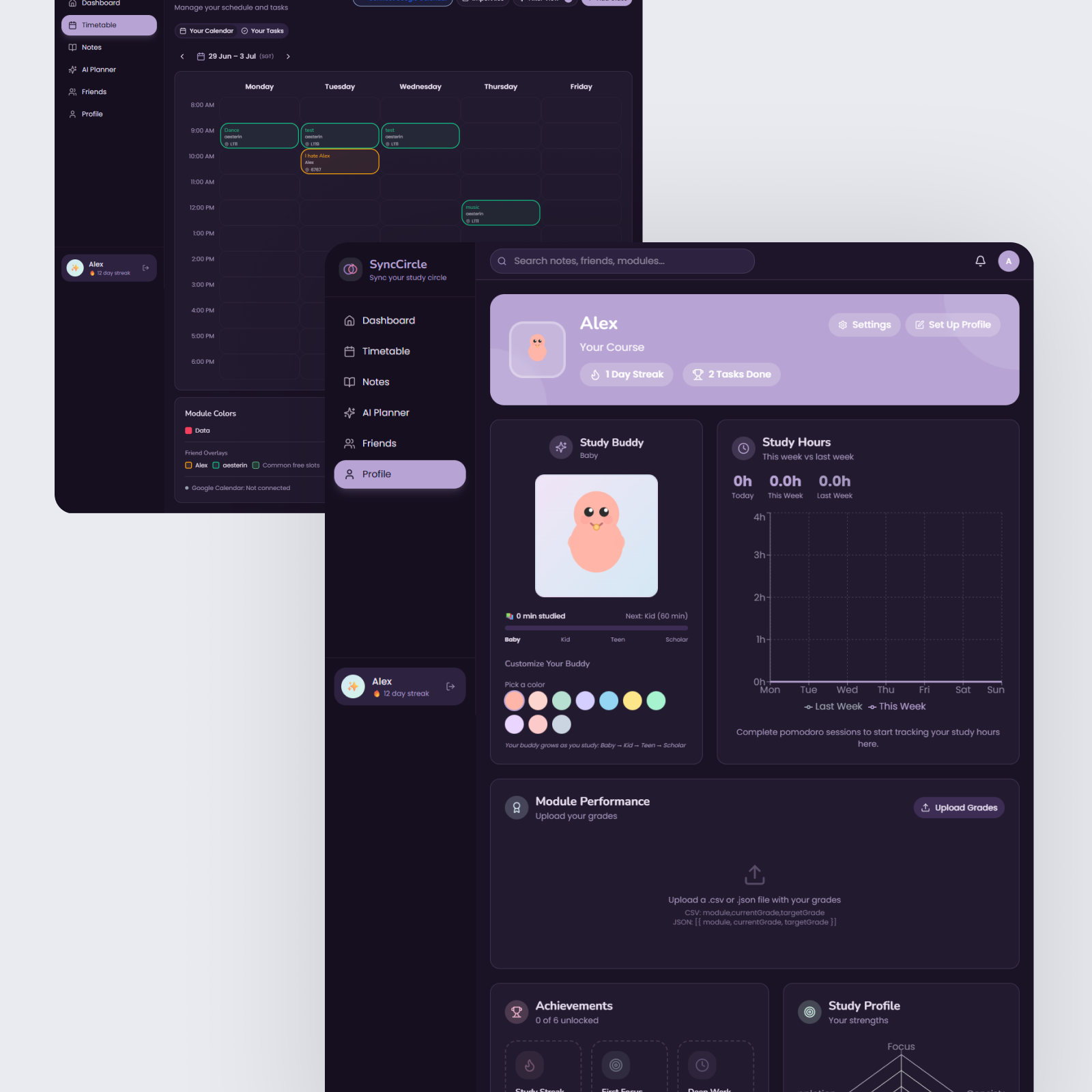
Timetable and Profile Tab
Inspiration
SyncCircle was inspired by the problem many students face when trying to study with friends. Everyone has different timetables, deadlines, notes, and group chats, which makes planning study sessions messy. We wanted to build a platform that makes studying together feel more organized and less stressful.
## What it does
SyncCircle is a collaborative study hub that helps students manage their academic life with friends. It lets users:
- Sync and compare timetables
- See friend availability
- Manage and share notes
- Use a smart planner for study scheduling
- View tasks, activities, and progress from a dashboard
The goal was to reduce the time spent coordinating and increase the time spent actually studying. In simple terms, if planning time is \(P\) and study time is \(S\), SyncCircle aims to reduce \(P\) so students can increase \(S\).
## How we built it
We started with group meetings to discuss the problem, user needs, and core requirements. After that, we used Kiro to help us structure the project, refine our specifications, and ask meaningful questions about the app flow, features, and design decisions. We then added more details ourselves based on what we wanted SyncCircle to become.
We built the app as a web application with a React frontend and AWS Lambda backend, organized the project with separate folders for frontend, backend planning, shared packages, tests, and documentation. We also made use of Amazon Cognito and Amazon DynamoDB for authentication and database. The final project includes pages for authentication, dashboard, timetable, notes, AI planner, friends, group chat, profile, and settings.
Kiro was especially useful for the specs and agent hooks, because it helped us keep the project more structured instead of just building random screens without a clear direction.
## Challenges we ran into
One challenge was deciding the project scope. SyncCircle had many possible features, so we had to prioritize what mattered most for a complete version.
Another challenge was making the app structure clean and understandable. Since the project needed to be continued and reviewed by teammates, we had to organize the folders, documentation, and requirements properly.
We also had to make sure the frontend worked after moving files around, cleaning unused files, fixing configuration issues, and preparing it to run in another environment.
## Accomplishments that we're proud of
We are proud that SyncCircle became more than just a UI idea. It became a properly organized project with a working frontend, clear documentation, requirements, and design planning.
We are also proud of building something that solves a real student problem. The app brings together timetables, notes, planning, and group communication into one shared study space.
## What we learned
We learned that good planning makes development much smoother. Having clear requirements helped us understand what each feature should do and how the app should be structured.
We also learned how helpful Kiro can be in a project workflow. It helped us think through the project more carefully, especially when creating specs, refining ideas, and using agent hooks to support development.
Most importantly, we learned that building a useful app is not only about coding. It also involves product thinking, teamwork, documentation, and making decisions based on what users actually need.
## What's next for SyncCircle
Next, we want to improve SyncCircle with real backend support so users can save accounts, notes, timetables, friend lists, and chat messages properly.
We also want to make the smart planner more advanced by using workload, deadlines, and availability to recommend better study sessions. A possible future planning score could consider factors like:
$$ Priority = DeadlineUrgency + Workload - AvailableTime $$
Future improvements could also include real-time collaboration, calendar imports, notifications, and more personalized study recommendations.
Built With
- amazon-dynamodb
- amazon-web-services
- aws-api-gateway-(rest)
- aws-cognito
- aws-ses
- cdk
- frontend:-react-18
- kiro
- kiro-api
- lambda
- motion-(framer-motion)
- node.js
- oauth2
- radix-ui
- recharts
- tailwind-css
- typescript
- vite


Log in or sign up for Devpost to join the conversation.