-
-
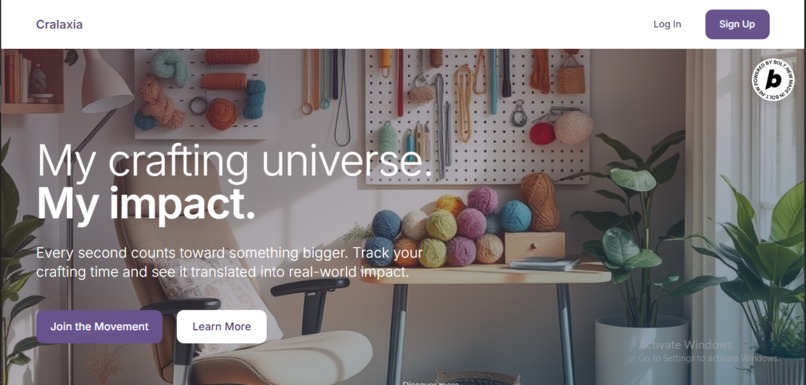
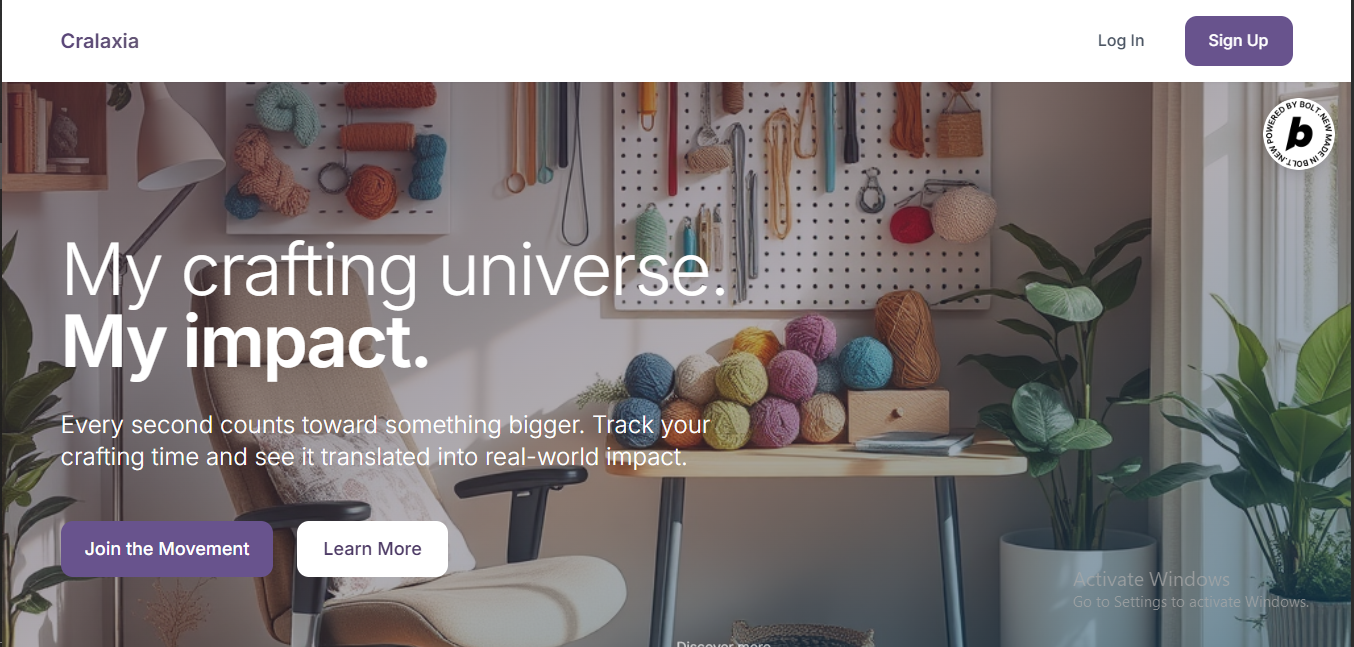
Home Page
-
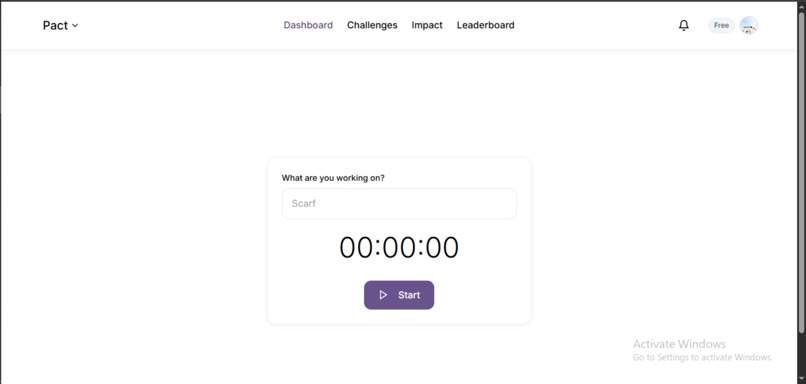
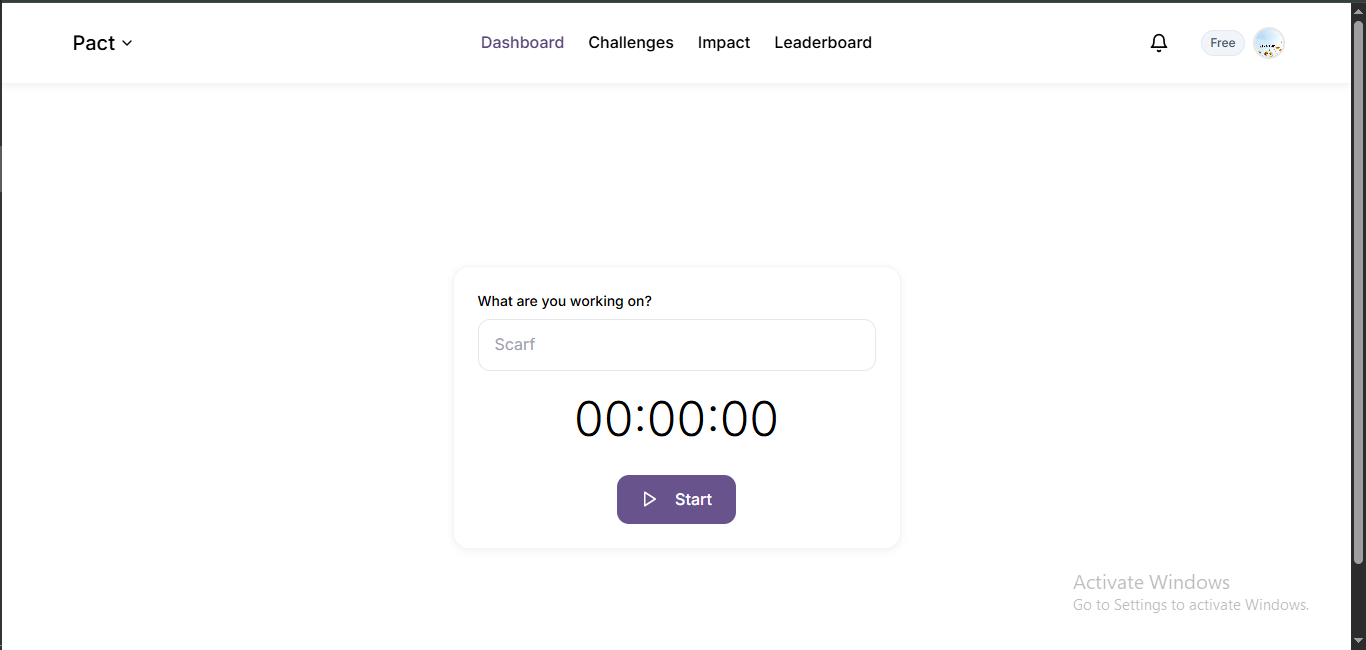
Dashboard - Stopwatch to track crafting time
-
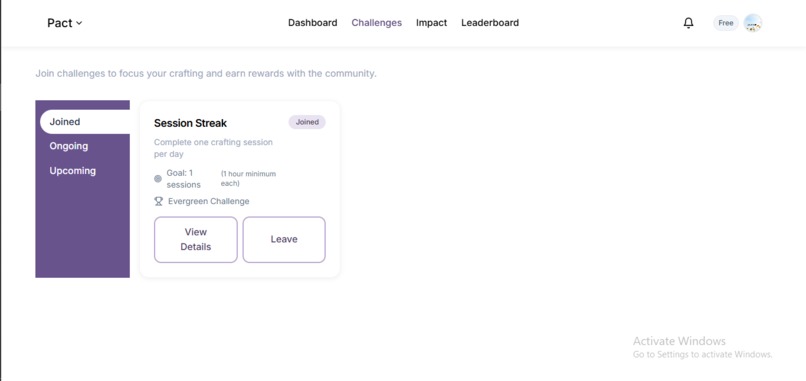
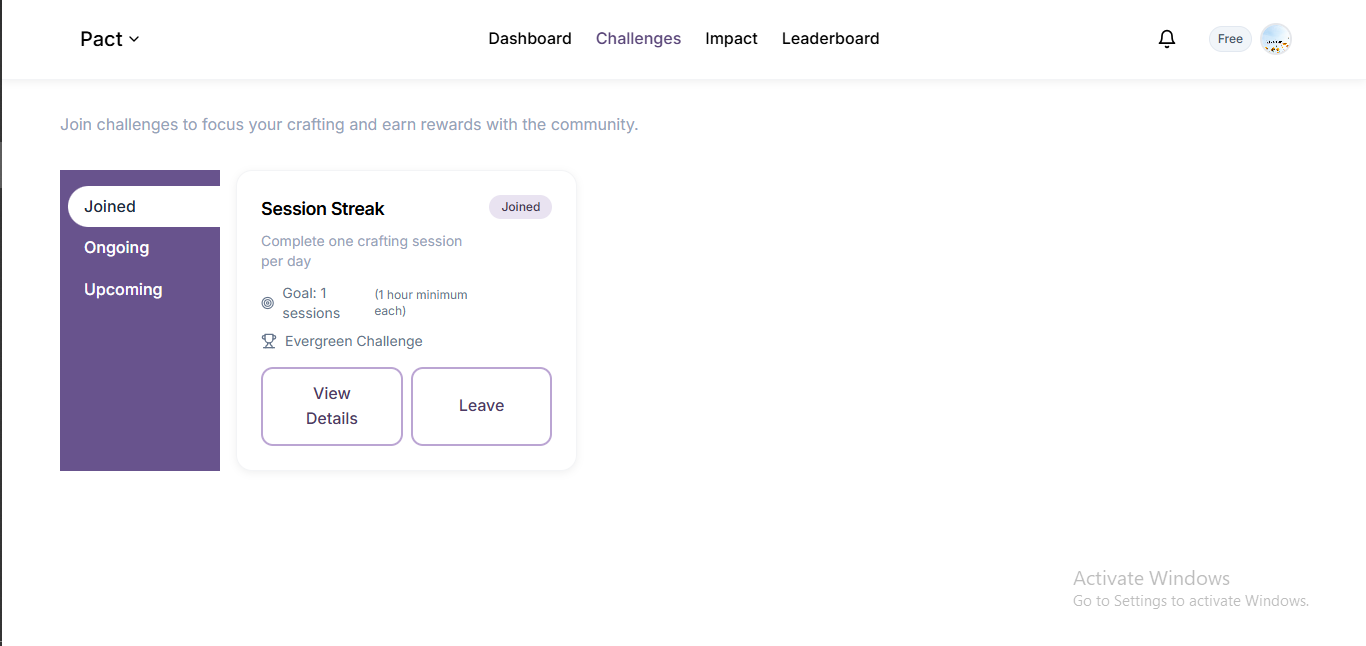
Challenges Page - challenges to drive more impact
-
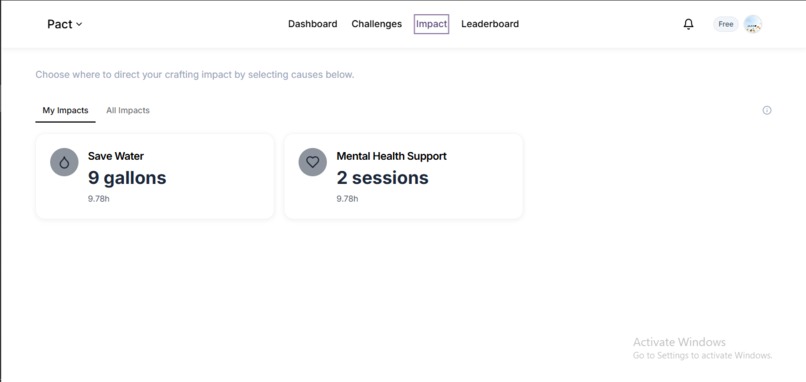
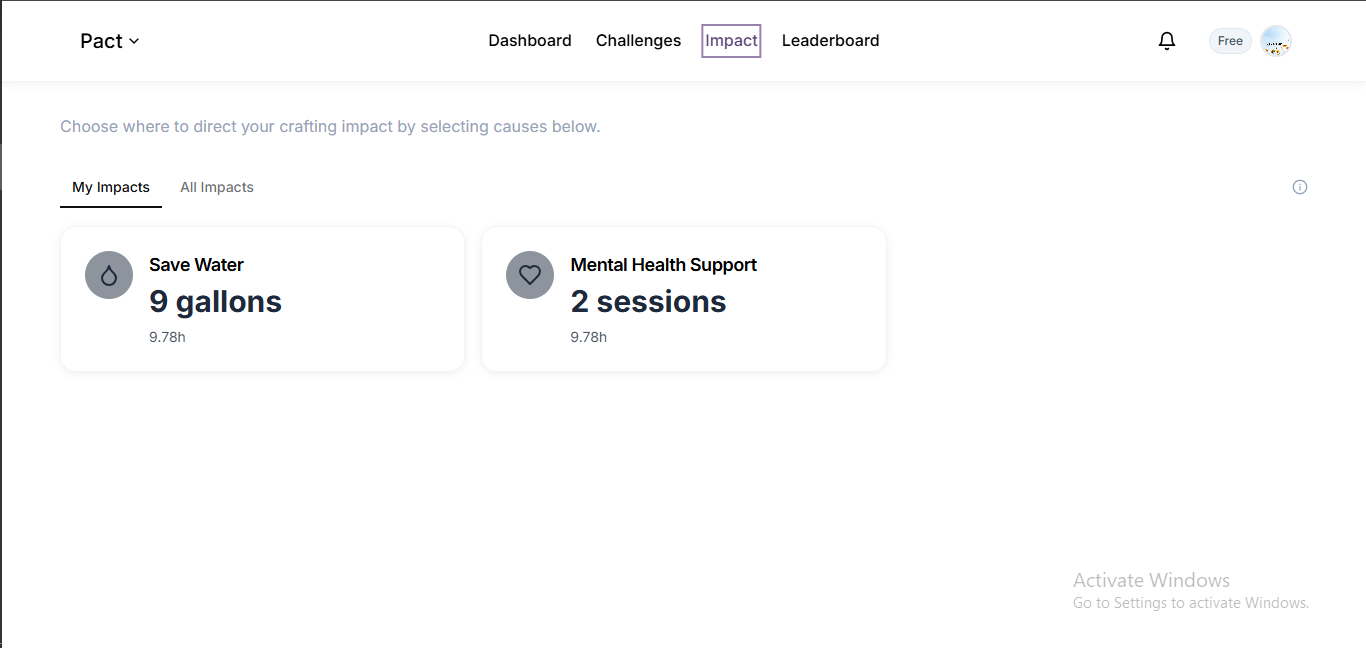
Impact page - user's individual impact
-
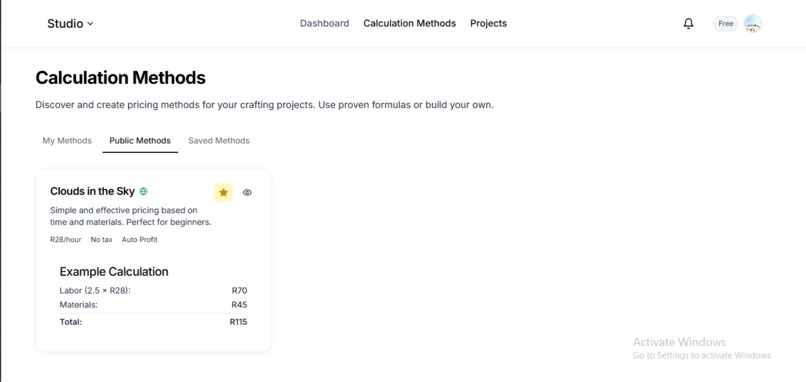
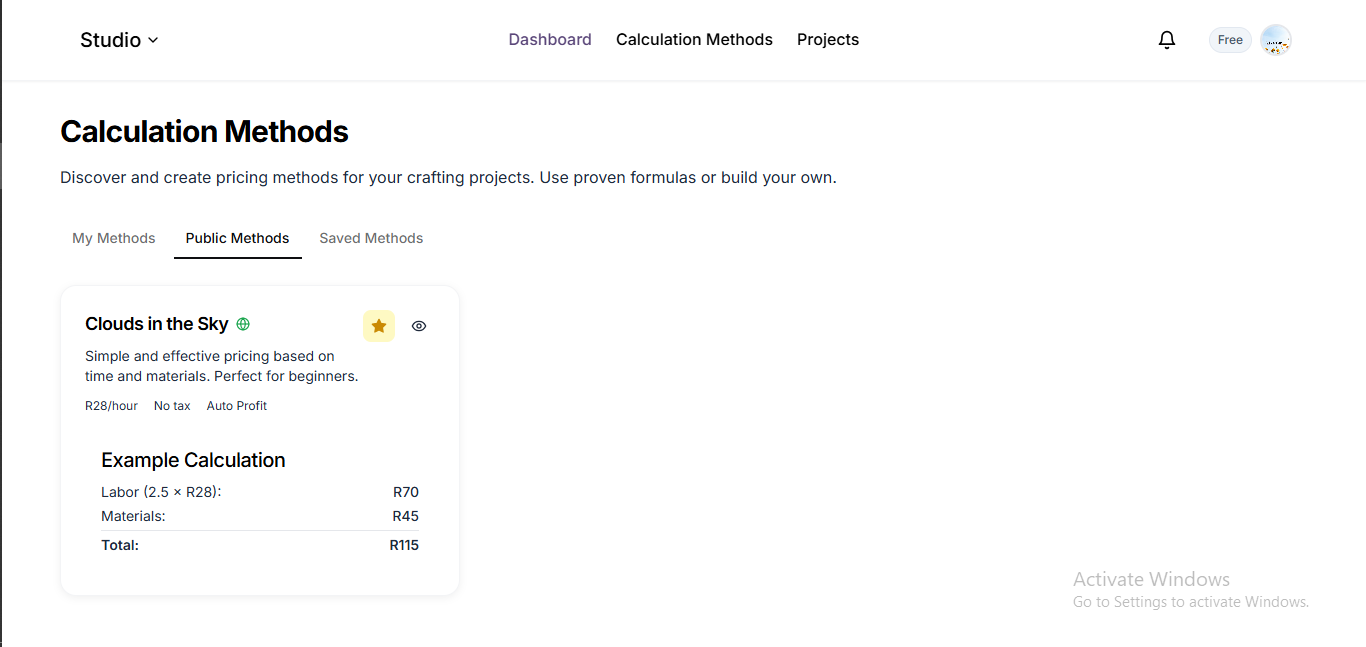
Cralaxia Studio - Calculation methods for product pricing
-
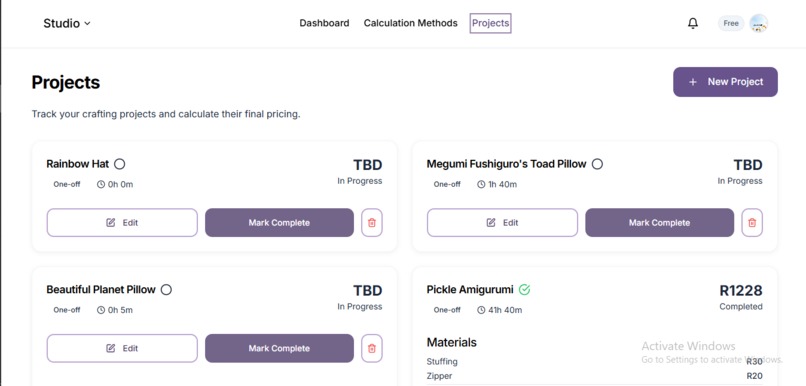
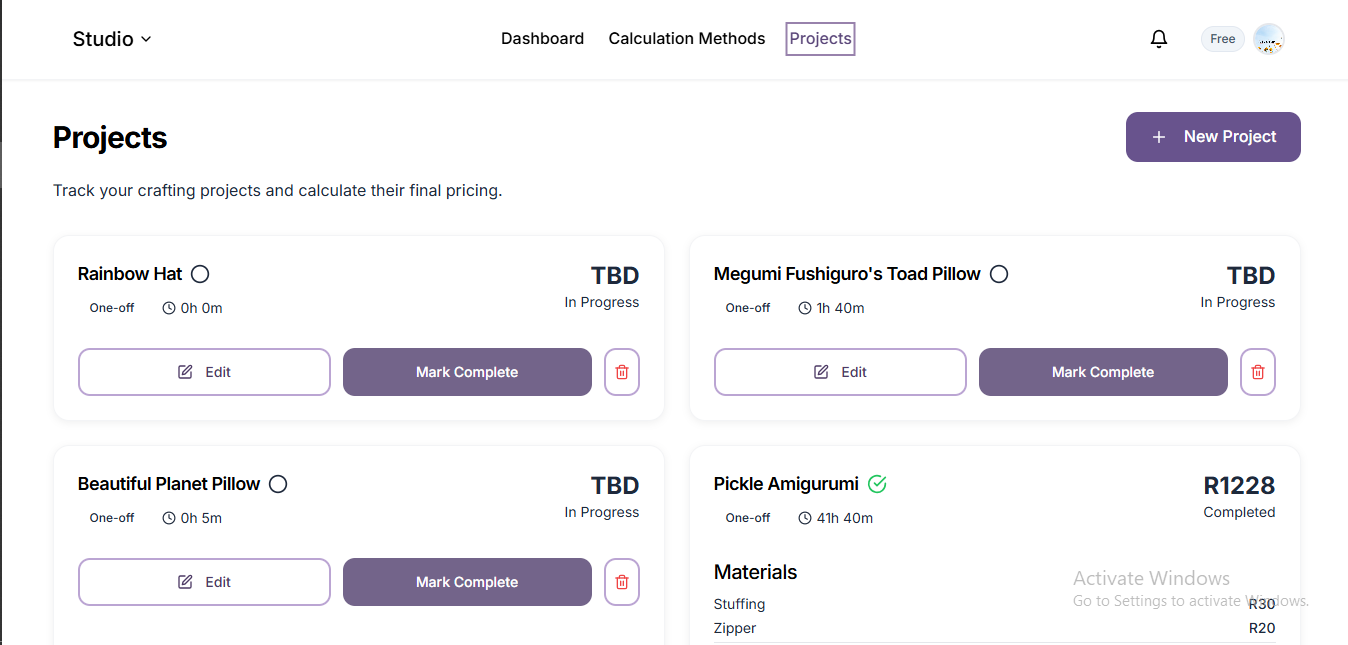
Projects page - user's projects
-
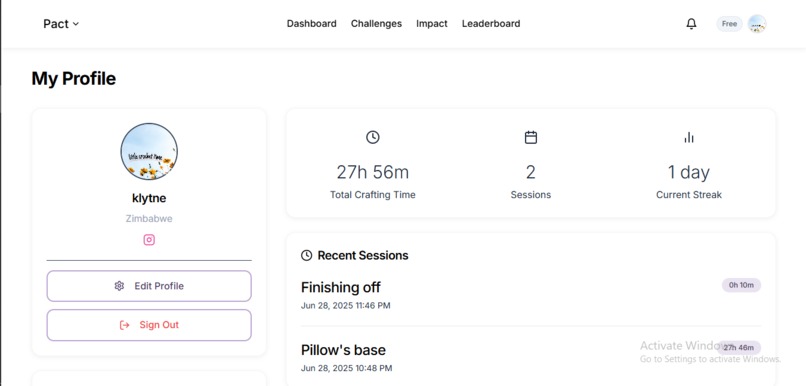
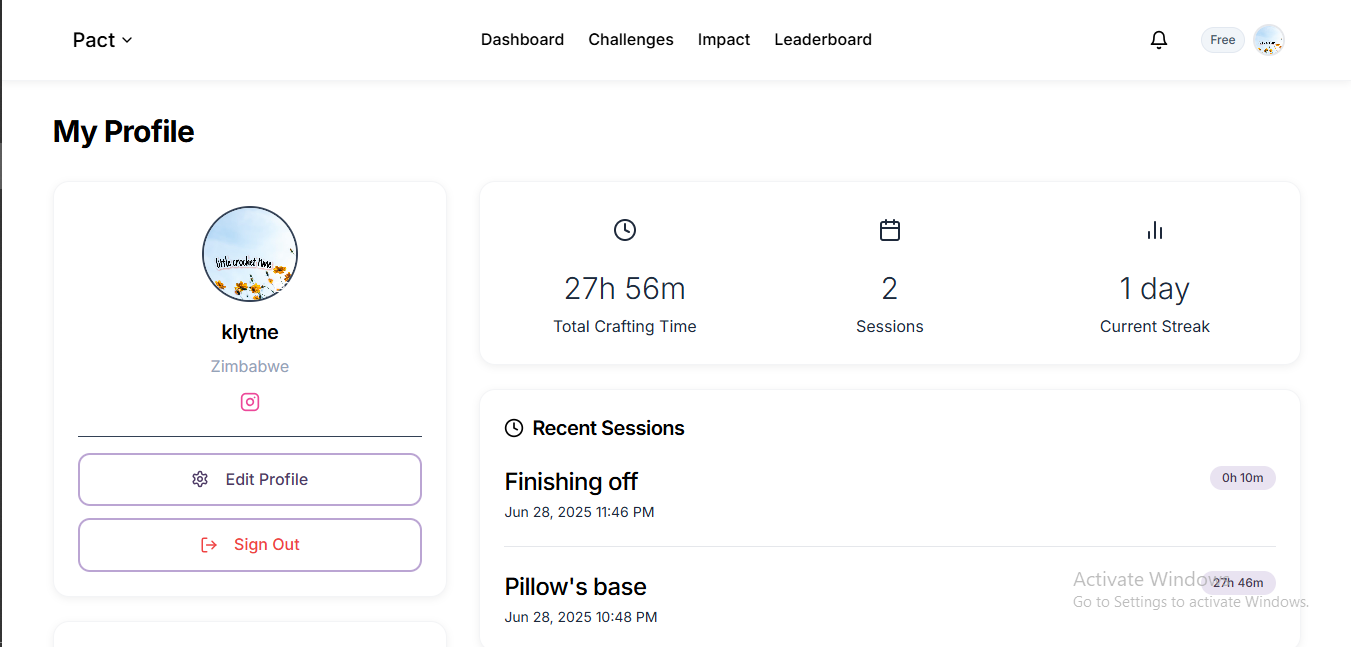
User's profile page
Inspiration
Not being able to give a helping hand due to lack of funds as a student — that’s where it started. I’ve often seen issues in the world and deeply wanted to help, but financial limitations made that impossible. On a more personal level, I also faced the headache of manually tracking time spent on crochet and knit projects using the Samsung stopwatch app — taking screenshots or writing down times, then manually calculating totals and pricing with a calculator. It was exhausting. At times the stopwatch would reset with me writing down the time or the screenshots just become confusing, like which time was a continuous session and which time was a full rest.
At one point, I even started asking ChatGPT to do my product pricing for me. And even then... I’d still double-check. Because, well, what if?
I thought: “What if all this crafting — all this time I spend making something beautiful — could mean something bigger? What if I could feel like I’m giving back while I work on my projects?”
That’s what sparked Cralaxia.
What it does
Cralaxia is a two-part platform designed to give crafters more purpose in every hour they spend making.
Cralaxia Pact converts your crafting hours into social and environmental impact. By selecting causes you care about — like trees, clean water, or education — your time gets “allocated” to real-world change in a symbolic way. It’s about making your hours feel like action.
Cralaxia Studio is a project tracker and calculator. Users can log their time, build project histories, and use customizable pricing methods (their own or from others) to calculate fair and thoughtful prices for their handmade products.
Together, the two parts create one ecosystem: “My crafting universe. My impact.”
Early on, it’s symbolic — but with user growth, I’ll pitch NGOs and brands to sponsor real-world causes. Until then, Pro plans fund the mission, cover costs, and seed early donations.
How we built it
Using Bolt.new as the core framework, I began by building out Cralaxia Pact — designing how impact hours are tracked and visually allocated across causes. Supabase powers the backend, including real-time data, authentication, and custom edge functions.
Once Pact was running, I extended the experience with Cralaxia Studio, the calculator and project management side. This included time tracking, custom pricing formula logic, project limits based on tier, and more.
The site also includes payment tiering via Paystack. Users can upgrade to unlock more features in the Studio and access the full method library.
Mini-Challenges Completed
Custom Domain Challenge: I participated in the Custom Domain Challenge by claiming the domain: cralaxia.me using Entri + IONOS. I chose this domain name because: It’s short and memorable. It reflects the idea of a "crafting galaxy", blending craft + galaxia (Spanish for "galaxy"). I chose the .me ending so it can add on to meaning of "My crafting universe". It’s aligned with my brand tagline: “My crafting universe. My impact.” I integrated it via Bolt.new’s custom domain settings, and it now hosts the full project publicly.
Startup Challenge (Supabase + Bolt.new): Cralaxia is built with Supabase powering the backend and Bolt.new on the frontend:
- Auth & Onboarding: Supabase Auth is used to register/login users with email. Users get directed to impact allocation and time tracking quickly
- Database: All user actions are stored using Supabase tables (projects, crafting sessions, calculation methods). Supabase Edge Functions are used to compute weekly crafting hour logic
- Scalability + Vision: The database schema is structured with monetization logic in mind (Pro Tiers). User data is clearly organized to handle growth across user types and feature sets
Deploy Challenge (Netlify Deployment): I used Netlify to deploy the Bolt.new project.
- Deployed Link: [cralaxia.me](https://cralaxia.me)
- Every commit on the Bolt.new project syncs with Netlify
- Automatic deployment and SSL setup was seamless
- This allows for global performance and easy scalability
Challenges we ran into
- Limited knowledge of TypeScript and React going in.
- Figuring out logic for tier-based feature gating.
- Navigation complexity between the two parts of the site (Pact vs Studio).
- Creating a playful but polished interface under time pressure.
- Payment integration across different regions (Stripe vs Paystack confusion — resolved!).
Accomplishments that we're proud of
Honestly? I didn’t expect to make it this far. When I entered this hackathon, I said: "I won’t be submitting. I don’t have time. My idea’s not that good. I don’t think anyone would use it." But the more I built, the more I saw the value. The more I wanted to use it. And somewhere in the process… I realized others might too. I’m proud of how the site turned out. It’s far from perfect, but it’s thoughtful, heartfelt, and real. It does something I genuinely believe in.
What we learned
- Supabase inside and out: database structure, edge functions, and auth flows.
- A much better understanding of TailwindCSS and responsive design.
- AI prompting — especially working with tools like Bolt.new — improved massively.
What's next for Cralaxia - My crafting universe. My impact.
- Bring back the idea of Yanbo, the cute Earth-yarn mascot, and animate it across the site for delight.
- Add actual data partnerships so real-world impacts could be funded via time and micro-donations.
- Let users share their crafting logs and impact journeys publicly.
- Open up public pricing methods for remixing and collaboration.
- Deepen the community aspect — badges, leaderboards, shared goals.
- Continue polishing the playful visual style — this is a site that should feel like home.
Cralaxia isn’t just about what we make.
It’s about what we give — hour by hour.
Built With
- bolt.new
- chatgpt
- javascript
- netlify
- paystack
- postgresql
- react
- supabase
- tailwindcss
- typescript
- vite

Log in or sign up for Devpost to join the conversation.