-
-
CraftRadar
Inspiration
As a solo developer and someone deeply engaged with communities in both urban and underserved environments, I’ve often seen how difficult it is to find reliable local artisans, whether it's for fixing a broken pipe, tailoring clothes, or electrical repairs. At the same time, millions of skilled individuals struggle to gain visibility and consistent work due to limited access to digital platforms. I was inspired to build CraftRadar as a tool that not only solves this discovery problem, but also empowers skilled workers with a digital presence using the power of location intelligence.
What it does
CraftRadar is a mobile-first, web-based application that allows users to:
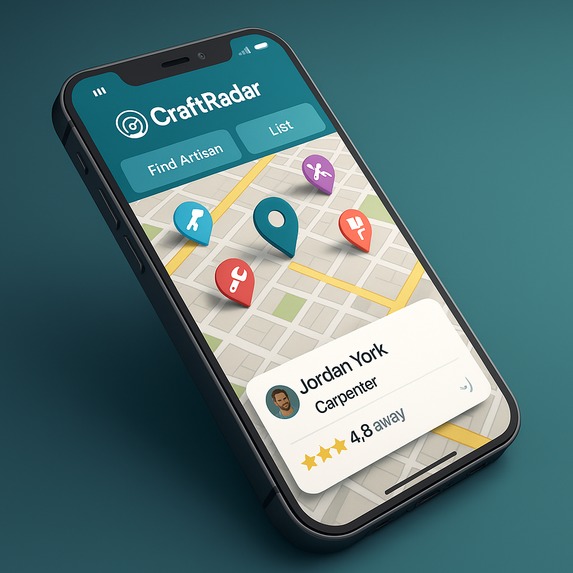
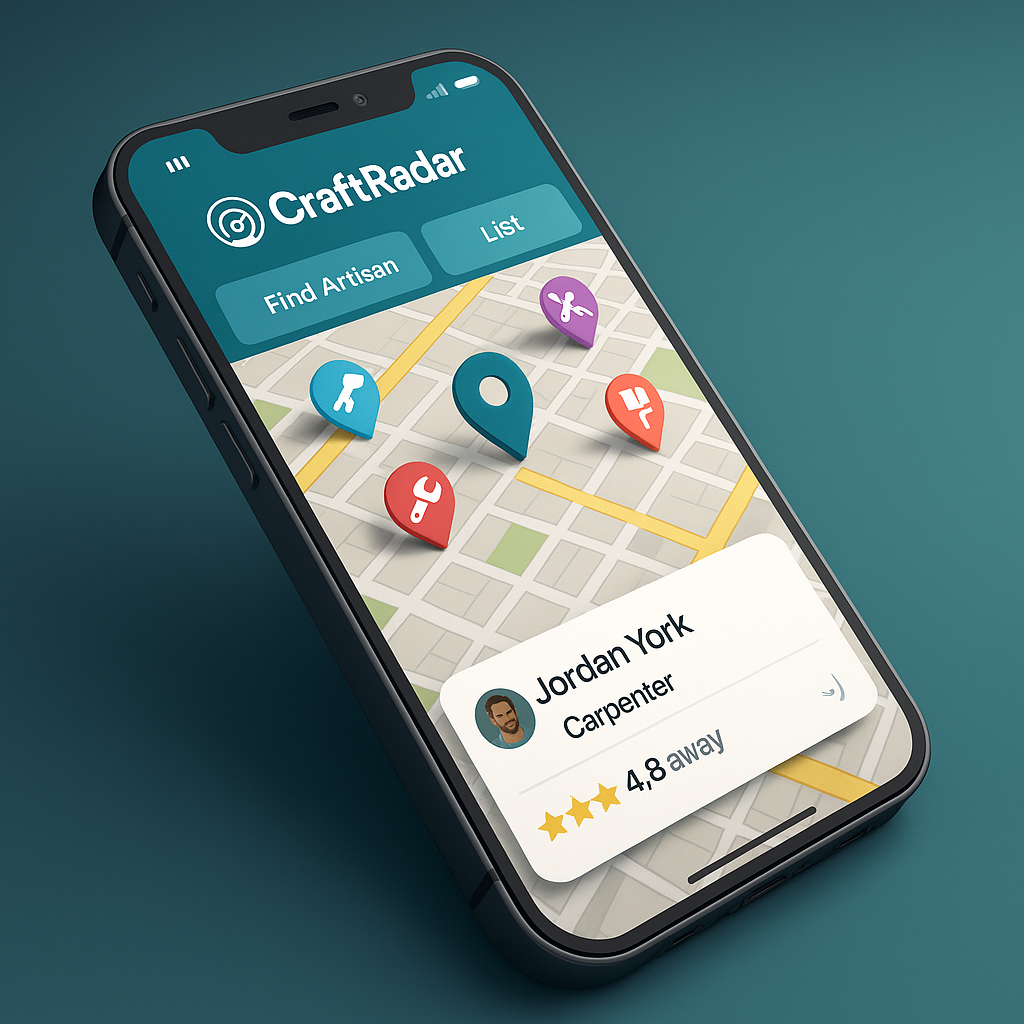
- Discover nearby, verified artisans in real time using Google Maps
- Filter artisans by skill or custom craft type
- View artisan profiles with ratings, skill info, and proximity
- Submit service requests with a simple tap
- Rate artisans after each job to build community trust
Artisans can:
- Register their craft or trade
- Go online and share live location
- Get approved by an admin before appearing on the map
- Build reputation through ratings and reviews
Admins have tools to:
- Review and approve artisan applications
- Moderate service quality and visibility
How it was built
CraftRadar was built using:
- Bolt.new + React + Tailwind CSS for the mobile-first frontend UI
- Google Maps JavaScript API for displaying artisan locations, routing, and real-time discovery
- Supabase for the backend, managing artisan profiles, job requests, and ratings
- Vite as the build tool, and ShadCN UI for styling and reusable components
Google Maps Platform is at the heart of the experience, used for map rendering, geolocation, and route visualization. The project is fully responsive and optimized for mobile, as most users and artisans would likely access it via smartphones.
Challenges faced
As a solo developer, one of the main challenges was scope management, ensuring the project stayed focused enough for a hackathon, but robust enough to demonstrate real-world potential. Other challenges included:
- Designing a scalable skill categorization system while still allowing flexibility for custom entries
- Managing real-time artisan status with minimal backend overhead
- Creating a simple but secure approval flow for artisan verification
- Ensuring the app performs well on mobile screens with embedded maps and modals
Accomplishments that I am proud of
- Building a working MVP that combines Google Maps, Supabase, and custom logic in a responsive web app
- Designing a system that supports both predefined and user-defined artisan skills with admin moderation
- Implementing a live map with real artisan pins, ratings, and request flow—all in a mobile-first experience
- Creating a socially relevant platform that can scale into emerging markets and community ecosystems
What we learned
Through building CraftRadar, I deepened my understanding of:
- The Google Maps JavaScript SDK, Geolocation API, and Directions API integration
- Supabase as a scalable backend-as-a-service for location-based applications
- UX patterns for mobile-first service platforms
- Structuring multi-role workflows (users, artisans, admins) as a solo dev
- The immense social impact possible by empowering informal workers with simple digital tools
What's next for CraftRadar
This is just the beginning. Upcoming plans for CraftRadar include:
- Enabling real-time location updates and push notifications for job requests
- Adding in-app messaging between users and artisans
- Integrating wallet/payments (e.g., Stripe or Paystack)
- Expanding the skill directory to support region-specific craft types
- Launching as a progressive web app (PWA) for installability and offline support
- Partnering with NGOs, municipalities, and community hubs to onboard real artisans at scale
Ultimately, I envision CraftRadar as a global platform for finding trusted hands, wherever you are.
Built With
- api
- react

Log in or sign up for Devpost to join the conversation.