-
Craftsmanship: Build Explore Sail
Inspiration
What it does
Inspiration
I wanted Craftsmanship to feel like the beginning of a bigger adventure: arriving on an island with very little, making your first tools and discovering what lies beyond the trees.
My experience making games in Horizon Worlds and Unreal, along with some experience in XNA/MonoGame, influenced the project. I wanted to bring that sense of exploration and discovery into a compact game designed for portrait play.
The central idea is that crafting opens up the world. A better tool, a repaired bridge or a stronger weapon gives you a reason to venture farther.
What it does
Craftsmanship is a single-player island survival and crafting adventure.
Players gather resources, craft equipment, refine iron and prepare for increasingly dangerous encounters. Repairing a bridge opens new ground to explore, while an ancient ruin contains a charging stone guardian and valuable treasure.
Crafting uses a simple shop-style interface: see an item, check its material requirements and craft it. Combat combines swords, a bow and enemies with readable attack warnings. Gems can be spent on healing supplies.
The adventure moves between peaceful gathering, preparation, exploration and action.
How I built it
I built the project using JavaScript and Three.js, with AI-assisted coding through iterative prompting and hands-on playtesting.
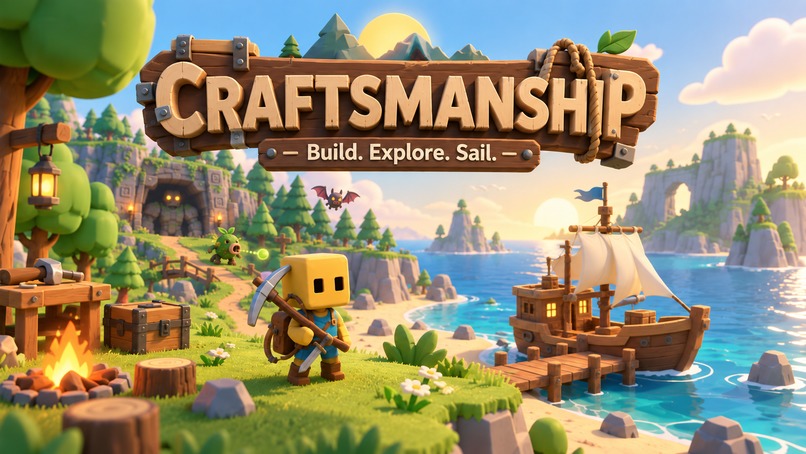
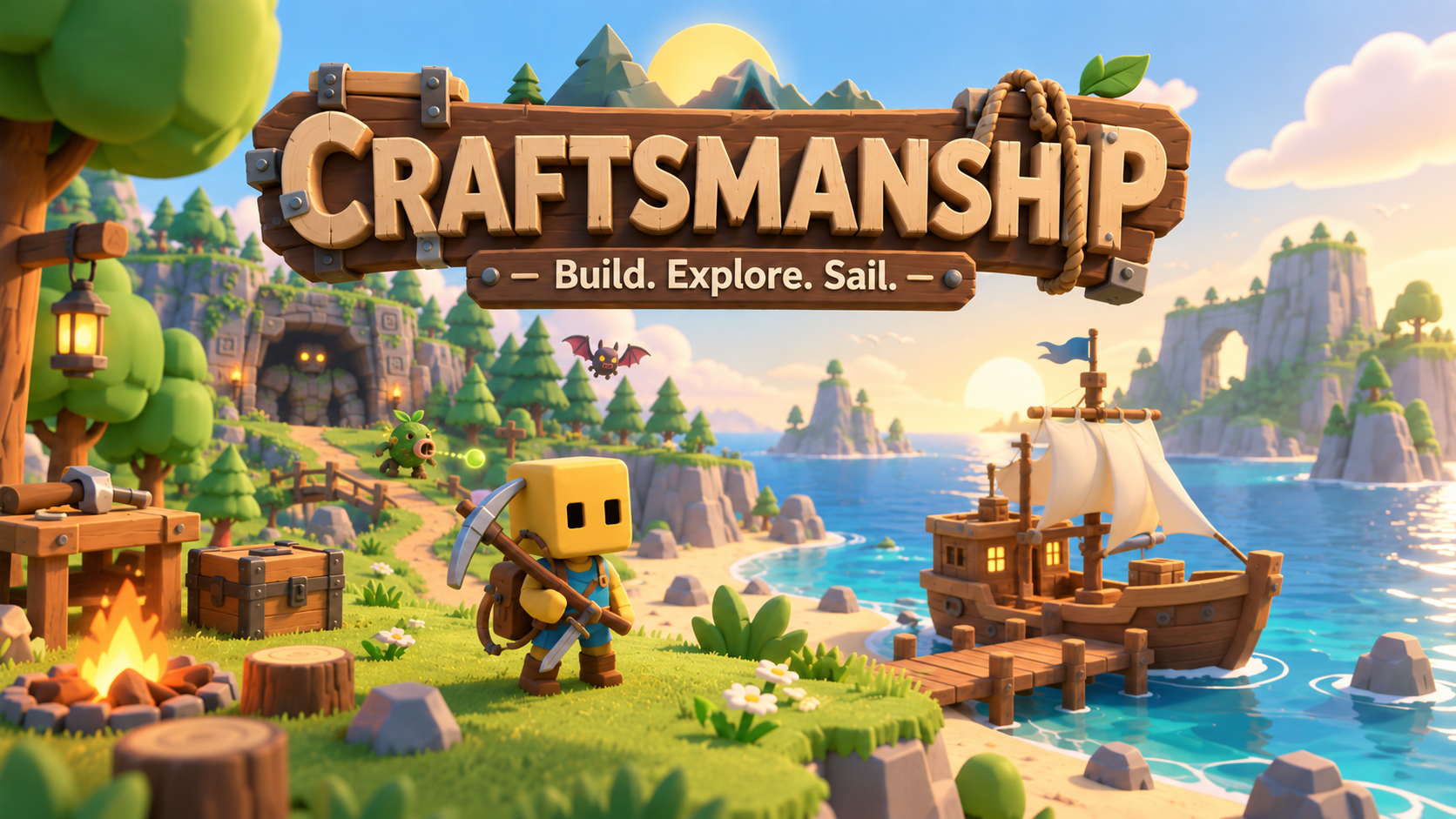
The project also draws on my experience with Autodesk Maya for 3D modelling and working with game assets. I wanted a chunky, readable visual style with simple shapes and a miniature-world feel.
Learning more about Three.js was an important part of the process, particularly how to bring together rendering, camera behaviour, interaction and gameplay in a browser-based game.
Challenges
The biggest design challenge was making the systems support one another. Gathering needed a purpose, better equipment needed somewhere useful to take it, and exploration needed rewards worth returning for.
Another challenge was keeping the experience readable on a portrait screen while balancing movement, combat, inventory and crafting controls.
I also worked on making progression satisfying without excessive grinding, so players could experience a complete adventure within the prototype.
What I learned
Opening the bridge, discovering the ruin entrance and fighting the guardian became some of my favourite moments. They gave crafting a stronger purpose: I wanted better equipment because there was somewhere exciting to go.
The project helped me develop my Three.js knowledge and explore how AI-assisted development could support my existing game-making experience. Repeated playtesting helped me decide which ideas improved the experience and which needed simplifying.
What’s next
The longer-term vision is an upgradeable wooden ship that carries equipment and crafting facilities between islands. Each destination would offer new materials, creatures and ruins, while the ship becomes a home the player gradually builds up.
This prototype establishes the island adventure at the heart of that larger journey.


Log in or sign up for Devpost to join the conversation.