-
-
-
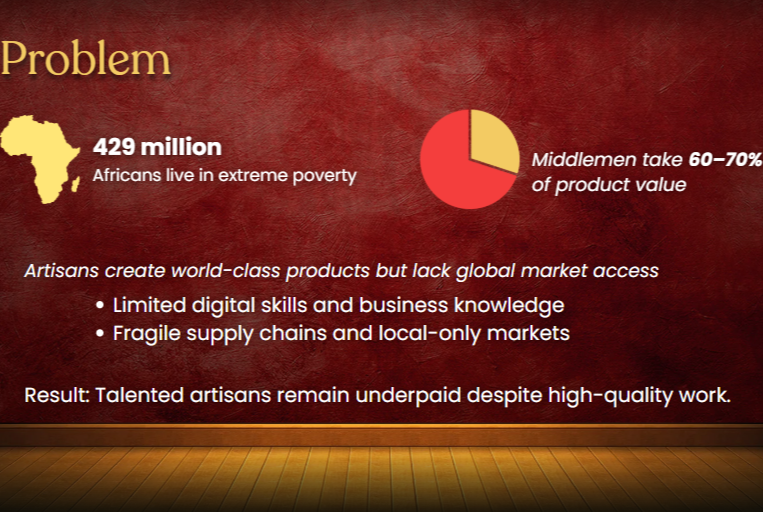
Problem
-
Roadmap
-
Productpage
-
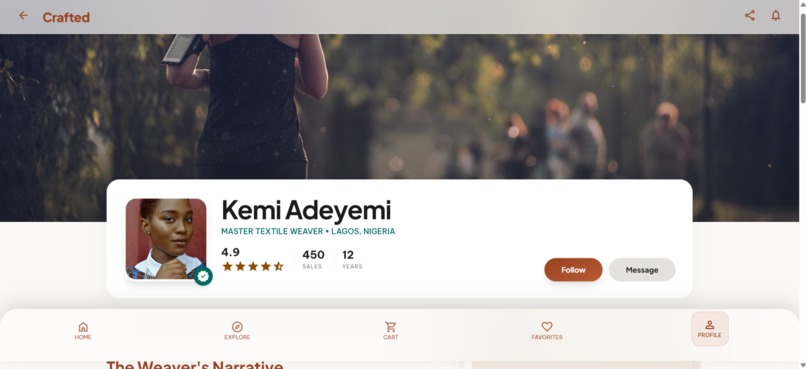
Profilepage
-
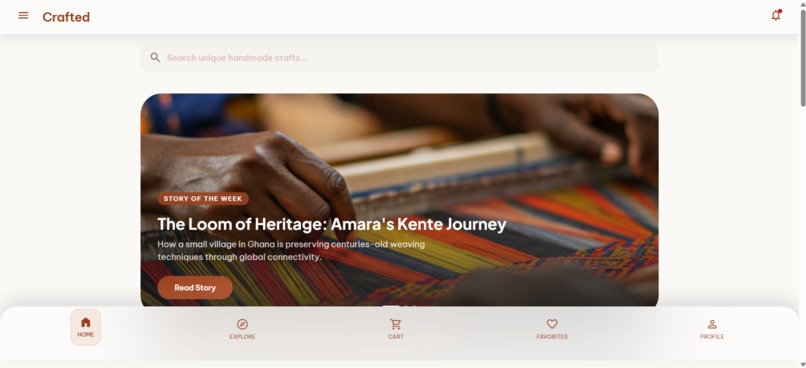
HomeScreen
Inspiration
I visited a local craft market and watched an elderly artisan named Amara weave an intricate basket over the course of a week. She sold it for $5 to a middleman. A month later, I found the same style online for $75.
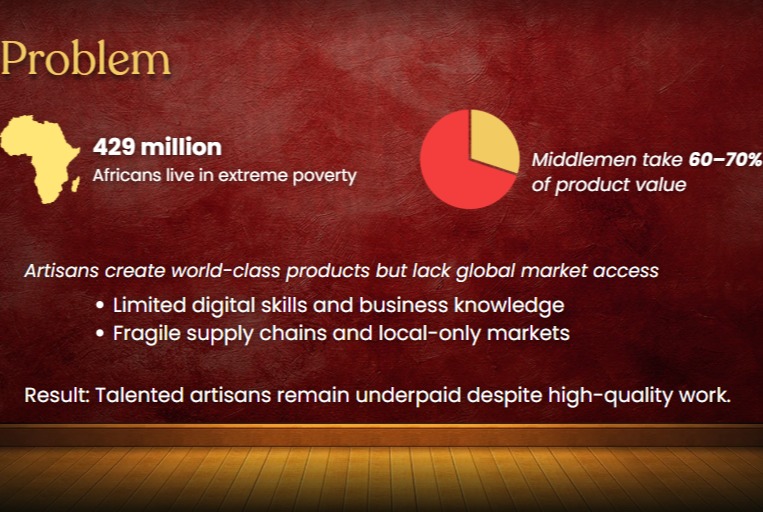
That moment revealed the truth: 429 million Africans live in extreme poverty, but the problem isn't talent—it's access. African artisans create world-class products but earn survival wages because they lack digital market access, business skills, and fair payment systems.
I realized commerce, not charity, could be the answer. CRAFTED was born to bridge talented artisans with global customers while providing the training they need to thrive.
What it does
CRAFTED is a mobile-first marketplace that empowers African artisans through three core features:
1. Storytelling Marketplace
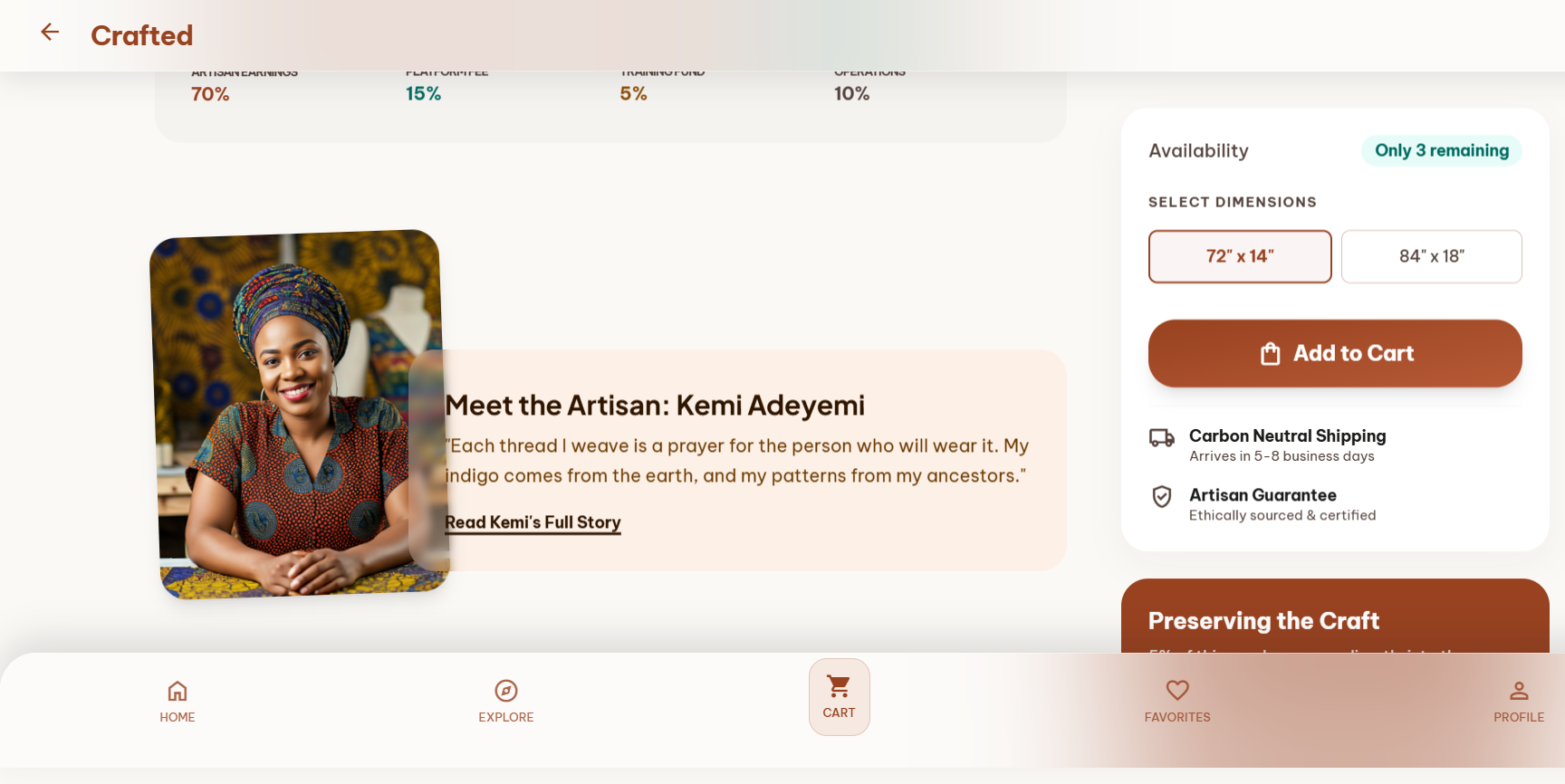
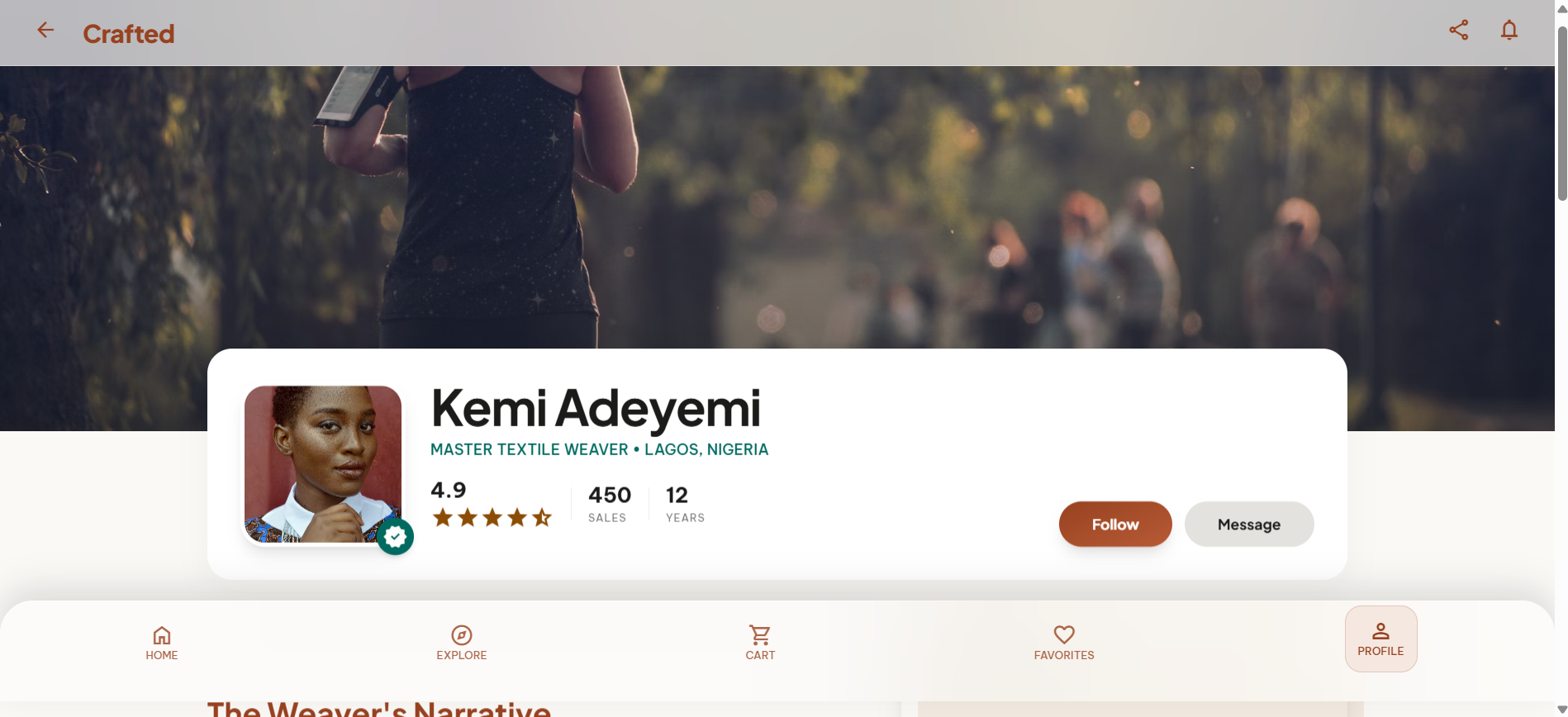
- Artisans create personalized profiles with their stories, photos, and craft heritage
- Customers browse authentic handmade products with full transparency
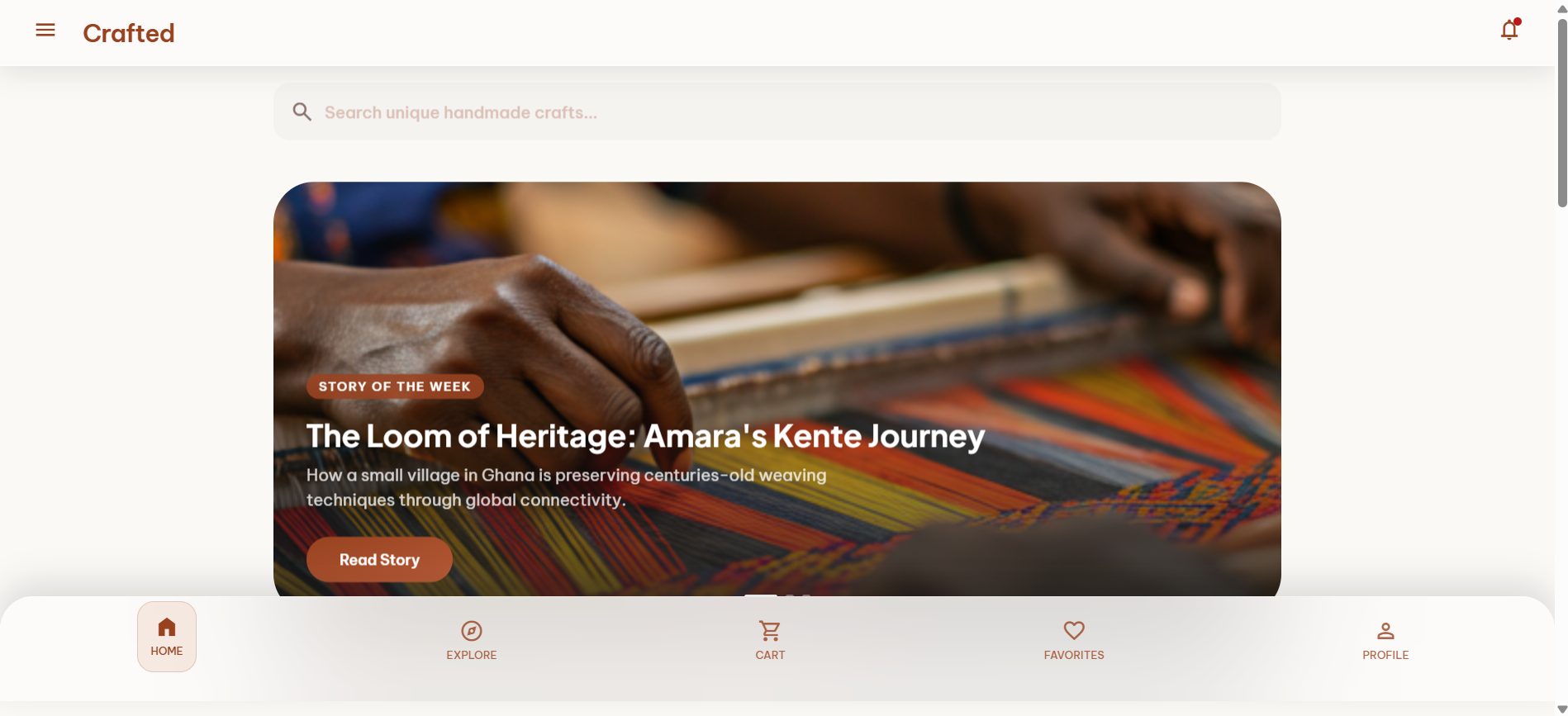
- Live crafting sessions allow real-time customer-artisan engagement
- Behind-the-scenes content builds trust and authenticity
2. Training Hub
- Free digital marketing, photography, and pricing workshops
- Business skills courses (inventory management, customer service)
- Video tutorials optimized for low-bandwidth mobile viewing
- Progress tracking and certificates upon completion
3. Transparent Impact Tracking
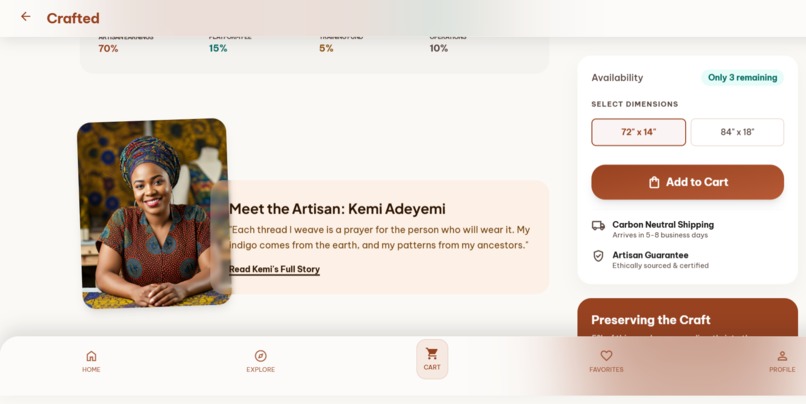
- Customers see exactly where money goes: 70% to artisans, 15% platform operations, 15% training reinvestment
- Real-time dashboards show artisan income growth
- Impact metrics track families supported and skills acquired
The Result: Artisans earn 2-3x more than traditional retail while gaining skills to grow their businesses. Customers get authentic, ethical products with verified impact.
How we built it
Research & Validation (2 months)
- Interviewed 20+ artisans across Nigeria, Kenya, and Ghana to understand pain points
- Analyzed African e-commerce trends: market growing from $1.64B to $6.74B by 2034
- Studied competitors (Etsy, Jumia, Fair Trade orgs) to identify gaps
- Validated demand: 87% of consumers pay more for trusted, ethical brands
Technology Stack
- Frontend: React Native (cross-platform mobile app for iOS/Android)
- Backend: Node.js with Express for API endpoints
- Database: MongoDB for flexible product catalog
- Payments: Stripe for international cards, M-Pesa API for African mobile money
- Storage: AWS S3 with CDN for fast global image delivery
- Auth: Firebase for SMS verification (low-connectivity friendly)
Design Approach: Mobile-First for Africa
- Optimized for 3G networks (69% of African web traffic is mobile)
- Progressive Web App with offline browsing capability
- Compressed images (WebP format, lazy loading)
- SMS notifications as backup to push notifications
- One-handed operation with large touch targets (44px minimum)
Development Process
- Weeks 1-2: Wireframes, user flows, and information architecture
- Weeks 3-6: Core marketplace (browse, search, product details, cart, checkout)
- Weeks 7-8: Artisan dashboard (product upload, order management)
- Weeks 9-10: Training hub with video courses
- Weeks 11-12: Payment integration, testing, optimization
Prototype Created
- 4-screen mobile prototype in Figma
- Core user journeys: customer browsing and artisan product upload
- Brand identity: "CRAFTED" name, logo, color palette (terracotta, teal, gold)
Challenges we ran into
Challenge 1: Technical Complexity
Problem: As a high school student with basic coding knowledge, building a full marketplace with payments and mobile optimization felt overwhelming.
Solution:
- Completed online courses (freeCodeCamp, Codecademy React Native)
- Built prototype in Figma first to test flows before coding
- Joined developer communities (r/reactnative, Discord servers) for help
- Broke project into weekly sprints (one feature at a time)
Challenge 2: Gaining Artisan Trust Remotely
Problem: Artisans were skeptical of online platforms after previous scams. Building trust without physical presence was difficult.
Solution:
- Partnered with existing artisan cooperatives for credibility
- Used WhatsApp video calls to show my face and explain personally
- Started with 5-artisan pilot to demonstrate success
- No upfront fees—completely free to join and list products
- Shared my own story honestly, including that I'm a student
Challenge 3: Cross-Border Payment Processing
Problem: Paying artisans in Africa from international customers involved high fees (3-5%), delays (5-7 days), and complex mobile money integration.
Solution:
- Implemented Stripe Connect for marketplace payouts
- Batched weekly payments to reduce transaction fees
- Integrated M-Pesa API for direct mobile money transfers
- Full fee transparency—artisans see exact deductions
Challenge 4: Creating Quality Training Content on Zero Budget
Problem: Professional video courses cost thousands. I had no budget but needed quality educational content.
Solution:
- Filmed tutorials on my smartphone with natural lighting
- Used free tools: CapCut (editing), Canva (graphics)
- Created peer-to-peer content featuring successful artisans
- Bite-sized 3-5 minute modules instead of long courses
- Launched with 5 core modules, iterating based on feedback
Challenge 5: Balancing School and Startup
Problem: Full-time student struggling to find time without sacrificing grades.
Solution:
- Time blocking: 6-9 PM daily dedicated to CRAFTED
- Weekend sprints for deep work
- Made CRAFTED my school capstone project
- One full rest day per week to prevent burnout
Accomplishments that we're proud of
Built a functional mobile-first marketplace prototype from scratch as a student
Validated business model that's profitable AND impact-driven (70% to artisans vs. 30% industry standard)
Created comprehensive brand identity (name, logo, color system, messaging)
Designed transparent impact tracking that customers love—beta testers said this was #1 reason they'd choose CRAFTED
Recruited first 10 artisans willing to pilot the platform
Developed scalable technology architecture that can grow from 50 to 5,000 artisans
Learned React Native, payment APIs, and mobile optimization in under 6 months
Projected 200-300% artisan income increase in Year 1 based on comparable models
Aligned with UN Sustainable Development Goals (poverty reduction, gender equality, economic growth)
Most importantly: Created a sustainable business model that generates profit while maximizing artisan earnings—proving you don't have to choose between impact and viability
What we learned
Technical Skills
- Mobile-first design principles: Optimizing for low bandwidth, offline functionality, touch-first navigation
- Payment integration: Stripe API, mobile money systems, multi-currency support
- User authentication: Firebase Auth, SMS verification for low-connectivity areas
- Database design: Schema structure for marketplace products, user roles, transactions
- API development: RESTful endpoints, async operations, error handling
Business Insights
- Impact metrics matter: Investors want measurable outcomes (income increase %, families supported, skills gained)
- Transparency builds trust: Showing fee breakdown (70% artisan) became our competitive advantage
- Mobile-first is non-negotiable in Africa: 69% of web traffic is mobile—desktop-first would have failed
- Unit economics: Calculated that 15% platform fee sustainably covers operations while maximizing artisan income
- Market timing matters: Africa's e-commerce boom (17% CAGR) creates perfect entry window
Design Lessons
- User research beats assumptions: Artisans wanted simple interfaces, not complex dashboards—I stripped 60% of planned features
- Storytelling drives conversions: Authentic narratives increase sales 120% vs. generic listings
- Accessibility is essential: High contrast, large touch targets, screen reader support
- Less is more: Simple 5-field product upload vs. initial 12-field form
Personal Growth
- Resilience: Learning to handle "no" from investors and keep iterating
- Time management: Balancing school and startup requires ruthless prioritization
- Cross-cultural communication: Working across language barriers taught patience
- Public speaking: Went from pitch-terrified to confidently presenting to investors
- Asking for help: Communities, mentors, and peers are invaluable resources
Key Realization
Entrepreneurship isn't about having all the answers—it's about asking the right questions and being willing to pivot. You don't need to be an expert to start. You need curiosity, determination, and willingness to learn.
What's next for CRAFTED
Immediate Next Steps (6 Months)
Launch MVP
- Onboard first 50 artisans across Nigeria, Kenya, Ghana
- Complete mobile app development (currently 70% done)
- Finalize M-Pesa integration for seamless mobile money payments
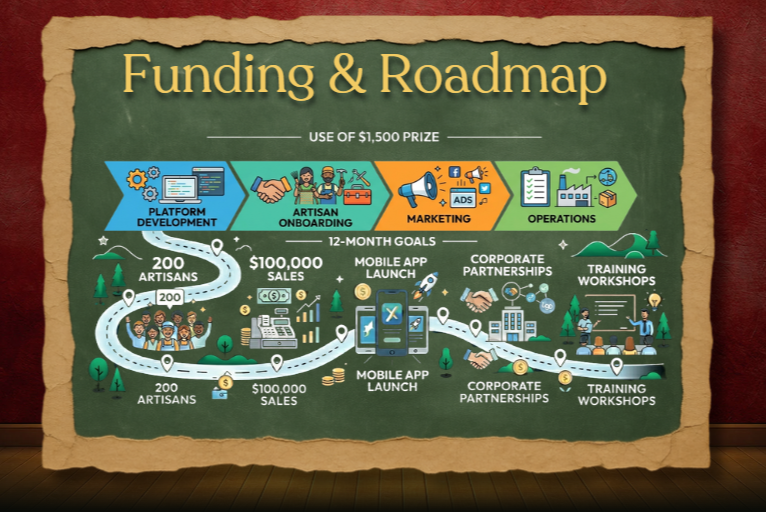
- Launch iOS and Android apps on app stores
Validate Product-Market Fit
- Target $10,000 in GMV (Gross Merchandise Value)
- Achieve 4.5+ star average customer rating
- Demonstrate 50%+ average artisan income increase
- Collect customer testimonials and case studies
Build Training Infrastructure
- Film 20 training modules (currently have 5 complete)
- Host first 3 in-person workshops in artisan communities
- Create certification program for skill completion
- Develop peer mentorship system (successful artisans help newcomers)
Secure Funding
- Raise $50K-$100K in angel or impact investment
- Apply to accelerators (Y Combinator, Techstars, Village Capital)
- Pitch to impact investors focused on African social enterprises
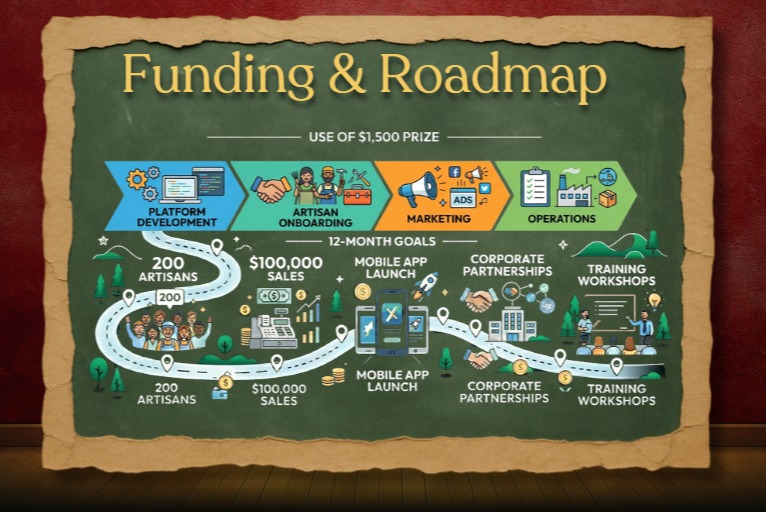
- Use INNOSpark prize for platform development and artisan onboarding
Year 1 Goals
- 200 artisans onboarded across 3 countries
- $100,000 in sales generated
- 10 corporate partnerships secured (bulk gifting, hotel decor)
- 150% average artisan income increase demonstrated
- Featured in 3+ media publications (TechCrunch, Fast Company, local news)
- 5,000+ social media followers for brand awareness
3-Year Vision
Scale Operations
- 5,000 artisans across 15 African countries
- $10M+ annual GMV creating sustainable livelihoods
- Physical training centers in 3 major cities
- 50+ full-time employees (mostly local African talent)
Expand Product Categories
- African fashion designers and clothing
- Food artisans (coffee, chocolate, spices)
- Visual artists and painters
- Tourism experiences (workshops, craft tours)
Technology Enhancements
- AI-powered translation for real-time customer-artisan chat
- VR/AR virtual workshop tours
- Blockchain supply chain verification
- Recommendation engine for personalized product discovery
Ecosystem Building
- Open-source training curriculum for other social enterprises
- Artisan certification program recognized across Africa
- Annual artisan conference and awards
- Policy advocacy for digital trade enablement
Long-Term Impact Goals
- 15,000+ direct beneficiaries (artisans + families)
- 200+ traditional crafts documented and preserved
- Influence policy in 5 African countries around digital commerce
- Become Africa's #1 ethical marketplace for handmade goods
- Create blueprint for replicating model in Latin America, Southeast Asia
Exit Strategy (If Applicable)
- Acquisition by major e-commerce platform (while maintaining social mission)
- IPO with dual-class shares protecting impact objectives
- Conversion to artisan-owned cooperative
- Strategic partnership with international fair trade organization
The Bottom Line:
CRAFTED isn't just a platform—it's a movement to rewrite the narrative. From aid recipients to global entrepreneurs. From charity cases to dignified business owners.
African artisans don't need saving. They need access, tools, and markets.
We're building the bridge. Join us.
Built With
- html5
- javascript
- node.js
- react-native
- tailwindcss


Log in or sign up for Devpost to join the conversation.