Inspiration
I was inspired by my friend with cerebral palsy. She could only interact with her eye tracking device if she wanted to browse the web or connect with others online. However, the features of that device were limited, and I would often see her try to use her nose to interact with her smartphone.
What it does
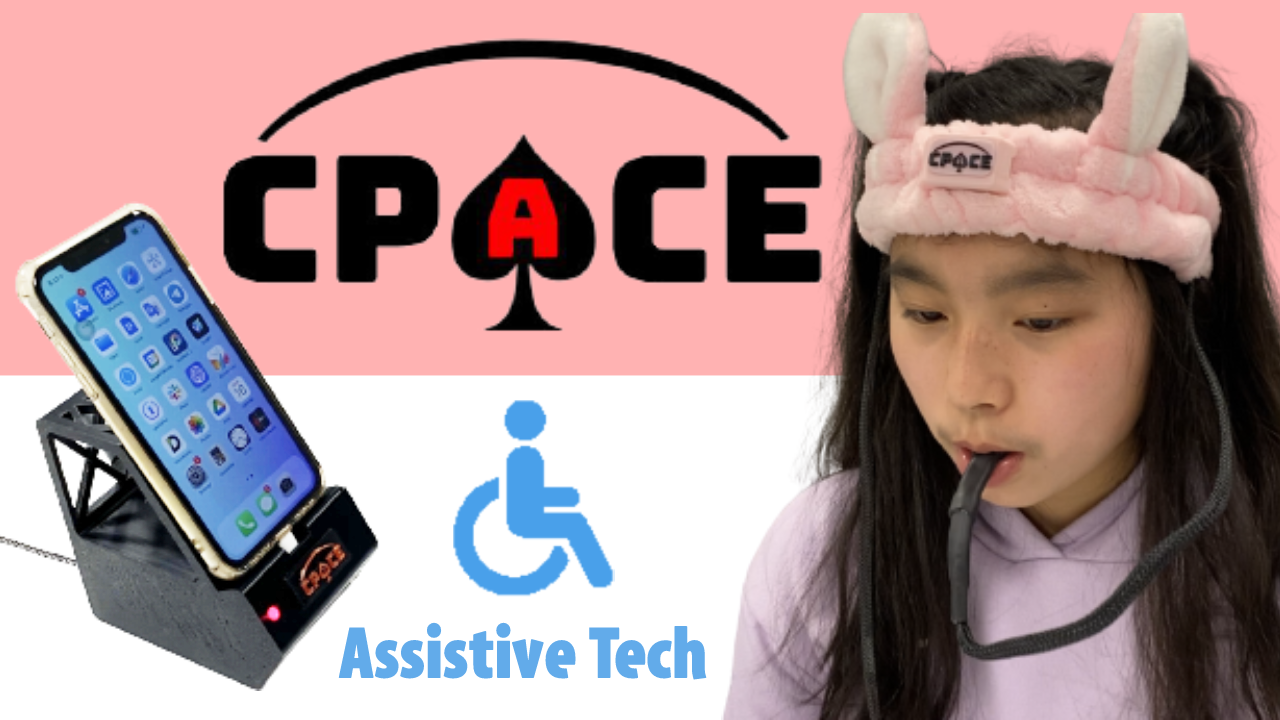
Current solutions have limited apps and features, or cost tens of thousands of dollars. CPACE lets anyone easily plug in a smartphone or computer to start using! It tracks head motion to position a mouse on screen, and the bite sensor for clicking.
How we built it
CPACE is made of programmed Arduino sensors and 3D printed parts.
Challenges we ran into
The main challenge was that even after all this, my friend still could not use CPACE. Eventually, I had to give up on making it work for people with severe cerebral palsy and instead make it for people with quadriplegia up to the neck.
Accomplishments that we're proud of
It is easier to use than other head motion tracking apps, and works for any iPhone or computer without needing to download additional software.
What we learned
This project helped me learn a lot about designing assistive technology, perseverance, and technical skills with coding and engineering as well.
Built With
- arduino
- c/c++
- cad

Log in or sign up for Devpost to join the conversation.