-
-
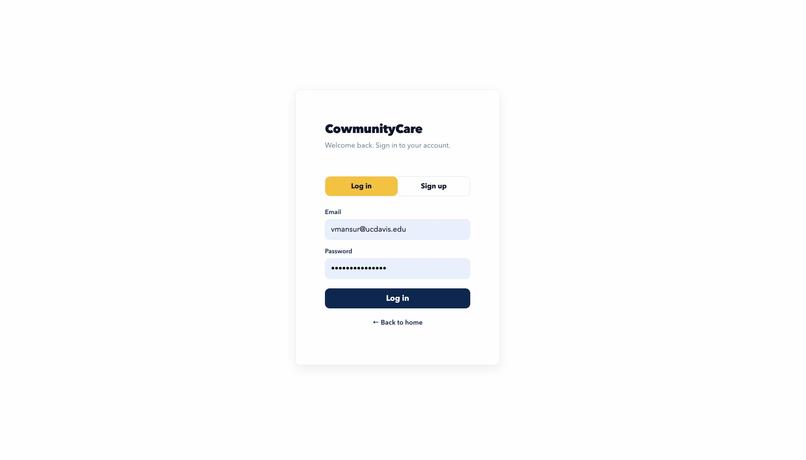
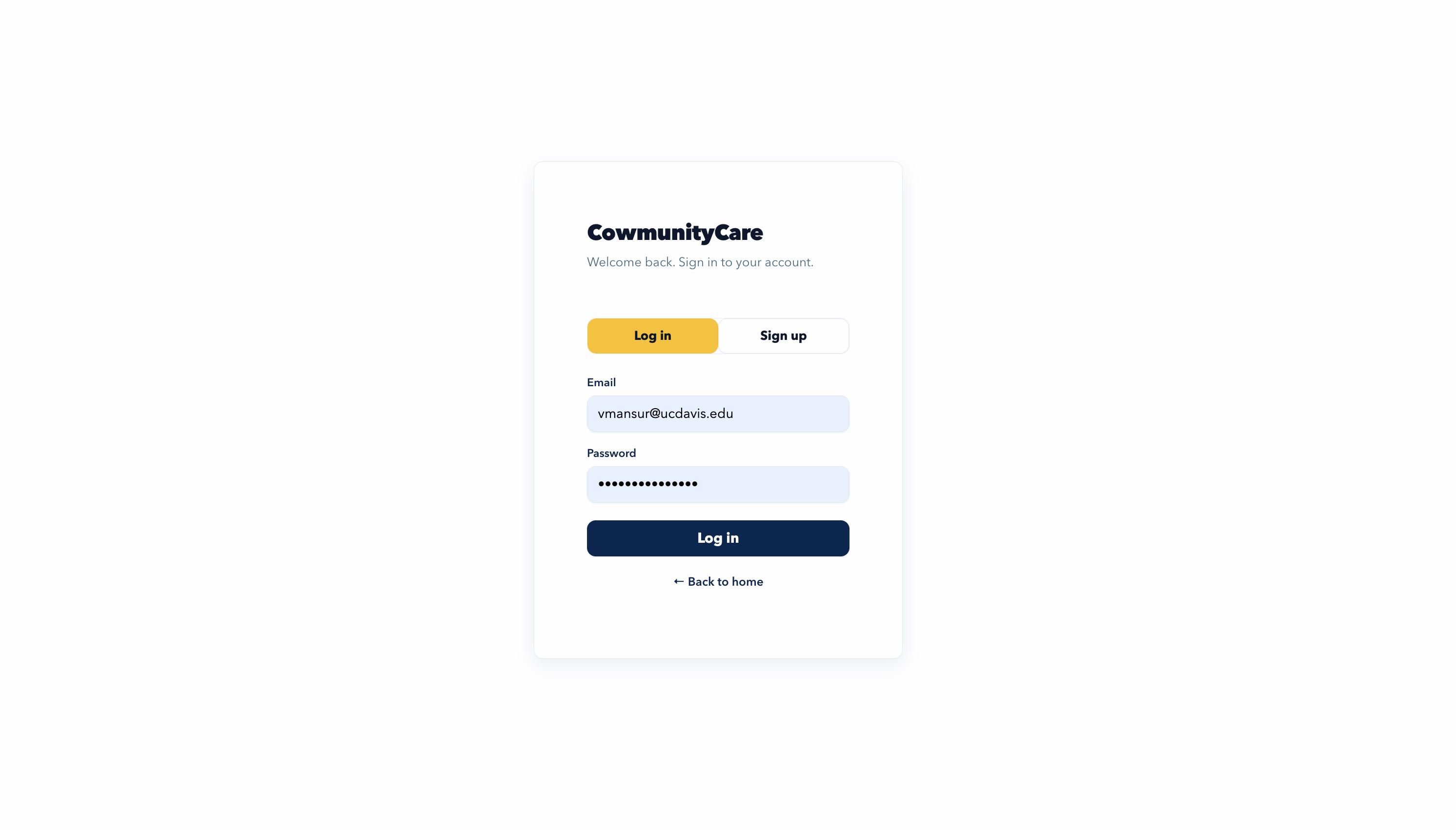
Login
-
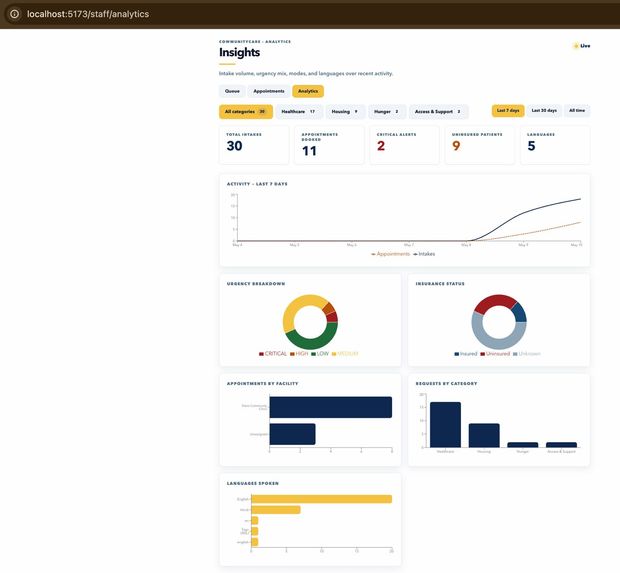
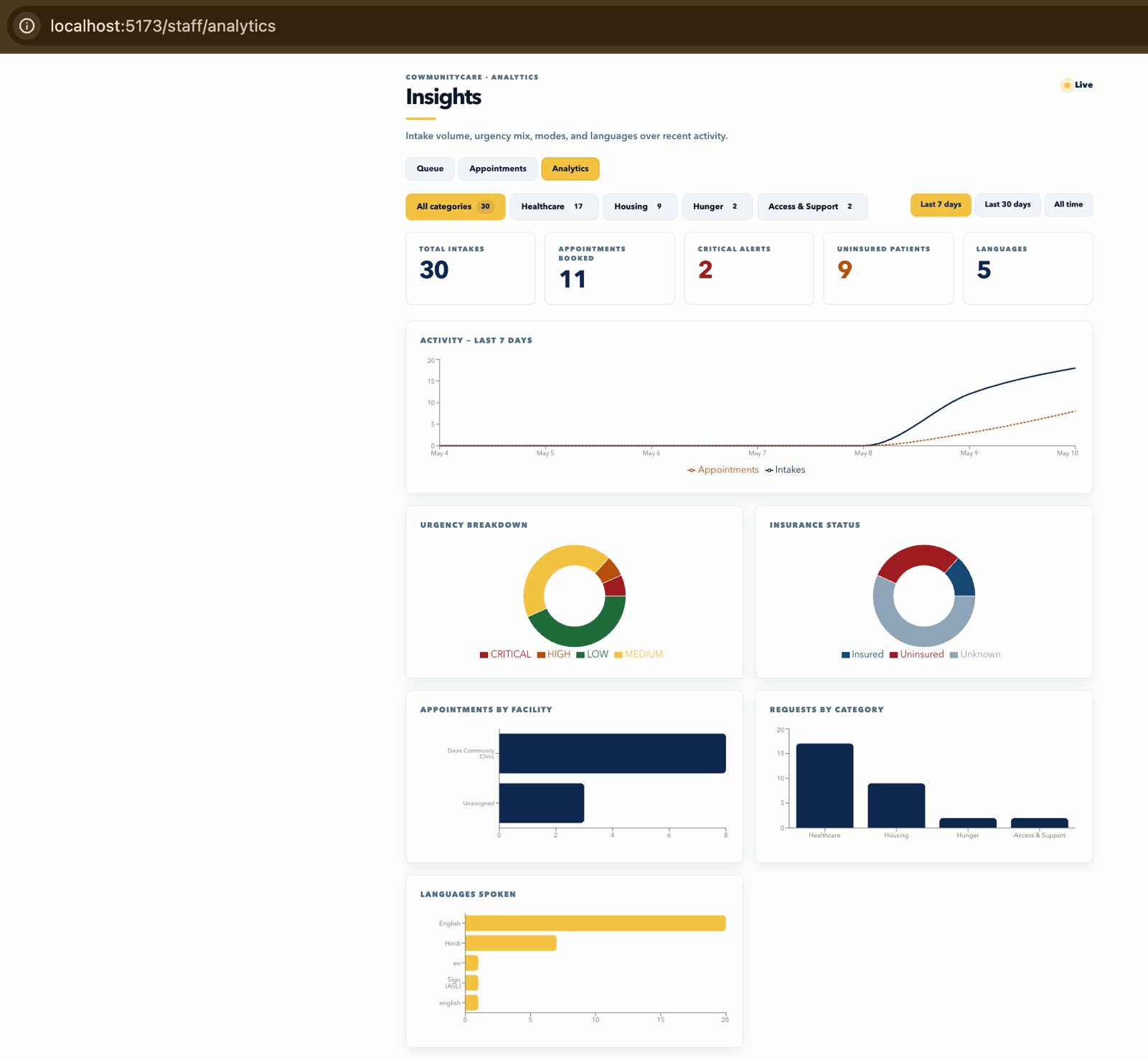
Staff analytics dashboard
-
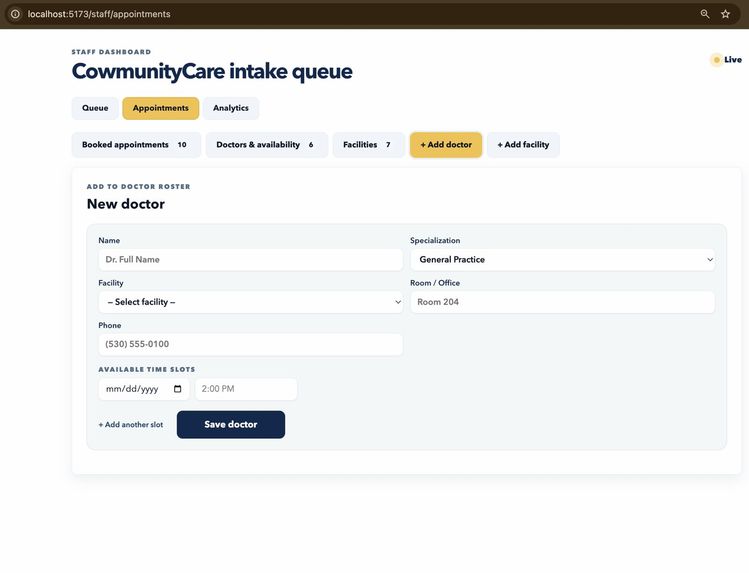
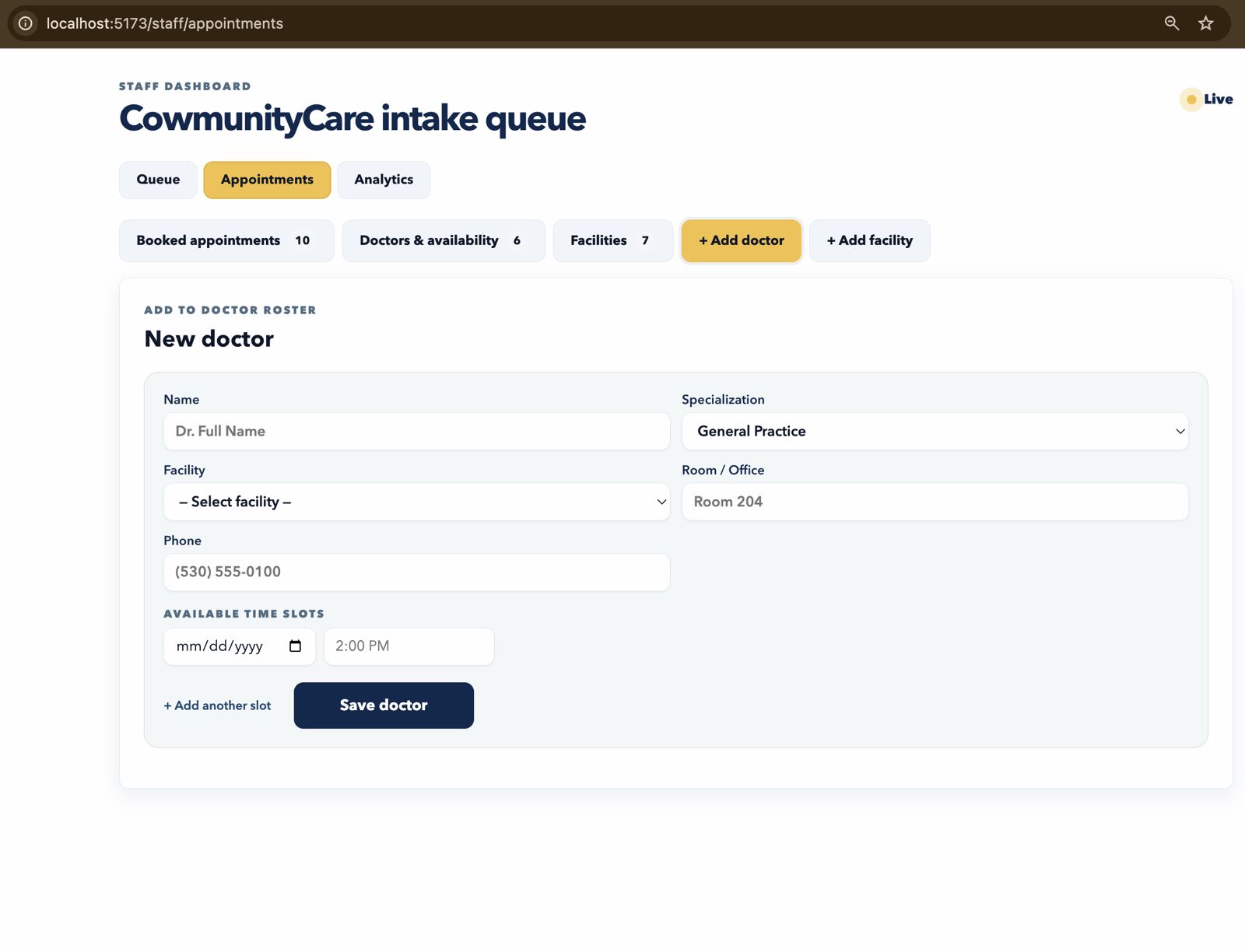
Add doctor functionality
-
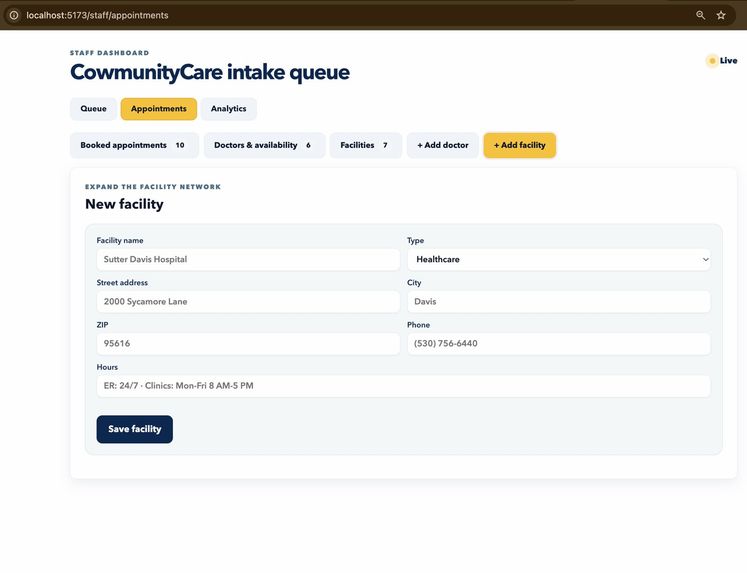
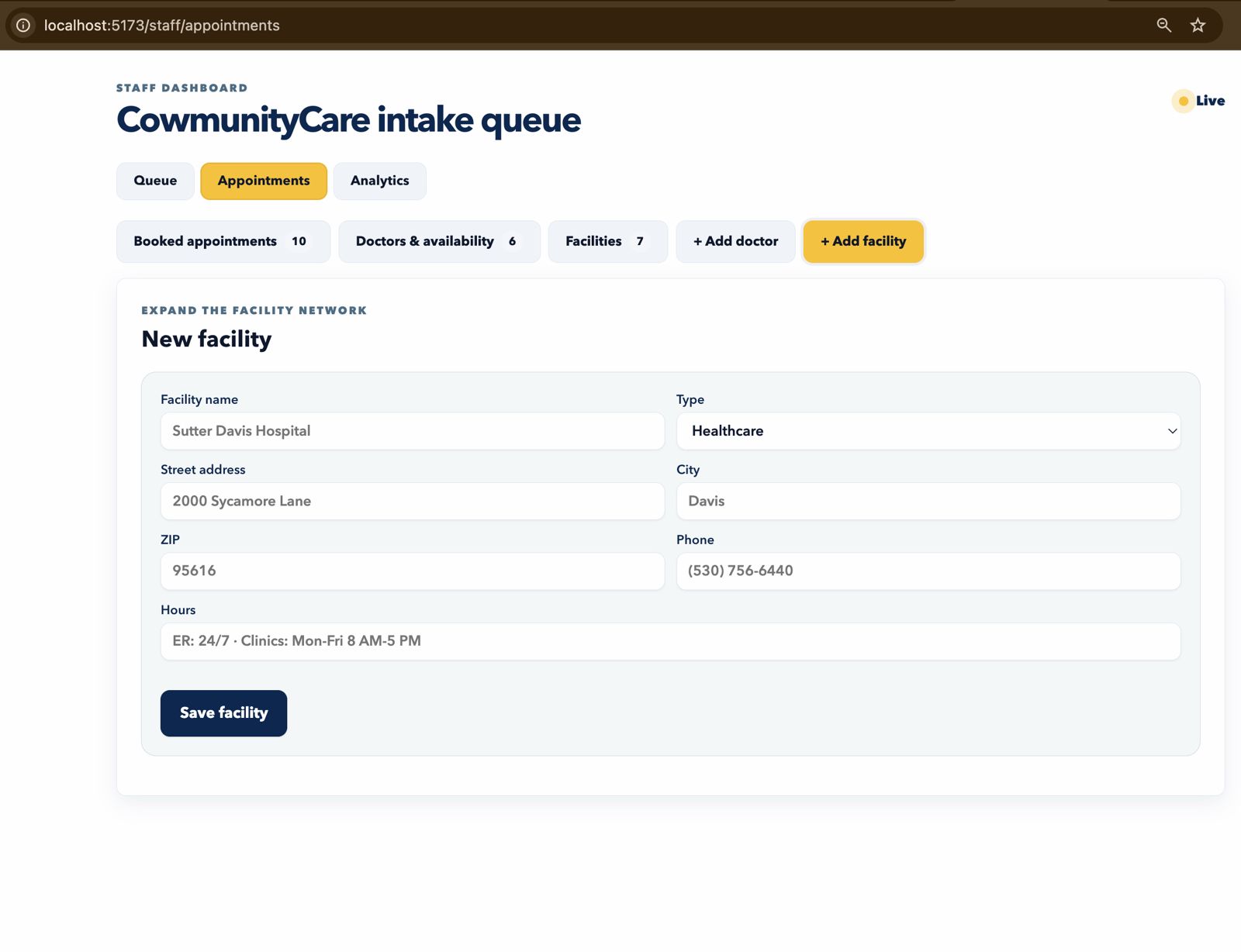
Add facility functionality
-
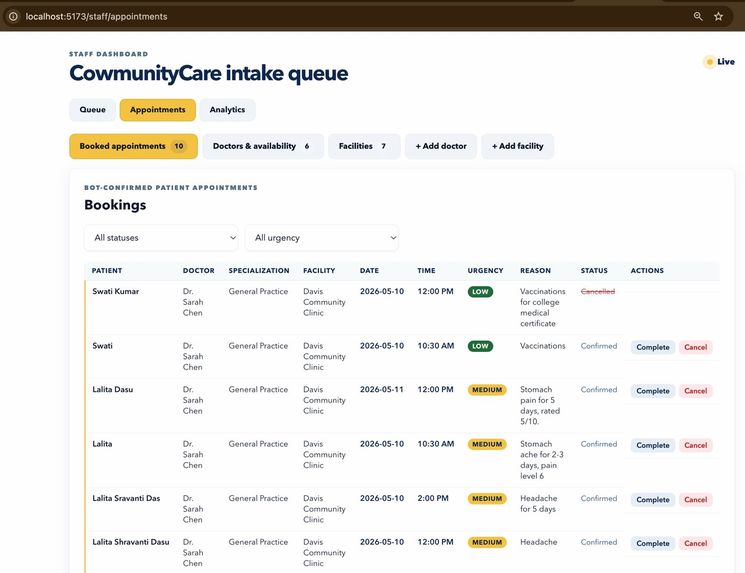
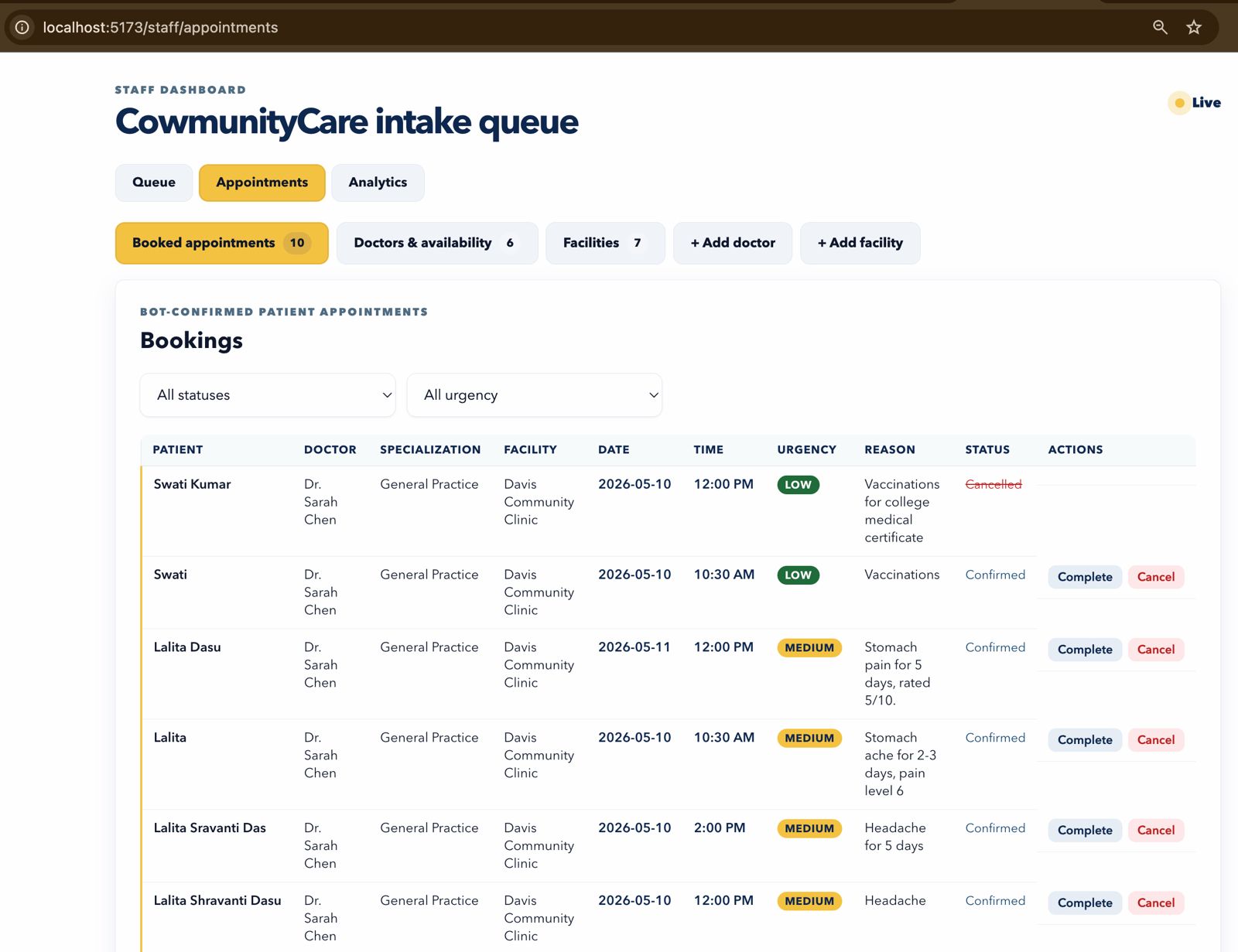
Currently booked appointments
-
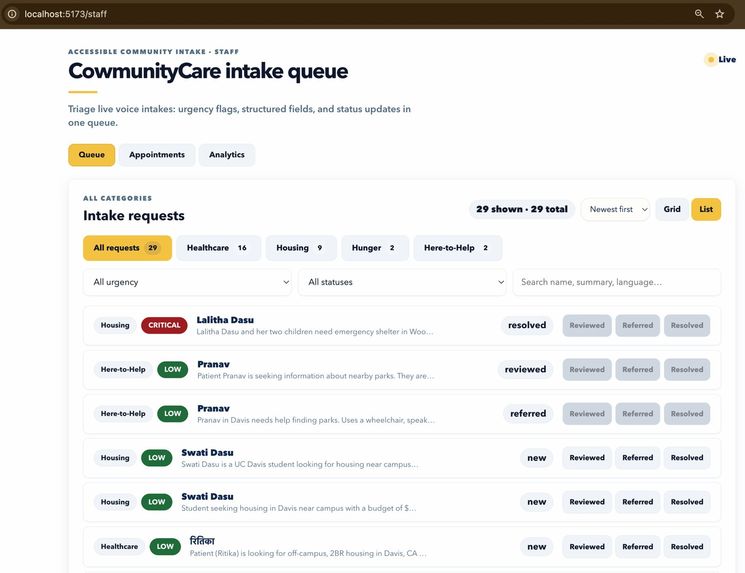
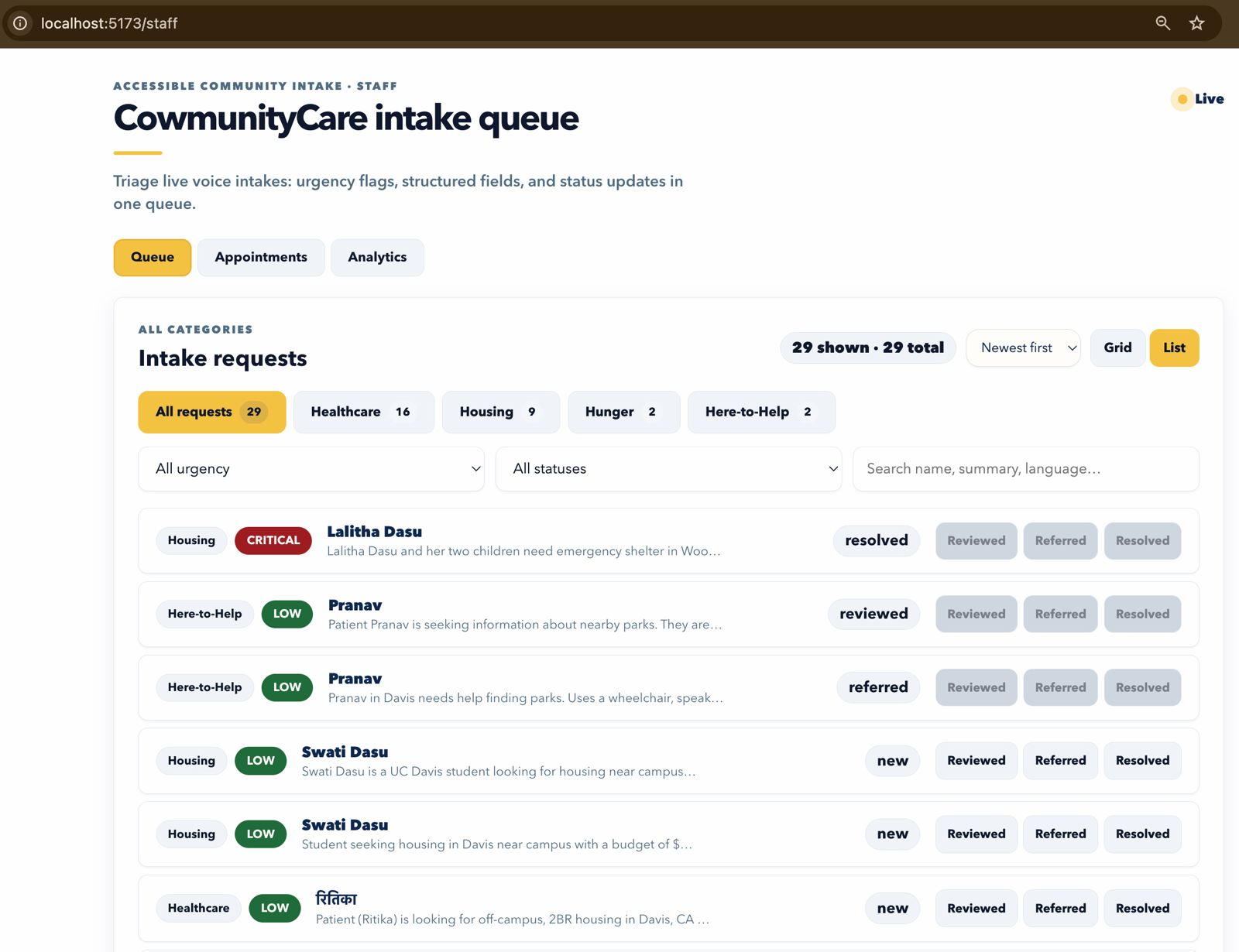
All intake requests
-
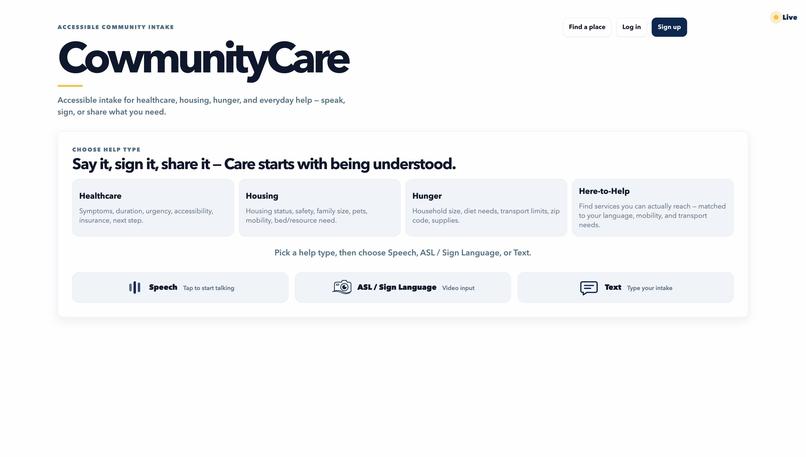
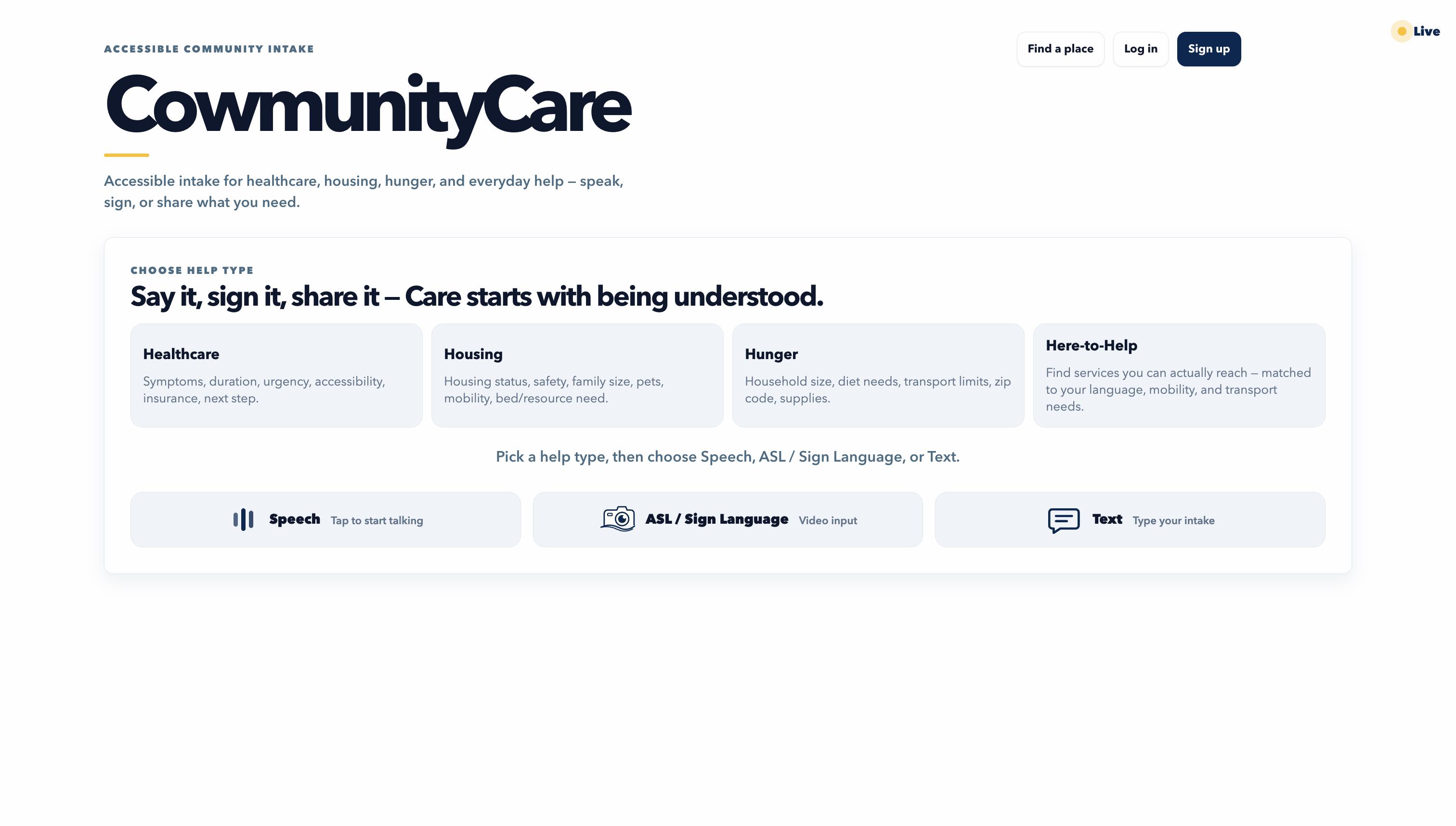
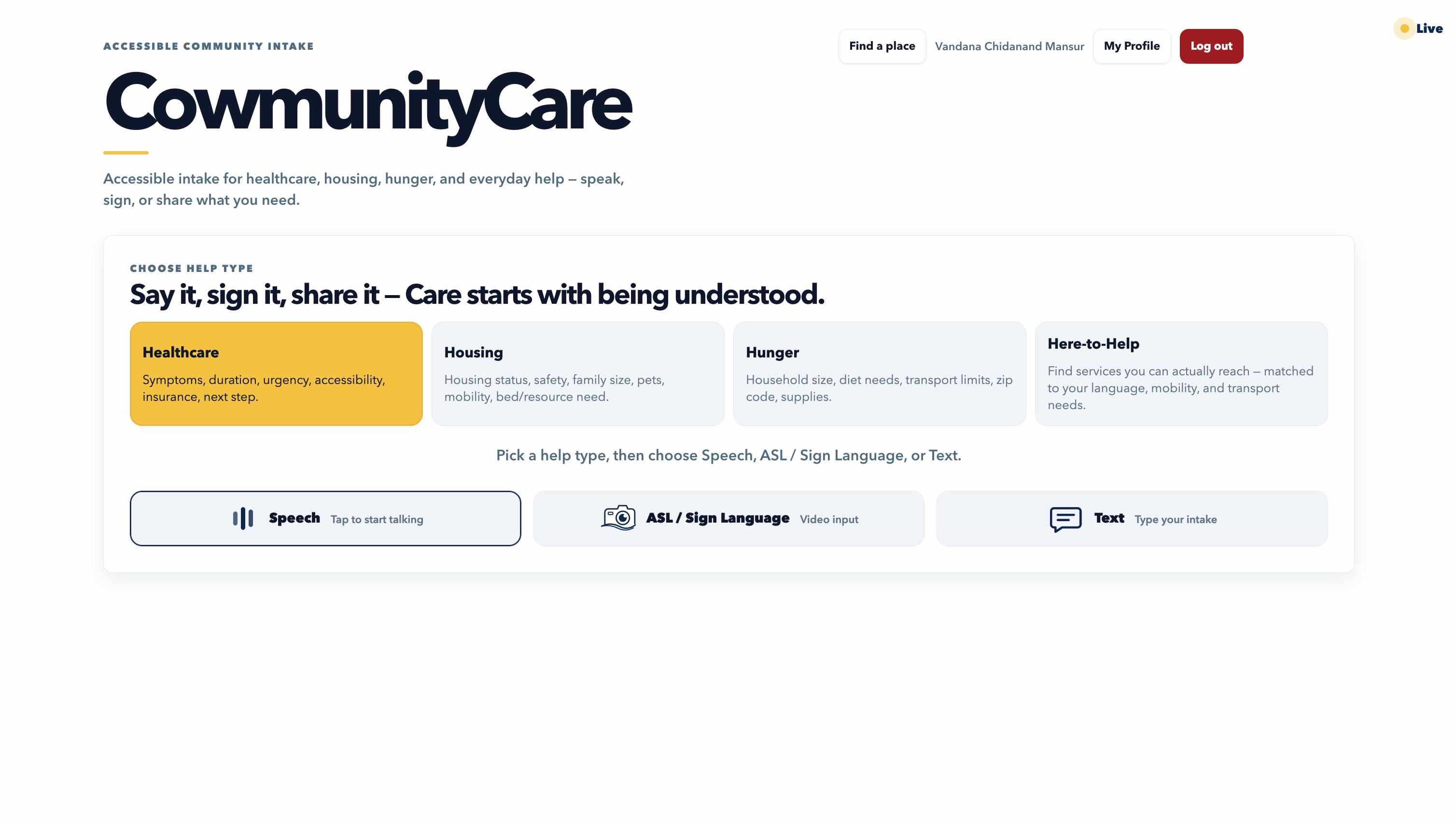
Home page
-
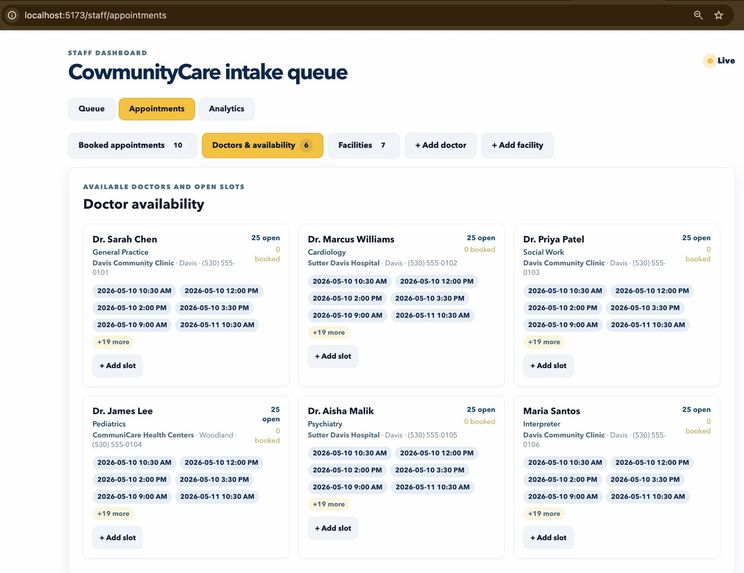
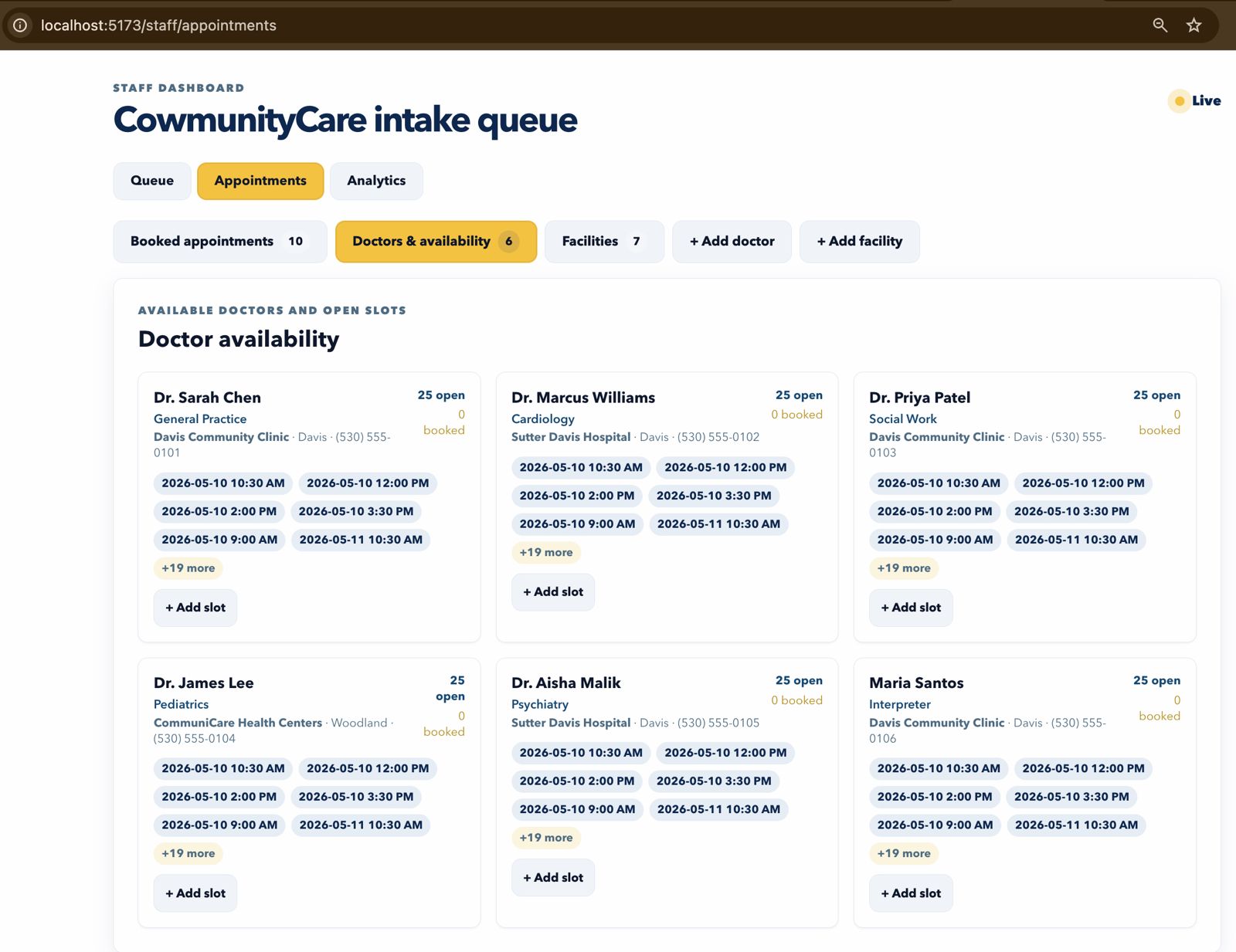
Doctor availability
-
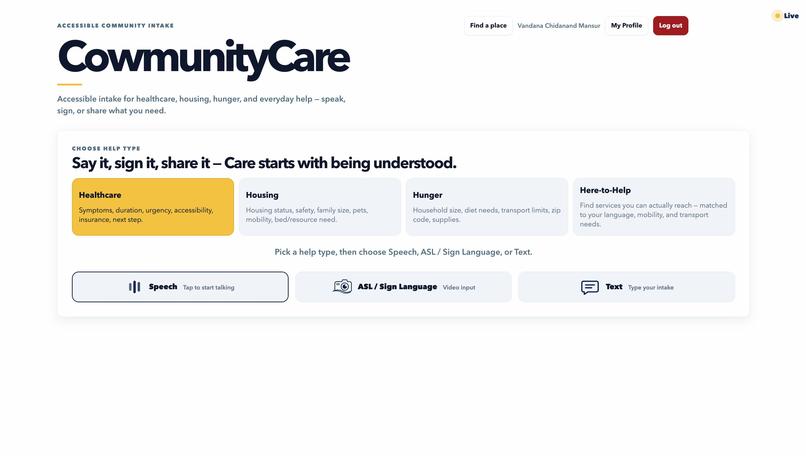
Select healthcare in home page
-
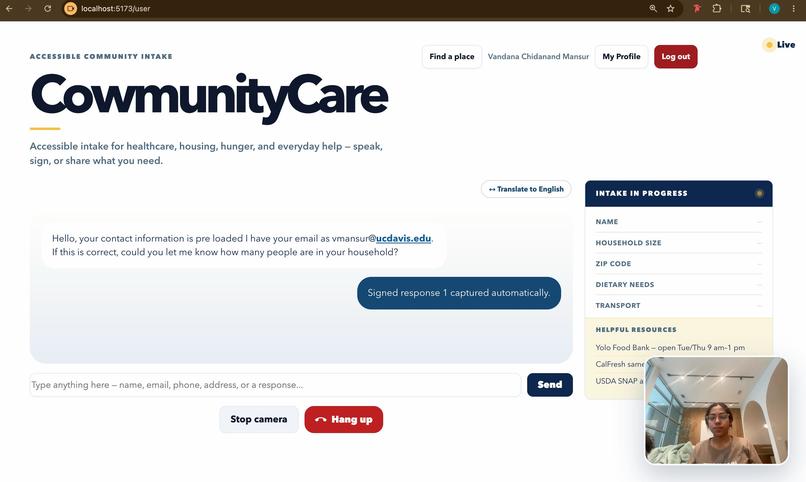
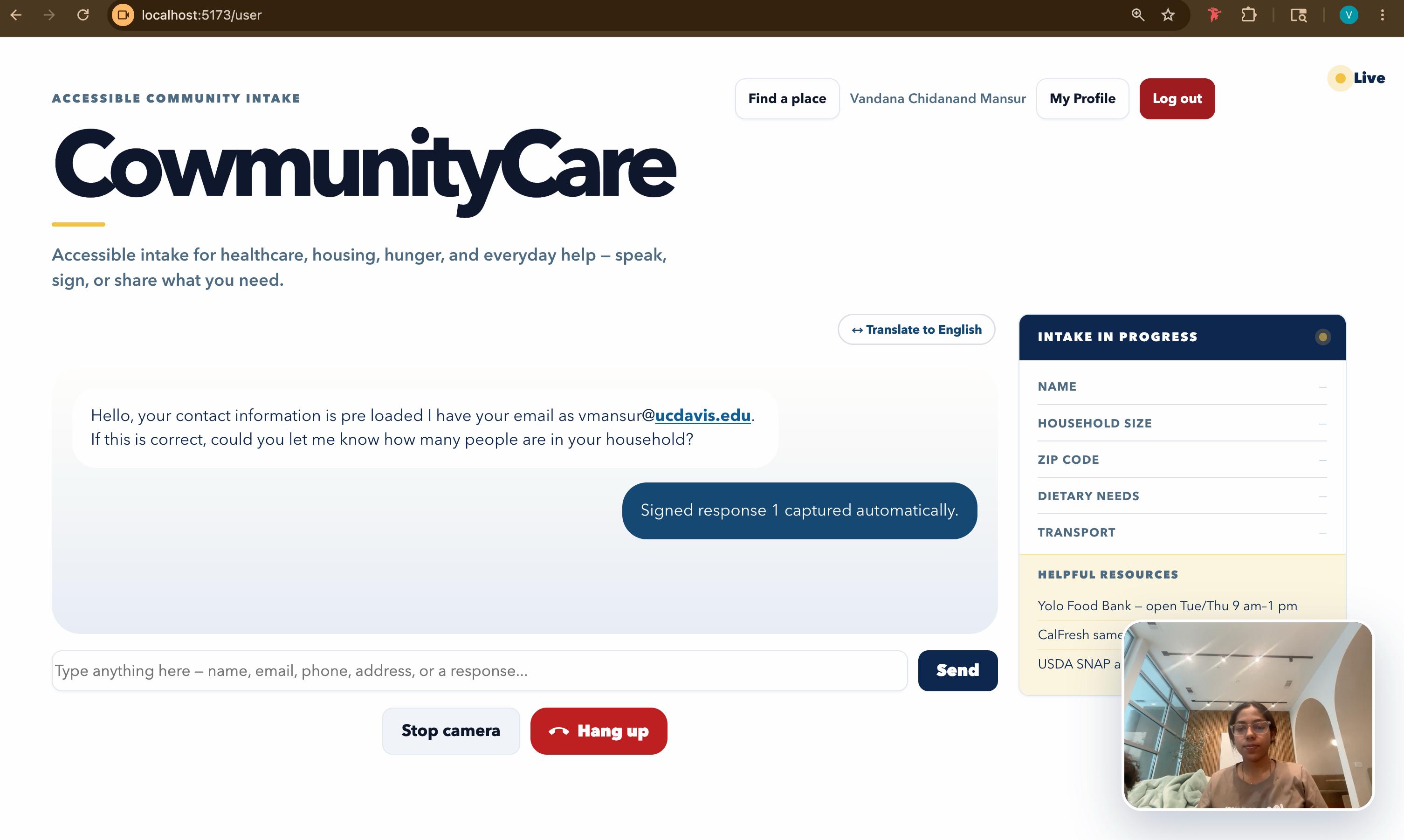
ASL Interface
-
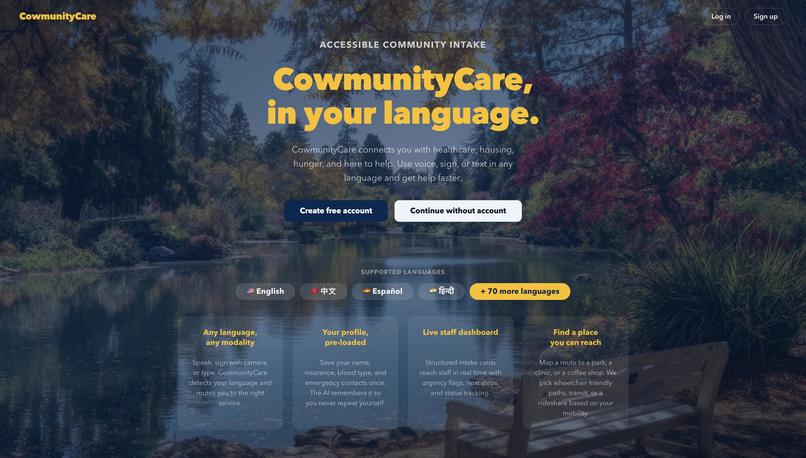
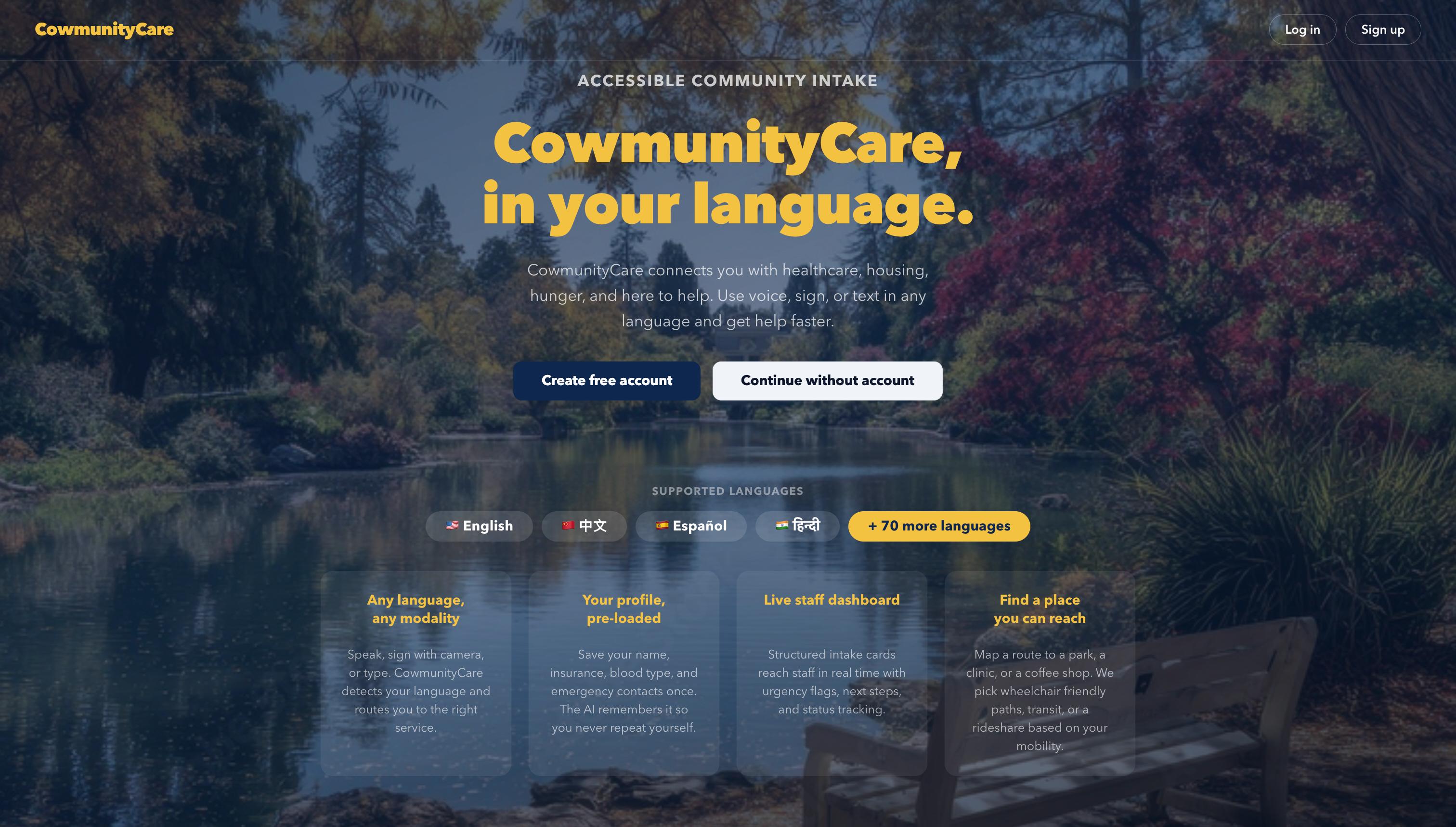
Landing Page
-
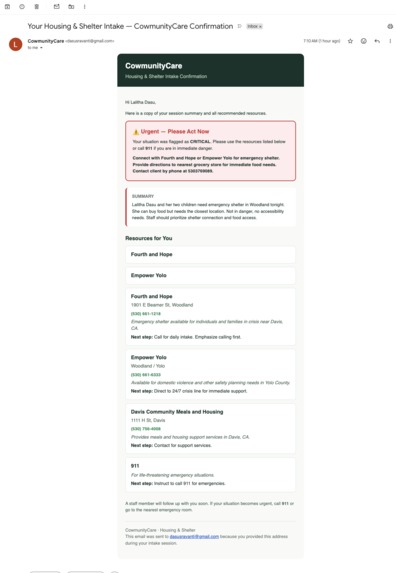
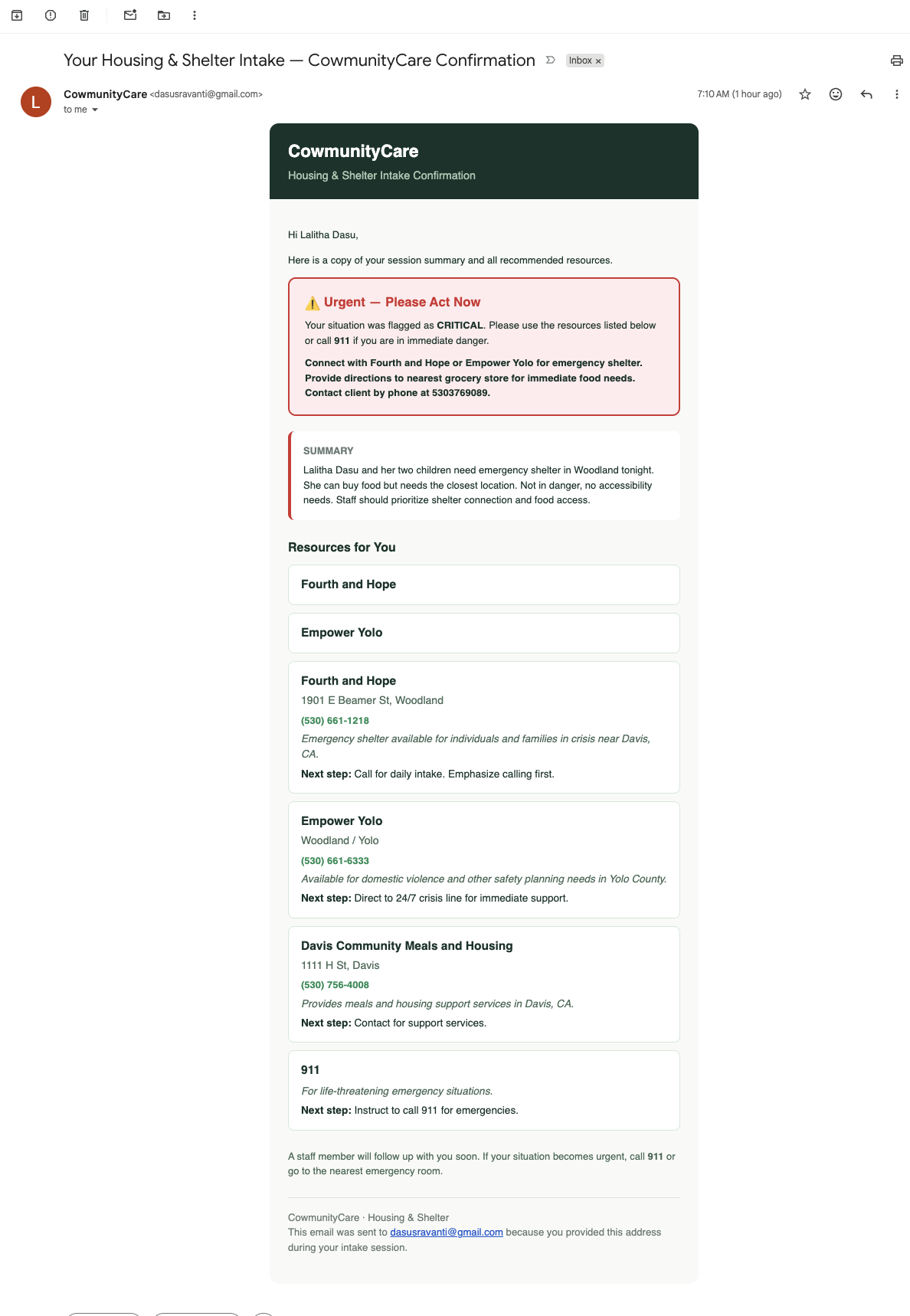
Email summary received at the end of the call
Inspiration
CowmunityCare came from our own collective experiences as new students in Davis.
When we first arrived, we realised that finding help is not always as simple as searching online. If someone needs a clinic, food support, shelter resources, transportation help, or guidance on where to go, the information is often scattered across different websites, flyers, offices, and word-of-mouth networks.
For new students, especially those unfamiliar with Davis, this can feel overwhelming. Some of us had friends who did not know where to go when they needed basic support. Others saw how difficult it can be for people who face language barriers, accessibility barriers, or simply do not know what resources exist.
That inspired us to build CowmunityCare: a compassionate AI-powered intake and navigation system that helps people ask for help in a natural way and connects them to the right support faster.
We wanted to build something that felt local, human, and useful. Not just another chatbot, but a bridge between someone saying “I need help” and a real organisation being able to respond.
What It Does
CowmunityCare helps community members, students, and patients find support through a real-time intake experience.
A user can start an intake session for needs like:
• free clinic support • shelter or housing assistance • food aid • local navigation and resources • appointments and care coordination
The user can speak naturally, type, or interact through accessible input modes. The AI guides the conversation, asks relevant follow-up questions, detects urgency, and helps turn an overwhelming situation into a clear next step.
For staff and volunteers, CowmunityCare creates a live dashboard where intake cards appear in real time. Each card includes structured information, urgency level, resources, and status updates so teams can prioritise who needs help first.
The project is designed around one belief:
Help should be easier to ask for, especially when someone is new, stressed, or unsure where to begin.
How We Built It
We built CowmunityCare as a full-stack real-time web application.
On the frontend, we used React and Vite to create a patient-facing intake flow, a staff dashboard, navigation tools, appointment views, analytics, authentication pages, and a polished UI/UX experience. We focused on making the interface simple because users seeking help should not have to fight the product before they can explain their situation.
On the backend, we used Node.js, *Express, and WebSockets to support real-time communication between the patient side and staff dashboard. Audio and conversation data are streamed live, so the intake process feels more natural than a static form.
We used the Gemini API / Gemini Live API to power the real-time AI conversation. Gemini helps guide the intake, understand user needs, support multilingual and accessible interactions, and trigger tool calls like urgency tagging and resource lookup.
We used MongoDB with Mongoose to store intake cards, user data, appointment information, and dashboard records. This allowed staff to track cases, update statuses, and maintain a persistent history rather than losing information after a single session.
We also built resource-matching and navigation features using local support data, including Davis/community resources, facility information, appointment flows, and BackBoard-related RAG/resource matching.
Challenges We Ran Into
One major challenge was turning a big social problem into a focused hackathon project. “Helping people find resources” sounds simple, but in practice, it involves intake, urgency, accessibility, location, trust, staff workflows, and real-time updates.
Another challenge was real-time voice and WebSocket communication. We had to connect the patient browser, server, Gemini Live session, and staff dashboard so that audio, transcripts, alerts, and intake cards could move smoothly through the system.
We also had to think carefully about how to design for people who may be stressed, new to Davis, unfamiliar with available resources, or uncomfortable filling out long forms. The UI had to be clear, calm, and fast.
The hardest product challenge was making the AI useful without making it feel cold. Since this is a social-good project, we wanted the AI to support human care, not replace it.
Accomplishments That We’re Proud Of
We are proud that CowmunityCare came from real experiences, not just a random hackathon idea.
As new students, we knew the feeling of not always knowing where to go, who to ask, or what resources were available. We turned that confusion into a product that could help future students and community members feel less alone.
We are also proud of building a complete real-time system: a patient intake experience, AI conversation flow, urgency detection, resource lookup, MongoDB persistence, appointment/navigation features, and a live staff dashboard.
Most importantly, we are proud that the project is designed for accessibility and inclusion. We thought about multilingual users, people who communicate differently, people facing urgent needs, and people who may not know how to describe what they need.
What We Learned
We learned that the best technology starts with listening.
Our user research came from real conversations and shared experiences with people who were new to Davis or unfamiliar with local support systems. Those stories helped us understand that the problem was not only “lack of resources.” Often, the resources exist, but people do not know how to reach them at the right moment.
We also learned how powerful AI can be when it is connected to real workflows. Gemini helped us create a more natural intake experience, while MongoDB and the staff dashboard made the information actionable for organisations.
From a technical side, we learned a lot about WebSockets, real-time audio, AI tool calling, structured data generation, resource matching, authentication, and building a full-stack product under time pressure.
What’s Next For CowmunityCare
Next, we want to make CowmunityCare more deeply connected to the Davis and UC Davis community.
We would expand the local resource database, improve sign-language and visual communication support, add more languages, and make the resource matching more personalised based on location, urgency, and user needs.
We also want to partner with student organisations, free clinics, shelters, food banks, and campus support centres so CowmunityCare can route users to verified, up-to-date services.
Long term, CowmunityCare could become a real intake and navigation layer for community care: helping students, patients, and residents find support before they fall through the cracks.
Built With
- anthropic
- api
- audio
- audioworklet
- backboard.io
- base64
- dashboard
- express.js
- gemini
- html/css
- javascript
- mongodb
- mongoose
- node.js
- pcm
- react
- real-time
- rest
- shadon
- staff
- streaming
- vite
- web
- websockets


Log in or sign up for Devpost to join the conversation.