-
-
Our really cool logo
-
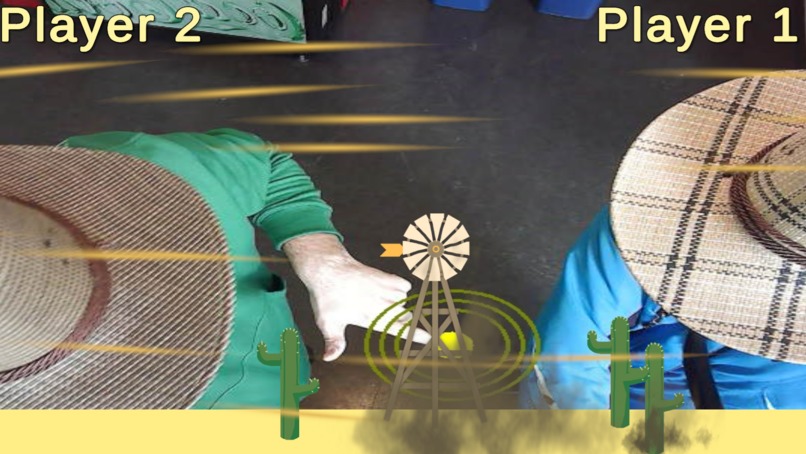
Demonstration of our top-down mode for the Beenox challenge
Inspiration
Inspired by the suspenseful standoffs in old western films and some video games.
What it does
Using computer vision/image processing, two players stand across from each other and, when given the signal on screen, they quickly fire with a finger gun. The outlaw with the fastest hand shoots the other and wins.
How we built it
First we had to train a PyTorch motion tracking model. Then we took this model, and interacted with it in OpenCV and Unity so it detects the quickest draw of a duel.
Challenges we ran into
It was difficult to find a good, and high quality dataset to train our PyTorch model with. It was also challenging to get Unity to work with and cooperate with the model and OpenCV. The socket system was sometimes difficult to work with when attempting to relay data back and forth between Python and Unity.
Accomplishments that we're proud of
We created a working dueling game like we set out to do, using a motion tracking framework, opencv and Unity, delivering a working and playable product.
What we learned
Other than patience, we learned how to connect a Python and a Unity program through a locally hosted server/socket.
What's next for Cowboy College
What's next for Cowboy College is Cowboy University. This game could be optimized and improved for better motion tracking and performance. We could also add new themes, features and game modes.


Log in or sign up for Devpost to join the conversation.