-
-
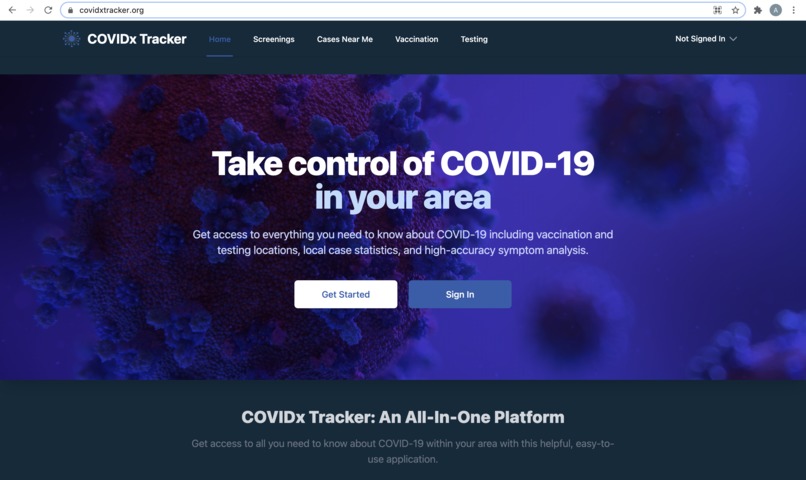
Homepage
-
-
-
-
-
-
-

Inspiration
Throughout the COVID-19 pandemic, people around the world have been struggling to understand the exact things to do if they begin experiencing symptoms of COVID-19, especially given the variety of resources on the internet providing conflict information. Specifically, schools are struggling to contain COVID-19, leading to an increased amount of students getting the virus. For these reasons, I developed COVIDx Tracker (link here), a tool that helps users understand their next steps given their current symptoms. This web app has a variety of applications, but in the educational setting, it can help students determine whether or not they should attend school given their symptoms, as well as help them learn more about COVID-19 within their area, and find nearby vaccination and testing locations.
What it does
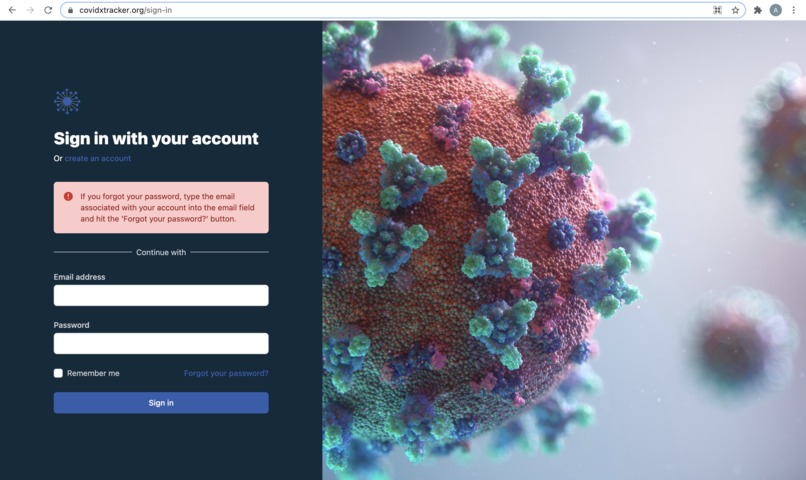
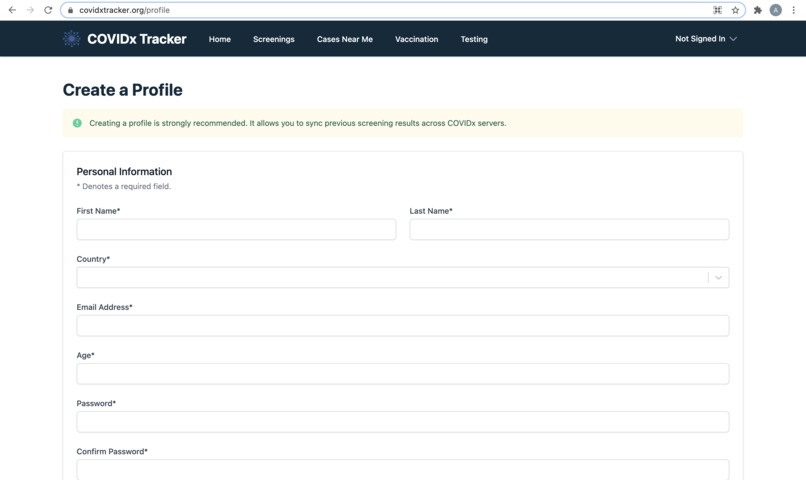
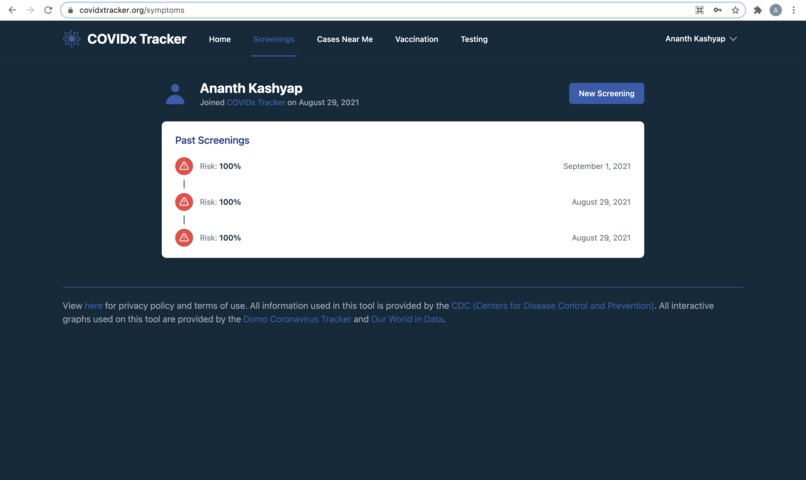
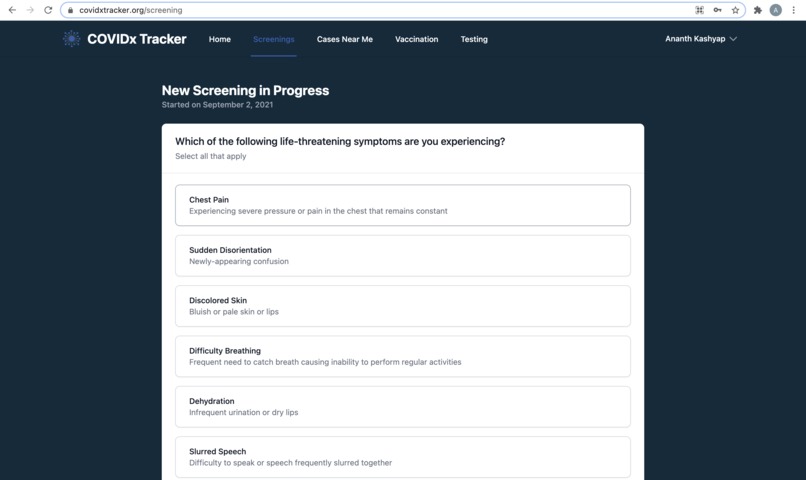
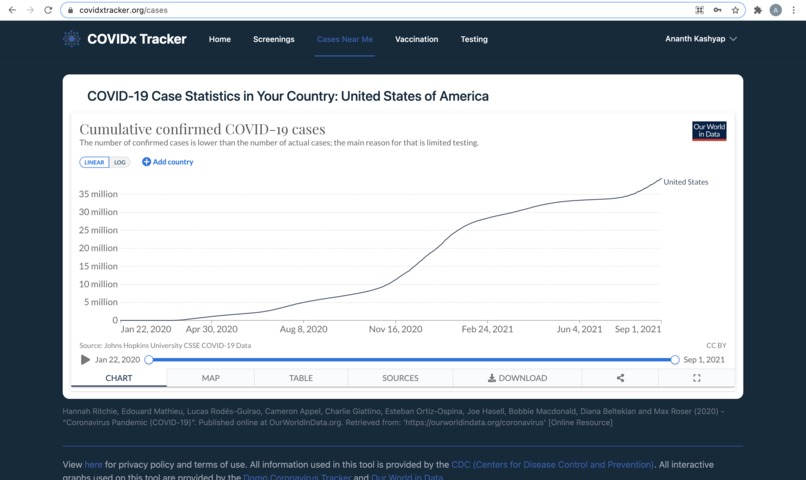
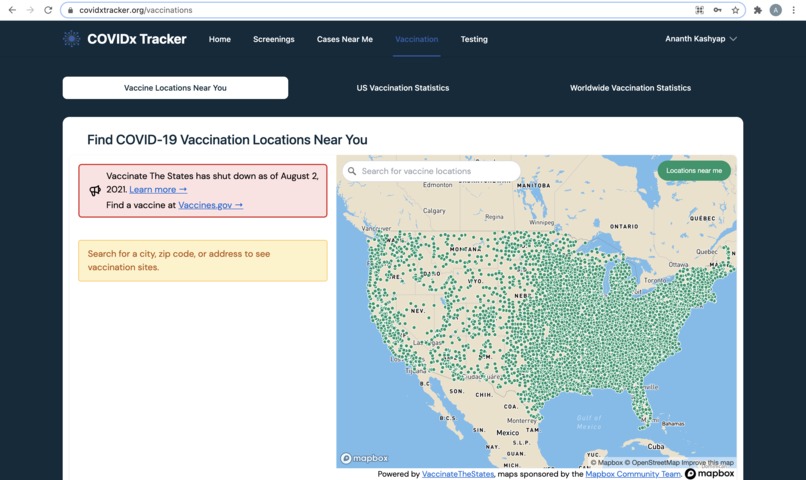
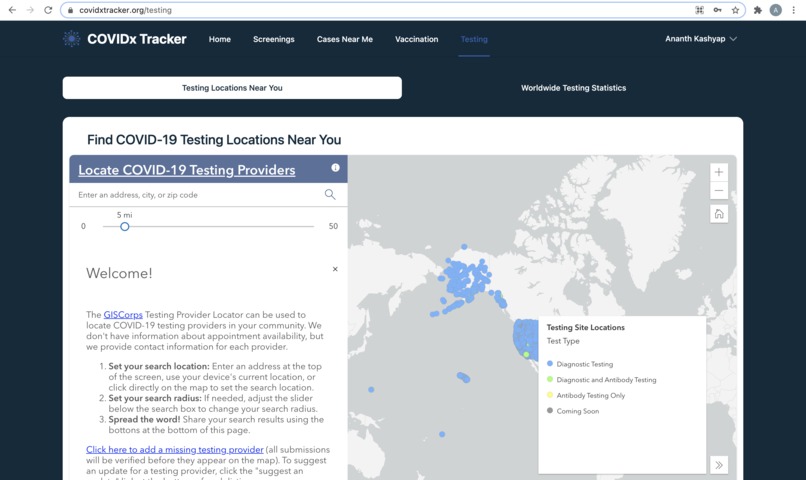
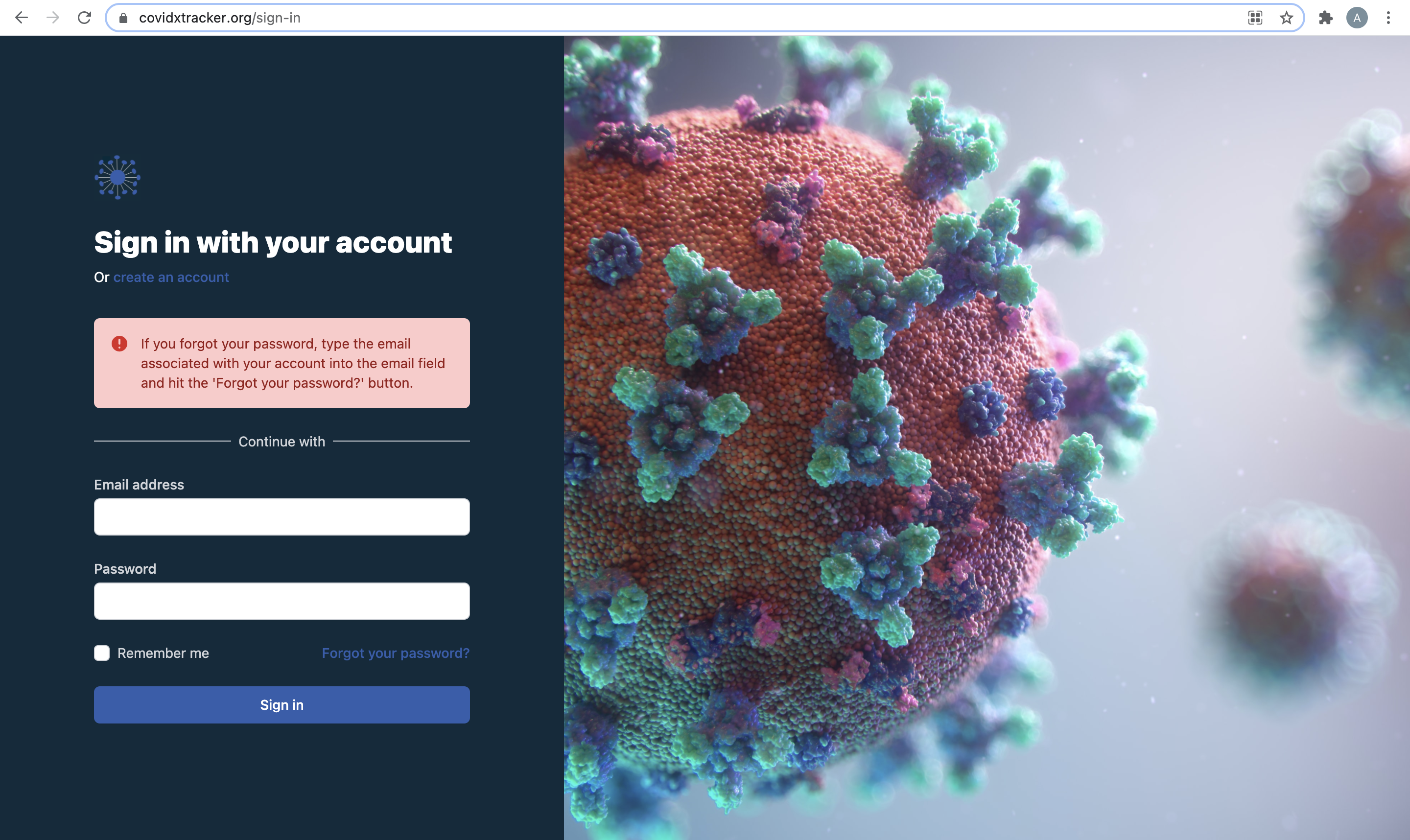
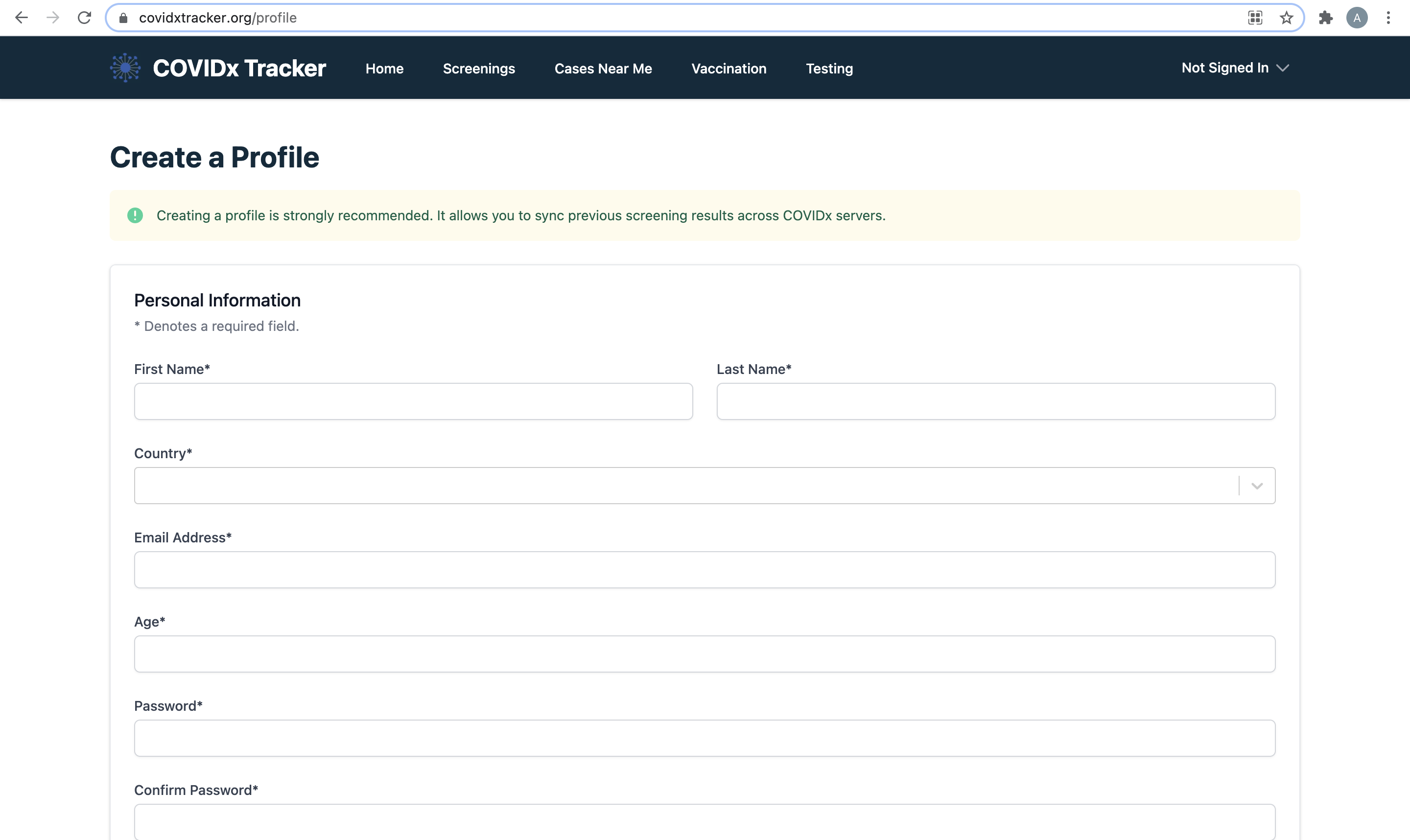
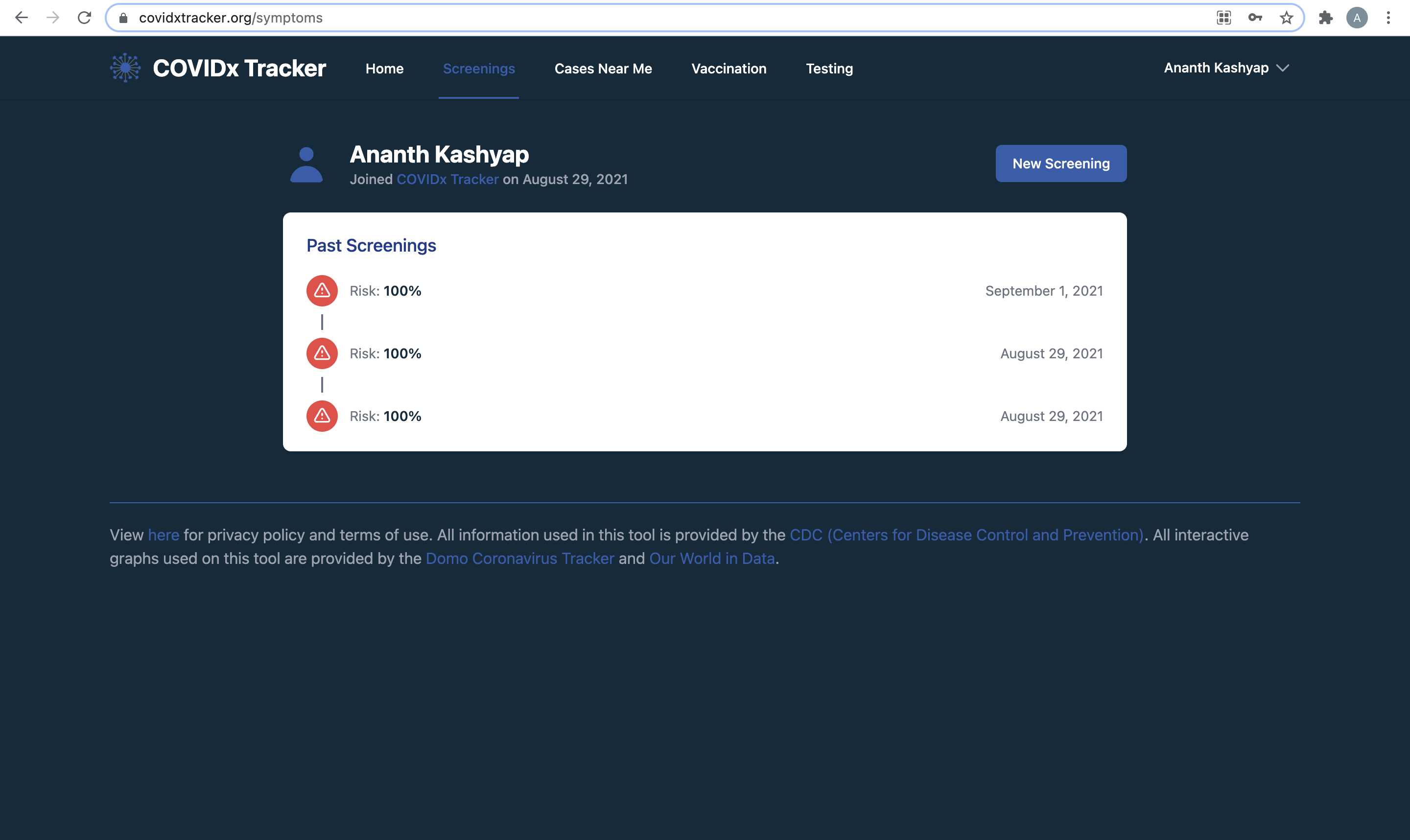
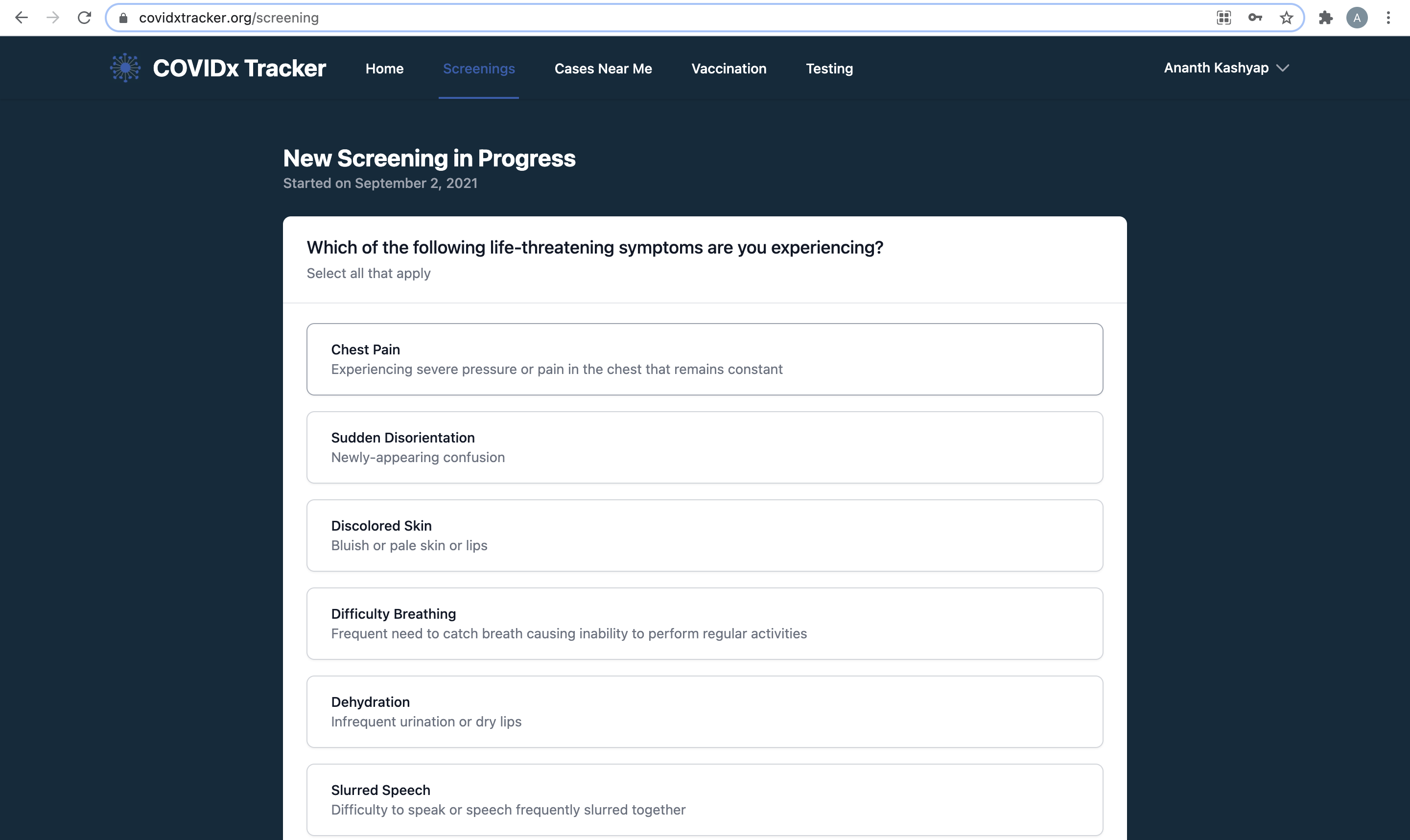
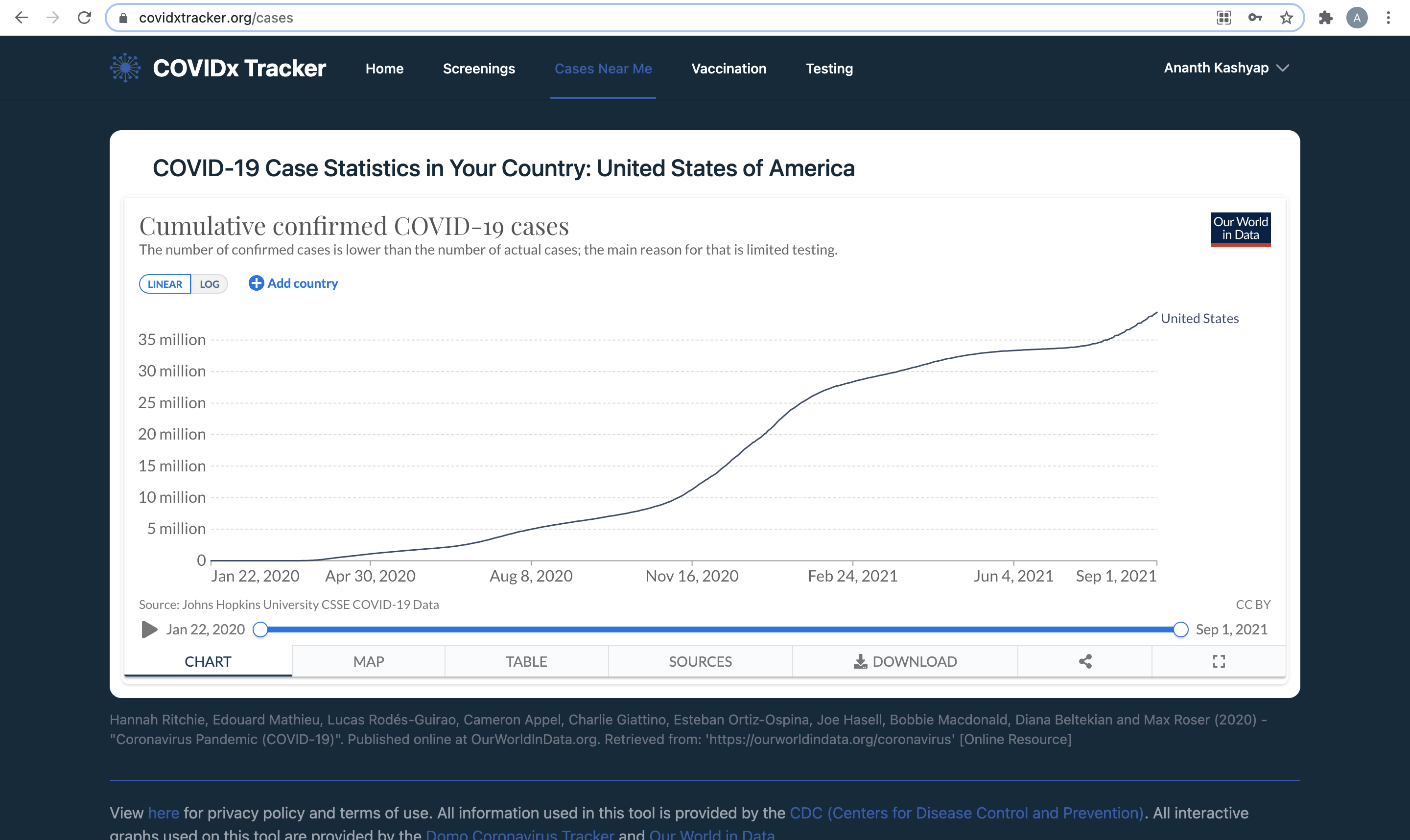
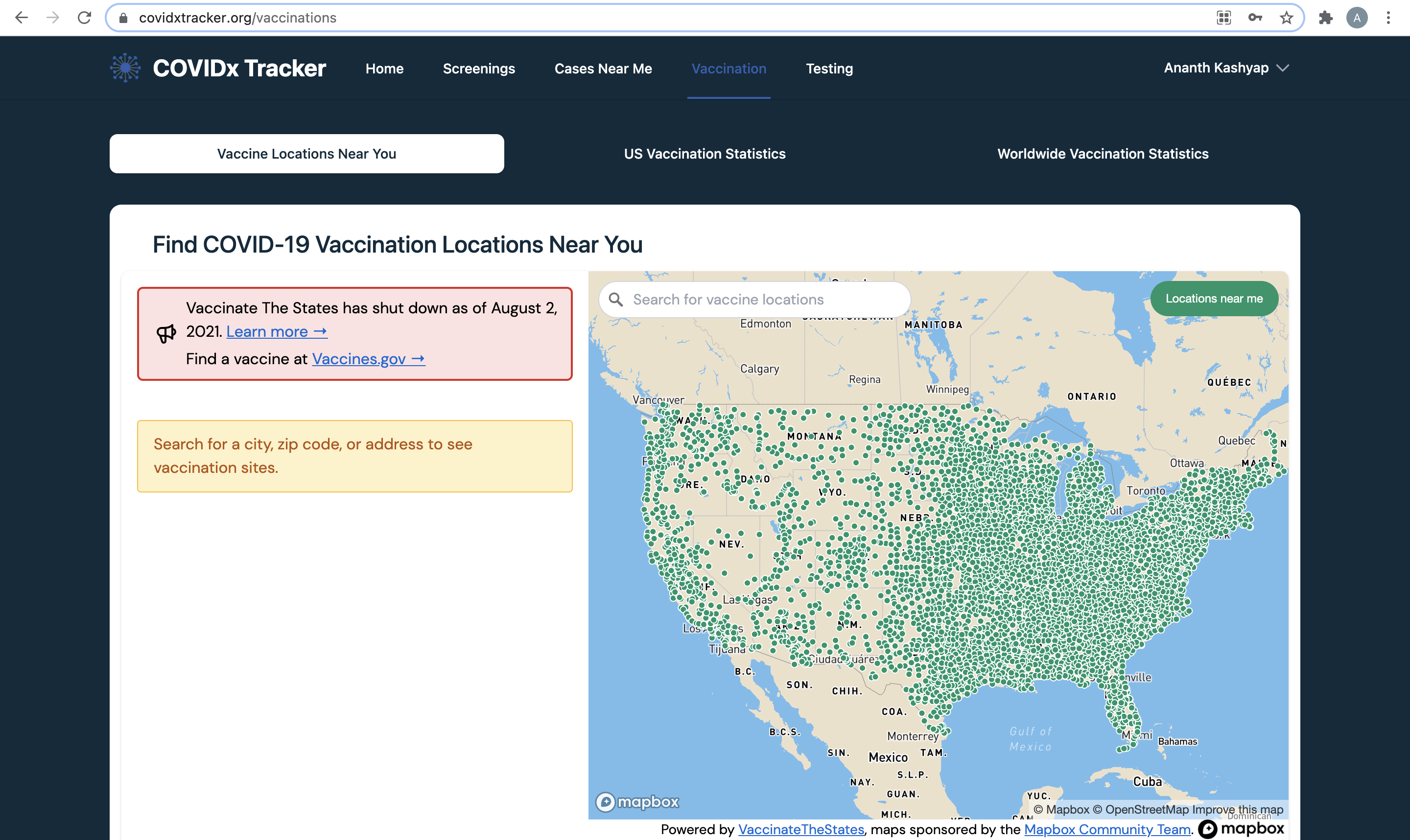
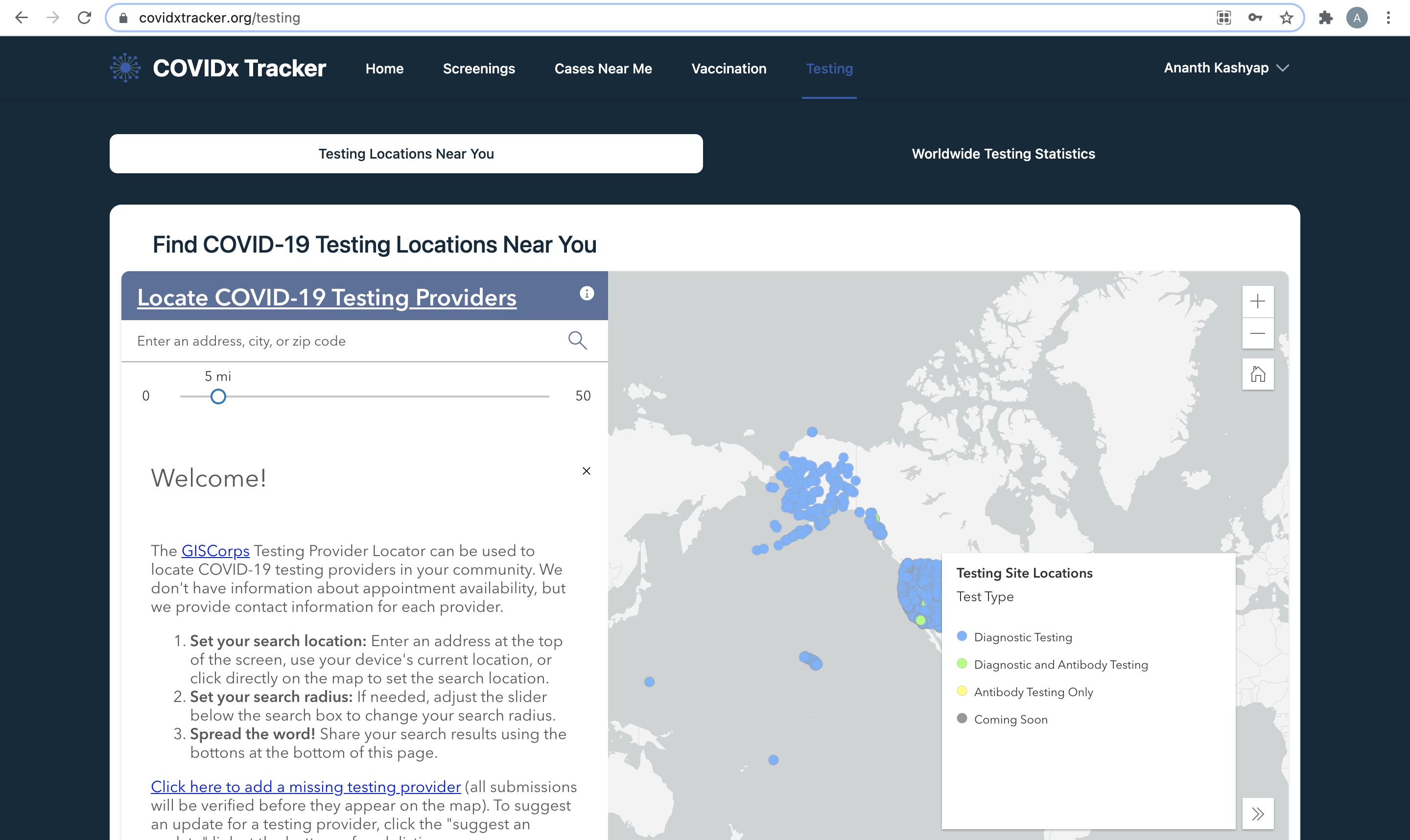
COVIDx Tracker (view here) gives users access to everything they need to know about COVID-19, all accessible through a simple dashboard and appealing user interface. For starters, users can log into their account, providing an email and password (to be able to access their account), their current age (to display accurate screening advice), and the country that they live in (to provide national case, vaccination, and testing data, as well as local testing and vaccination locations). Additional, a full in-depth privacy policy is available at the bottom of each page to inform users of COVIDx Tracker's policies with user data. Once their profile is created, if users are feeling symptoms of COVID-19 and are unsure of what to do next, they can access a high-accuracy screening algorithm to help determine their next steps regarding testing, precautions (such as vaccination and testing), as well as their risk of suffering from severe symptoms of COVID-19 due to pre-existing conditions. A core feature of COVIDx Tracker is that once they complete this screening, the screening results and date are stored in COVIDx Tracker's database and they will be able to access these past results through the screening portal, in order to view advice at a later date to help coordinate events such as vaccination dates, testing dates, and self-isolation timing. Additionally, COVIDx Tracker uses data to inform users of local, national, and international testing, vaccination, and case statistics based off of their current location, as well as nearby vaccination and testing locations.
How I built it
To develop the front-end of COVIDx Tracker, I utilized React JS to manage the user interface, and TailwindCSS for styling. For the back-end of this application, I utilized Node JS, and Firebase (powered by Google Cloud) as a database. I also deployed using Vercel.
Challenges I ran into
While coding COVIDx Tracker, I faced several difficulties, mainly with integrating past screening data and the Firestore database. When a user completed a screening, I had to translate the data and results into a specific collection of data in Firestore such that past screenings could be easily identified by their starting and ending times (as well as by the severity of the symptoms that the user was experiencing) and could be viewed at a later date. Another difficulty that I faced while programming my app revolved around the algorithm that I used to create screening results. For COVIDx Tracker, I implemented a high accuracy, case analytic model (using information and data from the CDC) that was able to improve result predictions by over 50% from other apps. This process took very long and included tedious casework, but the overall outcome was impressive as the results improved by almost 50%.
Accomplishments that I'm proud of
I am proud that I was able to get this full-fledge app created within the time frame of the hackathon, as at times I believed that I would not be able to finish. I am also proud that I created a UI for the app that, in my opinion, looks very professional and is appealing to the user.
What I learned
Throughout my time creating this project, I greatly improved my React JS skills. For example, before starting this project, I was extremely inefficient in fetching data from Firebase and passing it to components. However, throughout creating the project, I learned of more efficient ways to do this, even coming across custom hooks such as react-firebase-hooks that help accomplish this.
What's next for COVIDx Tracker
I were to create a new, more advanced, 2.0 version of this app, I would likely try to work with local and state health organizations to implement a contact tracing map and algorithm, so that users will be informed if they were possibly exposed to COVID-19 without their knowledge, and so that others can prevent themselves from being exposed to COVID-19 by avoiding known people that have been infected.
Built With
- firebase
- google-cloud
- node.js
- react.js
- tailwindcss
- vercel

Log in or sign up for Devpost to join the conversation.