-
-
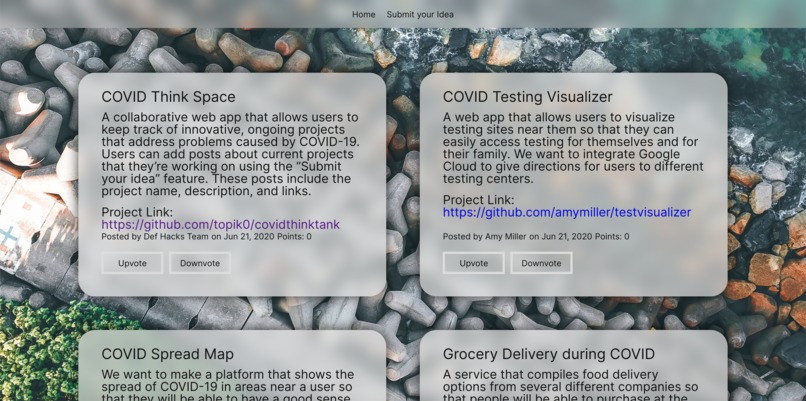
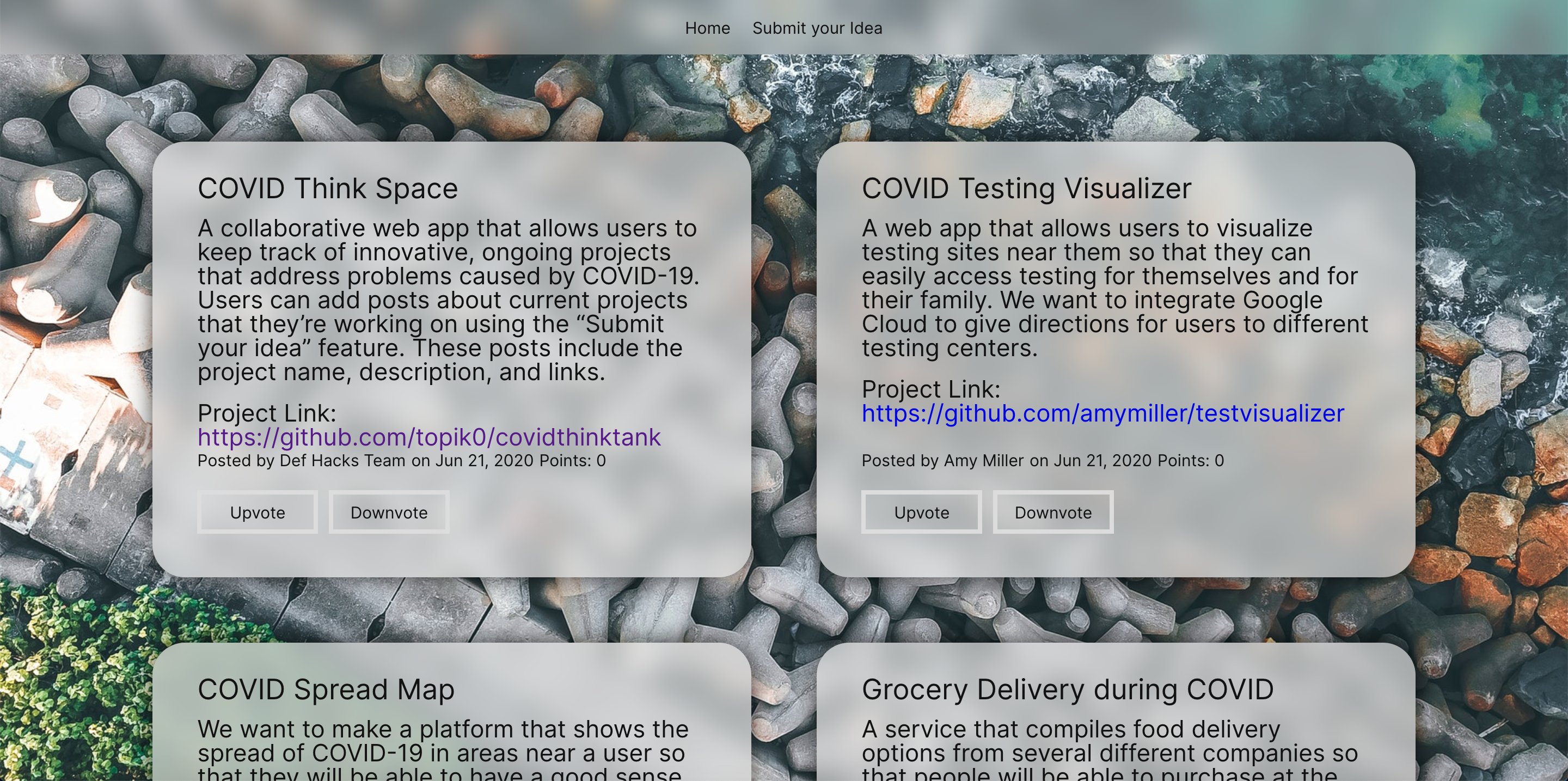
Home page with project posts from other users
-
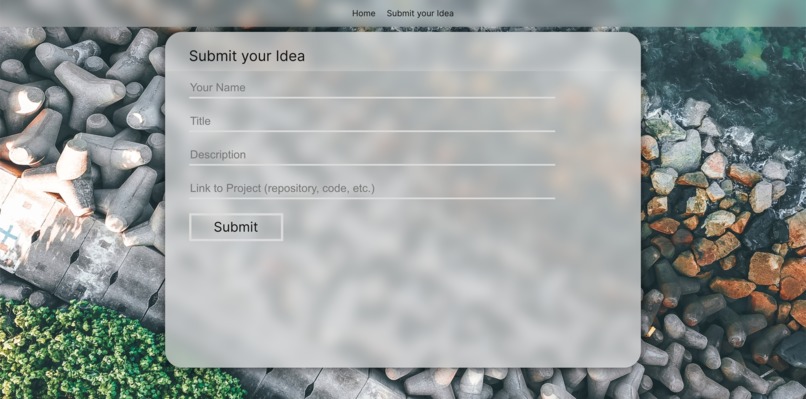
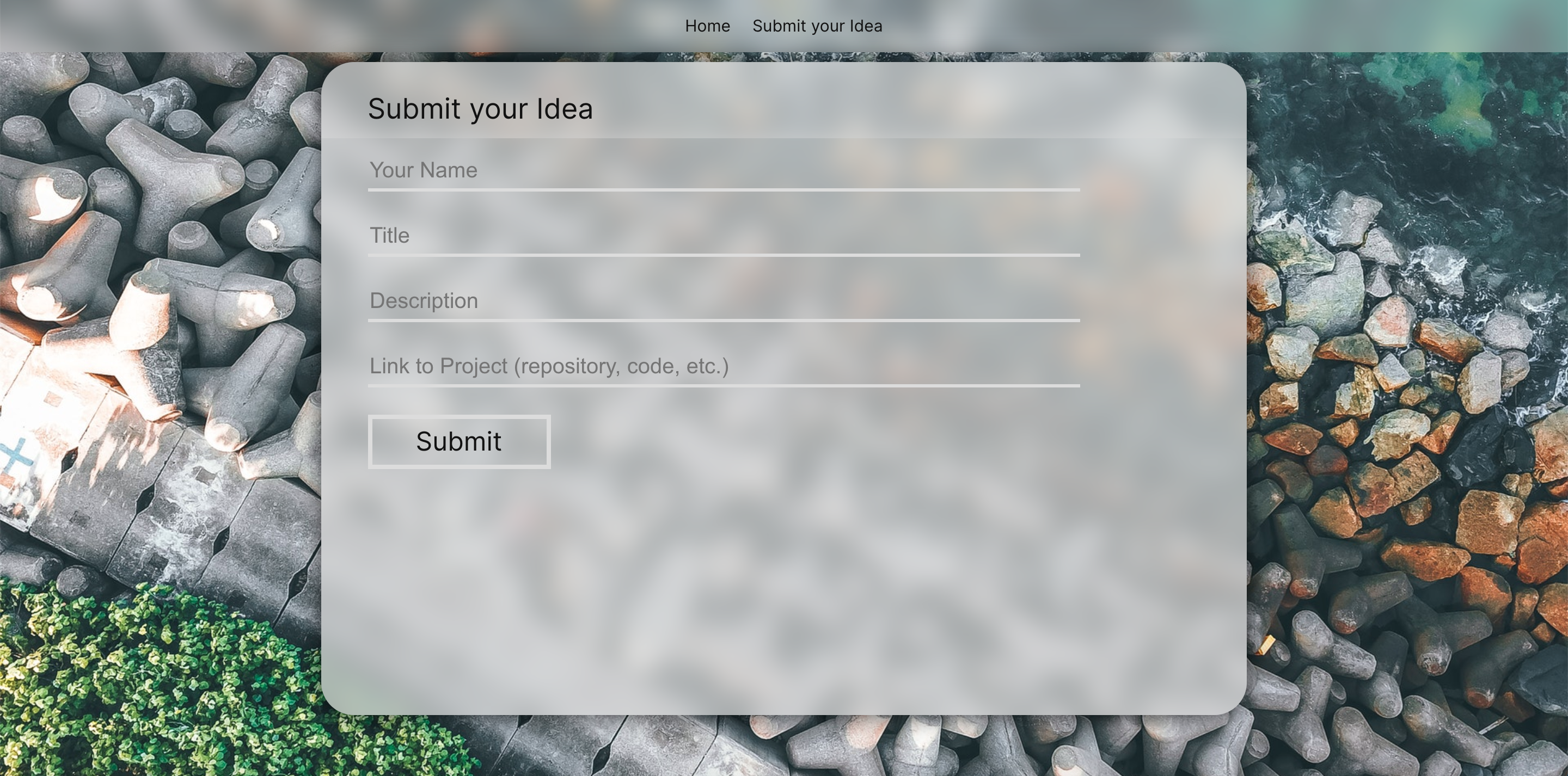
Submit your idea page, form for project submissions on the site
-
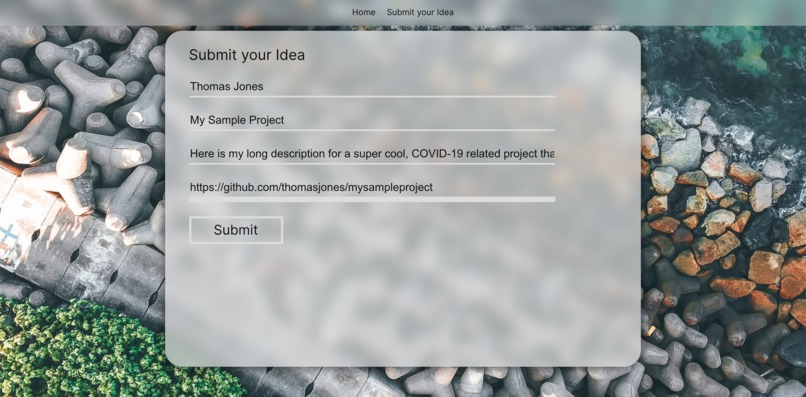
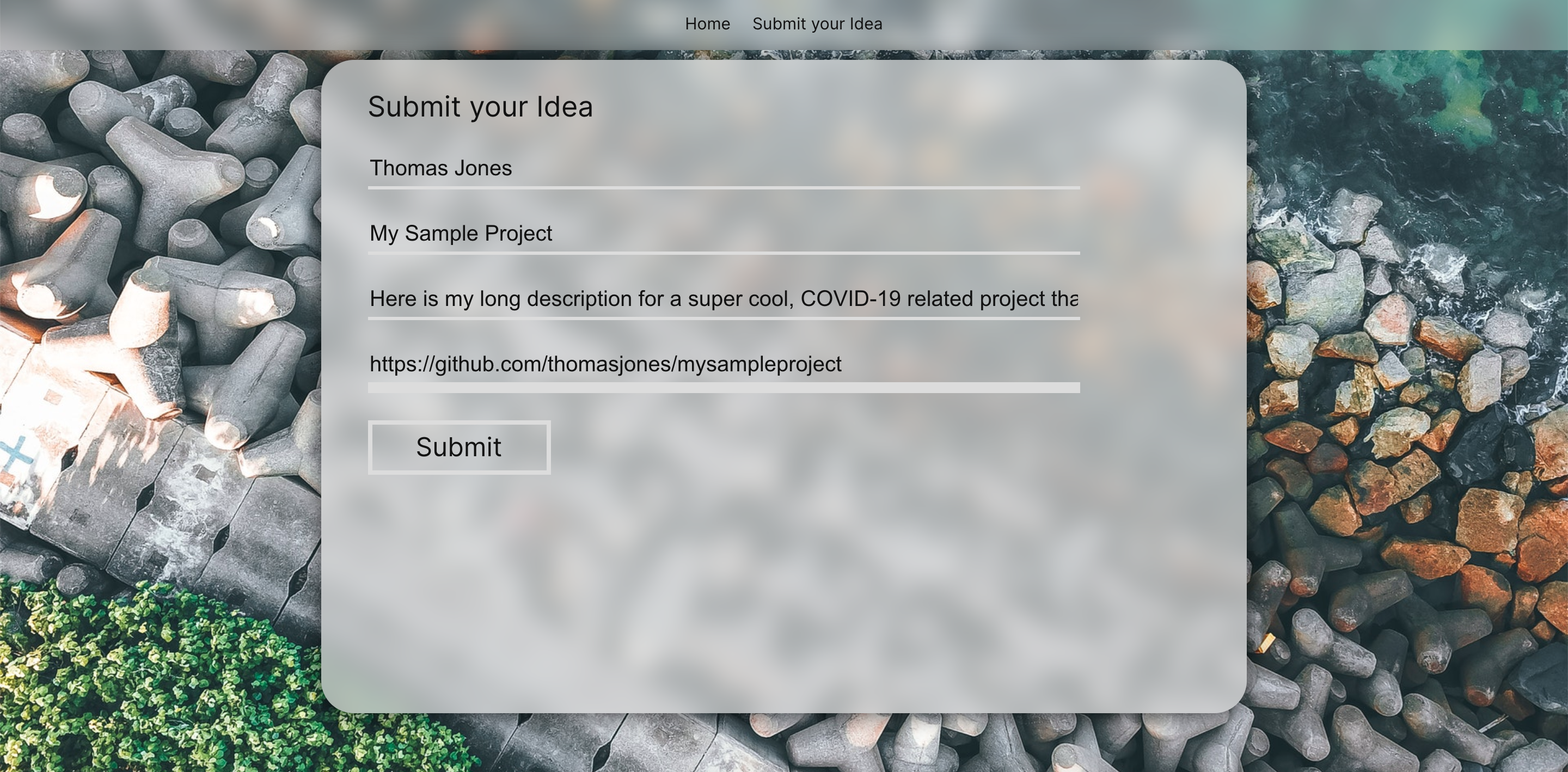
Submit your idea page with a sample project's information
-

COVID Think Space logo

Inspiration
Several developers across the world are working on solutions to address the COVID-19 pandemic. During the past few months, most hackathons on Devpost have been centered around creating innovative products for the virus. While these are great mediums to create solutions and improve your own coding skills, the typical 24-36 hour sprint to create a prototype limits functionality and discourages many developers from continuing their project after the closing ceremonies are over. Further, hackathon participants tend to reuse ideas that have already been tried at previous hackathons when under pressure to develop a functioning product in such a short amount of time.
Our team values continued innovation through tech against the pandemic. For this reason, we created the COVID Think Space platform for users to come together and work on COVID-19 related, long term projects, overcoming the temporary hackathon project mindset.
What it does
COVID Think Space is a collaborative web app that allows users to keep track of innovative, ongoing projects that address problems caused by COVID-19. Users can add posts about current projects that they’re working on using the “Submit your idea” feature. These posts include the project name, description, and links to the project. Other members of COVID Think Space can upvote project posts that they are interested in, allowing developers to garner a wide audience of developers interested in helping out with the project.
By creating a safe and welcoming online community for COVID-19 innovation, our team hopes to increase the turnover rate of project ideas into physical solutions. Through its open format, COVID Think Space helps reduce duplicate ideas and maximize efficiency so that developers across the world are able to focus on projects that matter.
How we built it
Our team built our web app using the React.js framework. We stored the data that users submitted in their posts (name, title of project, description of project, and link to project) in a database using Firebase and accessed this data to display on our web app.
Challenges we ran into
Since some of our team members were completely new to React.js, it was challenging to understand our more experienced teammate’s code during the hackathon. However, we were able to overcome this challenge by working with React.js to add features to our web app. Watching tutorials and seeing examples on the web was also really helpful in helping us become more comfortable using React.js.
Accomplishments that we're proud of
We are proud of our team’s collaboration on COVID Think Space and the functionality that we were able to achieve during this 36 hour hackathon. We were in frequent communication with each other over our team’s Discord server and the teammates that were more experienced with the technologies we used would always offer to help the teammates who were newer to React and Firebase.
What we learned
A couple of our team members were complete beginners at React.js, so we learned a lot about how components work through adding features to our web app as well as tutorials on YouTube. In addition, our team learned how to integrate Firebase services into our web app for the posting functionality.
What's next for COVID Think Space
Our team firmly believes that COVID Think Space is a sustainable platform for developers and has the potential to output a ton of innovative solutions for the COVID-19 pandemic. In the future, we hope to integrate login capabilities into COVID Think Space so that users will be able to build up a following for their projects. In addition, to help facilitate team collaboration, we are looking towards implementing chat rooms for each different project so that users will be able to talk to each other more easily. Another interesting feature we were thinking about was to link COVID Think Space to other platforms such as Trello and GitHub to encourage innovation and clear methodology for these projects.
Even when the pandemic is over, the platform that we created is flexible to repurpose towards another important cause, such as poverty or environmental sustainability.


Log in or sign up for Devpost to join the conversation.