-
-

CovidHub Logo
-
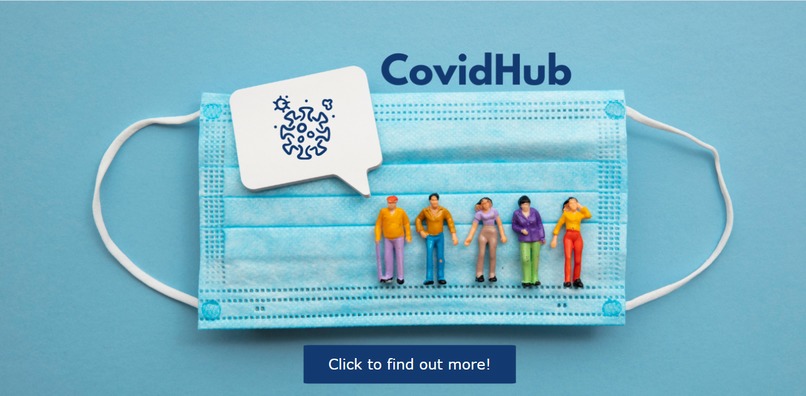
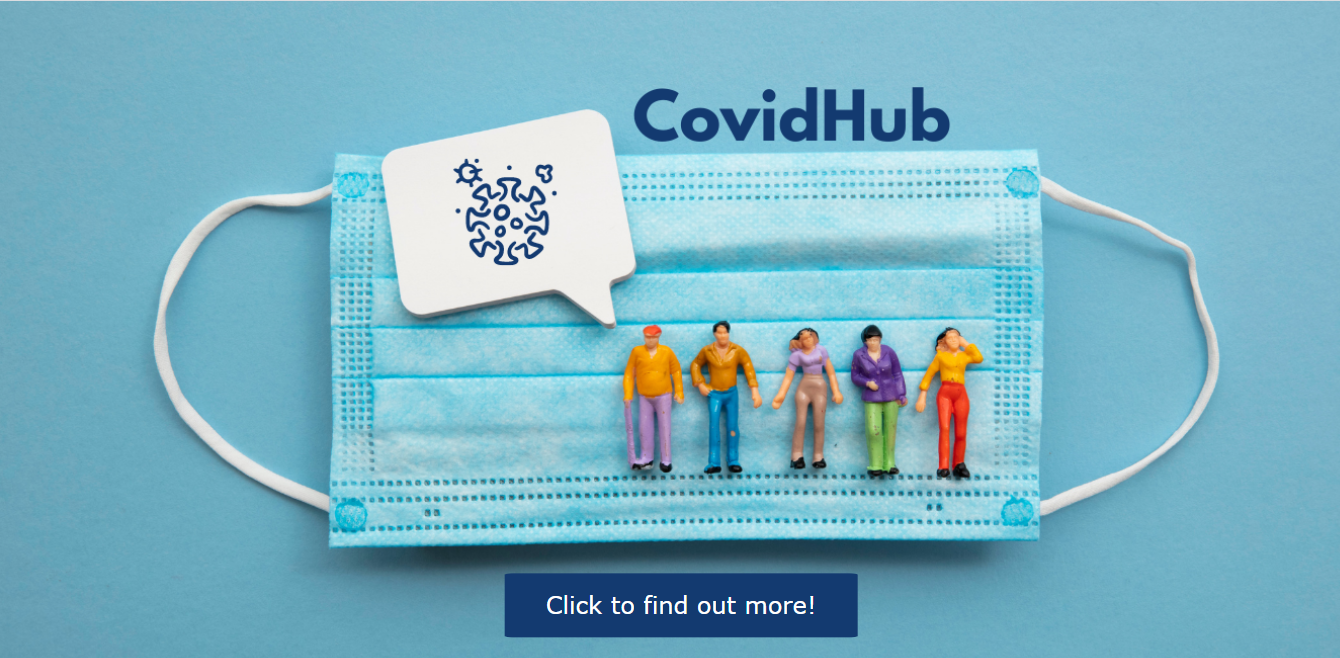
Welcome Screen
-
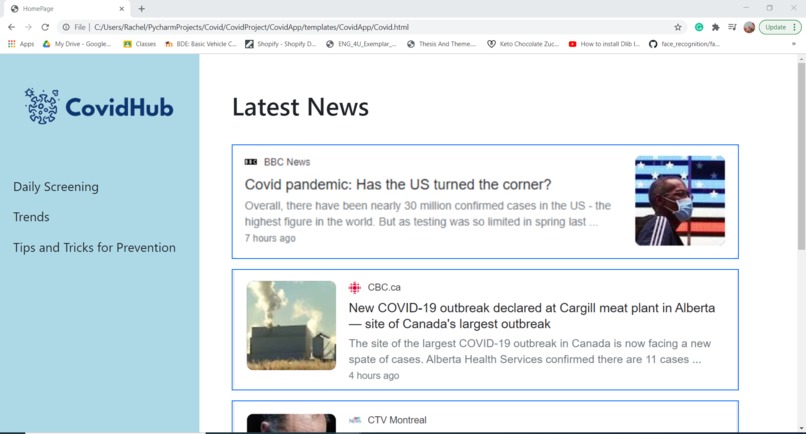
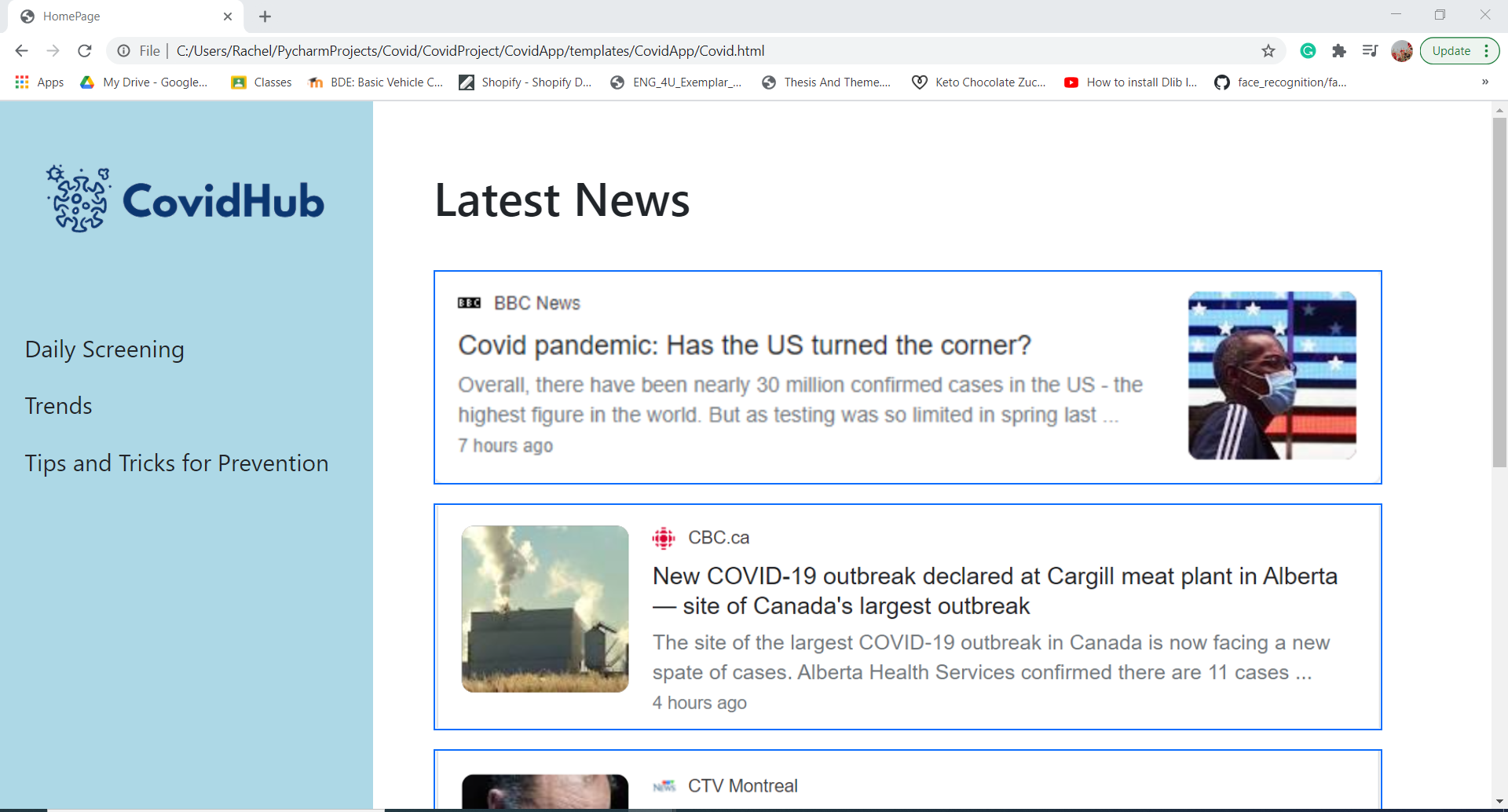
Home Page
-
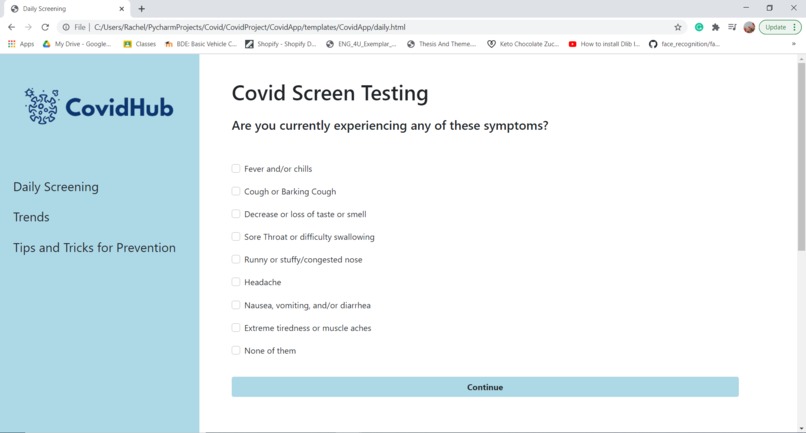
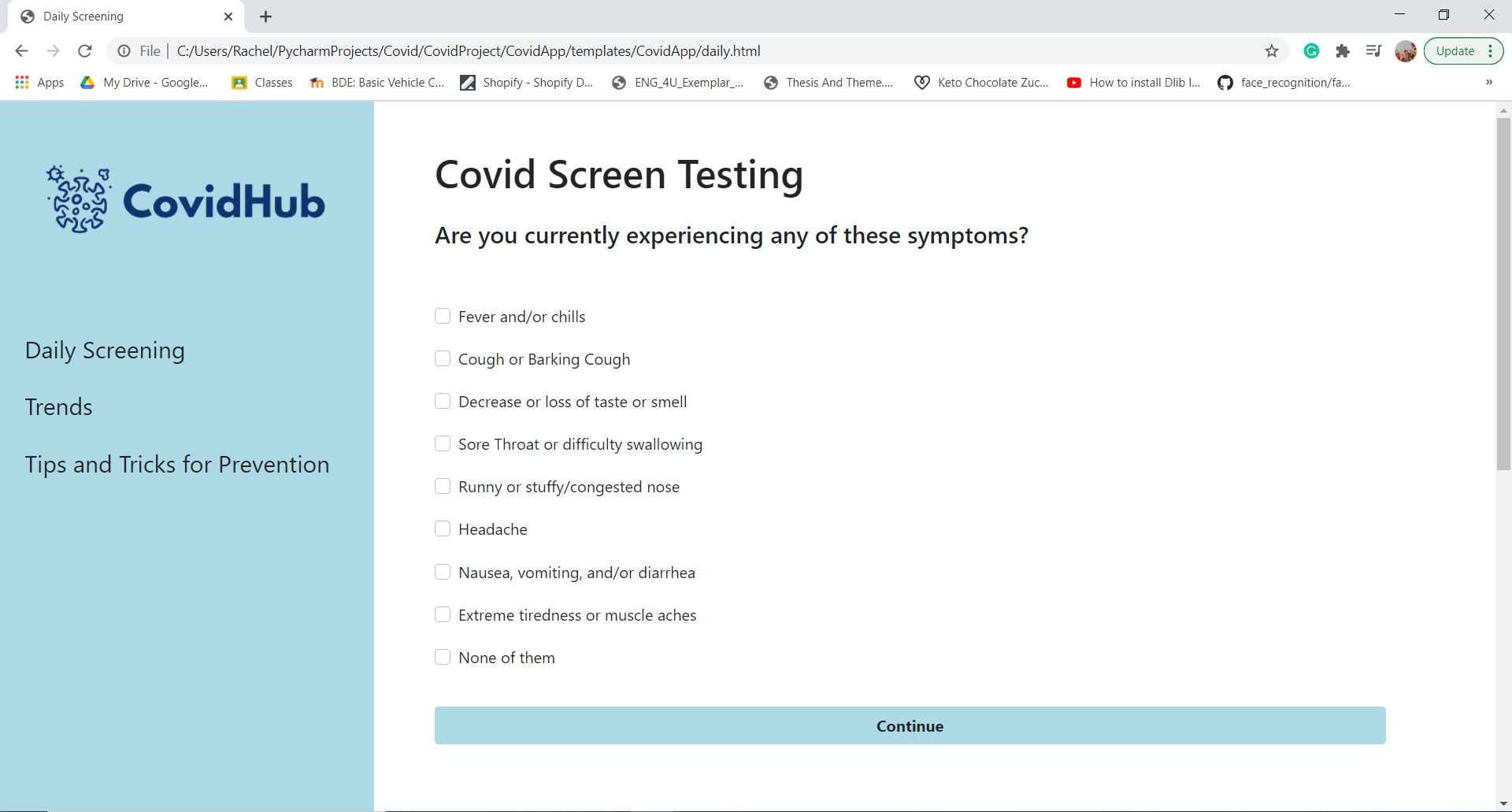
Daily COVID Screening Test Page
-
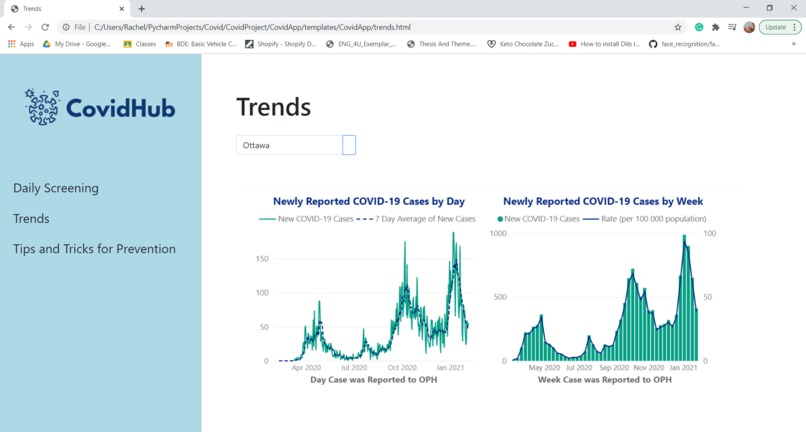
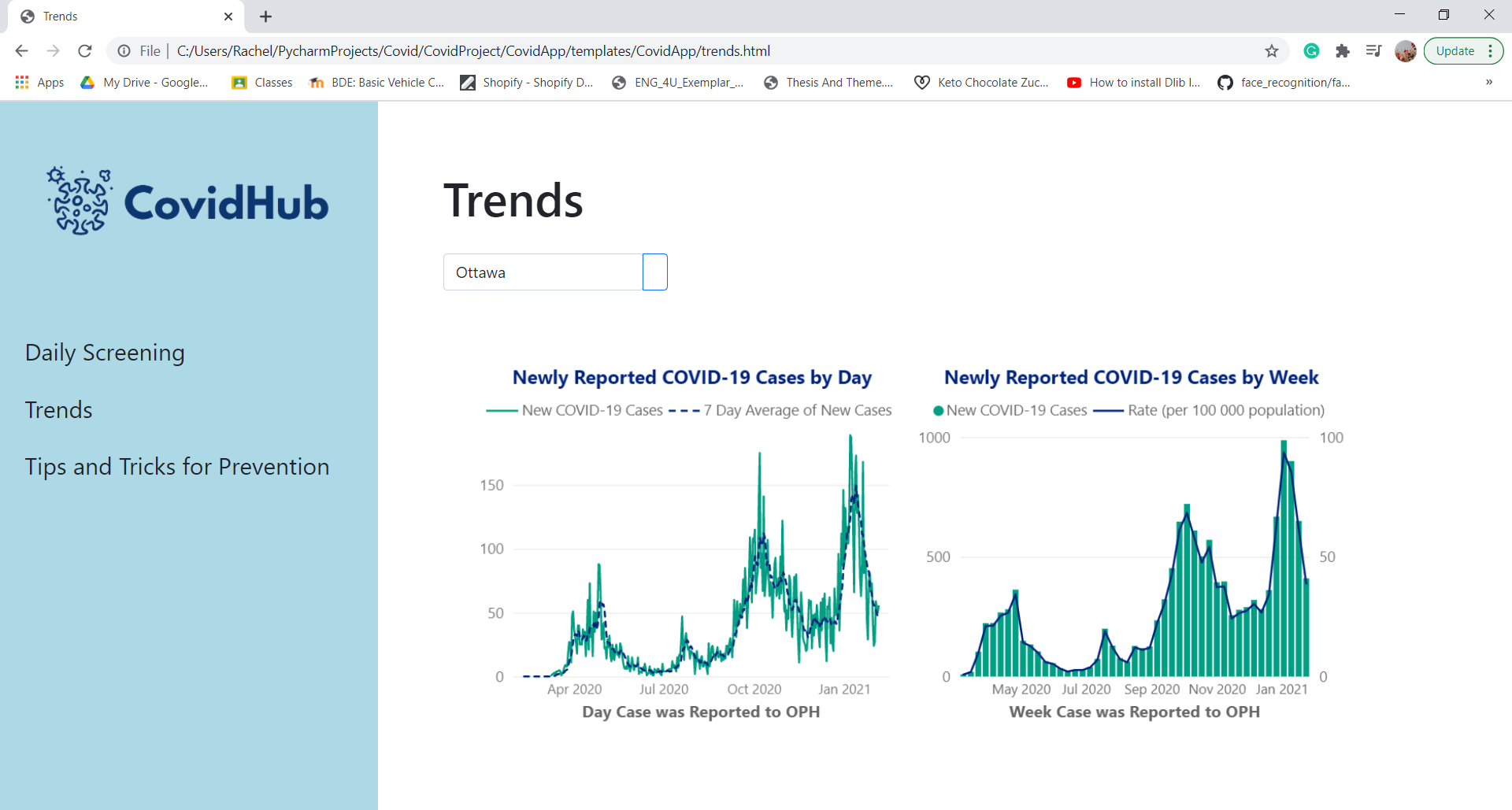
Trends Page
-
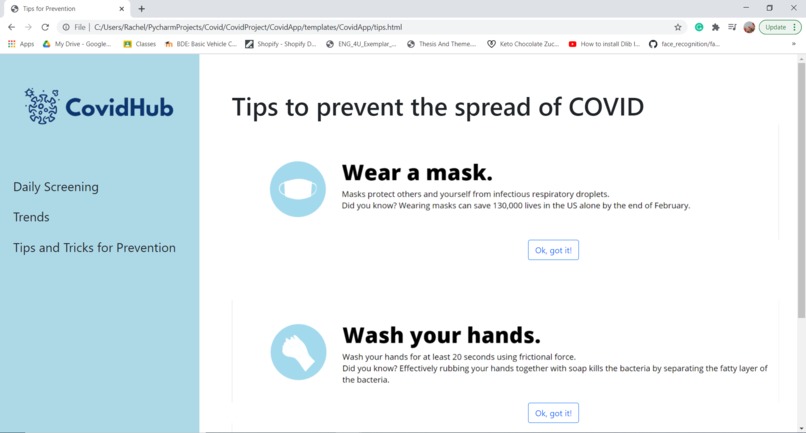
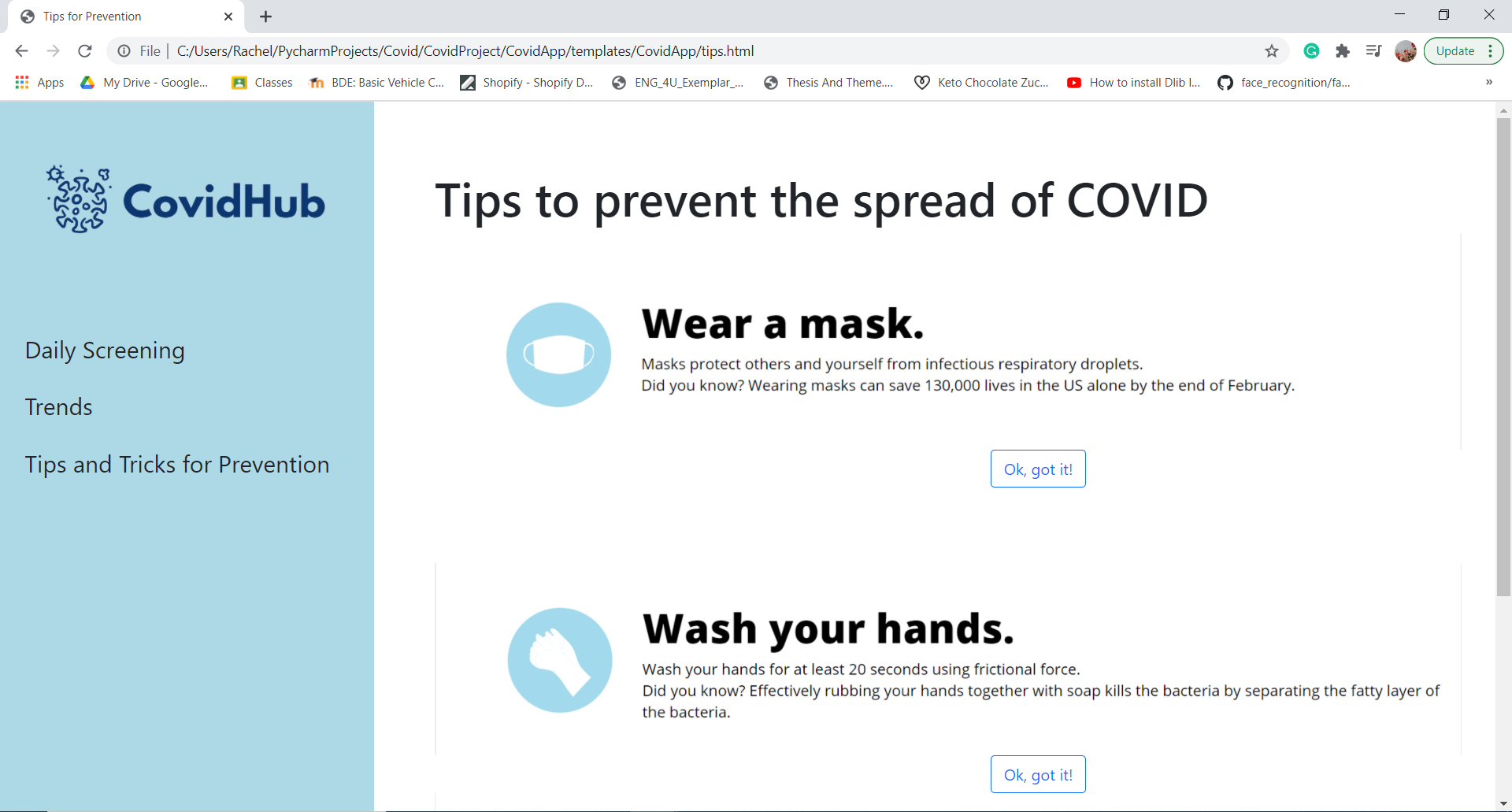
Tips for Prevention Page

Inspiration
The novel coronavirus (COVID-19) has quickly changed our lives around the world. As of today, the total number of COVID-19 cases has surpassed 105 million. In response to the alarming rise of COVID-19 cases, our team felt propelled to raise awareness about important information as the pandemic progresses to better equip people worldwide with crucial knowledge on how to better protect themselves.
What it does
CovidHub allows users to navigate on different pages ranging from a daily COVID screening test to the latest and specific regional COVID trends. Starting from the homepage, this presents the user with the latest news related to COVID -19 to inform users of real-time reports of COVID. Also in the webpage, is a daily screening test that allows users to complete a checklist of symptoms and that reveals whether it is safe for the user to attend work, school, daycare, etc. Next, the trends page is a space where users can enter the region or city in which they are located in order to view trends of COVID-19, including graphs of the newly reported COVID-19 cases by day. Finally, the tips and tricks for the prevention page offer users multiple tips and tricks to prevent the spread of COVID.
How we built it
Using HTML, CSS, Javascript, and the bootstrap framework, we built this application to create a dynamic and user-friendly website for the audience.
Challenges we ran into
Generally, our collaboration was smooth and effective. However, there were some minor setbacks. For instance, our team had defined, thorough goals pertaining to the development of our website. Yet, as time ticked away, we realized that we would be unable to accomplish all of our coding ambitions. Thus, we quickly decided that to succeed, we needed to be flexible and adjust the layout of our website. While our aspirations persisted, we determined more simple and faster ways to attain them instead of being too detail-oriented.
Accomplishments that we're proud of
Among the many accomplishments that we are proud of in the making of our website, our most successful one is that our team managed to encode the Google News into our project to provide the latest coverage on the pandemic. Despite the physical barrier, our coordination was as a team was seamless. Communication between team members was highly effective with a mutual understanding of objectives. As a result, we accommodated all ideas to create a vision we all agreed on. Aside from that, we were able to achieve the majority of our ambitions in a time-limited frame.
What we learned
During this hackathon, we learned how to fully utilize HTML and CSS to create a dynamic website for users. This included styling, creating class elements, and providing users with specific and real-time information. As well, we developed our knowledge of building websites for the first time while gaining valuable front-end experience.
What's next for CovidHub
Our next step is to turn our vision, CovidHub, into reality. We will continue to further develop our website and add more features that will ensure all users to easily navigate it and offer a wider scope of information on the rapidly changing situation of the coronavirus pandemic. For example, we plan on allowing users to contribute their own story and COVID-19 symptoms to provide users with real-time statistics every minute of the day every day. In the future, they will be able to connect with others like themselves so that people can support each other through similar experiences. Our ambition is that one day, users worldwide will turn to our website for the most trustworthy, helpful, and accurate information and advice on COVID-19.






Log in or sign up for Devpost to join the conversation.