-
-
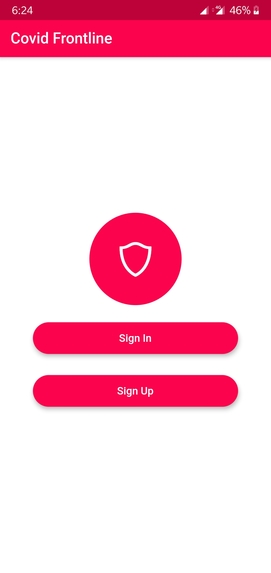
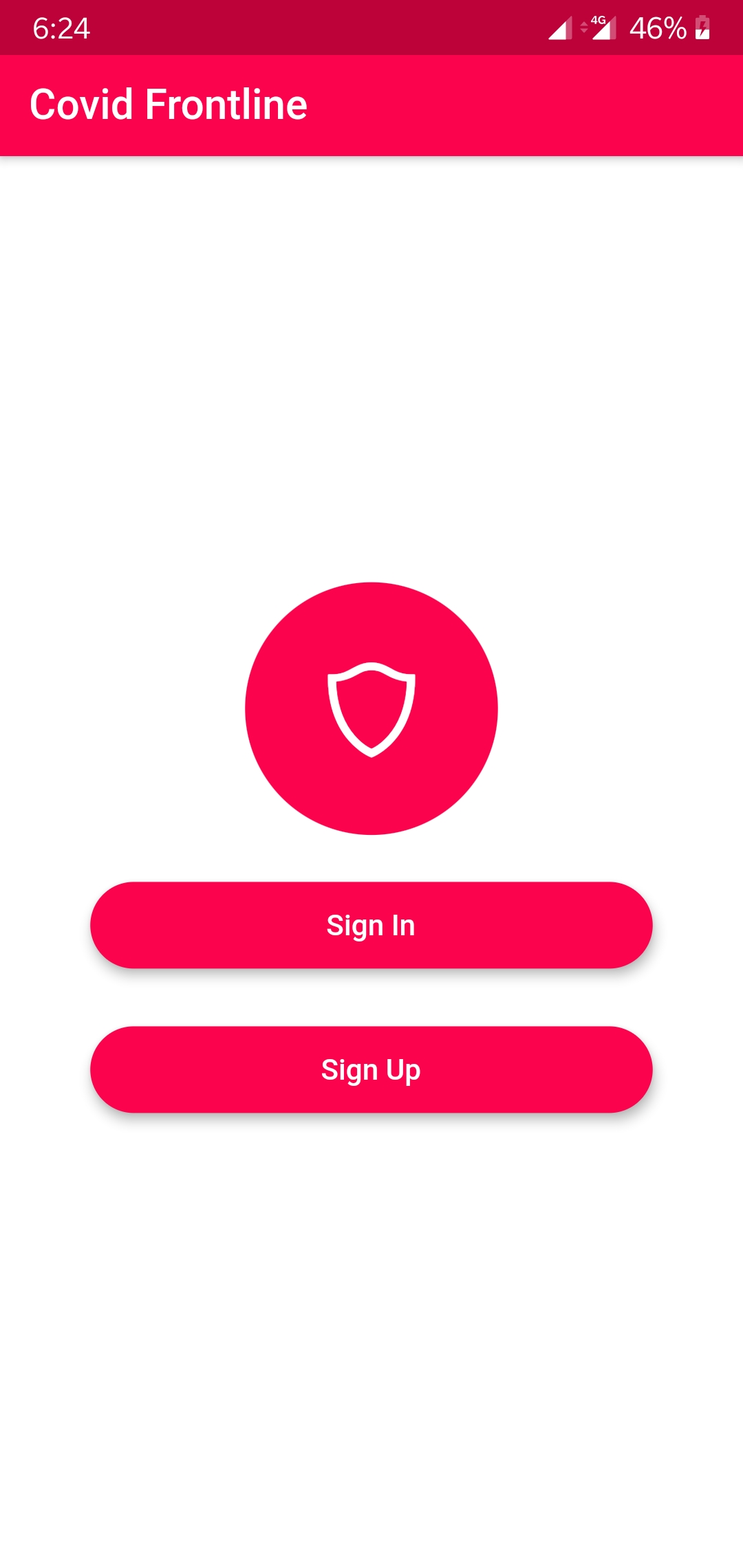
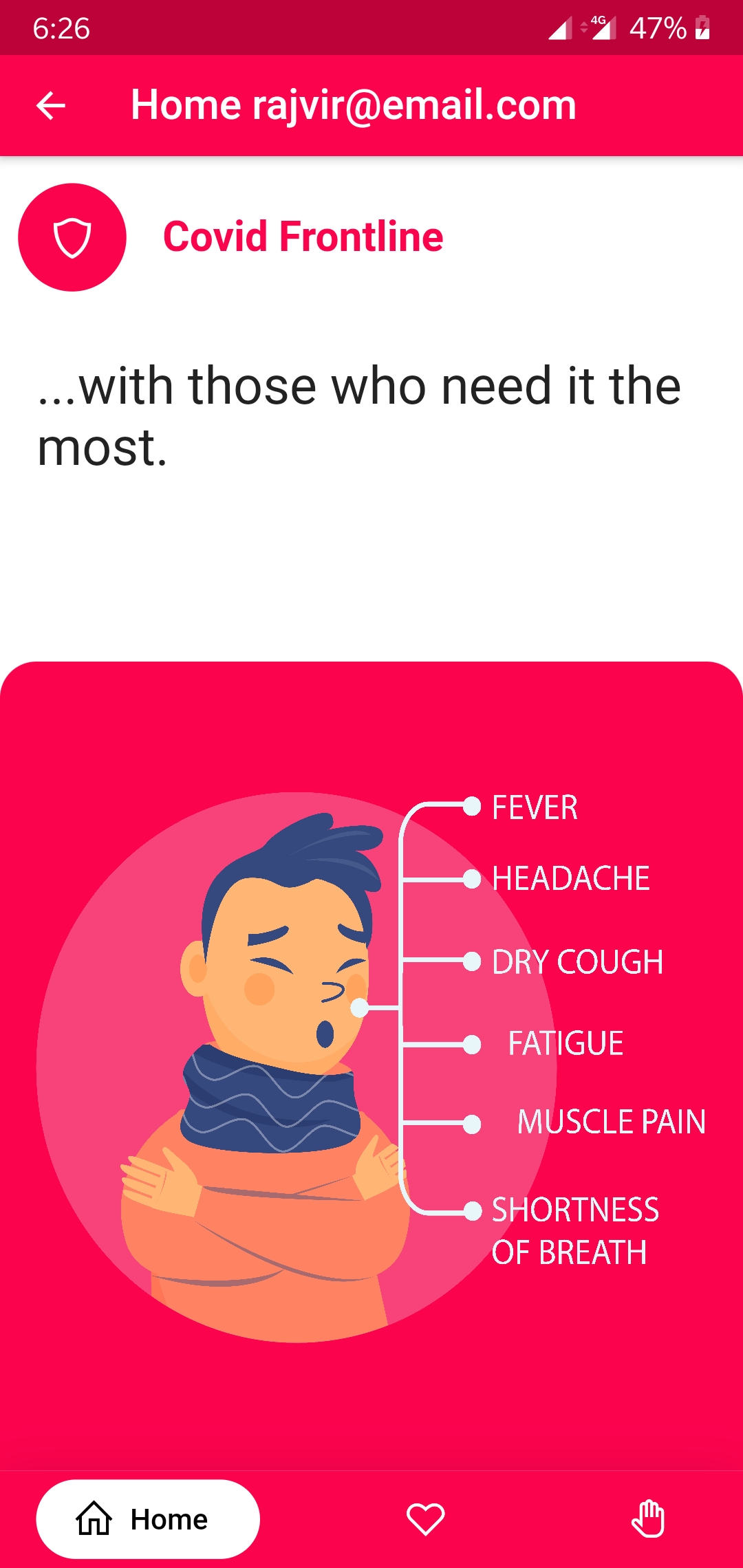
Start Screen
-
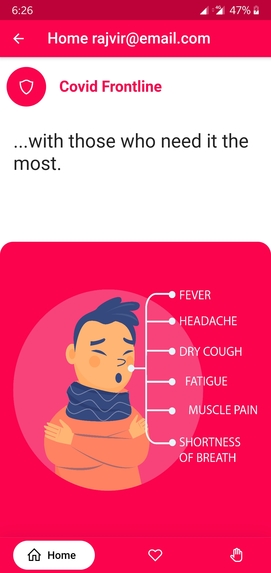
User/Normal Citizen perspective of the app
-
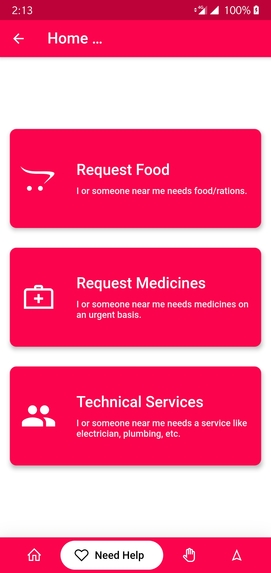
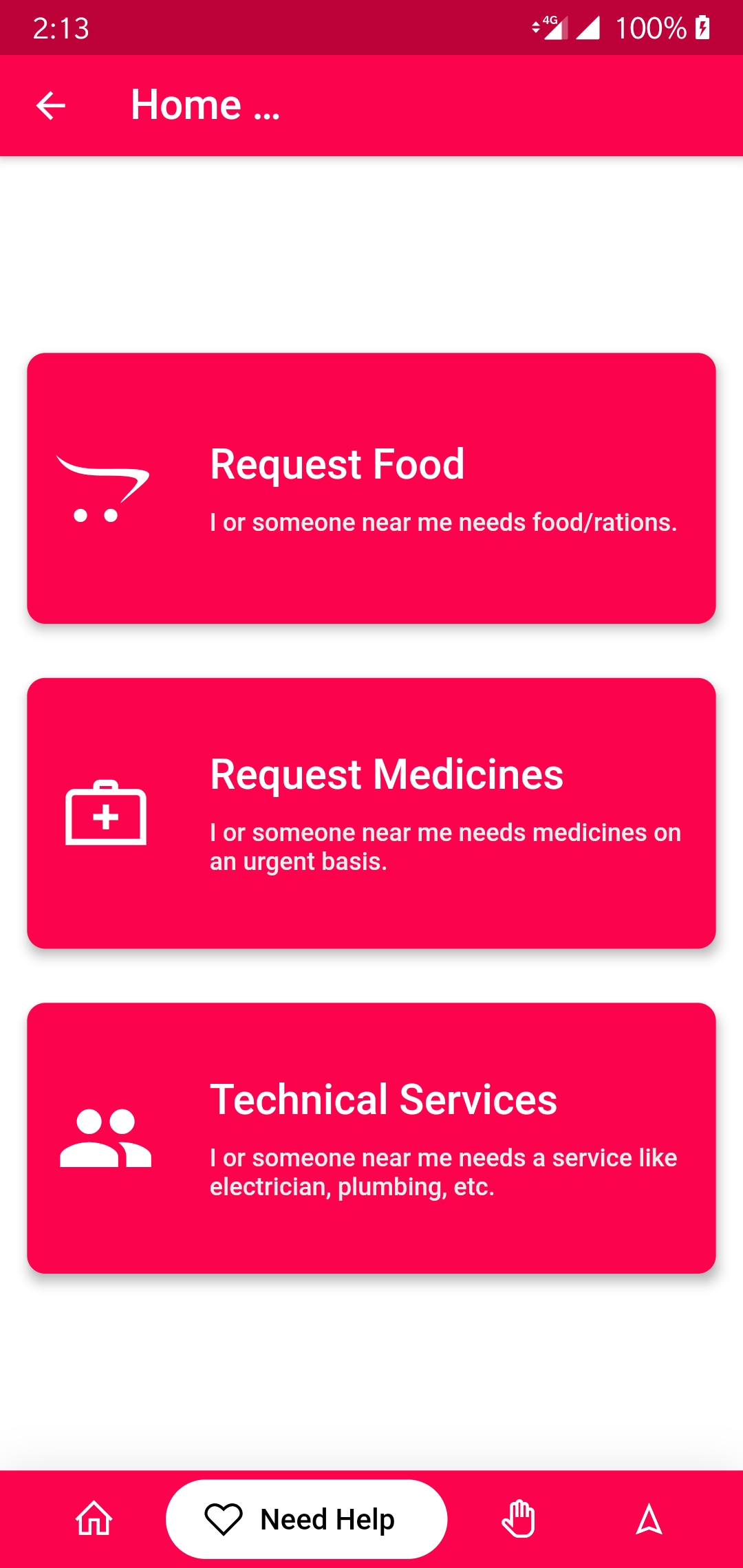
Need help screen for people in need
-
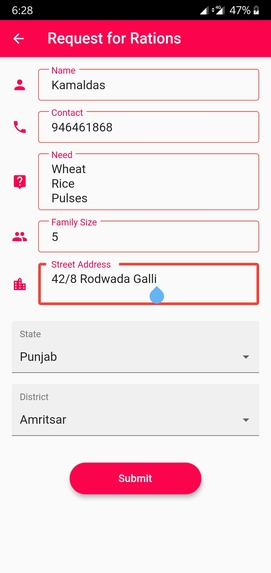
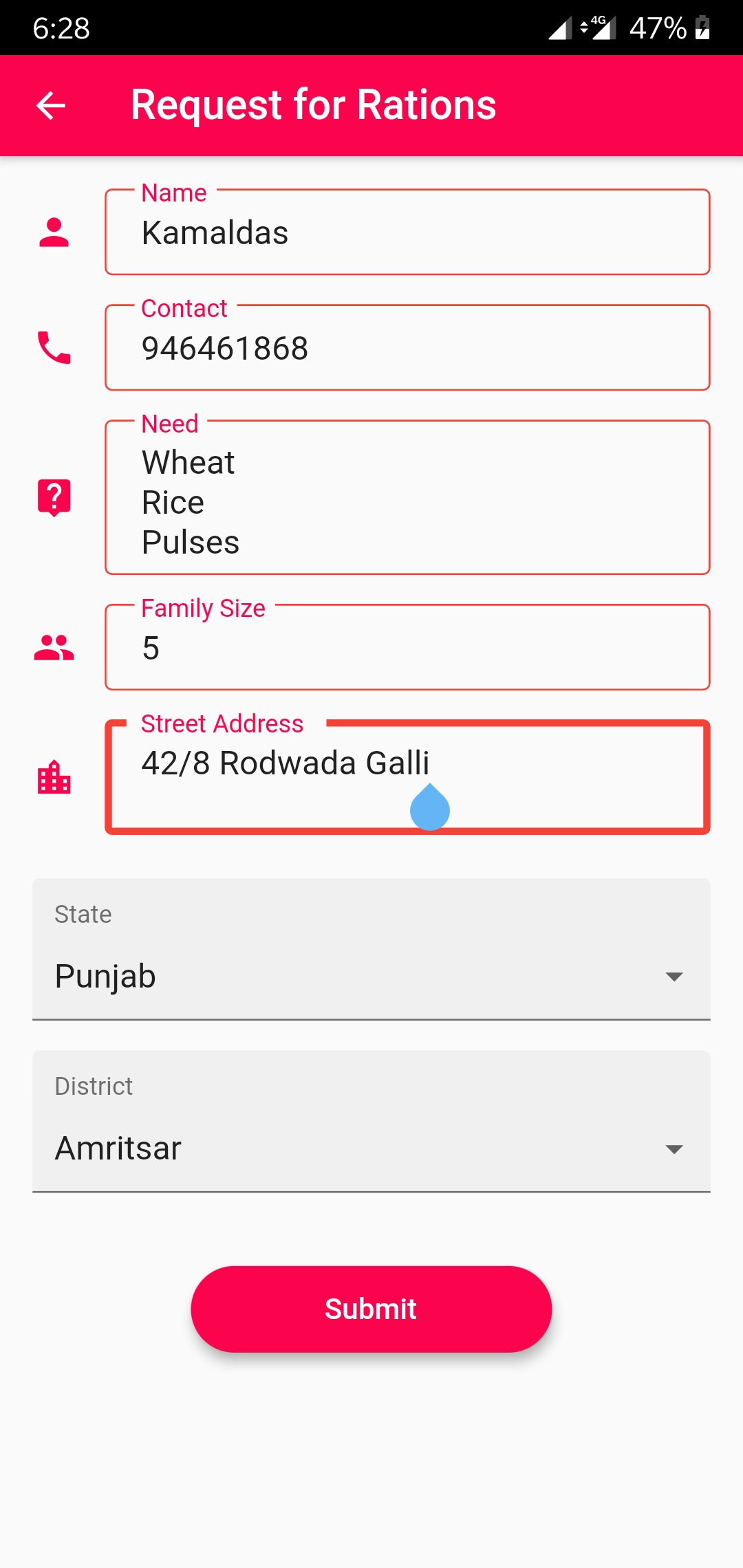
Request for Rations or Food
-
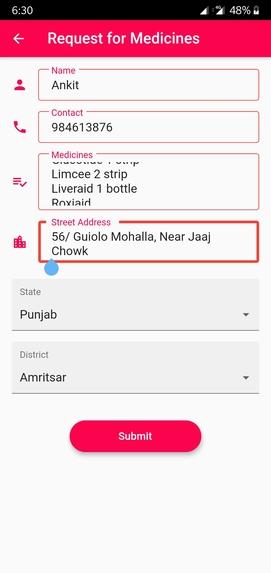
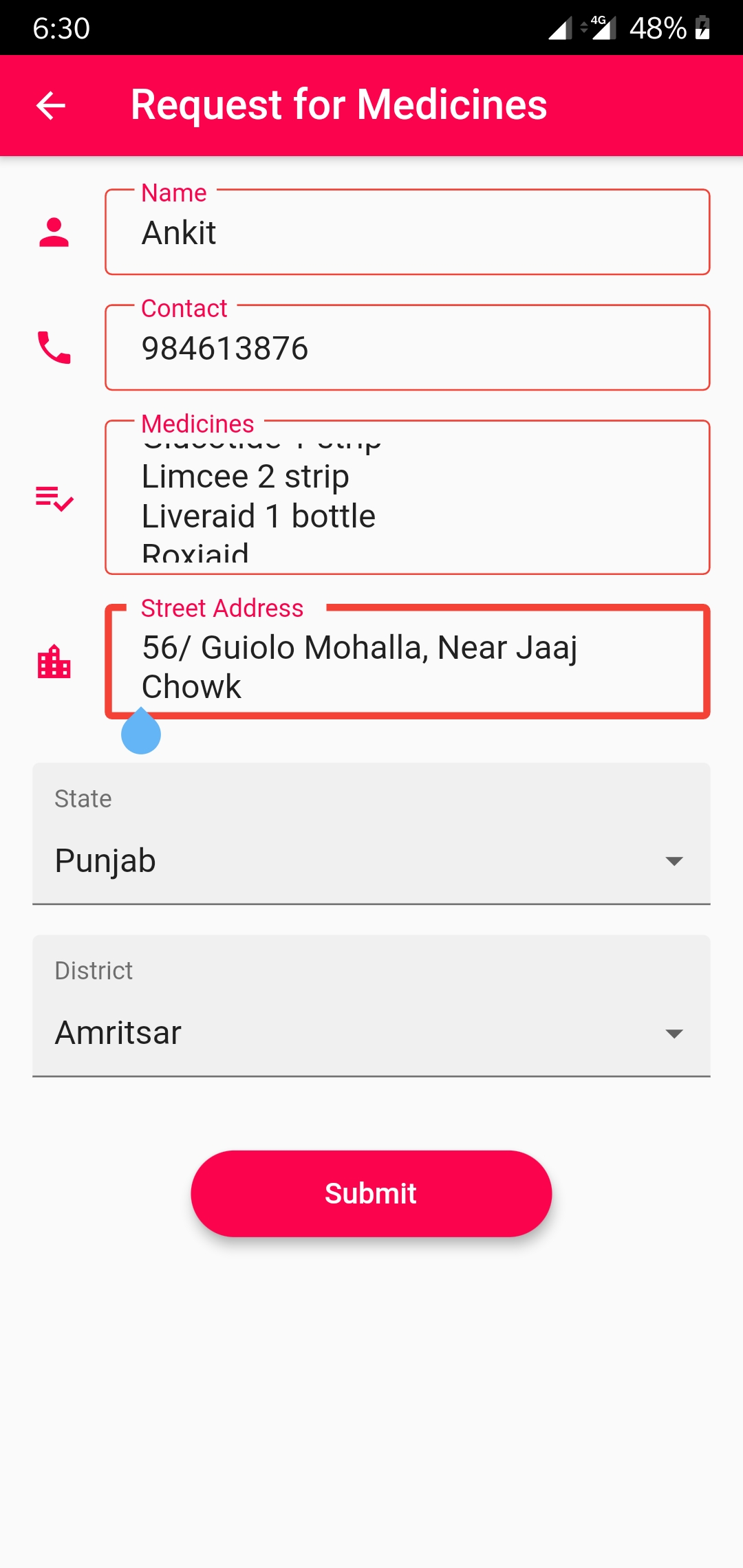
Request for Medicines
-
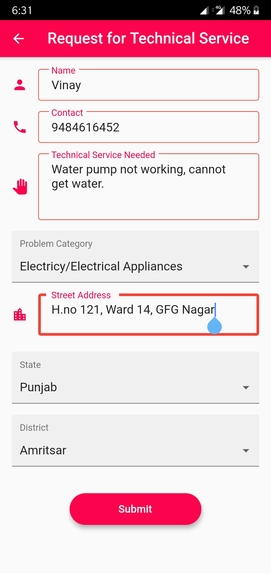
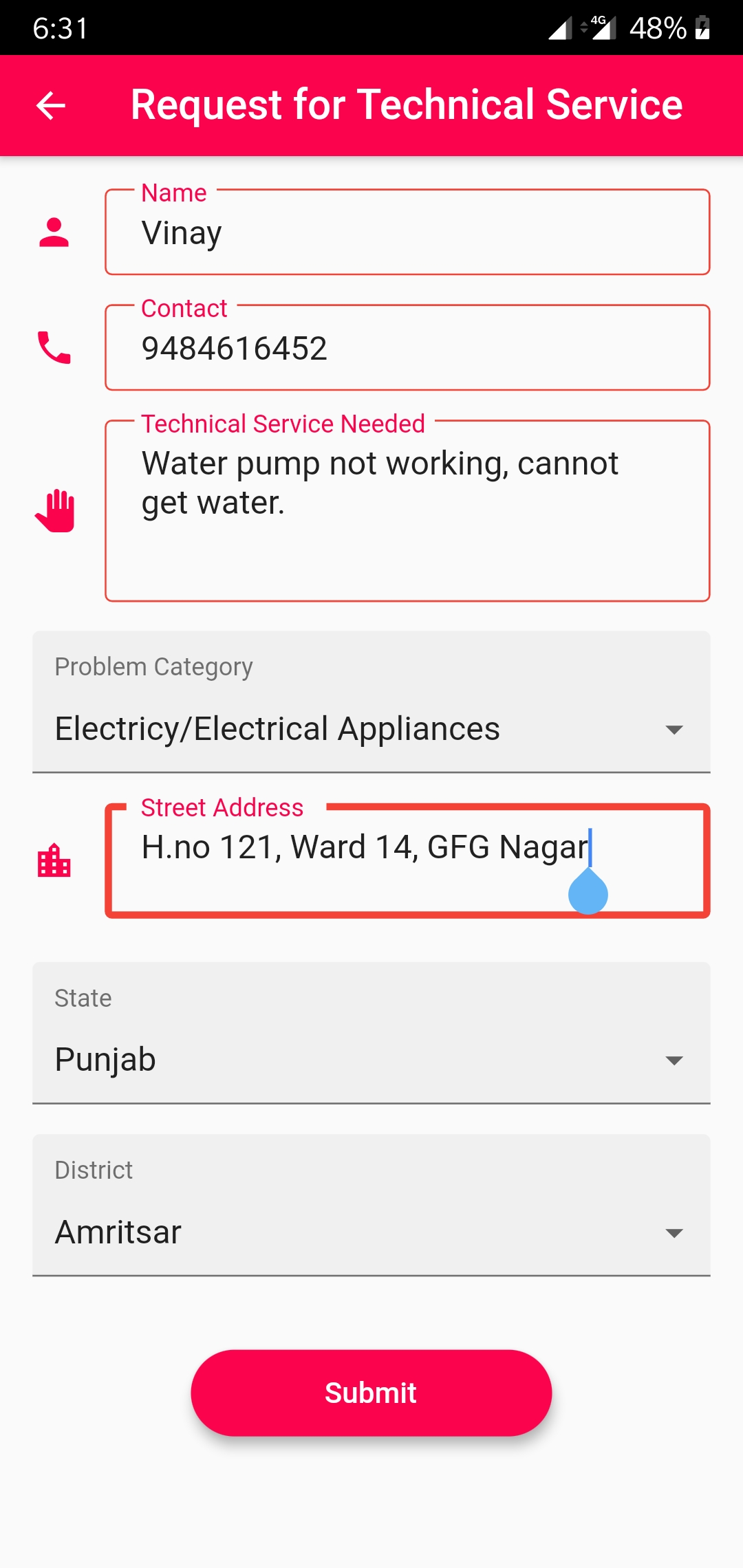
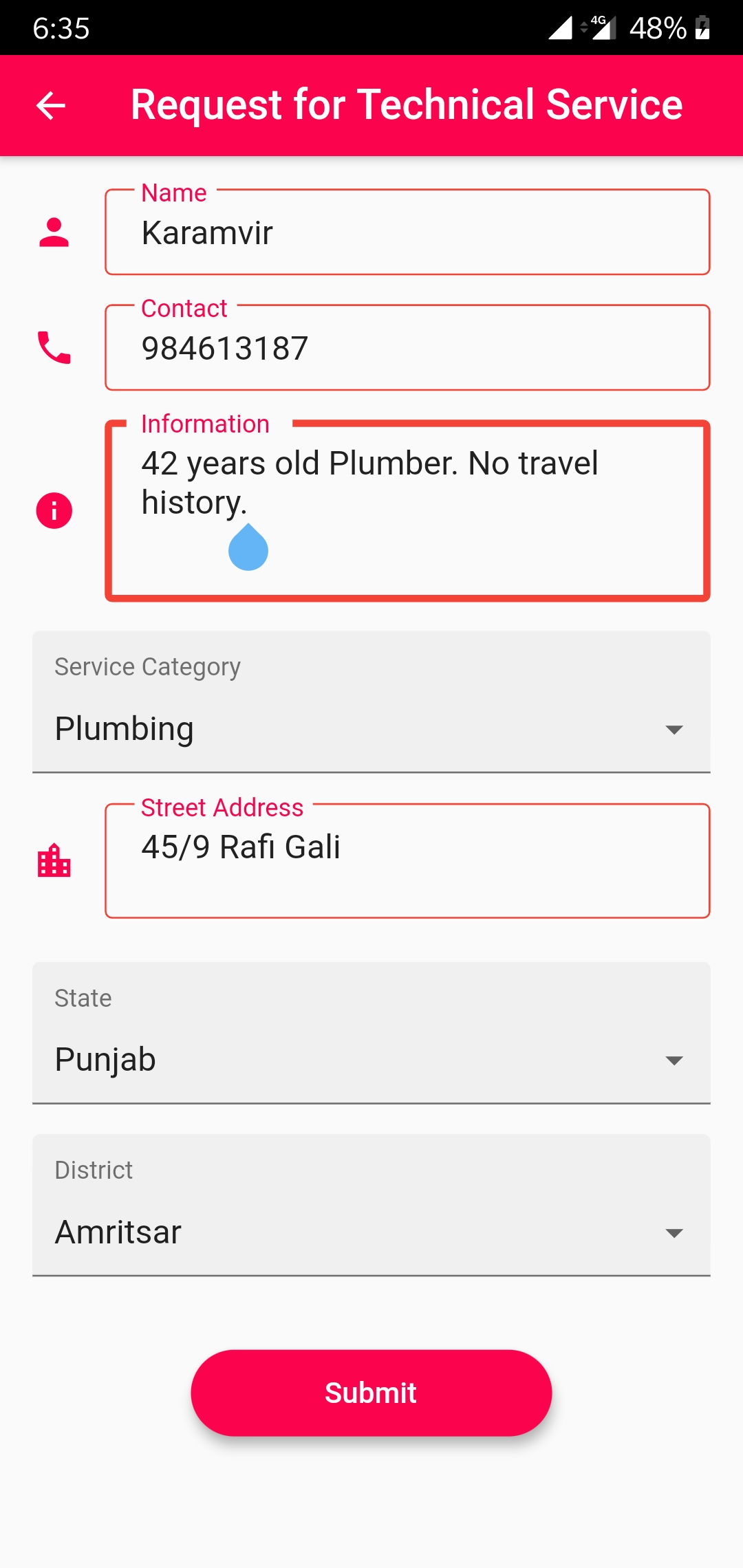
Request for services like plumber, electrician during lockdown
-
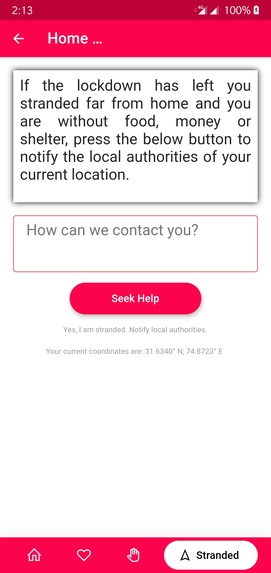
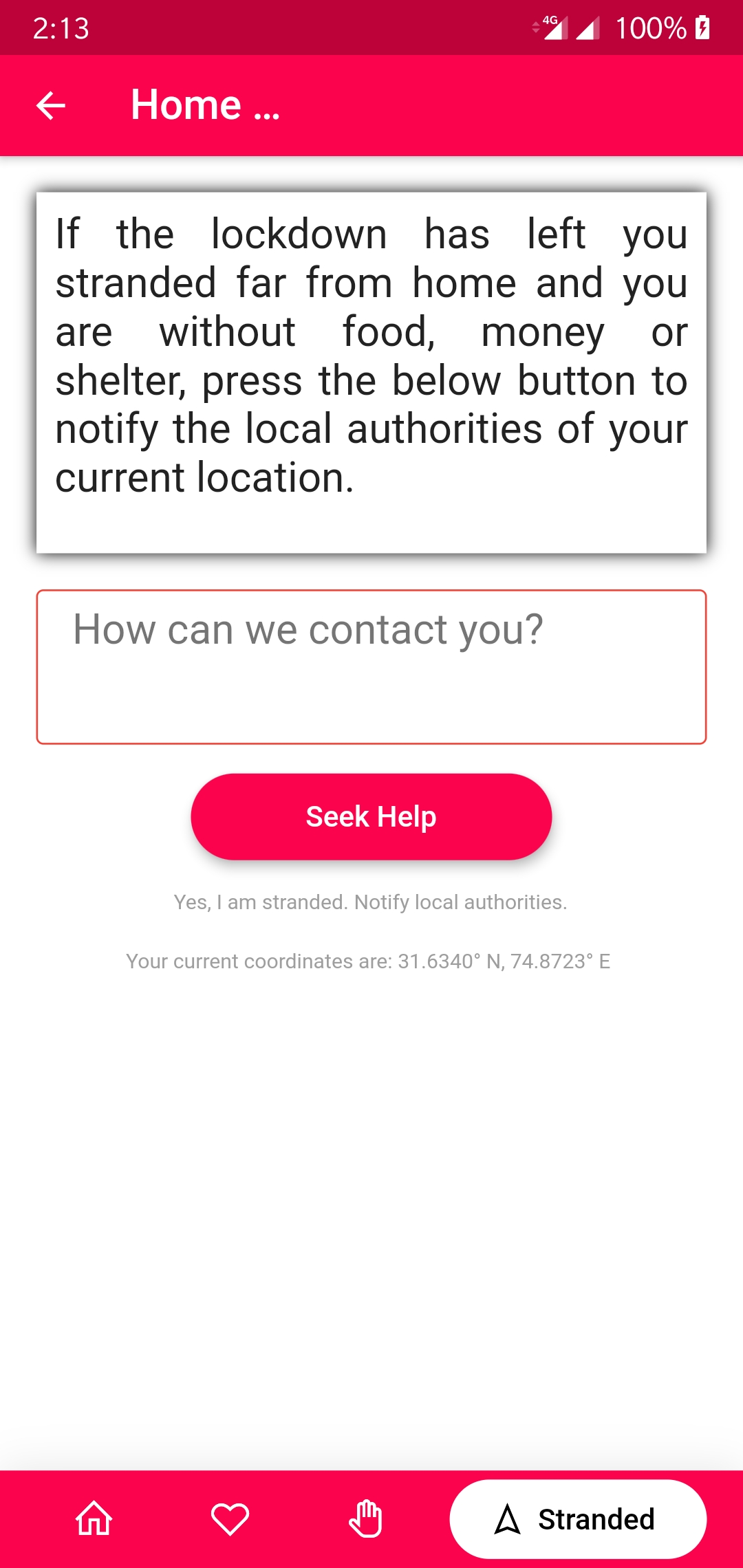
Stranded screen
-
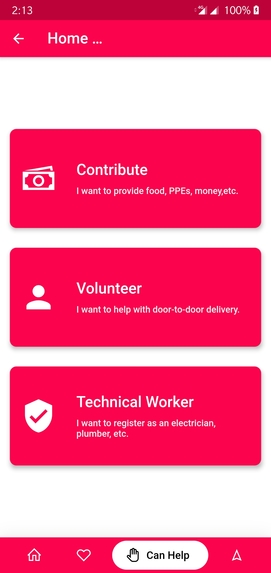
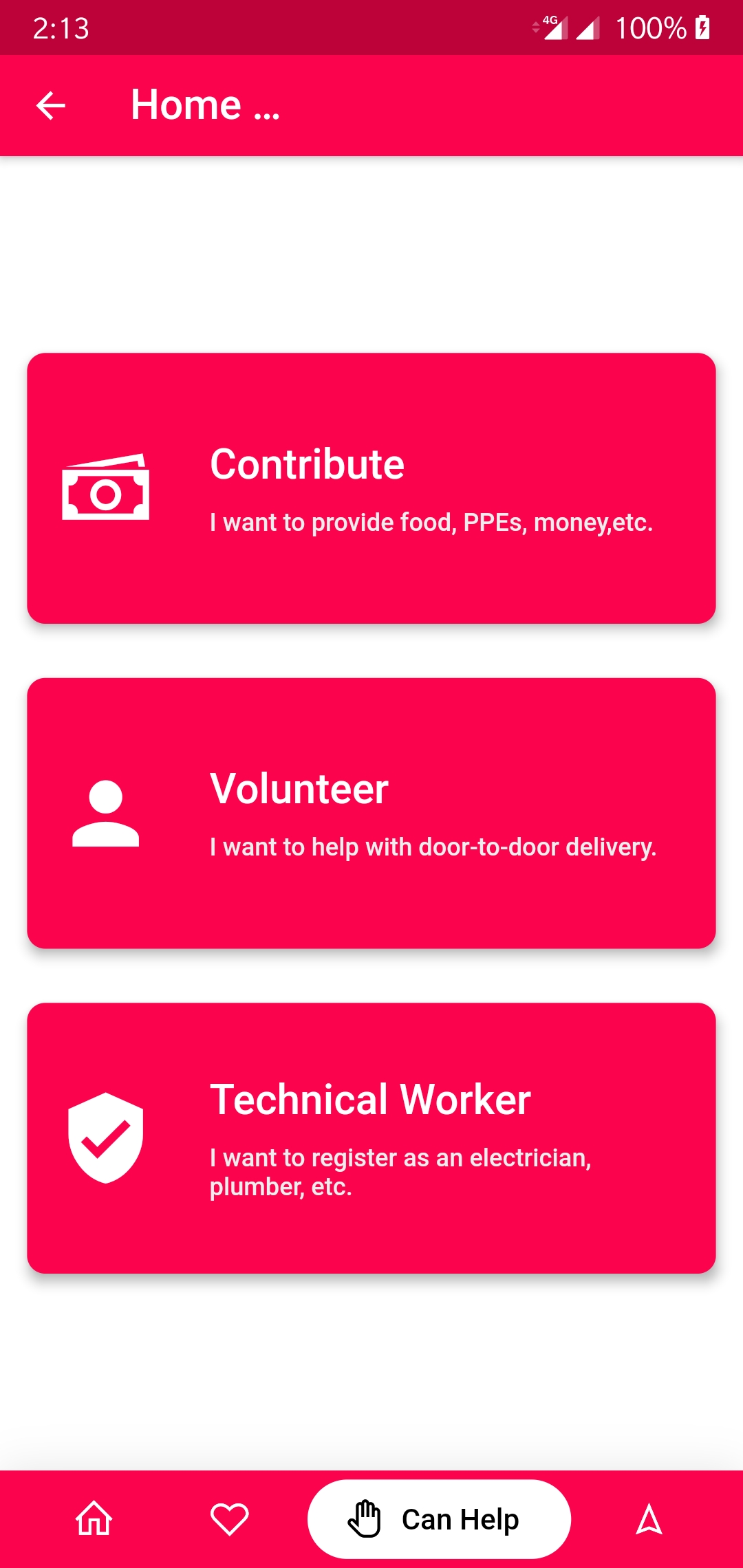
Can help screen
-
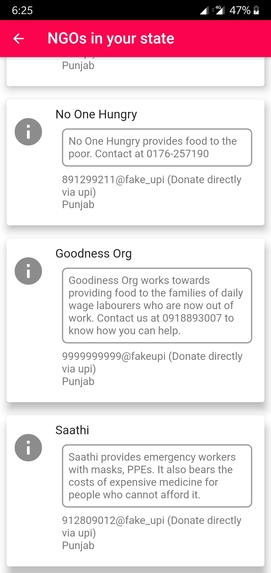
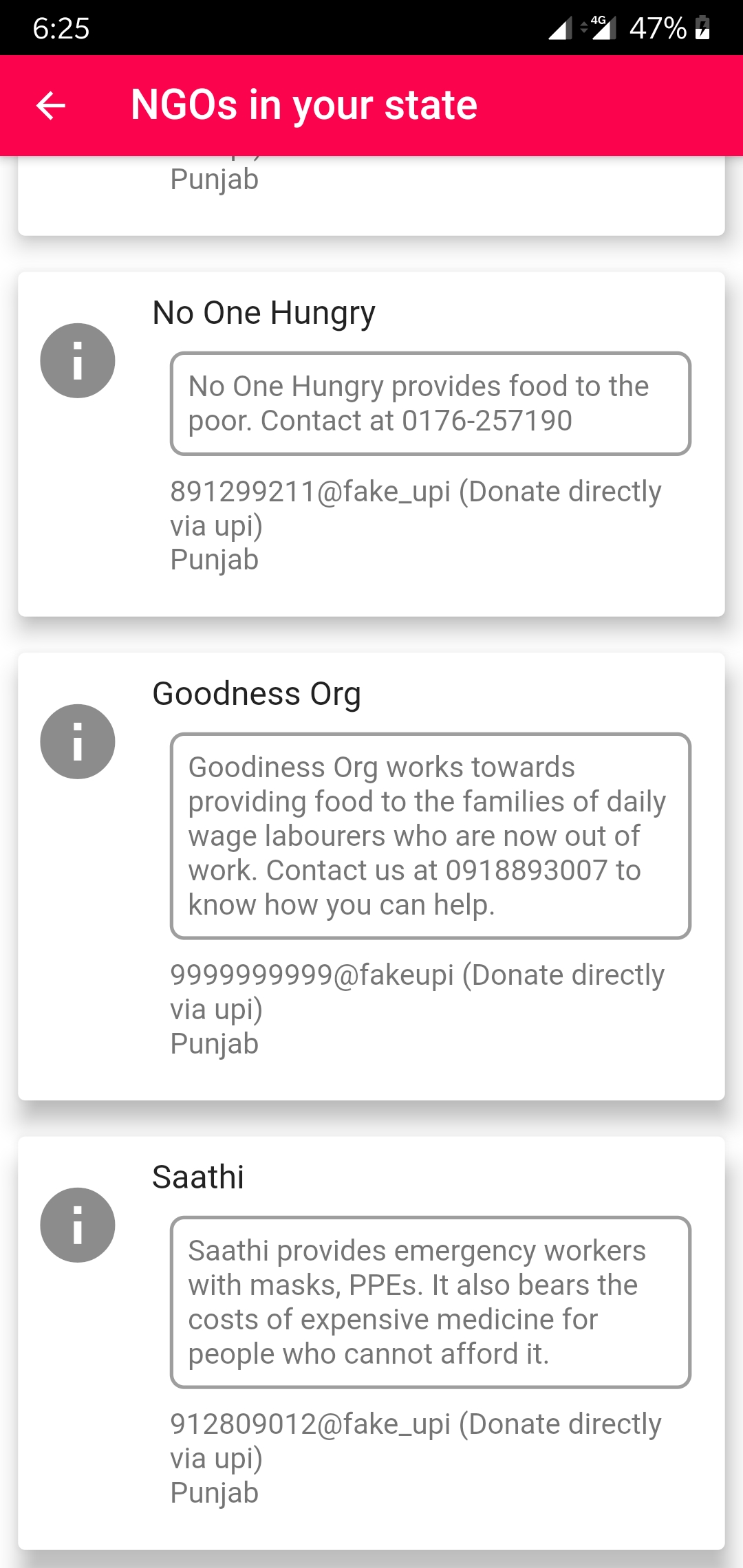
NGOs in my state. View information to contribute.
-
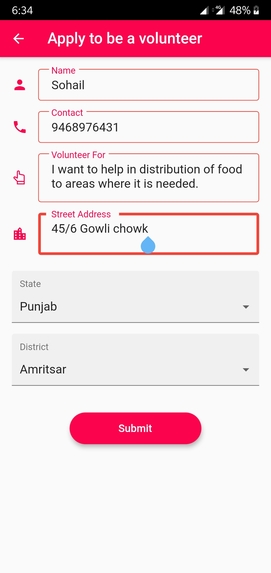
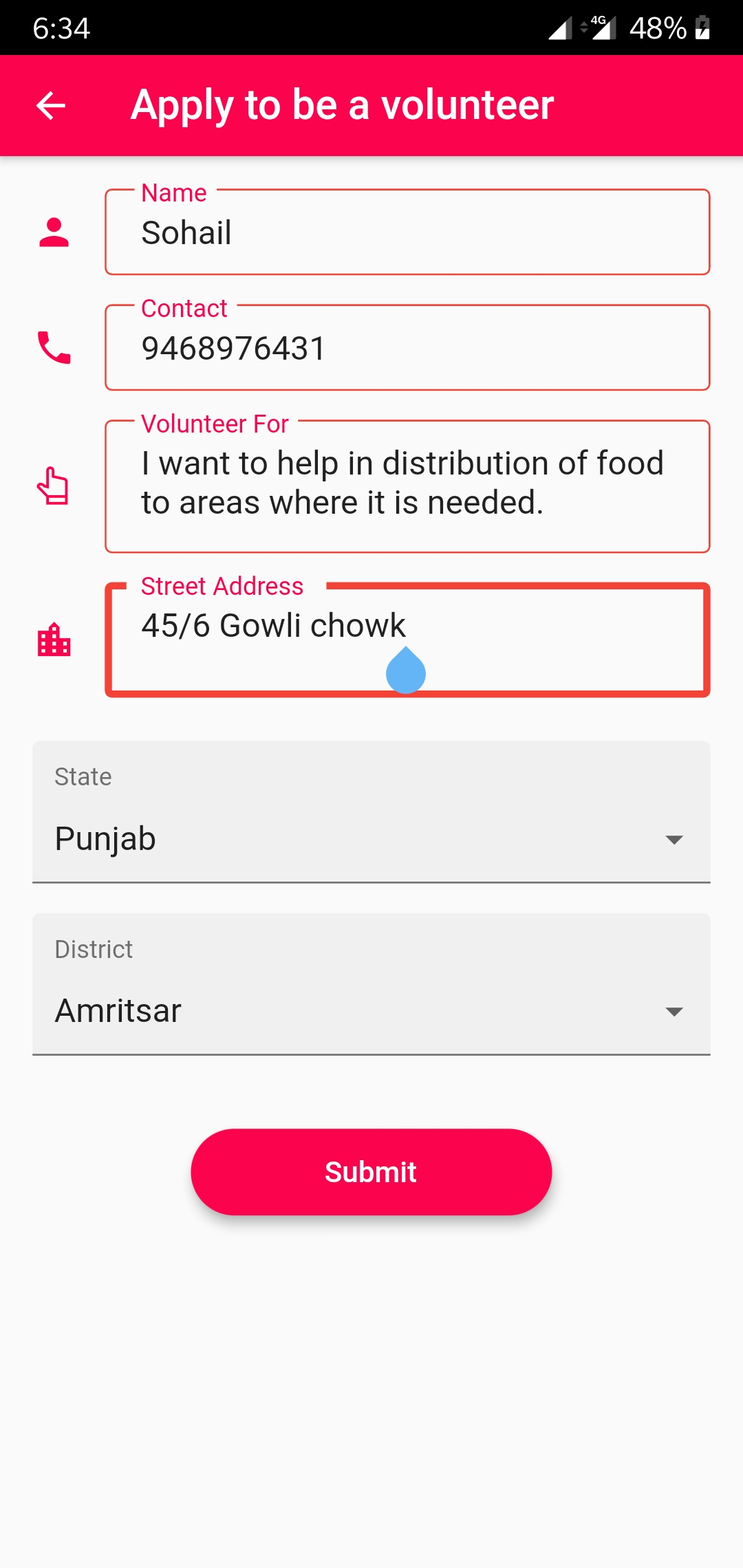
Apply to be a volunteer
-
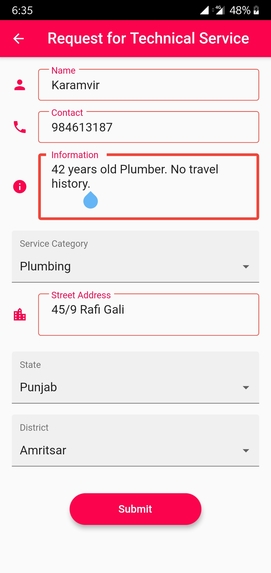
Register as a technical worker(plumber, electrician, etc) with the local government
-
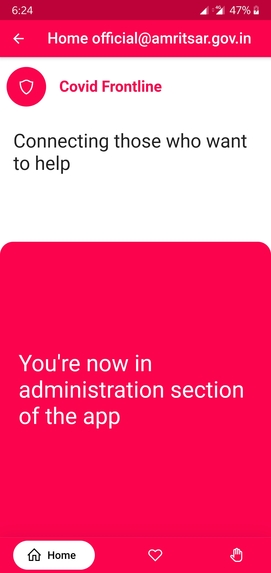
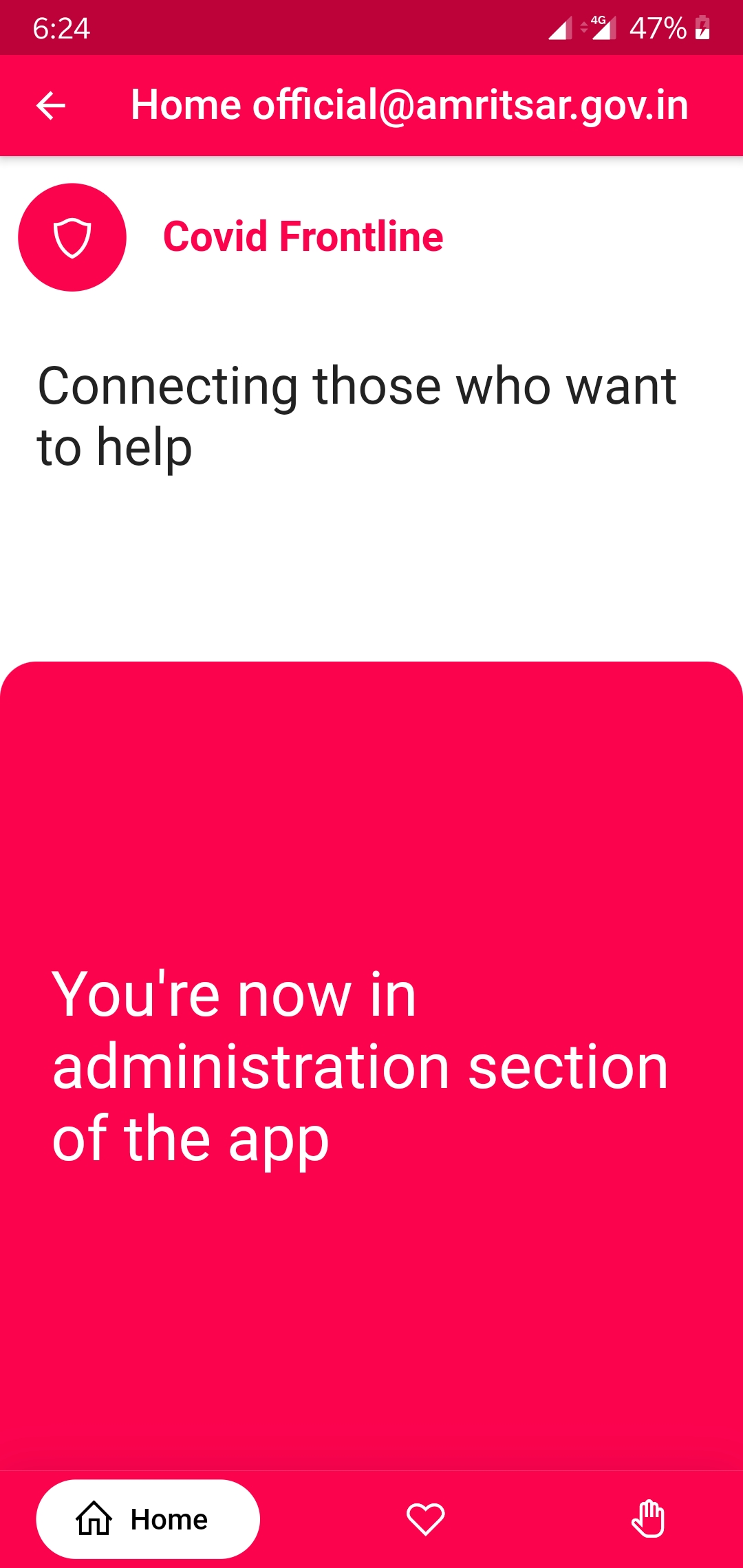
Administrative section/Government perspective of the app
-
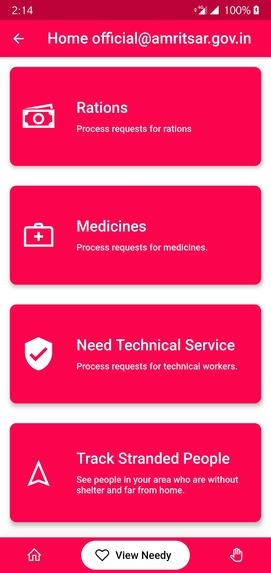
View Needy People in the area
-
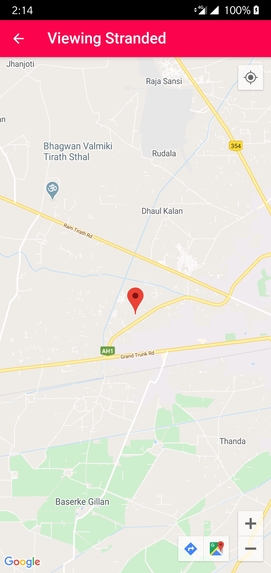
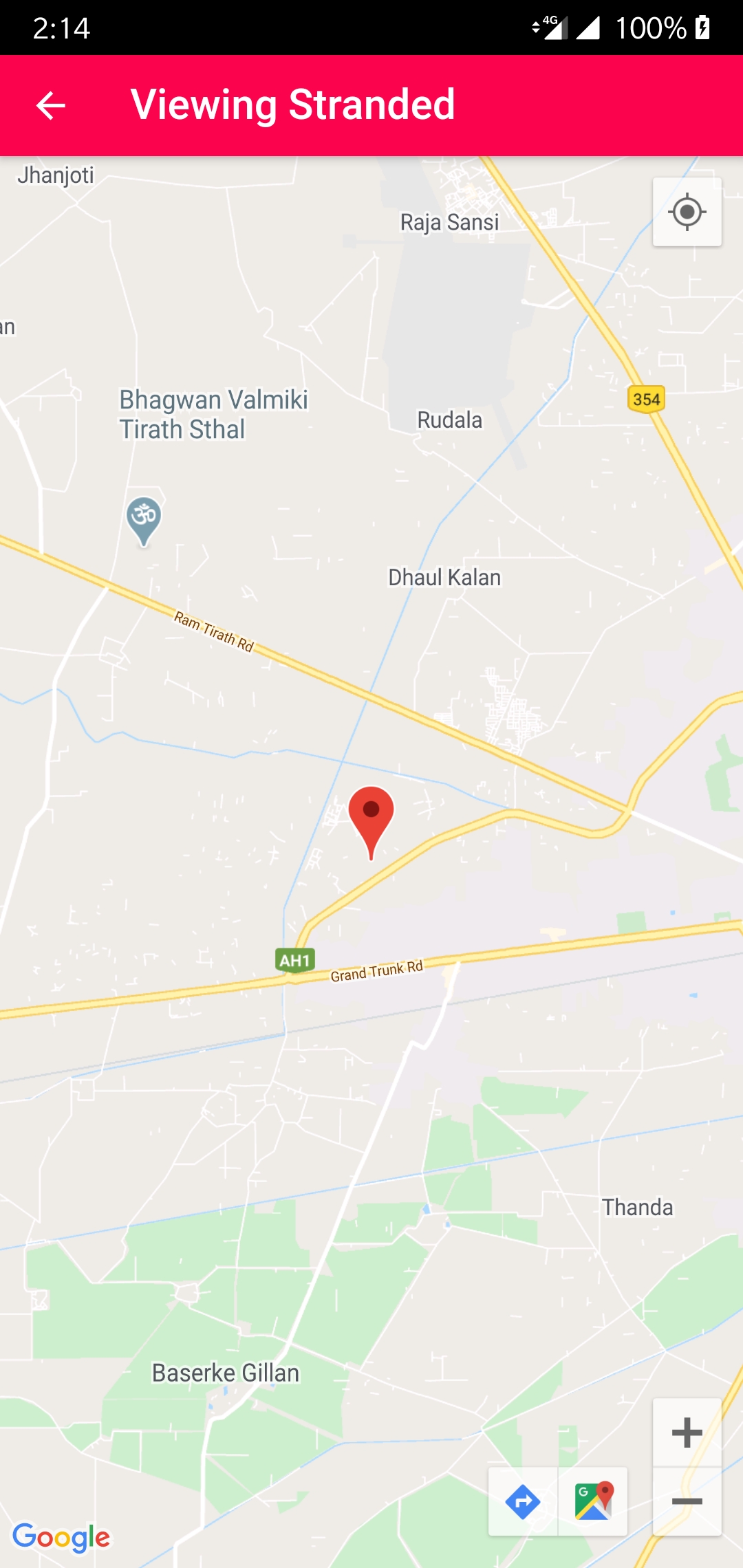
Tracking stranded people in the district. The red mark shows a cluster of people.
-
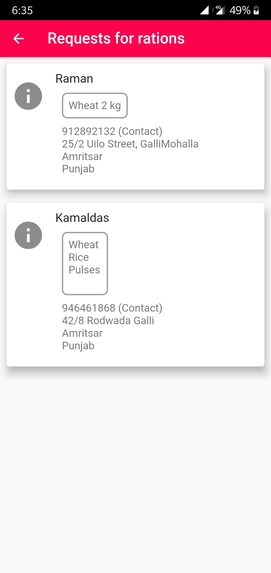
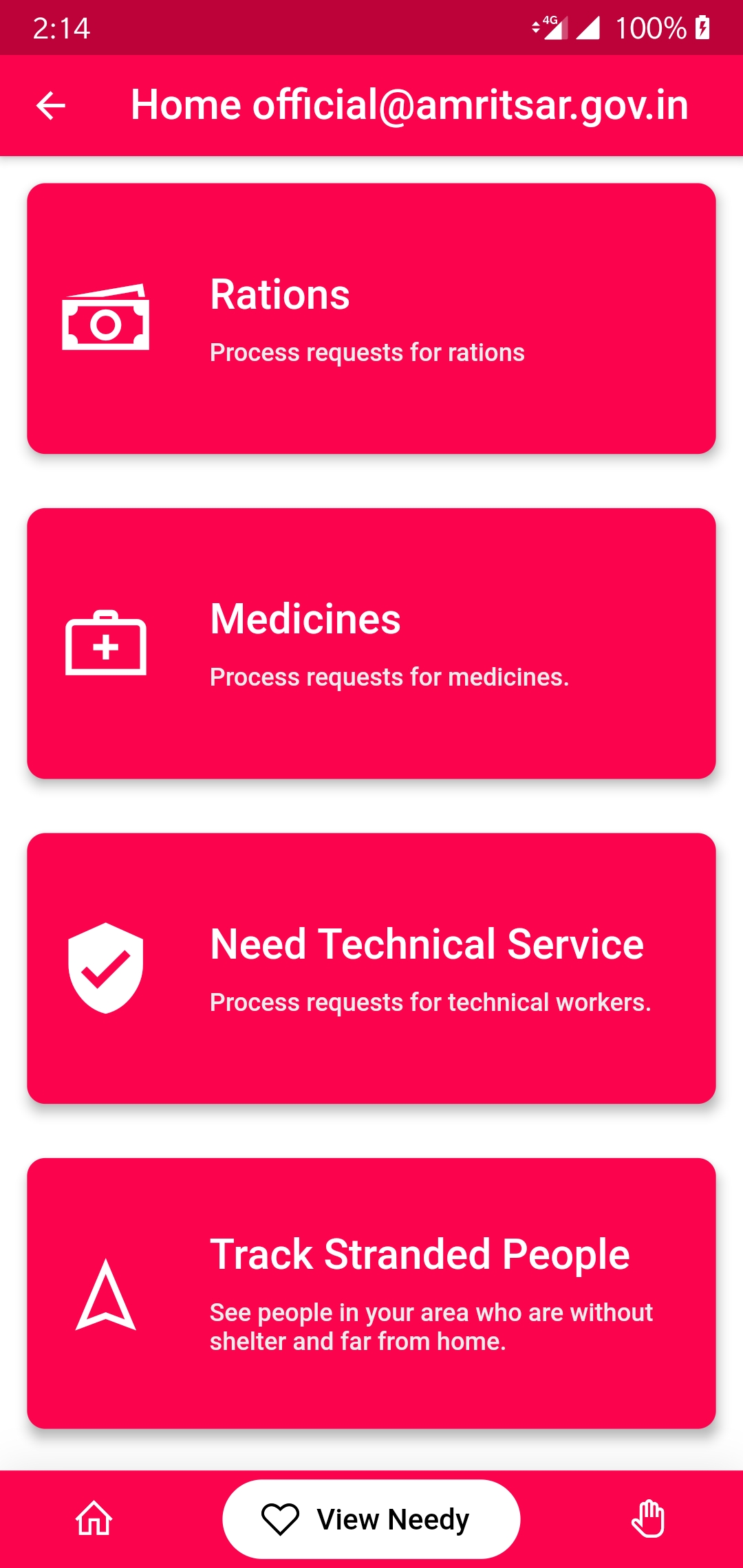
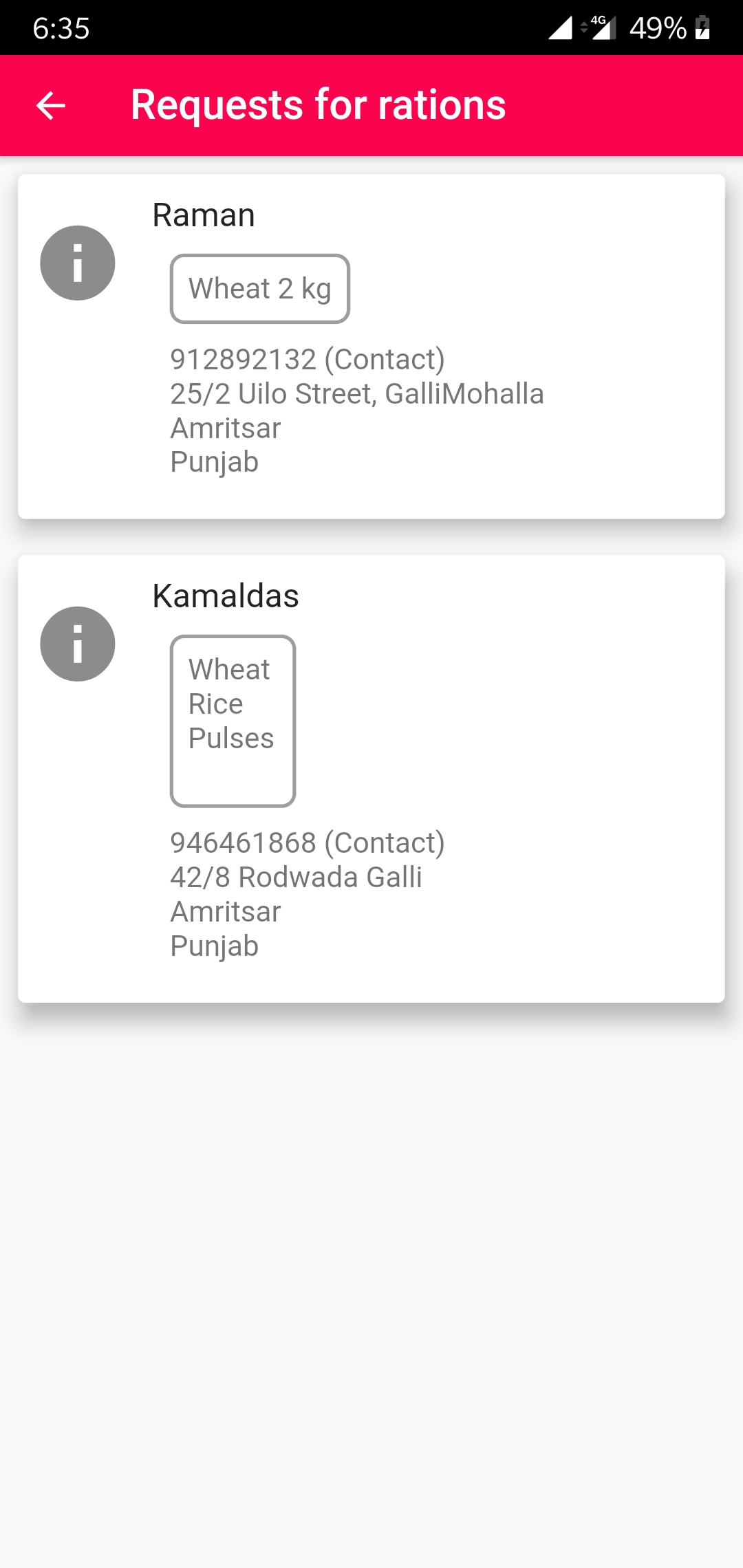
View requests for ration in relevant district (each local govt account sees only requests for their district)
-
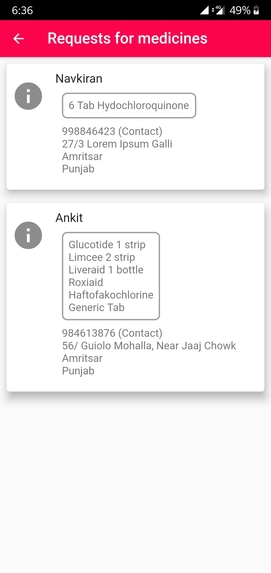
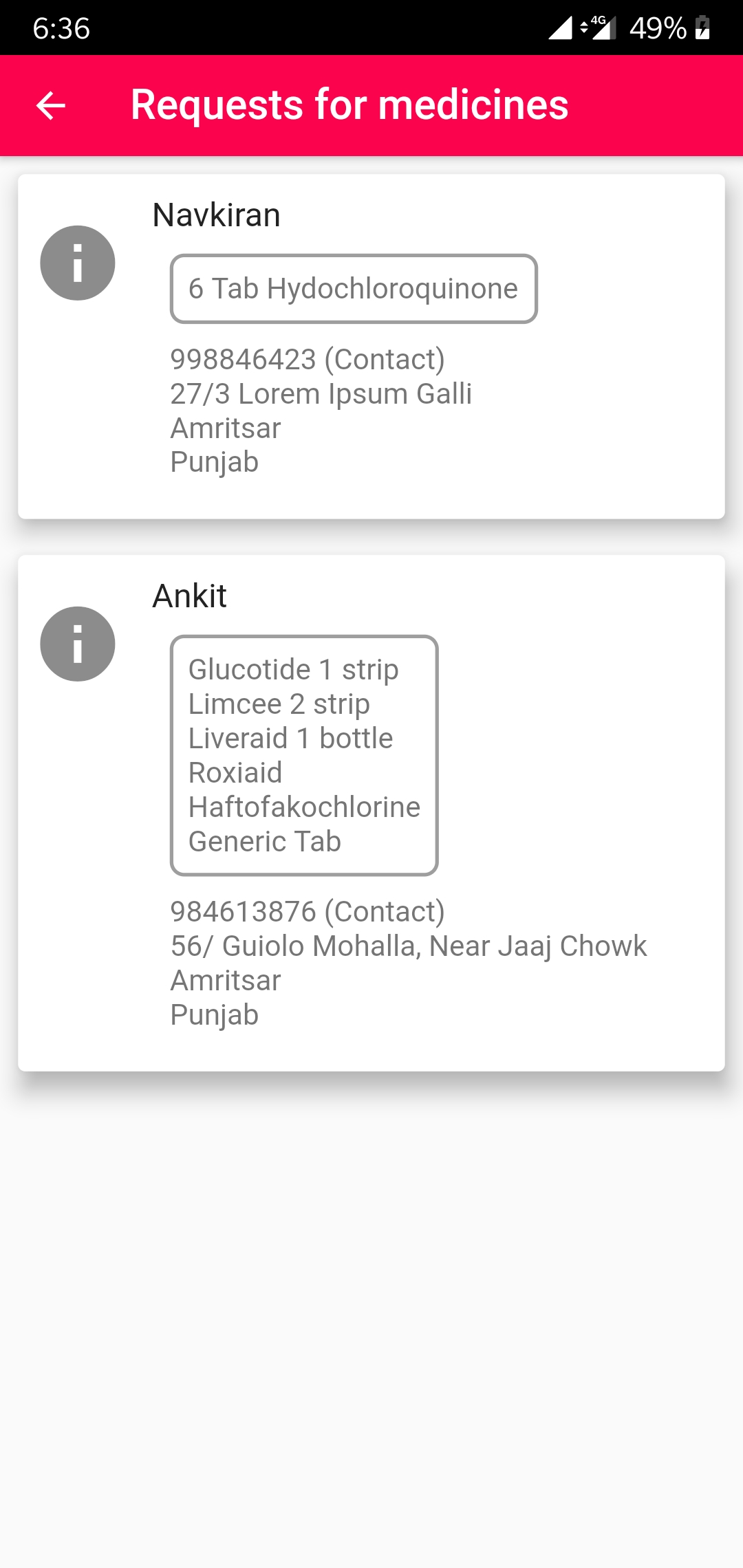
Process requests for medicines (each local govt account sees only requests for their district)
-
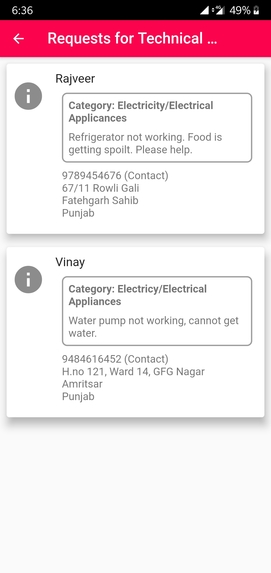
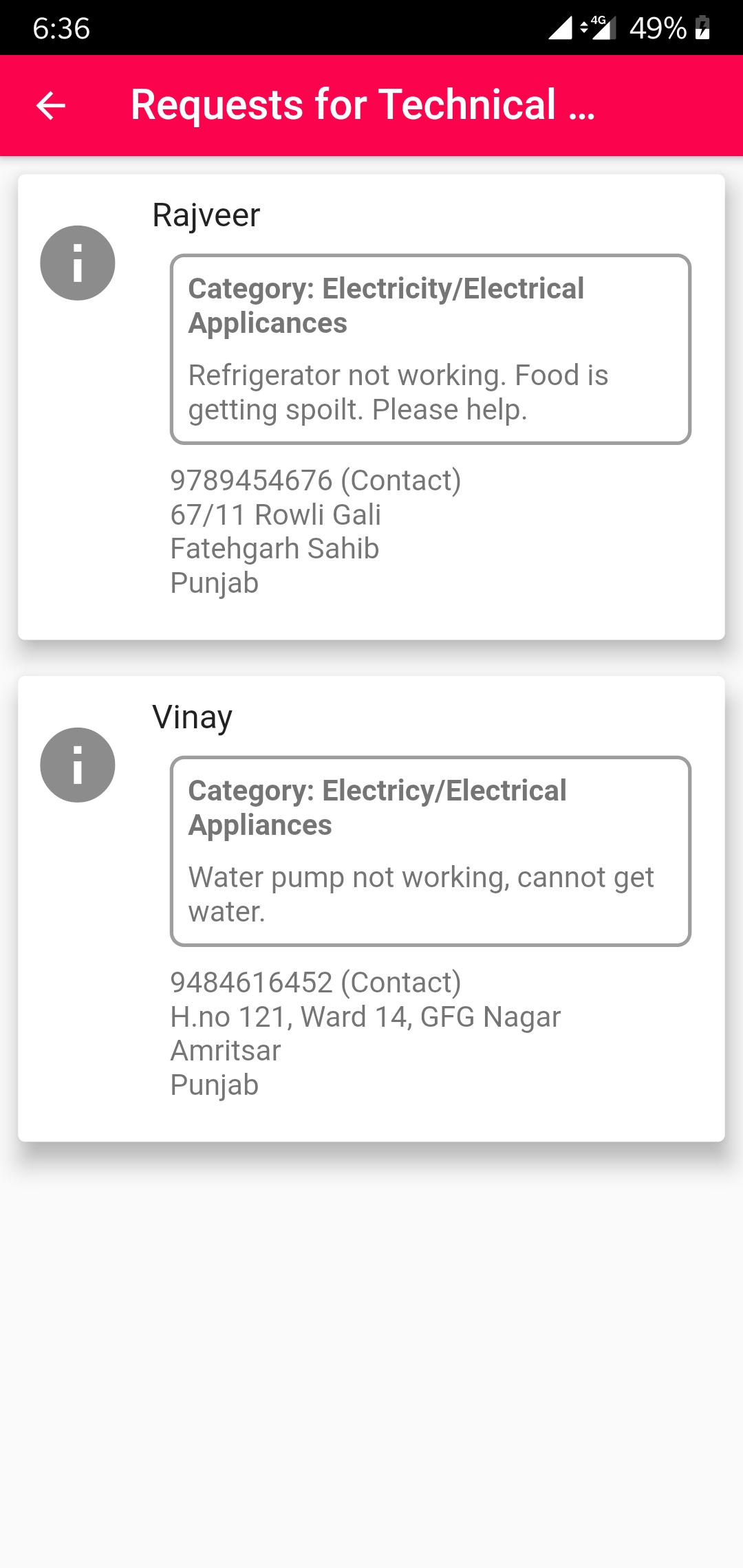
View requests for technical workers (each local govt account sees only requests for their district)
-
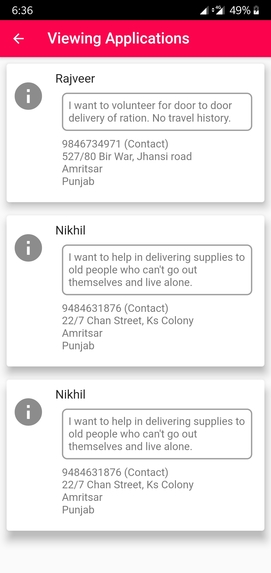
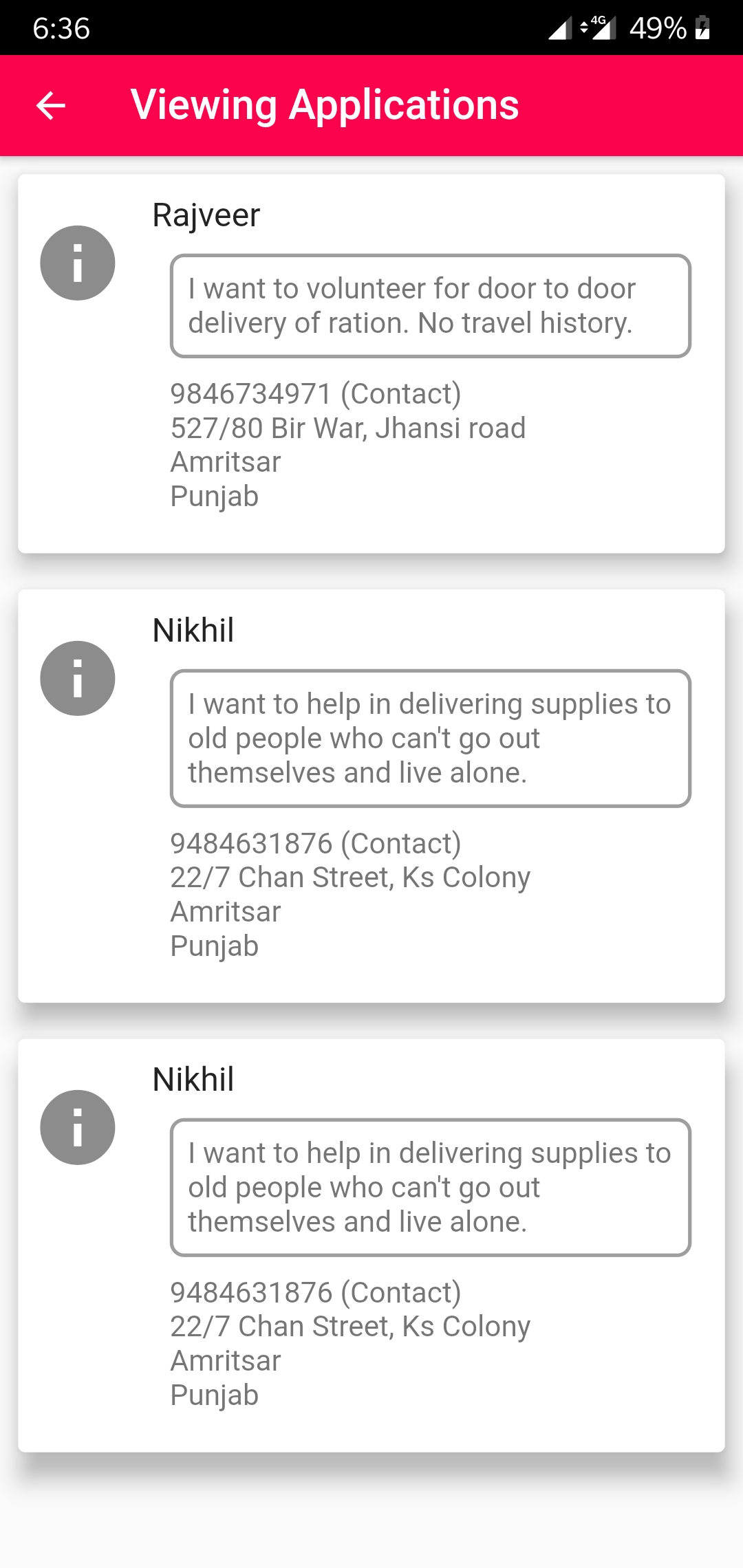
Process applications for volunteers (each local govt account sees only requests for their district)
-
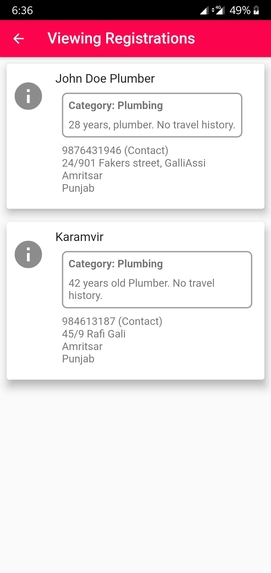
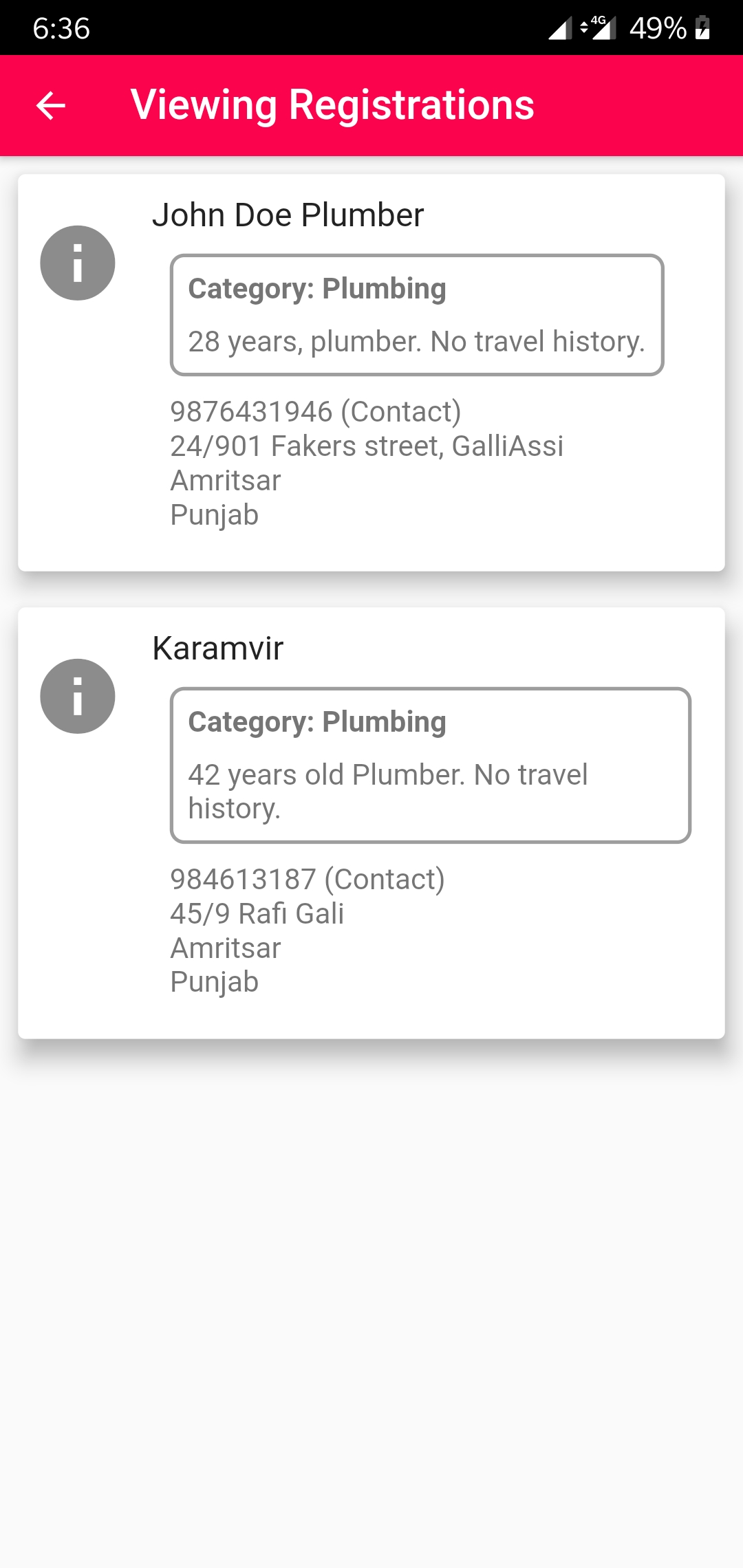
Process registerations for technical workers (each local govt account sees only requests for their district)
Basic Project Overview
The coronavirus pandemic has been an unprecedented challenge for Indian government due to our huge population. Despite of government’s best and continuous efforts, government help has not reached every person in a need (in fact, as per this news article 96% of migrant workers did not get rations!)
Covid Frontline is an application to connect people who can help with people who need it the most during the Pandemic.
- This allows for efficient distribution of resources even with limited infrastructure.
- It seeks to connect people in dire need of resources like food, medicines or other technical and other essential services(need of a plumber, electrician) to local government and associated bodies (like NGOs, volunteers, etc) providing those services.
- The request for supplies will be matched according to the district and state of the person in need to the correct local body - everything will be stored online.
- In this way, help reaches where it is needed the most. It also allows users to apply to be volunteers or to offer their service (if they are a technical worker) to help the government to provide essential supplies and services, after approval and vetting.
- It also seeks to help the government with tracking of people left trapped or stranded far from home without money and shelter.
I believe that the application will be especially critical in coronavirus hotspot areas where there are minimal relaxations on the movement of goods and people.
My Inspiration - the people of my town
Hello, I am Navkiran and I belong to Gurdaspur ( a small border district in Punjab, India). When India was put under lockdown, it presented a huge challenge for the local government and the people to allocate supplies and personnel in an efficient manner. We have limited infrastructure with no technological backbone.
While no strata of society remains unaffected, some sections have been hit especially hard:
Poor people - daily labourers, factory workers, etc who are now without jobs and are having difficulty getting their daily ration/food. Migrant workers were also left stranded away from their homes which has created a huge crisis. 96% migrant workers did not get government promised rations. Source
People with pre-existing medical conditions who need a regular supply of medicines.
Crisis of the poor workers. When lockdown in India was imposed hundreds of thousands of migrant workers were left stranded far from home. Most of them were evicted from their working accommodations. Daily wage labourers ran out of money. These people literally lost their livelihood and the roof their heads in just a few days.
With public transport shut down and states closing their borders these people were forced to walk towards their homes hundreds of kilometres away! These journey taking several days and without food. Adults and little kids all on foot. Refer here.
A lot of students were also left similarly stranded without resources, stuck in other states. Tourists were trapped in places where there were no airports so even if flights were arranged to home countries in theory, in practice they could never make it since they won't be able to reach the airport.
These are already vulnerable groups who are now at greater risk of dying of infection or starvation ( which is perhaps more tragic since it is something preventable by man).
Then there is also the problem of unavailability of technical workers like plumbers, electricians, etc. (Who do I call if my refrigerator breaks down in the midst of the lockdown?)
It's not that government is not working hard. The government bodies at the national, state and district level are trying their best to adapt as new issues arise. Funds have been mobilized, ration relief packages were sent to districts and limited movement of goods and technical workers has been allowed in some areas. NGOs and volunteers are working with the local governments to deliver food, medicines and other essential supplies.
But a lot of times these resources don't reach all the areas where they are needed because there is no centralized infrastructure in place. Some areas might get multiple visits by NGOs while others are left out unintentionally.
Communication is being done through WhatsApp, calls, SMS, etc - all highly inefficient, prone to being ignored due to large volume of messages and calls and most importantly, these were not made for communication during a lockdown.
How to make sure help reaches people most in need?
Covid Frontline is my answer to this problem.
Covid Frontline is an application to connect people who want to help with people who need it the most during the Pandemic.This allows for efficient distribution of resources even with limited infrastructure.
It seeks to connect people in dire need of resources like food, medicines or other essential services to local government and associated bodies (like NGOs, volunteers, etc) providing those services.
The request for supplies will be matched according to the district and state of the person in need of the correct local body - everything will be stored online. In this way, help reaches where it is needed the most.
There are two user roles and for each user role there are corresponding two main screens.
Roles
1) Local Government Officials ("Admins") - they have access to information for their district only
2) Normal Users - townspeople like me
For normal users, there are three main screens:
The Need Help screen wherein the person in need makes a request for food/ration/medicines/technical service. The requests will be matched according to the district to correct local government body which will then assign resources at their disposal accordingly.
The Can Help screen where there is an option to donate to local NGOs associated with the government(verified). Interested users can also apply to become a volunteer or register as a technical worker with the local government body - their application is subject to approval and they are vetted (experience, travel history, etc can be checked) before being put on the field. This ensures they have requisite pass and safety equipment and don't put anyone at risk.
The Stranded screen of the application allows a stranded person in need to add his location to the database along with his/her contact information. All these stranded people will be visible to the government on the map and local governments will be able to better track them and consequently formulate a plan to get them to their homes safely.
For officials, there are also two main screens:
- The View Needy screen shows the different kind of requests that have been posted by people of the district - what do they need? Family size? Urgency? Contact and address information.
This screen also has an option track people stranded due to shutting down of public transport in lockdown. Clicking this option opens a map which shows the location of all such people in real time.
- The View Helpers screen which shows all people who have applied to become volunteers to help government deliver supplies on ground and people who have skills like plumbing, electricians, etc who have also offered their services. These applications have the contact information which authorities can use to review, vet and enlist these people, equip them with safety equipment and basic training to work in the lockdown.
Thus, this will ensure that:
- Resources reach everyone in need.
- Movement of essential supplies and technical workers are organised and controlled - people in need won't be uncertain about getting help, preventing lockdown violations when people risk it to fend for themselves. Everyone in need will be helped.
View project presentation here
What did I learn?
Technical
- I did not know android development so I learnt flutter from scratch, which is also the reason my project took so long to get where it is now.
- I had not worked with firebase before so I learnt about NoSQL databases, cloud firestore vs realtime database, etc.
- I learnt wireframing and UI design basics.
Other learnings (which are more significant I feel)
- I learnt how to learn within extremely short timeframes and to code a minimum viable product within even shorter timeframes. It was a truly amazing experience to take what was in my head and see it coming to life on my screen - with each new line of code I wrote :)
- Learning new skills is hard and picking up the nitty-gritty details of frameworks takes some time but nothing is impossible if there is a goal to guide you and a will to pursue it.
Challenges
Learning a new skill was awesome and I am better for it but I knew I would be left very constrained on time. Fortunately, I was able to complete a working app with the core functionalities. I have a few more ideas which I mention towards the end and I will be adding them even after the hackathon ends.
I tried to kept the code organised as well and tried to follow good variable naming practices. The result does not look too shabby and the efforts spent in organising the code actually helped me avoid headaches later when I was deep in coding the app.
Lastly, there was not just the time constraint of the hackathon but rather the real world. I wanted to have a working product to show as soon as possible to check its feasibility in real-world - where the problem I want to solve lies. I understand that how things work in my development environment can be quite different from how they will behave in real-world environment. Taking my app to those levels of performance and reliability is what I hope to learn from this hackathon.
Future Scope
I want to expand the application to become a complete DISASTER RISK MANAGEMENT solution. Here are the features I have planned:
- Labour shelter mapping
- Support to orphans and vulnerable category
- Public Healthcare locations for COVID 19
- Add a Mental Health Corner showing common tips, advice on handling lockdown anxiety


Log in or sign up for Devpost to join the conversation.