-
-

The "Secret Garden" VR experience
-
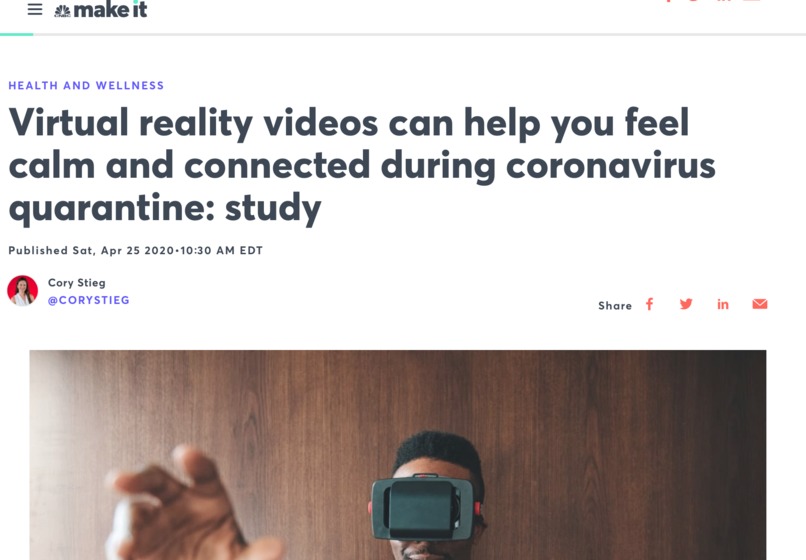
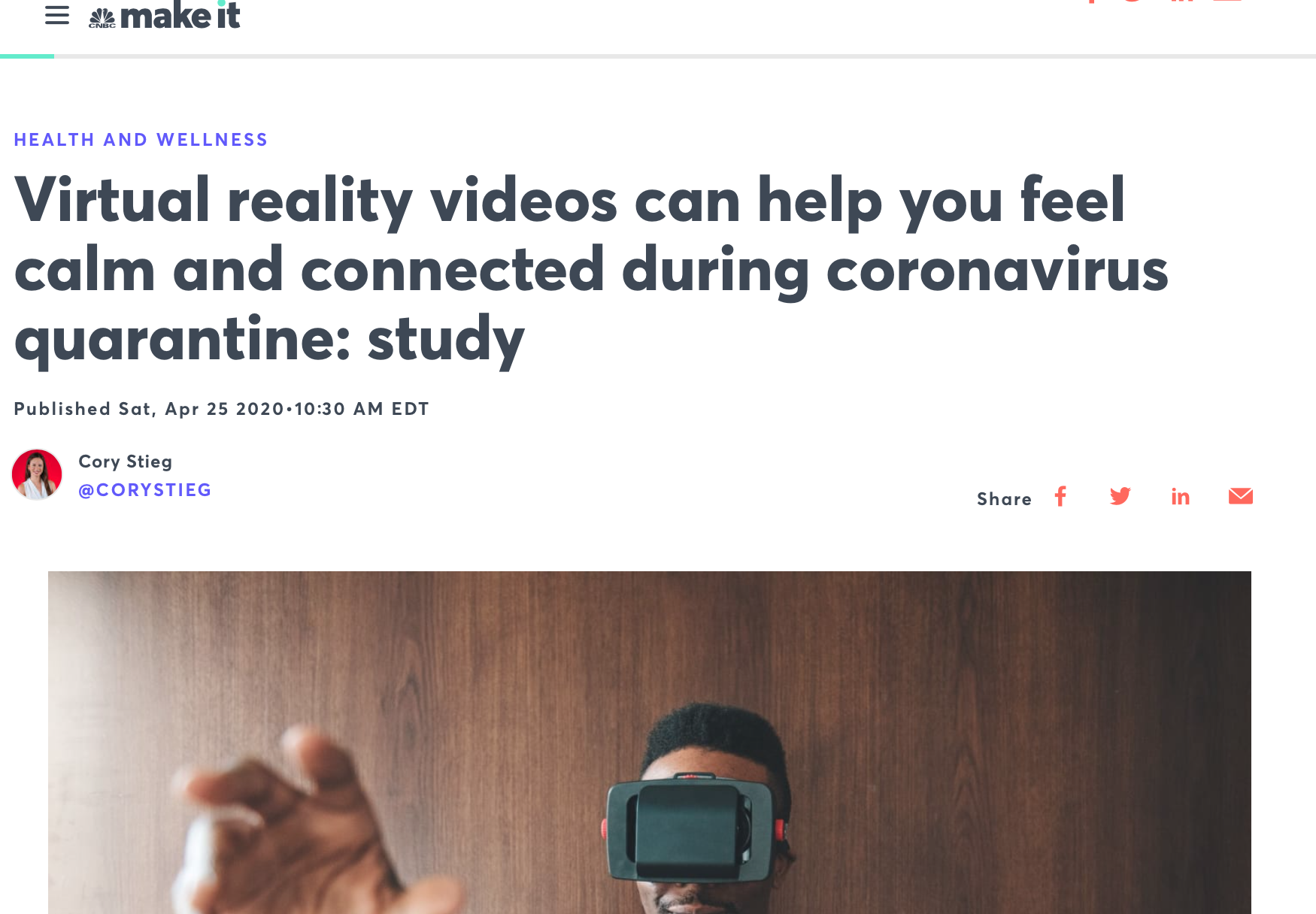
CNBC coverage of our work (25 April 2020)
-
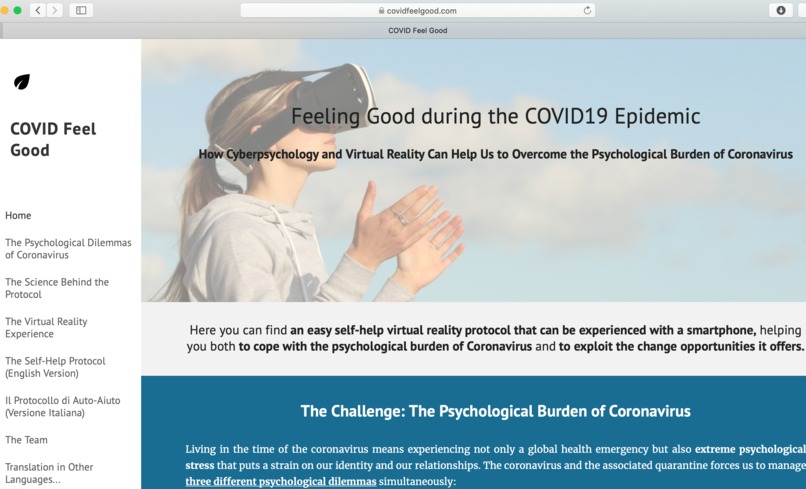
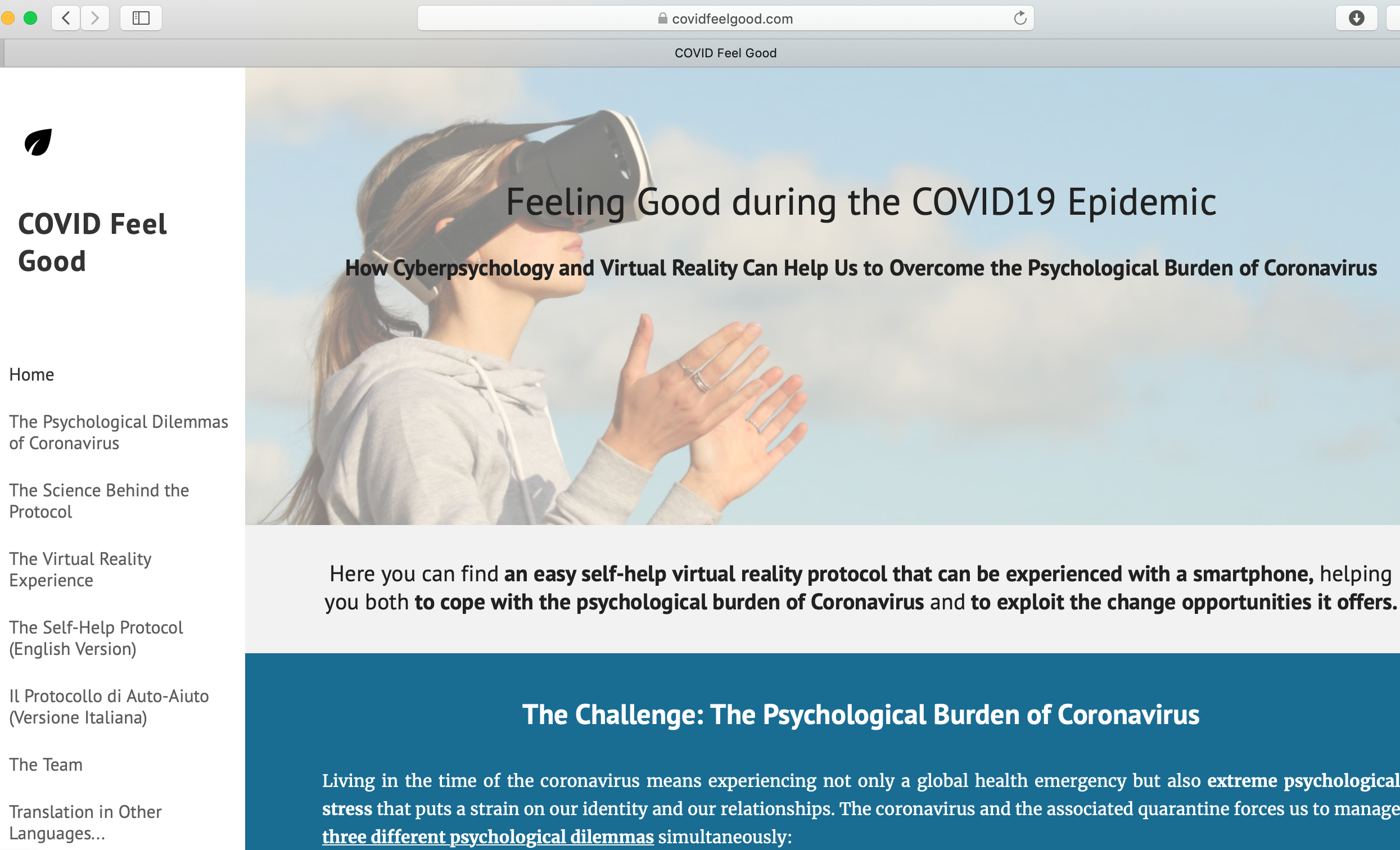
The home page of the web site
-
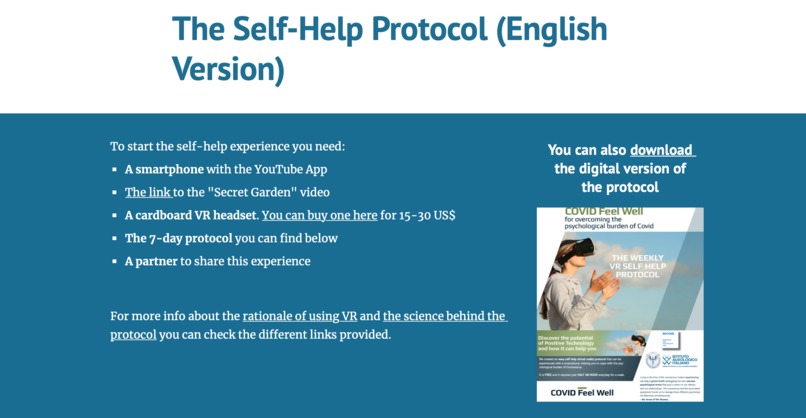
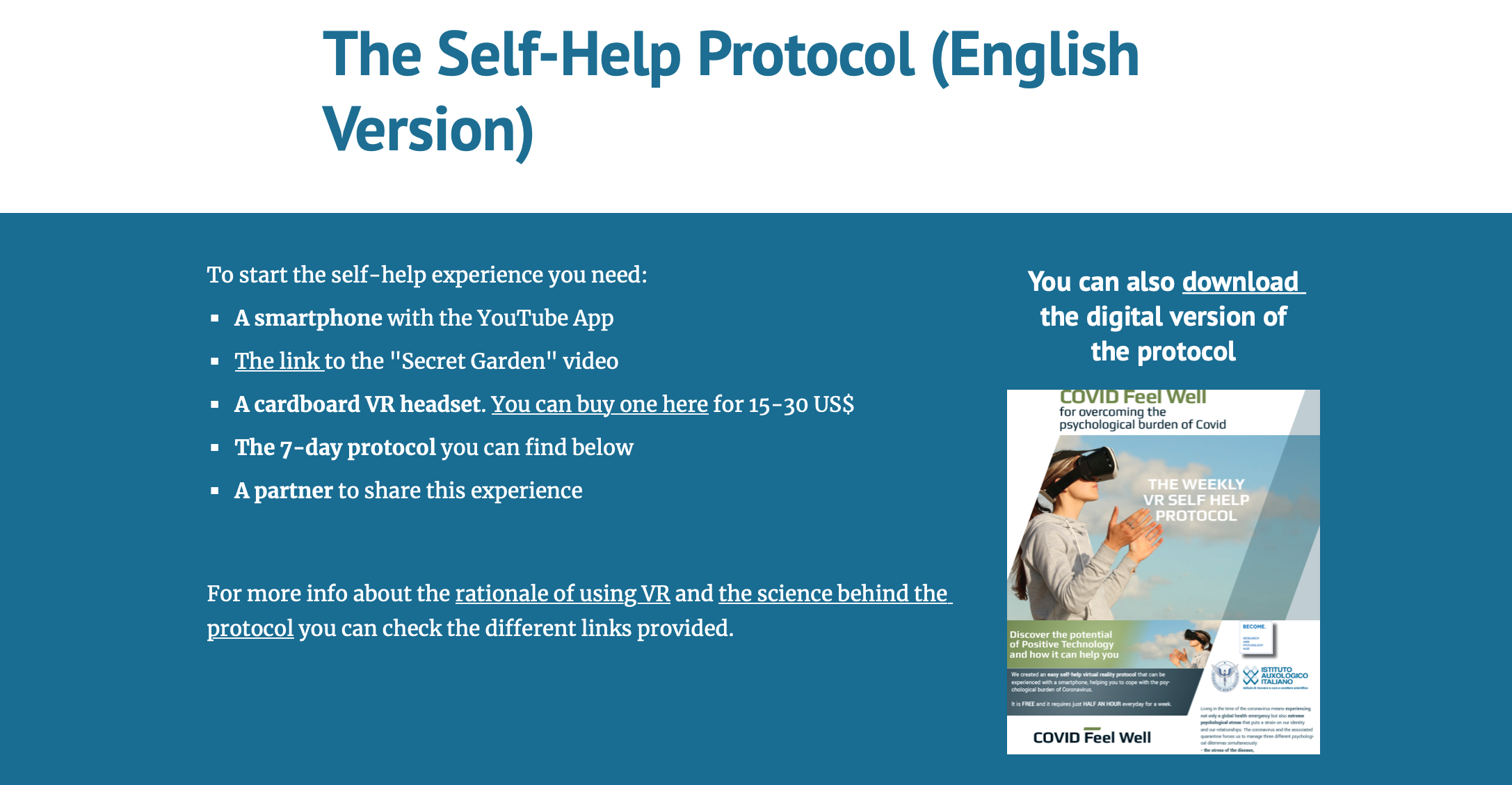
The protocol page in the web site
-
The logo of the project

## Inspiration
Living in the time of the coronavirus means experiencing not only a global health emergency but also extreme psychological stress that puts a strain on our identity and our relationships. The coronavirus and the associated quarantine forces us to manage three different psychological dilemmas simultaneously:
- the stress of the disease,
- the disappearance of places,
- and the crisis of the sense of community.
In fact, the coronavirus pandemic is having a significant effect on people’s mental health that requires urgent support.
On one side, is currently difficult to find to any form of psychological support. The social isolation of the quarantine and the economic downturn are limiting the possiblity of accessing to mental health specialist with the risk of a rise in conditions like anxiety, depression and addictions.
On the other side, one of the paradoxes of coronavirus is that despite being a problem, it can also be a unique opportunity. In fact, willingly or unwillingly, it forces us to change and manage new situations such as quarantine, close coexistence with children and spouse, lack of relationships, and so on.
This process of change can be dramatically boosted by transformative experiences, forcing individuals to critically examine and eventually revise their core assumptions and beliefs. Unfortunately, most transformative experiences cannot be planned in advance, but happen suddenly in individuals’ lives, without a prior control on their contents and their effects.
## What it does
This protocol uses the power of virtual reality to provide a transformative experience that can help individuals in two ways:
- By providing a digital place in which subjects can relax and reflect;
- By facilitating a process of critical examination and eventually revision of core assumptions and beliefs.
In particular we used the rules defined for an effective design of Transformative Experiences, to develop the "Secret Garden" VR experience and its weekly protocol you can find in the Covid Feel Good web site.
For a long time, the main barrier to a broad use of VR technology was its cost. However, now the simplest and cheapest form of VR comprises nothing but a pair of magnifying lenses and a sheet of cardboard or a plastic box. These headsets sell for 15–30 USD . and use a standard smartphone as a tracker and display to generate the three-dimensional (3D) environment. Mobile-based VR is particularly suited to a specific VR content that can be very useful to address the coronavirus stress: 360-degree videos.
360-Degree videos have the power to virtually transport users, immersing them in the video recording, allowing them to actively explore its content and experience the video from any angle. As recently demonstrated by Li et al., these videos have the ability to induce specific emotions characterized by different levels of valence and arousal. More, as shown by Robertson and colleaguesthe neural representations of the part of the 360-degree video presented in VR (the scene within the current field of view) prime the associated representations of the full panoramic environment, facilitating subsequent perceptual judgments. In other words, 360-degree videos generate a dynamic interplay between memory and perception that can be used to improve the features of these cognitive processes and to update their contents.
## How we built it
"The Secret Garden" Virtual Reality immersive experience has been developed through an integrated process involving psychologists, 3D artists, musicians, storytellers and designers. This immersive experience storyboard has been:
- written by wellbeing psychologists;
- converted in a VR experience by 3D specialists using the Unreal engine technology (with complex post-production activity related to VR conversion);
- it has been sounded by musicians and then dubbed by a professional dubber. We used the Augmented Relaxation approach involving deactivating human threat protection system and activating soothing system (see "Emotion Regulation Systems" theory;
- finally, the protocol has been designed by a team of clinical and cognitive psychologists.
## Challenges we ran into
A significant challenge for any psychological intervention during the quarantine is the ratio between accessibility and efficacy. Our goal was not to provide a full structured psychological intervention, but to build the "surgical mask" of mental health support. Surgical Masks do NOT provide the wearer with a reliable level of protection against coronavirus (20%) versus the 95/99% of FFP2 and FFP3 masks. However, they are very effective in protecting others from the wearer’s respiratory emissions, and their use is significantly better than wearing a scarf. Here, we try to do the same. The goal of this VR protocol is not to solve complex mental health problems, but rather to reduce the burden of the quarantine by relieving anxiety and stress and improving interpersonal relationships. Additionally, by facilitating self-reflectiveness and constructive exchange with relevant others, it improves our ability to adapt to the challenges and take advantage of the opportunities offered by the Coronavirus.
## Accomplishments that we're proud of
We have already completed the protocol and the VR experience in English, Italian, Spanish and Catalan. You can test it now in the Covid Feel Good web site. We are now working to produce the experience in other languages and with more contents.
## What we learned
Creating easy tools for mental health is not easy. In particular it is difficult to balance the difficulty and the involvement required with the efficacy of the process. In this view, focusing on clear goals and simplifying as much as possible the technology needed improves the efficacy of the system.
## What's next for COVID Feel Good
We want to start a multicentric controlled study to verify the efficacy of the presented approach. Our goal is to reach at least 240 subjects in three months. More, at the moment COVID Feel Good is a self-help VR experience. The next step is to add the clinicians in the process, by developing a set of easy VR tools to empower them.


Log in or sign up for Devpost to join the conversation.