Inspiration
Challenge: Shops are full. Since the official announcement of a pandemic by the World Health Organization, many people have made their way to supermarkets and hamsters everything they can. Despite the government's request to refrain from doing this, shelves for important goods such as toilet paper or wet wipes are always empty. This was foreseeable and, in my opinion, is something quite normal in a society that is more enlightened than ever. Even if you don't want to be true, you are always closest to yourself. And so you have to show a certain understanding towards those who have apparently been shopping for the next 2 years. And the more negative news is on the front pages of media and on the Internet and social media, the more tangible the virus and its consequences will be for all of us and the more often there will be such hamster purchases.
This is countered by the fact that supermarkets and the like now only let a certain number of people into stores at the same time. This is sensible, because you can prevent large crowds of cash registers and shelves and prevent the COVID-19 virus from spreading faster. The idea of a controlled inflow in shops is in theory a good one, on the one hand to maintain the economy and on the other hand to meet the needs of people. In my view, however, the practice is more of a disaster.
The principle in supermarkets is that only as many shopping trolleys are allowed in. Anyone who wants to shop will be asked beforehand by security personnel whether they really want to shop and if so, whether they could not get a shopping cart first. While this is OK as a temporary solution, it is far from being an effective access control, let alone a helpful solution, to counter the spread of the virus. People who are considered to be at risk are forced to touch shopping carts, who knows who touched them in order to be able to shop. It does not help to keep a distance of 1.5 m if the virus is already sticking to every handle of the shopping cart. Sure you could be so smart and put on gloves, but stupidly the grandma around the corner doesn't have one because they were sold out and can't even buy them now because she has to touch the shopping cart. And already the grandma is in a bind and feels beside the whole "Oh it only concerns the very old with previous illnesses" messages let down. How about if your grandson comes along quickly and push the car? - This doesn't belong to the risk group anyway, does it? Apart from the fact that this is not a sensible argument, that would not be possible anyway, because, as I have learned today, you cannot even have a friend, wife or grandson in a shopping cart, but the accompanying person must either wait outside (very reasonable Decision with mother with child [irony]) or this must also grab one of the now much sought-after shopping carts. And what does one shopping cart mean? It means one more person who might get infected through contact with the virus. I hope you realize how contradictory this implementation of an access control really is. But how could you solve this more effectively and maybe even better? I have based myself on this question and now I want to present my approach to solving it
What it does
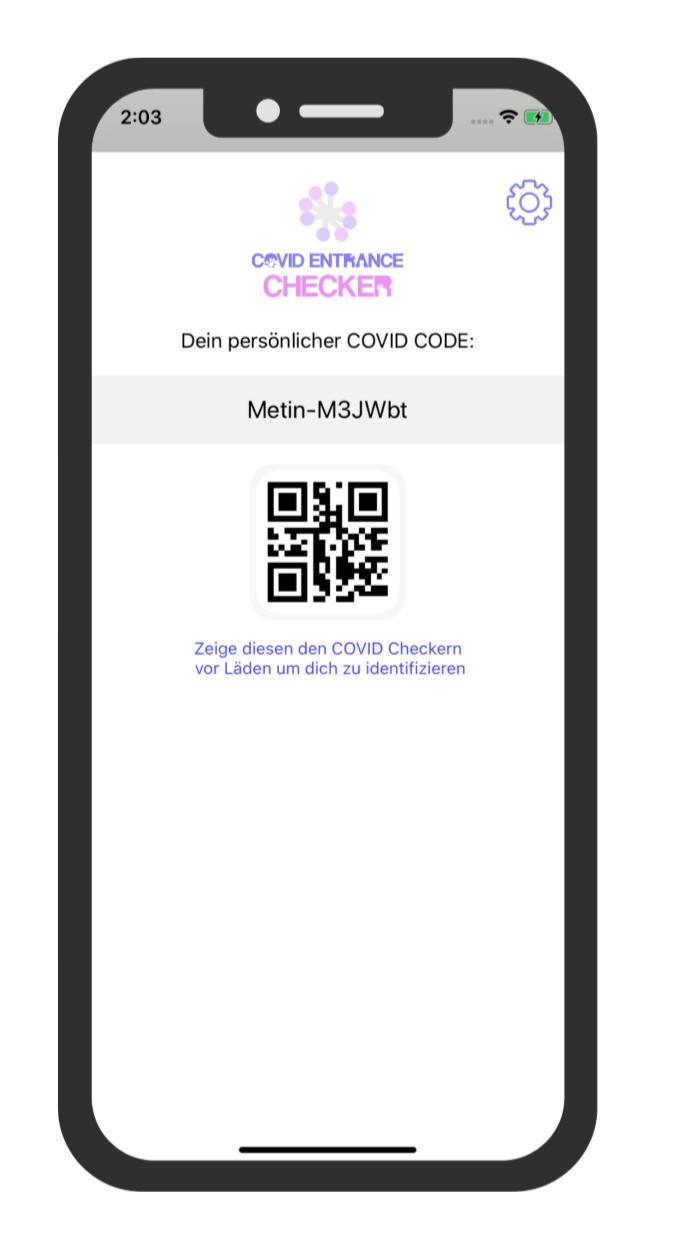
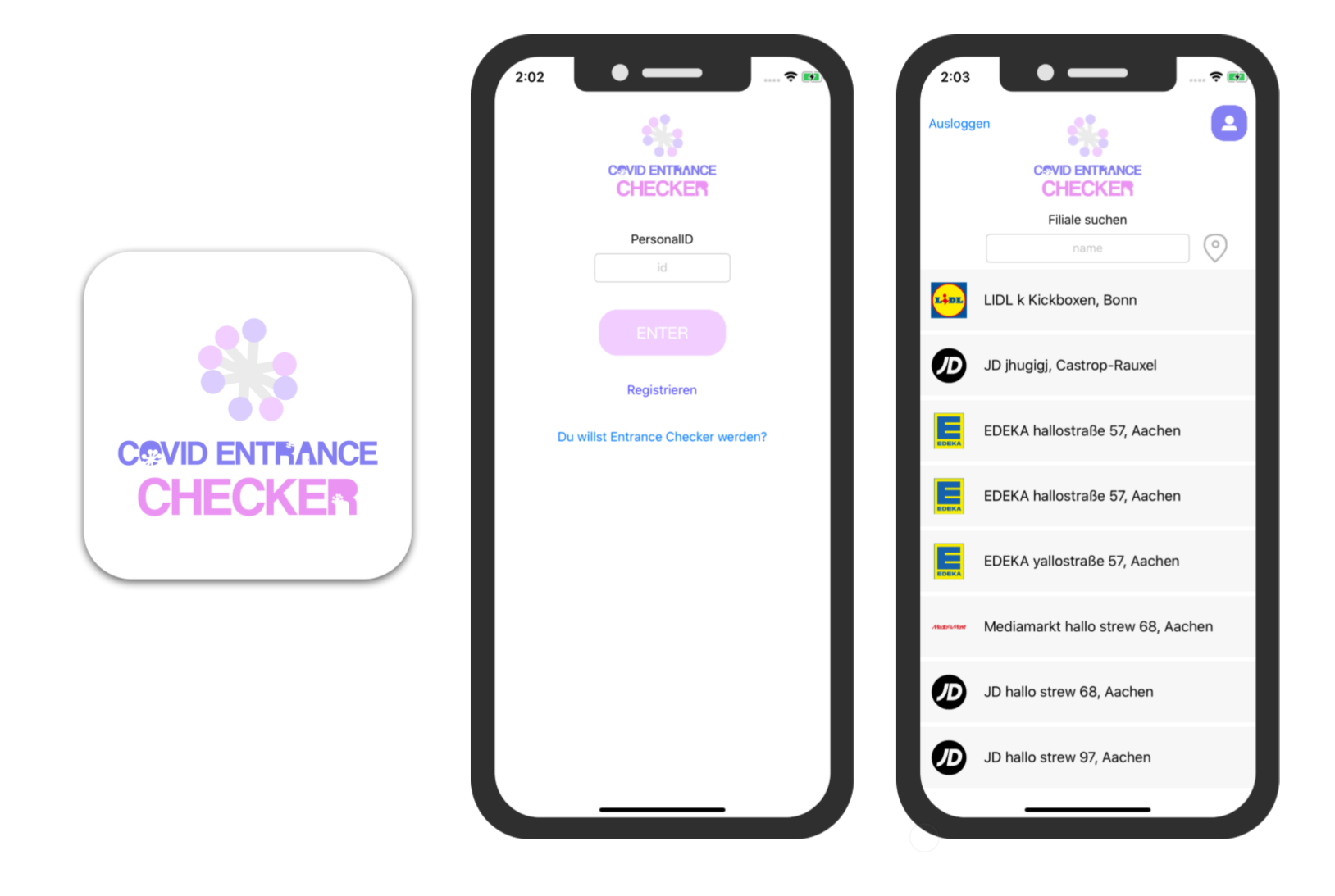
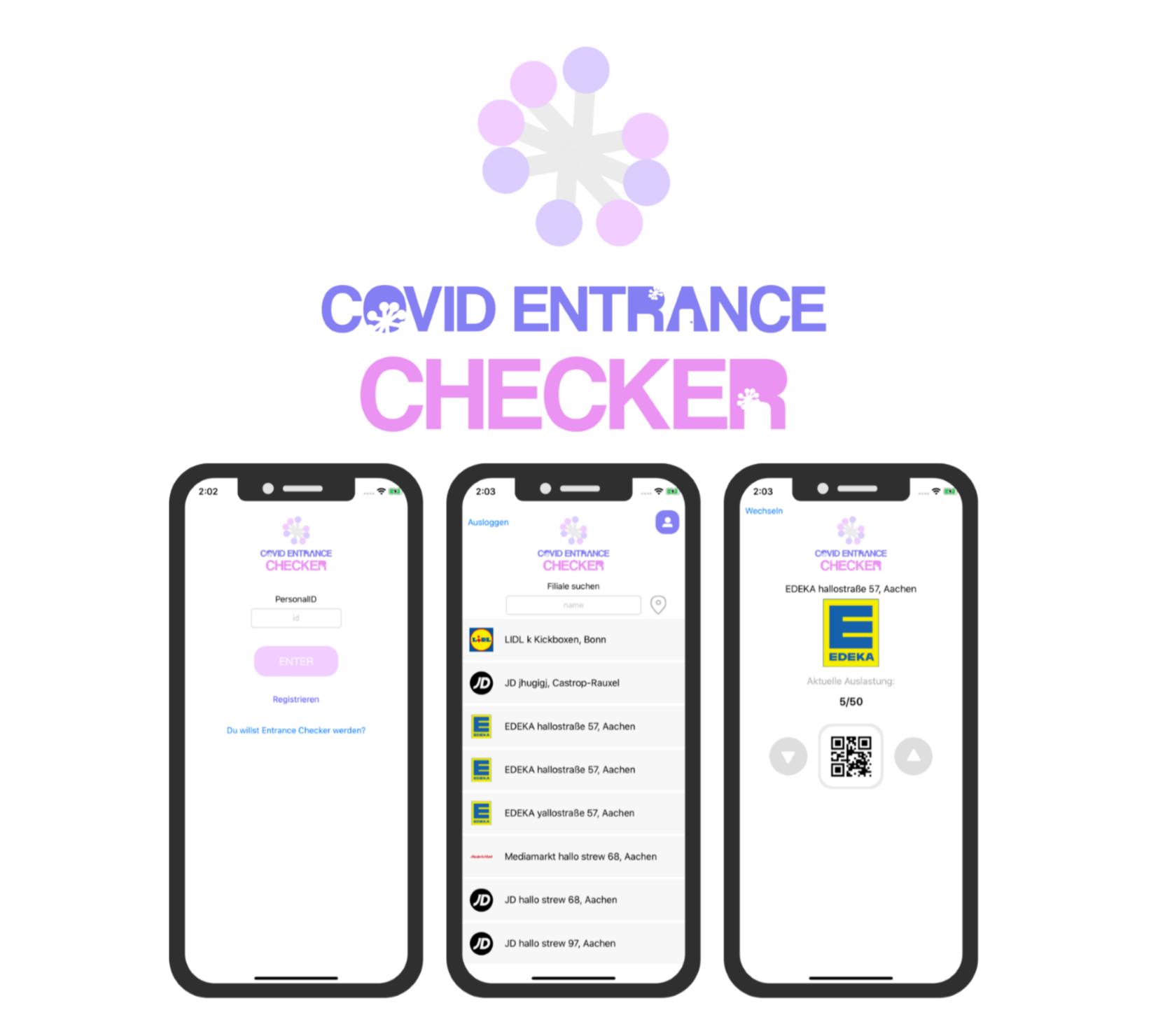
The Covid Entrance Checker is an app that can be used to regulate the flow of visitors in supermarkets and actually any shop without having to use any objects such as shopping trolleys. But not only that, it also automatically shows whether certain people belong to a risk group and the customers themselves can always find out about current visitor numbers in their planned shopping location, so that they know beforehand where the Crowds are big and where you can go straight in to do your errands quickly. And to make the best of the outside world: the app is already programmed and only needs to be brought to people.
How I built it
The app was implemented using Google's Firebase database services and also stores all data regarding the number of customers in a branch and accounts for individual customers. The use of this database is free of charge up to a certain access rate. But even if the access rate increases, it is still good and above all easily scalable and also cheap and reliable. The database structure looks like this:
Person (id, name, covidcode, city, email, question1, question2, question3)
- Every person in our system has a unique ID so that they can be identified in the database
- Each person has a unique name, an email and a city in which he lives
- Each person is automatically generated from the name and ID a unique CovidCode which can be shown to the responsible staff when they are identified in front of shops.
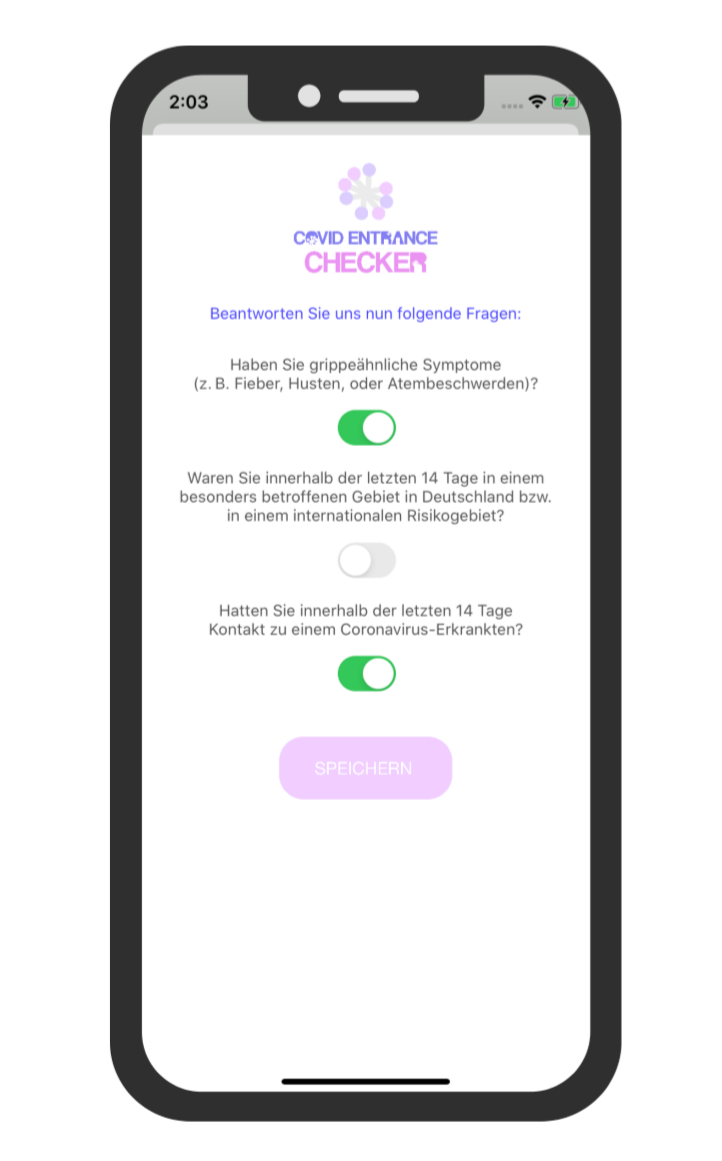
- Last but not least, the database stores answers to three important questions that can contribute a great deal to the protection of risk groups.
Branch (id, name, picture url, address, zip, city, capacity, current number of customers)
- Each branch also gets a unique ID
- Each branch has a name, an address and is located in a city
- Each branch has a capacity value that gives information about how many people this store lets in at the same time
- Each branch has also saved its current number of customers, so that you always know how many people are in this shop.
Challenges I ran into
None
Accomplishments that I'm proud of
I build the app in less then 2 days
What I learned
Designs should be kept as simple as possible.
What's next for COVID ENTRANCE CHECKER
I hope to be able to pursue this idea further and expand it to a system with a huge DB, where everyone has one of these QR codes.


Log in or sign up for Devpost to join the conversation.