-
-
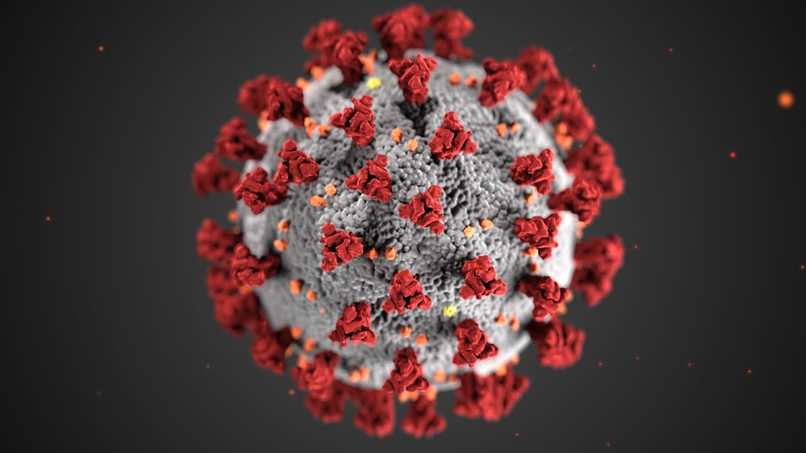
Corona Model-1
-

Corona Model-2
-

Corona Model-3
-

Problem Statement
-
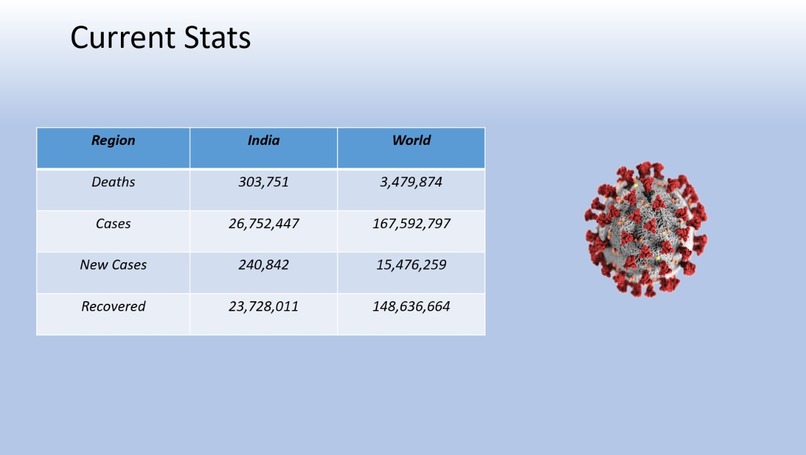
Current Stats
-
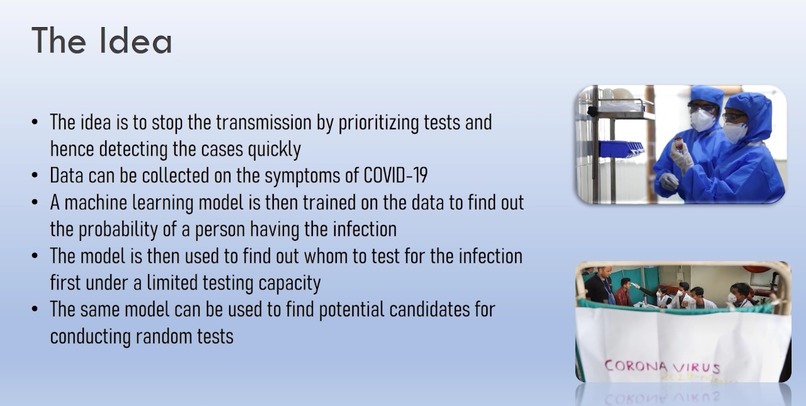
Our Idea
-
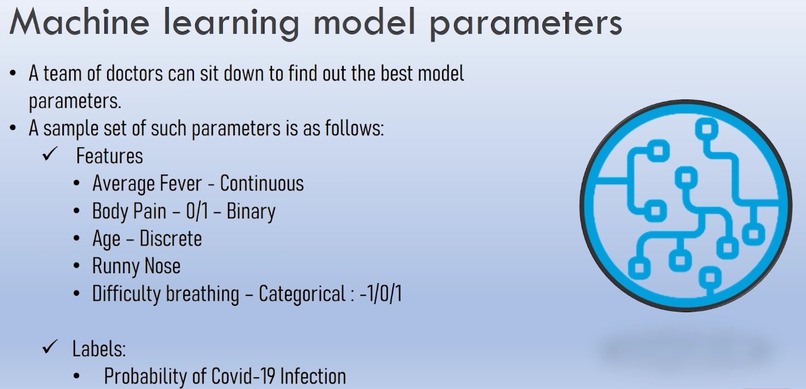
Machine Learning Parameters
-
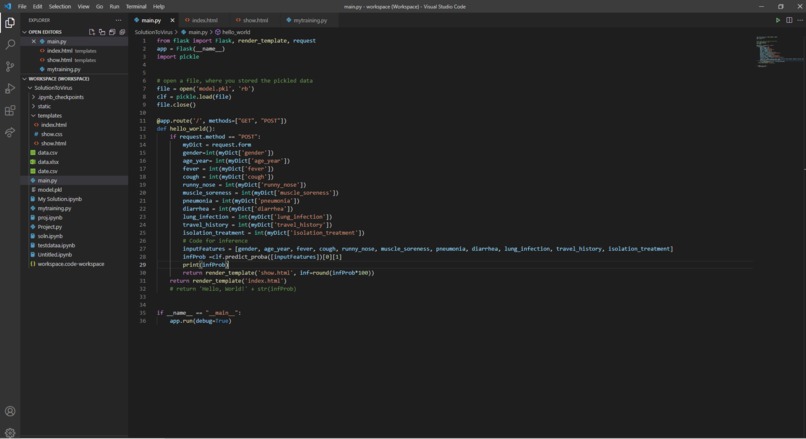
main.py
-
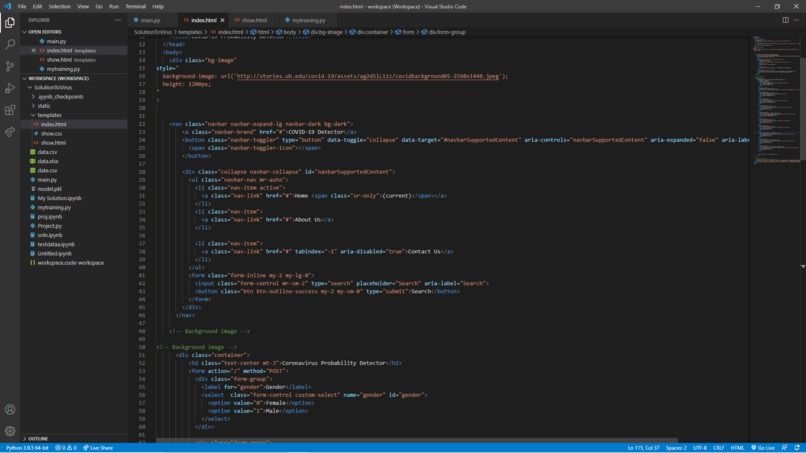
index.html
-
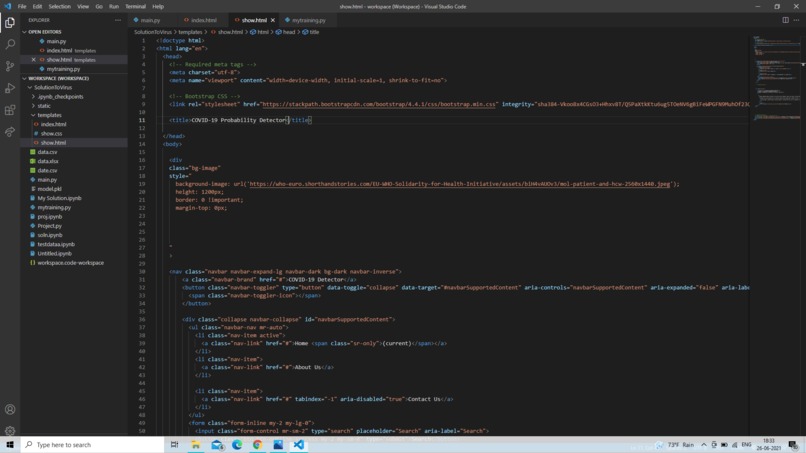
show.html
-
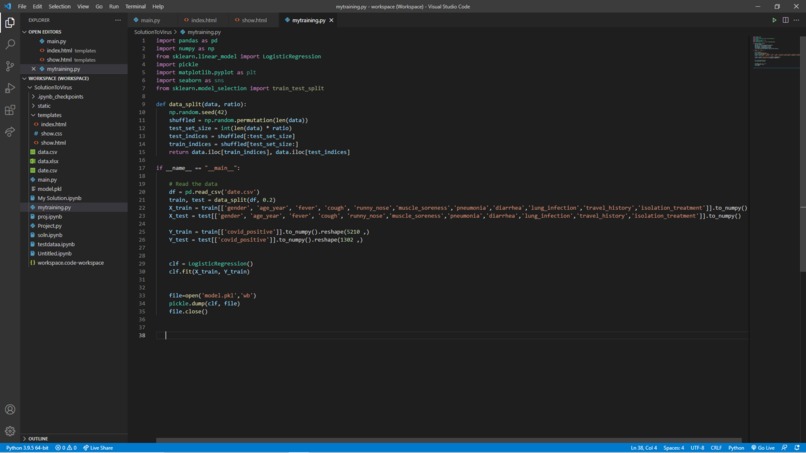
mytraining.py
-
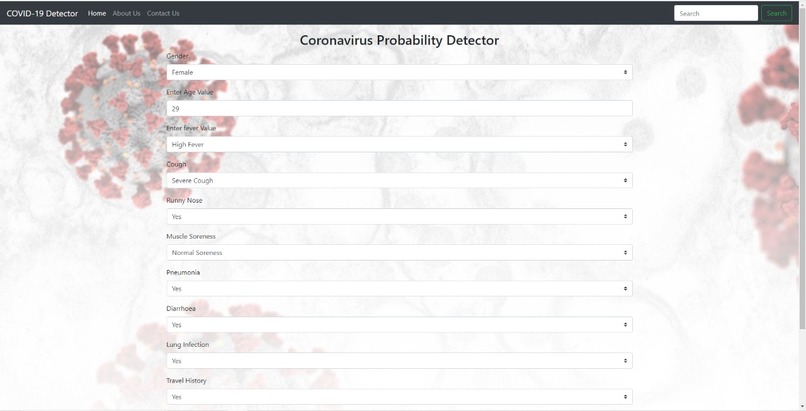
input page
-
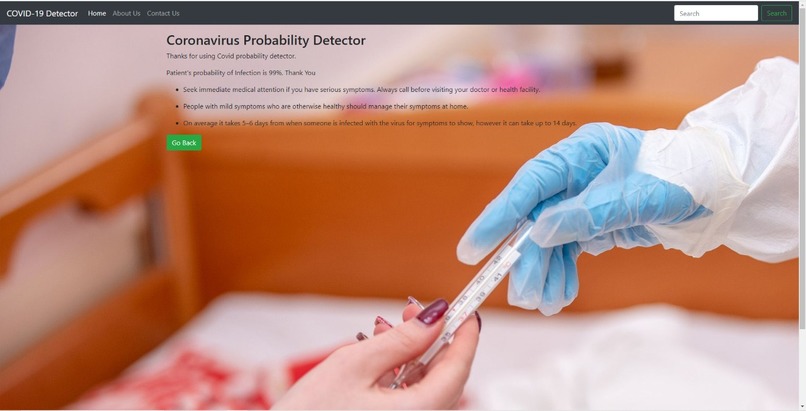
result page
-
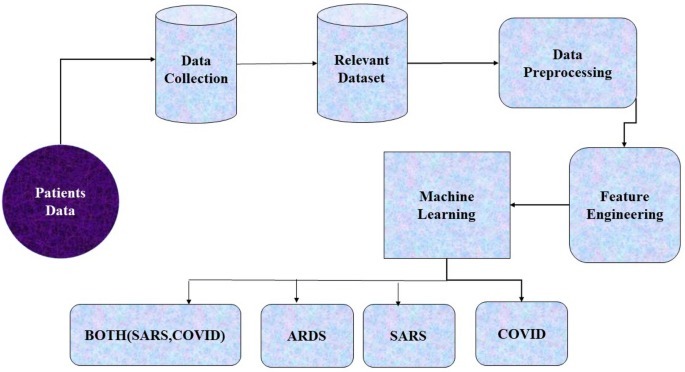
Architecture Diagram
-
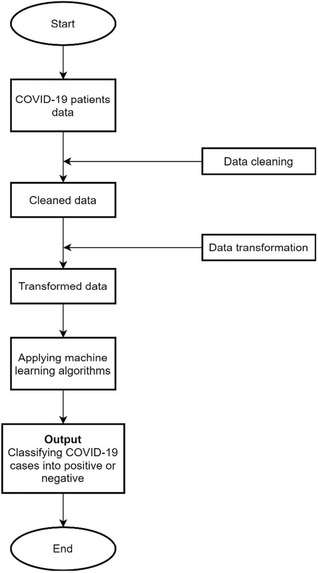
FlowChart
-
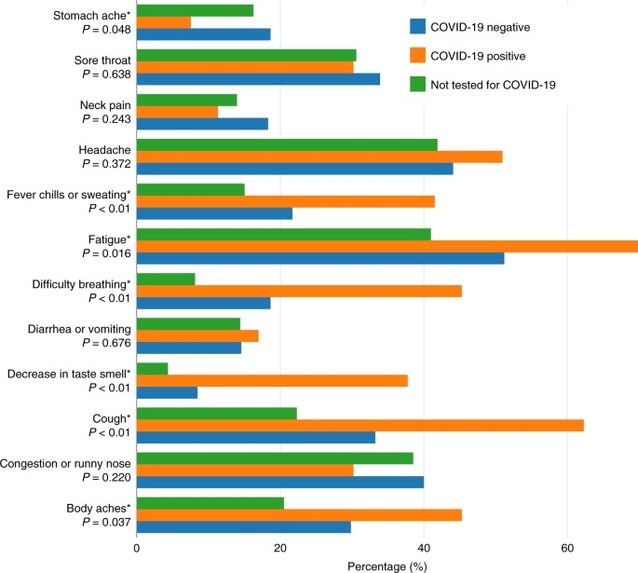
Bar Graph
-
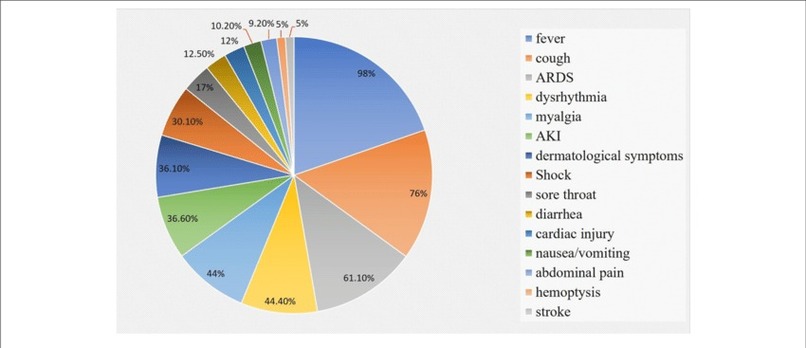
Pie Chart
-
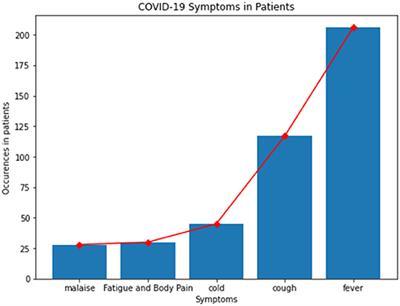
Histogram
-
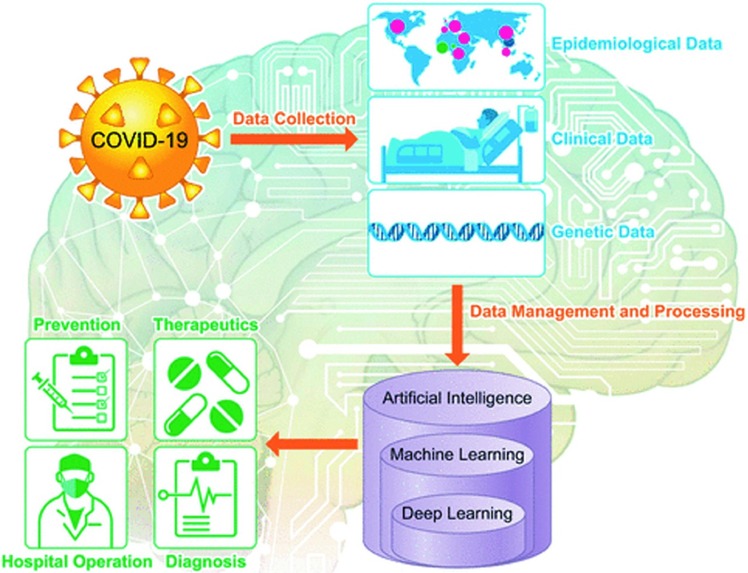
Analysis
-
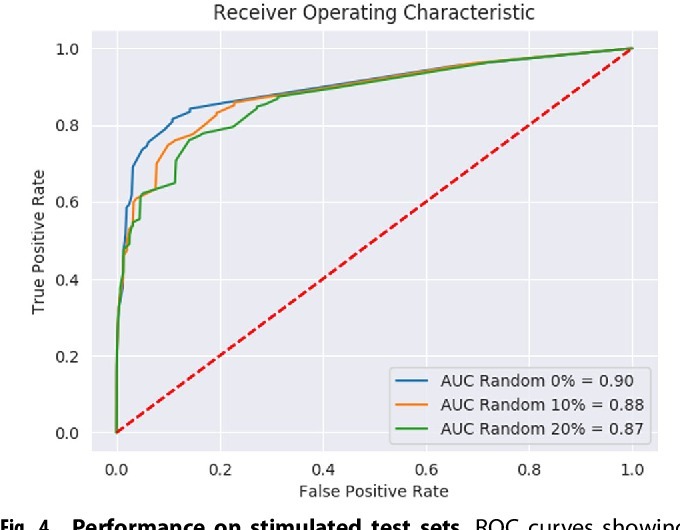
Visualization(i)
-
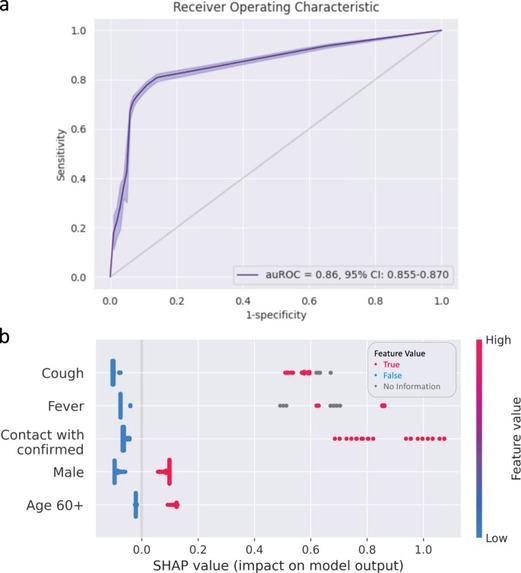
Visualization(ii)
-
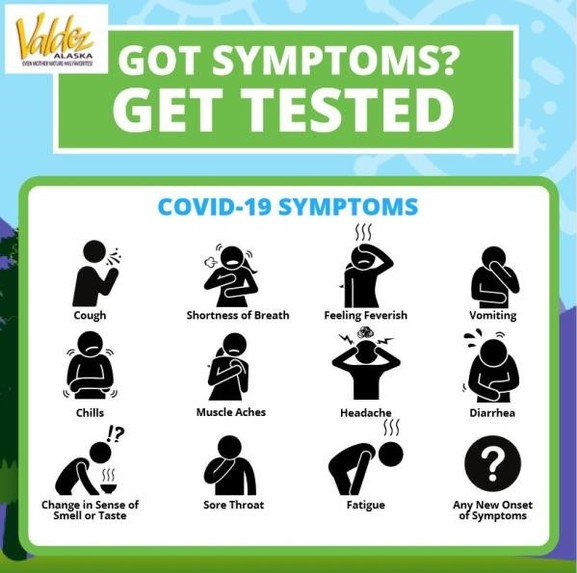
Thumbnail
-
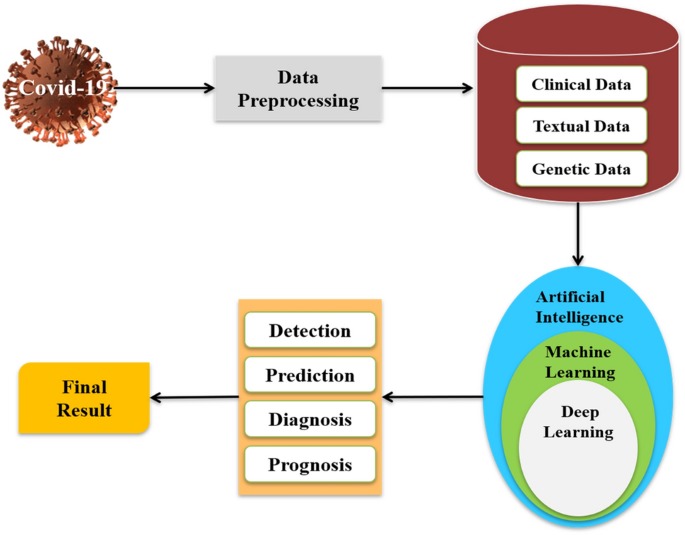
Custom Model


Covid Analysis Using Machine Learning
Our Inspiration
With the severe increase in the million number of covid cases and deaths, there is totally alter in the ecosystem as well as the lifestyle of people. Nowadays, every person is having fear of this fatal disease. So, our only vision is to stop the spread of transmission of virus and it is only possible when we strictly follow the safety precautions and prioritize the tests in the people.
What it does
Our project is machine learning based prediction model that calculates the severity of the disease in COVID-19 patients, using risk factors that can be monitored remotely, with the patient being at home and ultimately helps to prioritize the tests in the person based on their symptoms. The person having high chances of infection will be given priority for the test and hence it consequently helps to stop the spread of transmission of virus.
How we built it
Our project is totally built as software designed model.
CUSTOM MODEL

STEPS
Setting and study data
At first, we collected datasets which contains initial records, on a daily basis, of all the residents who were tested for COVID-19 nationwide. In datasets, various information is available, including clinical symptoms like age, sex, fever, runny nose, cough, pneumonia, etc. Based on these data, we developed a model that predicts COVID19 test results using eight binary features: sex, age or above, known contact with an infected individual, and five initial clinical symptoms.
The training-validation set consisted of records from 5000+ tested individuals (of whom 4769 were confirmed to have COVID-19). The following list describes each of the dataset’s features used by the model:
A. Basic information:
- Sex (male/female).
- Age (true/false)
B. Symptoms:
- Cough (true/false).
- Fever (true/false).
- Sore throat (true/false).
- Shortness of breath (true/false).
- Headache (true/false).
C. Other information:
- Known contact with an individual confirmed to have COVID-19 (true/false).
Development and Evaluation of the model
- The model was trained by the clinical datasets using Logistic Regression technique.
- The basic UI design was created using Bootstrap to take the response from the patients.
- The model is now evaluated to generate the results based on the input features of the patients.
DATA AVAILABILITY
The dataset can be downloaded, and can be accessed at : https://github.com/OmKumar-4041/covid_analysis_using_machine_learning
CODE AVAILABILITY
The model hyperparameters and the analytic code of the model required to reproduce the predictions and the results are available at : https://github.com/OmKumar-4041/covid_analysis_using_machine_learning
Challenges we ran into
A key part of our design was to incorporate a custom Machine Learning model that could predict the accurate results based on the input features. While we have gone the time consuming route of collecting our own images / scraping the internet for images and building our datasets and finding the datasets with high number of tests with accurate values was the most significant challenge we faced.
Finally, we found that one interface in google named Datasets Research-Google which is a famous and reliable tool for getting any categories of datasets making our project relatively easy to implement. Thank you Google and kaggle .
Accomplishments that we're proud of
The accomplishment that we are literally proud of is that :-
- Our model aims to assist medical staff worldwide in triaging patients, especially in the context of limited healthcare resources.
- This prediction model will have a great contribution towards our society since it prioritizes test and tells the probability of the covid infection in person which aware them for getting proper treatment as soon as possible and hence save their lives.
What we learned
- From the study of our project we came across many new interesting facts about machine learning and also we learned about the training of machine learning model as a result we finally could reach the conclusion of detecting the probability accurately.
- A detailed study of various frameworks like bootstrap, pickle and flask also made our work easier and smooth for developing our UI design form with much accurate results.
- Most importantly through our study we came to know in many places there are shortage of medical resources for checking the patients whether they are infected or not. So our model literally can play a good role in the shortage of such resources with much efficiency and reliable results.
What's next for Covid Analysis Using Machine Learning
The next for covid analysis using machine learning is Deep Learning method. As our model works on machine learning by getting trained on datasets and hence by detecting the probability of infected person. The DL techniques can be adopted for the detection, diagnosis, classification, prediction, and prognosis of COVID-19. Domestic datasets (including CT and X-ray images) or public datasets can be employed in which training and testing datasets which can train and validate the methods. The criteria for measuring the efficiency of methods used in community studies include sensitivity, specificity, and accuracy.


Log in or sign up for Devpost to join the conversation.