-
-
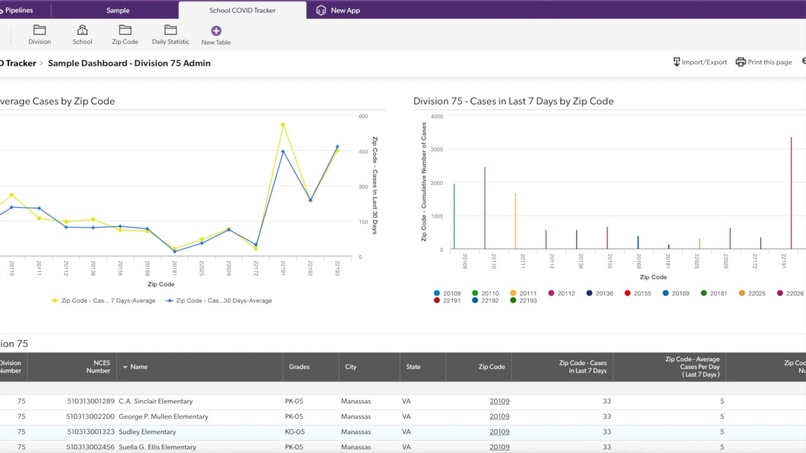
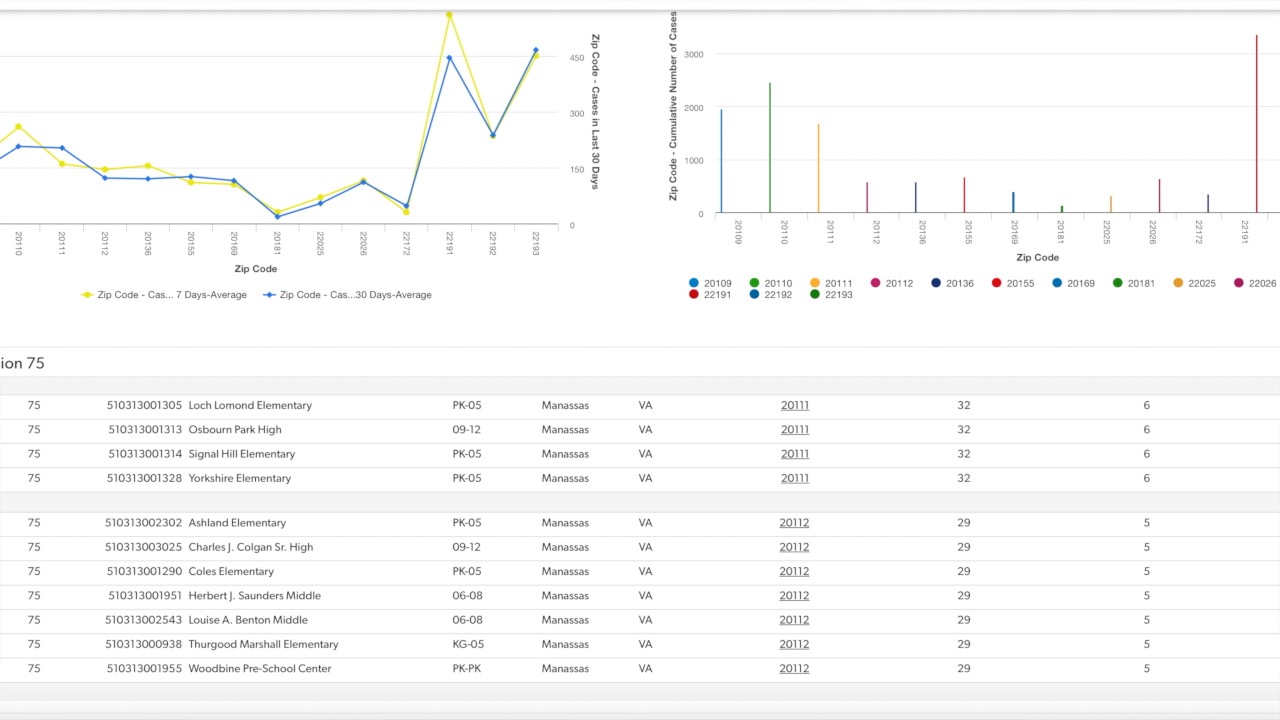
Sample Division Administrator Dashboard p1
-
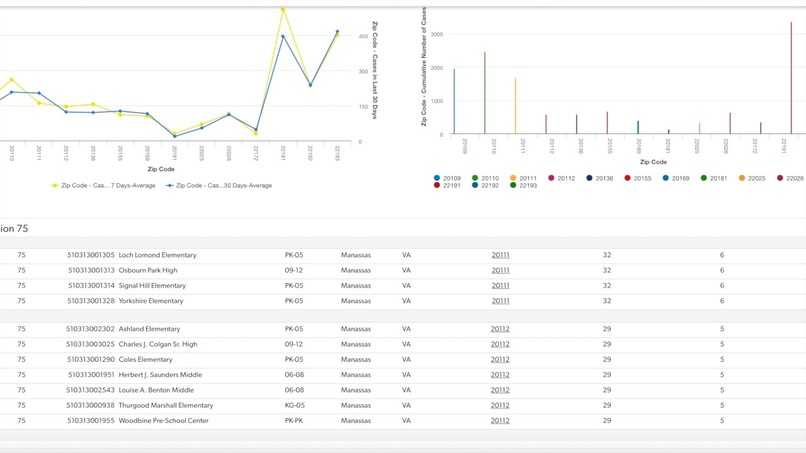
Sample Division Administrator Dashboard p2
-
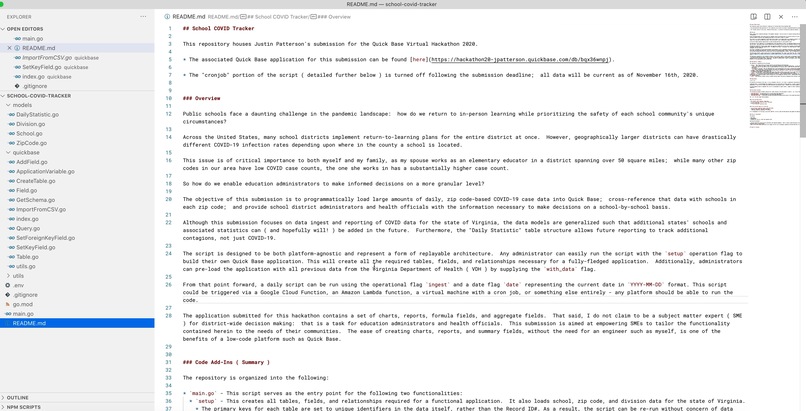
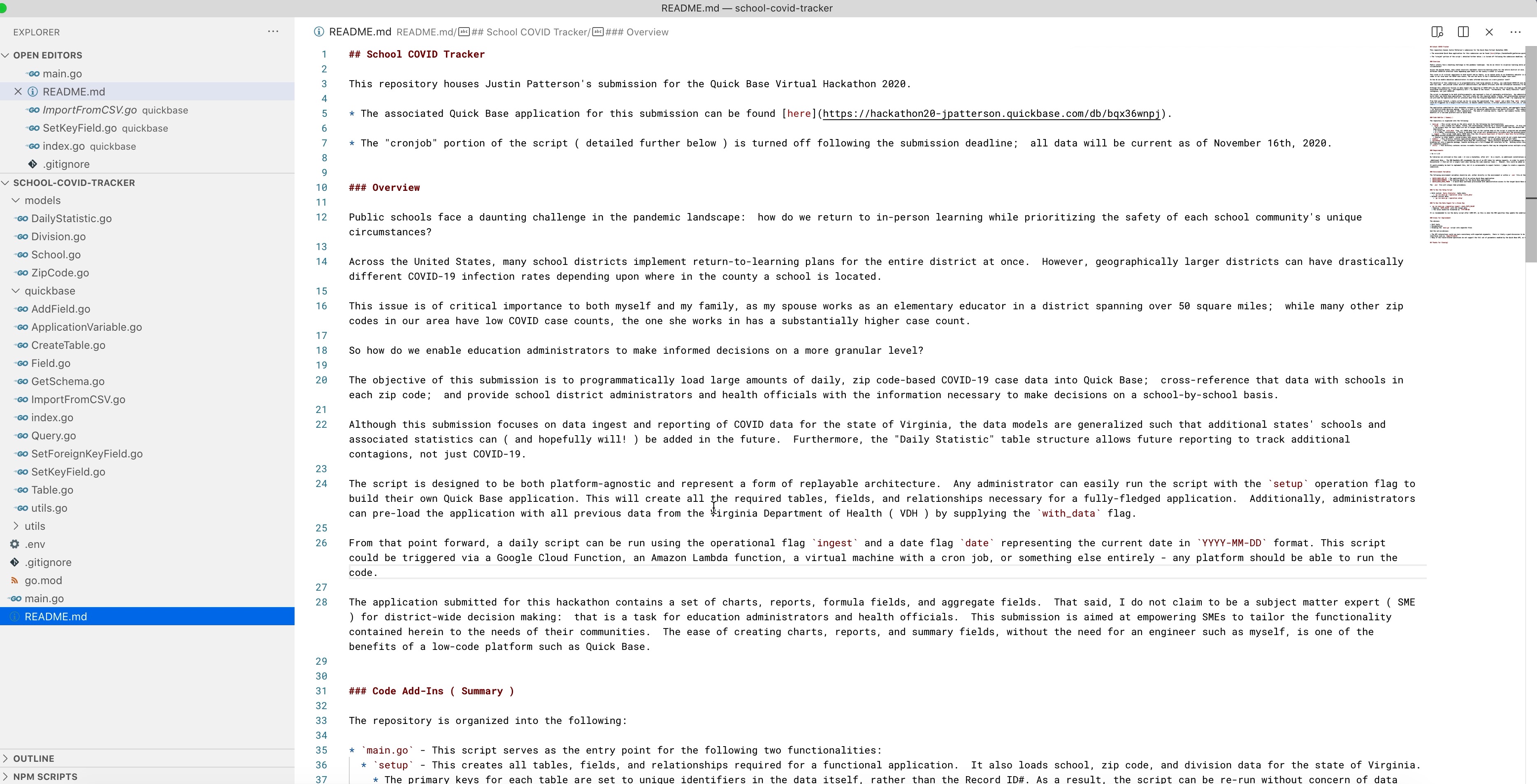
Detailed README
-
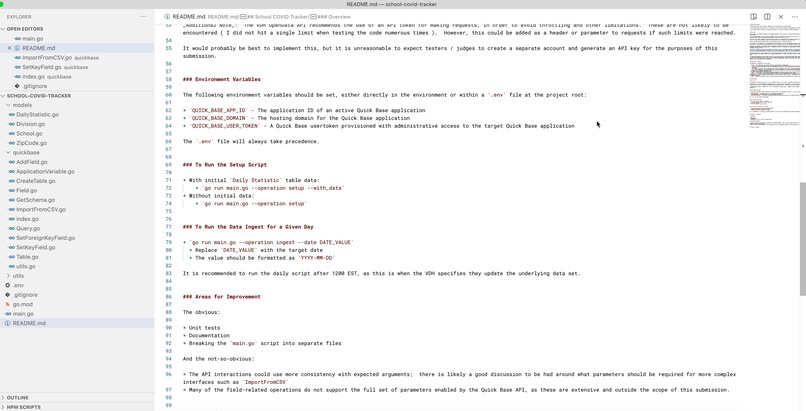
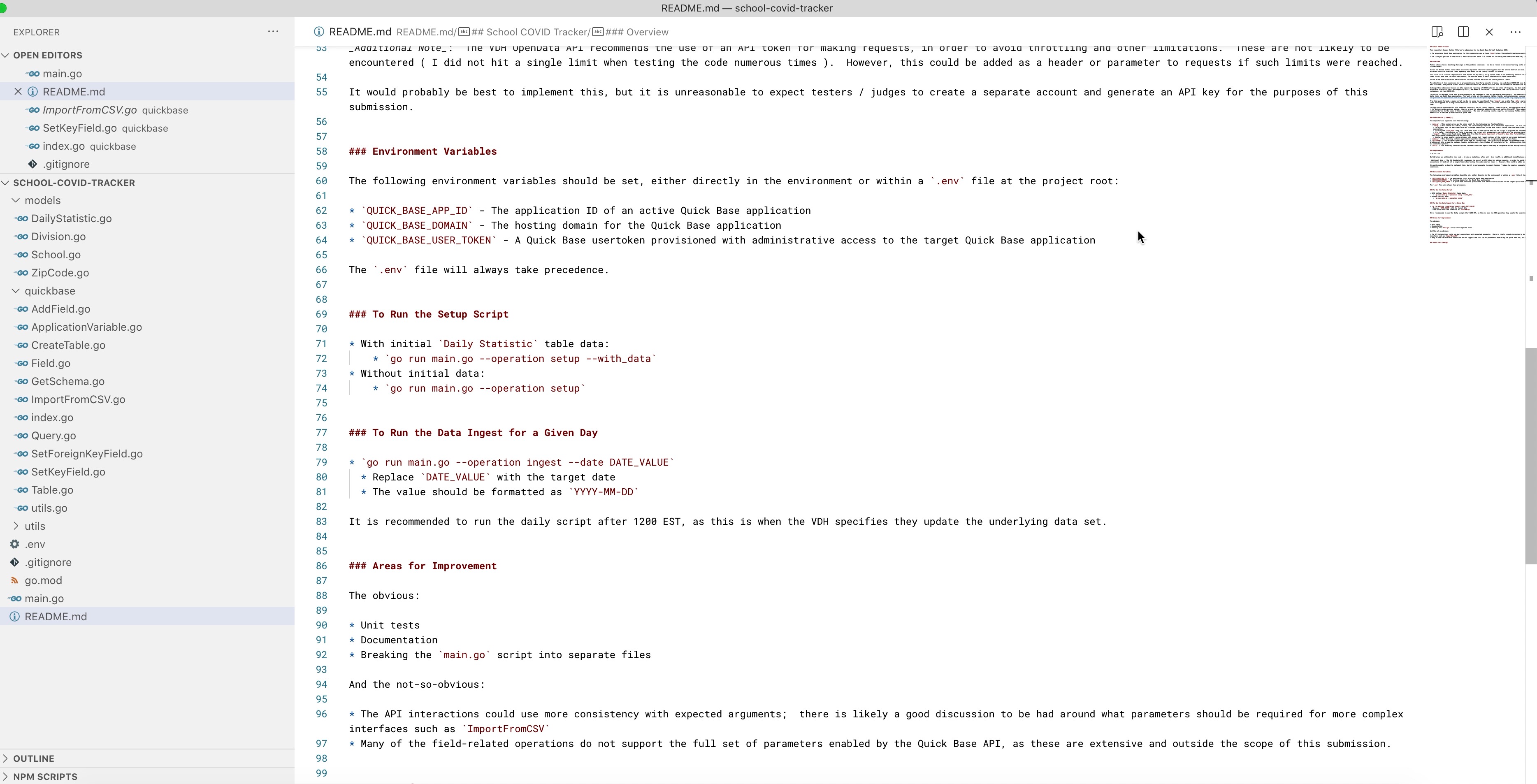
Detailed README v2
-
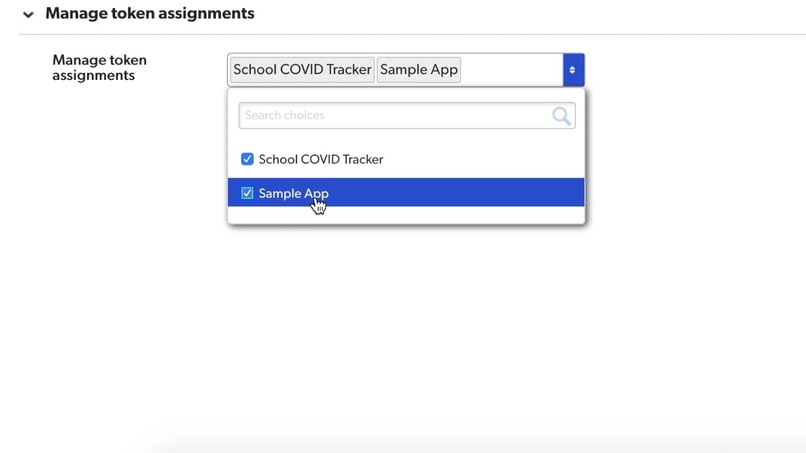
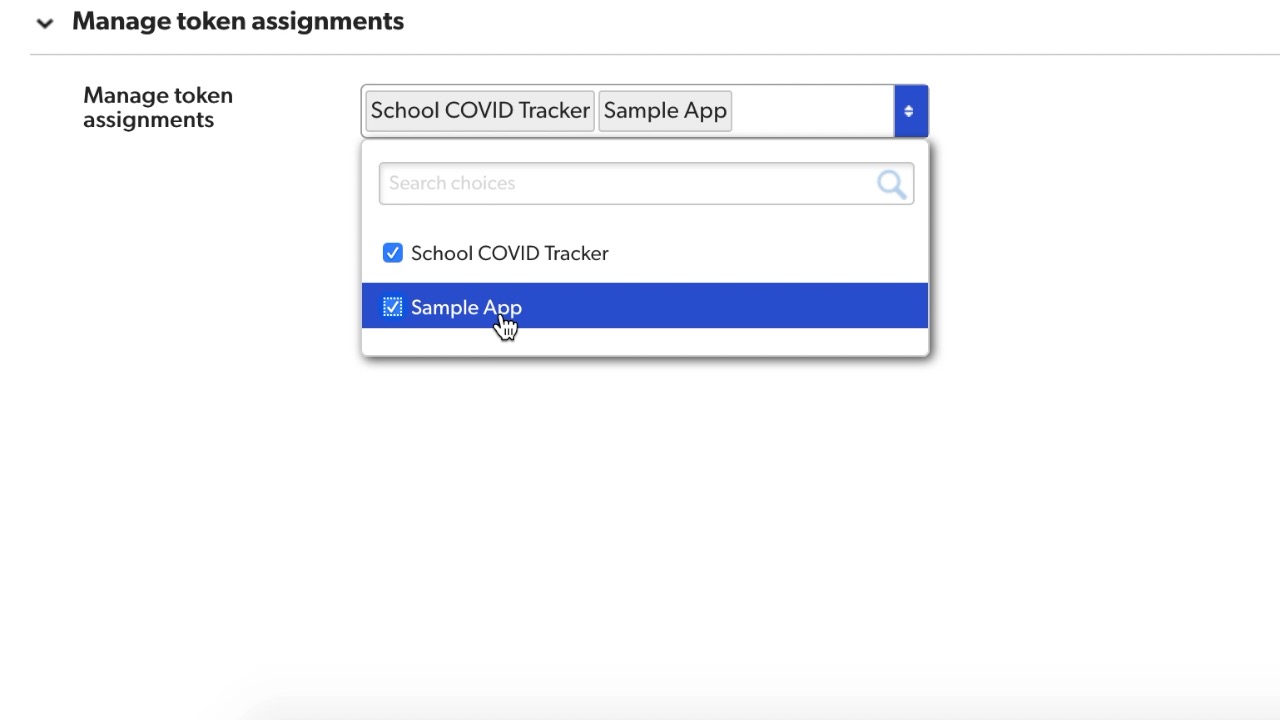
User Access Provisioning
-
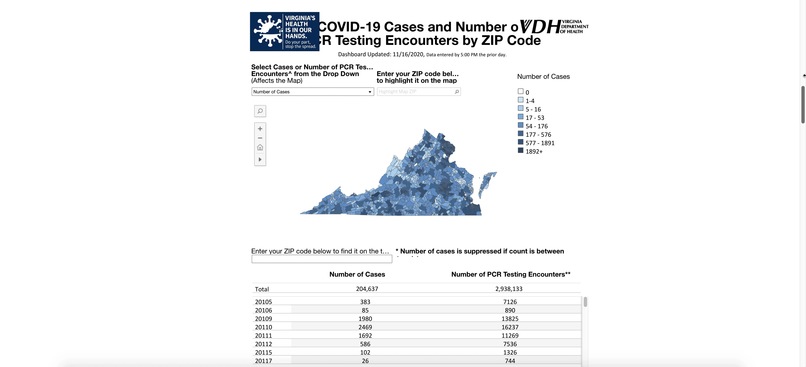
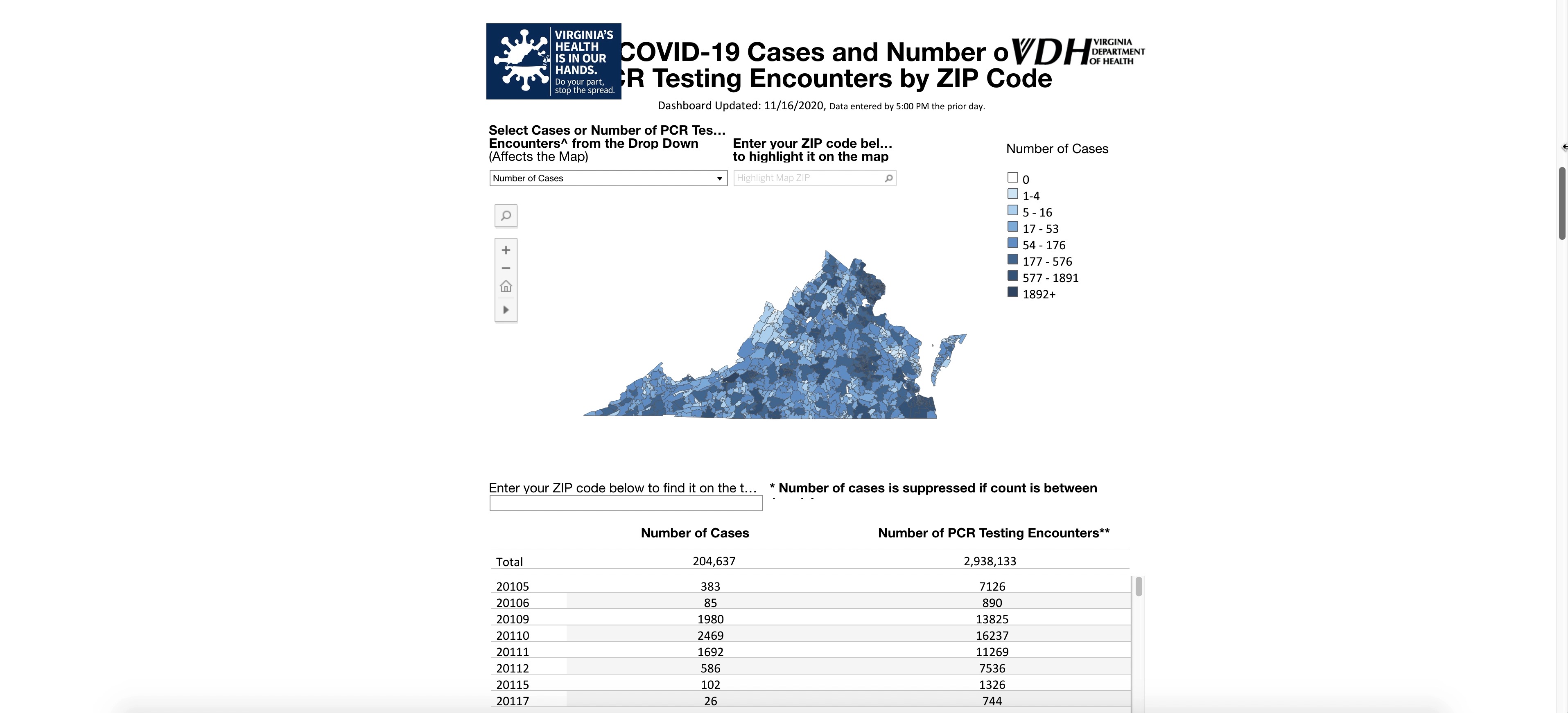
VDH Website
-
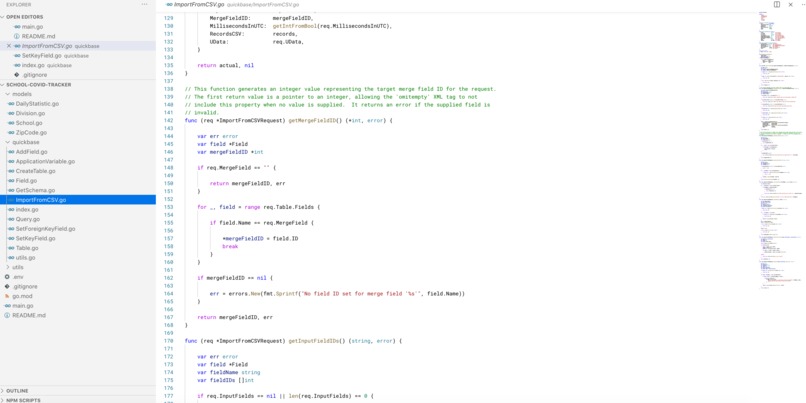
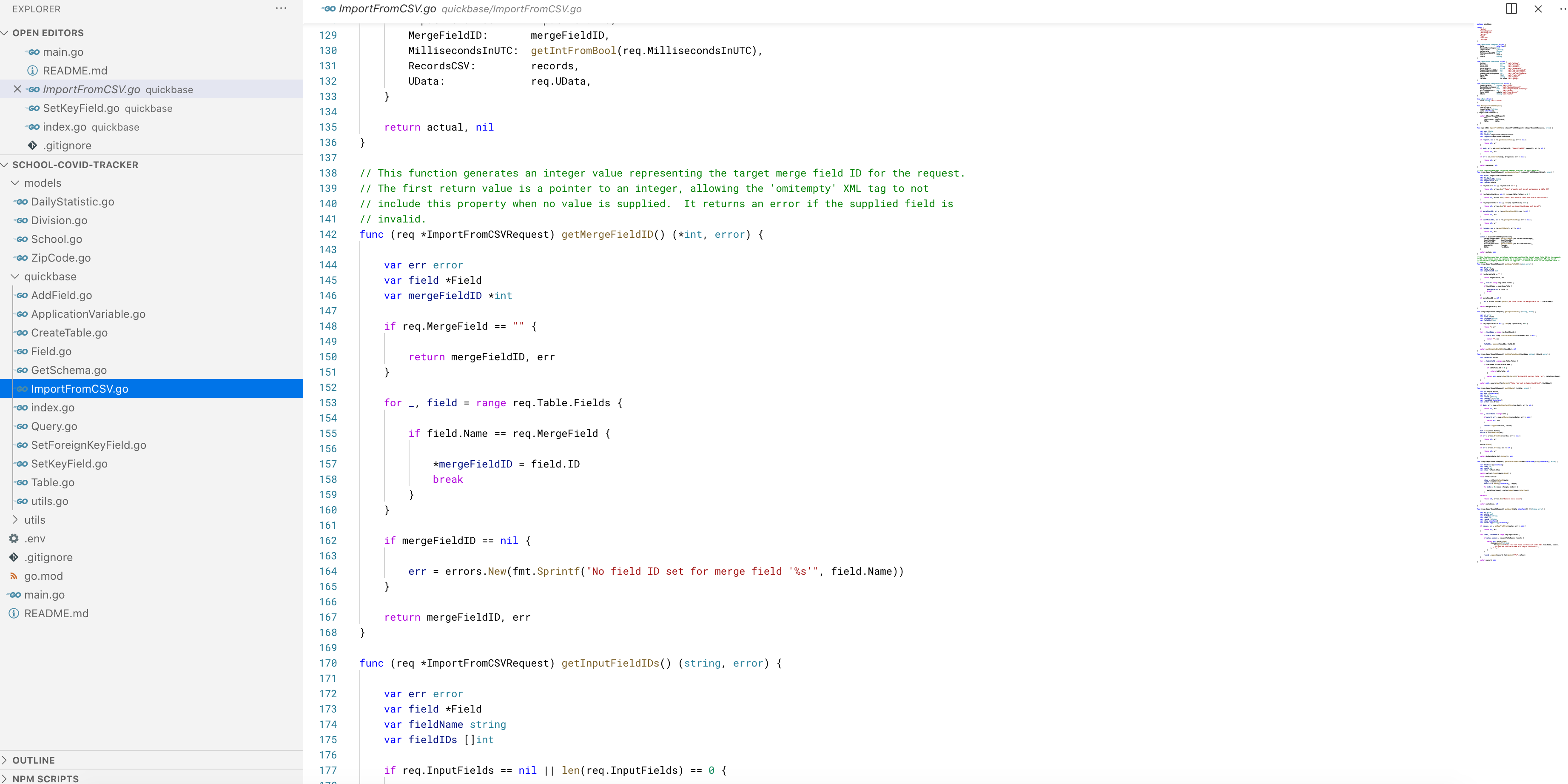
Code Snippet
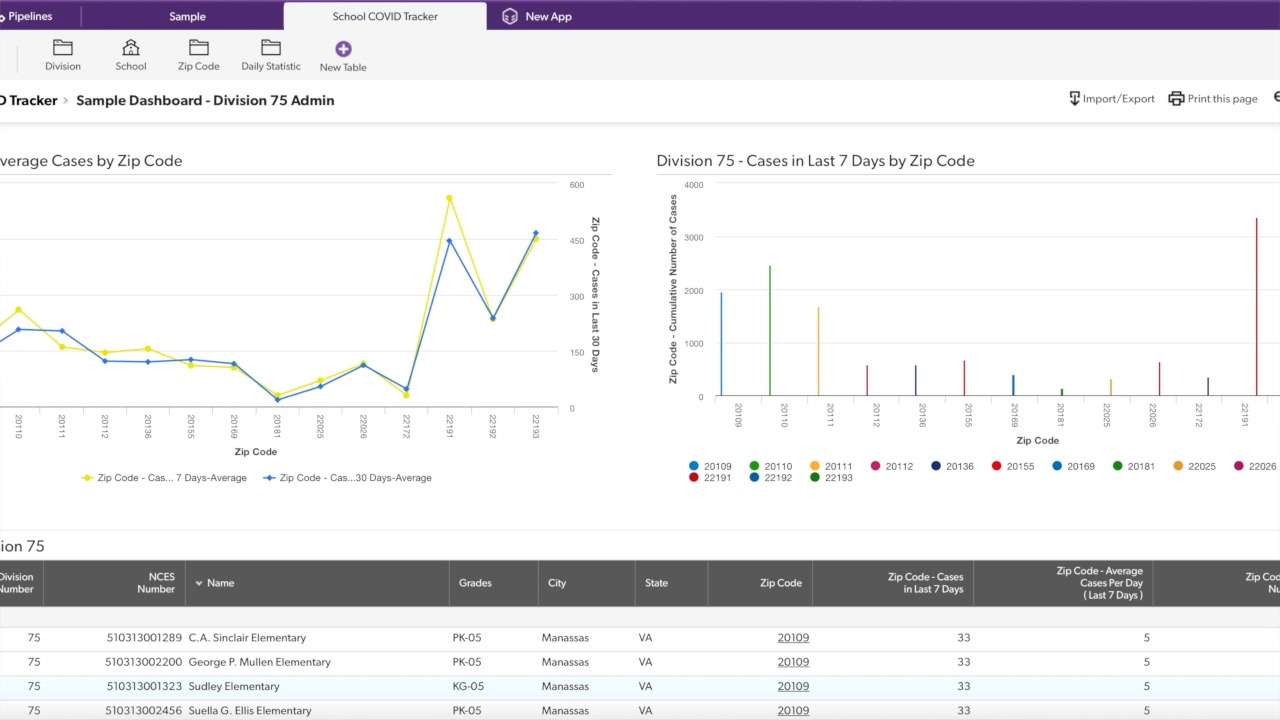
Overview
Public schools face a daunting challenge in the pandemic landscape: how do we return to in-person learning while prioritizing the safety of each school community's unique circumstances?
Across the United States, many school districts implement return-to-learning plans for the entire district at once. However, geographically larger districts can have drastically different COVID-19 infection rates depending upon where in the county a school is located.
This issue is of critical importance to both myself and my family, as my spouse works as an elementary educator in a district spanning over 50 square miles; while many other zip codes in our area have low COVID case counts, the one she works in has a substantially higher case count.
So how do we enable education administrators to make informed decisions on a more granular level?
The objective of this submission is to programmatically load large amounts of daily, zip code-based COVID-19 case data into Quick Base; cross-reference that data with schools in each zip code; and provide school district administrators and health officials with the information necessary to make decisions on a school-by-school basis.
Although this submission focuses on data ingest and reporting of COVID data for the state of Virginia, the data models are generalized such that additional states' schools and associated statistics can ( and hopefully will! ) be added in the future. Furthermore, the "Daily Statistic" table structure allows future reporting to track additional contagions, not just COVID-19.
The script is designed to be both platform-agnostic and represent a form of replayable architecture. Any administrator can easily run the script with the setup operation flag to build their own Quick Base application. This will create all the required tables, fields, and relationships necessary for a fully-fledged application. Additionally, administrators can pre-load the application with all previous data from the Virginia Department of Health ( VDH ) by supplying the with_data flag.
From that point forward, a daily script can be run using the operational flag ingest and a date flag date representing the current date in YYYY-MM-DD format. This script could be triggered via a Google Cloud Function, an Amazon Lambda function, a virtual machine with a cron job, or something else entirely - any platform should be able to run the code.
The application submitted for this hackathon contains a set of charts, reports, formula fields, and aggregate fields. That said, I do not claim to be a subject matter expert ( SME ) for district-wide decision making: that is a task for education administrators and health officials. This submission is aimed at empowering SMEs to tailor the functionality contained herein to the needs of their communities. The ease of creating charts, reports, and summary fields, without the need for an engineer such as myself, is one of the benefits of a low-code platform such as Quick Base.
Both the enclosed video and code repository provide further illumination on my motivations and implementation.

Log in or sign up for Devpost to join the conversation.