-
-
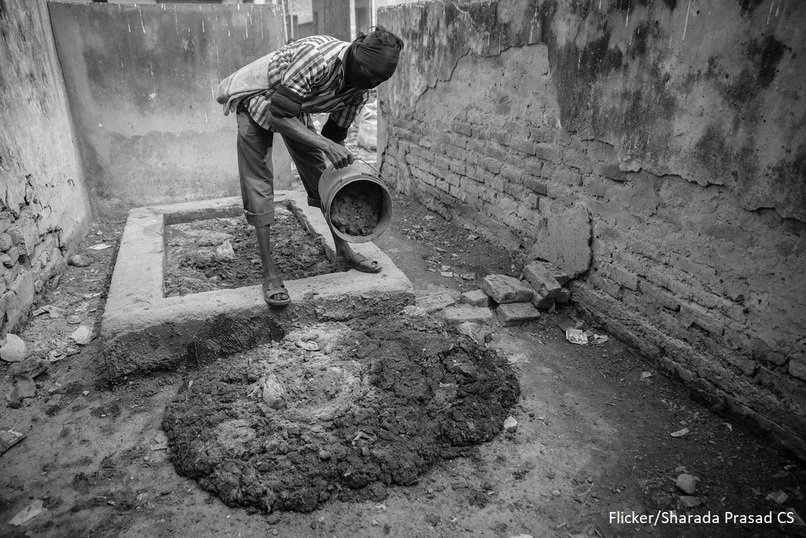
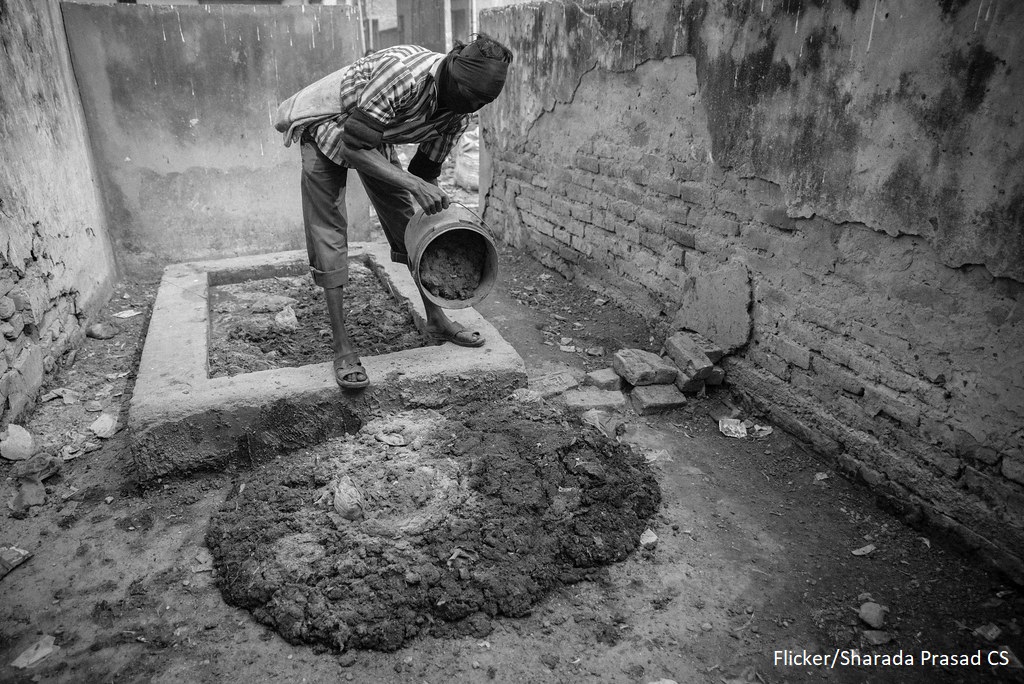
Manual Scavenger in India (26 Dec 2014)
-
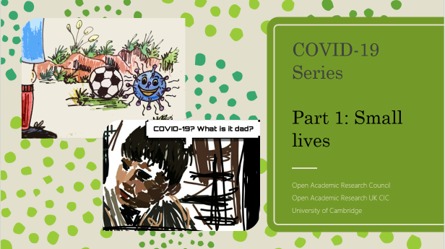
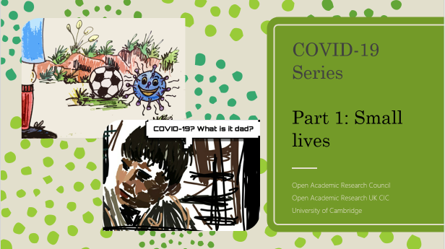
COVID-19 book series in collaboration with the Cambridge University Press.
-
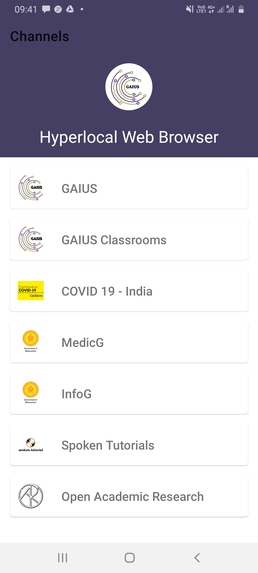
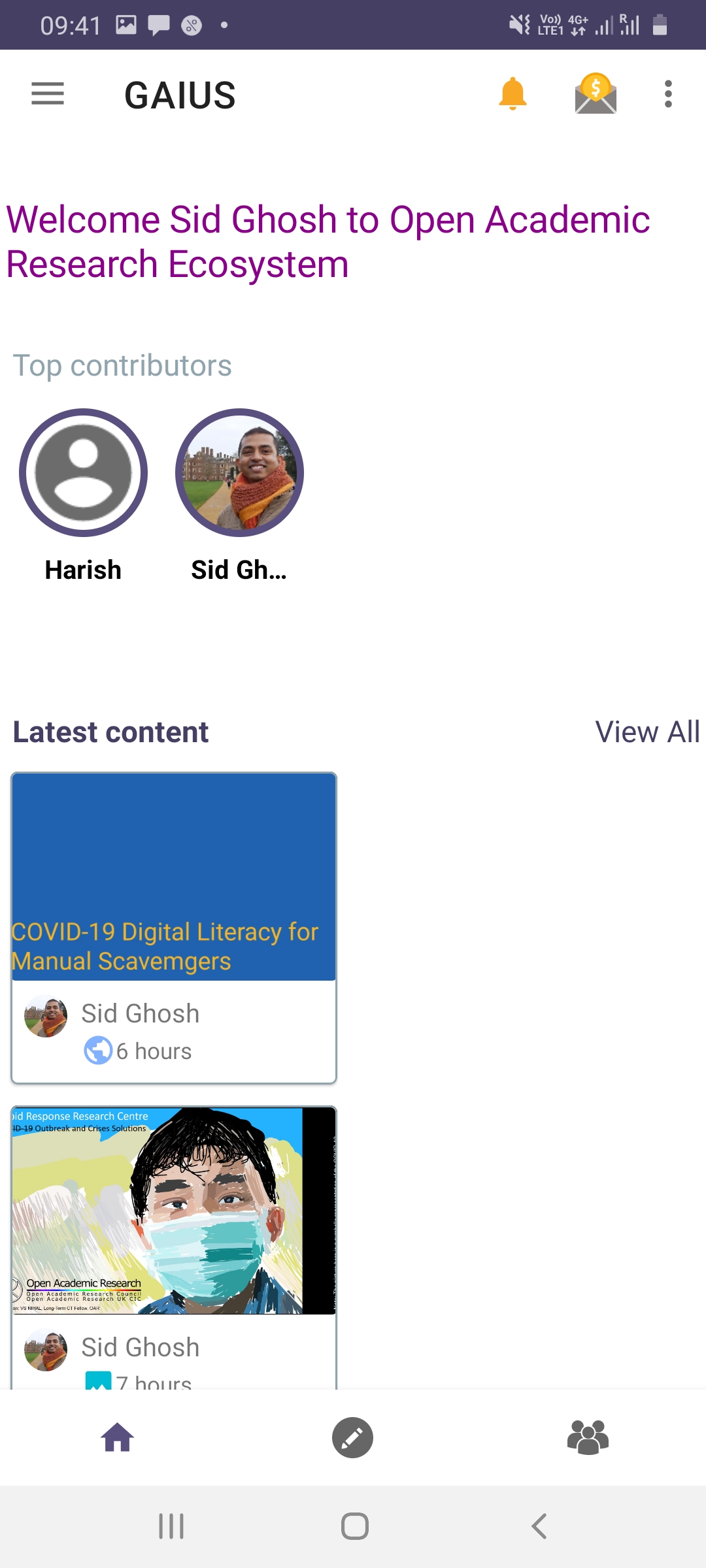
Open Academic Research Group is set up in GAIUS app.
-
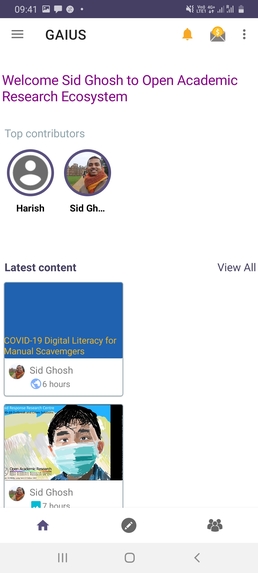
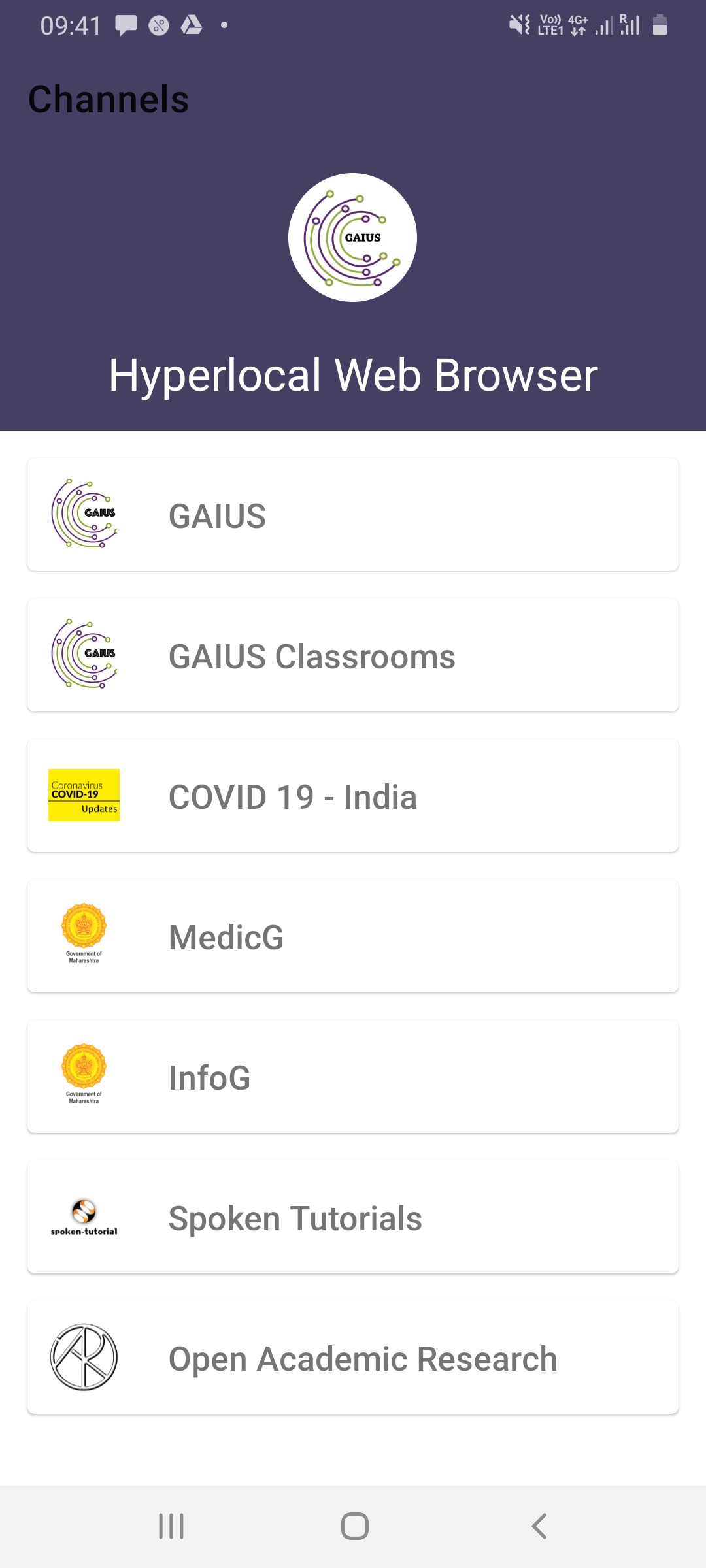
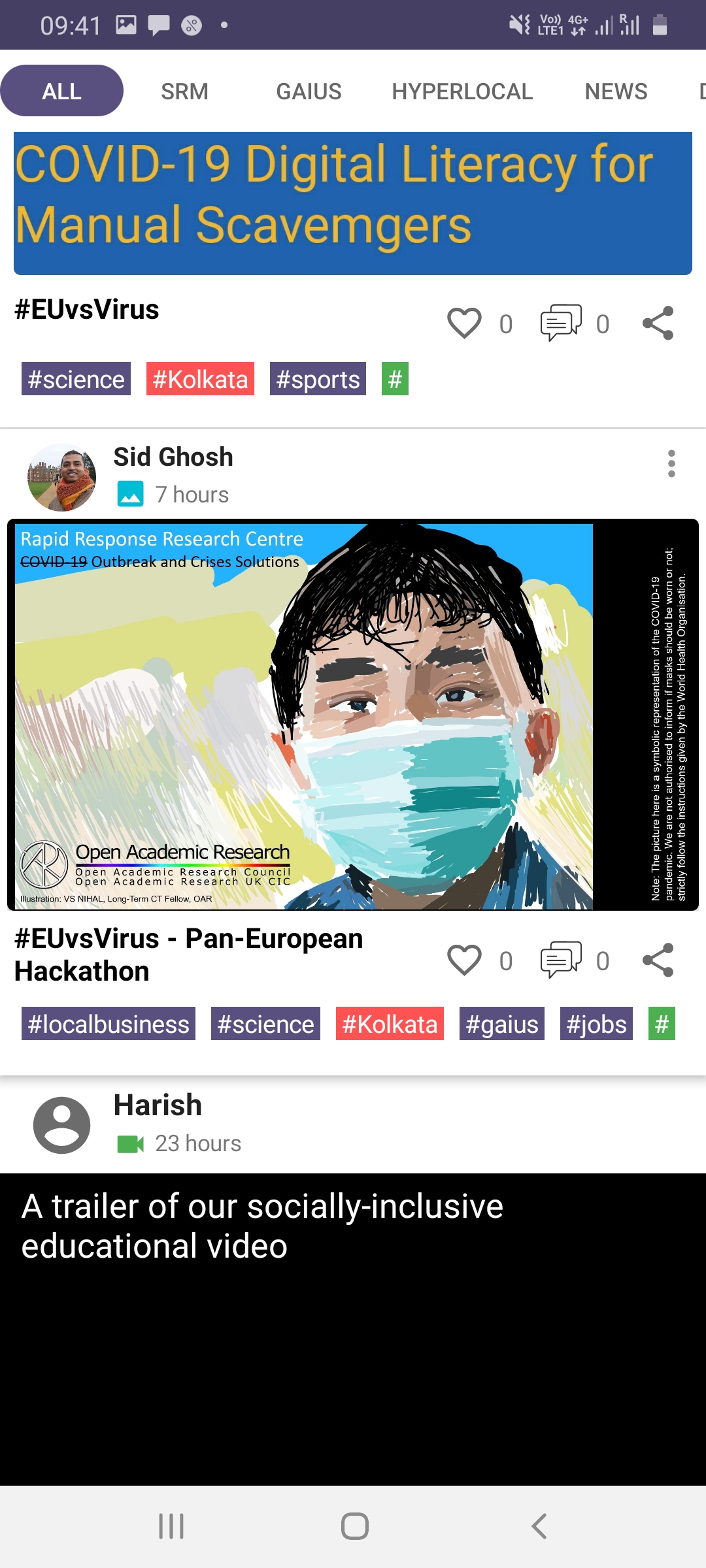
Open Academic Research's initial contents in GAIUS app.
-
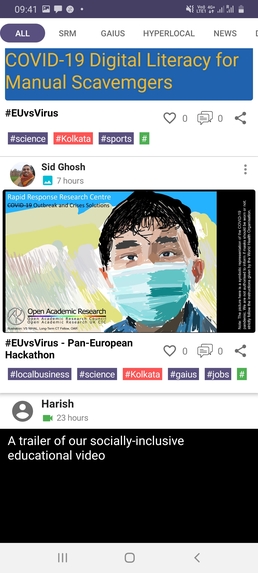
'COVID-19 digital literacy for manual scavengers' in GAIUS app.
Inspiration
COVID-19 is not only a matter of European concern but also an international public health emergency. Beside developing important healthcare technologies, to protect the EU and rest of the world, we should put our attention to the low and middle-income countries where we trade heavily and where manual scavenging is still practised. Unfortunately, the world has completely ignored manual scavengers - those who are fundamental to keeping society clean in many low and middle-income countries. We would like to use this hackathon as a unique opportunity to shine light into the lives of manual scavengers, why they are fundamental to our society and why they need to be looked after during COVID-19. We hope our project would have a long-lasting positive impact on these amazing selfless humans who are fundamental to our lives and our society's wellbeing.
Manual scavenging involves people cleaning clogged sewage and human excreta. Many LMIC societies, which are mainly guided by the caste system have thrust this practice on people from specific communities, who are from the ‘untouchable’ castes. India is home to 5 million sanitation workers (Safai Karmachari Andolan). This profession is one of the most life-threatening and hazardous professions with low wages and life-span of an average of 40-45 years. The work that they engage in is of utmost importance as without them the cities will come to a standstill. According to the Prohibition of Employment as Manual Scavengers and their Rehabilitation Act of India, 2013, forbids the employment of any person for the task of manual scavenging by any agency or individual. Despite this, manual scavenging as a profession still exists. With the rampant COVID-19 situation in the LMICs countries, the sanitation workers are at a greater risk. The risk factors have accentuated as they do not have adequate access to information regarding COVID-19 and are unaware of the public health measures for its prevention and protection. They are also not aware of the public health measures set out by the national authorities. Due to insufficient access to information, manual scavengers are prone to face the debilitating effects of the virus. Access to information is also very challenging for the manual scavengers as they are less literate and from poor socioeconomic backgrounds. Alongside these challenges, the social stratification of the society and other cultural barriers also play a role for better access to information for the manual scavengers. Given the nature of the work that the manual scavengers engage in, it is important that an education and information hub is created for easy access of content in vernacular languages sensitising about COVID-19 and remote training for prevention and control of the virus can be imparted to them.
Due to low literacy amongst the manual scavengers, a conventional read and education are not ideal for them. Moreover, hand-holding and training is also not possible due to the prevalent norms of social distancing in the present times. So we need a solution that can act as an information hub acting in a bidirectional way. We need to hear from them about their needs and address those needs with proper information shared in the information hub. For this, we will be using the expertise and experience of GAIUSNetworks which enables a hyperlocal community-based app alongside the experience of Gram Marg and Spoken Tutorial projects at the Indian Institute of Technology, Bombay for seeding the growth of community networks and delivering audio-video content for uptake and use in day to day lives of the manual scavenging people respectively. We are collaborating with GAIUS, Gram Marg and Spoken Tutorials to contribute to the solution for this hackathon.
Manual scavengers undergo a social outcast mechanism that forces them to be intoxicated most of the time. Thus, conventional read and write education is not ideal. We figured out by talking to Gram Marg and Spoken Tutorial projects at Indian Institute of Technology Bombay that usage of the Internet in low-income background communities is primarily not meaningful. GAIUS is a hyperlocal community-based app, which has made Spoken Tutorials available to rural India in 22 languages on health and nutrition content. To overcome these challenges, we will collaborate with GAIUS, Gram Marg and Spoken Tutorials.
What it does?
The solution is designed to be an information hub for the manual scavengers. We have already identified the place of residence in the slum where these people reside. The youth amongst the community will be identified and asked to download the GAIUS app on their smartphones. We will recharge the data pack for these youth who will be using the GAIUS app. The GAIUS application then becomes the hyperlocal browser platform for the community. All the information related to COVID-19 awareness and prevention made through the Spoken Tutorial project will be uploaded by us through GAIUS. The same content can be viewed by the community. The youth must become the Digital-friends for the community. Similarly, the community can upload videos and audios that they want us to listen onto the GAIUS platform. We will be able to listen to them online and suggest solutions to them. Thus this becomes an information hub for the community keeping in mind the needs of the community and enabling adequate information to the community.
Amidst low access and less availability of resources, education and awareness on basic microbiology and public-health are not broadcast to the poor billions. The current mismanagement of sewage systems across India without the manual scavengers will standstill the cities. When energy is at stake, another aspect of these low-income societies is the Internet is misused by most of them. Can we not use the Internet to reach out to manual scavengers with a clear educational program to bring a positive impact on their lives?
The project's immediate focus is on the issue is COVID-19 and manual scavengers. When the lockdown is in action and every low-income house in our focus countries own a smartphone, we propose to create a series of short (less than three minutes long) ethnically relevant and high-quality videos specialised for manual scavengers, which will be intellectually involved. The manual scavengers are indeed working in the frontline of the COVID-19 pandemic, however, they are not counted as Frontline workers (https://thewire.in/rights/sanitation-workers-covid-19-working-conditions). So, our first goal is to immediately educate the MSs with basic microbiology and human rights. Such a physically tiring and psychologically depressing job will not enable them to be involved with lengthy tutorials or lectures.
The solution is aimed to create an online education and information hub in vernacular languages where a two-way information exchange can take place from the community to OAR and from OAR to the community. The hub will contribute to information dissemination on COVID-19 as well as remote handholding for health awareness and well being.
How we built it?
OAR and GAIUS are working together to make an immediate societal impact. Here, we aim to bring harmony between sustainable education and technology of remote education. are working together to make an immediate societal impact. Here, we aim to bring harmony between sustainable education and technology of remote education. We plan to use GAIUS as a hyperlocal platform-based to create a highly localised ecosystem of meaningful content focussed on basic microbiology and their effect on manual-scavengers in 22 national languages. The content is audio-visual thus ensuring literacy is not an impediment for assimilating the content. The GAIUS platform is already being used by several hyperlocal communities in 7 countries. The platform is already being used by the Government of Maharashtra (India) to disseminate COVID-19 government information to its citizens. The platform is also currently being used to disseminate verified COVID-19 information across entire Africa (powered by Microsoft Azure and in partnership with Liquid Telecom) in 19 African languages as well as in talks with the Government of New Jersey to power their COVID-19 Information ecosystem.
Open Academic Research (OAR) specialises in understanding human capital-formation from a trans-disciplinary approach. It is a non-profit research organisation based in the UK as a Community Interest Company and India as a Section 8 company. OAR’s focus country is India. OAR's interest is to develop low-cost and effective innovations for immediate societal impact i.e. suitable for low- and middle-income countries. All of our projects are publicly proposed and curiosity-driven. We support these unique IPs towards becoming a commercial product. As India is going through a pandemic lockdown, OAR is trying to use this time to understand various aspects of this pandemic and developing methods motivated from this pandemic situation under a platform called Rapid Response Research Solutions. We are working with the Government of India to transform this effort into a Rapid Response Research Centre (RaReRC): COVID-19 Outbreak and Crises Solutions. We hope our effort will remove the word COVID-19 from the caption of the centre, and the centre will continue to serve as a trans-disciplinary platform specialising on 'Outbreak and Crises Solutions'.
Challenges we ran into
Due to the short time frame of the hackathon, we were not able to connect with a group of manual scavengers. Internet connectivity in India is great but we faced electrical power shortages during the hackathon. The socio-economic conditions of our team (e.g. student participants) meant some of the students could not participate full time (some students were caretakers of their families).
Accomplishments that we're proud of
We are proud of our initiative called Open Academic Research/OAR where various academic and nonacademic people come together to solve a farsighted societal problem. OAR has been actively working on various aspects of COVID-19 in the Rapid Response Research Solutions. OAR has started a collaboration with the Cambridge University Press India on publishing a COVID-19 book series book for children. These contents will be modified into films and games for a placid and peer-reviewed digital literacy.
In the EUvsVirus Hackathon, we have started creating such an ultrashort film series called COVID-19 series dedicated for the manual scavenger. We uploaded the first rough cut of the ultrashort film for this hackathon in GAIUS App under Open Academic Research. This can be also found in YouTube (https://youtu.be/wJU_szvPaPo). We will require funding to scale up our contents and keep the manual scavengers involved in education and learning. The EUvsVirus Hackathon has enabled us to conceptualized the idea and challenged us to work with limited funding and time. We are certain that with larger funding we will be to make a large societal impact by benefiting a community of 5 million manual scavengers all over the world.
We discussed among our hacking group and understood that not only Dharavi Mumbai (the biggest slum of India with more than 1 million manual scavengers in the financial capital of India, capital of Maharashtra, Mumbai (18 million population, 10-15 people share single accommodation, the highest number of infection recorded till now) but also at various other parts of India, like Sonarpur, Kasba, Bajbaj, Sonagachi etc will be our target point in phase I.
In the EUvsVirus Hackathon, we have started created such an ultrashort film series called COVID-19 series dedicated for the manual scavenger. We uploaded the first rough cut of the ultrashort film for this hackathon in GAIUS App under Open Academic Research. We will require funding to scale up our contents and keep the manual scavengers involved in education and learning. The EUvsVirus Hackathon has enabled us to conceptualized the idea and challenged us to work with limited funding and time. We are certain that with larger funding we will be to make a large societal impact by benefiting a community of 5 million manual scavengers all over the world.
We discussed among our hacking group and understood that not only Dharavi Mumbai (the biggest slum of India with more than 1 million manual scavengers in the financial capital of India, capital of Maharashtra, Mumbai (18 million population, 10-15 people share single accommodation, the highest number of infection recorded till now) but also at various other parts of India, like Sonarpur, Kasba, Bajbaj, Sonagachi etc will be our target point in phase I.
What we learned
Human capital formation has generated a scarcity of creative and educated people in the low and middle-income countries. We have found that innovations do not require globally reputed academic affiliations, rather it requires interest and necessity. Manual scavengers believe that they are born in the outcast societies who are supposed to handle dirt of the society. Low life expectancy is granted in their lifestyles. Considering these facts, they do not aim to live a healthy lifestyle. If educated manual scavengers can understand the scientific reasoning behind the health problems associated with their occupations. The basic human right violation can be raised by them to the authority.
What's next for COVID-19 digital-literacy for manual scavengers
If this project is successful, we are aiming towards achieving the goal of uplifting the manual scavengers from their present pitiable position. The information hub can double up to facilitate this change in their lives. Some of our short term plans are to grow a digital community of manual scavengers enabling two-way communication, online and offline methods of information dissemination can be enabled like community radios, expand the programme to other areas in Mumbai. Some of the long term plans are to double up the information hub as a platform which can fight for the rights of the manual scavengers, and bring the manual scavengers in the constructive field of education, technology and research. It is important to acknowledge the empirical knowledge they hold on this job. Manual scavengers go through a sophisticated microbiology incubator which conventional microbiologists have never seen. Can they use this experience in the mentioned field?
- A centre for public health education for manual scavengers, which will create a fundamental understanding of COVID-19 at sewage and create policies for manual scavengers.
- An education and information hub that will give professional vocational training for skill improvement and award them diplomas for qualified jobs and provide career counselling.
- Citizen science lab for manual scavengers in their localities where they come and develop technologies for their needs with scientists, technologists/engineers and marketing specialists.
- Enabling collaboration with UNESCO, World Economic Forum, private philanthropic organizations and various universities and research institutes to support the manual scavengers.
Justification of Resources
We need manual scavengers, sociologists, microbiologists, cinematographers, video editors and educators to be on board. We aim to have a full-time postdoctoral researcher on education, a part-time researcher on technology and science, full-time video editor, part-time cinematographer and mentors from the field of human rights, sociology and science. Beside our active team members, we will have mentorship from Dr Arjuna Sathiaseelan (CEO & Co-Founder, GAIUS Networks INC), Dr Alba Lanau (Researcher, Demographic Research Centre), Dr Moumita Ghosh (FEI Electron Optics/Thermo Fisher Scientific and Open Academic Research), Dr Abhilash Thendiyammal (Biomedical imaging, University of Twente), Dr Balasubrahmaniyam M (Optics, Tel Aviv University), Prof Jaideep Prabhu (Socioeconomics of low-cost countries, University of Cambridge and Open Academic Research), Dr Anirvan Chatterjee (Virologist and resistant TB genomicist, Indian Institute of Technology Bombay and Open Academic Research) and Dr Ronita Bardhan (Sustainable Architecture of low-income houses, University of Cambridge, Indian Institute of Technology Bombay, Stanford University, and Open Academic Research). The team will require a space in the UK and India, computers, devices for creating illustrations, software licensing, cameras and several basic smartphones to run a few trials in the communities, Internet data and basic salaries for next six months.


Log in or sign up for Devpost to join the conversation.