-
-
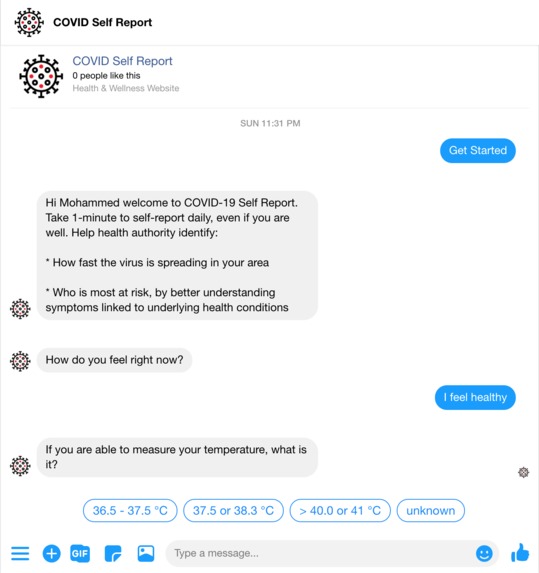
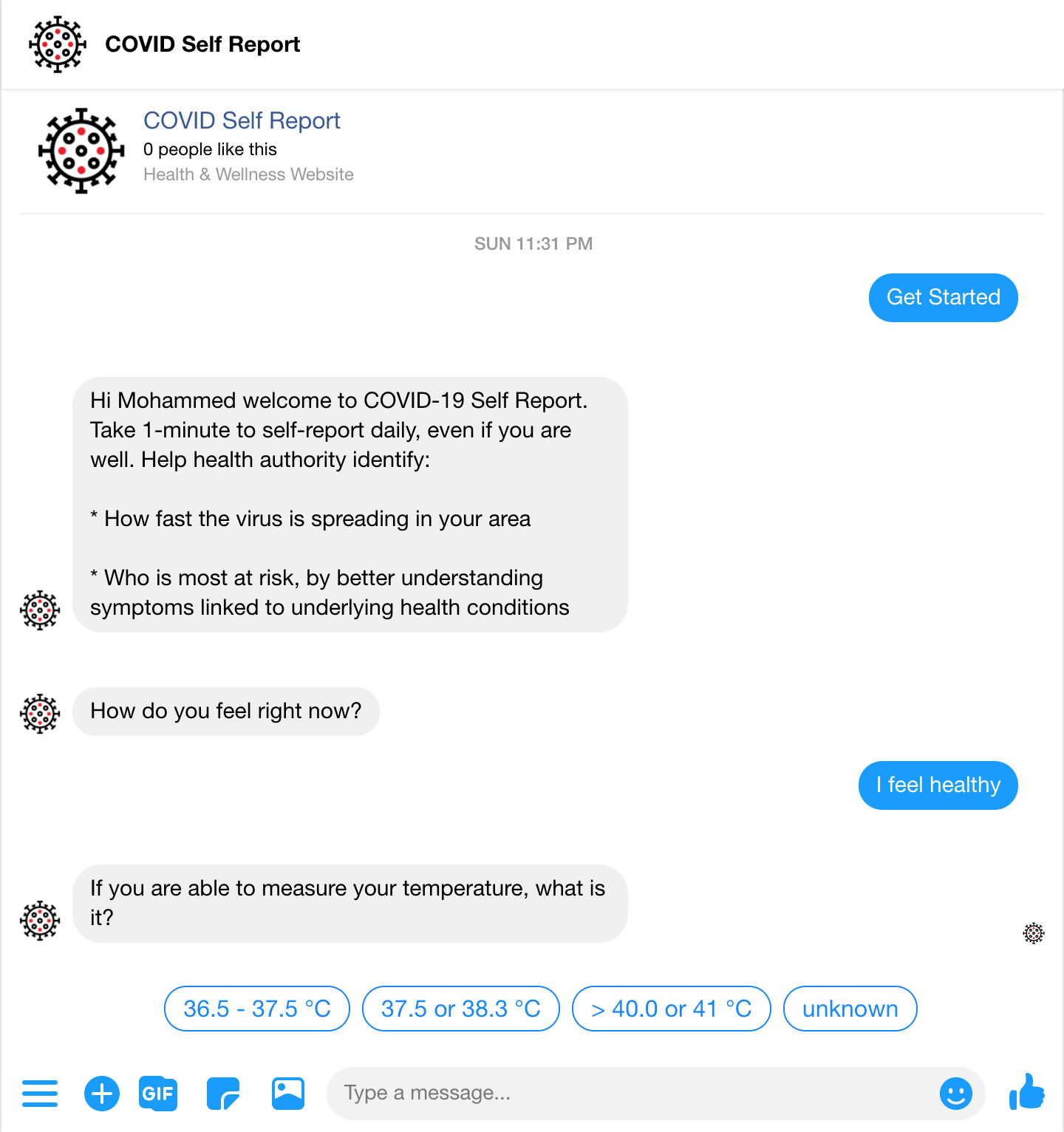
Facebook Messenger Chatbot
-
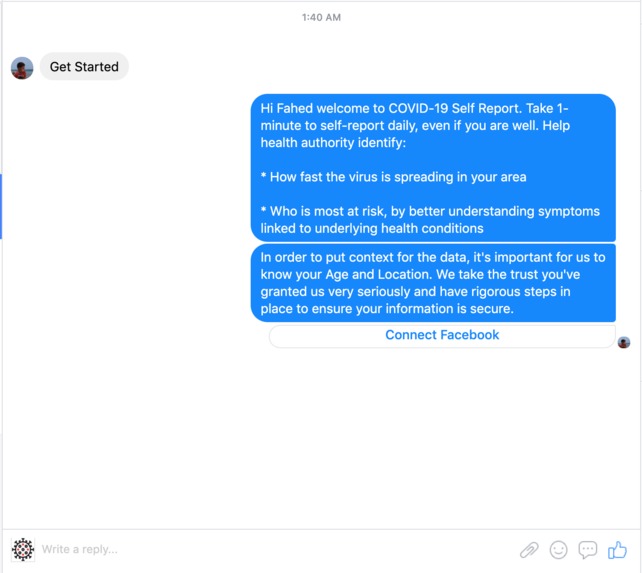
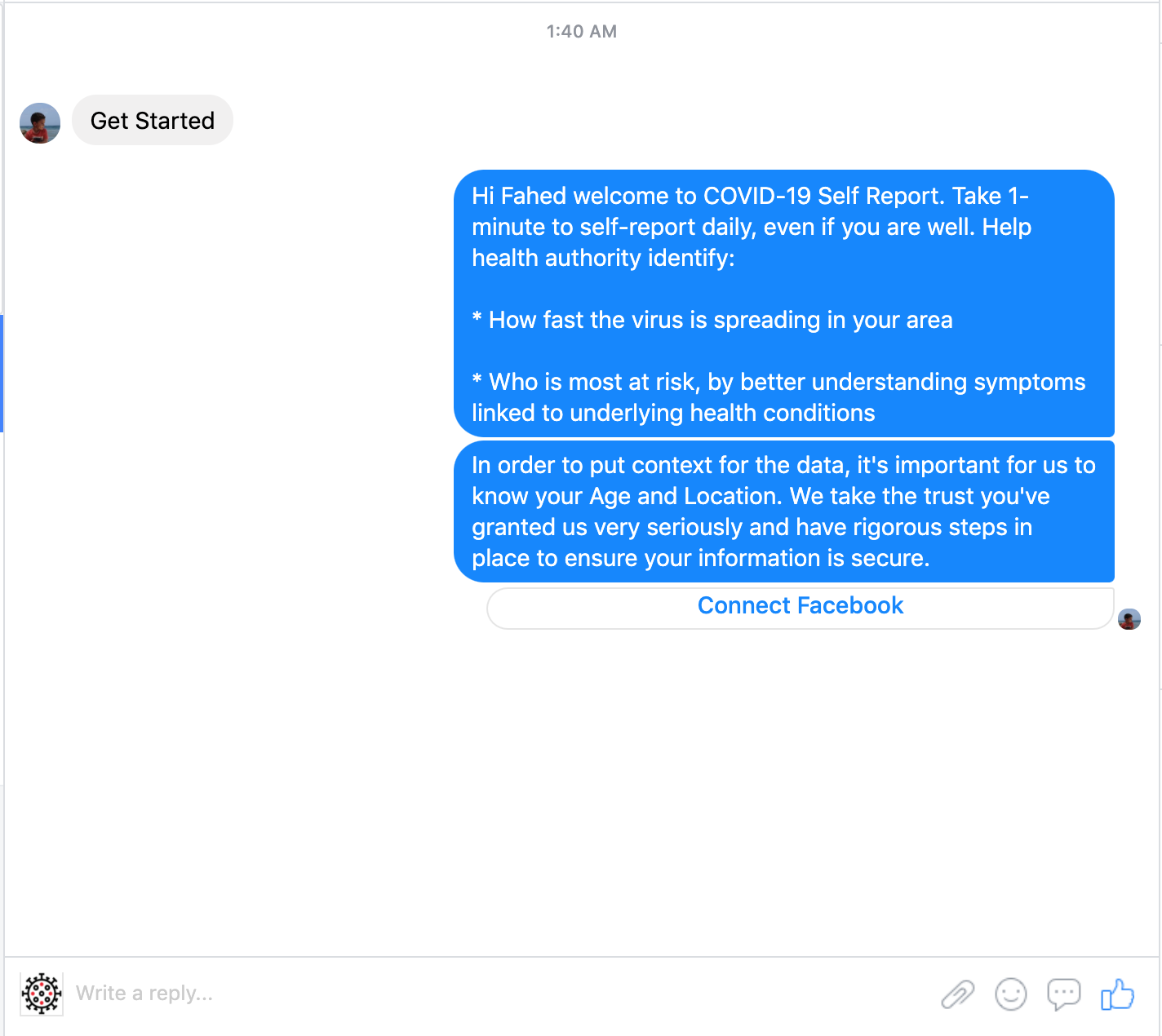
Get user location and info through facebook login
-
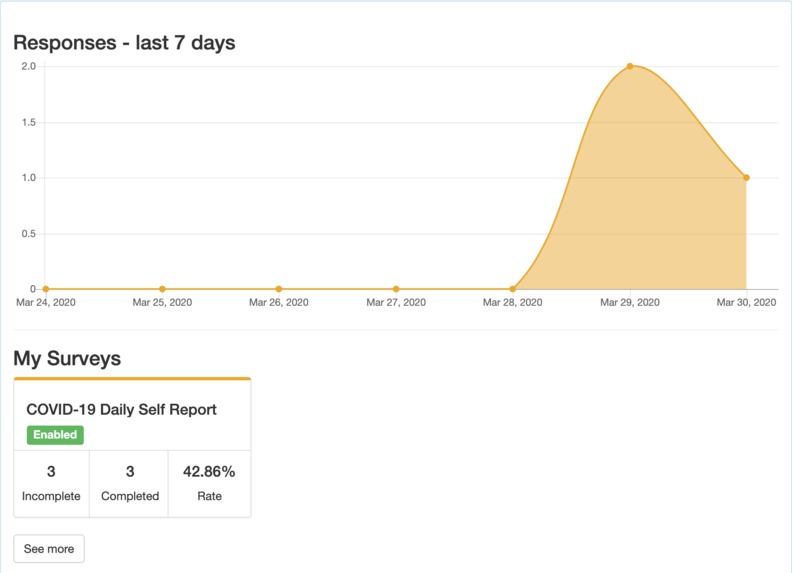
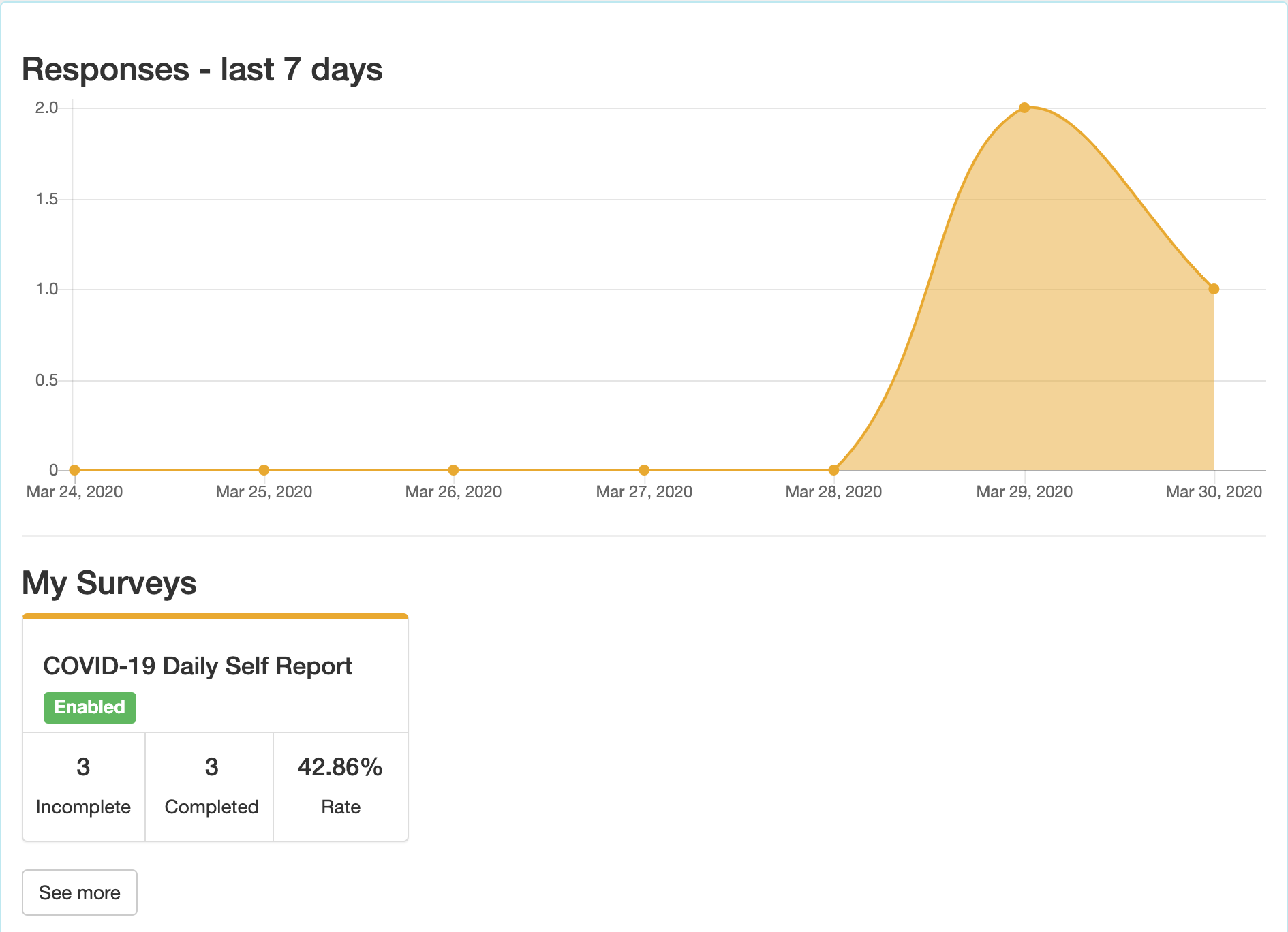
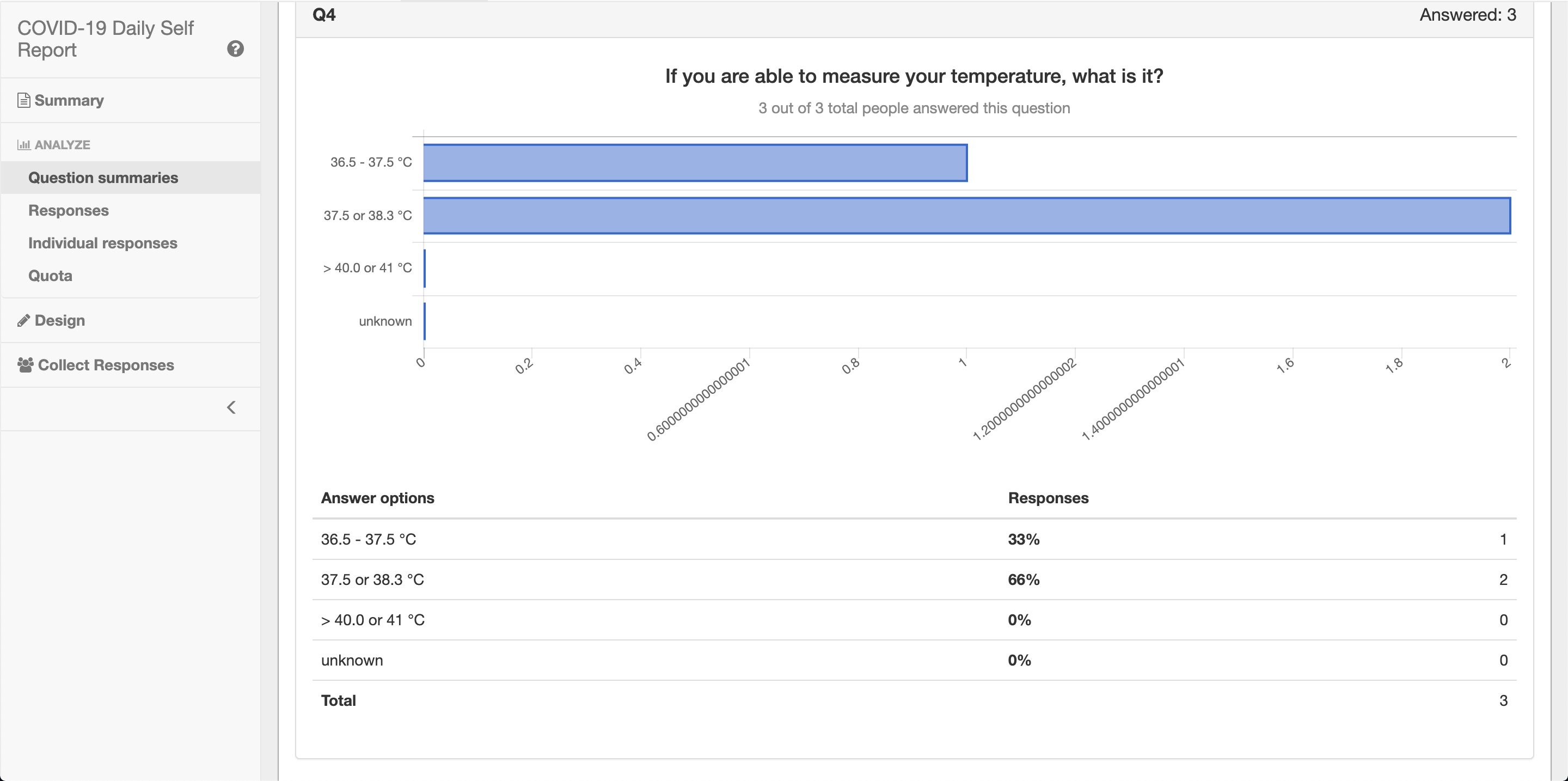
Dashboard daily summary
-
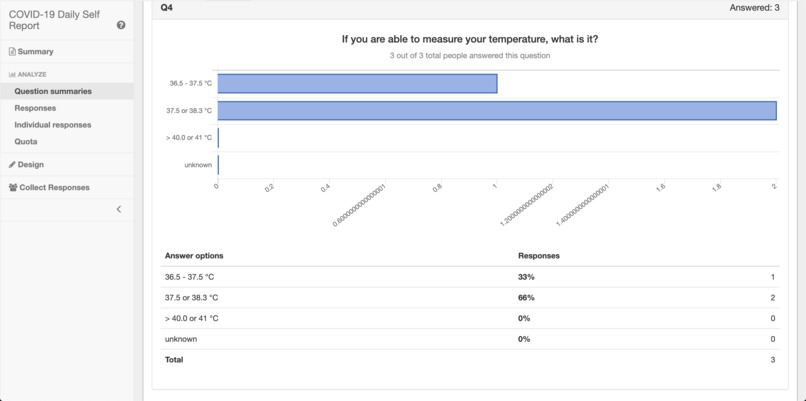
Average Answers
-
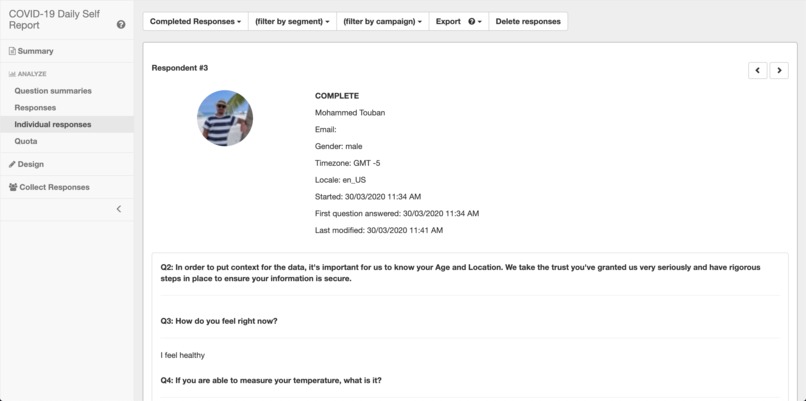
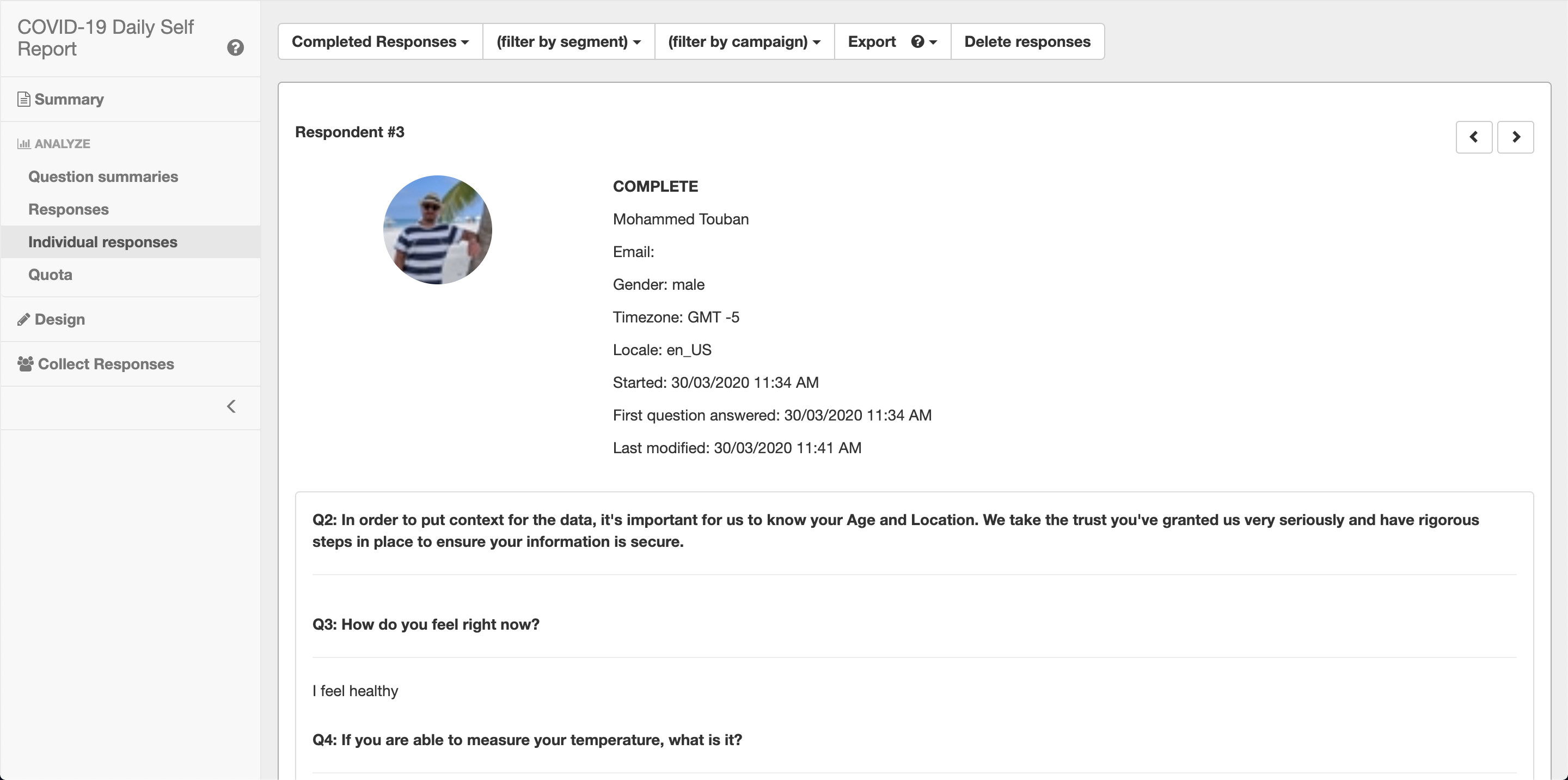
Individual track down
Inspiration
One of the big challenges (among many) with the coronavirus pandemic is that overwhelmed health services do not always know how best to deploy the limited resources they have to meet the demand of people falling ill with COVID-19. For example, we know that more ventilators and beds will be needed, but where specifically are the outbreaks happening and how can those local areas be served better? We also know that there is a lack of available and timely testing of COVID-19 for everyone. Meanwhile, researchers and physicians still don’t have an accurate picture of the symptoms of coronavirus infection, particularly if they are mild. While people are told to be alert for fever, persistent coughing, and breathlessness, many are reporting symptoms such as headaches, muscle pains, loss of smell or taste, and diarrhea. But these can also be symptoms of less serious conditions like seasonal colds or allergies.
What it does
Its main purpose is to find out where hot spots of spread are, new symptoms to look out for, and use as a planning tool to target quarantines, send ventilators and medical equipment and provide real-time data to plan for future outbreaks.
Help health authorities identify:
- High-risk areas in the country
- Who is most at risk, by better understanding symptoms linked to underlying health conditions
- How fast the virus is spreading in your area
Individuals take a 1-minute to self-report daily, even if they are well. All they need to do is answer a few simple questions about themself and their current health, then check-in daily to say whether they're feeling fine or have noticed any new symptoms. The chatbot will remind them every day to start the report by sending them a notification. All the data collected, will be presented on a dashboard which shows aggregated information about individuals' health across areas and then is analyzed to know how the virus is spreading in these areas. This information can be traced down to individuals, which allows the authorities to reach out to them if needed. To be very clear, the service itself is not a diagnostic tool — these are being developed on a national level, linking people through to local services. Nor is it designed to give the public any clarity on where COVID-19 symptoms are cropping up. Instead, it’s purpose is to collect data from all individuals to bring information to health authorities to better plan their responses. We asked people to stay at home, we can ask them to daily self-report too. It's that easy!
How I built it
Using the Facebook messenger platform to create the bot. Nodejs for the backend and React for the frontend.
Challenges I ran into
- The first time I am developing a chatbot and had to figure out how the API works.
Accomplishments that I'm proud of
Troubleshooting issues with Facebook Messenger API and making the chatbot work.
What I learned
Developing a chatbot
What's next for COVID-19 Daily Self Report
- Enhance the dashboard report to show hot zones area and aggregated data
- Use AI and machine learning on the data gathered and transform the platform into a predictive tool to predict how the virus could be spreading.


Log in or sign up for Devpost to join the conversation.