-
-
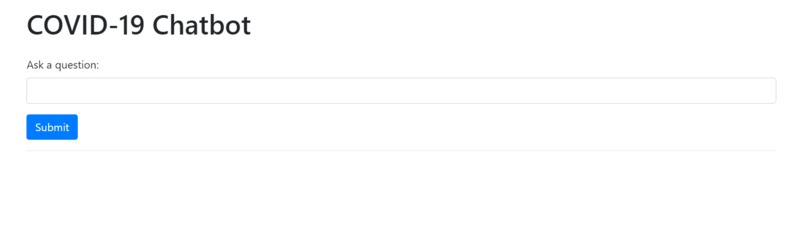
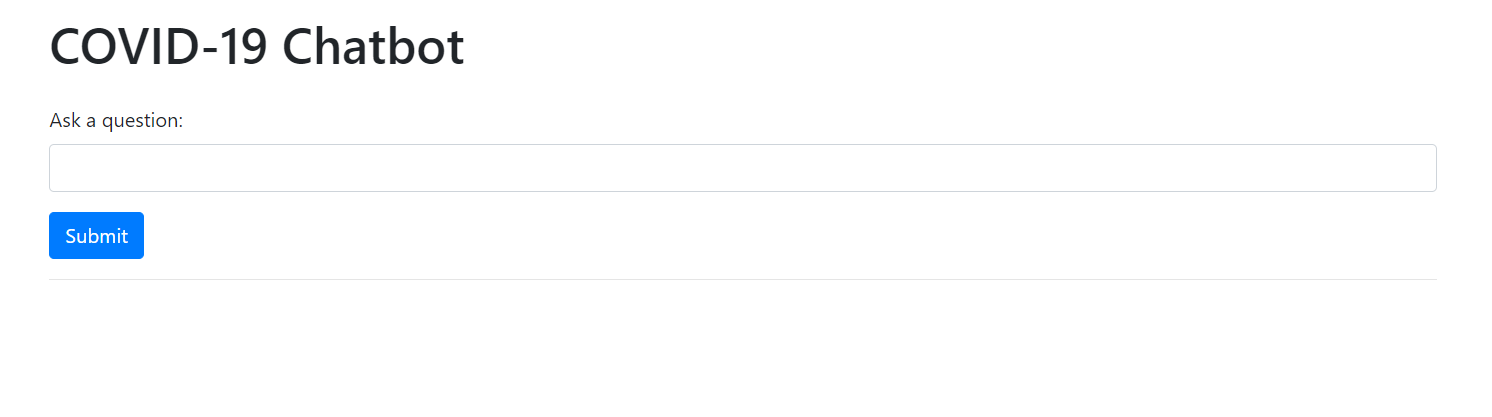
UI
Inspiration
Through continuous innovation, people find ways to improve their lives, so as in healthcare. At the heart of this era, we are inclined to build something that matters, while also reflects the current state of technology.
What it does
The main idea about this web application, is that it takes users' question and outputs the related answer to it. Much like ChatGPT, but for diseases. Within the course of a prototype, we opted for COVID-19 as our introduction disease, as it makes a good entry point, and even now there are still people and community haven't recovered from its effect.
How we built it
We made use of a fixed dataset including the most asked questions about COVID-19, and built an algorithm (called Levenshtein distance) to match user query to the closest question in the dataset, then return the respective response. The app was then decided to be built static by pure elementary web development tools without any frameworks or database, because we think it is best to make it simple, both for the time constraints and for the newcomers to hackathon.
Challenges we ran into
With only 1 single member in the team having prior experience with hackathons, we were slow, sluggish even, to adapt to the fast-paced nature of Unihack. Without much technicalities to talk about, communication wasn't fostered to its full potential. That resulted in us divided with ideas, with some implemented only to be discarded afterwards. For the algorithm, we used a very basic natural language processing technique, which wasn’t a as accurate as we wanted, so we had to make variations of similar prompts.
Accomplishments that we're proud of
It's not all bad though, because at least we have a working prototype.
What we learned
Both the senior and juniors were able to have something out of this hack. The former should be happy to make some mentoring experience and learn something new about programming, while the latter should be learning something about being more proactive. Hopefully.
What's next for Covid-19 Chatbot
As this is only the prototype, we plan to expand the scope of diseases, building dynamic content, and adding more variables (age, gender, location and more) to the input. We can envision the final product as being able to pinpoint the most proneable diseases to a person with those given variables, and give prevention measures.


Log in or sign up for Devpost to join the conversation.