-
-
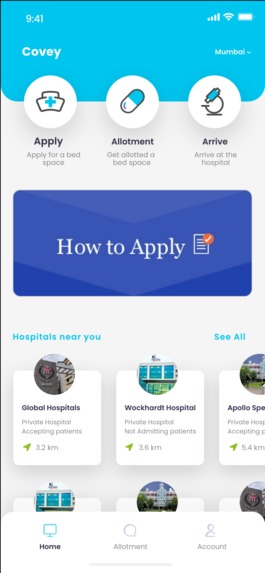
Home page
-
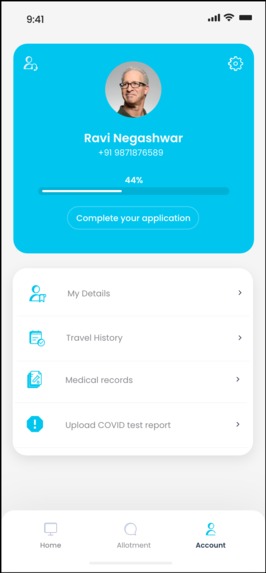
Your application for a bed space in a hospital
-

First Page
Inspiration
Inspired by the situation in Delhi, India, wherein people who get the report of "COVID-positive" are expected to visit a hospital, queue up for a chance to get a bed at the hospital. If they do not get a bed, they go to another hospital, queue up for hours, and hope for a bed there too. This movement of COVID-19 positive patients from hospital to hospital, queueing up is troublesome in two of many ways. Firstly, this movement increases the risk of spreading of the virus itself as these patients visit many different hospitals in the hope to get a bed, thereby infecting so many different places. Secondly, these patients do not get immediate care, and are forced to spend time waiting in queues.
An added problem arises in beds being booked by people in power and those that can pay the highest for that bed. A news report featured a shocking amount asked by a COVID-19 patient of 1 lakh INR (£1061) per bed per night. During the current times of pandemic, corruption in healthcare must be condemned. Beds must be allotted based on case severity and not on the amount of money.
What it does
What if we could automate this system of "queueing-up" for a bed? What if we could have a system wherein COVID-19 positive patients would know exactly which hospital to go for a guaranteed bed, at the ease of their phone?
Keeping this in mind, we created a mobile application that lets:
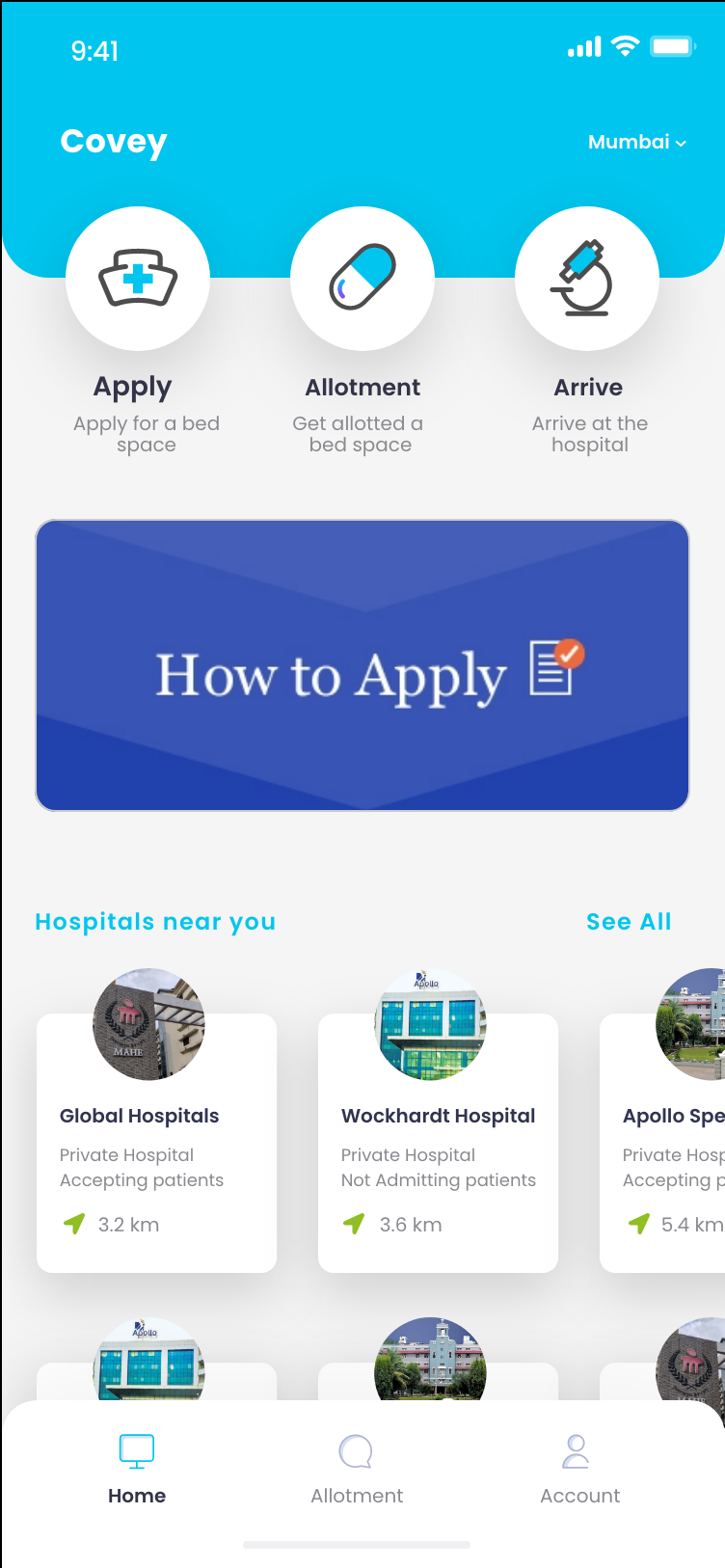
1) COVID-19 patients look at bed availability in hospitals nearby,
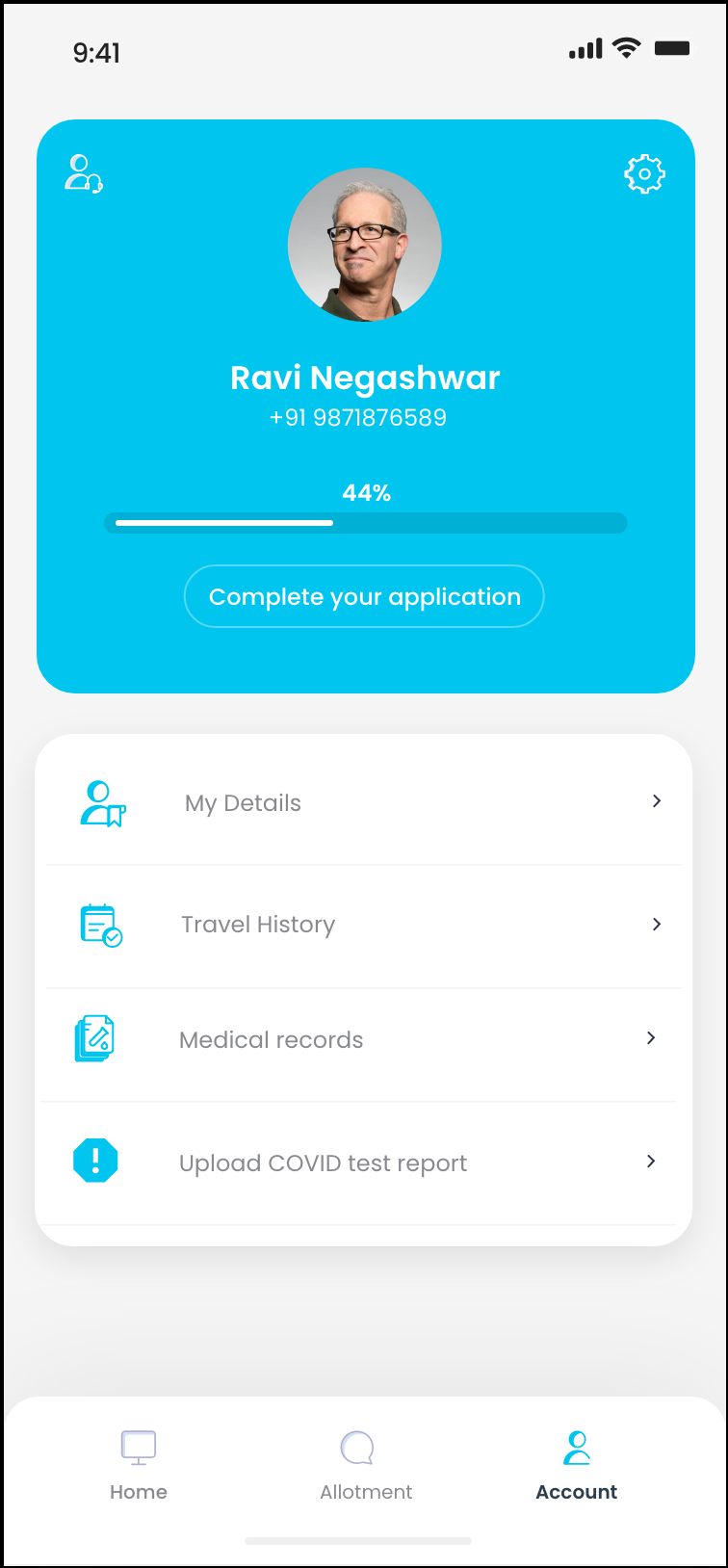
2) COVID-19 patients send one e-application (through the app) for a bed to hospitals within 10km radius, by filling in details (such as age, past illnesses, travel history etc.) and attaching COVID-19 positive report scan,
3) The Machine Learning algorithm predicts and ranks the severity of the case/e-application using these details per bed space,
4) Based on the results of the ML model, hospital officials can be suggested on who the bed should be allotted to instead of allowing officials to indulge in allotting the bed to the highest bidder (the one with most money)
5) A hospital then allots an available bed to the most critical case/application after which the case/application is marked as "Treated" on the database of applications, which would signal to other hospitals that this particular case has already been catered to
6) The person who has been allotted the bed, gets a notification and a set time to arrive at.
In other words, we are creating a database of beds and the applications for those bed spaces, which are then ranked on the basis of severity using questions answered by the patient. The most severely ranked case gets a bed. This process brings about transparency and helps cater to those who need it most. It would aid in removing any corruption that exists in allotting bed spaces.
How I built it
Upon research, we figured out the exact process of a COVID 19 patient being tested positive, to the patient being allotted a bed. We then tried to imbibe this procedure in the form of an app, with all the questions that a patient would be asked by a doctor, in order to decide bed allotment.
Challenges I ran into
Oddly enough, downloading the twilio framework was a bit of an issue this time around.
Building the JavaScript code for sending a message to the patient who has been allotted a bed.
Accomplishments that I'm proud of
Creating the app design, fixing most bugs of the JS code.
What's next for COVID-19 Bed Tracker
We are hoping to completely integrate the ML model with the app. Also, we hope to automate the notification being sent after a bed is allotted, as currently it requires a prompt to run the code which then triggers a notification.
Log in or sign up for Devpost to join the conversation.