💡 Inspiration
The Delta variant of COVID-19 arrived in India in March 2021. It led to the deaths of 270,000 individuals in three months, more than twice the number we saw in the entire year of 2020. It has affected people regardless of nationality, level of education, income or gender. But the same has not been true for its consequences, which have hit the hardest.
Signs and symptoms of coronavirus disease 2019 (COVID-19) may appear two to 14 days after exposure. This time after exposure and before having symptoms is called the incubation period. But sometimes people may understand about symptoms and suspect to have covid. Our solution makes it easy by providing useful information to users.
💻 What it does
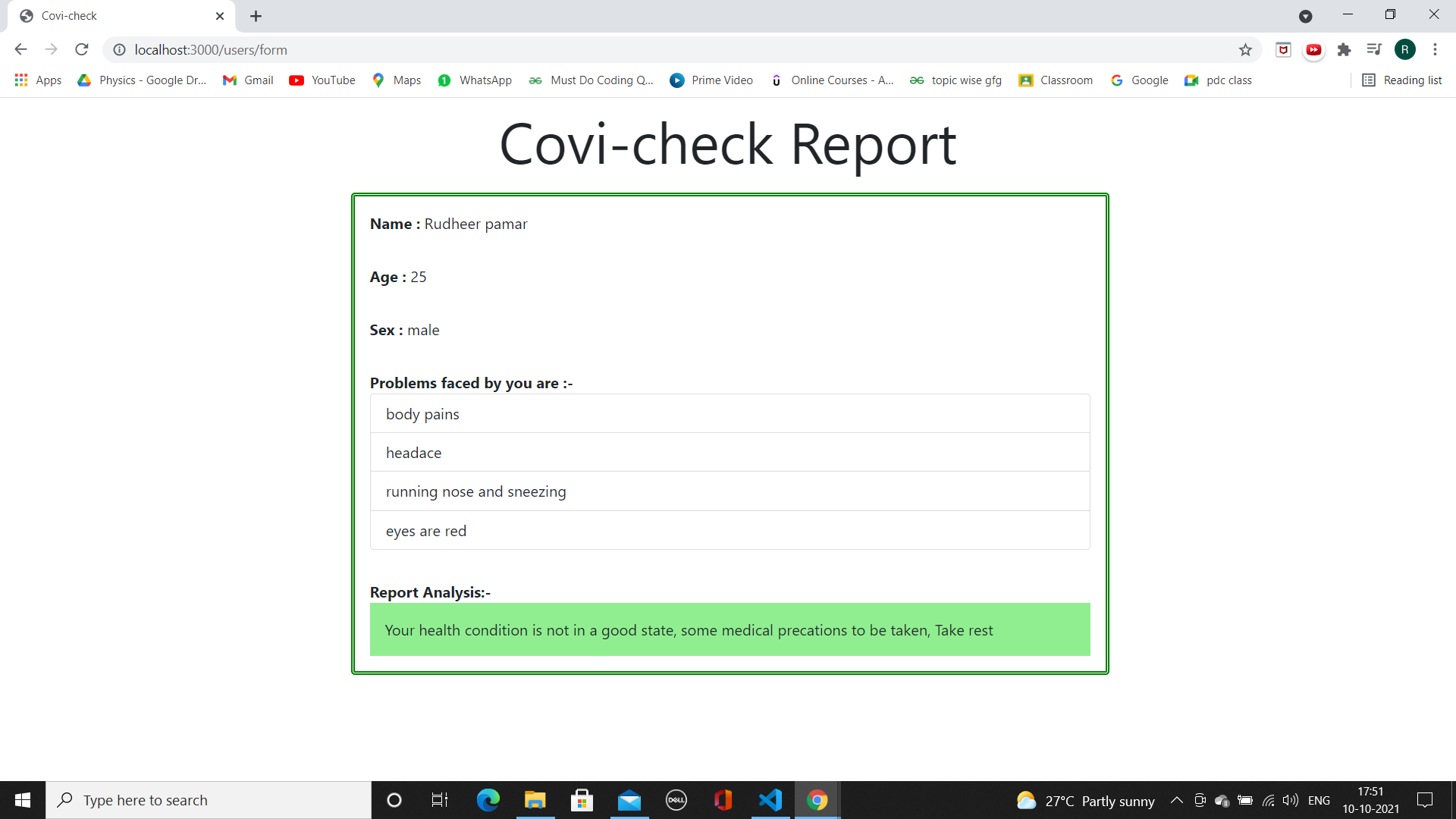
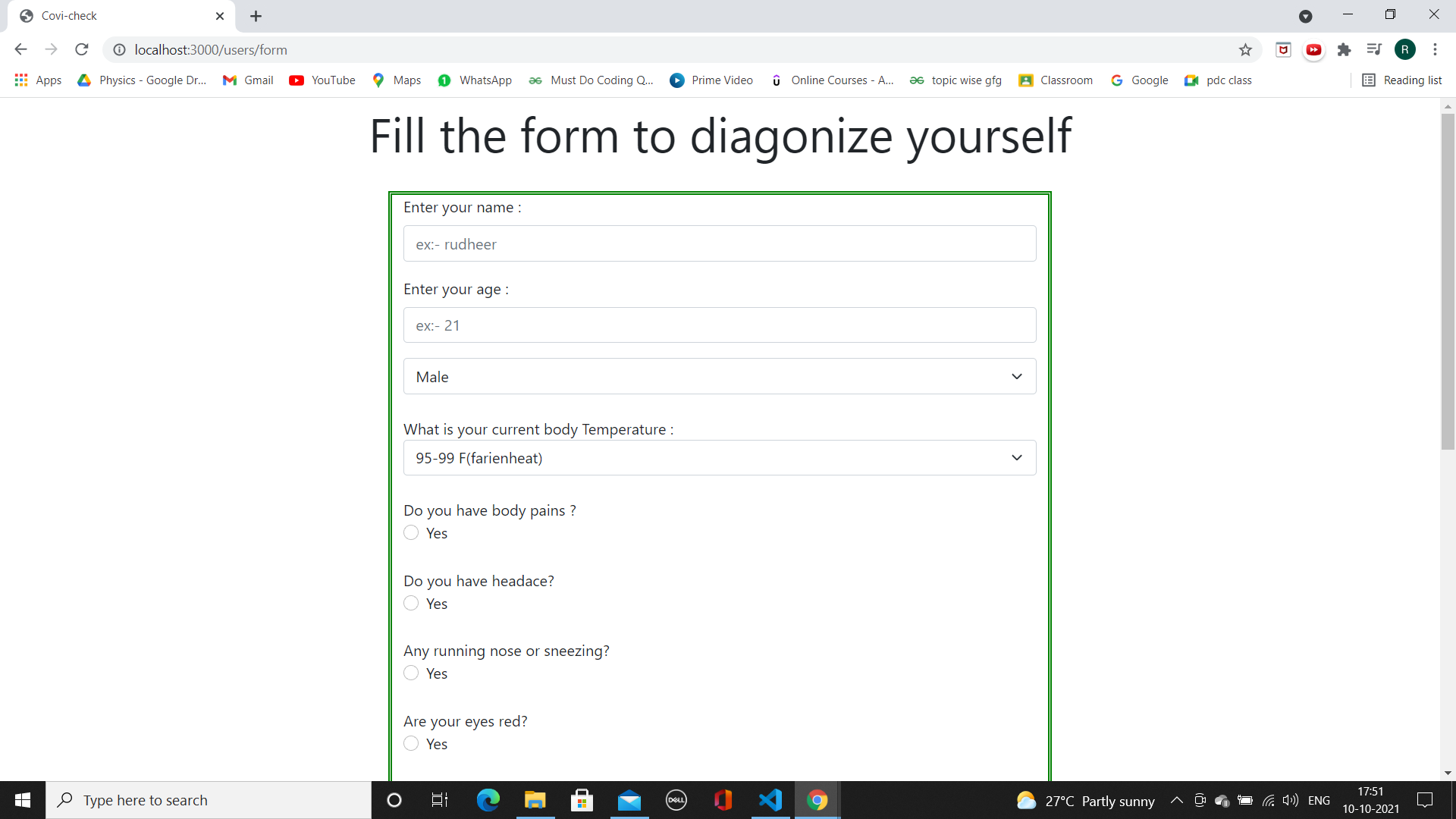
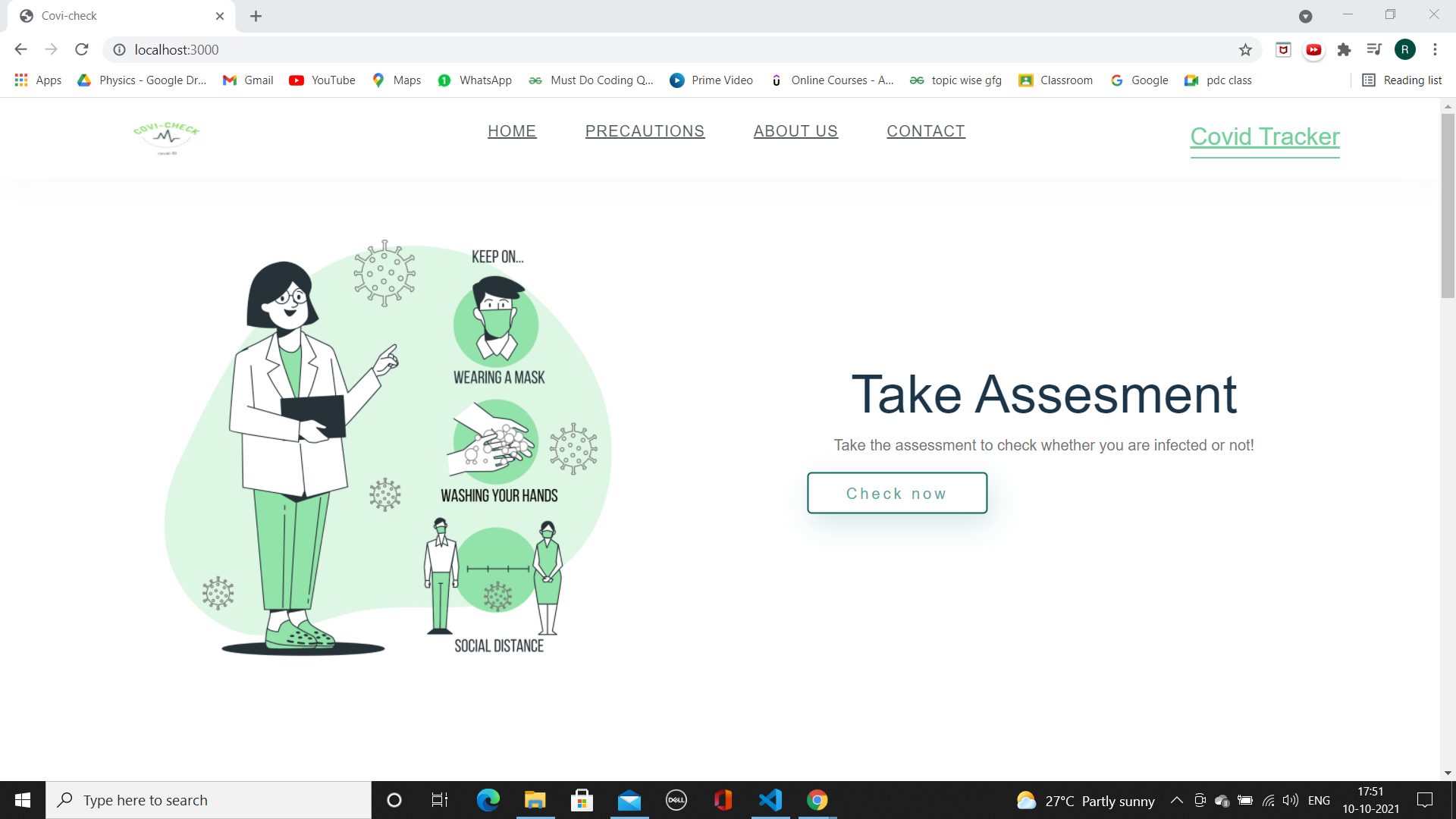
Our solution aims to analyse what are the symptoms user went through and classify them as COVID-19, common cold and other viral infections. It can not only assist doctors but can also be directly used by the patients to self-diagnose (although we suggest confirming the results with doctors).
👷♂️ How we Built it
Data related to the healthcare industry is not openly accessible. We were fortunate enough to find a relevant dataset on Kaggle (Link). The Dataset consists of 251 symptoms basics(111 - COVID, 70 - Viral Pneumonia, 70 - Normal)
⚙️ How it works
• User needs to Login/Signup
• User needs to upload the symptoms and information about any allergies. • We would process the image and return the result • Our solution aims to analyse what are the symptoms user went through and classify them as COVID-19, common cold and other viral infections. It can not only assist doctors but can also be directly used by the patients to self-diagnose (although we suggest confirming the results with doctors). It's like helth check up people come to fill up what they get symptoms they give it solution User needs to upload a that people what they get Image (Need some images to test on? Download them from here) And people find they detail's about globally people get coronavirus and how many people died cases increase full details also .
🧠 Challenges we ran into
We first attempted to build the model from scratch but failed t (due to lack of training data) reaching an accuracy of just about 59%. The accuracy was increased to and the stored model size was around 300 MB, which could have caused problems when deploying the model on Heroku. Finally, we settled on the VGG16 model, which had an initial accuracy of 84 percent (later improved to 97 percent) while still keeping the size in check. Another challenge was to integrate Twilio OTP while login.
🏅 Accomplishments
that we're proud of When we started, we never thought we would be able to achieve an accuracy of 97%. We are really proud of that. Secondly, our aim was to deploy this project so that anyone in the world can really use it and we are extremely happy for reaching our goal.
📖 What we learned
•We learned how to use Fast API gobal type how to give unique solution and thanks to awesome documentation, that process was seamless. • We also learned how to use Twillio for OTP Authentication
🚀 What's next for Covicheck
We tested the model face analysis and eye test give the info also what they get to people give solutionWe would love to test it we improve the model accordingly • We are planning to make some improvements depending on user’s feedback.
● And also planning to make it available for persons in all sectors.


Log in or sign up for Devpost to join the conversation.