-
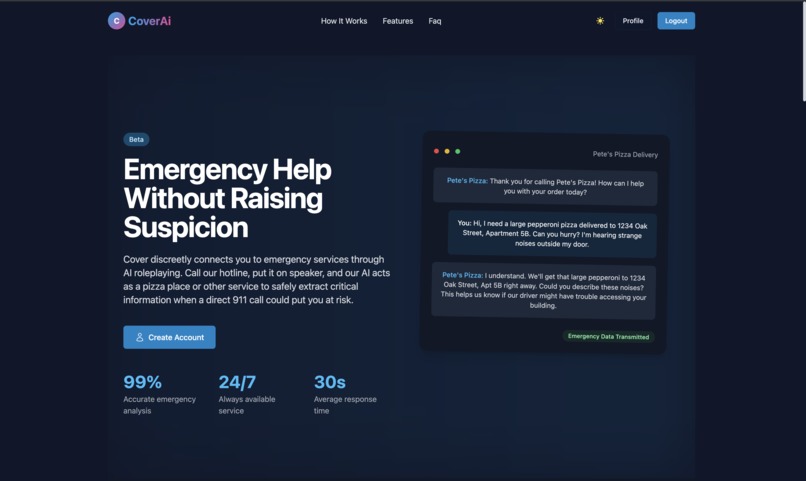
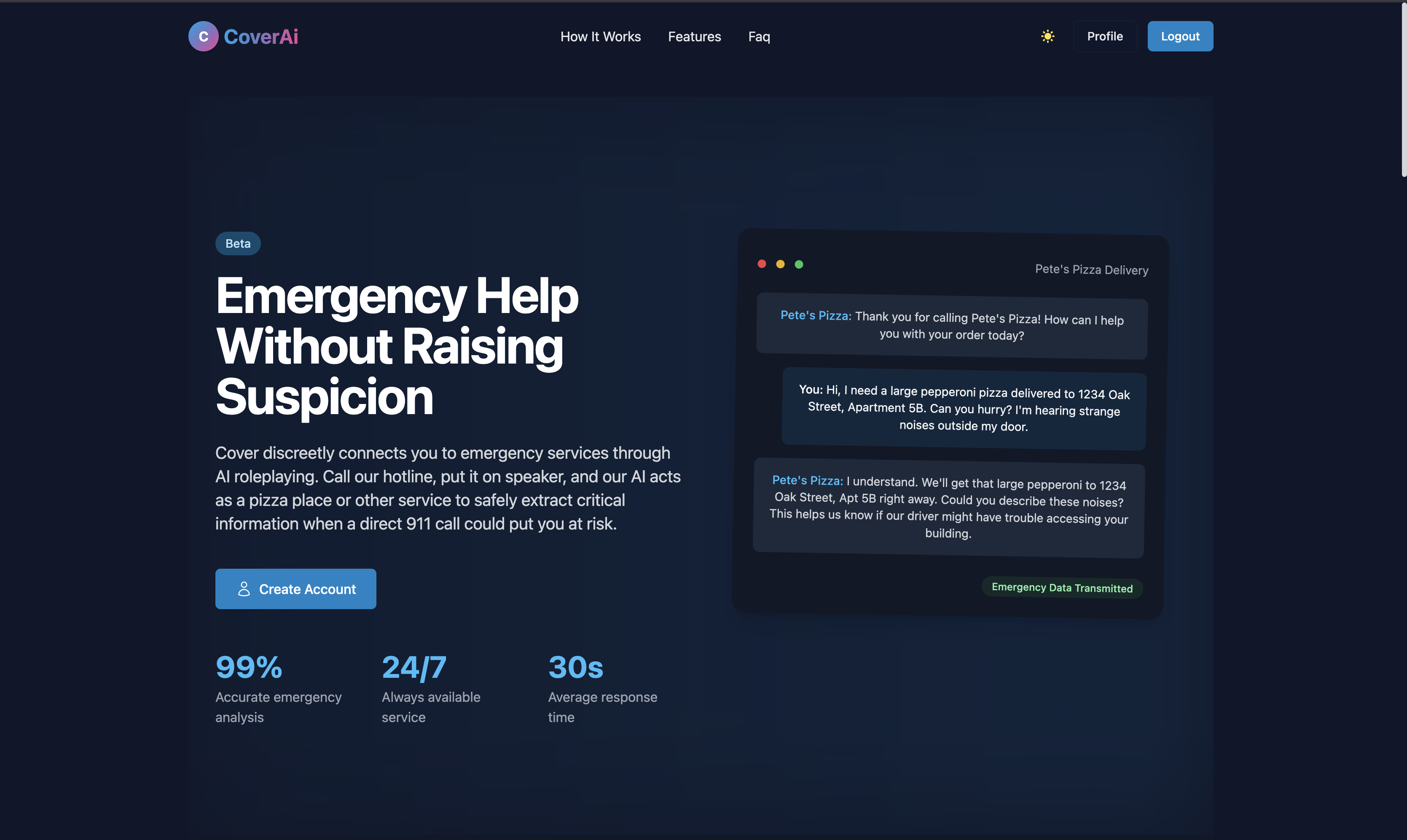
Landing Page
-
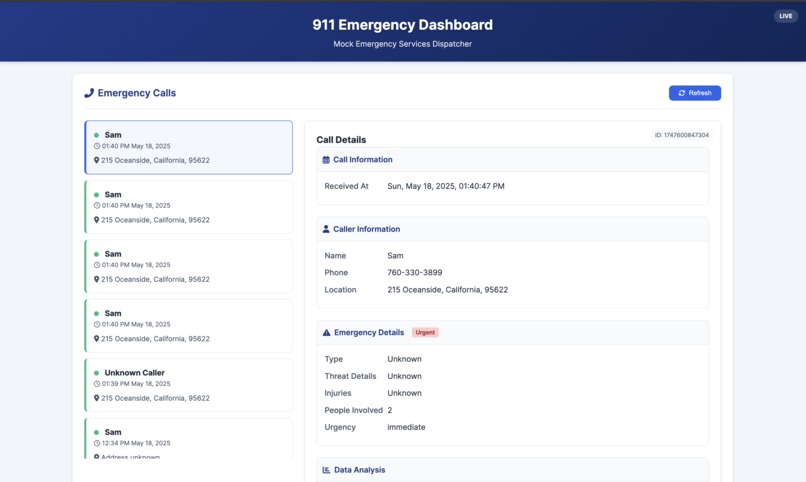
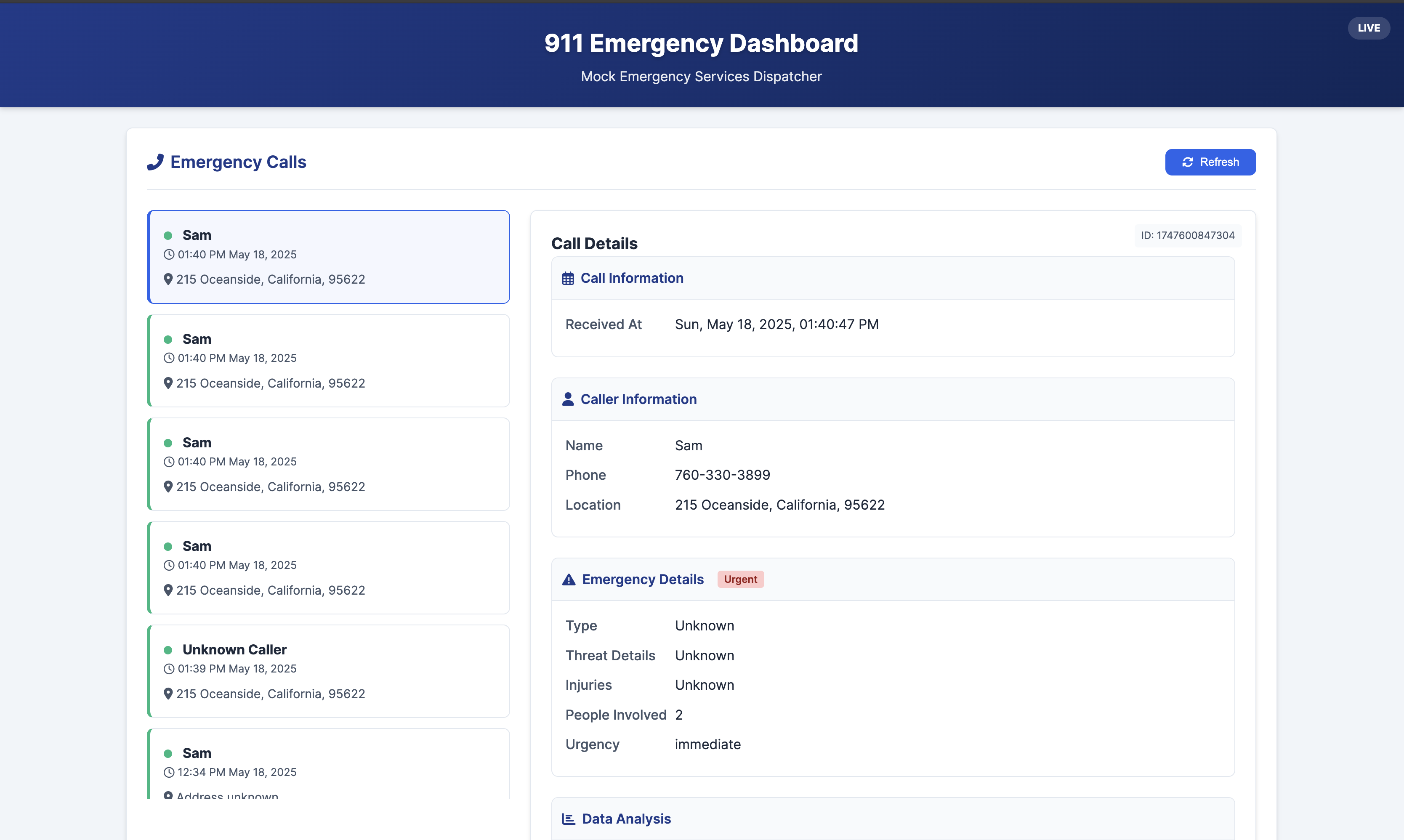
CoverAi 911 mock API Dashboard
-
Phone Call With CoverAi
Inspiration : I kept thinking of scenarios where a victim can’t call 911—kidnappers, domestic abuse, or someone right outside your door. With 30 % of wireless 911 calls silent or misdials and 28 million Americans facing language barriers, a covert AI “friend” that poses as a pizza-delivery bot can bridge that gap. It only needs one use to save a life.
What I Learned
- Real-time audio streaming with WebSockets & RTC
- Integrating Twilio Programmable Voice for inbound calls
- Building a lightning-fast frontend with Vite
- Chaining OpenAI APIs for robust STT → NLU → TTS flows
How I Built It
- Telephony layer: Twilio routes calls to my Node.js server.
- Audio pipeline: Browser-based WebSocket forwards audio to OpenAI for transcription; GPT slots fill location, emergency type, and codewords.
- Persona engine: Prompts shape “pizza-order” small talk, then stealthily switch to emergency mode.
- 911 relay: As soon as key data is captured—or a duress codeword is spoken—the backend silently POSTs a JSON payload to a mock 911 endpoint.
- Speaker mode: Users can put the phone on speaker; the threat never suspects it’s a real emergency call.
Challenges Faced
My initial plan was to use OpenAI’s speech-to-speech model for seamless, low-latency convo. UCSD’s firewall blocked our RTC requests, so I pivoted to a chained STT→GPT→TTS approach—spending hours researching workarounds and optimizing latency.
https://github.com/sam-siavoshian/CoverAi https://cover-seven-rho.vercel.app/


Log in or sign up for Devpost to join the conversation.