-
-
-
-
-
-
-
-
AI Chat Assistant
-
-
Inspiration Healthcare should not feel like decoding a legal document. Patients and providers lose precious time trying to understand coverage rules buried inside dense insurance PDFs, often when treatment decisions are urgent. We built CoverageAtlas because access to care should not depend on who is best at navigating paperwork.
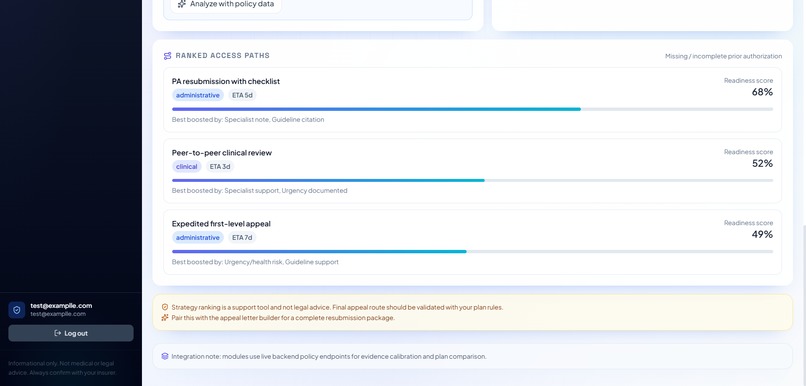
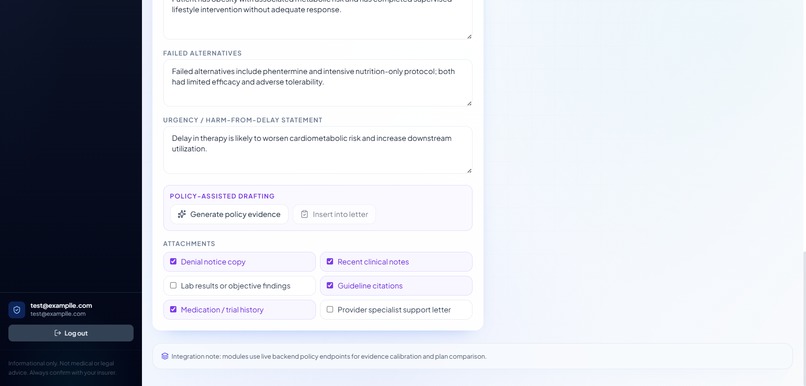
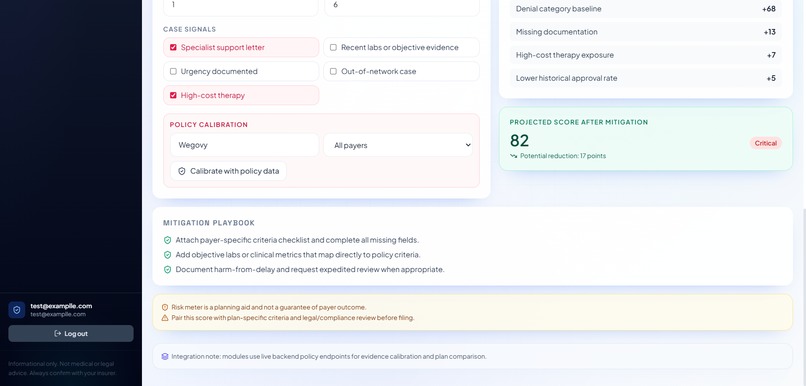
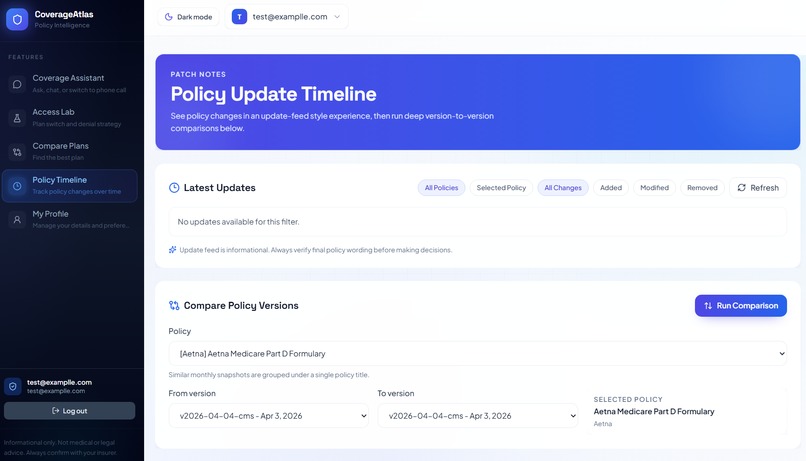
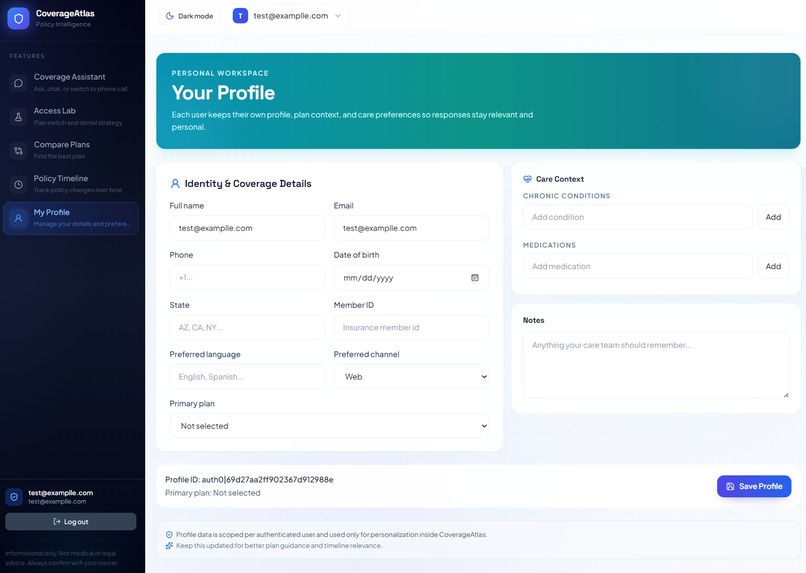
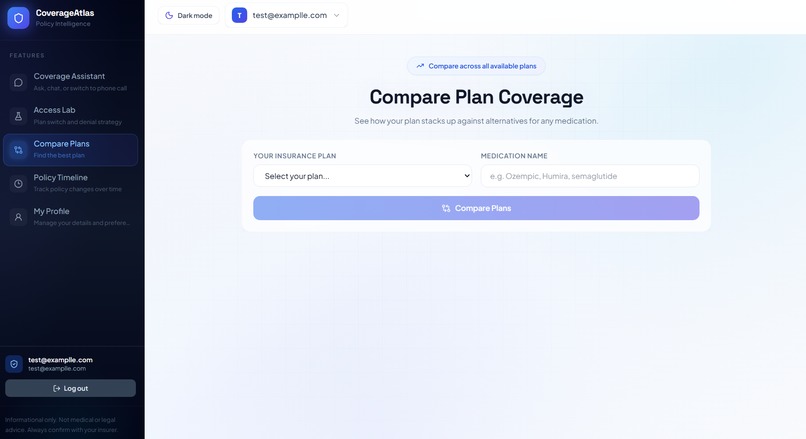
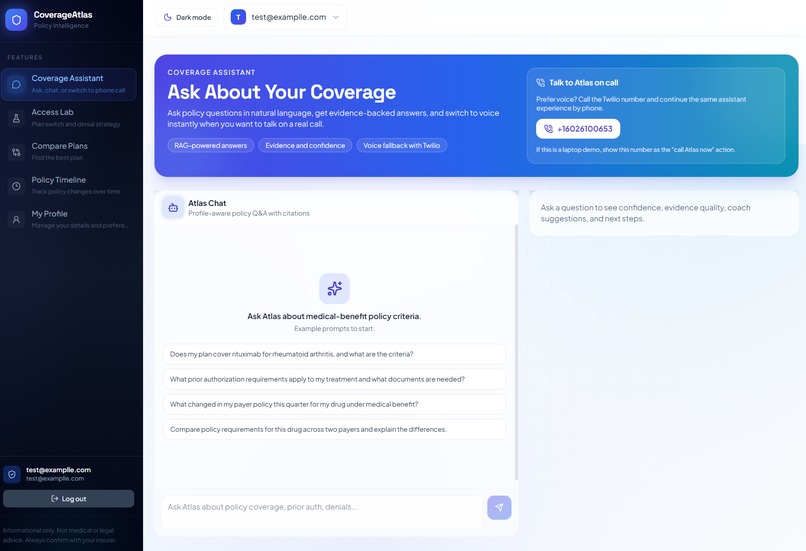
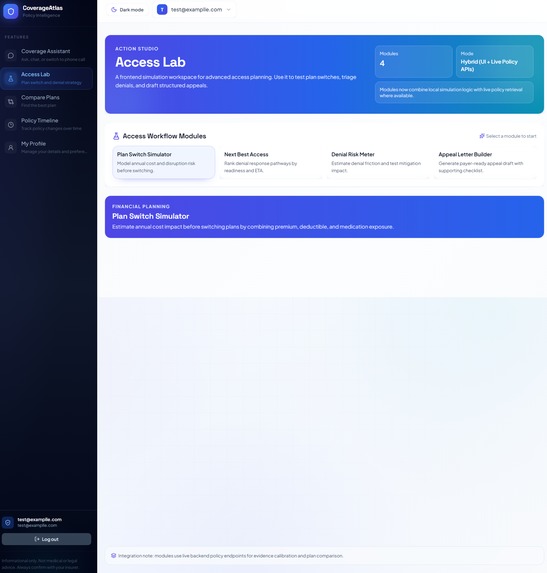
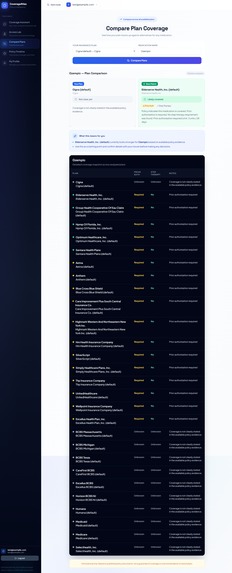
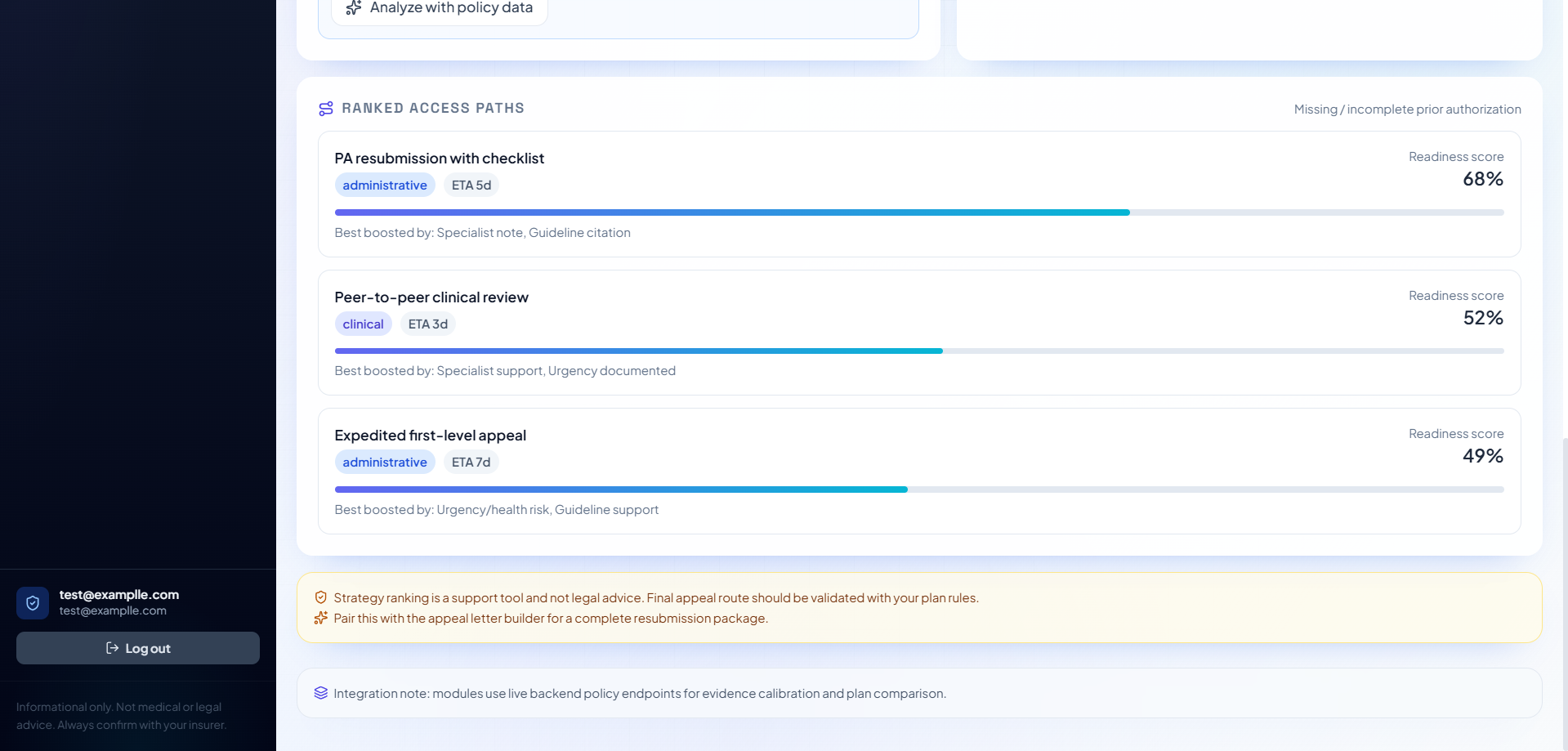
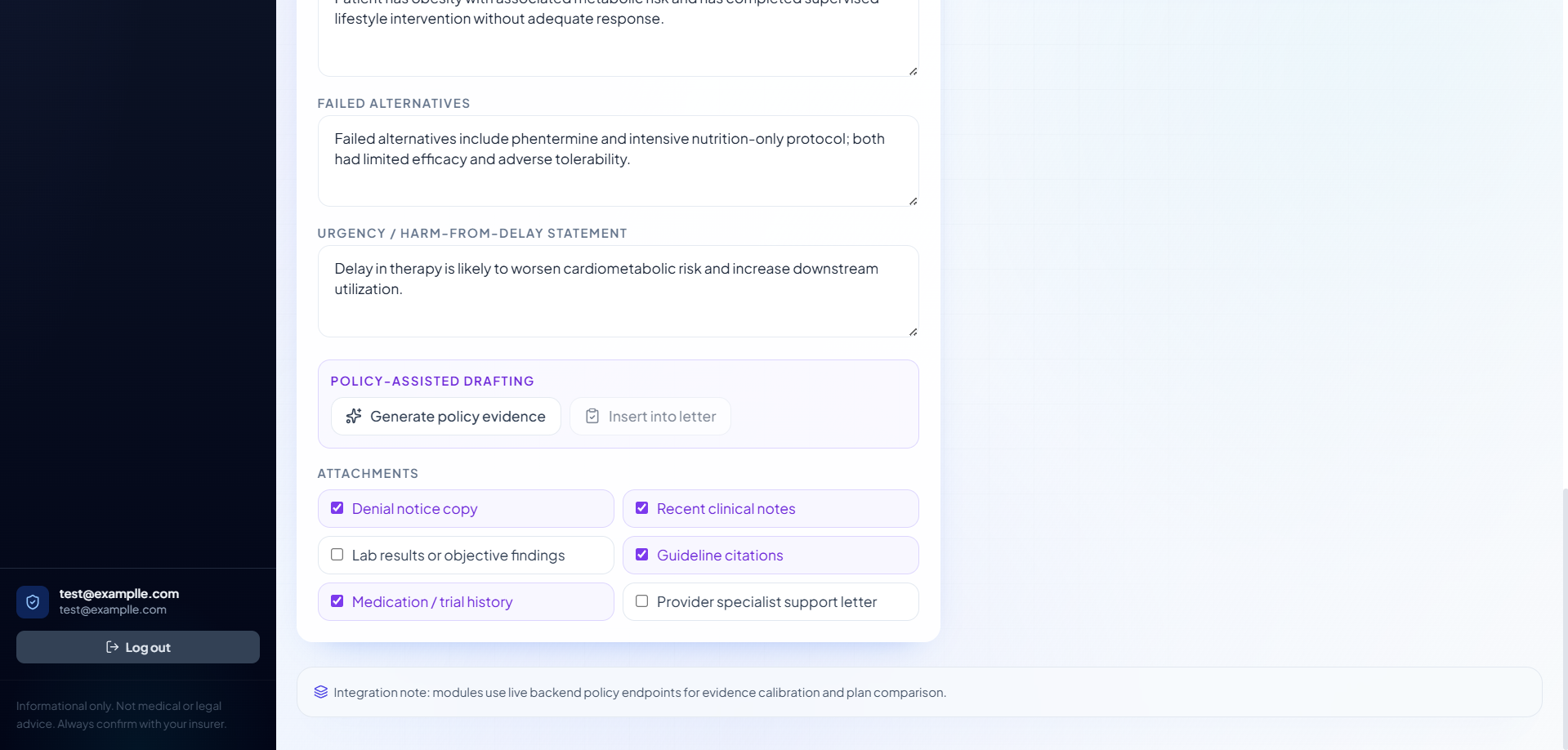
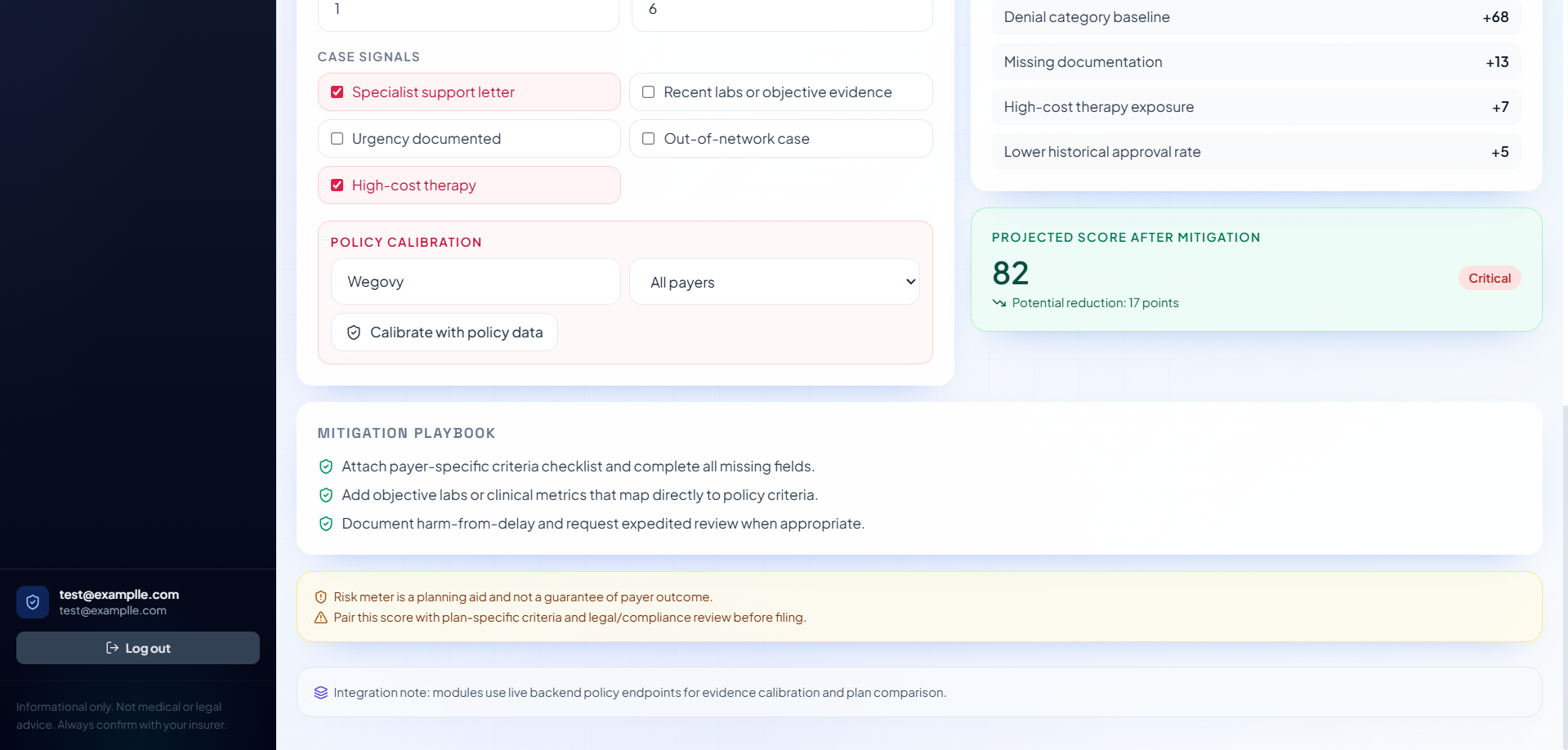
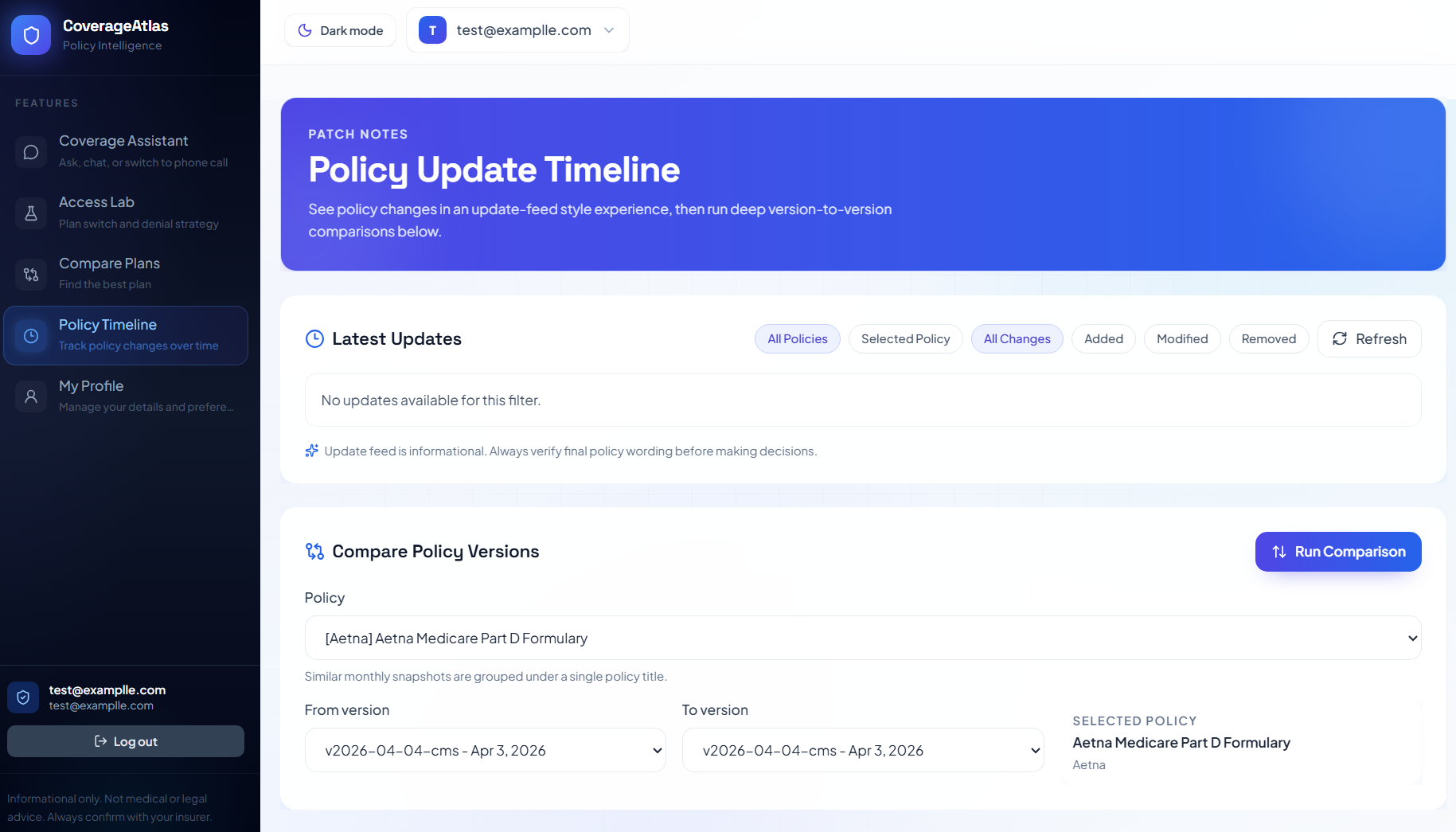
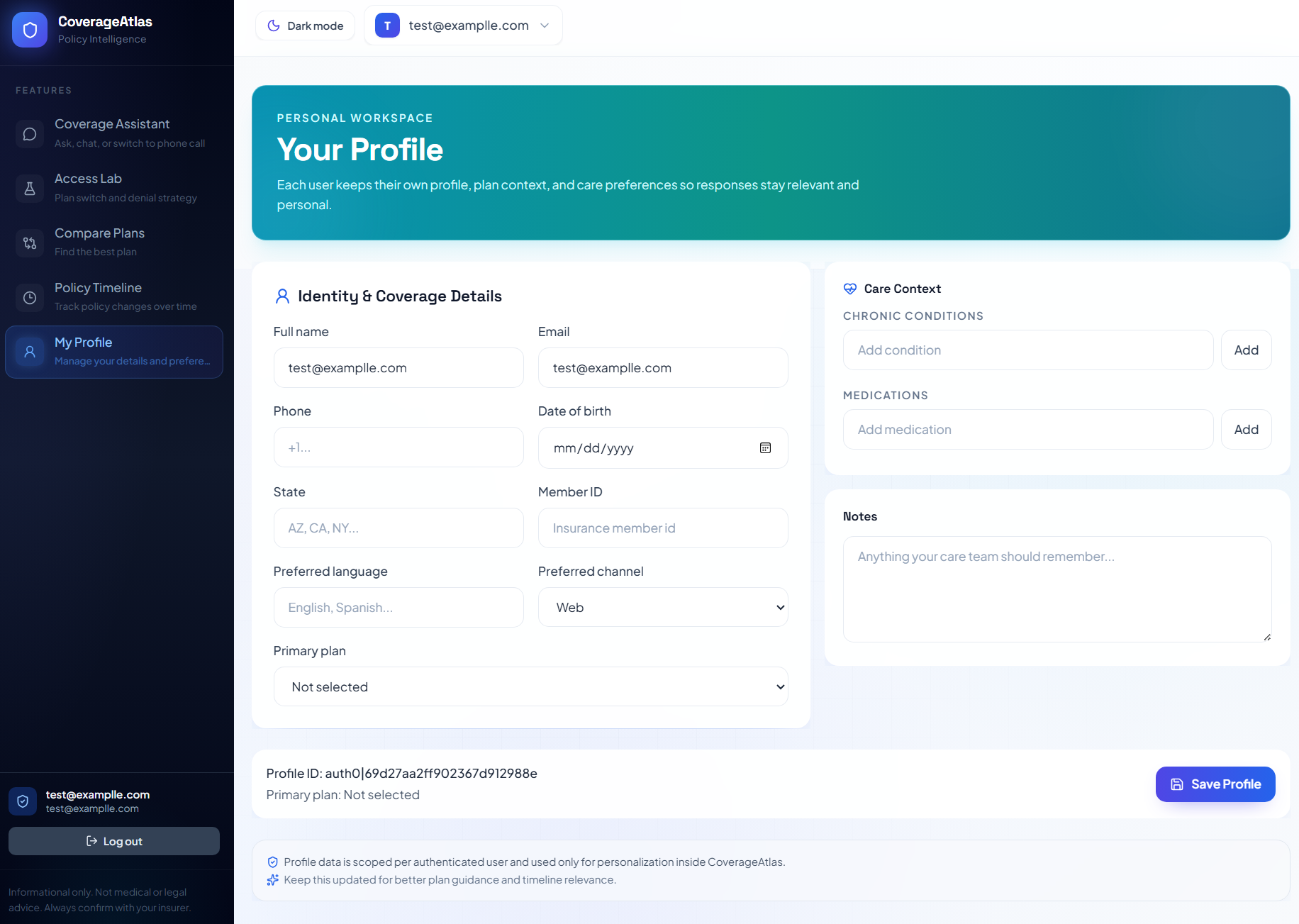
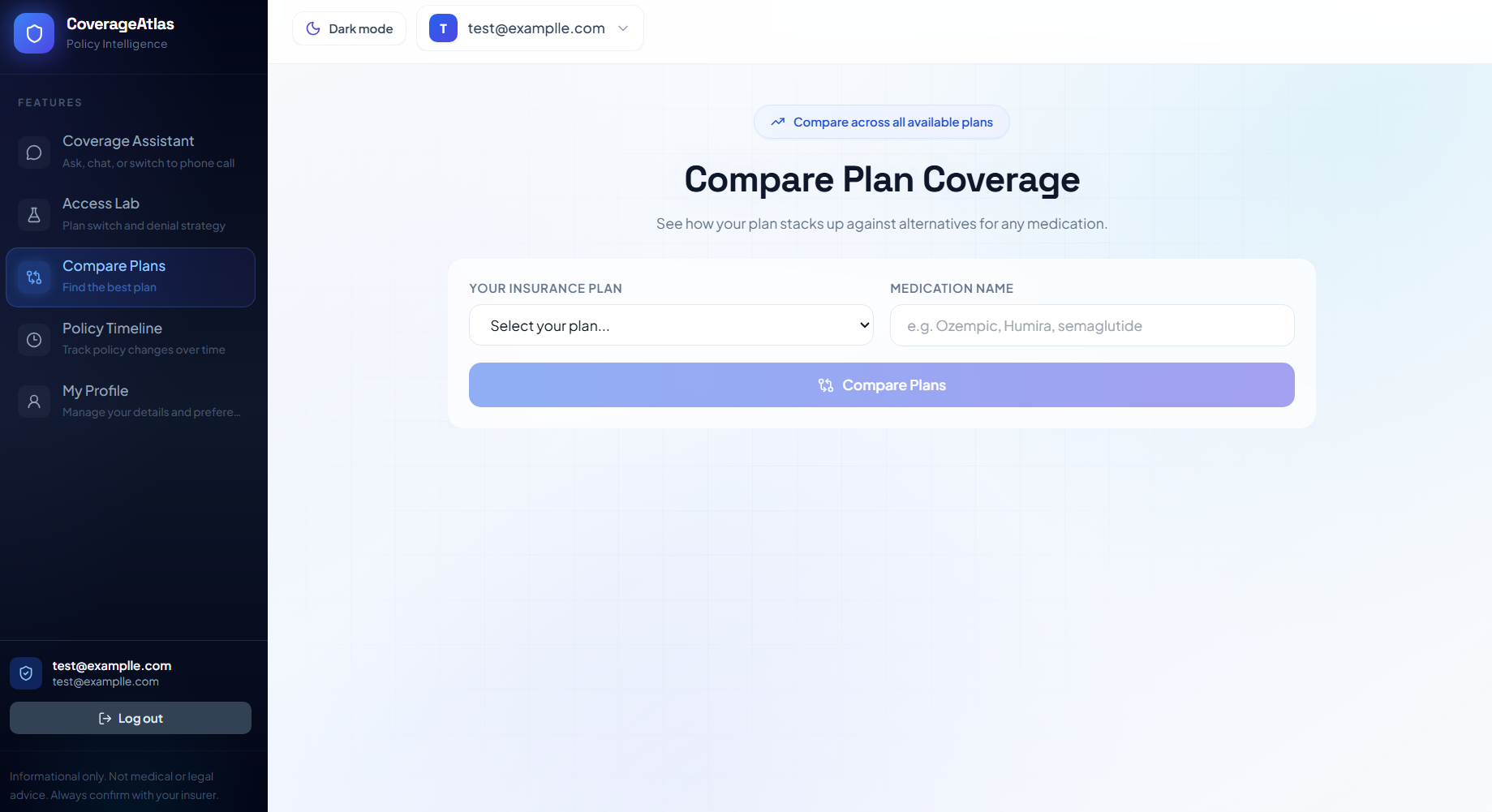
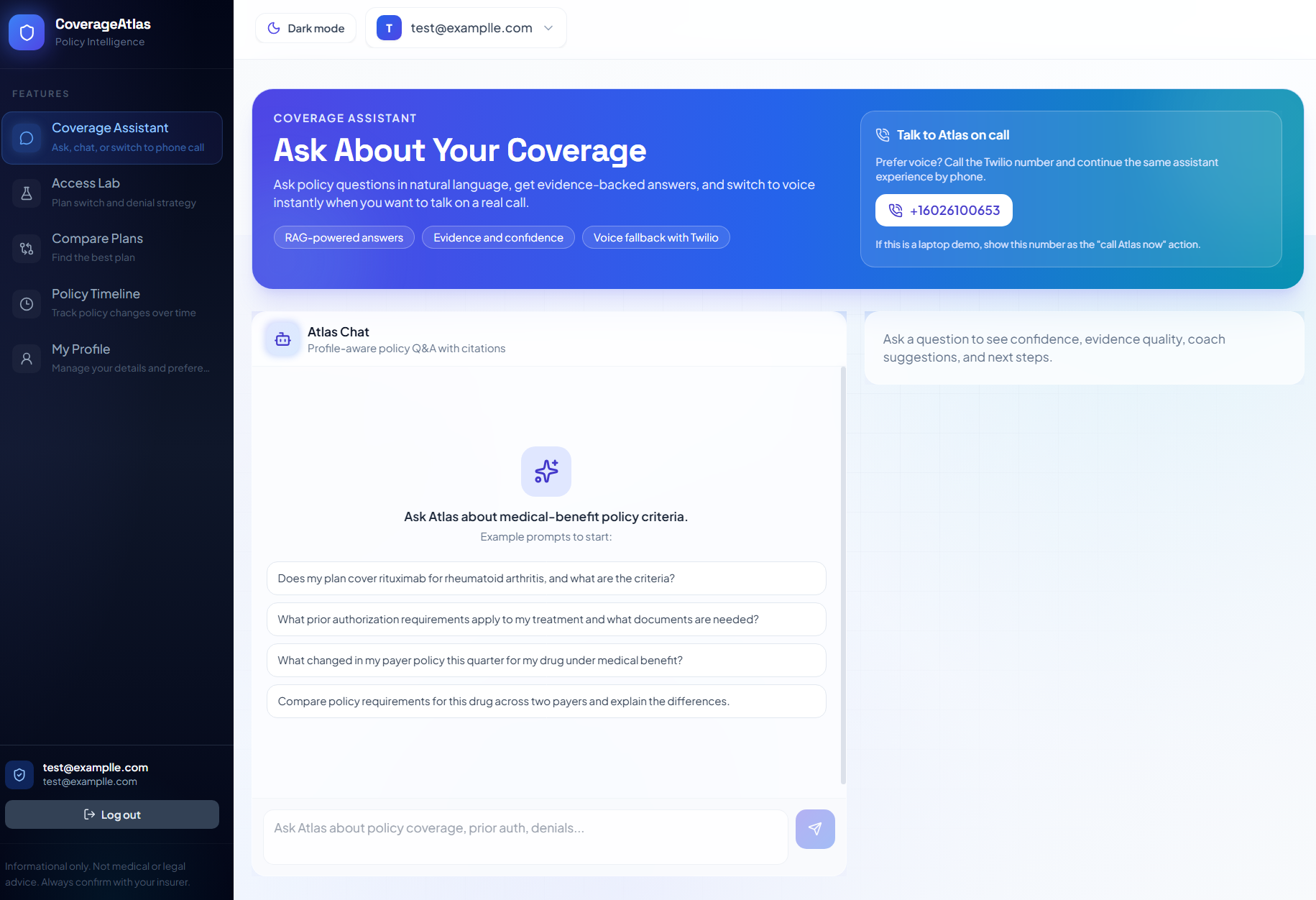
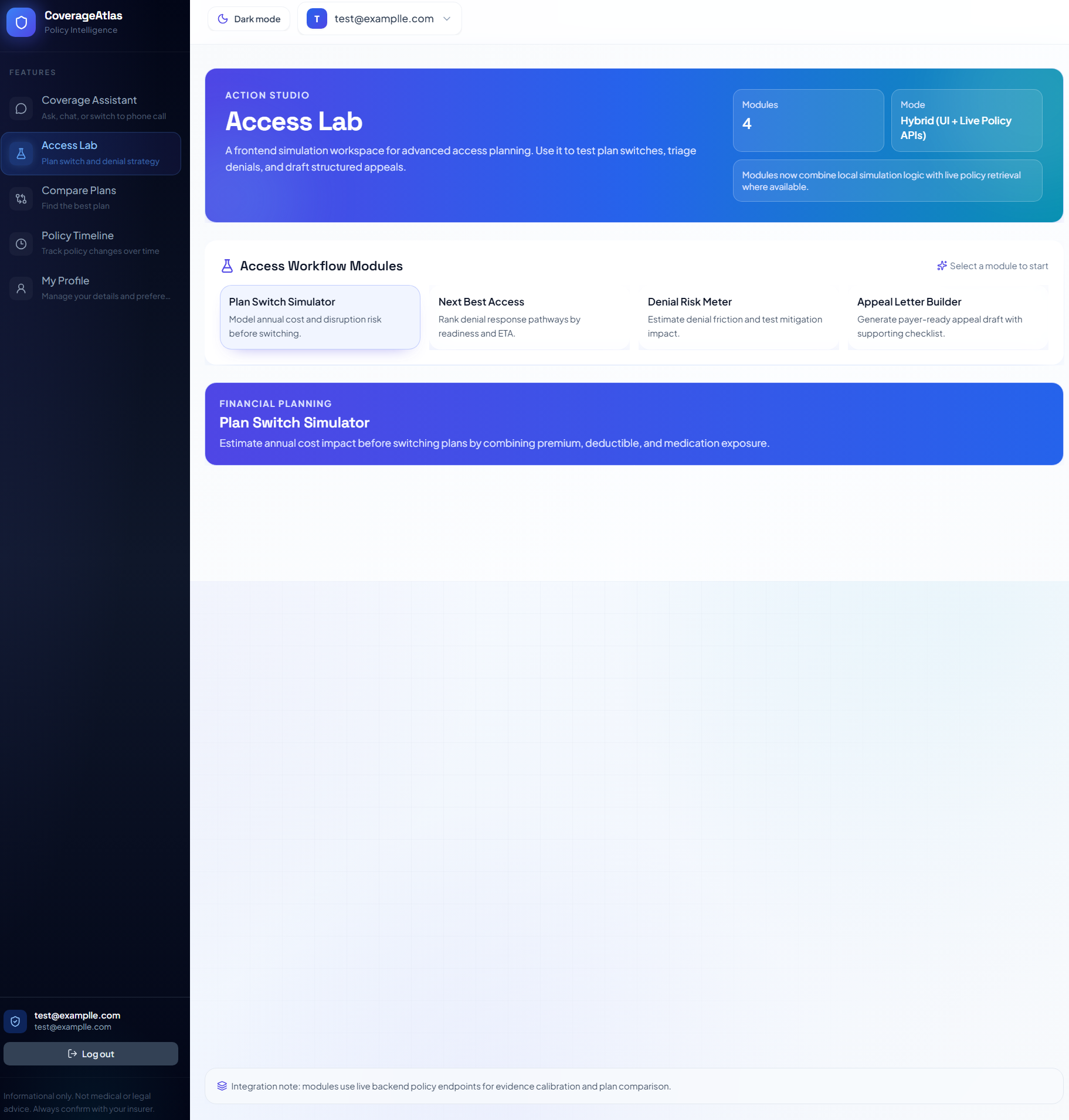
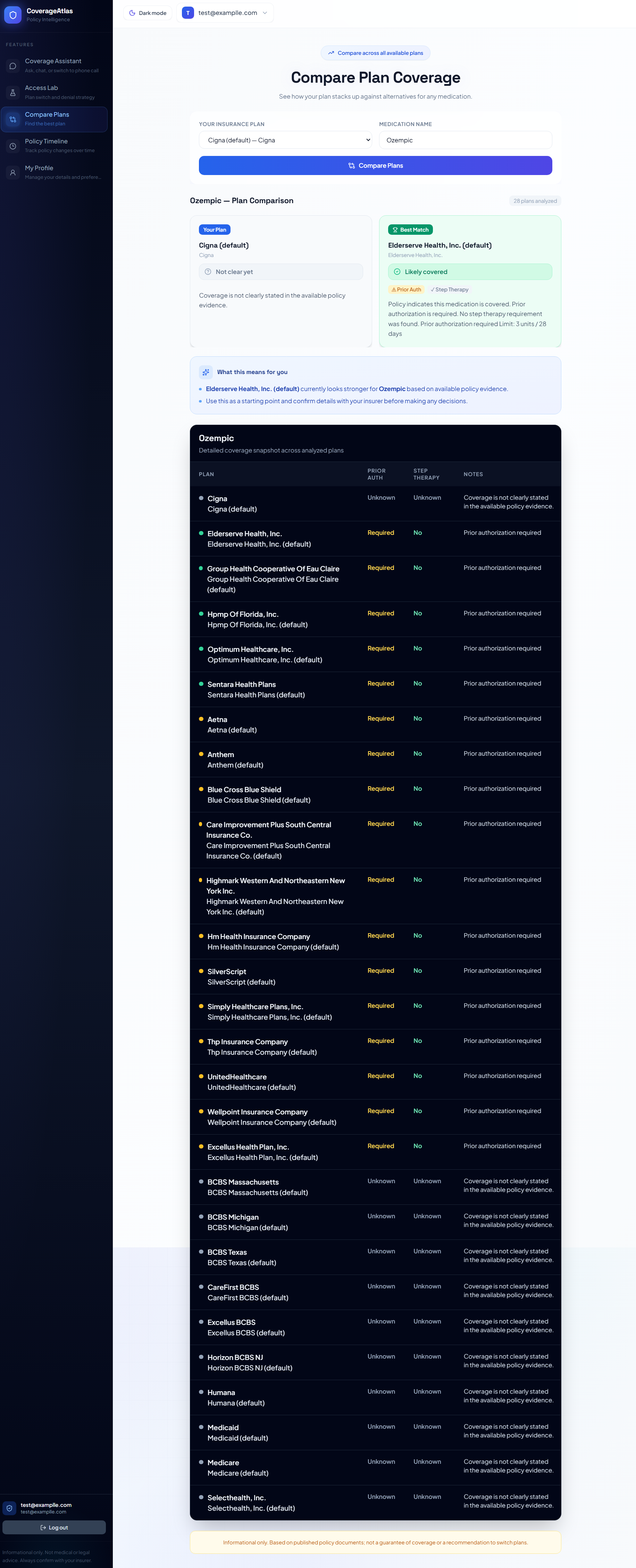
What it does CoverageAtlas turns messy insurance policy documents into clear, actionable guidance. It lets users ask plain-language questions and get evidence-backed answers with citations, compare coverage across plans, track policy changes over time, and explore practical access tools like denial-risk estimation, appeal-letter generation, next-best access recommendations, and plan-switch simulation.
How we built it We built CoverageAtlas with a FastAPI backend, PostgreSQL for structured policy data, and Qdrant for retrieval over policy content. We used Gemini/Vertex-powered AI to extract, organize, and answer questions from policy documents while keeping responses grounded in real evidence. On the frontend, we built a React + Vite experience focused on clarity, trust, and decision support, with Auth0 layered in for secure user access.
Challenges we ran into Insurance documents are inconsistent, complex, and full of edge cases, so turning them into reliable structured knowledge was harder than it looked. We also had to make sure our AI stayed grounded in evidence instead of sounding confident without support. On top of that, we were building in parallel as a team, so keeping the architecture modular and integration-friendly was critical.
Accomplishments that we're proud of We are proud that CoverageAtlas feels like more than a demo chatbot. It is a real policy intelligence system with citation-backed answers, advanced filtering, policy-change tracking, and patient-centered access tools that address real-world friction. We also built it in a way that supports parallel development and future expansion without breaking the foundation.
What we learned We learned that trust is everything in healthcare AI. Strong retrieval, clean data modeling, and transparent citations matter more than flashy responses alone. We also learned how important it is to design systems that are modular, collaborative, and resilient when multiple teammates are building different parts at the same time.
What's next for CoverageAtlas Next, we want to make CoverageAtlas even more proactive and personalized. We are planning a \textbf{Coverage Scorecard} to rate plans based on access friction, transparency, and prior-authorization burden, plus a \textbf{Drug Alternate Finder} to suggest covered therapeutic alternatives when a medication is restricted or denied. We also want to integrate the \textbf{CVS API} so users can check medication availability, add available medications to cart, and purchase them directly through the experience. Beyond that, we see CoverageAtlas growing into a smarter access platform with richer denial intelligence, stronger provider workflows, proactive change alerts, and deeper real-world treatment navigation support.
Built With
- auth0
- docker
- docker-compose
- fastapi
- git
- google-gemini
- jwt
- postgresql
- python
- qdrant
- react
- redis
- render
- tailwind-css
- typescript
- uvicorn
- vercel
- vertex-ai
- vite


Log in or sign up for Devpost to join the conversation.