
Inspiration
Film development involves a huge amount of uncertainty. A strong script can still fail because of casting, audience mismatch, market trends, or changing viewer preferences. We wanted to build a tool that could bring some of these factors together before a movie goes into production.
Coverage was inspired by the idea of giving filmmakers a fast, evidence-based second opinion on a proposed movie.
What it does
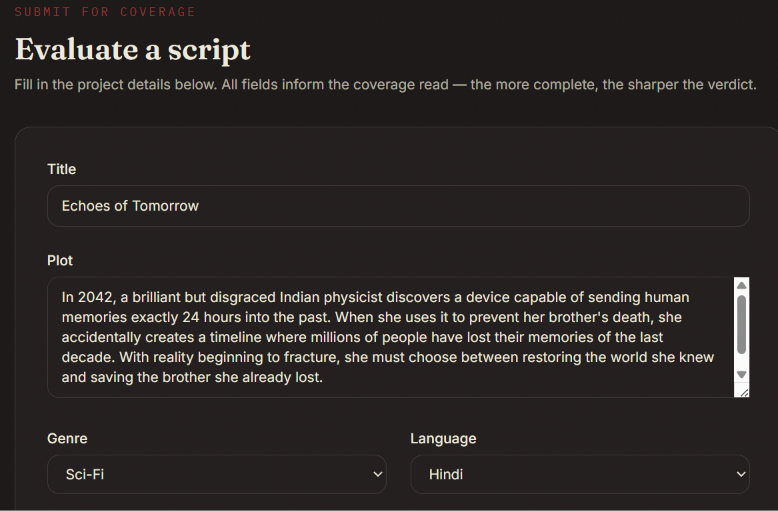
Coverage evaluates a movie proposal using its script, story details, cast, director, genre, language, and target audience.
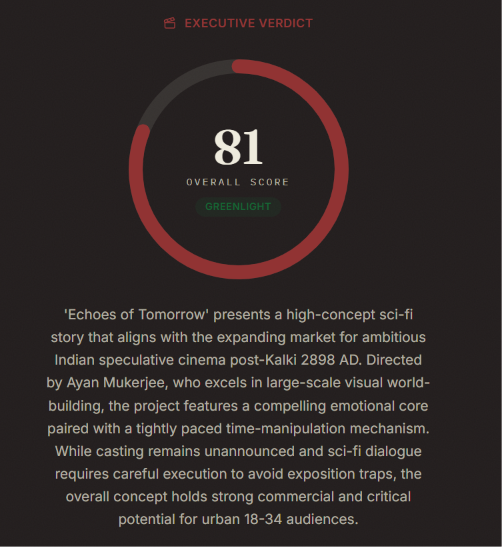
The system researches relevant market and audience information, then combines that research with AI-based analysis to generate an overall evaluation. It breaks the result into areas such as:
- Overall project score
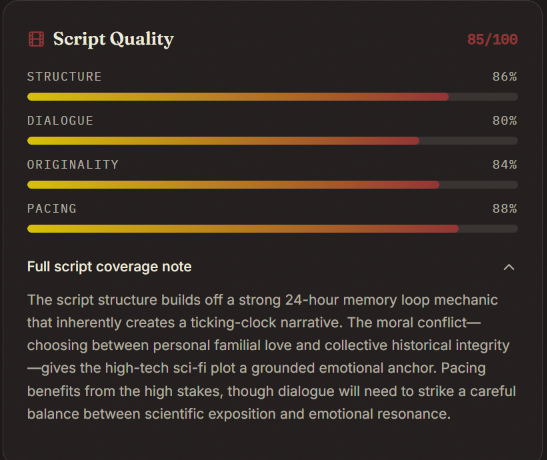
- Script quality
- Structure, dialogue, originality and pacing
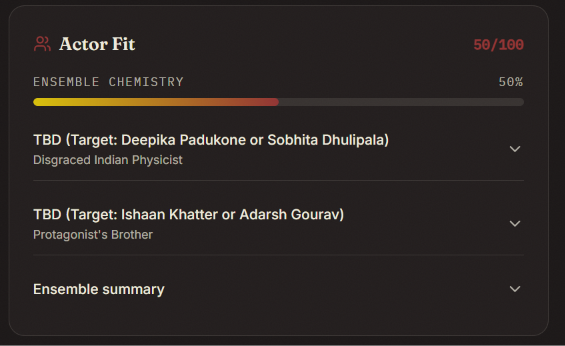
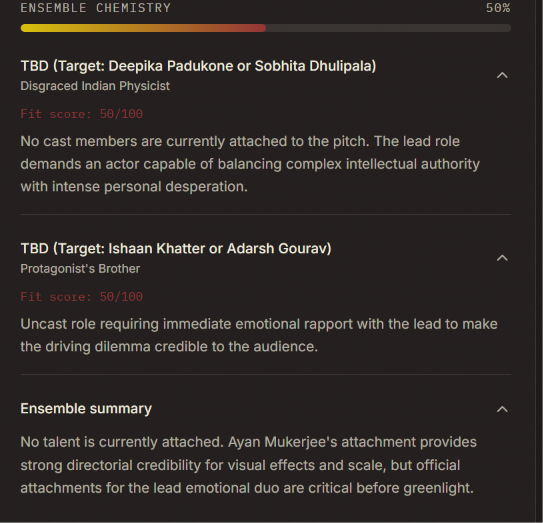
- Actor-role fit and cast chemistry
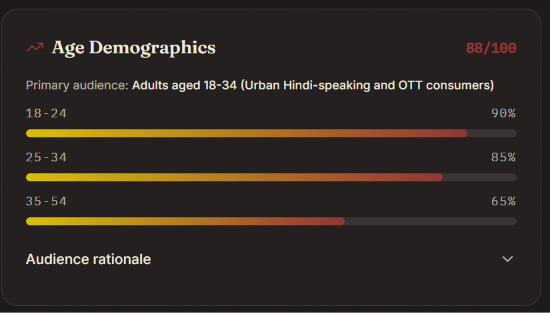
- Target-audience affinity
- Market and audience trends
- Greenlight recommendation
Instead of only returning a single score, Coverage explains the reasoning behind the evaluation so that the result can be useful during early-stage decision making.
How we built it
The frontend was built with React and Vite, with a FastAPI backend handling the analysis pipeline.
The backend connects the project to Parallel for web research and Gemini for synthesizing the research into a structured movie evaluation. The frontend communicates with the backend through an API and presents the resulting evaluation as an interactive results dashboard.
The architecture follows:
Frontend → FastAPI → Parallel research → Gemini analysis → Evaluation dashboard
Challenges we faced
One of the biggest challenges was connecting multiple AI services into a single reliable pipeline while keeping the response structure consistent with the frontend.
We also had to deal with API quotas, model availability, frontend-backend communication, CORS configuration, and making the development environment work correctly in Google Cloud Shell.
Another challenge was designing the evaluation so that it goes beyond a generic AI opinion. The system combines movie-specific information with external research and separates the result into multiple dimensions that can be interpreted by a filmmaker or production team.
What we learned
This project taught us how to integrate multiple AI services into a practical application rather than treating an LLM as a standalone chatbot. We learned about API-based research pipelines, structured AI outputs, FastAPI, React/Vite integration, and handling real-world issues such as authentication, quotas, and service availability.
Most importantly, we learned that useful AI products need to present reasoning and actionable information, not just a generated answer.

Log in or sign up for Devpost to join the conversation.