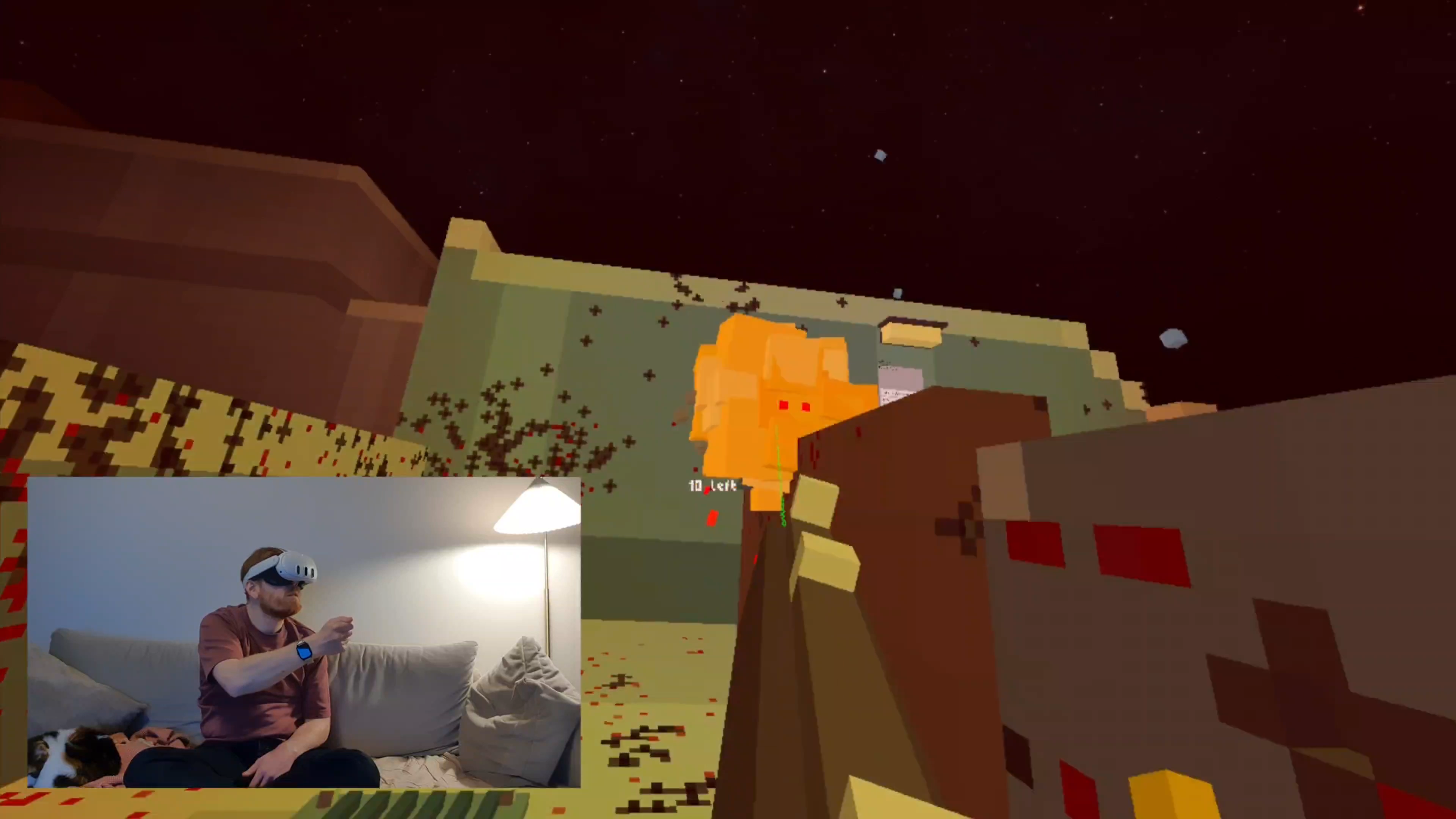
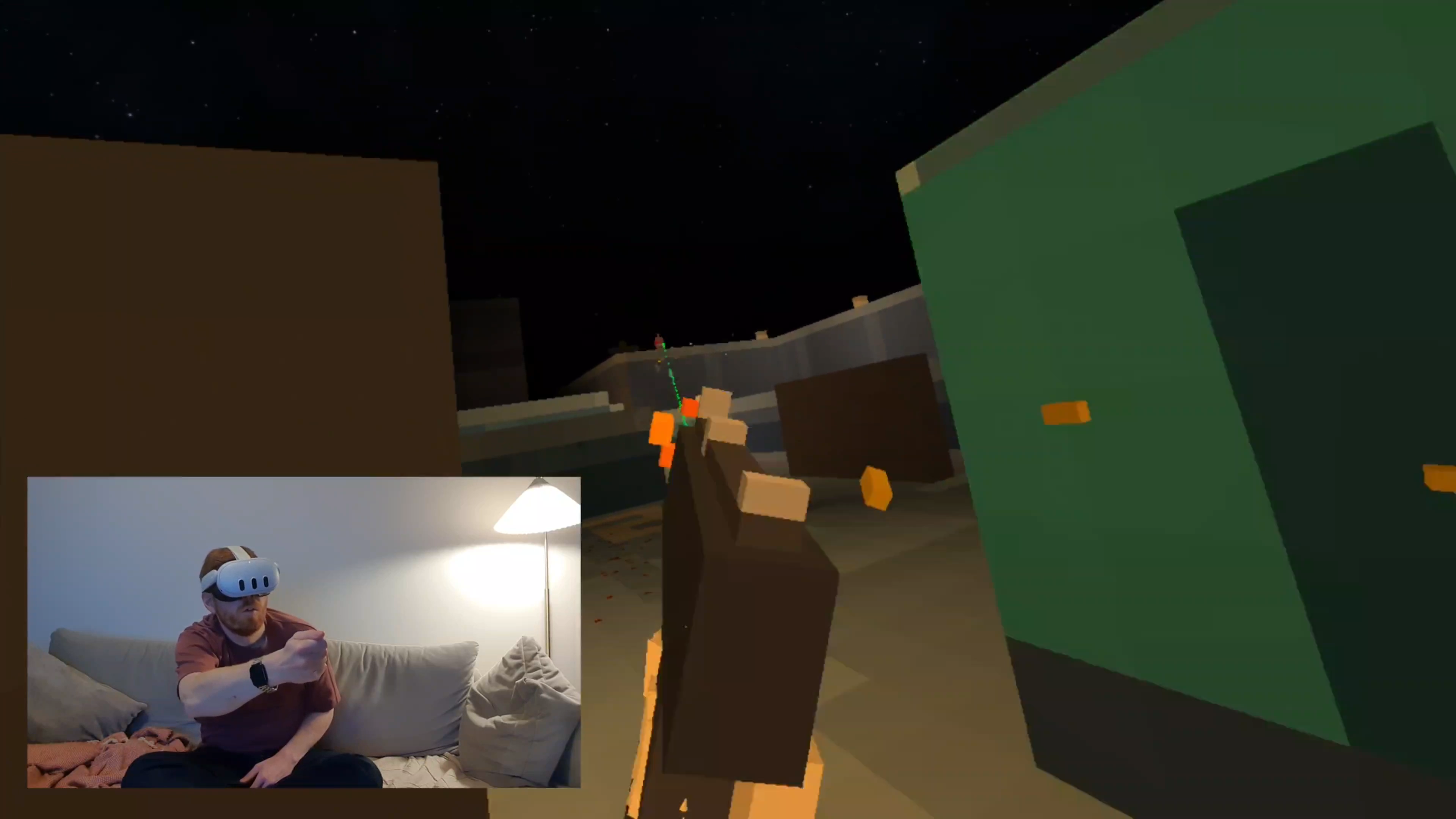
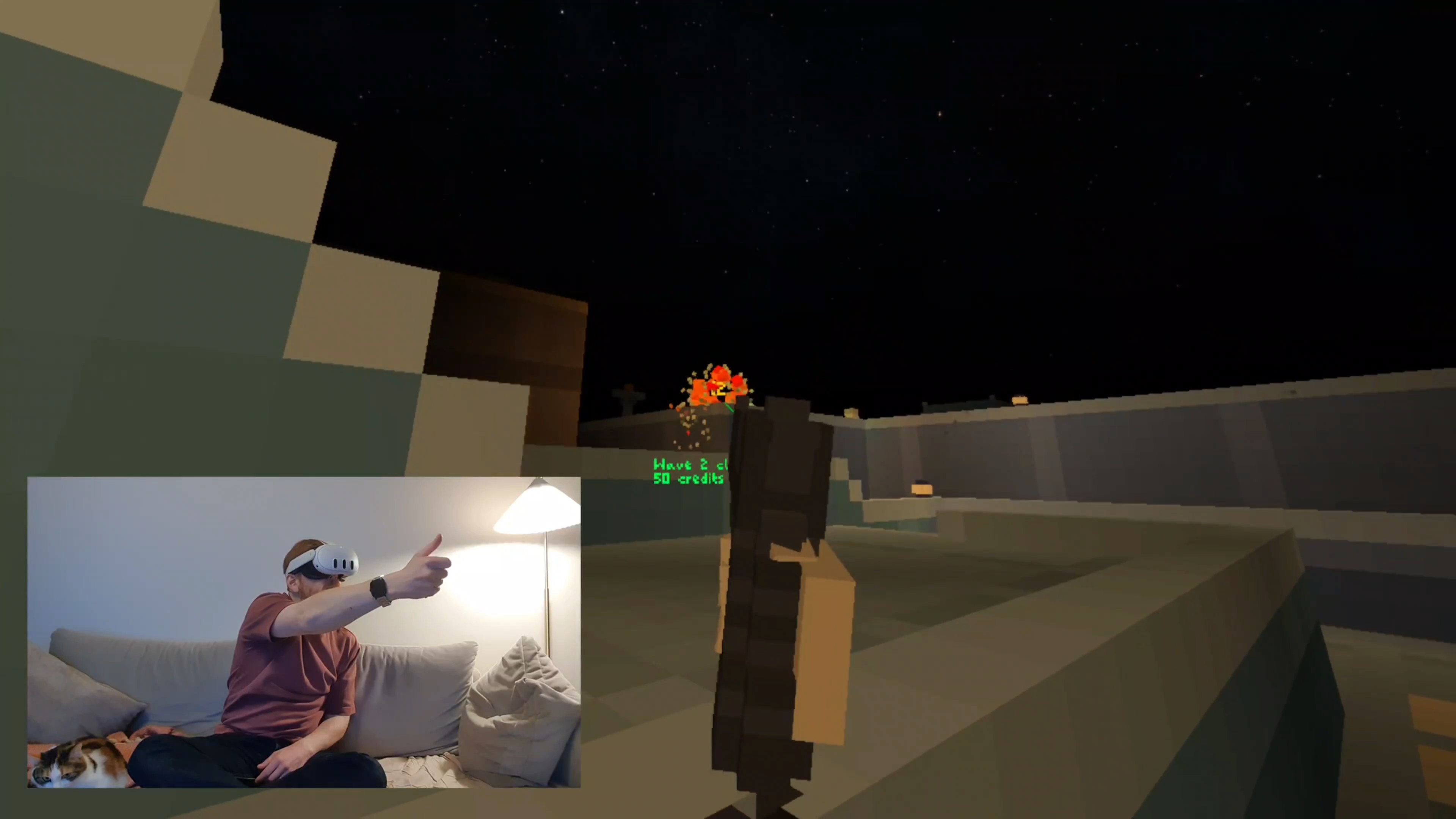
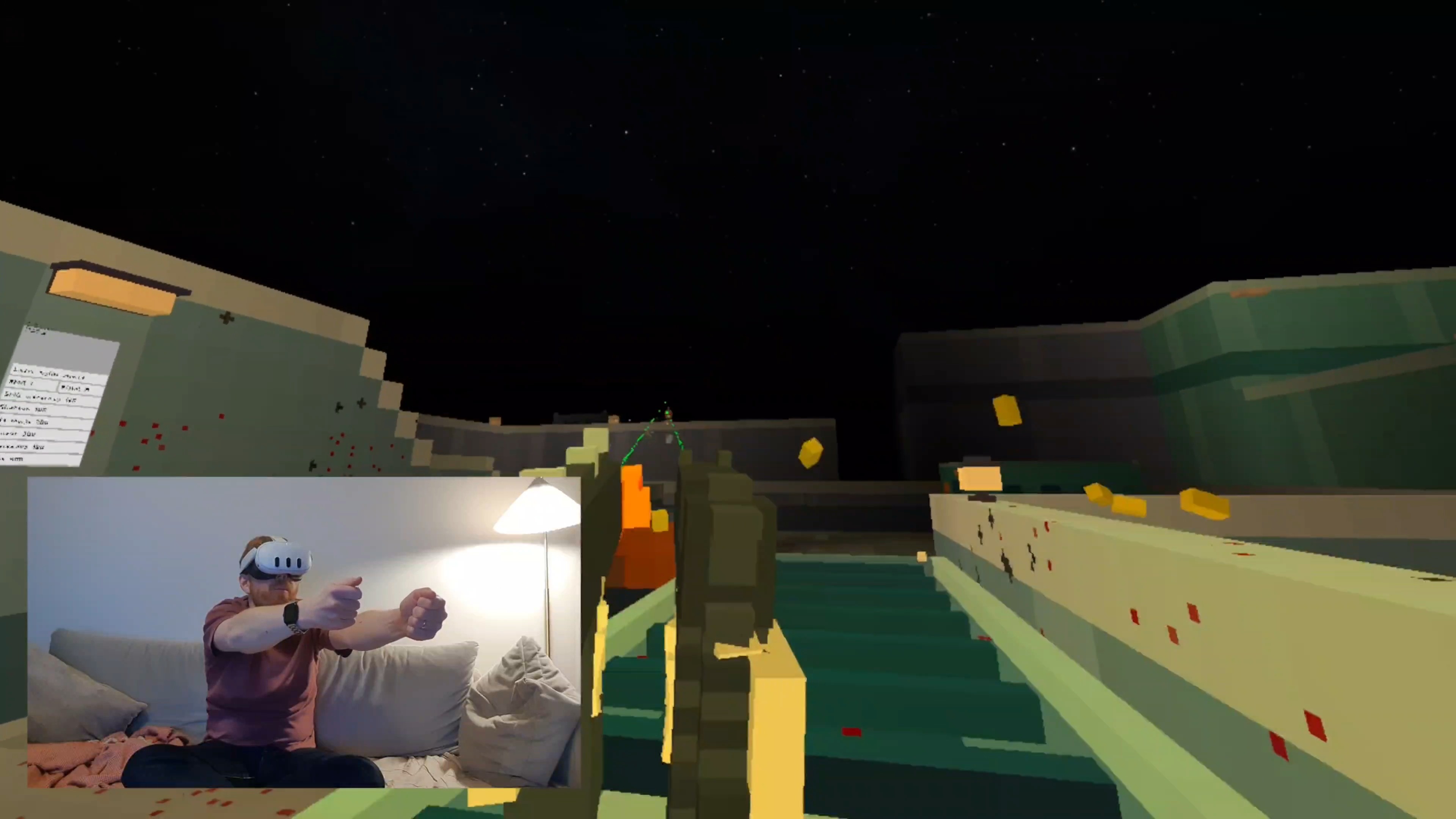
Inspiration
I see constantly online people saying that hand tracking is a gimmick and can't be used for serious games. I was also in that camp too. While building my own engine, before I had any input at all, I integrated hand tracking before controllers because it was the simpler path to just get something working in order to test the engine. Over time, I started to enjoy the frictionless experience of not using controllers. This was enough to sway me to pursue hand tracking as the only input method.
This year I published a hand tracking only game built in my engine as a proof of concept for my engine. The game however, was stationary. To make a serious game I needed to build a locomotion system. Before VR took off, I was a huge fan of the Gears of War series, and wanted something cover-mechanics heavy in VR, so took the opportunity of this hackathon to create that game.
What it does
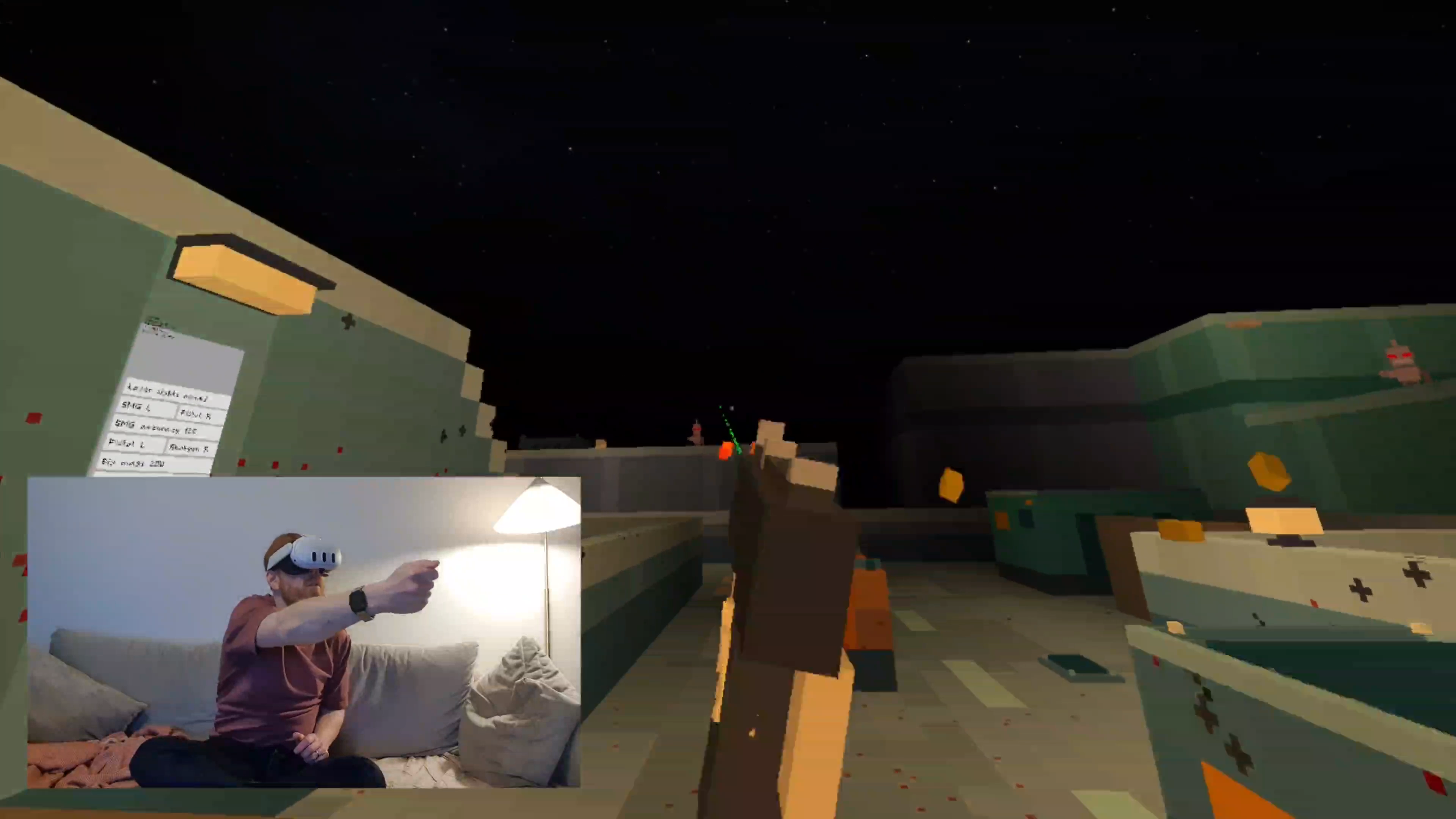
The locomotion system is the core. It allows free movement, rotating, jumping and evading, without using the controllers at all. The basic premise is that your head position relative to your playspace center acts as an analogue stick, with a dead zone. Leaning your head away from your playspace center moves your character in that direction. It's how we all leaned while playing games on a TV when we got immersed!
This is incredible for accessibility, as players with poor motor functions in their hands, or even missing a hand can still navigate the world without issues with a full range of in-game movements.
On top of the core locomotion system, I continued implementing gameplay features with the same design language. The cover system allows you to easily stick to cover, walk along it, peek out and breach corners and ledges all without controllers.
With all movement handled with head movement, this freed up the hands to interact naturally with objects simultaneously with movement. I used a custom gesture system to detect several different actions on a gripped object, eg, a main trigger and a secondary action. Either gesture can detect a tap, a down/up/held gesture. In the case of this game, I had gun firing on the main trigger, and a reload on the secondary trigger.
How I built it
The game registers your world head position at the start of the game. Every frame the system compares your heads new position with that base, and creates a virtual thumbstick, allowing you to move with a small lean. Looking far enough over your shoulder triggers turning, so you can turn as well as move. With a nod of your head, you can jump. It's variable too - a small nod for a little hop and a big nod for a high jump.
Challenges I ran into
How do you build smooth locomotion, jumping and dodging without controller thumbsticks? How do you turn? How do you fire guns reliably? What about secondary functions like reloading? For what I wanted to achieve, I had to invent a whole new design language. This system is very sensitive, so it was essential to add a bunch of settings for configuration.
My engine when I began was, and still is, very primitive. It was hard to give good player feedback, as I didn't have any particle system, skeletal collision, or any kind of screen shake or juicieness. To make it feel nice I had to add a whole bunch of systems to fix these shortcomings.
Accomplishments that we're proud of
The methodology, reliability and robustness of the locomotion techniques feel really easy to get the hang of, and feels natural once you learn it. The base locomotion system naturally opens up more systems, and became more than a system, but a design language.
What I learned
From my first release, I learned that juiciness really sells the experience and is more important than you might realise. To that end, I learned that making the core feel really nice and responsive should come first before you take care of all the other details. There's nothing more important than how it feels to embody your virtual character, so that takes priority.
What's next for Cover Corps
So far, this is a small arena proof of concept. I would love to add a campaign, multiplayer and more weapons, enemies and variety.


