-
-
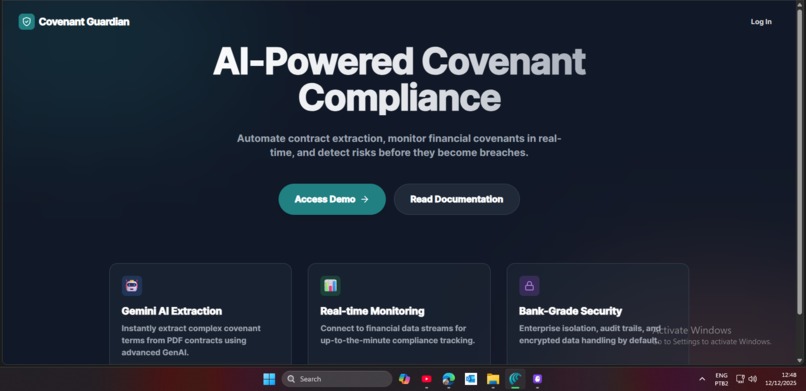
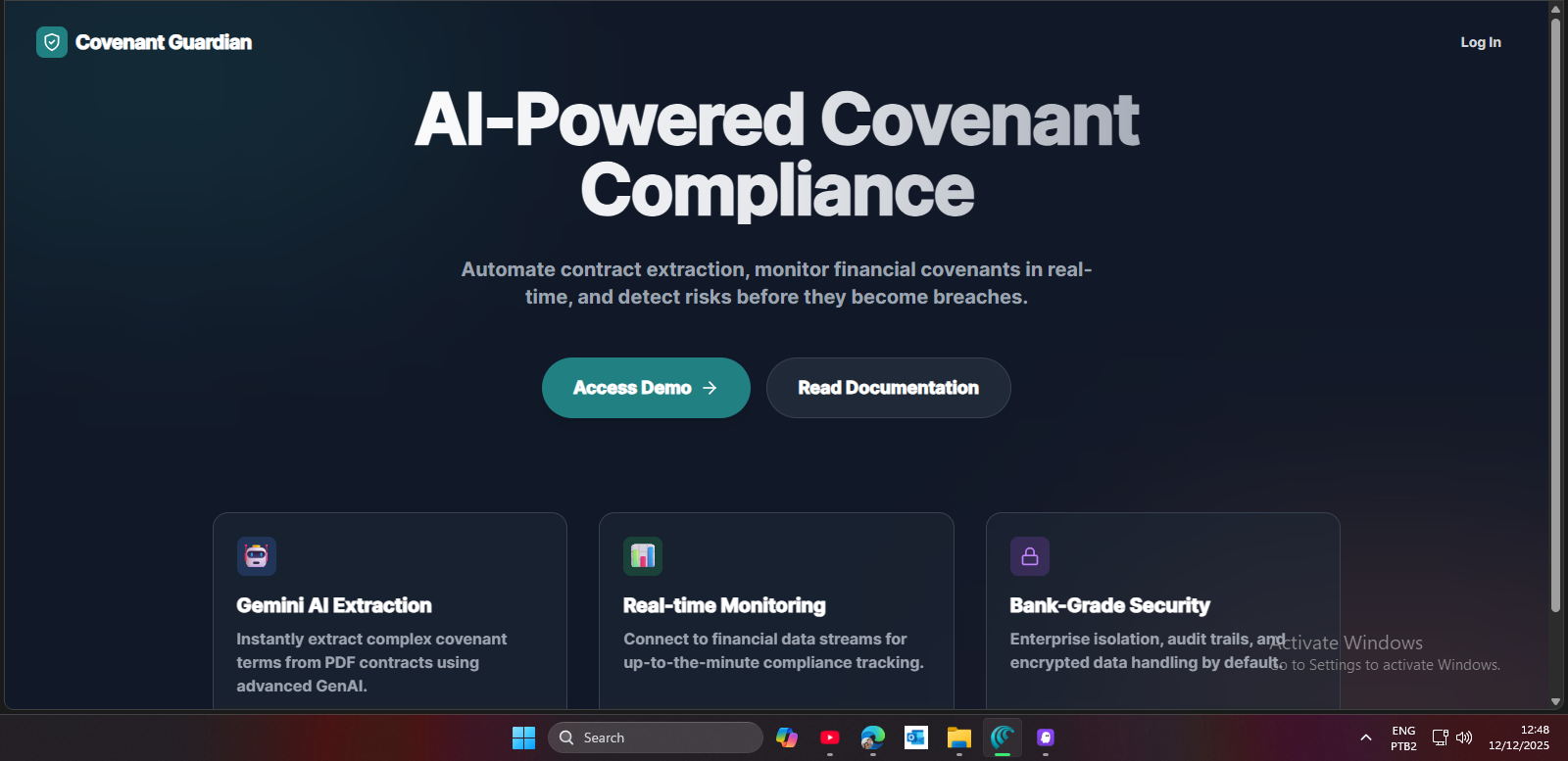
Initial Screen
-
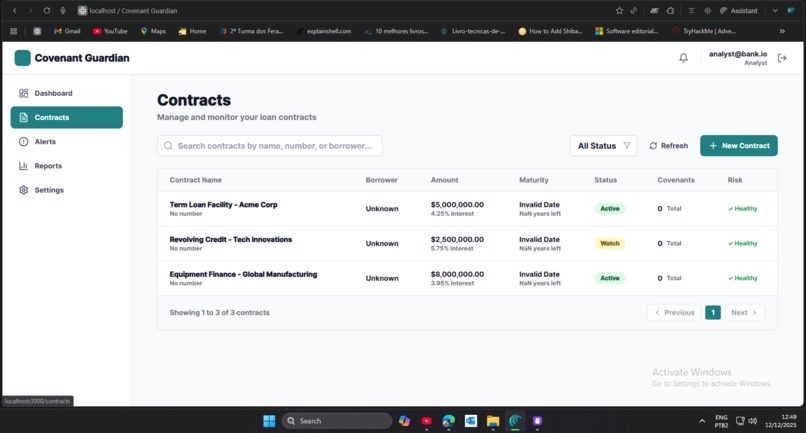
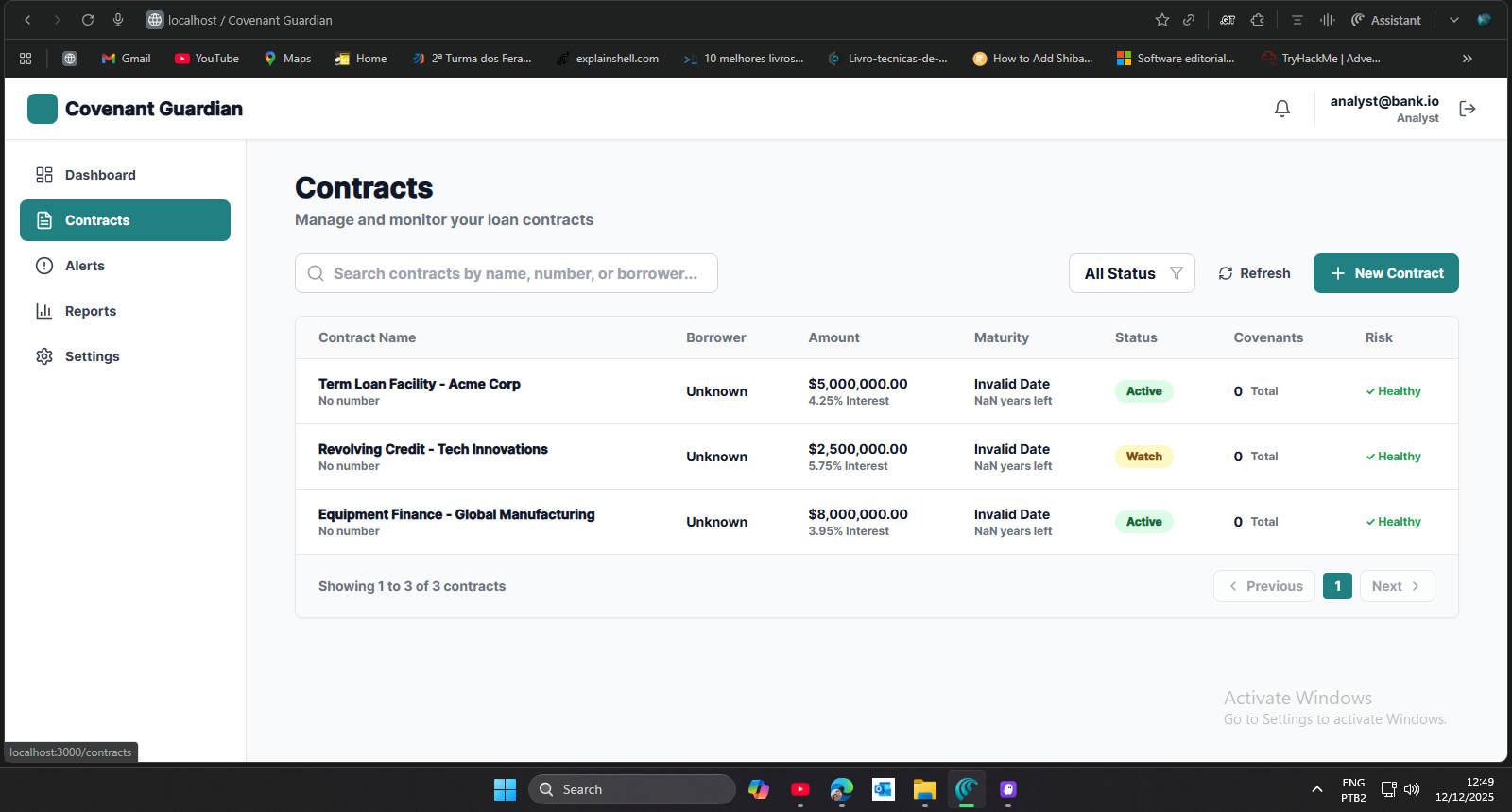
Contracts
-
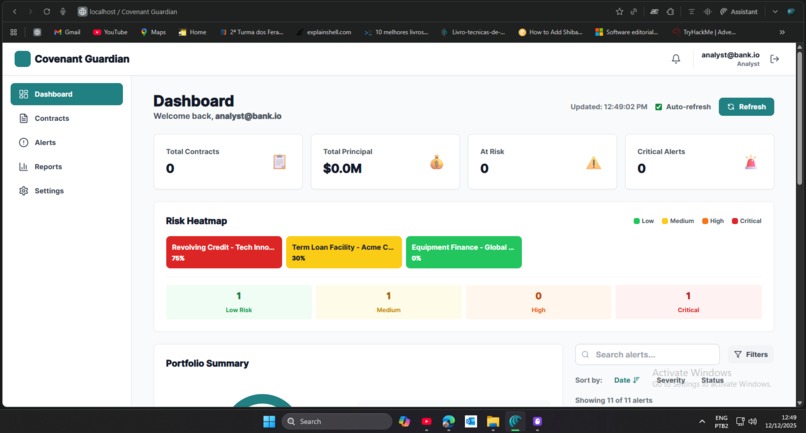
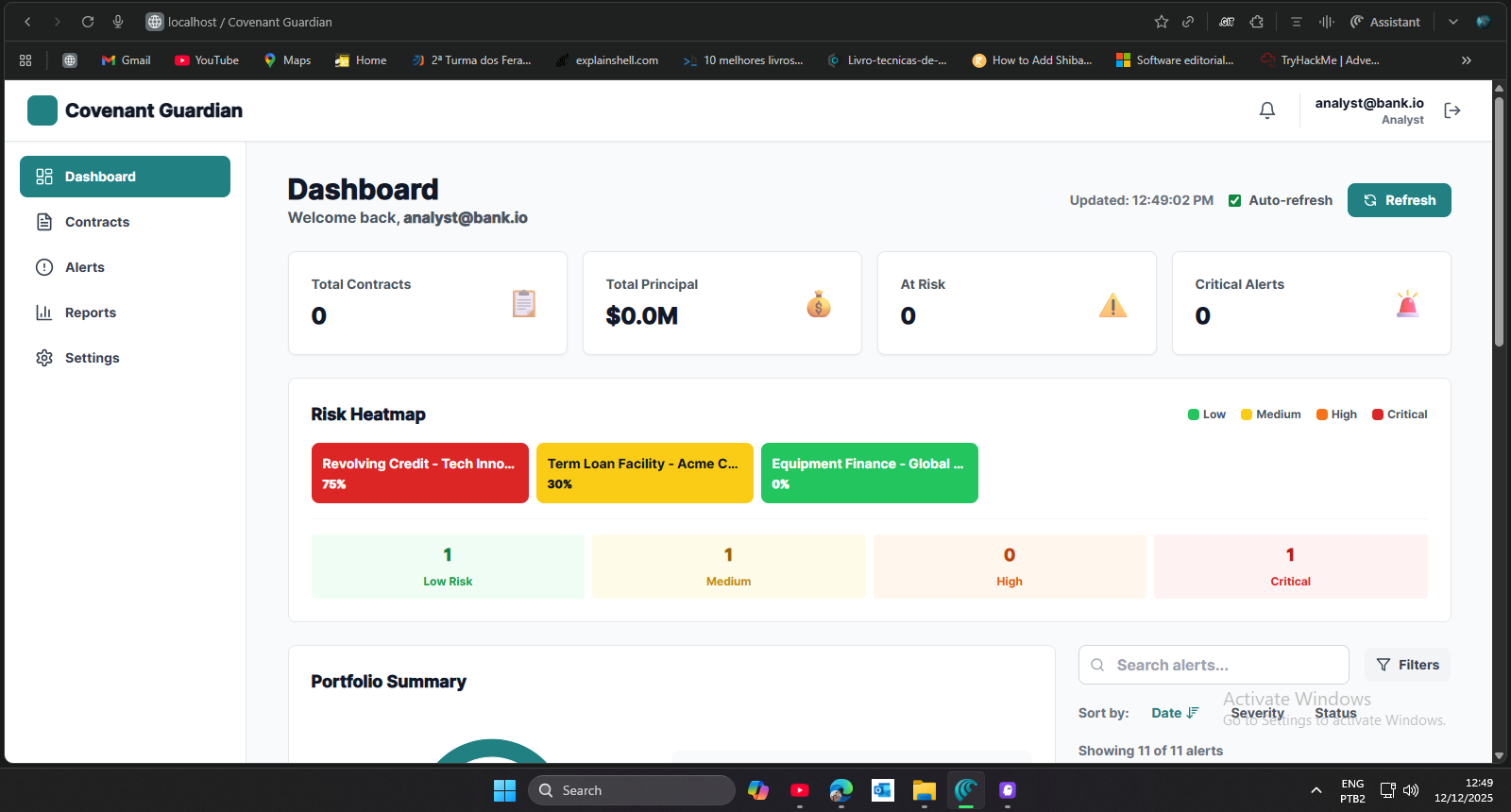
Dashboard
-
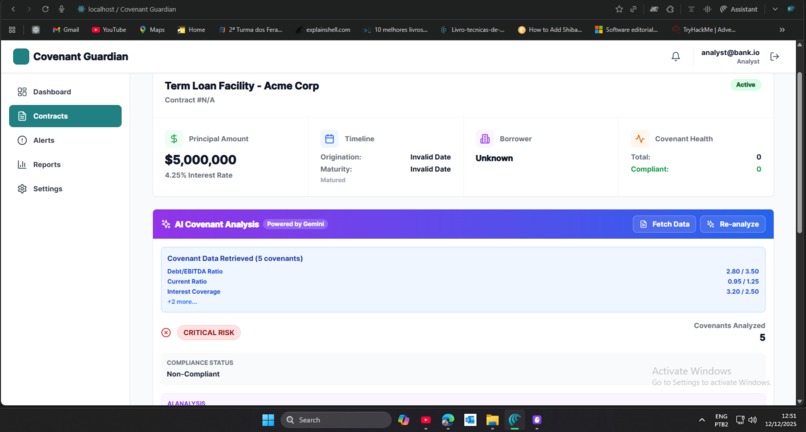
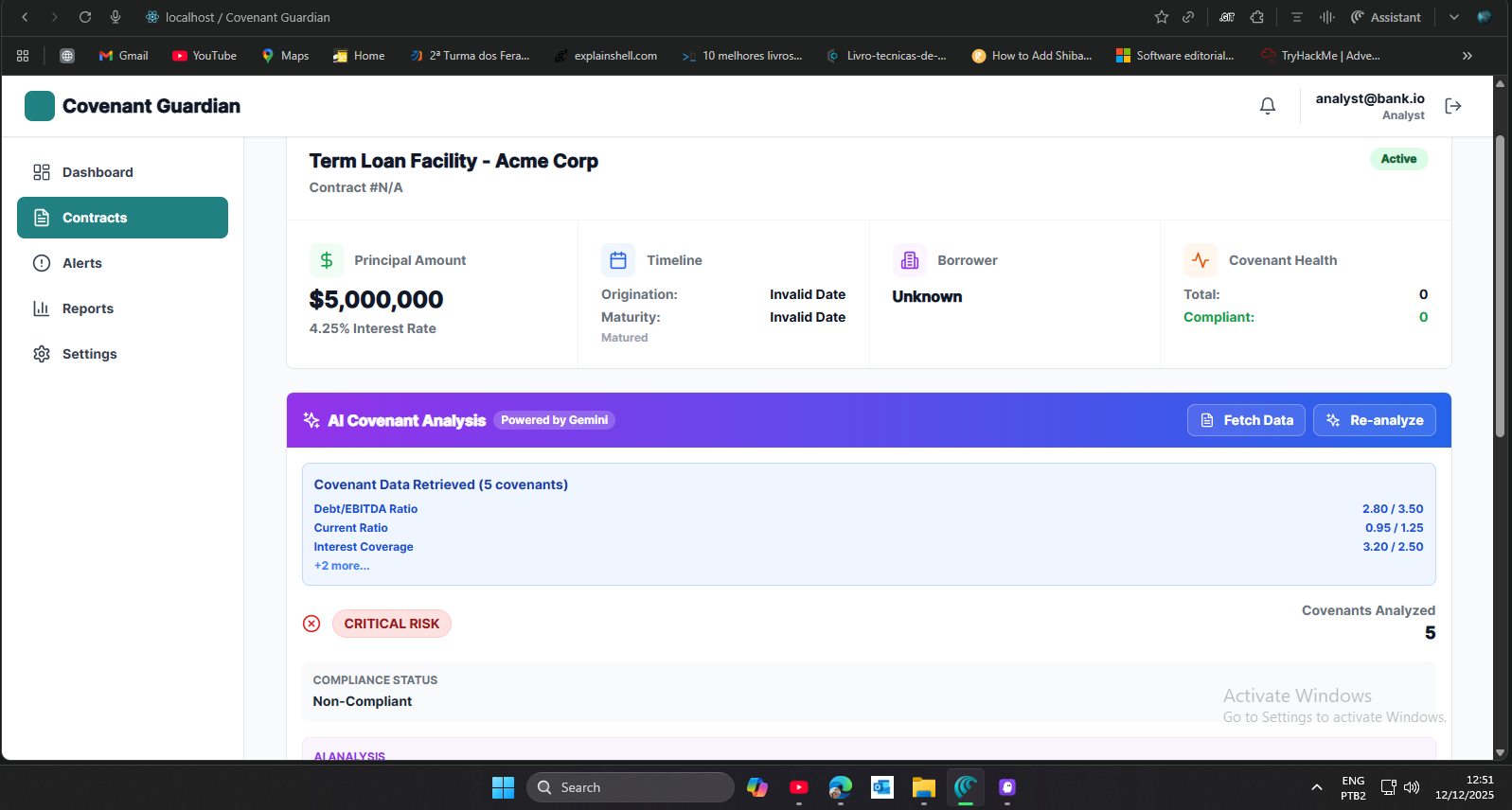
Contracts IA Analysis
Inspiration
Loan covenants are still monitored with PDFs, emails, and spreadsheets in many institutions, which makes it easy to miss early warning signs and react too late.[web:50][web:47] The LMA EDGE Hackathon challenge to build practical, scalable tools for the loan market was the perfect context to prototype an AI-first covenant monitoring co-pilot that could actually fit into a bank’s day-to-day workflow.[web:6]
What it does
Covenant Guardian ingests loan contracts, uses an AI agent to extract the covenant terms, and then tracks the relevant financial metrics over time for each facility.[web:45] The app surfaces covenant status in a dashboard, highlights upcoming or potential breaches with alerts, and gives portfolio-level risk views so teams can prioritise where to act first.[web:44]
How we built it
On the frontend, we built a React 18 + TypeScript single-page app using Vite and TailwindCSS, with Zustand for state management and a modular structure for dashboard, contracts, covenants, alerts, and reports.[file:1] On the backend, we used Xano to define REST endpoints, model the data in PostgreSQL, implement JWT authentication and multi-tenant isolation, and orchestrate a Gemini-based AI agent for covenant extraction and analysis.[web:48][web:10]
We seeded realistic demo data (contracts, covenant metrics, and alerts) so judges can explore the flows without external integrations and wired environment variables for API base URL, workspace, and feature flags (audit logs and multi-tenant). The API layer exposes dedicated endpoints for contracts, covenants, covenant health, alerts, and portfolio summaries that the React app consumes via typed service modules.[file:1]
Challenges we ran into
Designing a schema that works both for generic LMA-style covenants and custom bank-specific clauses was a big challenge, especially under hackathon time pressure.[web:55] Another challenge was tuning the AI prompts and structure so the Gemini agent returns consistent covenant objects that can be validated and stored safely in the Xano backend.[web:45]
We also had to carefully handle multi-tenant concerns and permissions (for example, isolating everything by bank_id) while keeping the developer experience simple enough for rapid iteration during the event.[web:51] Finally, ensuring the demo feels realistic—without access to a live core banking system—required thoughtful sample data and clear UX to show value quickly.[web:44]
Accomplishments that we're proud of
We are proud that Covenant Guardian demonstrates an end‑to‑end flow: upload a contract, extract covenants with AI, see a live compliance dashboard, and view portfolio insights—all within a single, cohesive UI.[web:45][web:44] Another highlight is that the architecture remains close to production-ready patterns (JWT auth, rate limiting, validation, audit logs) while still being simple enough to deploy as a hackathon prototype.[web:11]
We are also happy with how accessible the tool feels to non-technical users: relationship managers and risk teams can understand the status cards, traffic-light alerts, and covenant detail views without needing to know anything about AI or no-code backends.[web:50] This aligns tightly with the LMA EDGE focus on practical, commercially viable solutions for the loan market.[web:6]
What we learned
We learned how hard it is for lenders to keep track of covenant obligations at scale, and how even small delays in monitoring can materially increase risk and response times.[web:47][web:50] Working through the problem forced us to think not just about extraction accuracy, but also about UX, explainability, and how risk teams actually triage their workload.[web:44]
From a technical side, we deepened our experience with Xano’s API groups, AI agent orchestration, and observability, as well as building a strongly-typed React + TypeScript front‑end that stays maintainable under time pressure.[web:48][web:10] We also learned how to align a hackathon project more closely to judging criteria like design, potential impact, and market opportunity.[web:11]
What's next for Covenant Guardian – AI Loan Covenant Monitor
Next, we want to plug into real financial data sources (for example, core banking, treasury systems, or data warehouses) so covenant metrics can update automatically instead of relying on manual inputs.[web:44][web:53] We also plan to extend the AI agent with more advanced capabilities such as scenario analysis, “what‑if” stress testing, and explanations written for non‑technical stakeholders.[web:51]
Longer term, the roadmap includes richer reporting, audit trails for regulators and auditors, and support for greener lending metrics so lenders can track ESG-related covenants alongside traditional financial ones.[web:56][web:34] The goal is to make Covenant Guardian a practical co‑pilot that keeps loans on track across the full lifecycle, from signing to maturity.[web:6]
Built With
- 18
- ai
- apis
- authentication
- css
- for
- gemini
- github
- jwt
- node.js
- postgresql
- react
- rest
- tailwind
- tooling)
- typescript
- version
- vite
- xano
- zustand

Log in or sign up for Devpost to join the conversation.