-
-
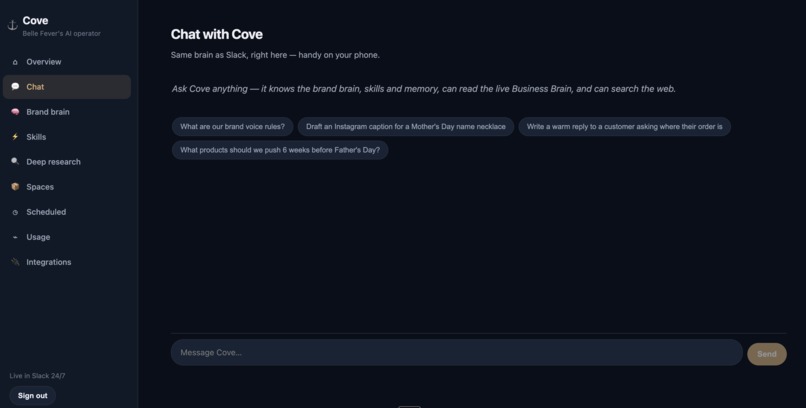
Dashboard Chat
-
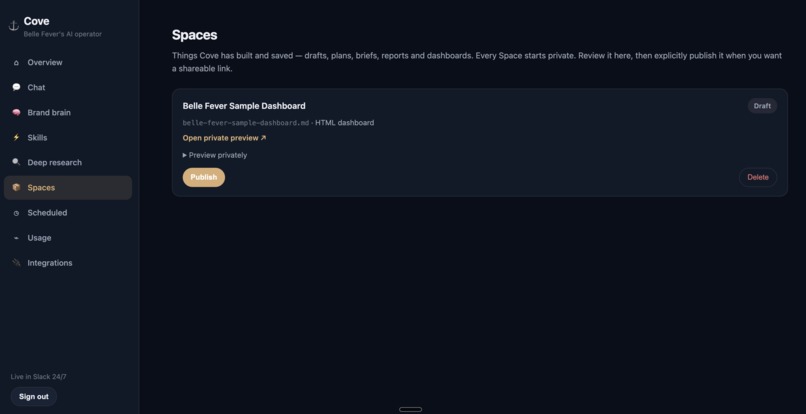
Spaces
-
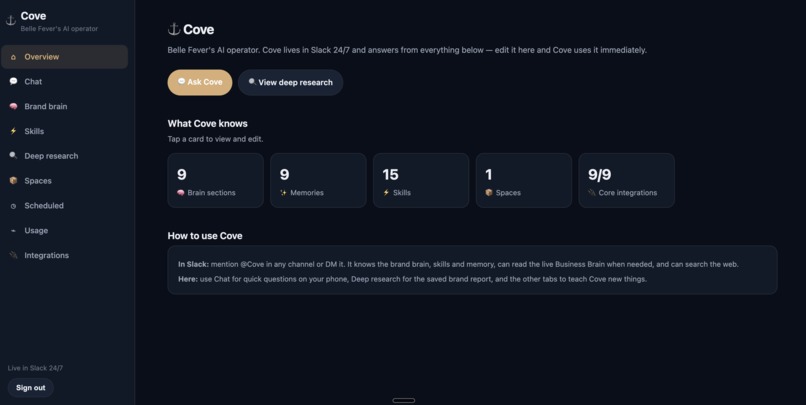
Dashboard
-
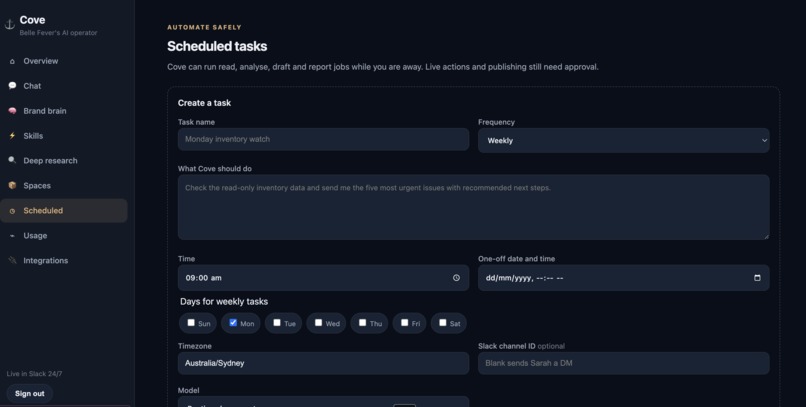
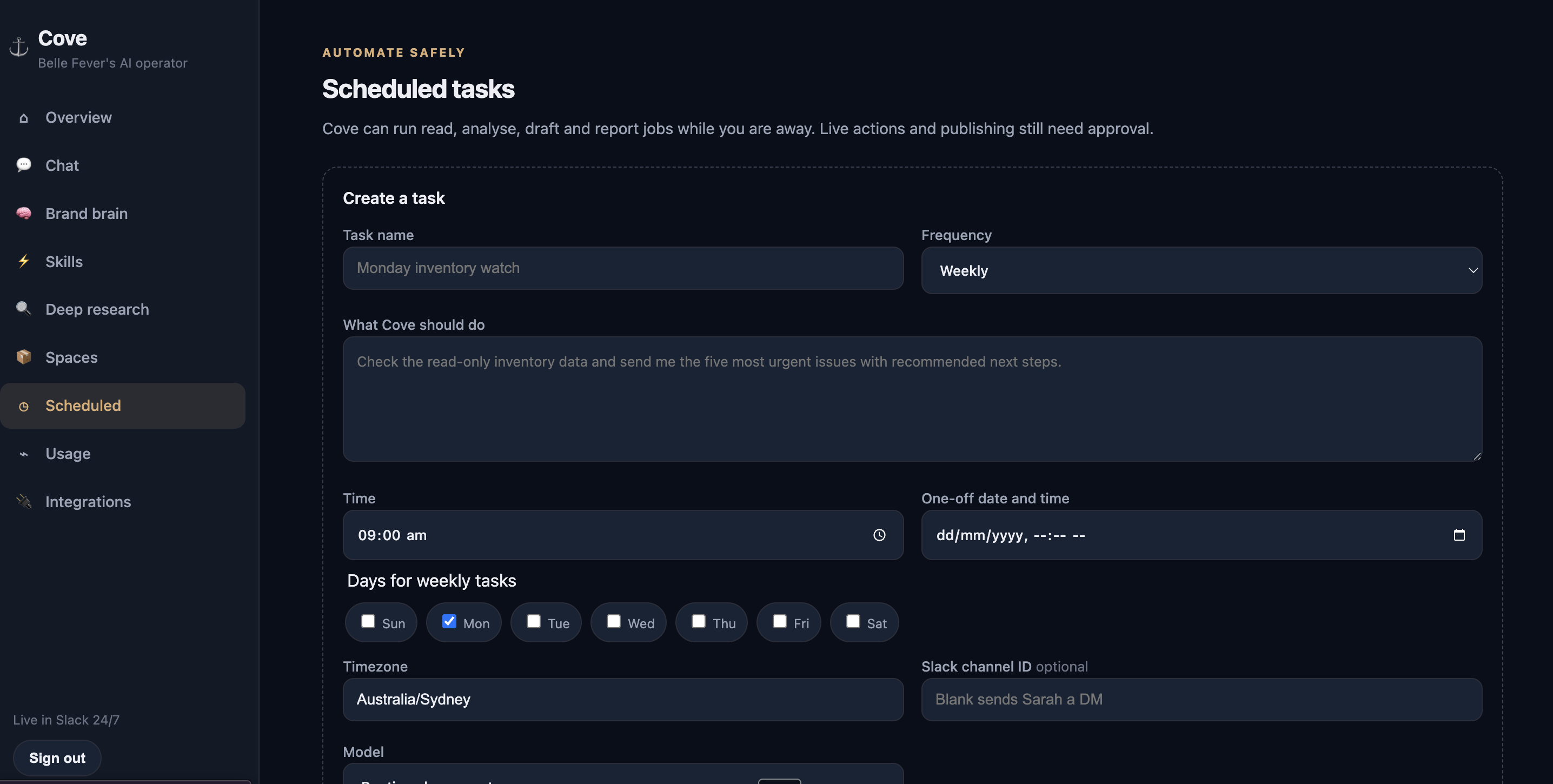
Scheduled
-
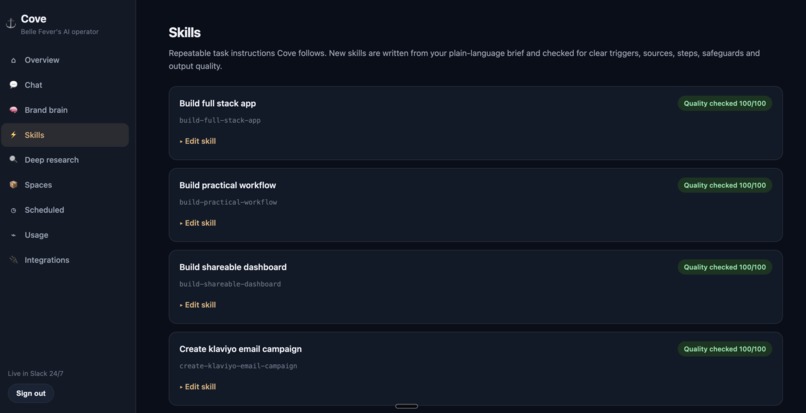
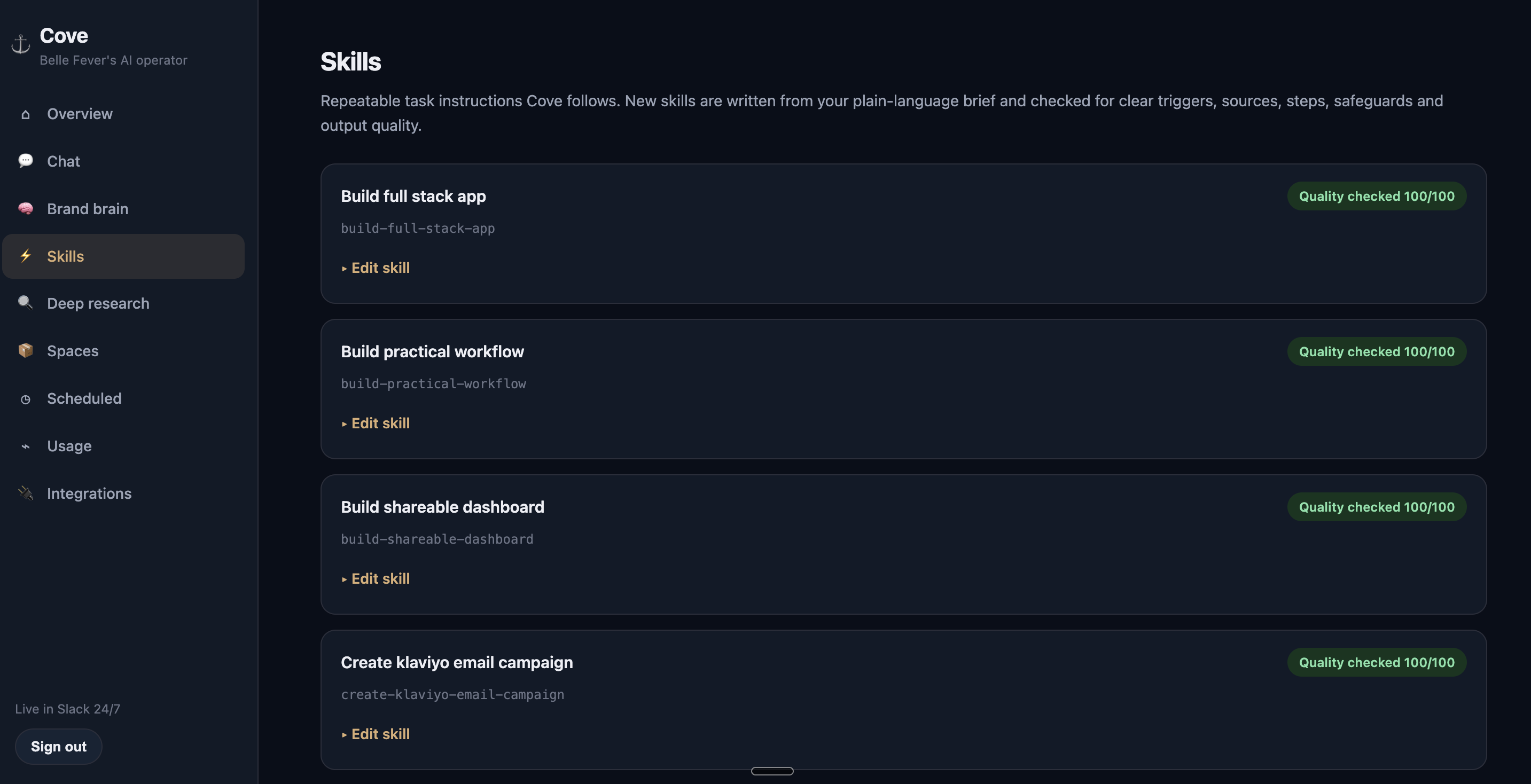
Skills
-
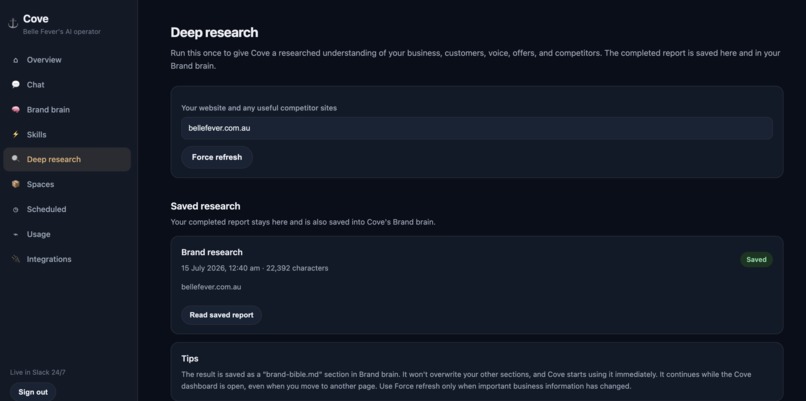
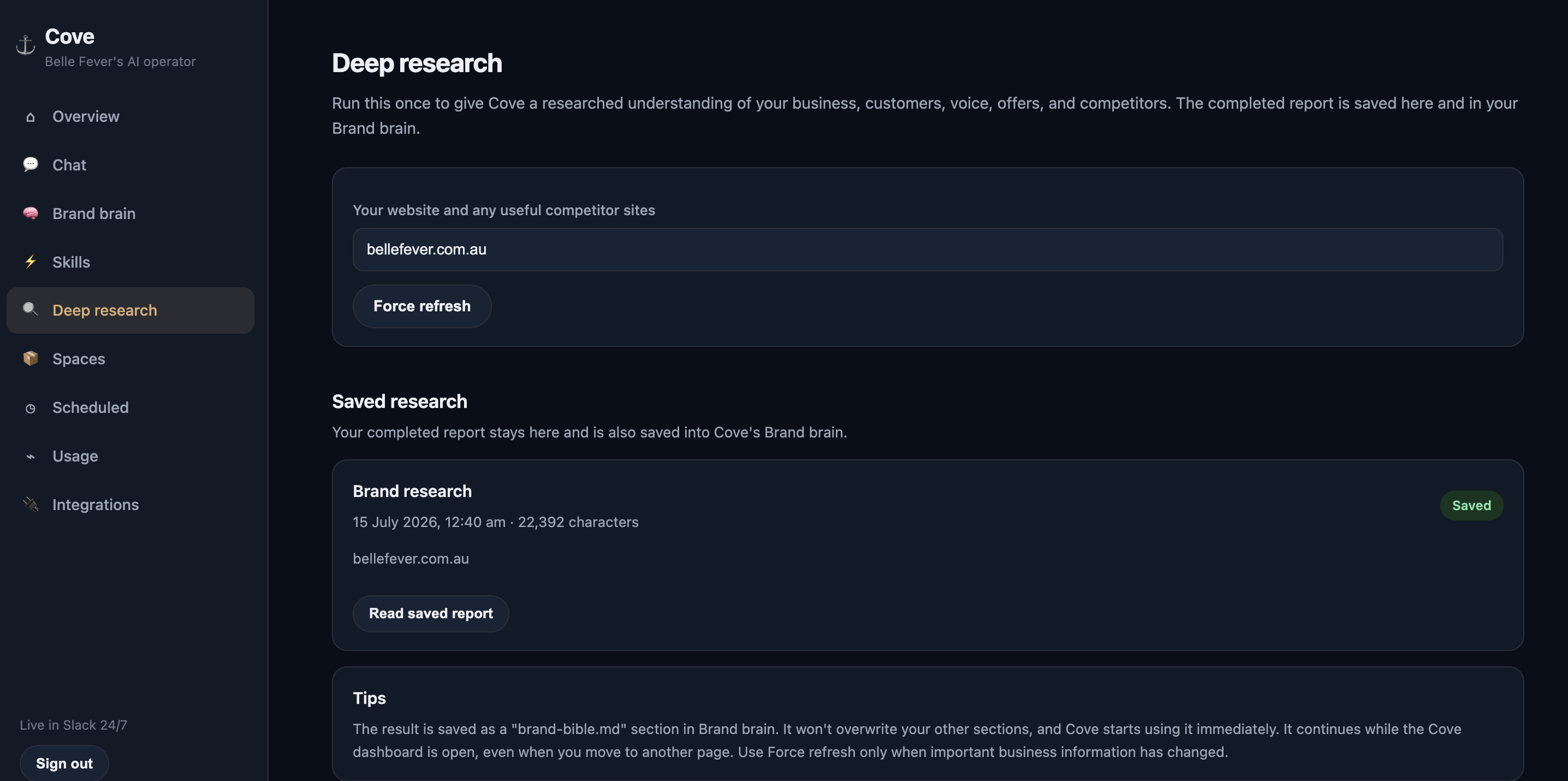
Deep Research
-
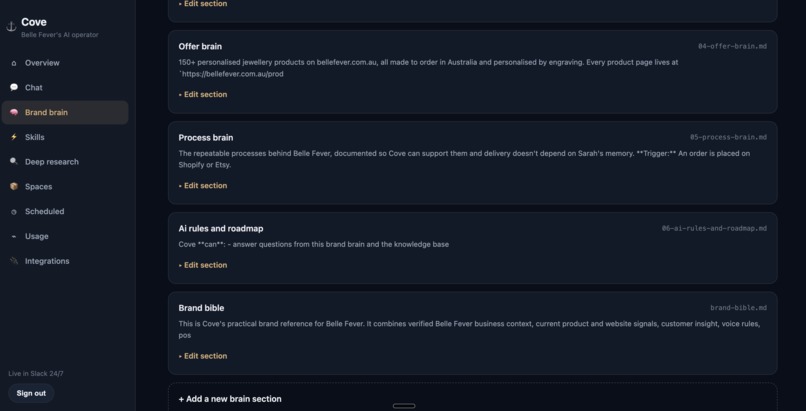
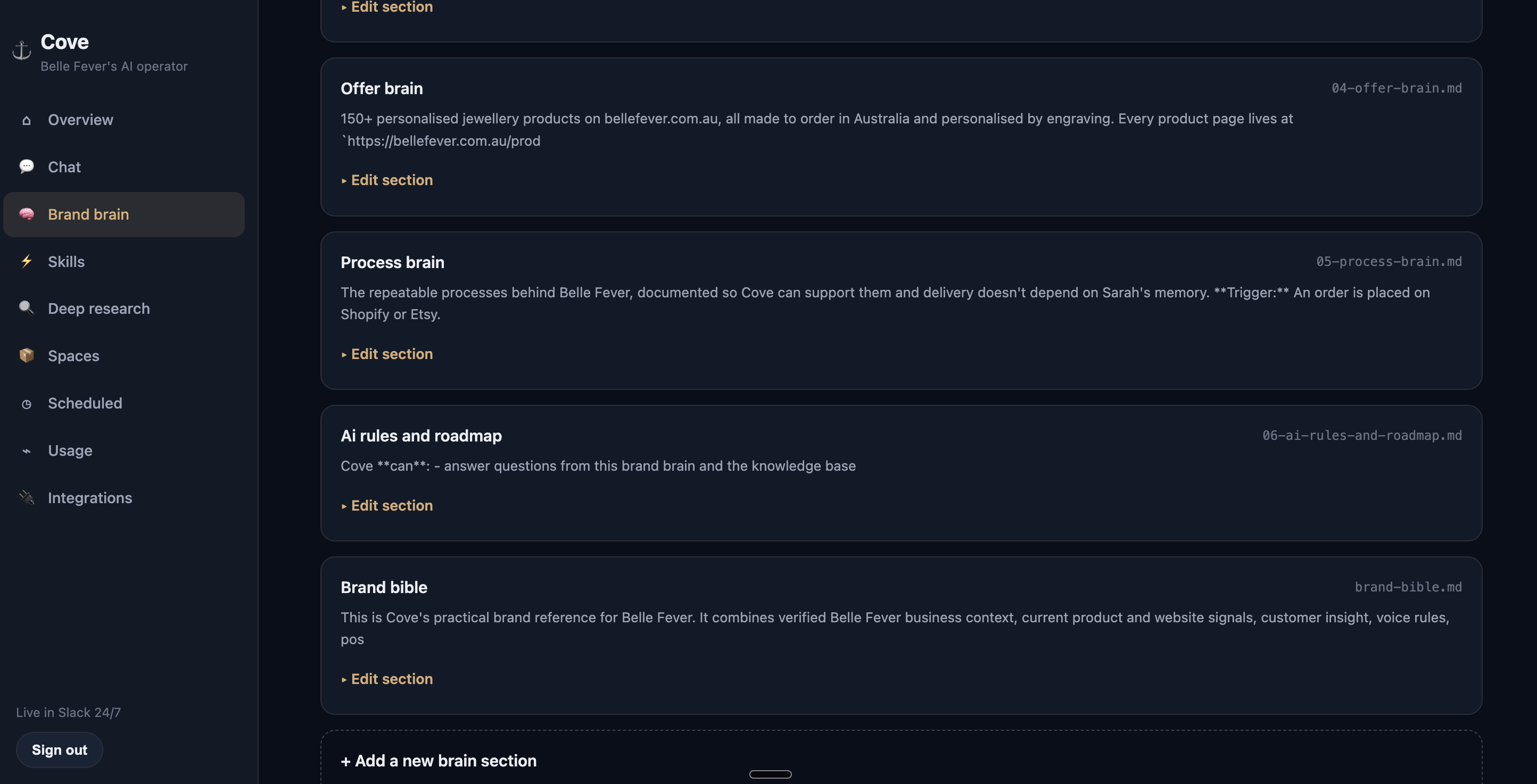
Brand Brain
-
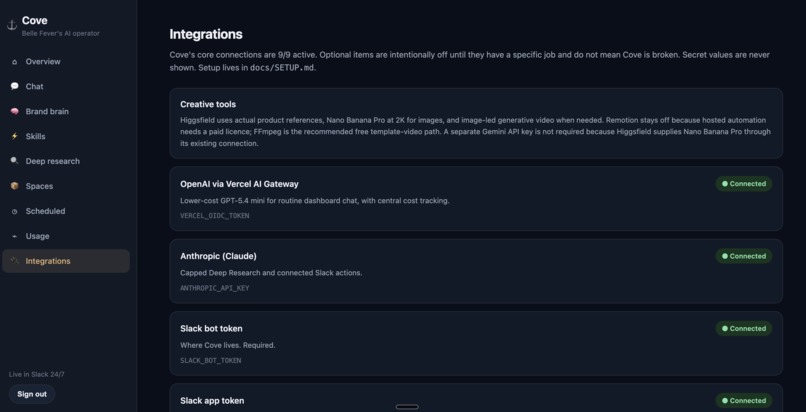
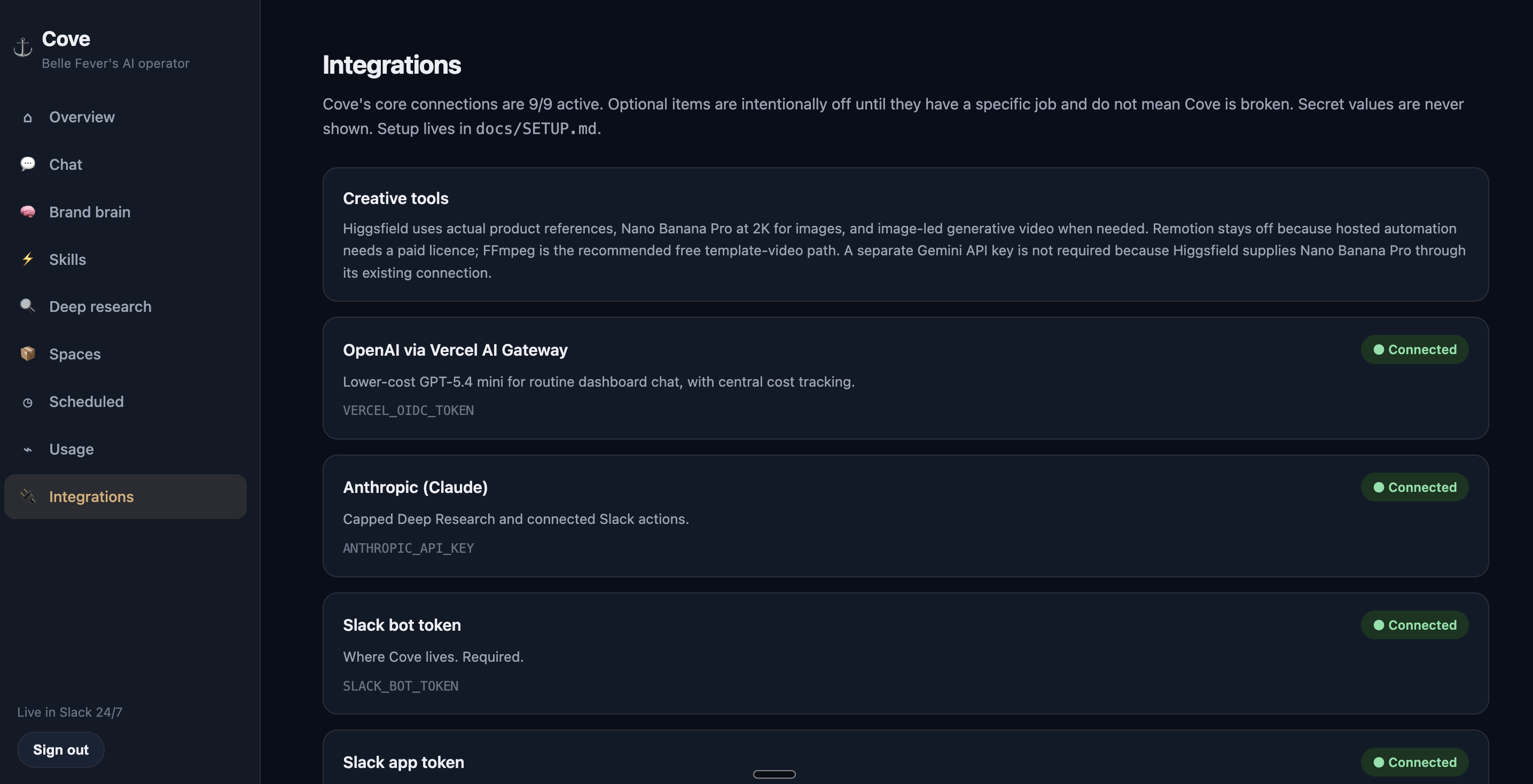
Integrations
-
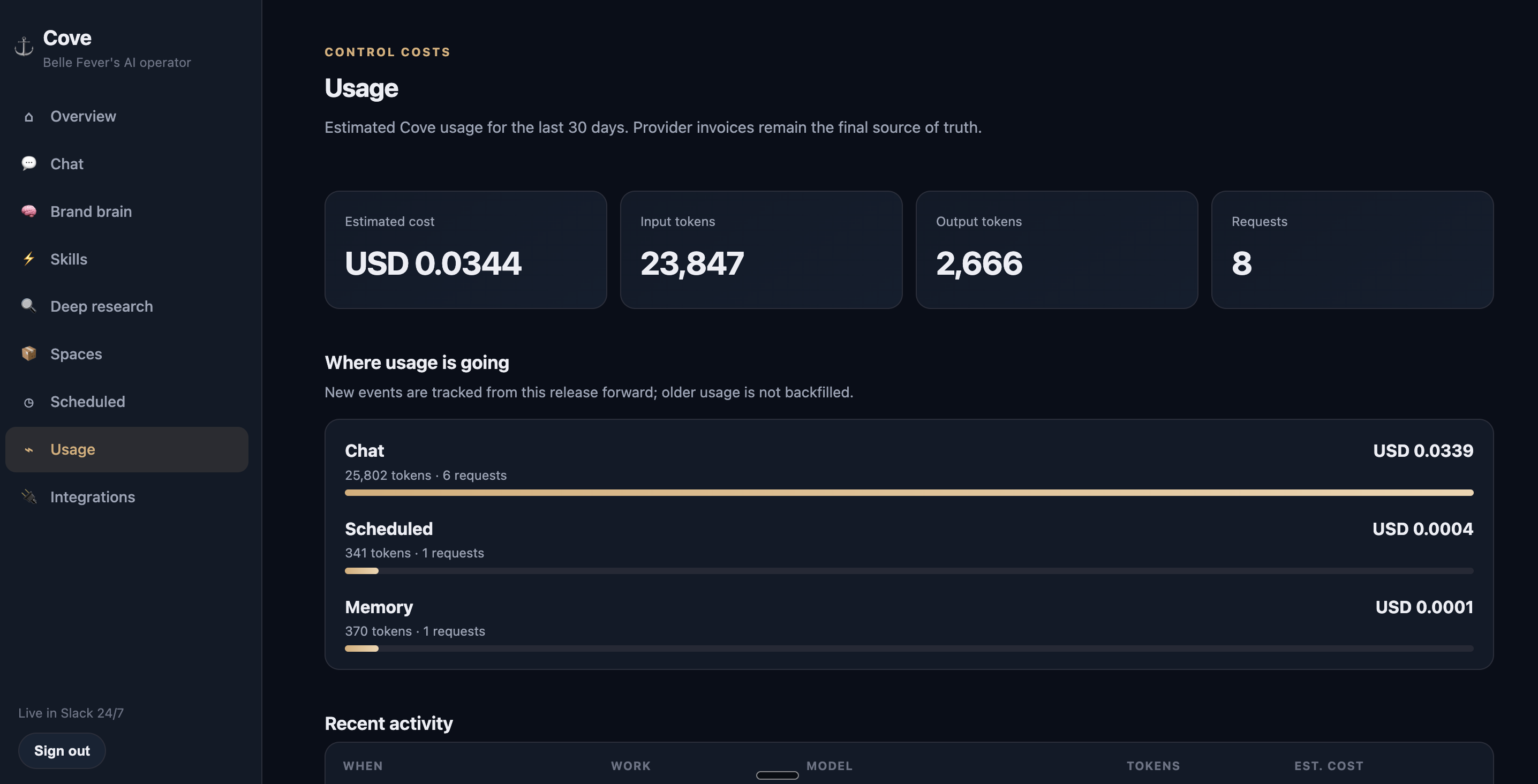
Usage
-
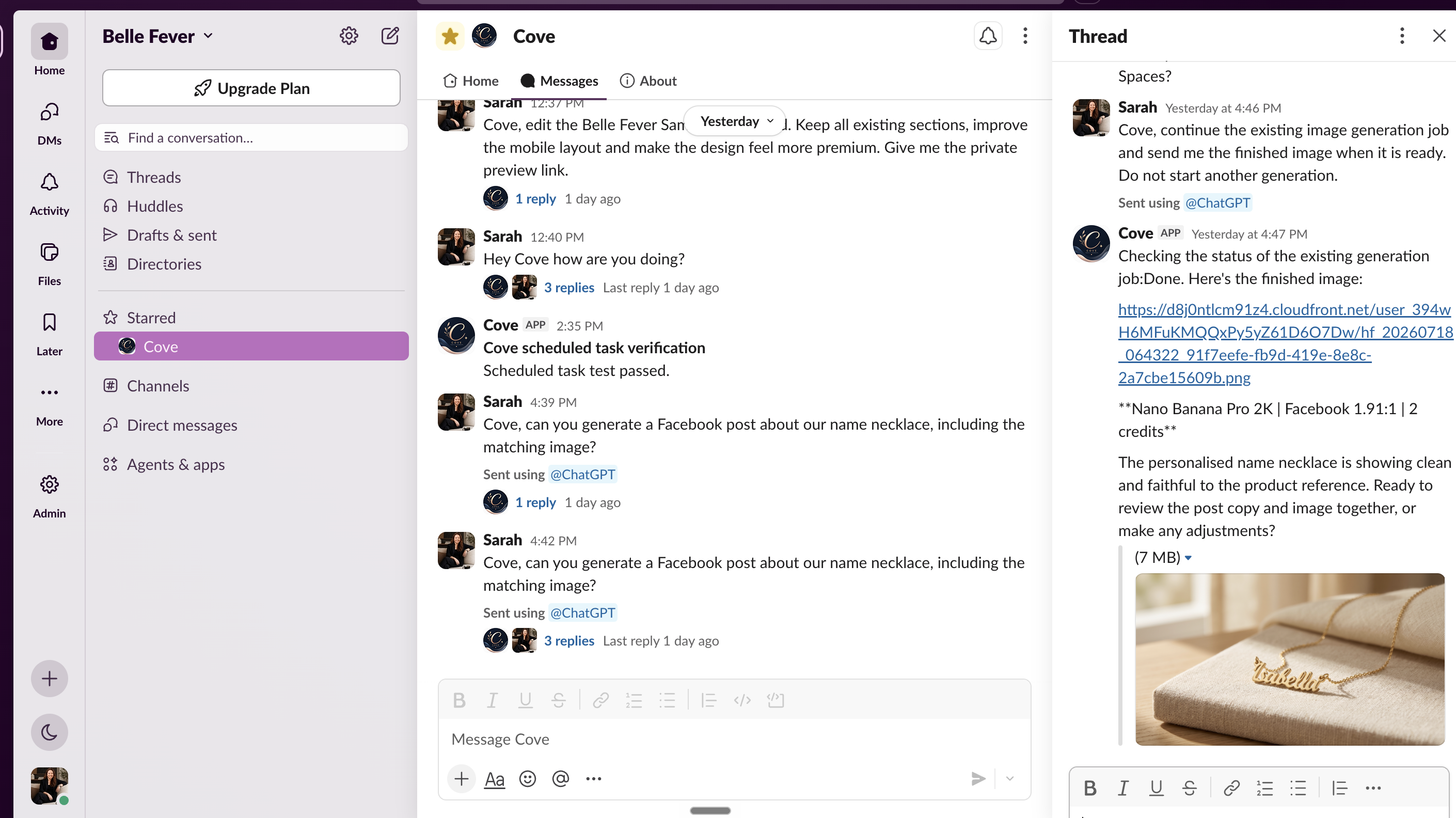
Slack Interface Agent
Why I built Cove
I run a real ecommerce business, and the problem I kept running into was not "how do I chat with AI?" It was: how do I make AI useful inside the actual way a team works?
Most AI tools are either too generic, too isolated, or too risky to trust with live business context. They can answer a question, but they do not know the business deeply, they do not remember decisions cleanly, and they often blur the line between drafting, deciding and doing.
Cove was built to solve that. It is a Slack-first AI operator with a private dashboard, a business brain, workflow skills, memory, protected workspaces and approval-gated integrations. The goal is simple: help a small business turn everyday team requests into useful, reviewable work without making the founder the bottleneck.
What Cove does
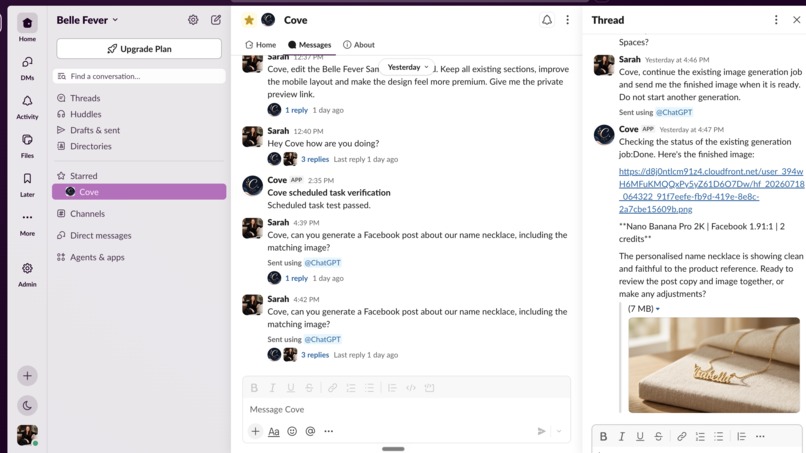
Cove works where the team already works: Slack. From there it can answer business questions, load the right workflow, build a private Space, return a protected preview link, prepare campaign drafts, read narrow operational data, and remember durable decisions.
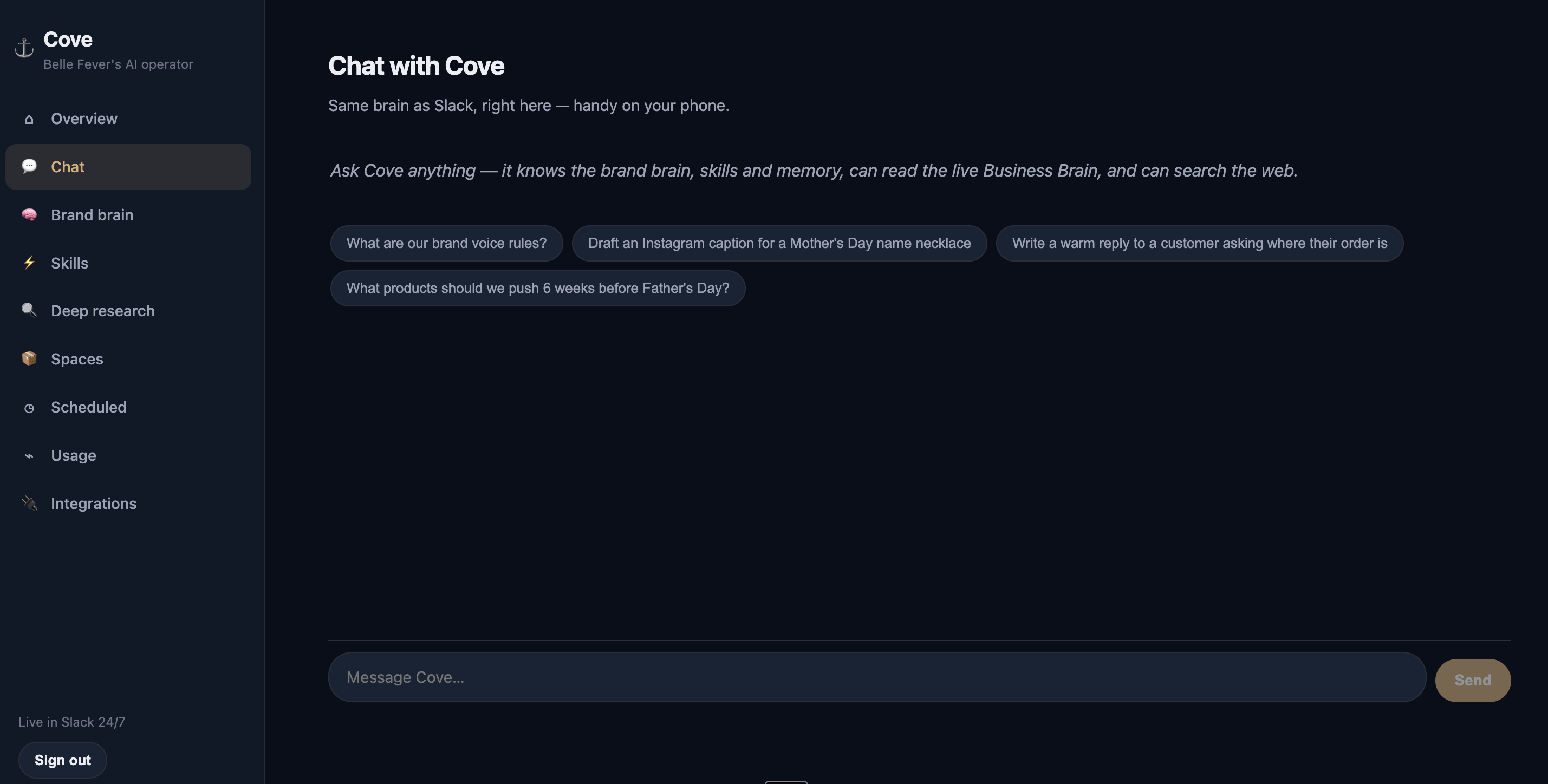
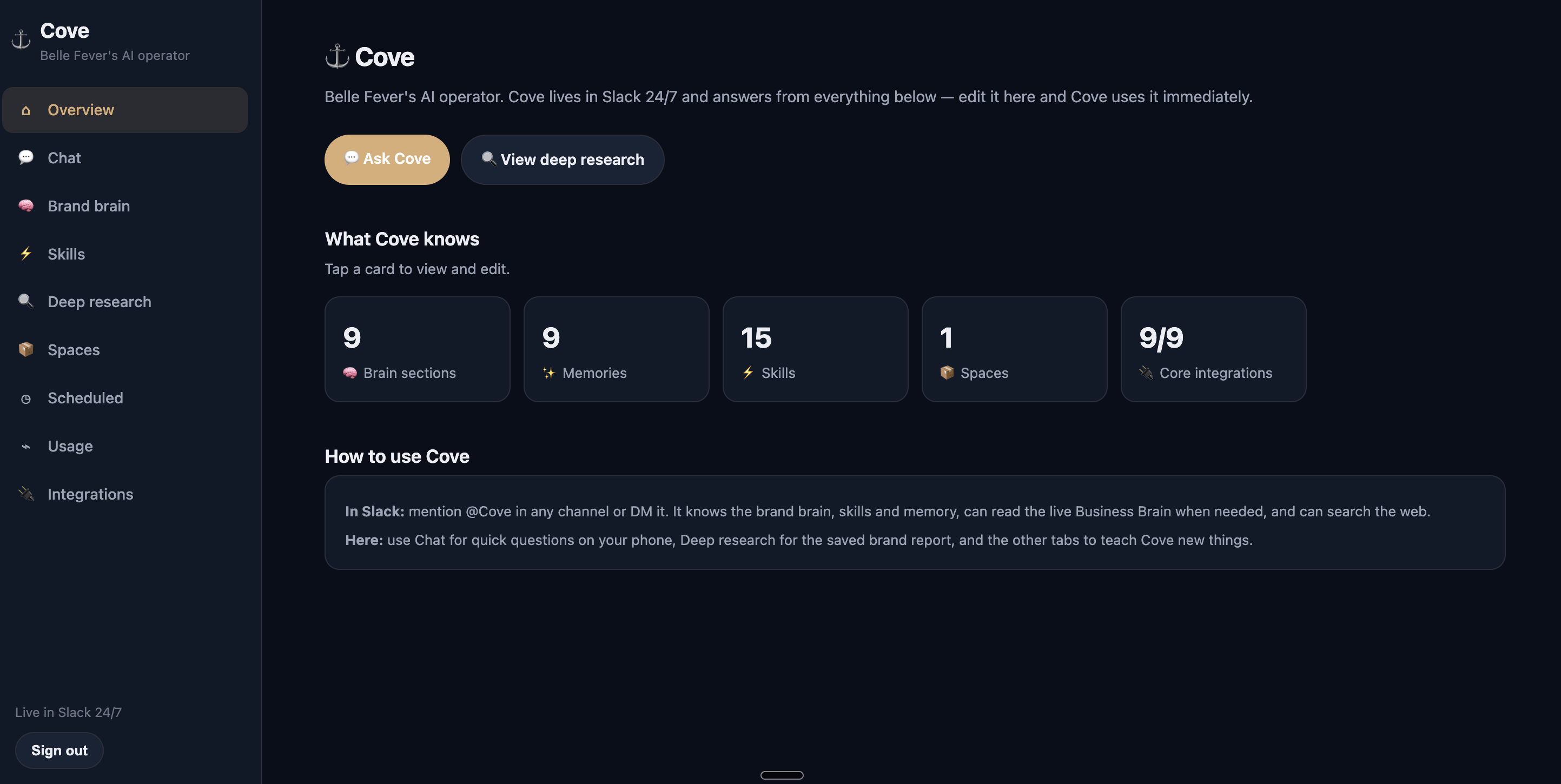
The private dashboard gives the owner control over the system: the brain, skills, memory, research, Spaces, integrations, usage and scheduled tasks are all visible in one place.
A few examples of what Cove can do:
- read the full accessible Slack thread before replying, so "the above" actually means something;
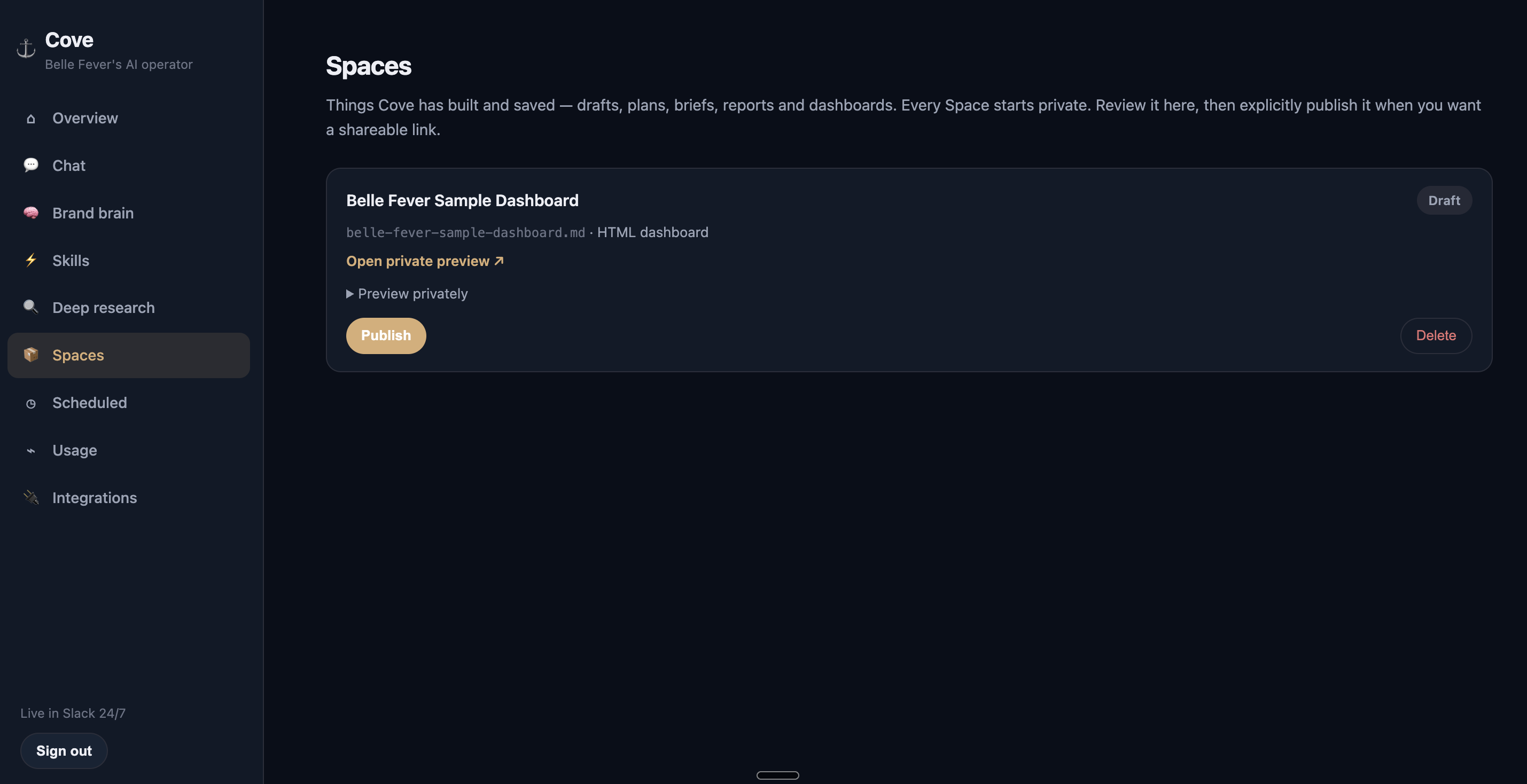
- save a dashboard, report or campaign brief as a private Space and return the preview link in Slack;
- keep memory selective, so important decisions are saved but ordinary chatter is not;
- read selected OMS, inventory and design-system information through narrow read-only endpoints;
- prepare Klaviyo campaign drafts while keeping scheduling and sending behind explicit confirmation;
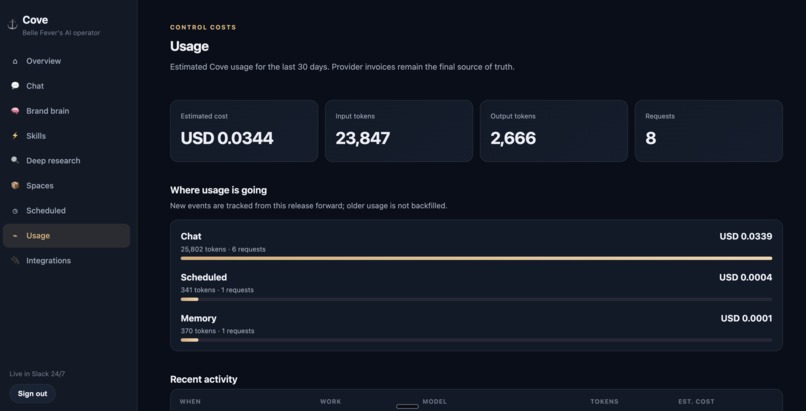
- show usage, scheduled work, active integrations and memory health in the dashboard.
How it was built
The Slack worker is written in TypeScript with Slack Bolt in Socket Mode. Cove builds each response from the business brain, the relevant skill index, durable memory and the current conversation context. It then runs a controlled tool loop, with clear boundaries around what it can read, draft, save, publish or schedule.
The dashboard is a Next.js app. Supabase stores shared memory, Spaces, research jobs and usage events. Published Spaces are served through a separate public reader, so private drafts stay private until reviewed.
During Build Week, Codex was the main coding partner. It helped harden Cove in the places that matter for real use: Slack context, long artifact builds, protected previews, memory rules, usage visibility, direct Klaviyo drafting, safety checks, tests, and documentation. GPT-5.6 was used through Codex for implementation, review, debugging and shaping the submission.
What changed during Build Week
Cove became much more reliable. Earlier versions could lose Slack context, promise a Space without actually saving it, or stop midway through a long build. Those failures matter because a business operator cannot say something is done unless it is actually done.
The Build Week work fixed those gaps:
- Cove now refreshes accessible Slack threads from the root before answering.
- Long Space builds use the right transport and token budget so artifacts are actually saved.
- Cove verifies tool success before claiming work is complete.
- Private preview links work from Slack without publishing the Space.
- Memory maintenance backs up first and only makes safe deterministic changes automatically.
- Campaign scheduling requires an exact confirmation.
- Production security and anti-indexing controls were checked and documented.
Design choices
The design is intentionally practical. Cove does not try to look like a magic AI toy. It behaves more like a careful operator.
The main UX decisions were:
- Slack is the everyday interface.
- The dashboard is for review, control and setup.
- Drafts are private by default.
- Publishing, scheduling and paid generation require approval.
- Sensitive customer details are excluded from assistant context.
- If Cove cannot verify an action, it says so instead of pretending.
That last point became one of the most important product rules.
Impact
This is built for one real business first, but the pattern is much bigger. Many founders have the same problem: the business lives across Slack, spreadsheets, ecommerce systems, documents, campaign tools and the founder's head.
Cove shows a practical path for AI inside that messy middle. It can preserve business memory, reduce repeated briefing, draft useful work, make operations more visible, and let a team use AI without handing it unlimited access.
For me, the exciting part is not that Cove can answer questions. It is that Cove can become part of a governed workflow a normal business can trust.
What I learned
The biggest lesson was that useful AI products are mostly about boundaries. The model matters, but so do memory rules, source-of-truth rules, approval gates, privacy, cost controls, and verification.
A clever answer is not enough. In a business, the question is: can this system do useful work safely, repeatedly and honestly?
That is what Cove is trying to prove.
Built With
- ai
- ai-agents
- anthropic
- automation
- boltsupabaseopenaivercel
- claude
- ecommerce
- fly.io
- gatewayanthropicvercelfly.ionetlifyklaviyonode.jsai
- klaviyo
- netlify
- next.js
- node.js
- openai
- productivity
- react
- slack
- slack-bolt
- supabase
- typescript
- typescriptnext.jsreactslackslack
- vercel
- vercel-ai-gateway
- zod


Log in or sign up for Devpost to join the conversation.