Inspiration
Gig workers, specifically food-delivery partners in urban India, face a unique vulnerability: when extreme weather (floods, heatwaves) or civic disruptions (traffic collapse, outages) occur, they temporarily lose their earning opportunity. Traditional insurance covers health, vehicle, or accident damage, but ignores this hyper-local loss of weekly income. We were inspired to build an AI-powered parametric insurance platform that pays out automatically when verified disruptions overlap with a worker's shift. Furthermore, we saw that existing parametric beta platforms were being drained by sophisticated syndicates of 500+ workers coordinating via Telegram to spoof GPS coordinates during red-alerts. We needed to build a system that protected honest workers while being bulletproof against these organized liquidity drain attacks.
What it does
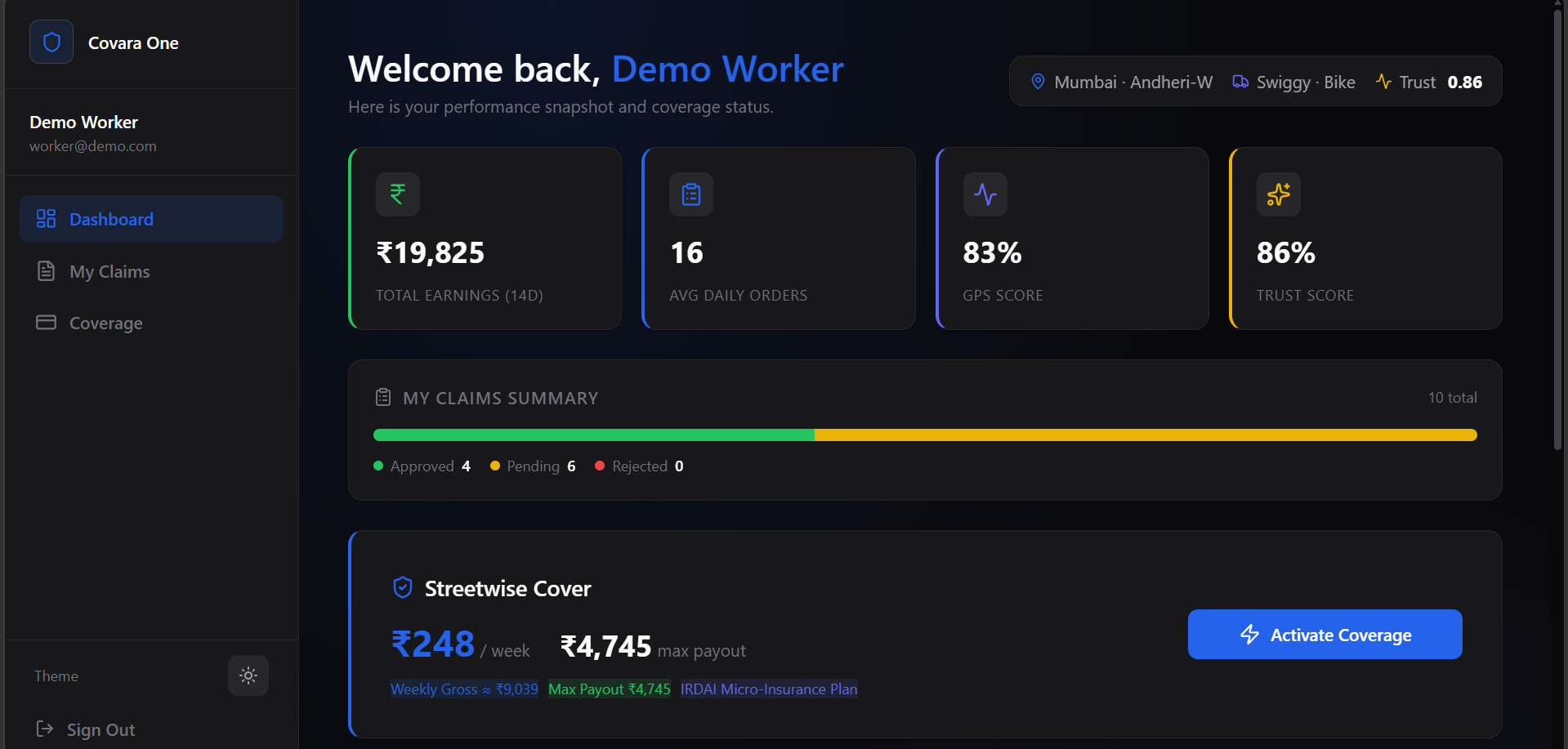
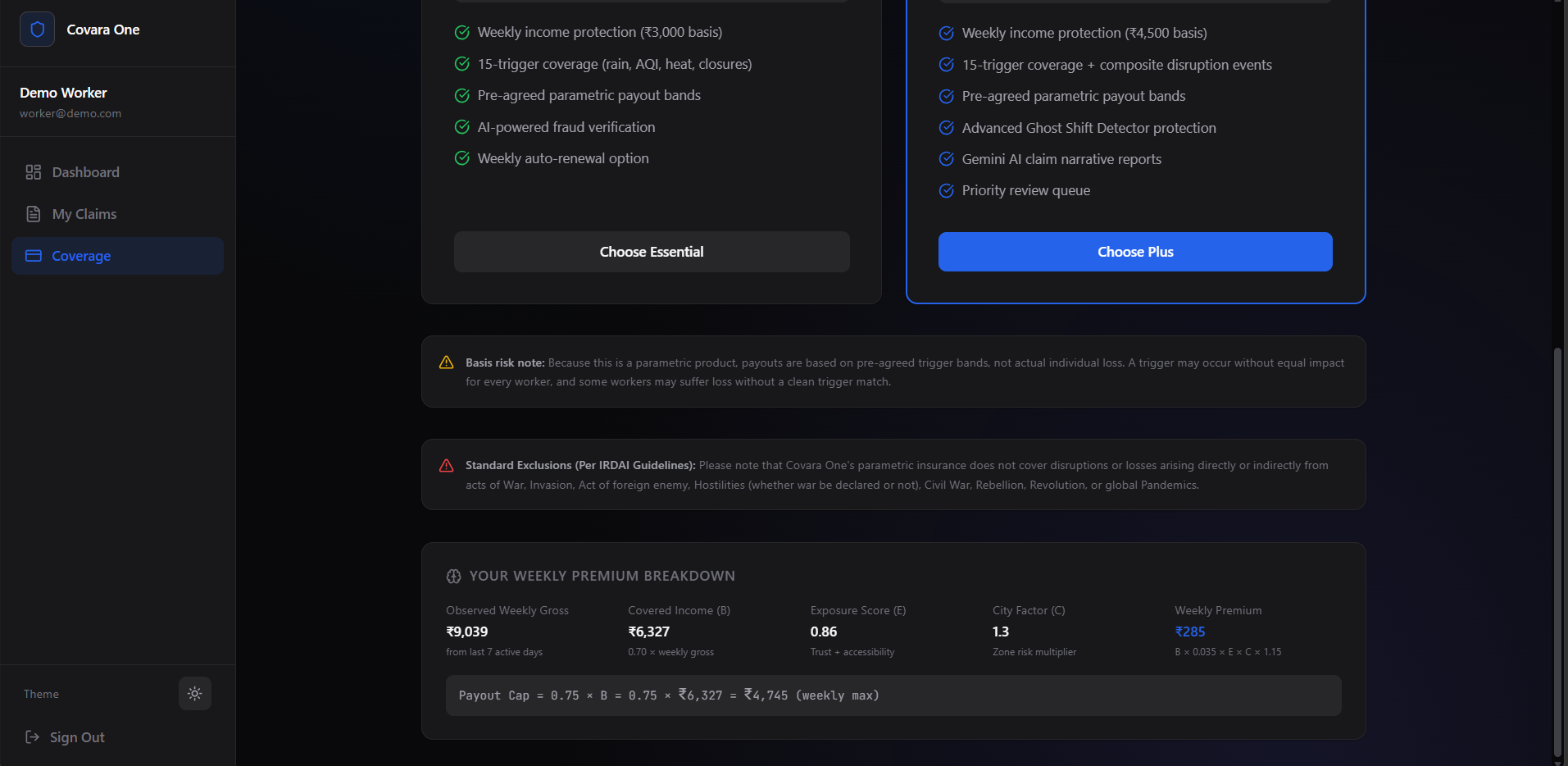
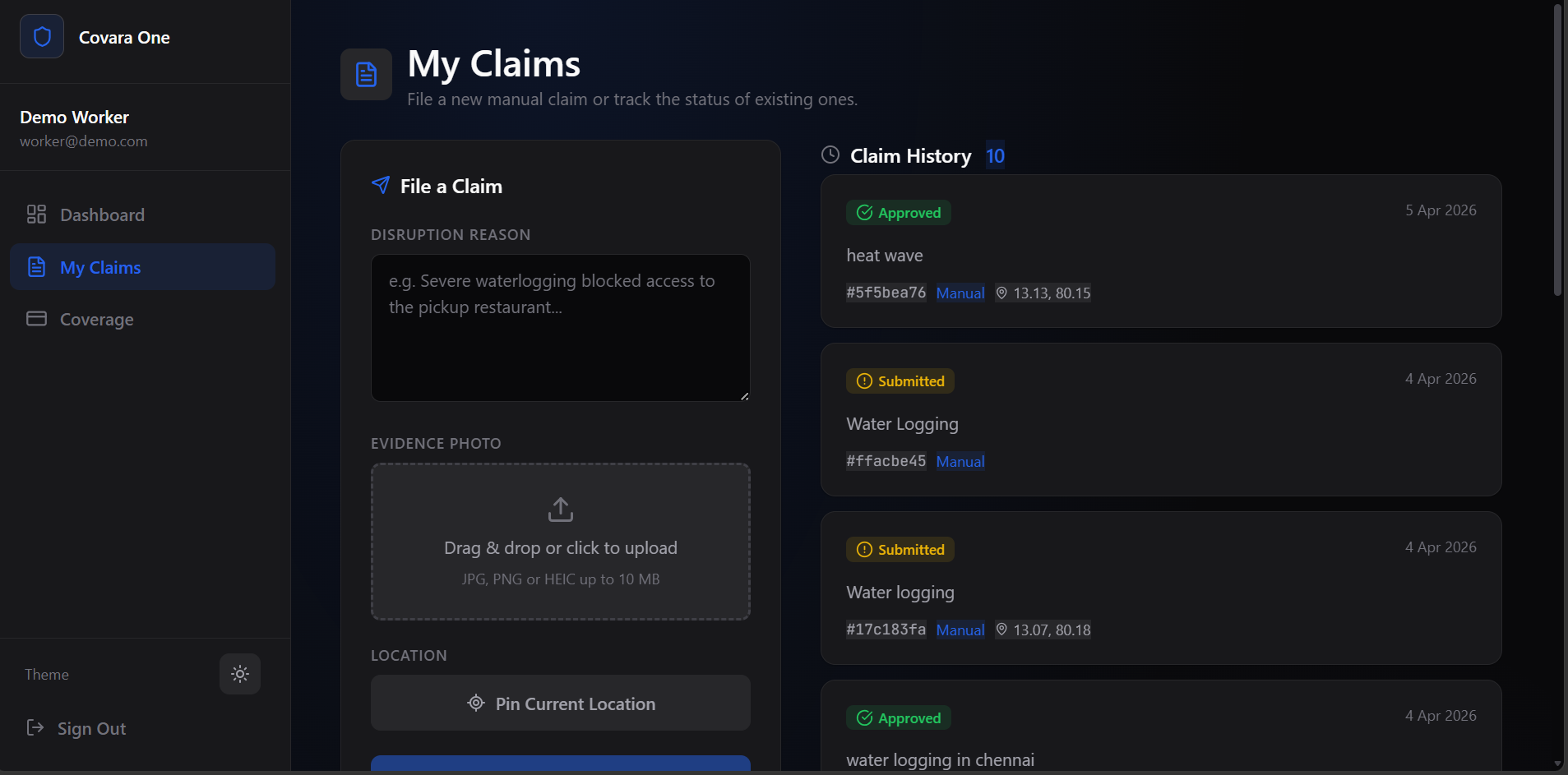
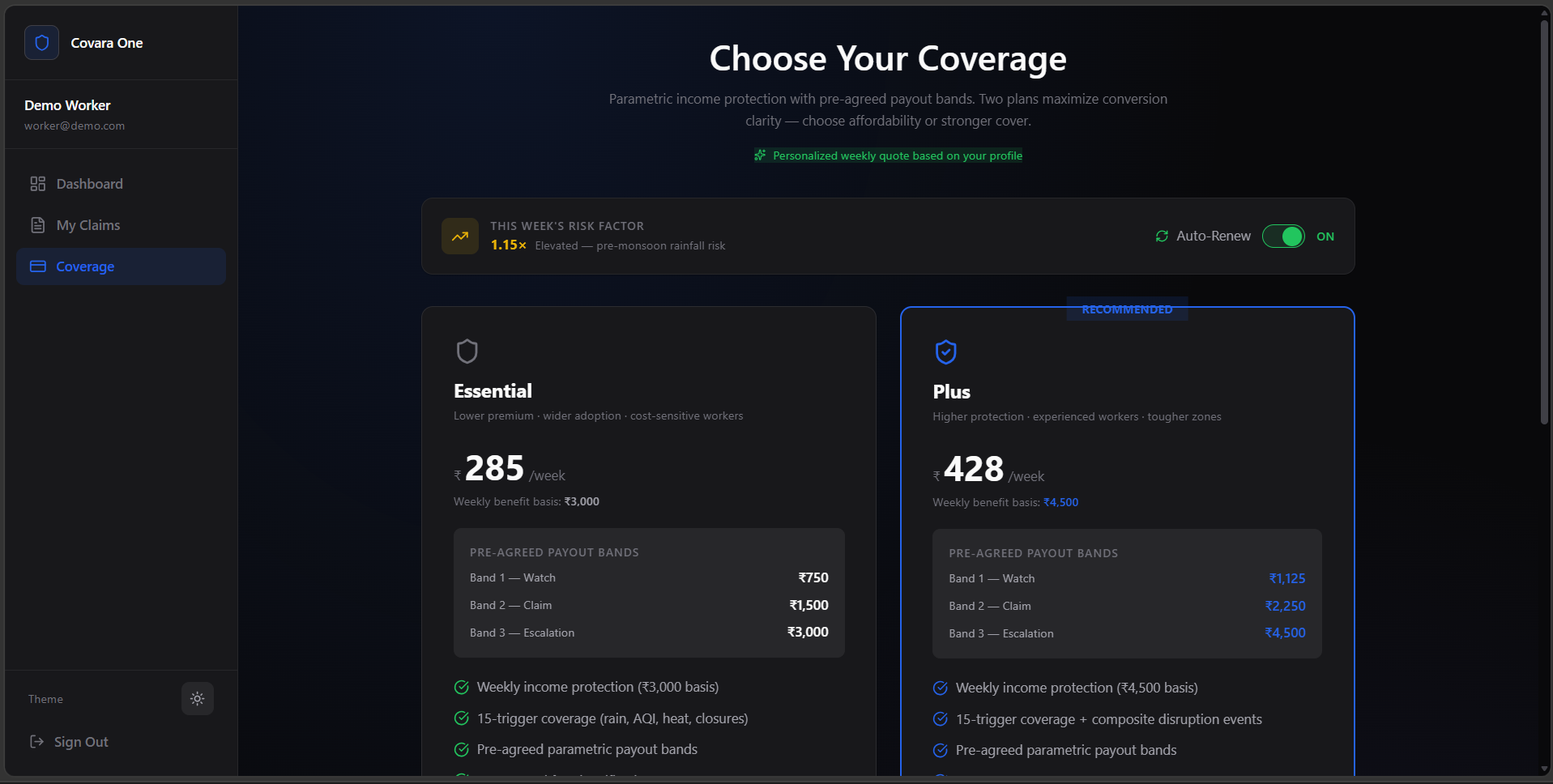
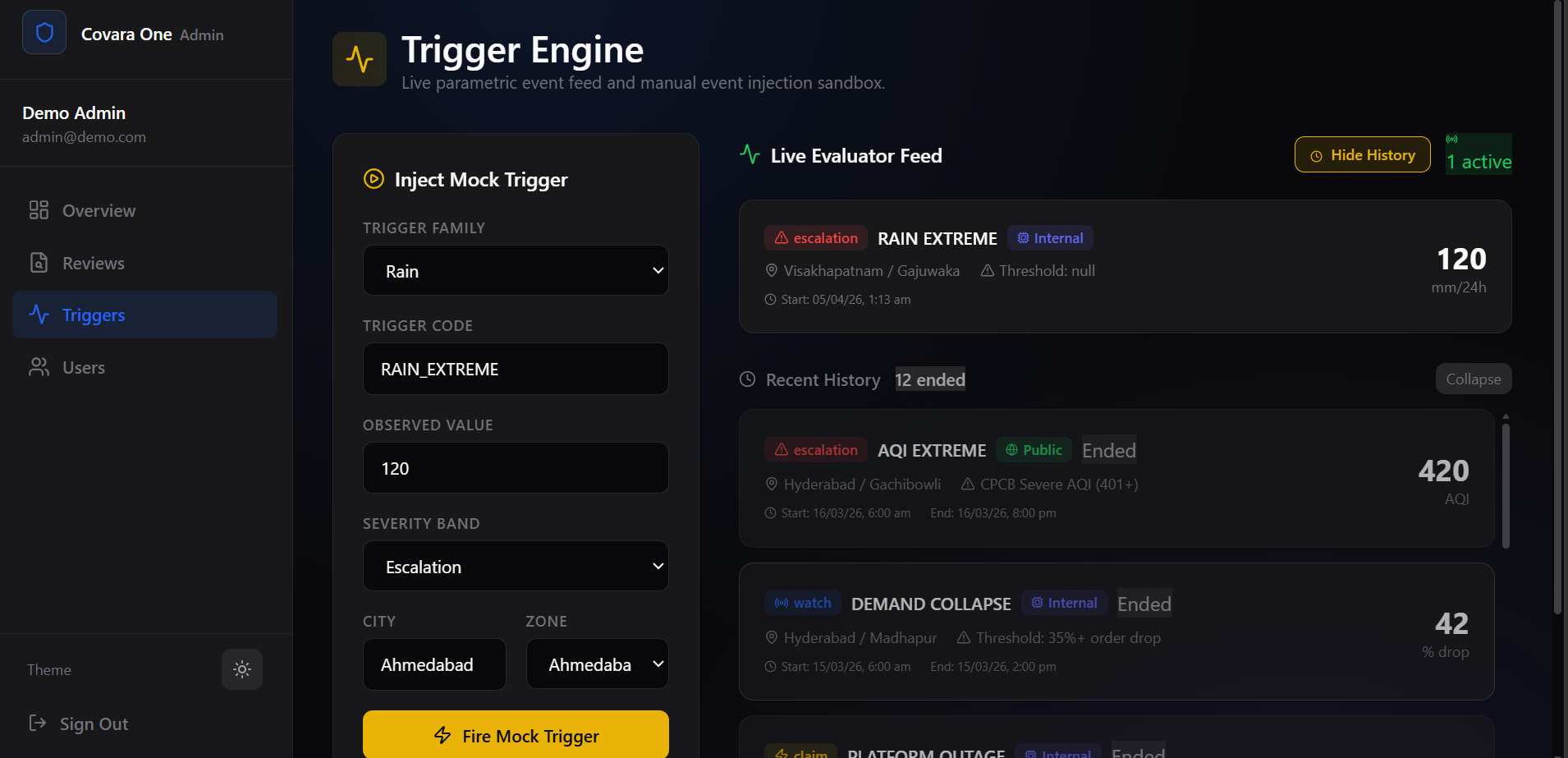
Covara One is a hyperlocal, weekly income-protection engine. Workers select a simple weekly coverage plan (Essential or Plus). The system continuously monitors a 15-trigger library of public data (like heavy rain, AQI, heat, and traffic delays). When a trigger fires in a worker's zone during their active shift, they can file an auto-claim. If the system's fraud layer verifies their genuine presence and exposure, it auto-approves the claim and prepares a zero-touch payout via a predetermined parametric ladder. No manual adjusters are required for clean claims.
How we built it
We built a web-first Progressive Web App (PWA) to ensure zero-friction onboarding for delivery workers using varied Android devices, eliminating the need for heavy app-store downloads.
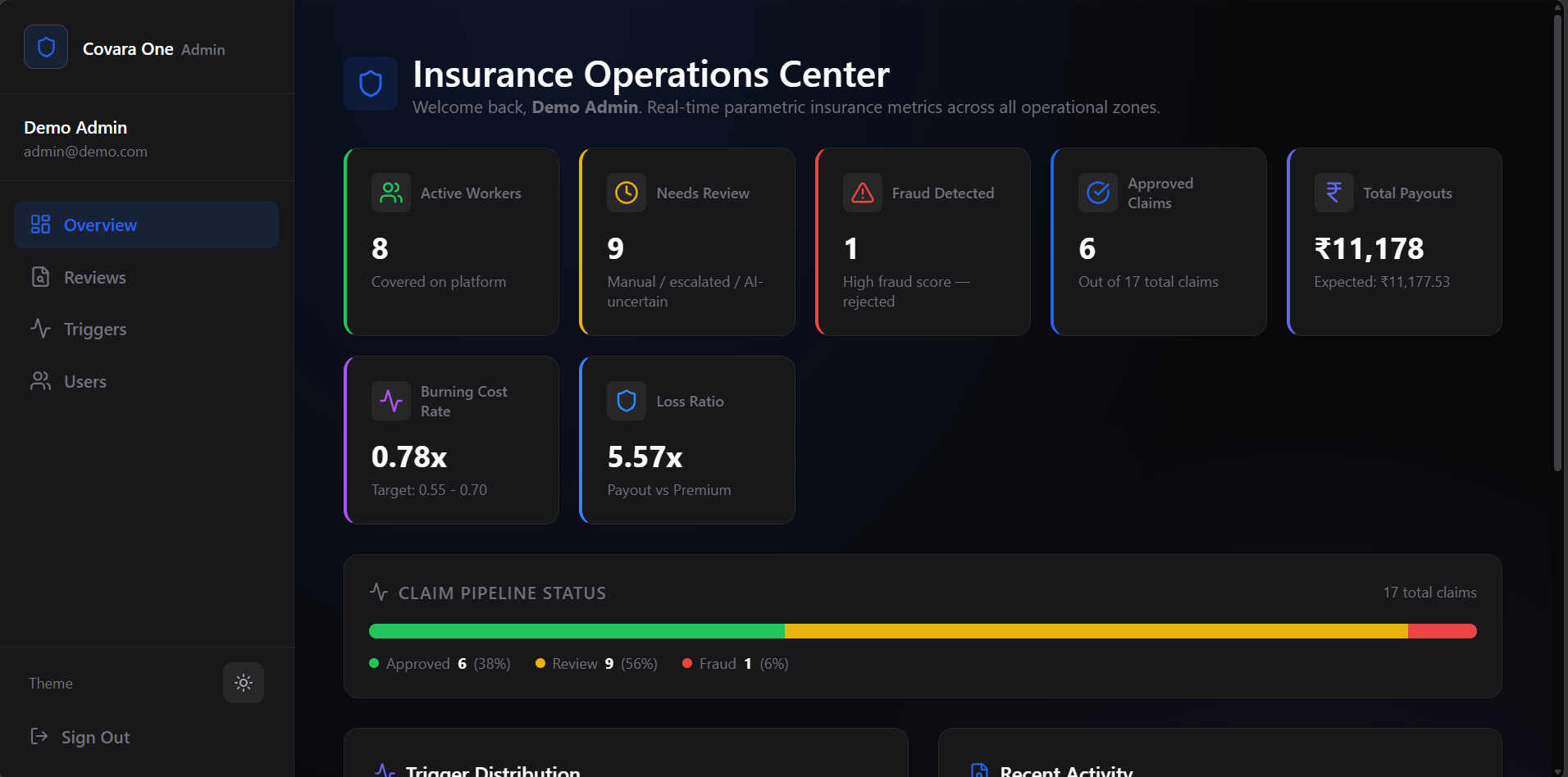
Frontend: We used Next.js 16 and Tailwind CSS to build distinct, role-based dashboards for both workers and insurer admins.
Backend: We orchestrated the 8-stage claim pipeline using Python and FastAPI.
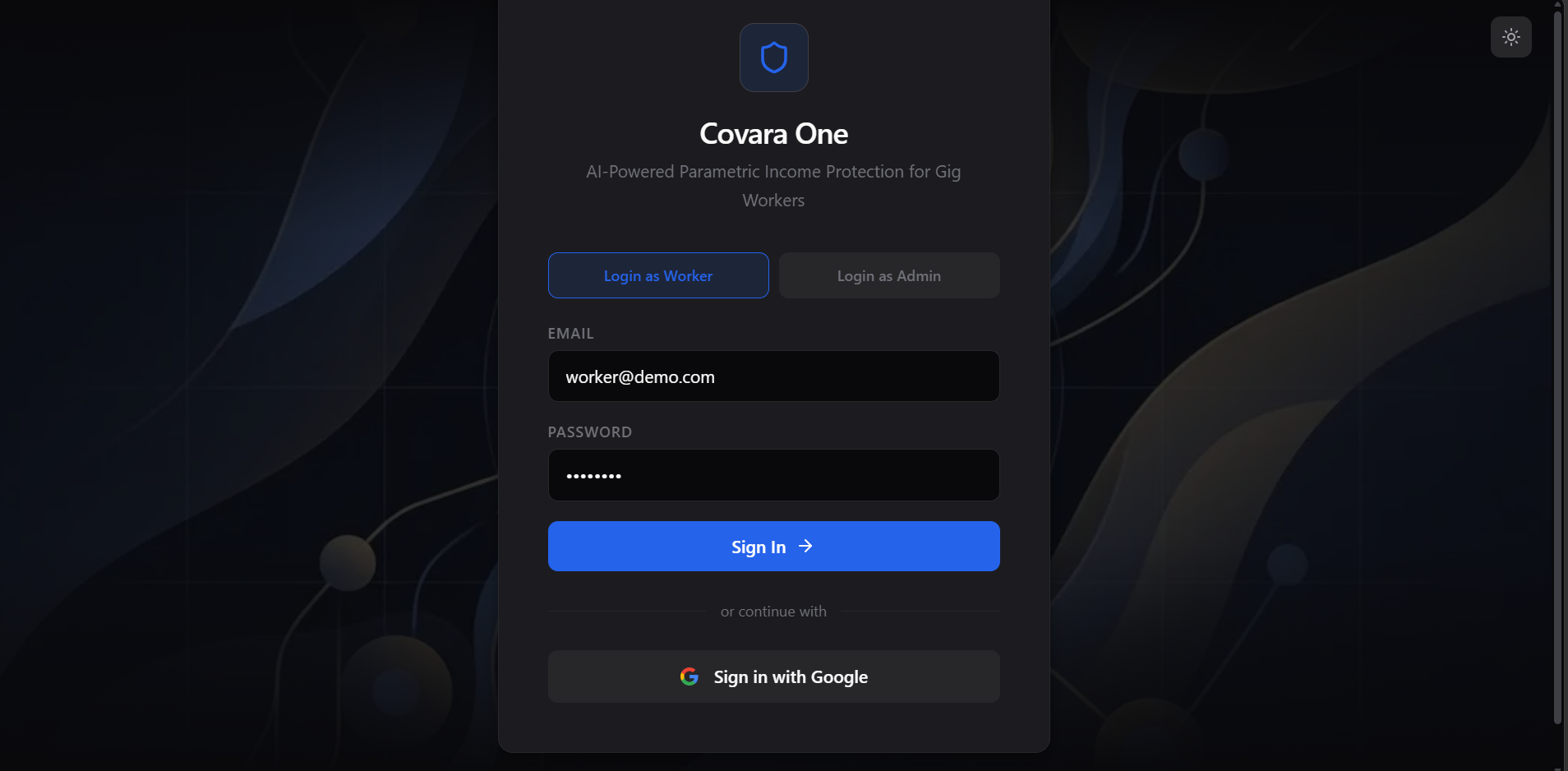
Database & Auth: We leveraged a 14-table Supabase PostgreSQL database with strict Row-Level Security (RLS) and Google OAuth.
Integrations: We wired up live external signals via OpenWeather, CPCB AQI feeds, and TomTom traffic data to act as the source of truth for disruption events. We also integrated the Gemini API to detect AI-generated SynthID watermarks on submitted evidence photos and generate claim narratives.
Challenges we ran into
Our biggest challenge was designing the Ghost Shift Detector—a 5-layer anti-spoofing pipeline. We had to defend against Tier 3 systemic abuse where fraudsters fake locations in severe weather zones while resting at home. We couldn't just rely on GPS verification, as it is easily bypassed by mock-location apps. Another major challenge was balancing the UX so honest workers wouldn't be punished if their messaging apps stripped EXIF metadata from their evidence photos. We solved this by ensuring no single signal (like GPS or missing EXIF) could auto-reject a claim; instead, we built a weighted signal hierarchy.
Accomplishments that we're proud of
Here are the drafts for the next two sections of your project page, based on the details in your repository documentation.
Accomplishments that we're proud of The Ghost Shift Detector: We successfully designed a 5-layer anti-spoofing pipeline that doesn't just rely on easily manipulated GPS coordinates. We are incredibly proud of our multi-signal verification approach—combining EXIF integrity, TomTom route plausibility, Gemini AI SynthID detection, and cluster intelligence—to effectively neutralize coordinated 500-worker syndicate attacks.
A Fully Functional End-to-End Platform: We didn't just build a mockup; we built a production-hardened platform. From the Next.js 16 frontend and FastAPI backend to the 14-table Supabase SQL schema with strict Row-Level Security, the entire architecture is live and functional.
Real-World Parametric Anchoring: We successfully mapped out a 15-trigger library and anchored our environmental thresholds (rain, heat, AQI) to official Indian government sources like the IMD, NDMA, and CPCB.
Innovative Payout Safety: We rejected the industry standard of "provisional 50% payouts" and implemented a "soft hold" state. This ensures money only moves after verification completes, entirely eliminating clawback risk and protecting the liquidity pool.
Engineering Rigor: We achieved a 100% pass rate across our 61 automated pytest suite tests.
What we learned
We learned that raw GPS coordinates are essentially obsolete for establishing ground truth in high-stakes gig environments. We discovered the critical importance of multi-signal verification—combining pre-trigger delivery activity, EXIF integrity, TomTom route plausibility, and cluster intelligence to accurately separate a genuinely stranded worker from a bad actor. We also learned the value of a "soft hold" state; by holding funds until verification is complete rather than offering partial payouts, we successfully eliminated accounting complexity and clawback risks.
What's next for Covara One
Live ML Inference: While our Random Forest model is trained and saved, we are currently using a hardcoded actuarial baseline ($p=0.15$) in the claims process. Our next immediate milestone is wiring up live ML inference to power dynamic severity scoring and review routing.Live Payment Disbursements: We currently calculate the payout amounts and record them in the database via a simulated Zero-Touch Payout. We plan to integrate Razorpay or Cashfree to execute live UPI bank transfers.Official Data & Identity Migrations: Once we receive the necessary approvals, we will migrate from the OpenWeather API to direct IMD APIs (pending IP whitelist) and move our Level 4+ KYC from Sandbox.co.in to official DigiLocker (MeitY/NIC) integrations.Native Hardware Signals: While our web-first PWA ensures zero-friction onboarding, we plan to implement optional deeper mobile integrations. This will allow us to capture hardware-level anti-spoofing signals—like background GPS, accelerometer data, and GNSS validation—for higher device assurance.WhatsApp Communication: We plan to fully activate our 7 Twilio WhatsApp notification templates, ensuring workers receive real-time disruption alerts and claim updates right on their phones while they are on the road.

Log in or sign up for Devpost to join the conversation.