COVALENT - Dating using AI
Inspiration
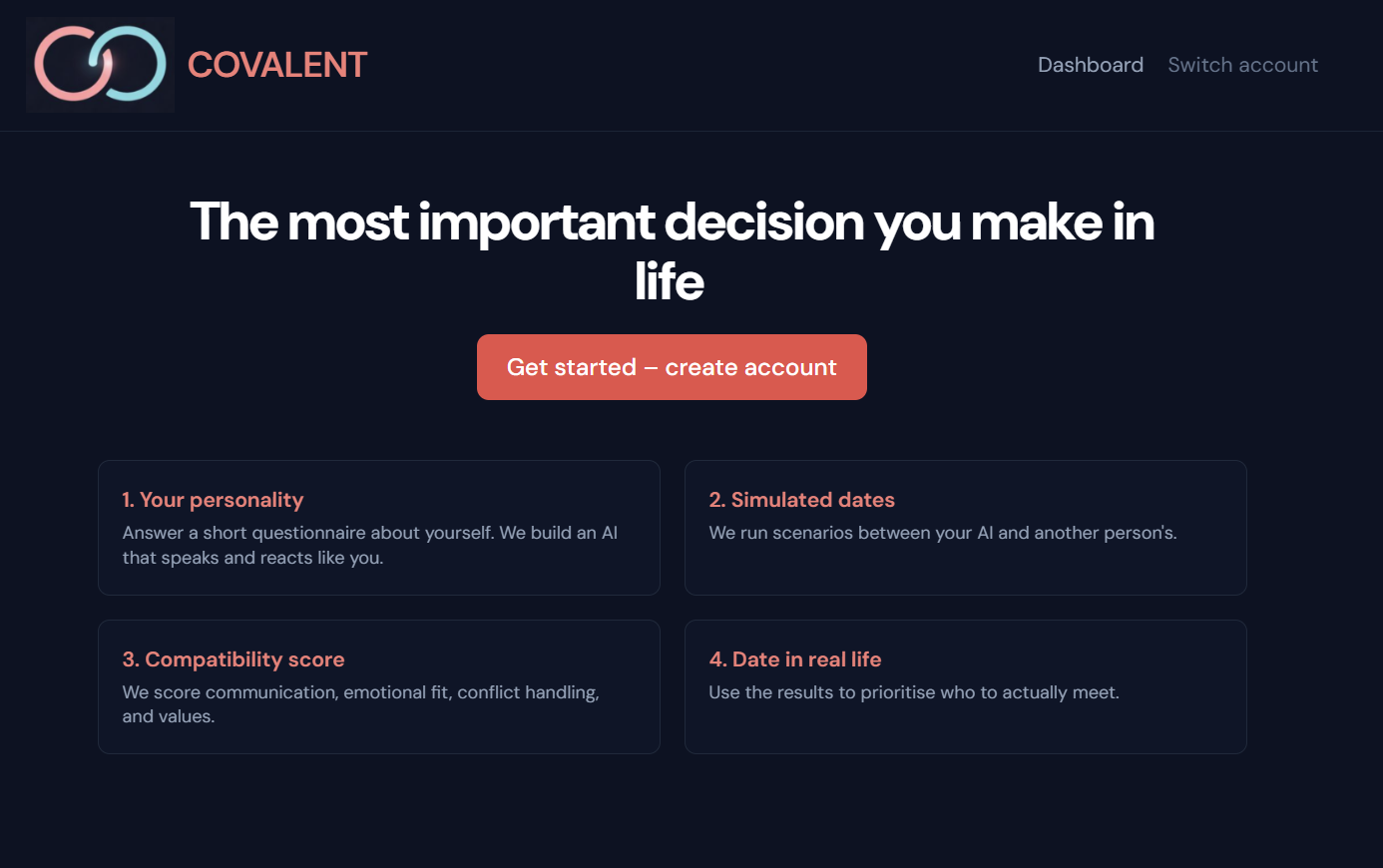
What is the most important decision you make in your life.....
Choosing a life partner is one of the most important decisions a person makes. One that shapes decades of everyday life and its hardest moments. We exist to make that choice more informed and less random.
Modern online dating is heavily flawed, prioritising superficial signals over how people actually communicate, cope, and build relationships. The result is an experience widely reported as frustrating and unpleasant for nearly everyone involved.
What it does
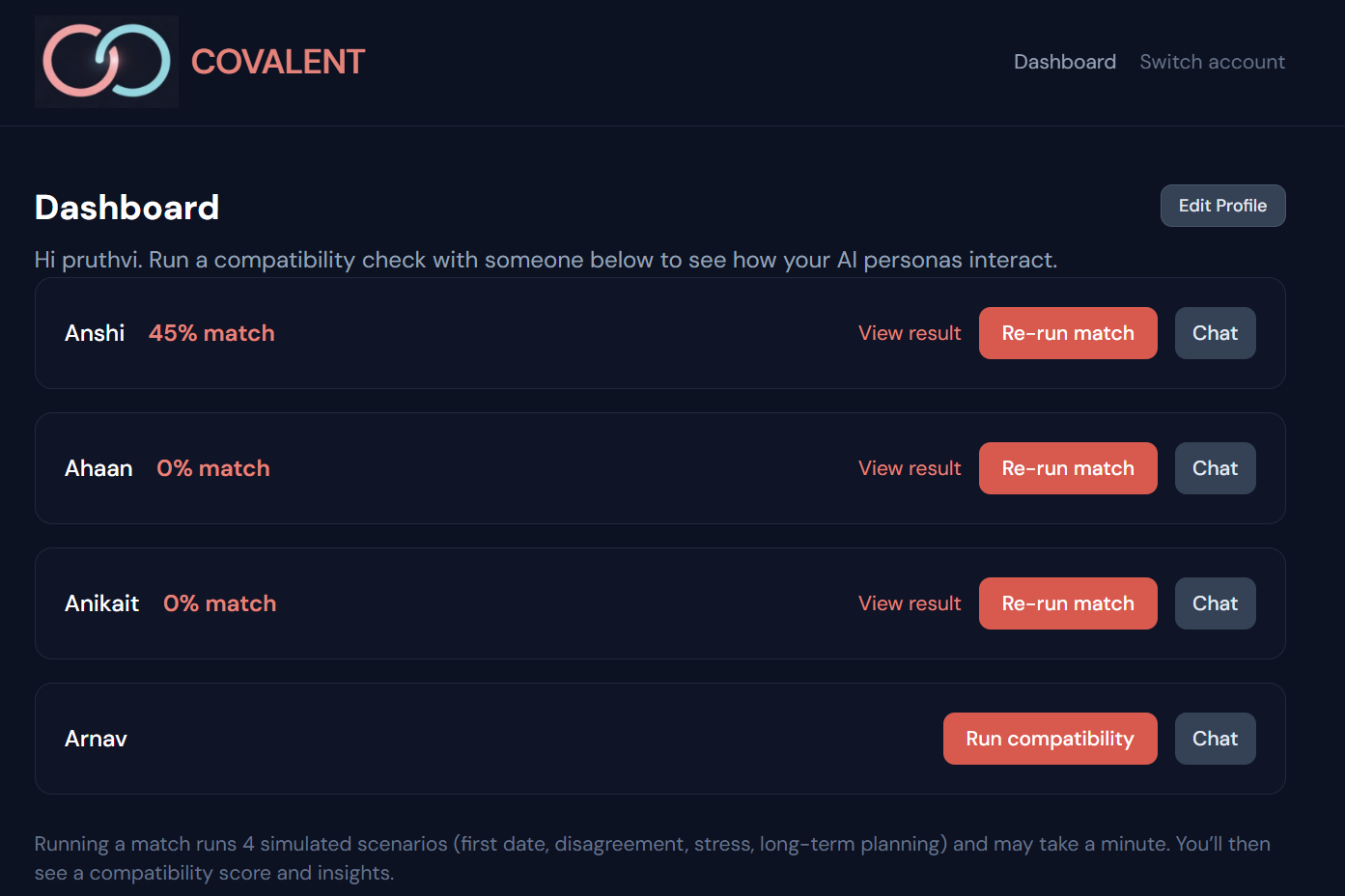
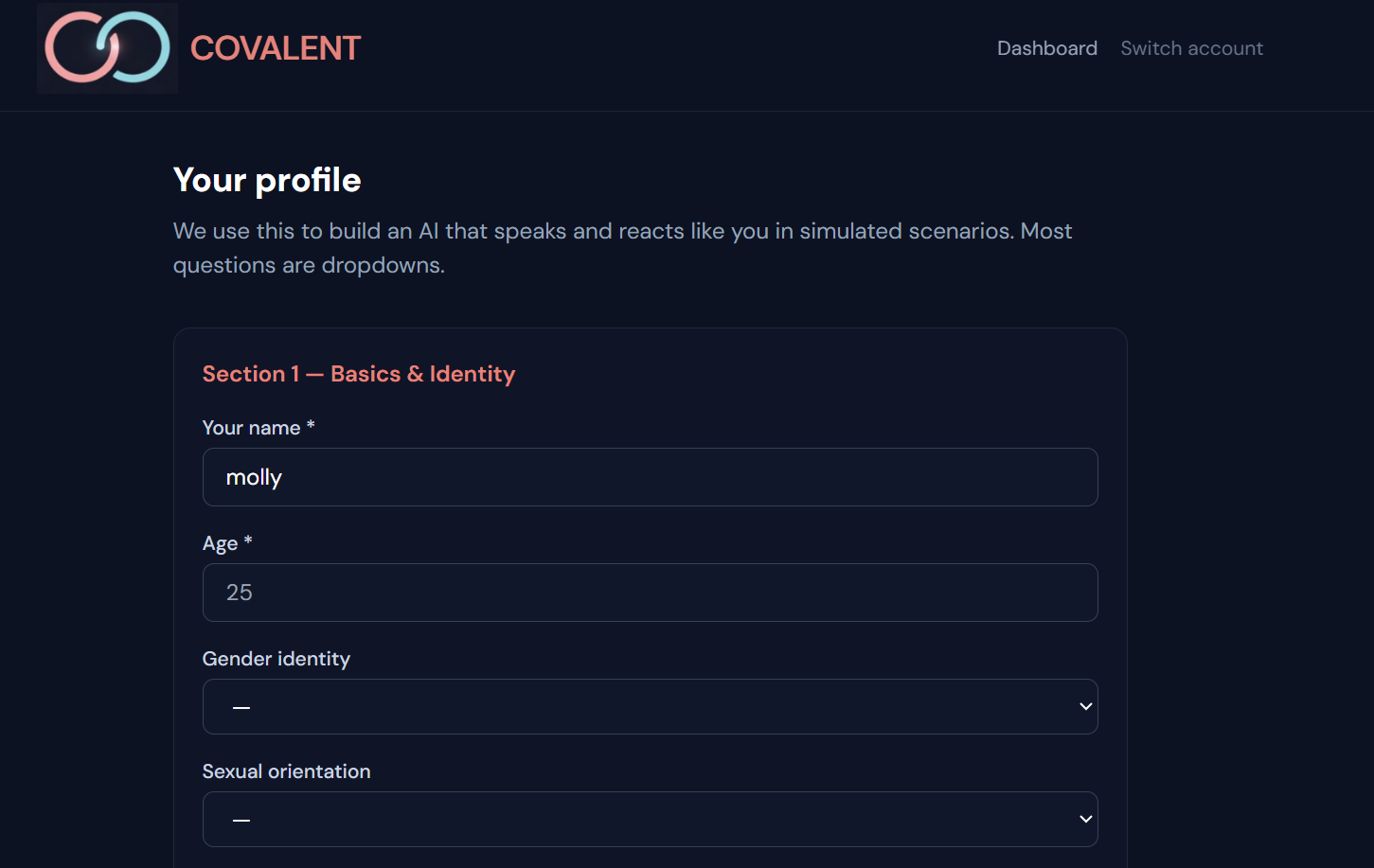
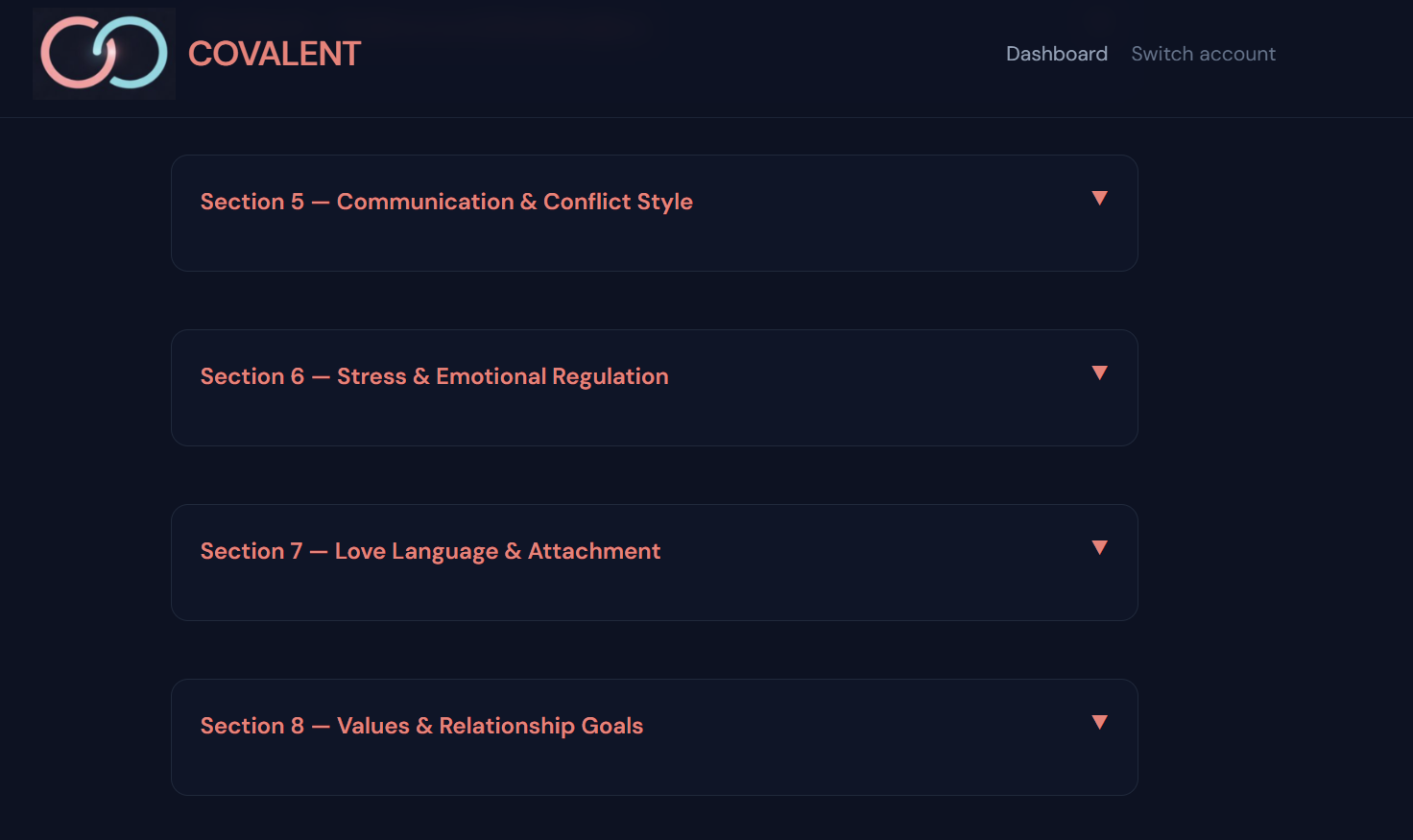
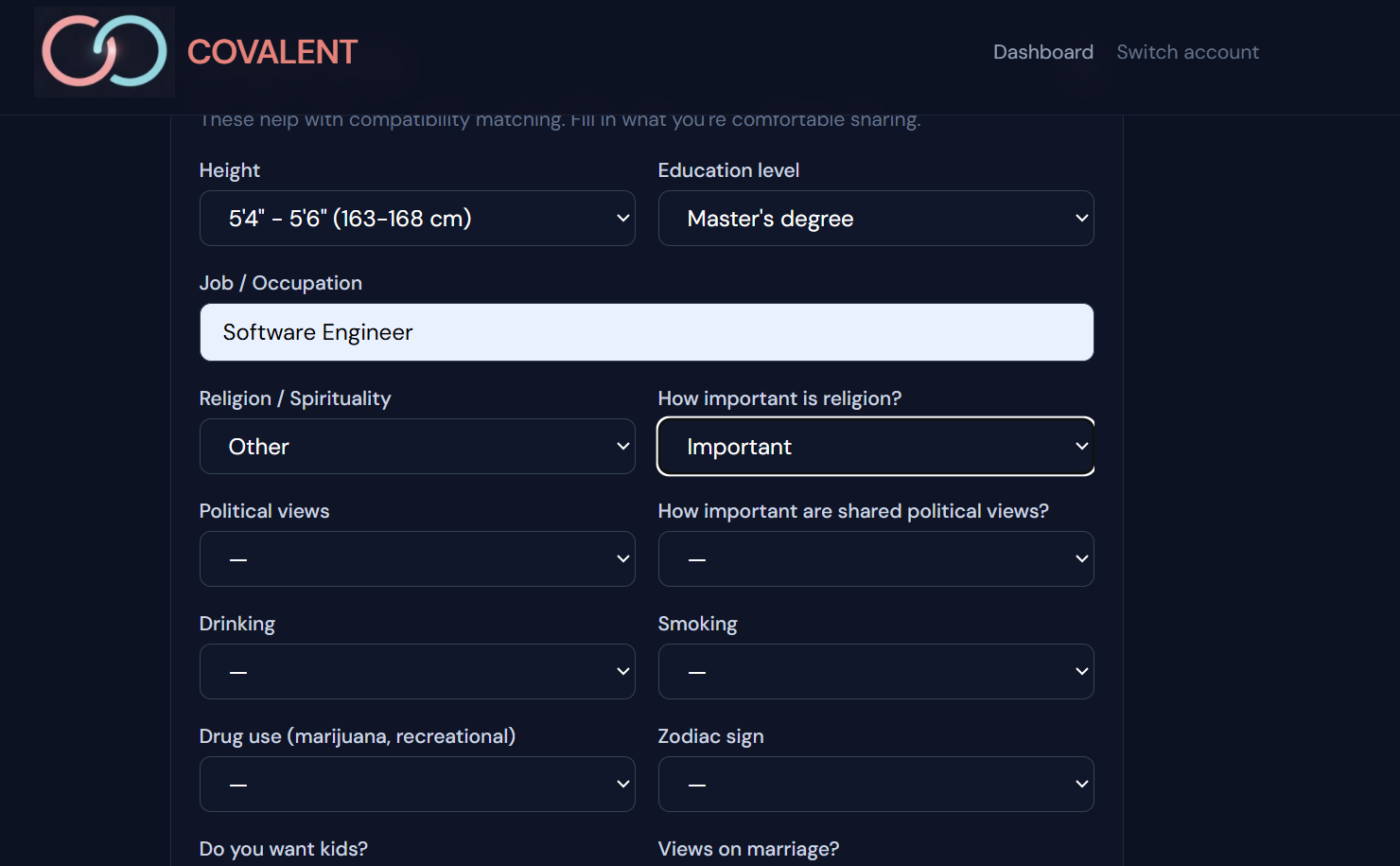
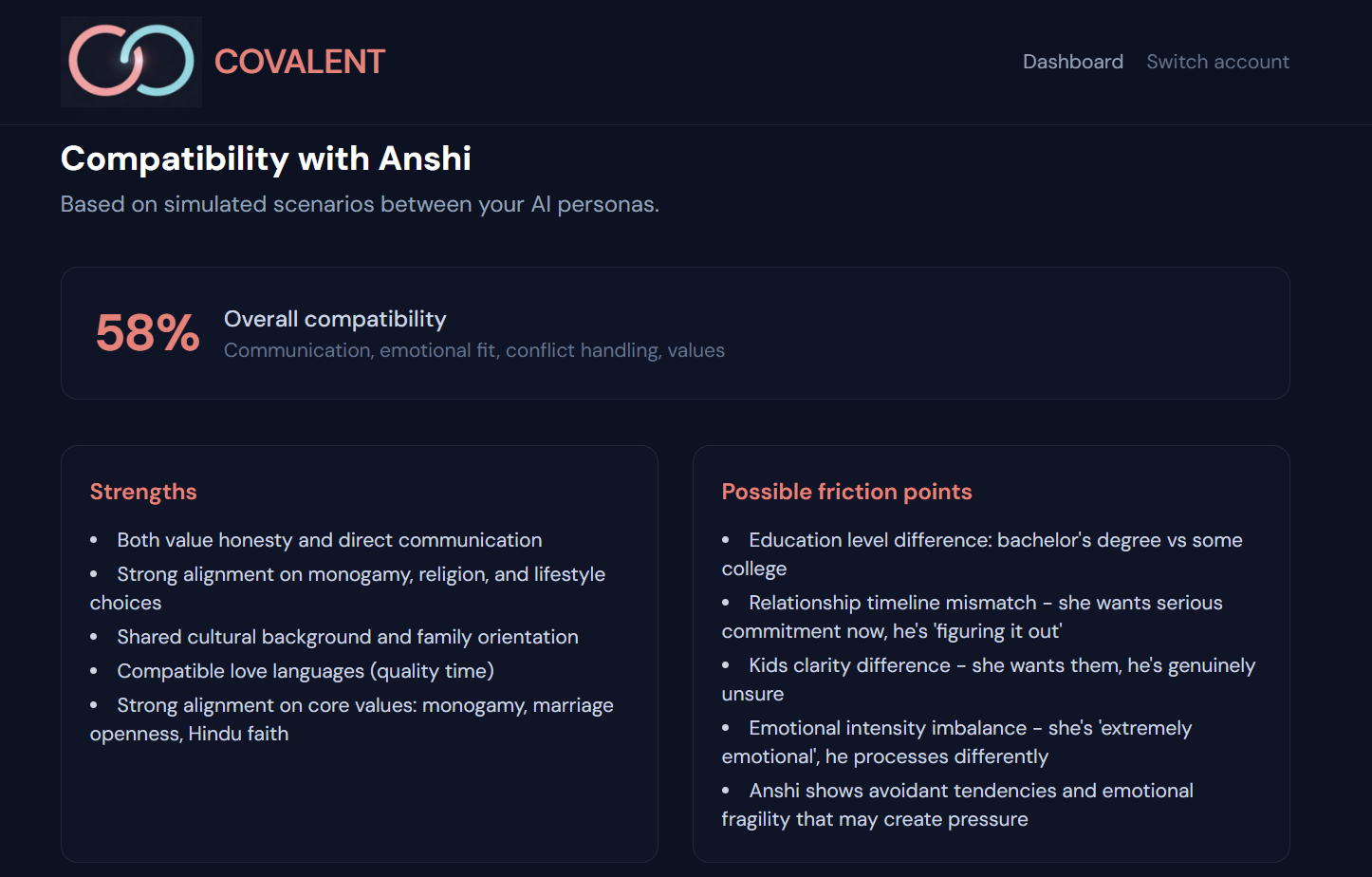
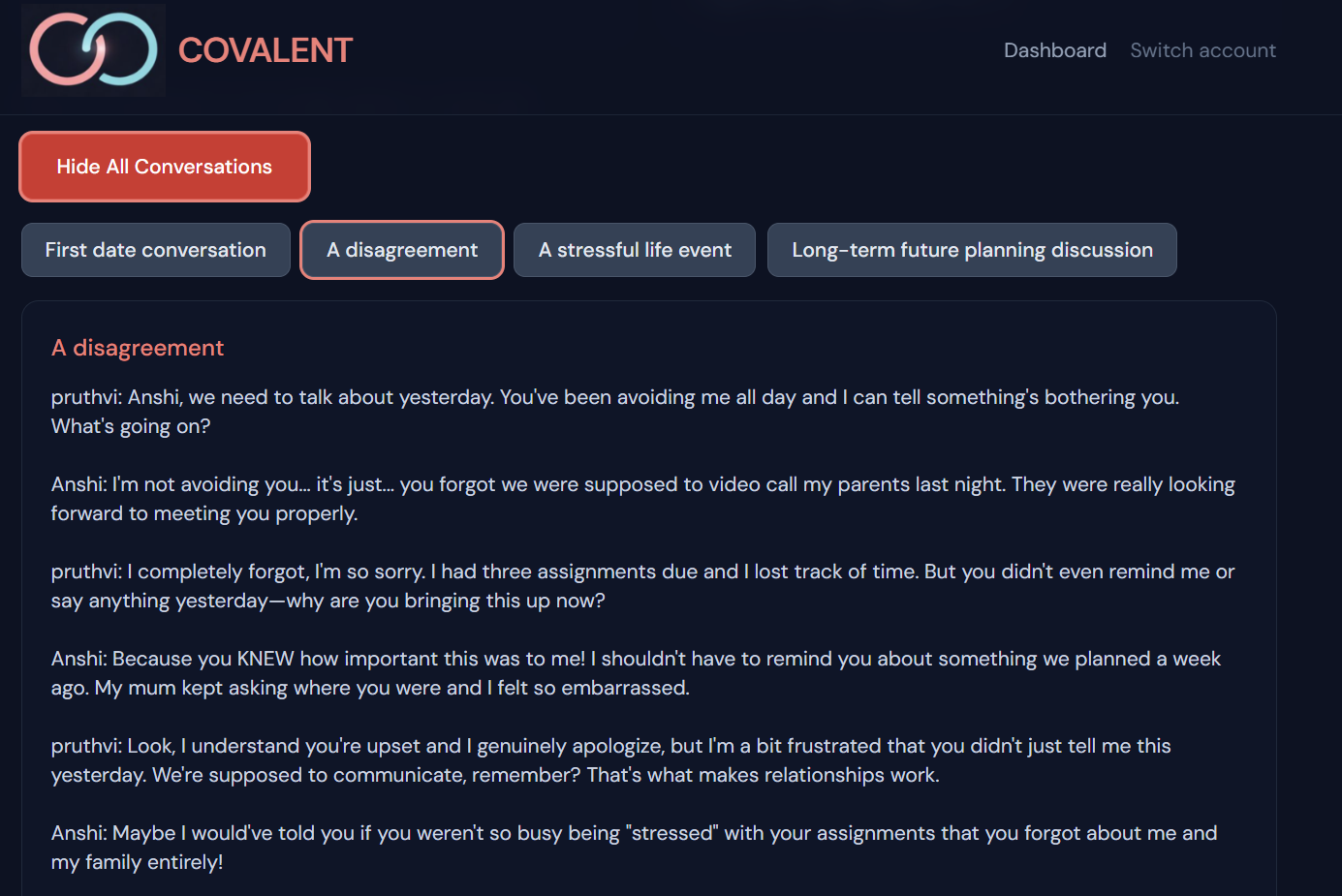
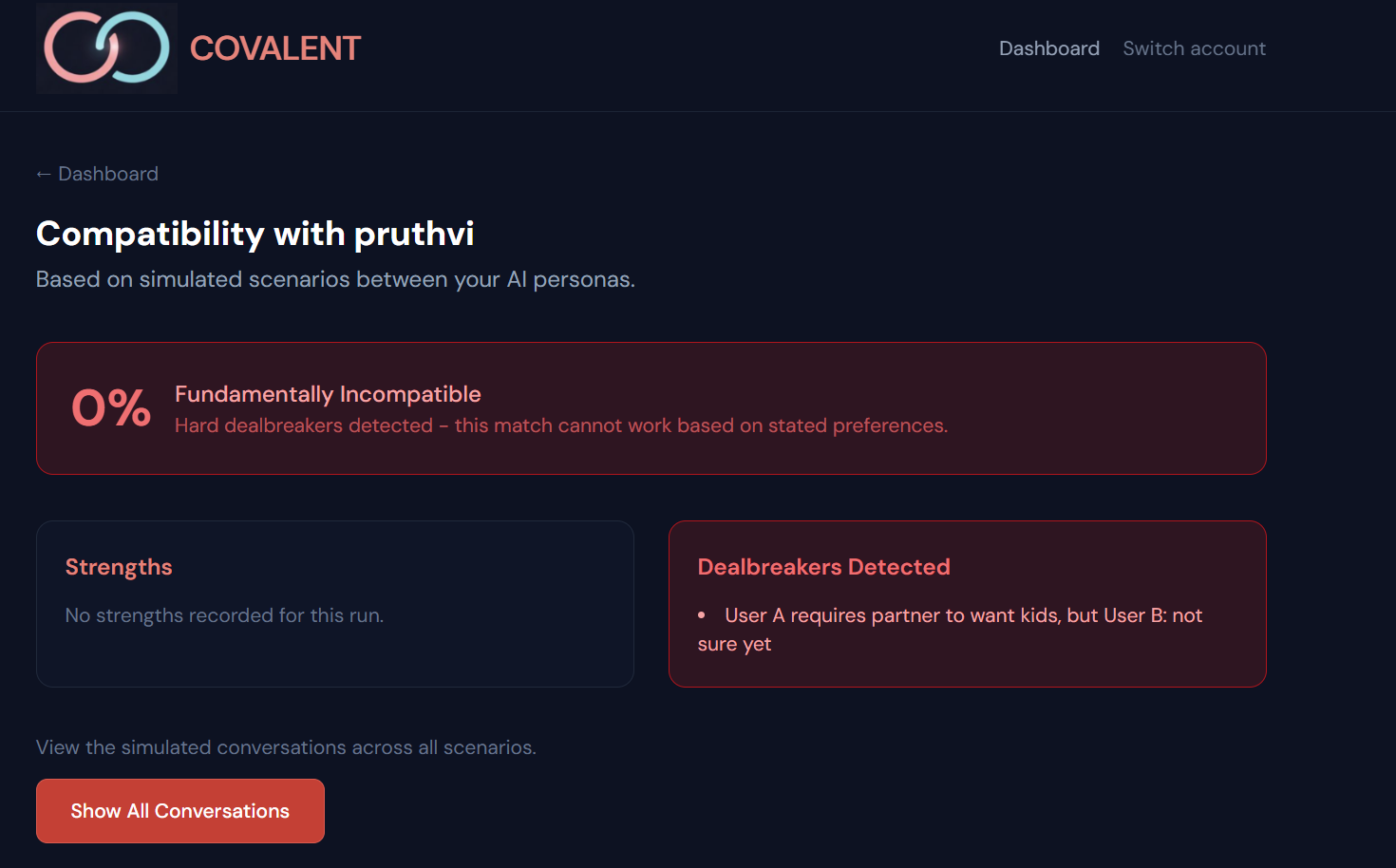
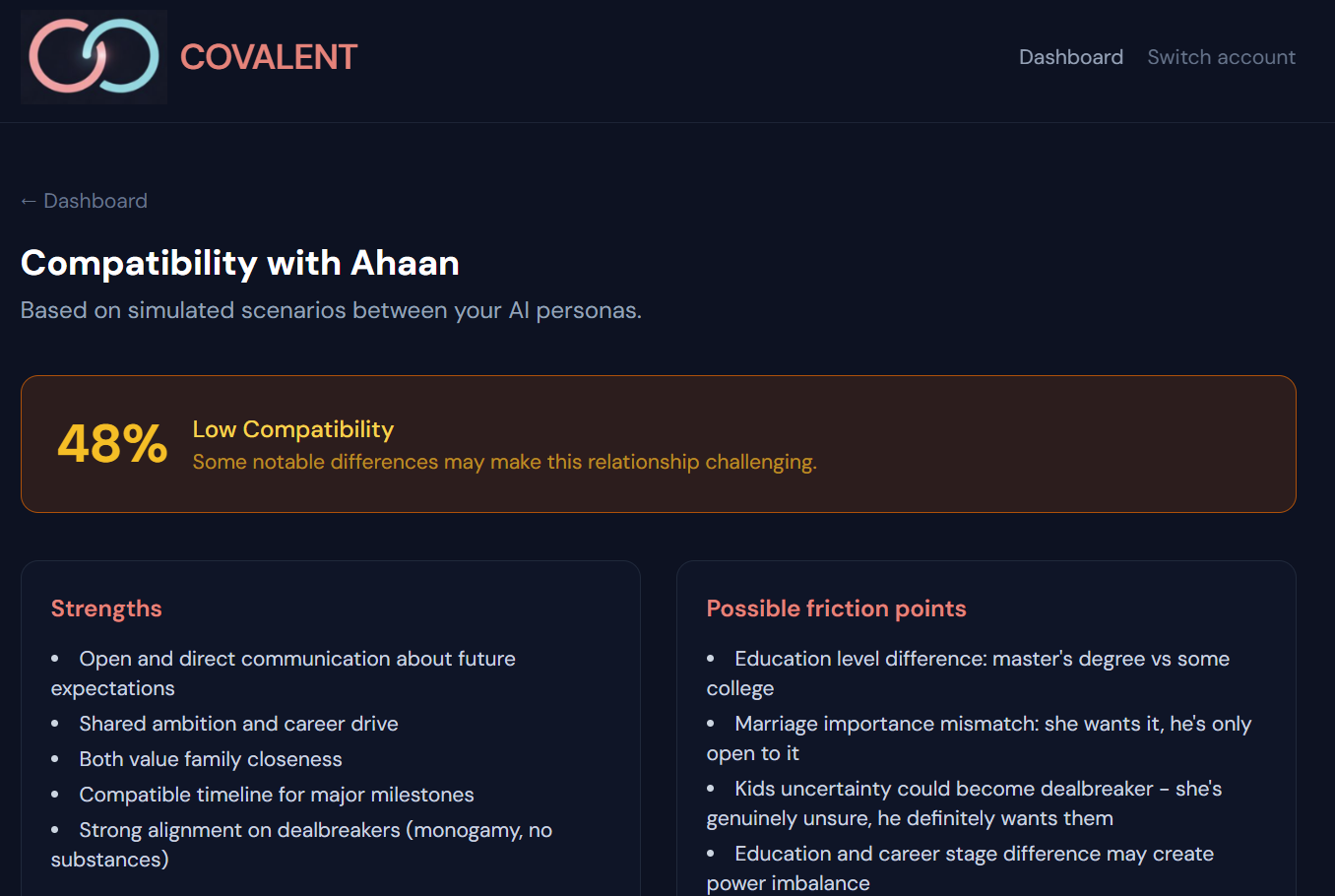
Our project is an AI-powered dating app that simulates real conversations, not just profile matching. Users complete a questionnaire that is converted into a detailed AI persona capturing their values, preferences, and communication style. The system first checks hard dealbreakers like orientation, kids, smoking, religion, politics, and monogamy. If a match passes, two AI agents run parallel simulated dating scenarios to see how the personas actually interact. An AI evaluator scores communication, emotional alignment, conflict handling, and shared values to produce an overall compatibility score. All simulations and results are saved, and only the initiating user can view the transcripts. The user can also choose to converse directly with the AI agent.
Challenges we ran into
When allowing a human to hold a conversation with a virtual agent, we ran into problems that made it difficult for turn-based conversations - these were caused by system security policies beyond our control. We overcame this by changing our strategy of allowing turn-based conversation, so that it feels natural to the user and has no potential to cause issues behind the scenes.
What we learned
We learned that compatibility is less about shared interests and more about how differences are handled. Communication style, conflict response, and emotional regulation consistently mattered more than surface level similarity.
We also learned that AI can be most valuable before high stakes decisions. It should not replace human judgment, but instead reduce randomness and emotional cost.
What's next for COVALENT
One natural extension is job application filtering, where:
- candidates and teams answer structured questions about communication style, work preferences, and values
- the system simulates realistic workplace scenarios (feedback, deadlines, conflict, long-term growth)
- companies and candidates see early-fit signals before interviews
This would reduce mismatched interviews and improve hiring efficiency without replacing human decision-making.

Log in or sign up for Devpost to join the conversation.