

Inspiration For a student flatshare or a household using prepaid electricity, an unexpected empty meter is more than an inconvenience. Small, frequent top-ups can make it hard to understand how quickly credit is disappearing or who has contributed. We designed Courant around the everyday questions: How much is left? When should we recharge? What can we change?
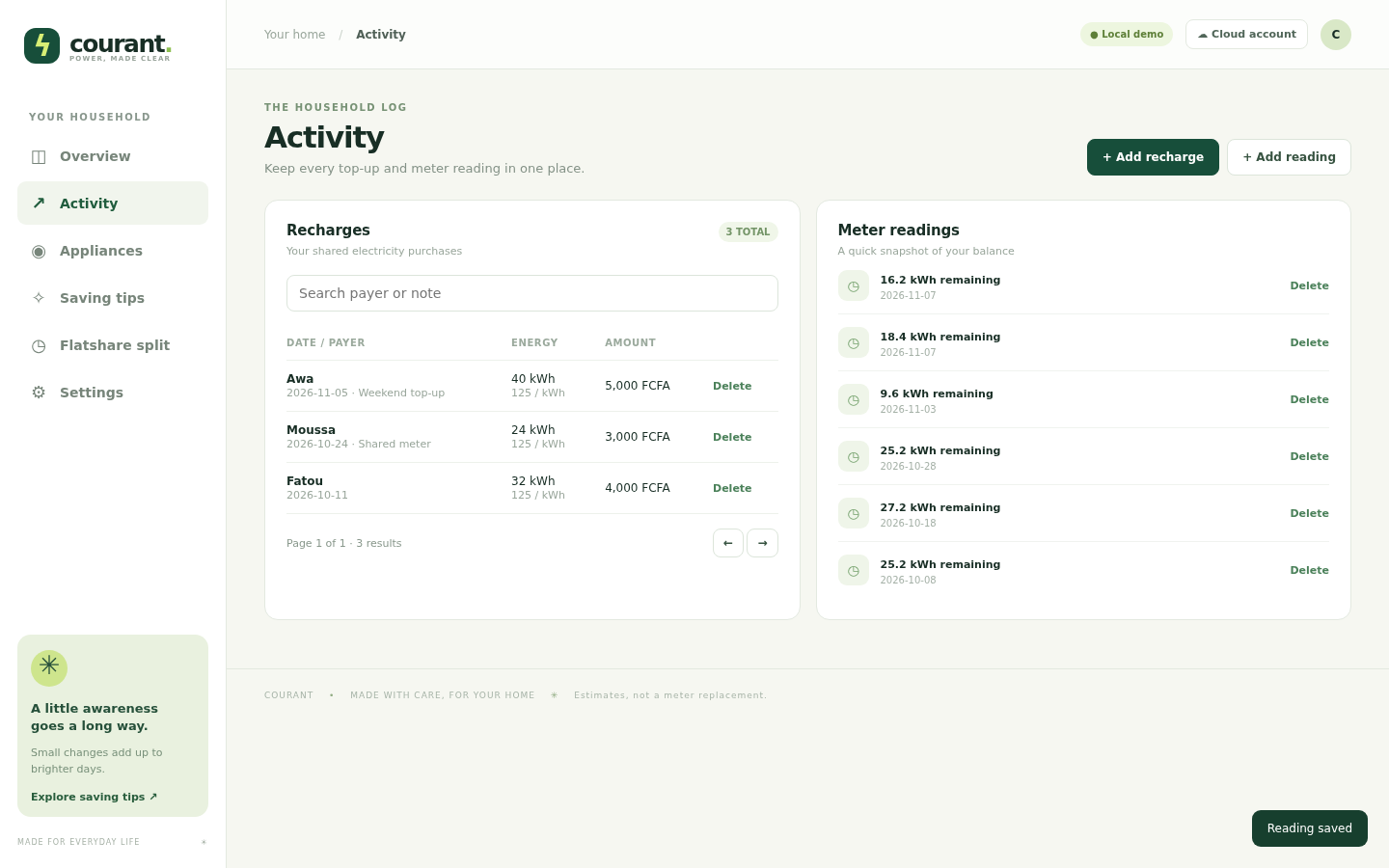
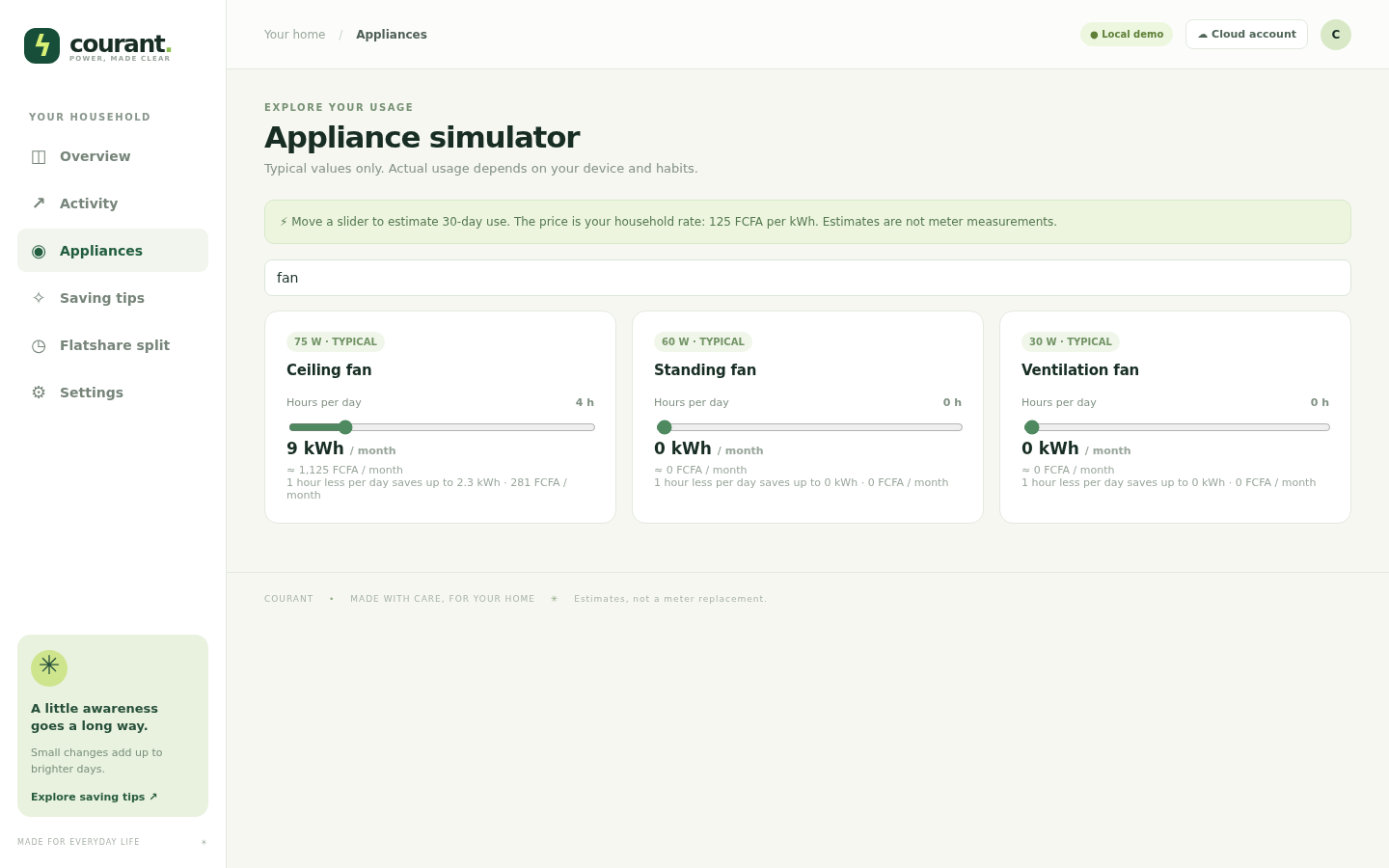
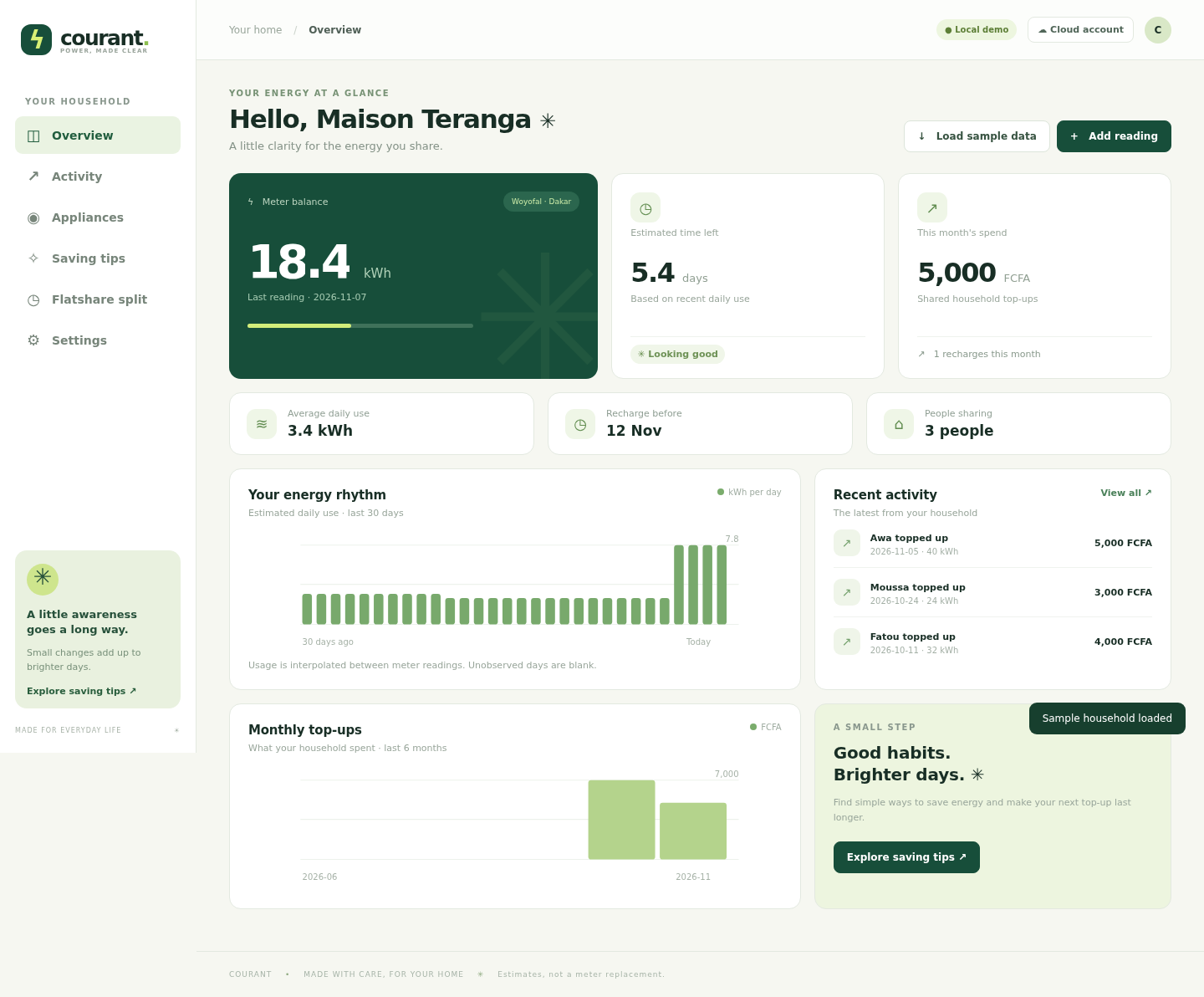
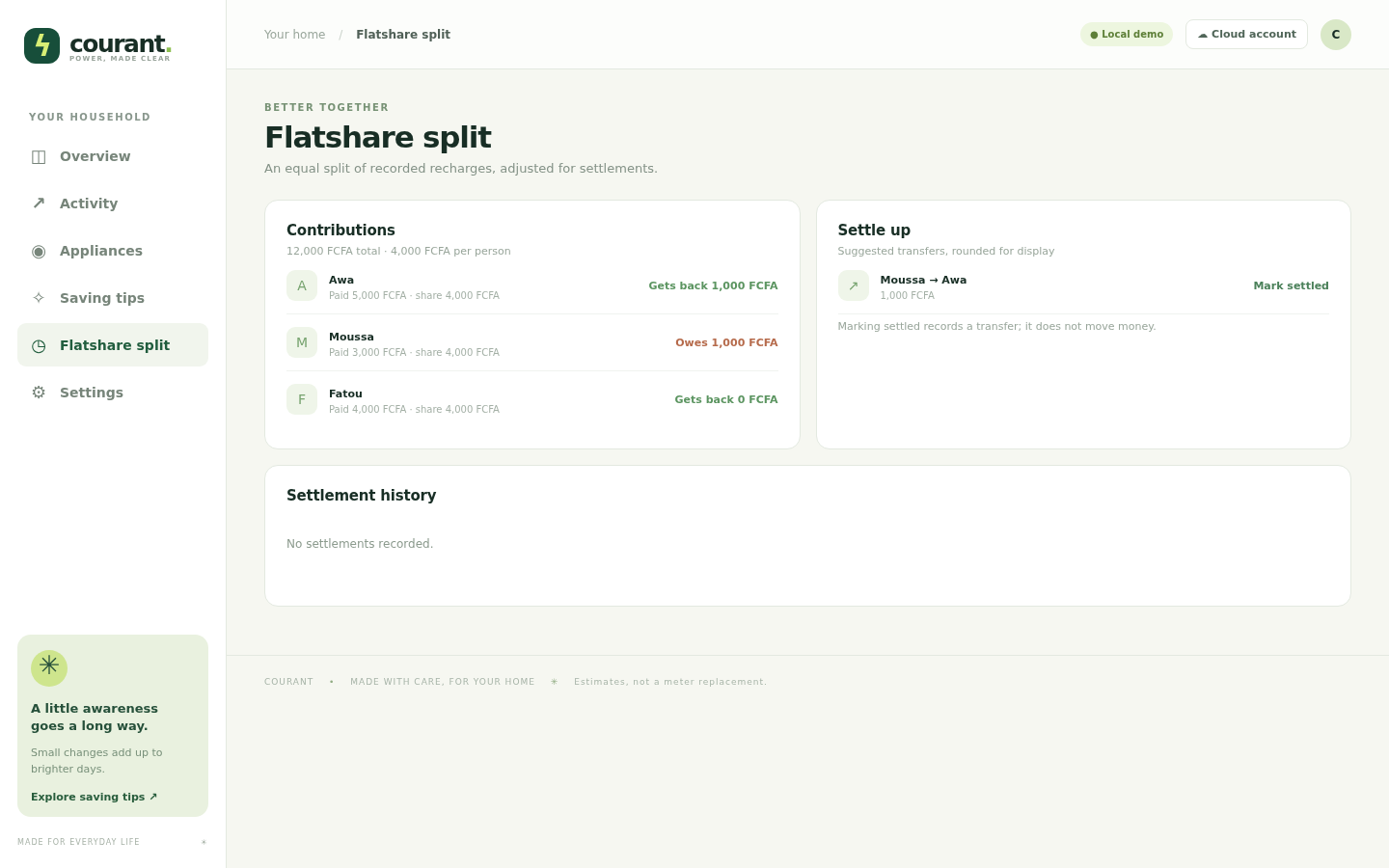
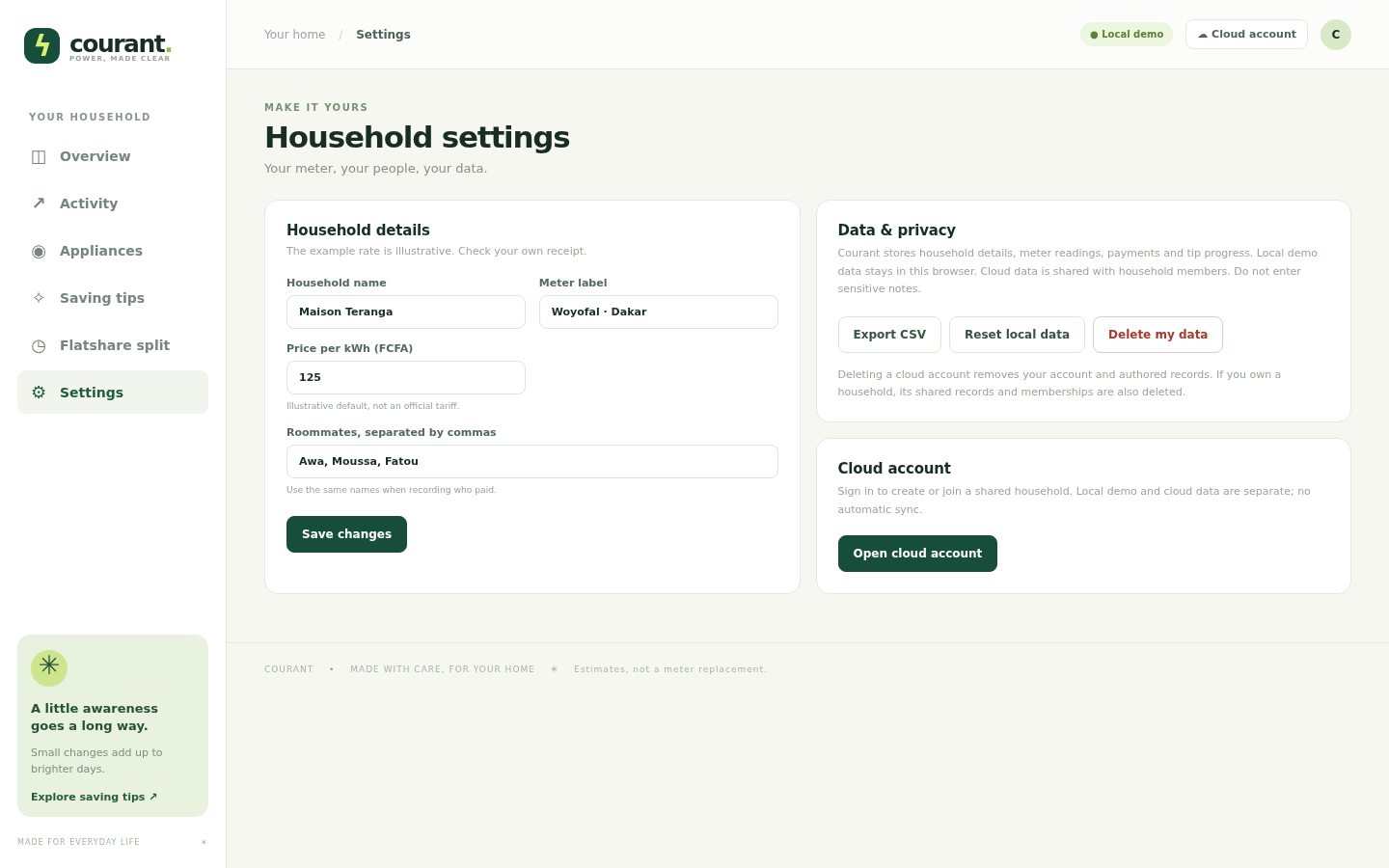
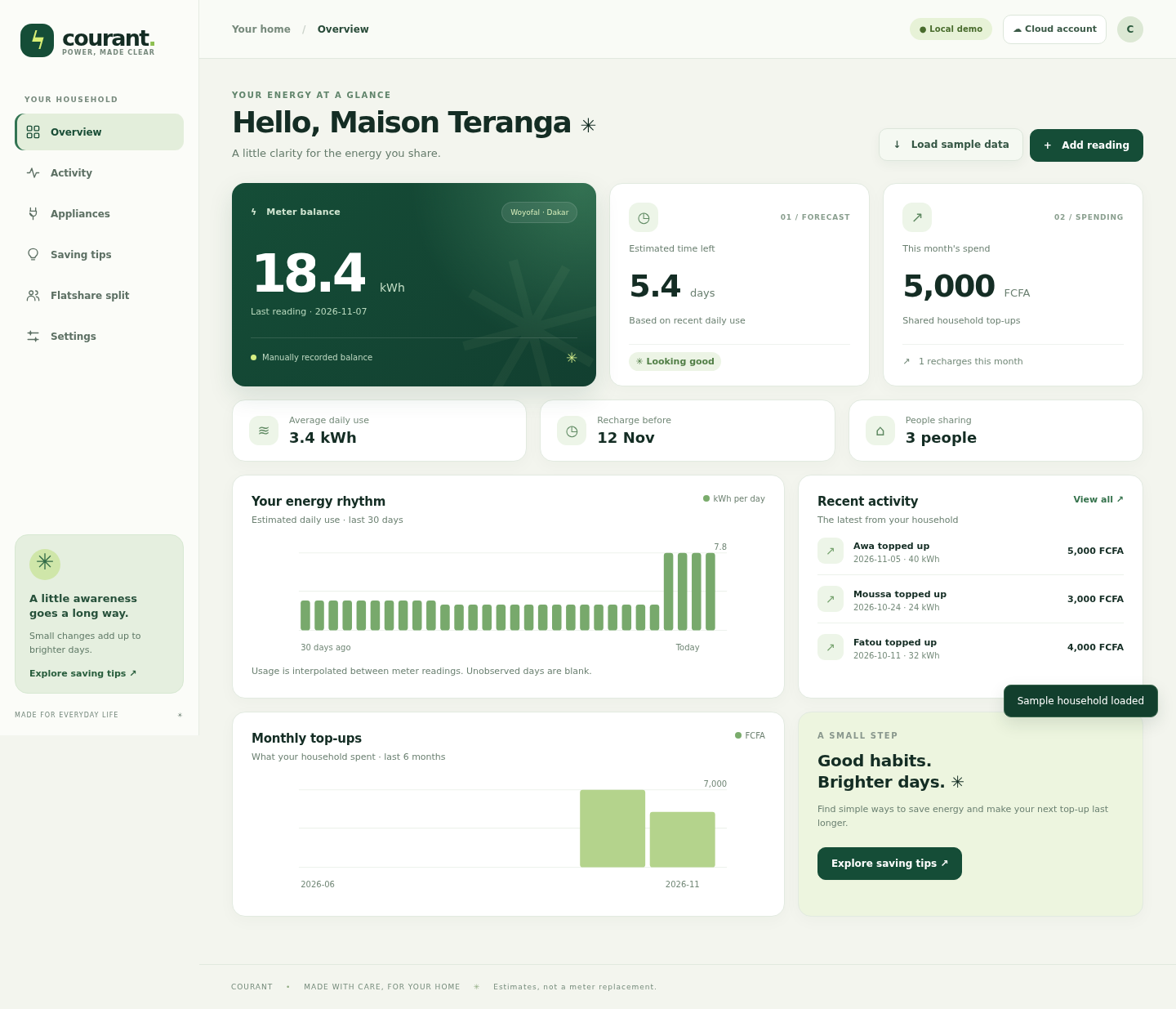
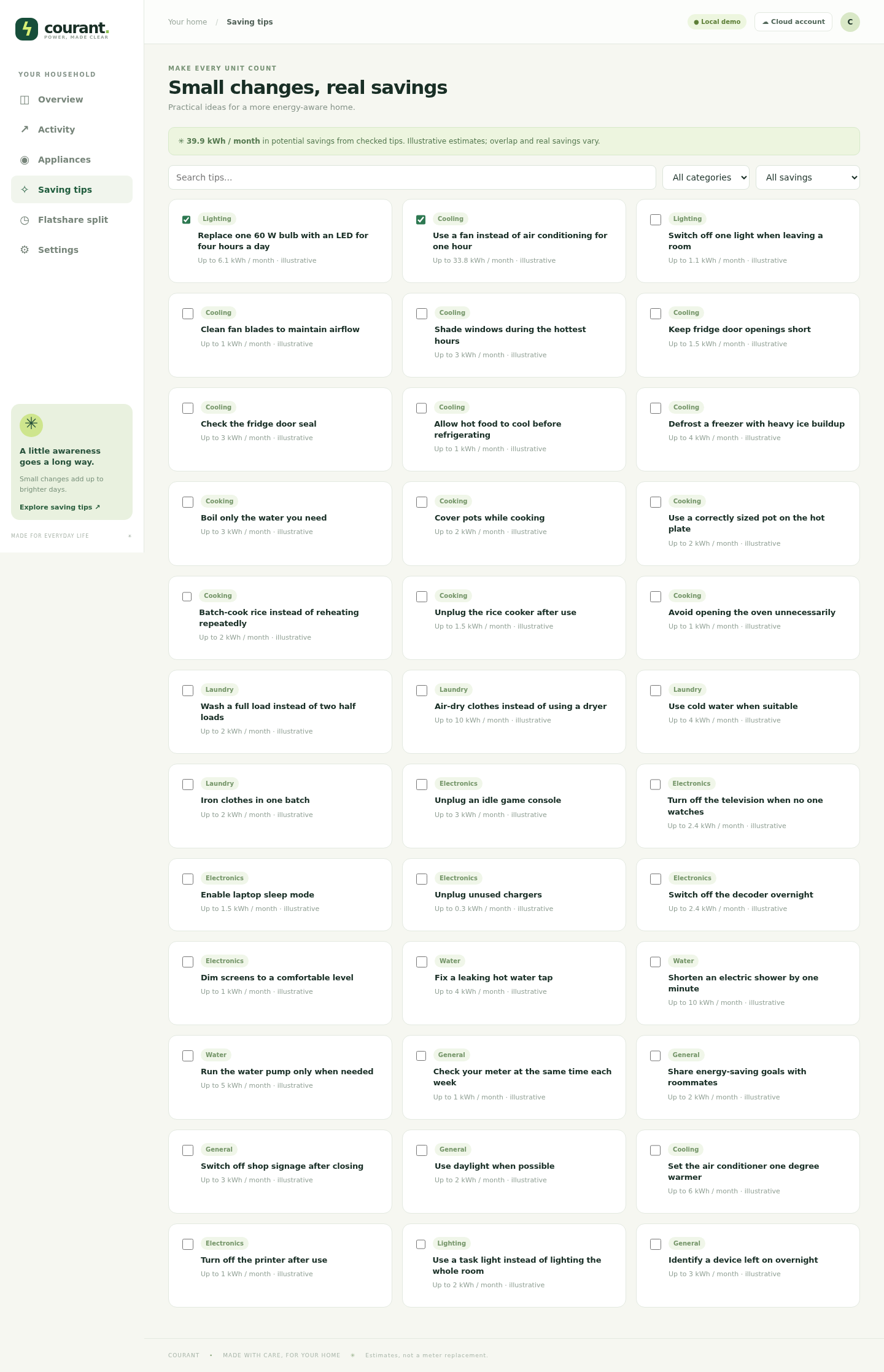
What it does Courant turns manual meter readings and recharge receipts into a shared picture of a household's electricity. It estimates days remaining from recent readings, displays top-ups and energy trends, models appliance use, and offers practical energy-saving ideas. An equal-share calculator suggests who should settle with whom. A local demo works even when the cloud is unavailable.
How we built it We used HTML, CSS and vanilla JavaScript without a build step. A single storage module supports localStorage and Supabase Postgres with Auth and row-level security. Charts are inline SVG. Cloud recharge searches are filtered and paginated at the server. The simulator and recommendations use illustrative values, not device measurements. We used AI assistance during development; disclose all tools your team used as required by the rules.
Challenges and lessons A prepaid meter is not a smart meter. Courant cannot know live consumption, so its predictions rely on readings and top-up dates. We chose to make uncertainty visible rather than present estimates as facts. Designing cloud and local modes also means not implying that unsynced local changes are already shared.
What's next Validate assumptions with Senegalese households and prepaid-meter users, support French and Wolof, add stronger invite management and consent, model tiered tariffs, and design explicit offline synchronization after privacy and security review.
Built With
- ai
- browser-localstorage
- css
- html
- javascript
- supabase-auth
- supabase-js
- supabase-postgres
- svg
