Inspiration
Phone calls feel small but scary for many people. We read thousands stories of users who freeze when they try to book a simple appointment. We wanted a tool that turns fear into clear steps. Practice first. Then speak with calm.
What it does
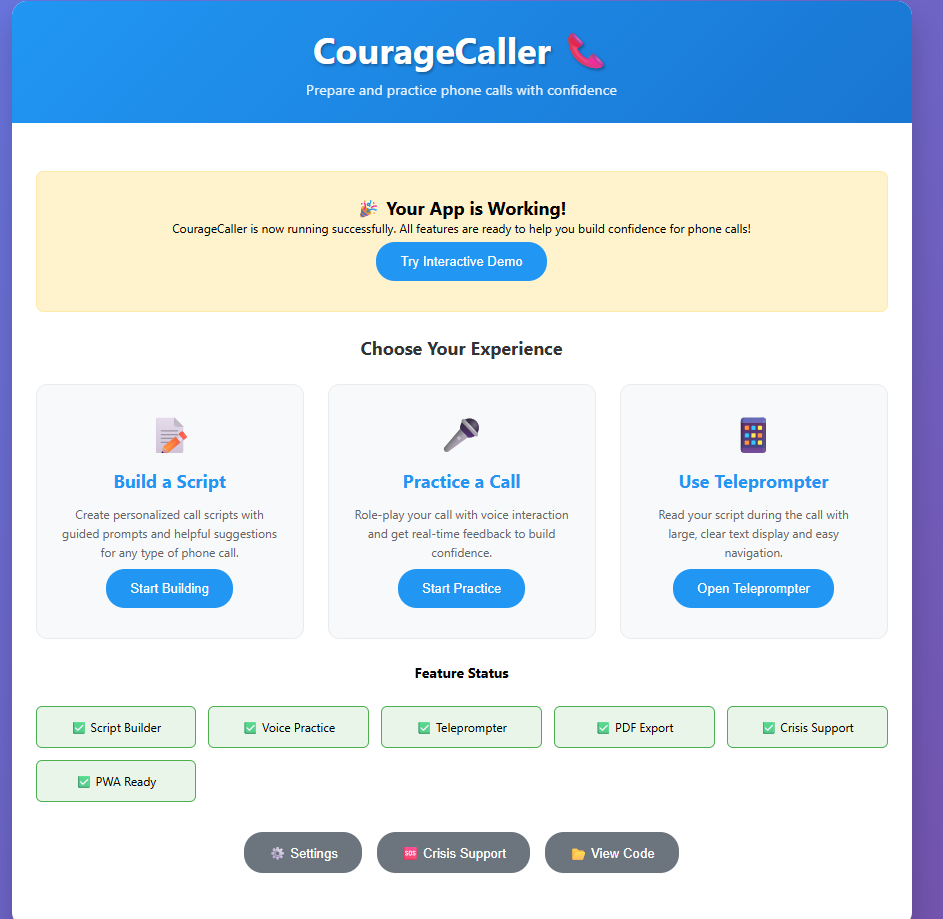
CourageCaller helps you prepare and rehearse calls. You pick a preset or write your own script. The app shows likely replies and suggested answers. You can practice with a friendly voice and get gentle hints. During the real call you switch to a large teleprompter that shows one line at a time. A panic button opens a short breathing guide. All data stays on your device.
Uniqueness
Most tools sit before or after the call. You see task apps, call reminders, CBT journals, generic AI chat coaches, simple teleprompters, or call loggers. We could not find one product that helps during the exact spike of fear and keeps you there with a full path from script to voice rehearsal to a calm teleprompter, all in one place and running fully on device. That mix matters. It protects privacy, works in weak signal, and keeps people from dropping off when switching apps. It also brings trauma aware design into the call itself with a panic pause and guided breathing, which we did not see in call tools. Finally, it measures real outcomes like calls completed, time from practice to call, and drop in self rated anxiety, not just clicks. This blend of moment of fear focus, local first tech, gentle support, and outcome tracking is what makes CourageCaller new.
3 Verticals - Mental Health & Wellness
This project targets the avoidance loop that keeps people from care. Short practice turns build mastery, which reduces anxiety and makes action feel possible. Throught this app, Breathing and pause cues help the body settle so the mind can speak. The result is more finished calls to clinics, counselors, and support lines, faster access to help, and less shame afterward.
Challenges we ran into
Browser speech support varies by device. We added guards and clear fallbacks. Matching free speech to a script is tricky. We used token overlap, soft thresholds, and hints. Writing copy that supports anxious users took care. We chose simple words and a calm tone. Keeping everything local while still share friendly also needed thought.
Accomplishments that we're proud of
We turned a vague fear into clear steps that lead to care, work, and answers, and that is the proudest accomplishment we have. Helpers could prepare a script for someone else in one sitting and see action the same day. We also proved the calm practice flow and the match logic hold up when stress rises.
What we learned
Build for calm, not hype. Short words and clear steps help more than fancy features. Voice UX needs tight timing and gentle recovery. Offline first and privacy first can live together with smart use of the browser.
What's next for CourageCaller
Next we take CourageCaller into real life settings so more people finish the calls that matter. We will run small pilots with campus centers, community clinics, and job programs, and measure three things for each user. Did the call get made. How long did it take from practice to call. How much did self rated anxiety drop afterward. We will add more languages so families can use the app at home. We hope to let helpers share ready scripts so clients act the same day. We also hope to publish a short public report and a simple playbook so schools and nonprofits can copy what works and help their own communities.

Log in or sign up for Devpost to join the conversation.