Inspiration
After watching close friends struggle to identify recurring relationship conflicts despite wanting to strengthen their bond, I realized there was a gap for a tool that combines structured check-ins with empathetic, data-driven insights. As someone who values long-term relationship health, I wanted to create something that’s non-judgmental, actionable, and centered on connection—designed to fit the busy lives of couples aged 25-45 who prioritize growth over crisis management.
What it does
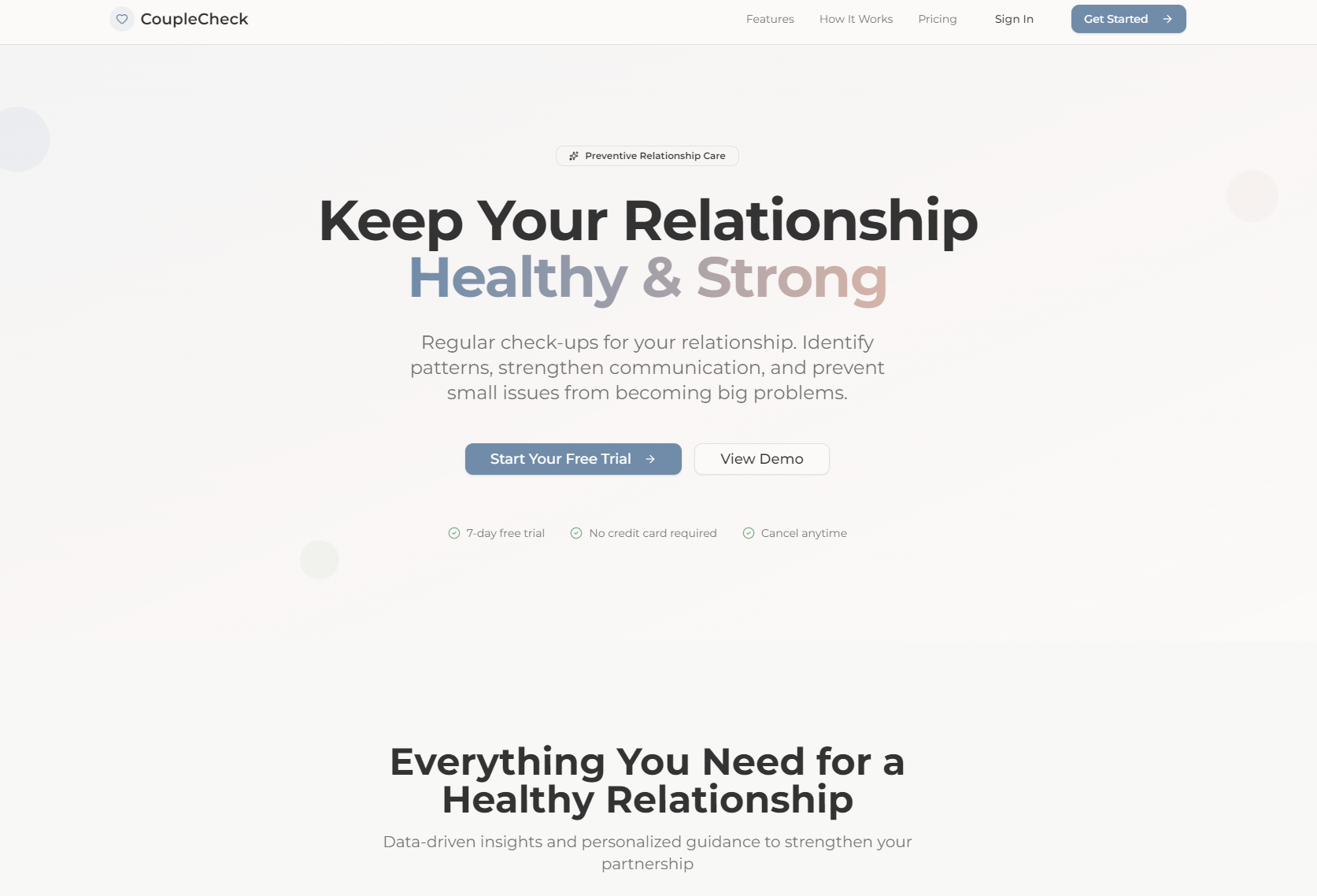
CoupleCheck is a relationship health tool that lets couples complete weekly temperature surveys, log conflicts, access micro-lessons on communication, track progress over time, and receive personalized advice. It uses AI to identify conflict patterns (like unmet emotional needs or trigger topics) and delivers guidance that adapts as the relationship evolves—all with a warm, intuitive UI focused on safety and privacy (responses stay private until both partners submit).
How we built it
We started with user research to map core pain points (e.g., feeling unheard, repeating conflicts) and designed a mobile-first UI with GSAP for smooth animations (parallax effects, card transitions, data visualizations). The backend (Node.js/Express) manages shared couple accounts, survey logic, and conflict log storage (MongoDB), while AWS handles data processing for AI pattern analysis. Firebase powers authentication, and Chart.js brings progress tracking to life with animated trend graphs. We iterated on the UX to ensure the tone stayed supportive (no blame-focused language) and animations enhanced—not distracted from—the core purpose.
Challenges we ran into
The biggest hurdle was balancing rich animations with mobile performance—low-end devices struggled with complex parallax and particle effects, so we built a dynamic system to reduce animation complexity based on device capability. We also had to refine the AI pattern analysis to avoid overgeneralization; it took multiple iterations to ensure insights were objective and rooted in relationship science, not just data. Additionally, designing the shared account flow (for two partners) required careful validation to prevent access issues and ensure privacy rules (responses locked until both submit) were enforced.
Accomplishments that we're proud of
We created a tool that’s both visually engaging and emotionally thoughtful—users have noted the non-judgmental tone of conflict insights as a standout feature. The animation system (optimized for all devices) delivers a seamless experience, and the AI pattern analysis now reliably identifies 4+ conflict types with actionable takeaways. We’re also proud of the 7-day preview model, which lets couples test core features before subscribing, aligning with our goal of making relationship support accessible.
What we learned
We deepened our understanding of relationship psychology and how to translate that into digital tools—language choice and emotional safety are as critical as technical functionality. We also learned to prioritize performance over "flashy" animations, and that iterative user testing with real couples is irreplaceable for refining core logic (like survey submission rules). Technically, we mastered dynamic animation optimization and AI integration for sensitive, non-clinical insights.
What's next for this project
We plan to expand the micro-lessons library with video content tailored to specific conflict patterns, add progress sharing features (for couples who want to celebrate milestones), and integrate gentle reminders for weekly check-ins (without feeling intrusive). We’re also exploring partnerships with relationship therapists to refine our advice framework and add optional professional guidance referrals—all while keeping the core experience focused on accessibility and empathy.

Log in or sign up for Devpost to join the conversation.