Inspiration
Who wouldn't want to be a wizard?
I wanted to capture the feeling of doing magic, really doing it. I wanted it to feel natural and smooth, but also to be something you can learn and explore. I wanted it to be more than waving a magical staff around, or waiting for your mana to recharge between each cast.
That led to the central idea behind Sarian: Unbound. An enemy spell is both a threat and an opportunity. Catch it, unravel its structure, and its power becomes yours to reshape.
The setting grew from the same idea. Ancient constructs, suspended architecture, mysterious entities. I wanted the world to feel older and larger than the player.
What it does
Sarian: Unbound is a hand-tracked VR magic game for Meta Quest 3.
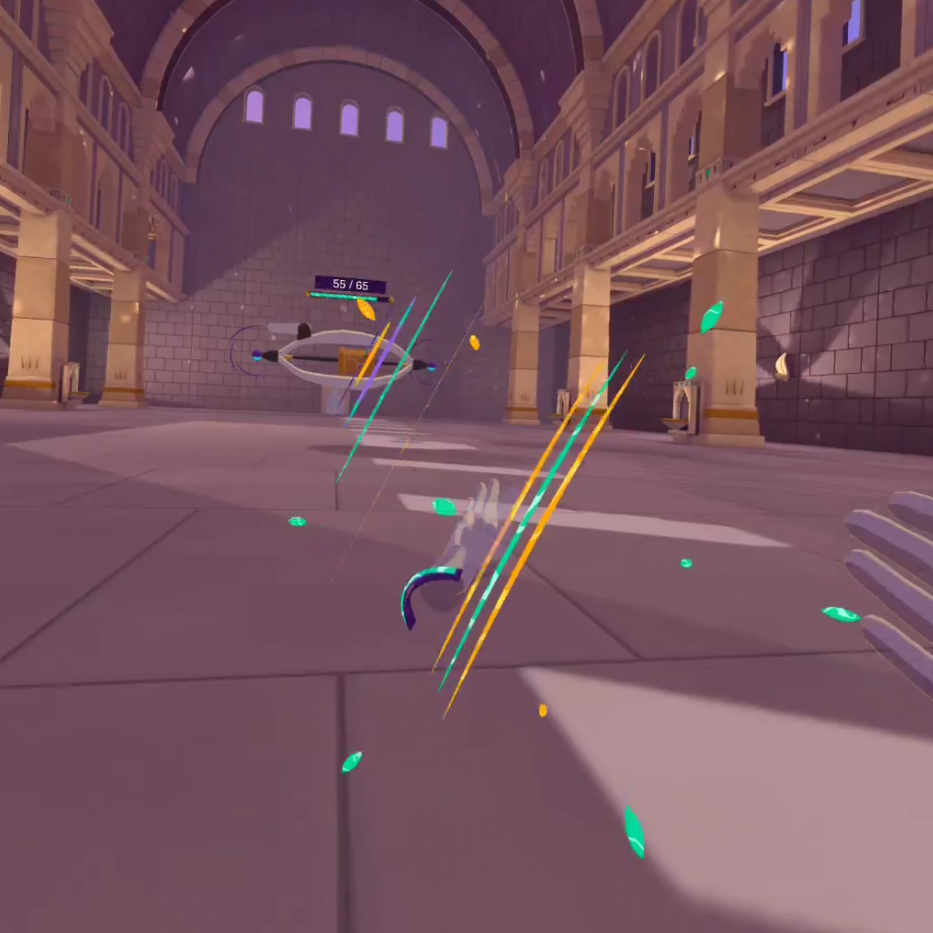
Players stop incoming spells with an open palm, then physically manipulate their bindings to release the cores inside. Different seals present different spatial puzzles. A well-timed Perfect Capture holds a spell in place without requiring the player to keep their palm raised, freeing their hands to work on another spell.
Once released, a core can be modified and used in several ways. Draw it like a bow, stretch it into a protective ward, launch it from your palm, sweep it into a cutting slash, or absorb it to recover health.
Modifiers change those outcomes. Condensing a core concentrates its power; Scatter spreads it; Kite introduces time-related effects. Combining these choices lets players experiment with the magic they recover.
Enemies create different problems to solve. They can have multiple parts, giving players opportunities to interrupt attacks, exploit weaknesses and change the encounter by breaking them.
How I built it
I built the project in Unity using C#, OpenXR, Unity XR Hands and the Meta XR Interaction SDK.
The Interaction SDK provides physical grabbing and manipulation. Custom gesture recognition interprets hand poses, orientation, movement and context for spell capture, modification and casting. A shared priority system resolves overlapping gestures so that one movement does not accidentally trigger several actions.
The spell system separates incoming bindings, core modifiers and casting actions. This makes it possible to reuse interactions while giving their combinations different effects.
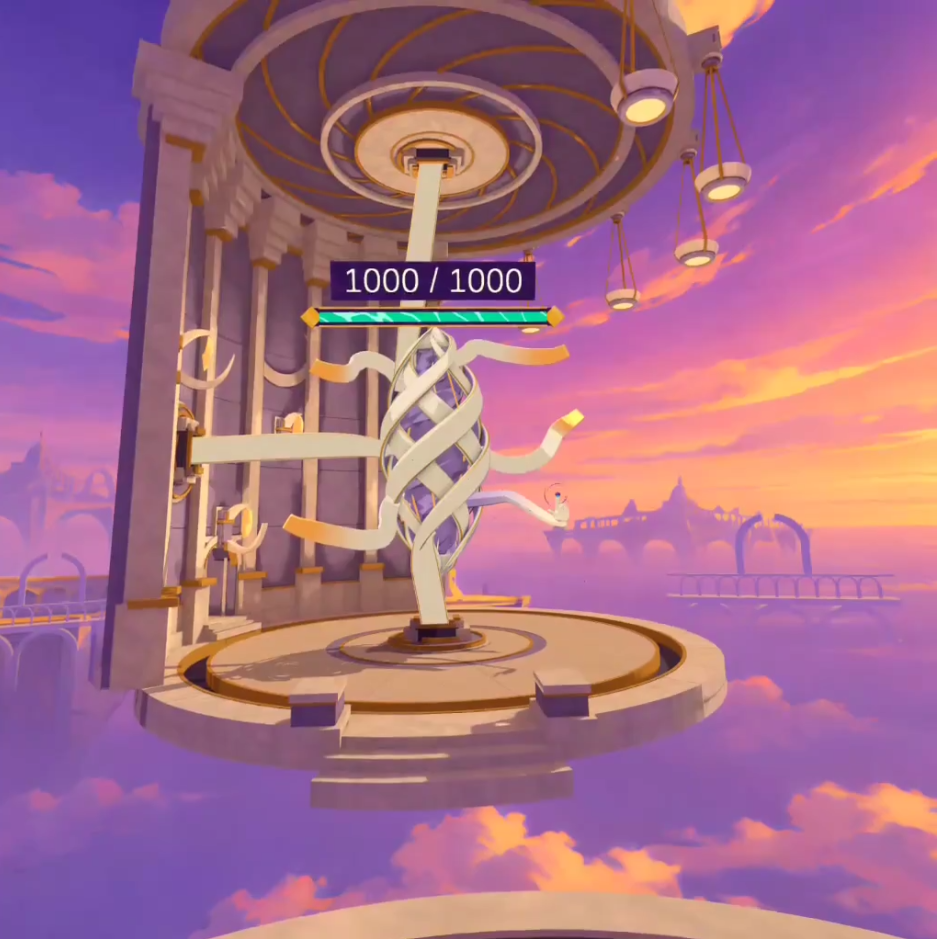
The visual direction uses sculptural stone and ceramic forms, warm metallic details, stylized shading and animated magical surfaces. Blender models, procedural animation, custom shaders and baked environment lighting help bring the ancient facility to life within standalone VR constraints.
AI-assisted tools supported coding, concept art, modeling workflows and asset experimentation. Development has been an iterative process of implementing an idea, trying it in the headset, and revising both its appearance and its behavior.
Challenges I ran into
Sound effects. Do you download them? Do you buy them? Do you record them yourself? Do you generate them? No path is perfect. And each one requires you to go through countless options and possibilities, so many little choices. And it's such an important part of the immersion too.
Another challenge was making a gesture feel intentional without making it feel strict. A player closing their hand might be grabbing a core, preparing a modifier or starting a "summon core" gesture. Recognition needs to understand the surrounding situation as well as the pose. Tracking interruptions and hands obscuring one another also require careful cancellation and recovery behavior.
Physical comfort shaped the design. Holding a palm out continuously can become tiring, so Perfect Capture rewards timing while giving the player’s hands a chance to move on to something else.
Another challenge was making combinations useful without making one preparation the obvious answer every time. Concentrated damage, wider coverage, repeated uses and defensive effects needed meaningful trade-offs.
Finally, magic needs visual impact while remaining readable. I repeatedly adjusted shapes, colors and effects so that the important interaction remained visible inside the spectacle.
Accomplishments that I'm proud of
I’m particularly proud of how closely the central mechanic matches my initial concept. Gesture-controlled experiences can sometimes feel finicky or like a memorisation challenge. The system in Sarian: Unbound consists of easy-to-remember moves that usually do what you'd expect them to do. Squeeze a core? Now it's condensed, dealing more damage but in smaller area.
The variety comes from what players do with a core. A small set of materials and gestures supports offensive, defensive and restorative uses, with room for experimentation.
The Woven boss encounter is another milestone. Its casting limbs, breakable supports, coordinated attacks and awakening and defeat animations bring the game’s mechanics and visual identity together.
I’m also proud of the progress from simple geometric prototypes to a cohesive world of ancient constructs and living light, while keeping the interactions at the centre of the experience.
What I learned
The most important lesson was that a gesture that sounds satisfying on paper may feel completely different after repeating it in VR.
Comfort, timing, visual feedback and the transition into the next action matter as much as recognition accuracy. Headset testing repeatedly changed decisions that seemed settled in the Editor.
I also learned that restrictions can strengthen a creative system. Limited modifier capacity and trade-offs between effects make preparing a spell a decision rather than a checklist.
Building for standalone VR encouraged a clearer visual language. Strong silhouettes, purposeful movement and well-chosen colors often communicated more than additional detail.
What's next for Sarian: Unbound
The next step is to connect the existing combat, environments and lesson systems into a cohesive playable journey.
That includes authored encounters, enemy decision-making, clearer progression and in general just more of everything.
The goal is to develop the mystery behind the facility and the presence it contains, while preserving the simple pleasure that started the project: taking magic into your hands and discovering what you can do with it.


