-
-
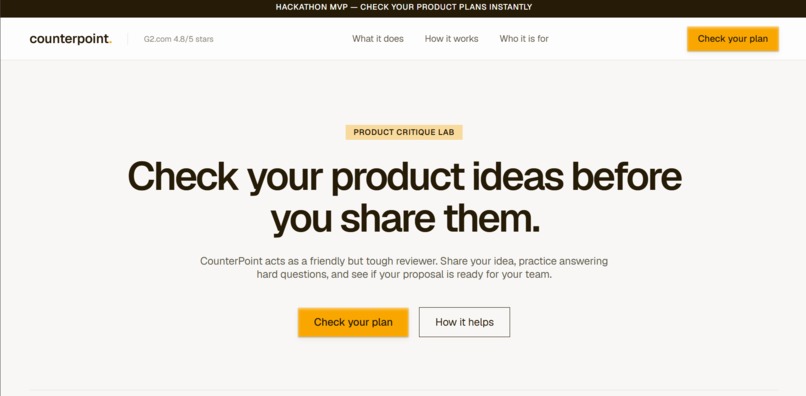
CounterPoint UI
-
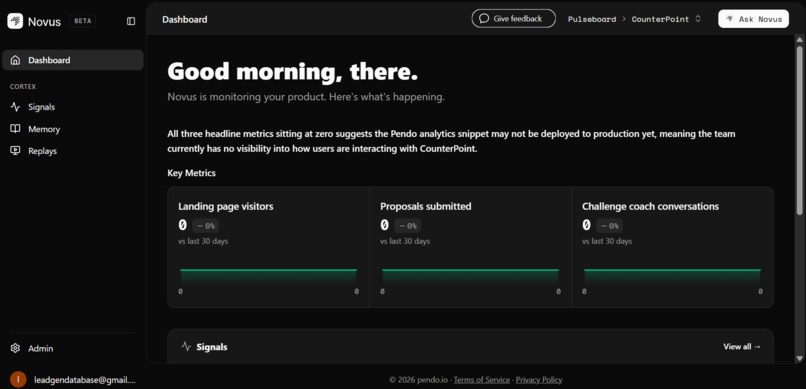
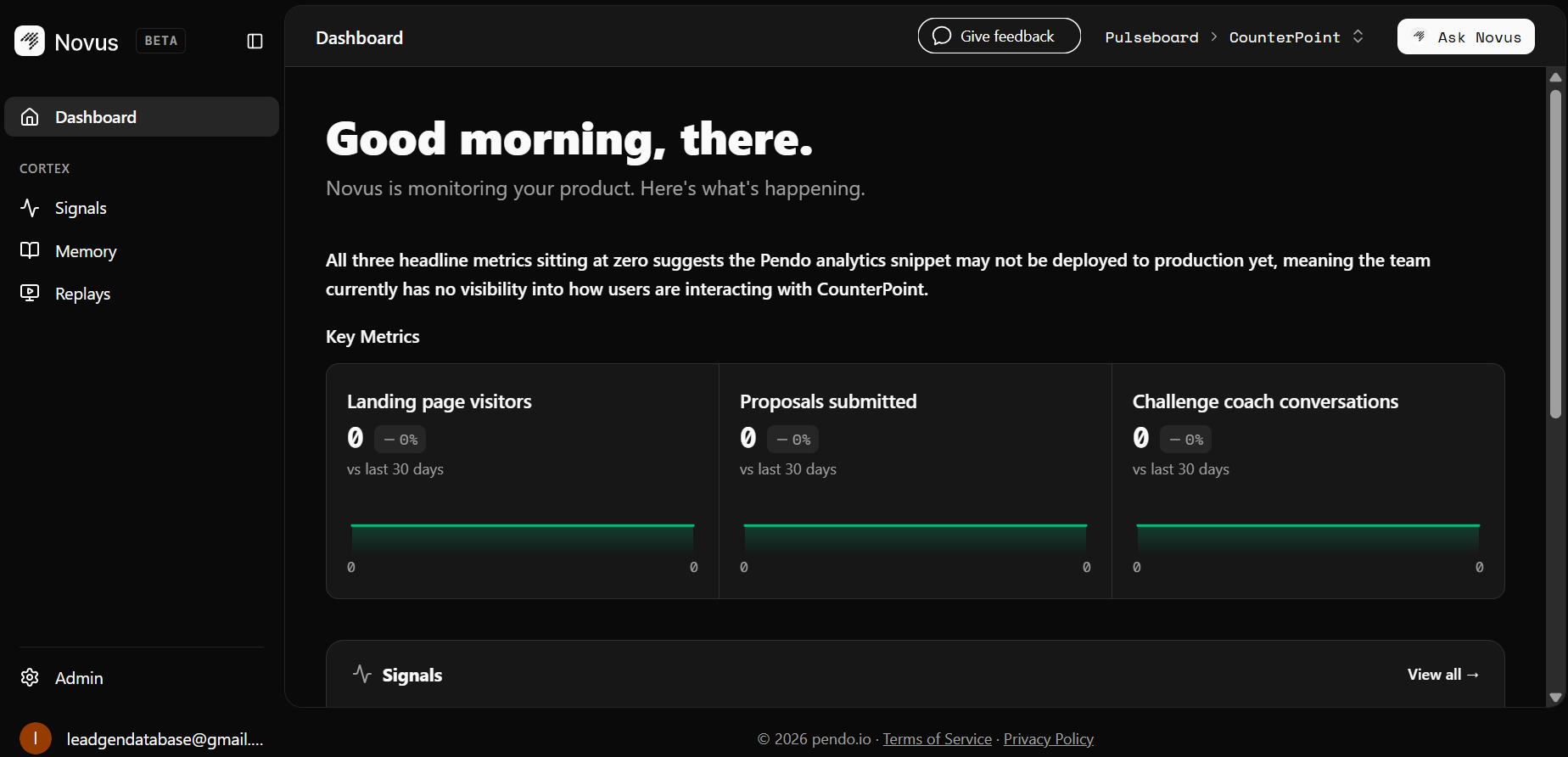
Novus Dashboard for CounterPoint
Inspiration
Every product manager knows the pre-pitch anxiety: You have a fresh, exciting feature idea. You spend hours writing a document, only to get blindsided in the next roadmap review meeting. The engineering lead raises a hand to ask about technical debt; the design lead raises concerns about cognitive user friction; sales asks how it helps close a key account; and leadership asks how it supports this quarter's business goals.
We wanted to build a safe, interactive "flight simulator" for product ideas. A place where PMs, designers, and engineers can pressure-test their plans, practice answering tough cross-functional questions, and walk away with a clear, concise decision memo before stepping into the room.
What it does
CounterPoint is an interactive product critique lab that simulates a cross-functional review board. It bridges the gap between "I have an idea" and "My team is aligned."
- Simulated Stakeholder Personas: Review your plan from the specific lens of 5 critical team leaders:
- CEO: Focuses on strategic priority and business impact.
- Engineering Lead: Focuses on technical feasibility and workload complexity.
- Design Lead: Focuses on user needs, usability, and visual quality.
- Sales Lead: Focuses on key account requests and sales velocity.
- Investor: Focuses on expansion margins and competitive moats.
- Critique & Readiness Pipeline: Analyzes your plan across four dimensions: Evidence & Data, Strategic Value, Feasibility, and Team Buy-in, producing a weighted Plan Readiness Score.
- Interactive Q&A Session: Generates direct, role-specific questions and concerns in the stakeholders' voices. Answer them interactively to test your defense and improve your score.
- Review Board Vote: Present your case to see how the five simulated leaders vote (Approve, Conditional Approve, or Needs Re-evaluation) based on your inputs and Q&A answers.
- Decision Brief & Action Plan: Compiles your analysis, responses, and board votes into a clean, scannable executive brief with Missing Evidence and next steps for your roadmap.
- Instant Demo Mode: Includes three pre-loaded realistic product ideas to let judges immediately run a full 60-second review cycle.
How we built it
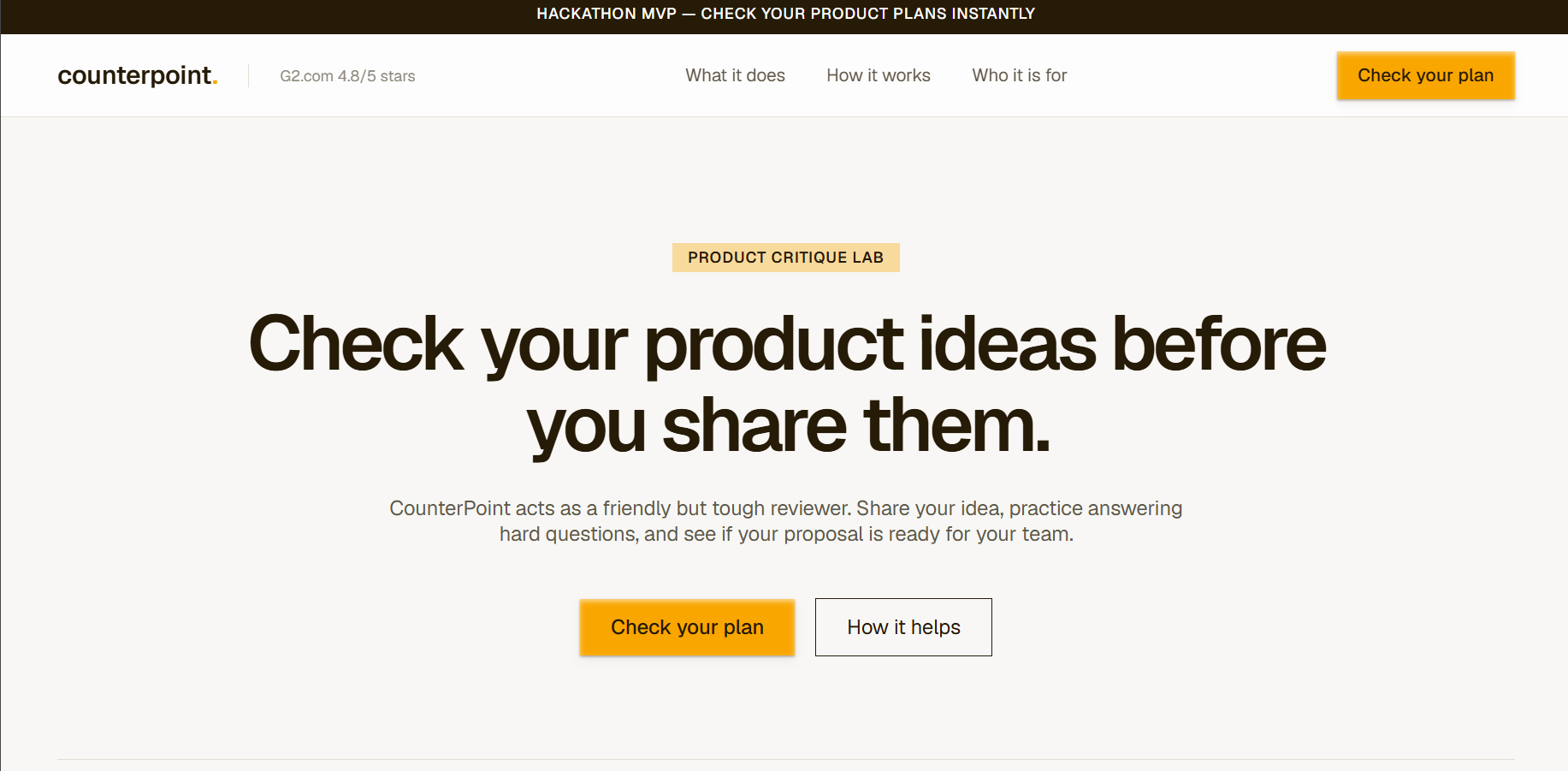
We built CounterPoint to look and feel like a high-fidelity, premium workspace:
- Framework & Logic: Next.js, React 19, TypeScript, Zod, and Tailwind CSS v4.
- Runway Design Language: Styled entirely using the Runway style guide. The interface renders a warm, paper-like financial ledger—featuring a cream canvas background (
#f8f7f5), pure paper cards, warm linen borders (#e3dfd5), deep espresso text, and a single amber signal accent (#f9a600) for primary actions. The layout is dense, tight, and highly legible. - AI Pipeline: Powered by OpenRouter for the LLM completions, with a fully self-contained mock mode fallback that generates dynamic mock responses if no API keys are present in the environment.
Challenges we ran into
- Airtight Persona Modeling: Getting AI agents to behave like distinct, opinionated business leads instead of converging into a polite, generic consensus. We solved this by implementing strict system prompt guardrails that enforce unique review priorities for each persona.
- Layout & Sizing Balance: Aligning textareas of varying row heights on desktop and mobile without introducing cluttered scrollbars or vertical layout shifts. We addressed this by refactoring the form into a clean, 3-step interactive wizard with step-by-step validations.
- Pipeline Consistency: Making sure the final Decision Brief was directly traceable to the Q&A answers and board votes, ensuring a rejected proposal actually reads like a reject with clear gating conditions.
Accomplishments that we're proud of
- Premium UX: Crafting a high-fidelity visual experience that feels like opening a physical, well-bound business notebook rather than a generic digital dashboard.
- Zero-Setup Demo: Ensuring that a judge can run the entire simulation out-of-the-box with zero API keys using the high-quality local mock fallback.
- Traceable Reasoning: Building a cohesive multi-stage LLM pipeline that connects the initial proposal, interactive responses, and the final decision memo with clean logic.
What we learned
- How to structure multi-turn conversational state in Next.js where the output of one model feeds into a user interface, updates a score, determines voting outcomes, and finally gets compiled into an executive memo.
- The power of restraint in UI design—using a single accent color (amber) and warm shadows to create professional depth.
What's next for CounterPoint
- Novus.ai Integration: Directly linking live user interaction telemetry from Novus.ai into the review board's evaluation. This will allow PMs to feed actual, real-world usability metrics directly into their simulated stakeholder sessions.
- Exporting Briefs: One-click exporting of the decision brief and action plan to Confluence, Notion, or Jira PRDs.
- Team Mode: Letting real teammates leave their own stakeholder feedback and votes in parallel with the AI simulation.
Built With
- Next.js
- React 19
- TypeScript
- Tailwind CSS v4
- OpenRouter API
Built With
- nextjs
- openrouter
- typescript

Log in or sign up for Devpost to join the conversation.