-
-
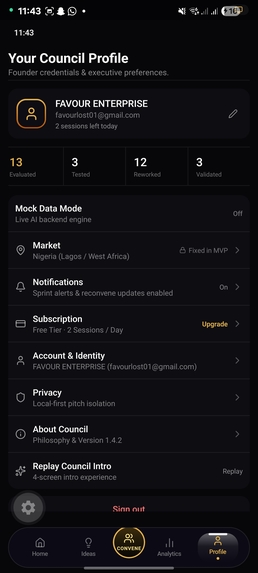
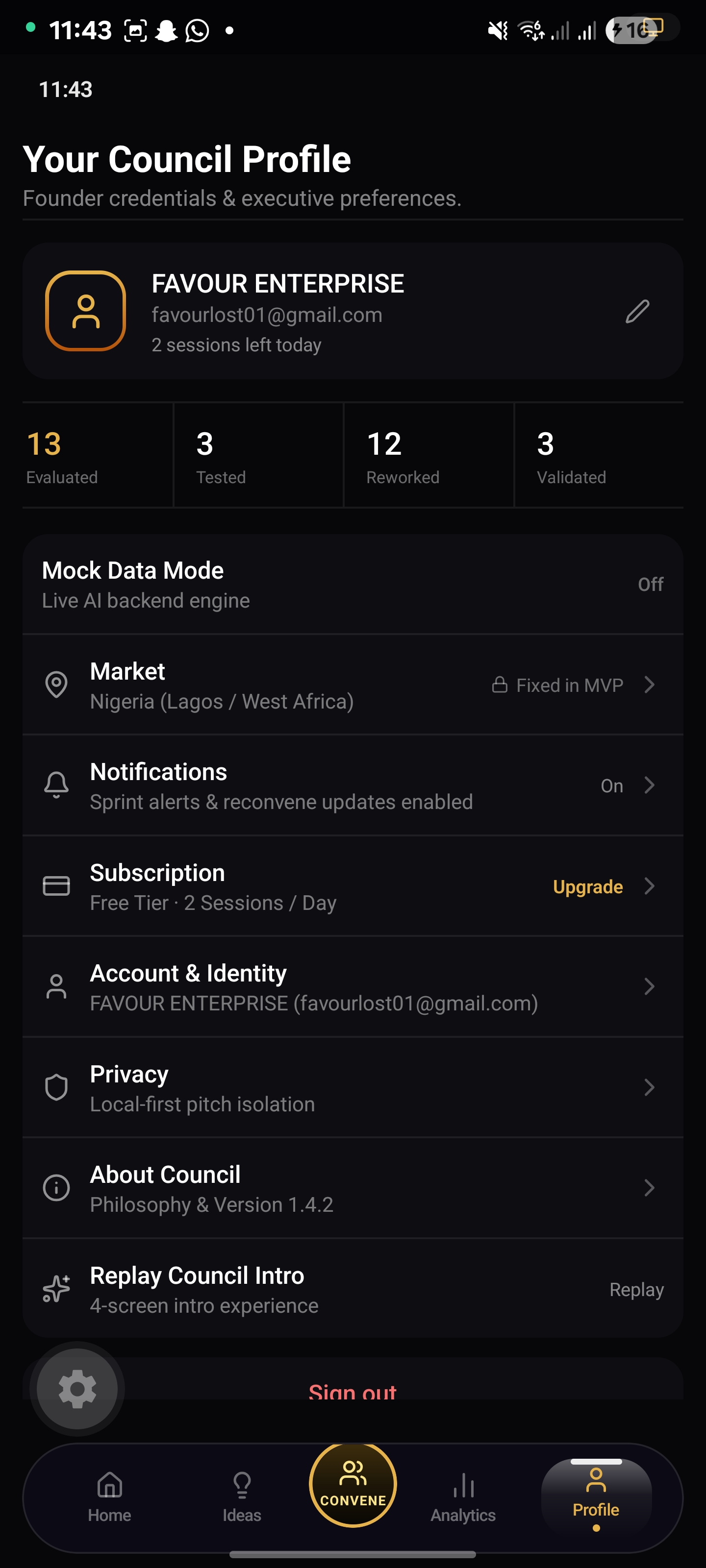
your profil
-
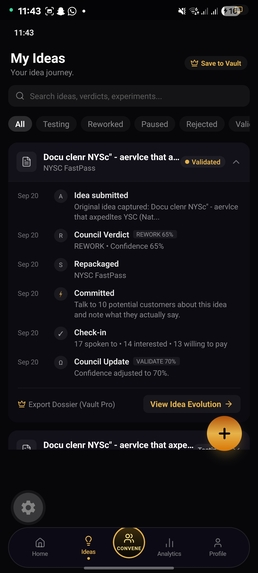
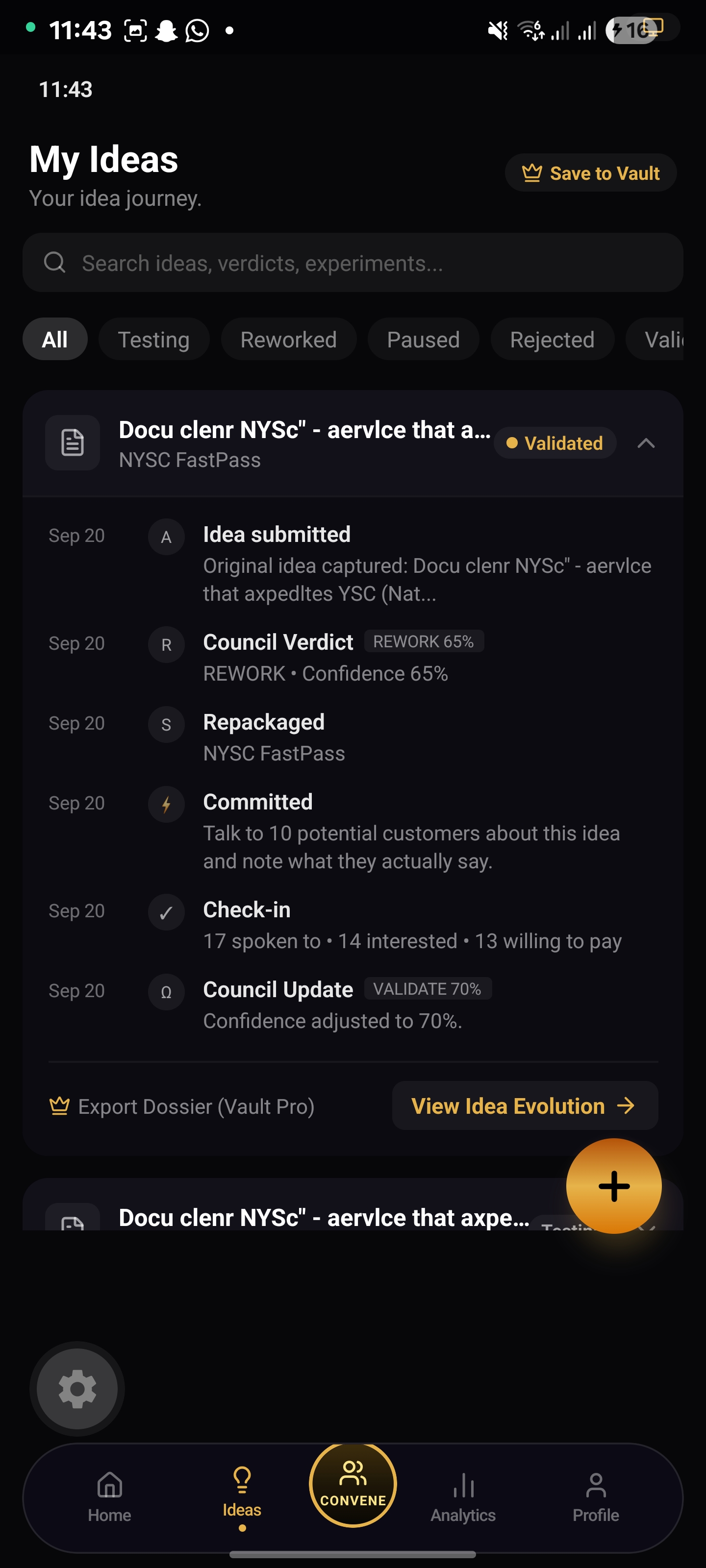
your ideas
-
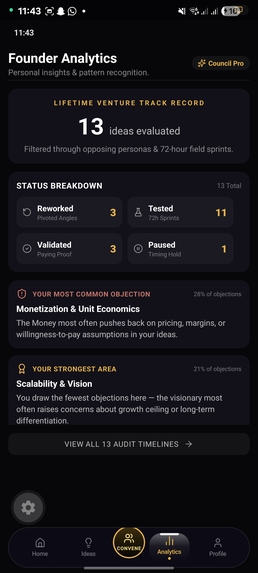
-
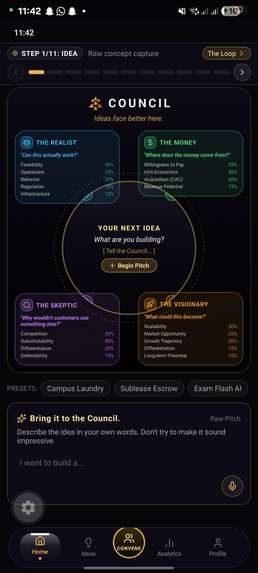
home screen
-
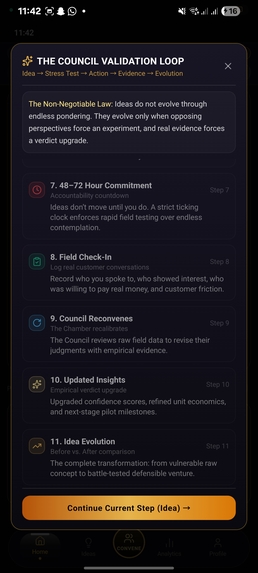
the process your idea pass through
-
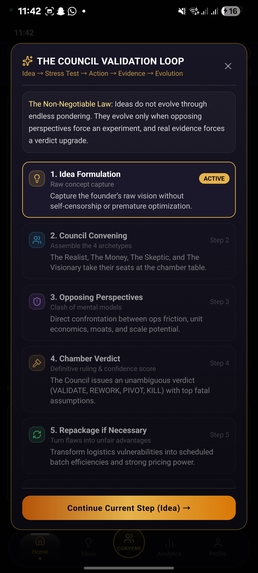
the process your idea pass through
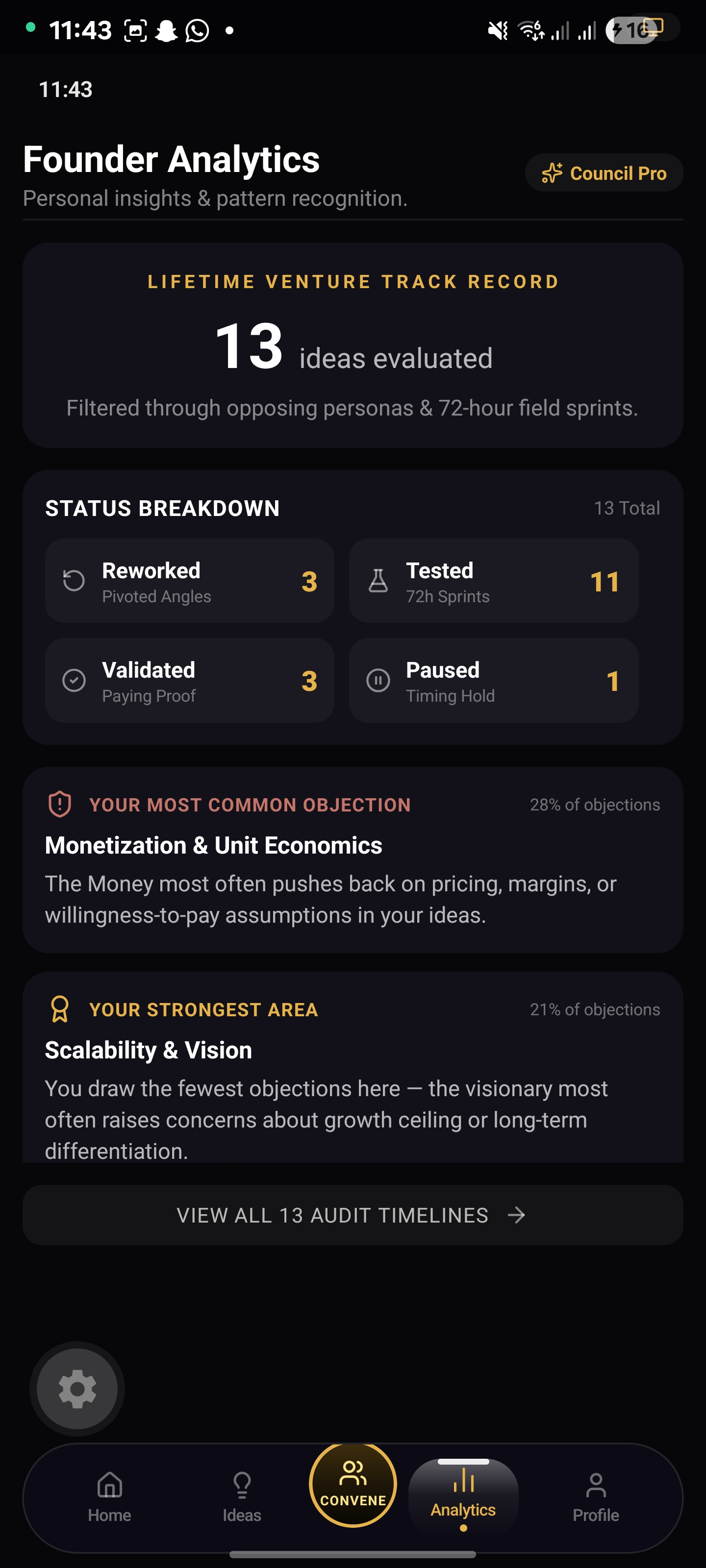
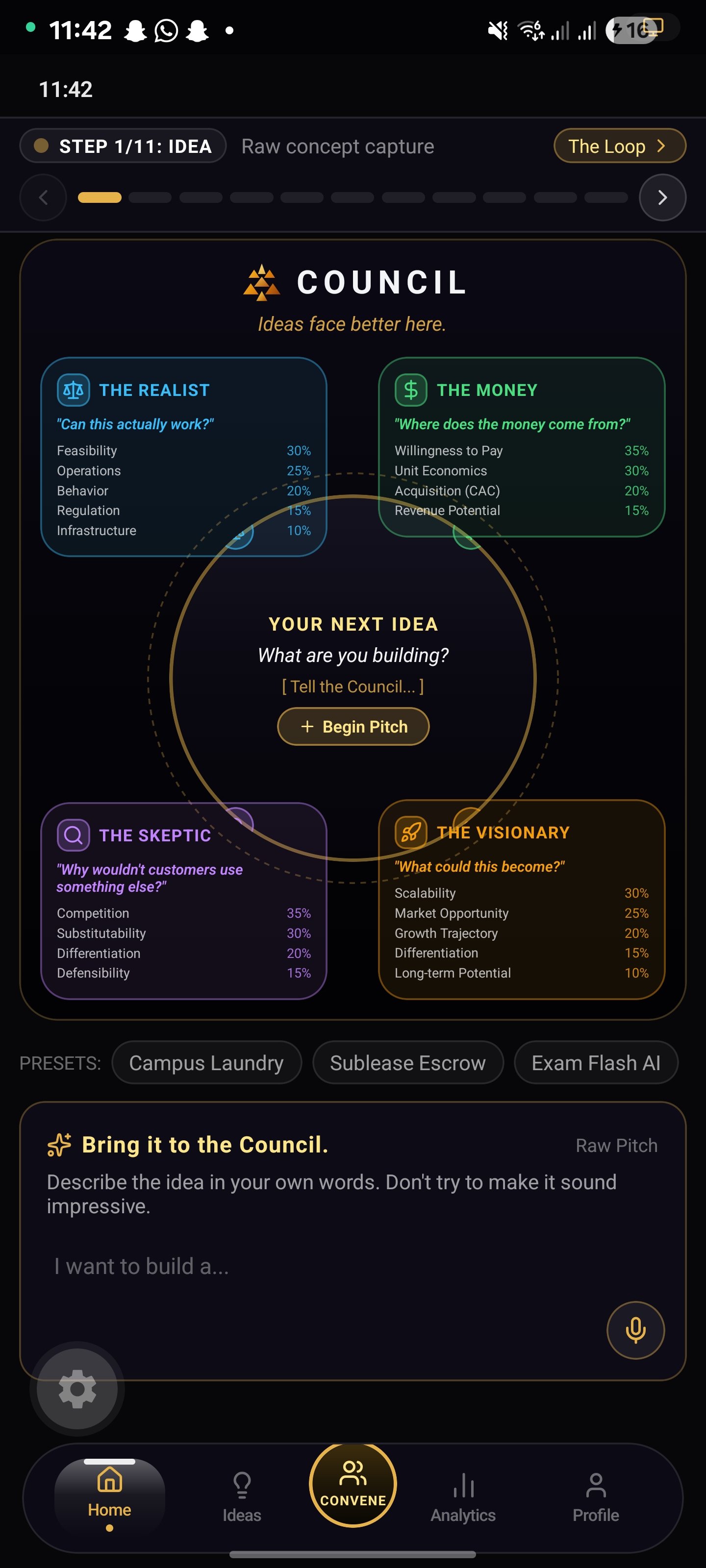
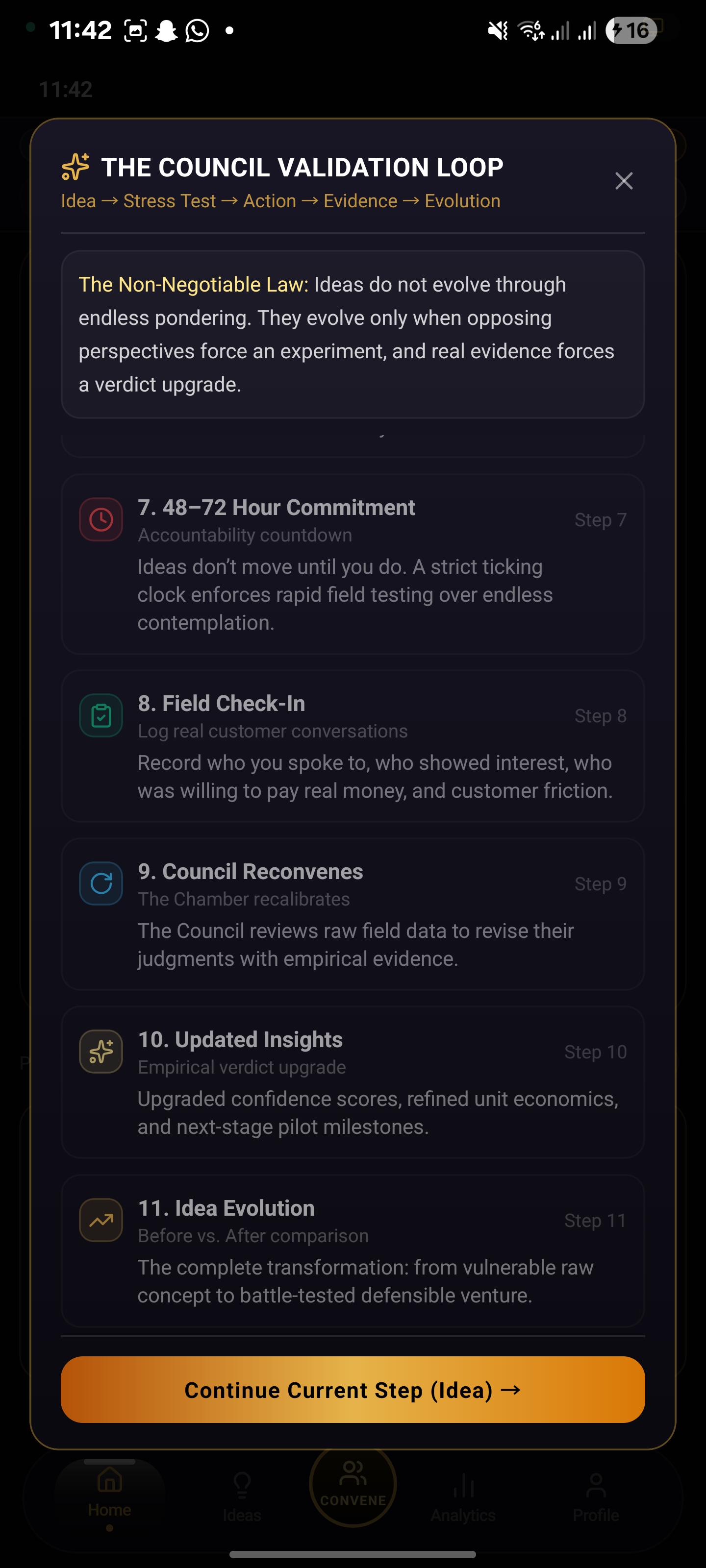
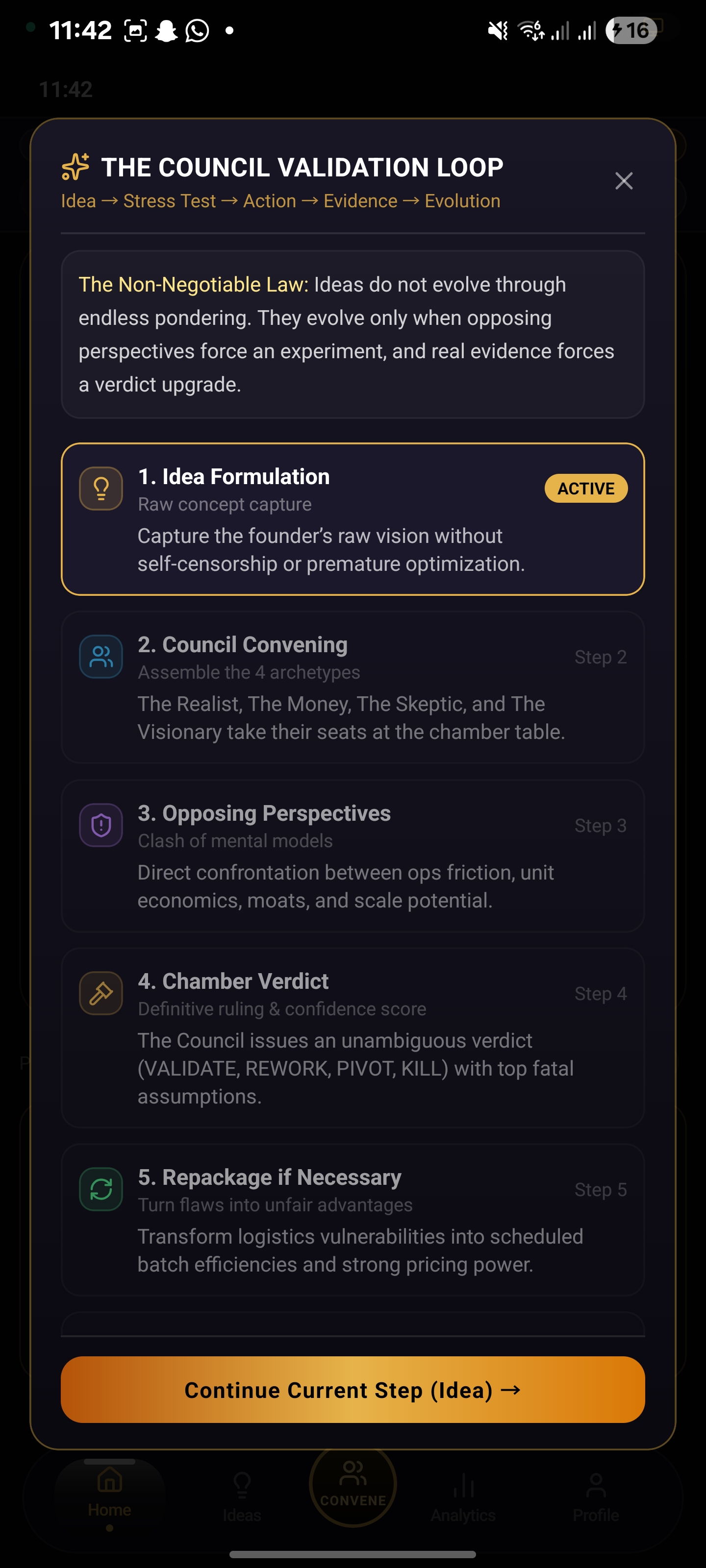
Inspiration
Every early-stage founder falls in love with their own idea before the market ever gets a say. Ask a friend "is this good?" and they'll say yes — friends are bad investors. By the time reality delivers its verdict, you've already spent weeks or months building the wrong thing. This is especially costly for student and first-time founders across Nigeria and the wider African market, where capital and runway are scarce and a wrong bet is expensive in a very real way. We wanted something that argues back — before the market has to.
What it does
Council puts your idea in front of four opposing AI personas — The Realist, The Money, The Skeptic, and The Visionary — who debate it from feasibility, monetization, competition, and scalability angles, then return a structured verdict: Validate, Rework, Pivot, or Kill.
If the idea needs work, Council doesn't just rewrite the pitch — it rebuilds the idea specifically around the objections that were raised, then re-runs the Skeptic and Money personas against that new version to check whether it actually resolves the original problem, or just sounds better. Only versions that pass this re-verdict gate move forward.
From there, Council hands you a ready-to-use pitch script — the actual opening line, the differentiator, and the price question — so you know exactly what to say when you go talk to real people, and commits you to one concrete, time-boxed action (a 72-hour Proof-of-Life sprint) instead of an open-ended to-do list. You report back what actually happened, and the Council reconvenes with real evidence instead of speculation. Every idea's full journey is kept as an auditable timeline in your Vault.
How we built it
A React Native app (Expo + NativeWind) backed by Supabase for auth and data, with a single Groq call (openai/gpt-oss-120b) per Council session generating the objections, verdict, repackage, and re-verdict gate together. RevenueCat handles subscriptions, synced back to Supabase via a webhook so pro access unlocks in real time after purchase.
Challenges we ran into
Getting a free-tier LLM to reliably return structured JSON under load was harder than expected — we went through three AI providers before landing on one stable enough to ship, and had to build retry logic and backoff around rate limits along the way. We also had to make a real architectural call: whether the "does this repackage actually fix the objection" check should be a second AI call or folded into the same one — we chose the latter to protect against doubling our failure surface so close to the deadline. And more than once, a bug that looked like an AI problem turned out to be a plain type mismatch between screens and the backend — a reminder that even AI-assisted apps live or die on ordinary engineering discipline.
Accomplishments we're proud of
A monetization loop that's actually wired end-to-end and tested with a real purchase — not just a mocked paywall. And a validation gate that isn't just theater: we tested it against ideas with real structural strengths and real structural weaknesses, and it discriminated correctly between them.
What's next
Tagging real Proof-of-Life field results back to the specific objection categories they resolve, so founders see not just "did this validate" but "which specific concern did the evidence actually answer."
Built With
- expo-eas
- expo.io
- groq
- llama
- nativewind
- postgresql
- react-native
- revenuecat
- supabase
- supabase-edge-functions
- typescript


Log in or sign up for Devpost to join the conversation.