Cougar Degree
Cougar Degree is an AI-assisted degree-planning prototype built by Mahmoud Badi, Michael Monroe, and Rami Abdelrazzaq at CodeRED Astra. The project won [MLH] Best Use of DigitalOcean Gradient AI.
Inspiration
Planning a degree means coordinating requirements, prerequisites, completed courses, and semester workload. Inspired by CougarGrades, our team explored a simpler interface for turning that information into a semester-by-semester starting plan for University of Houston students.
What it does
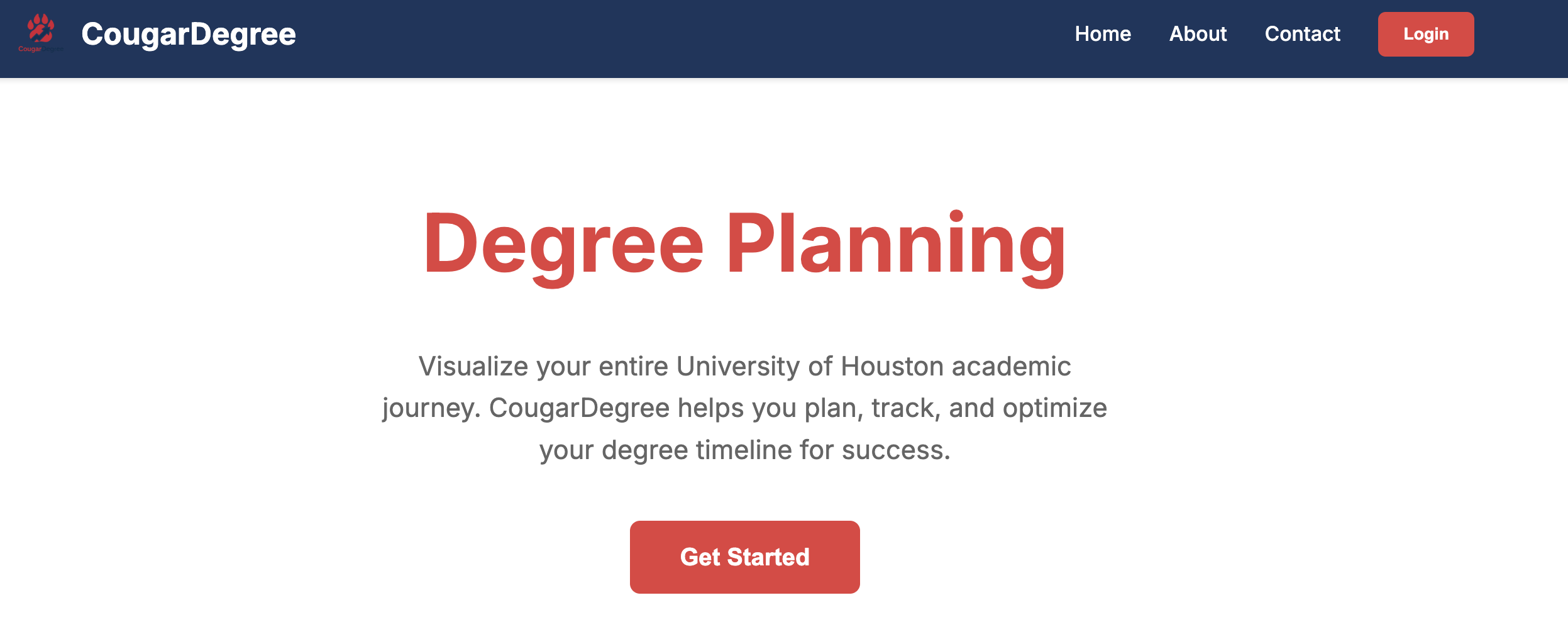
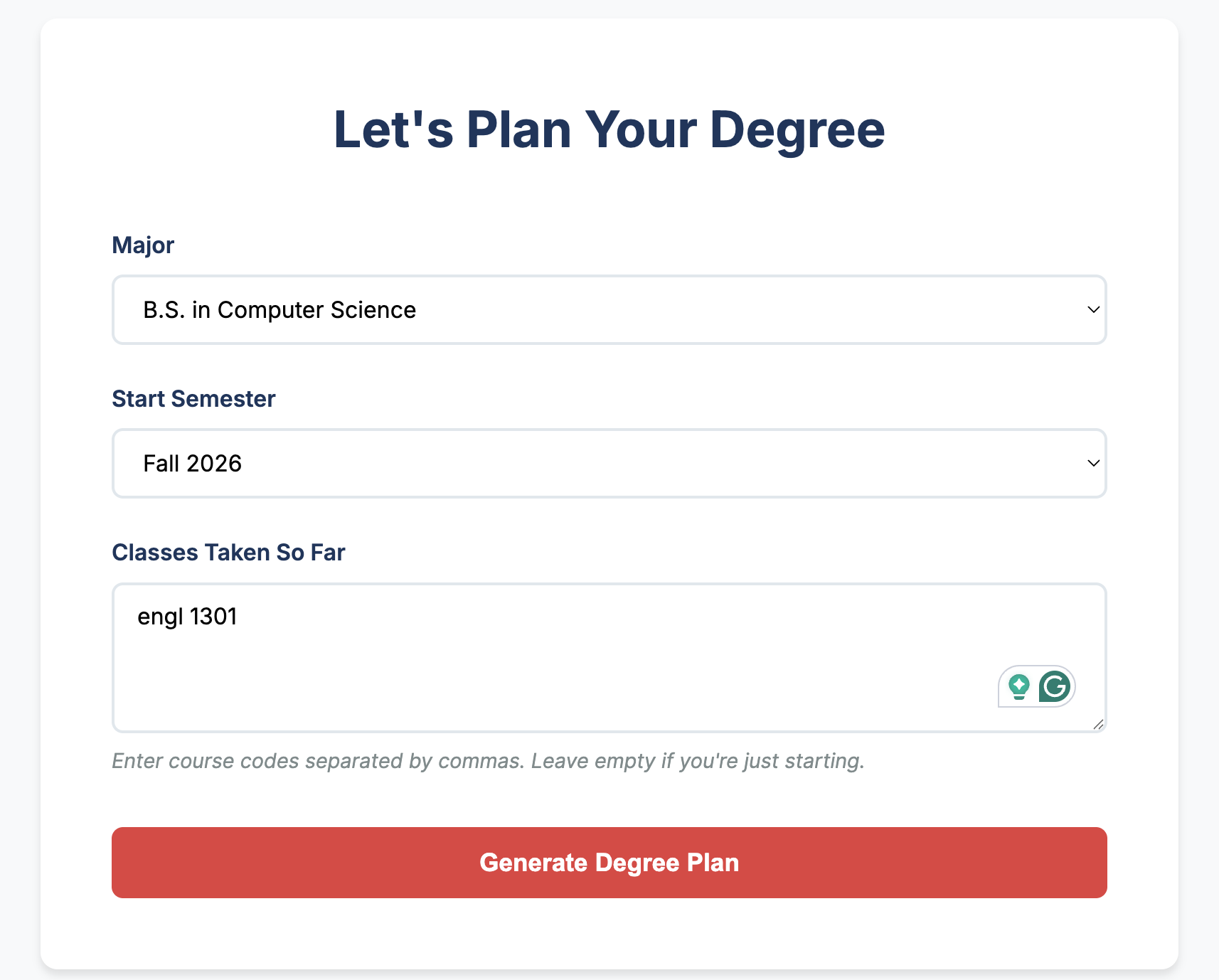
The interface accepts a major, completed coursework, and planning preferences, then presents a proposed degree path with course and credit breakdowns. The project explores eight-semester planning and credit-load balancing around 15 hours per semester.
How we built it
The application uses a vanilla JavaScript/HTML/CSS frontend and a Node.js/Express backend. The backend includes API routes for plan generation and major listings, structured prompts, response parsing, rate limiting, Helmet, and CORS configuration.
The hackathon-winning version integrates an AI agent through DigitalOcean Gradient AI. Its repository README documents the llama3-8b-instruct model and grade-aware planning goals. The original Devpost story describes a Gemini-based implementation; the project update and linked winning-version branch document the DigitalOcean version. These are distinct versions of the team's project.
Team and my role
I was a member of the three-person hackathon team. This page presents our collaborative project and its award; implementation credit remains shared with Mahmoud Badi and Michael Monroe.
Challenges and learning
The project brought together structured course information, AI output, and a usable planning interface. The key challenges were coordinating frontend/backend behavior, prompting for consistent plan structures, and making prerequisites and semester loads understandable to students. We learned how much the usefulness of an AI planner depends on the quality of its underlying course data.
Accomplishment
Winner of [MLH] Best Use of DigitalOcean Gradient AI at CodeRED Astra, as recorded on the project's Devpost page. The public repository preserves the winning version for review.
Project status and next steps
Hackathon prototype. Generated plans are starting points for review with an academic advisor; they do not guarantee graduation or replace official degree requirements. Future work includes stronger validation against current catalogs, clearer handling of substitutions and transfer credits, and saved plans.
Explore
Created by Mahmoud Badi, Michael Monroe, and Rami Abdelrazzaq.
Built With
- css
- digitalocean
- express.js
- gemini
- gradient-ai
- html
- javascript
- llama
- node.js


Log in or sign up for Devpost to join the conversation.