Inspiration
Game night at home breaks down at the controller: one person holds the remote, everyone else watches. Party games solve that with phones, but they usually need an app on every device and a fixed set of questions. We wanted something a family could start from the couch in under a minute — pick a topic with the remote, scan a code, play — with a host that can talk about anything, from "space for kids" to "our family trip to the beach".
What it does
How we built it
Couch Quiz is a multi-modal experience: three inputs work together in a single flow. The remote's D-pad runs the show on the TV, every phone becomes a private answer pad and topic-suggestion box, and the AI host turns any idea into a game in seconds.
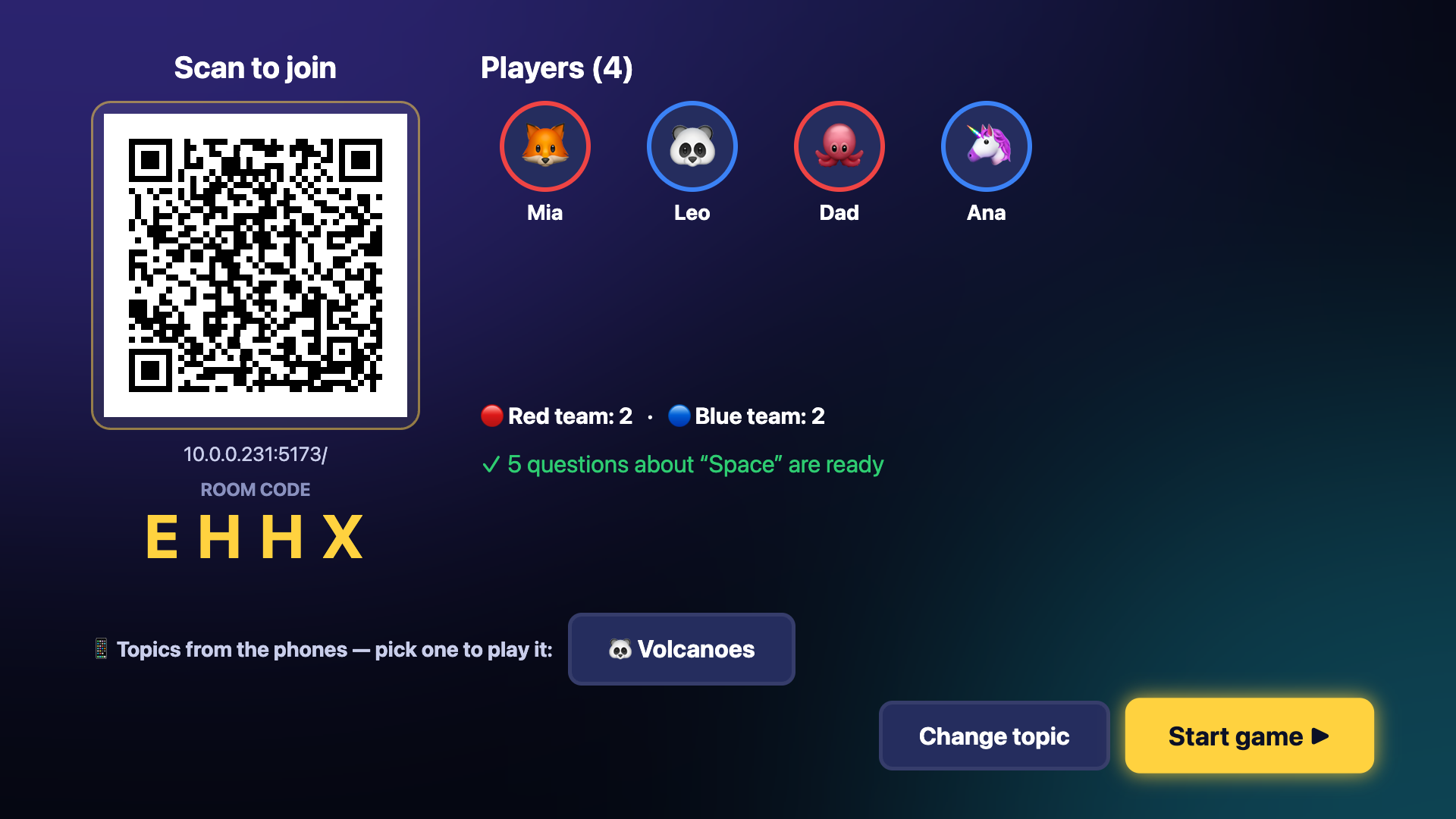
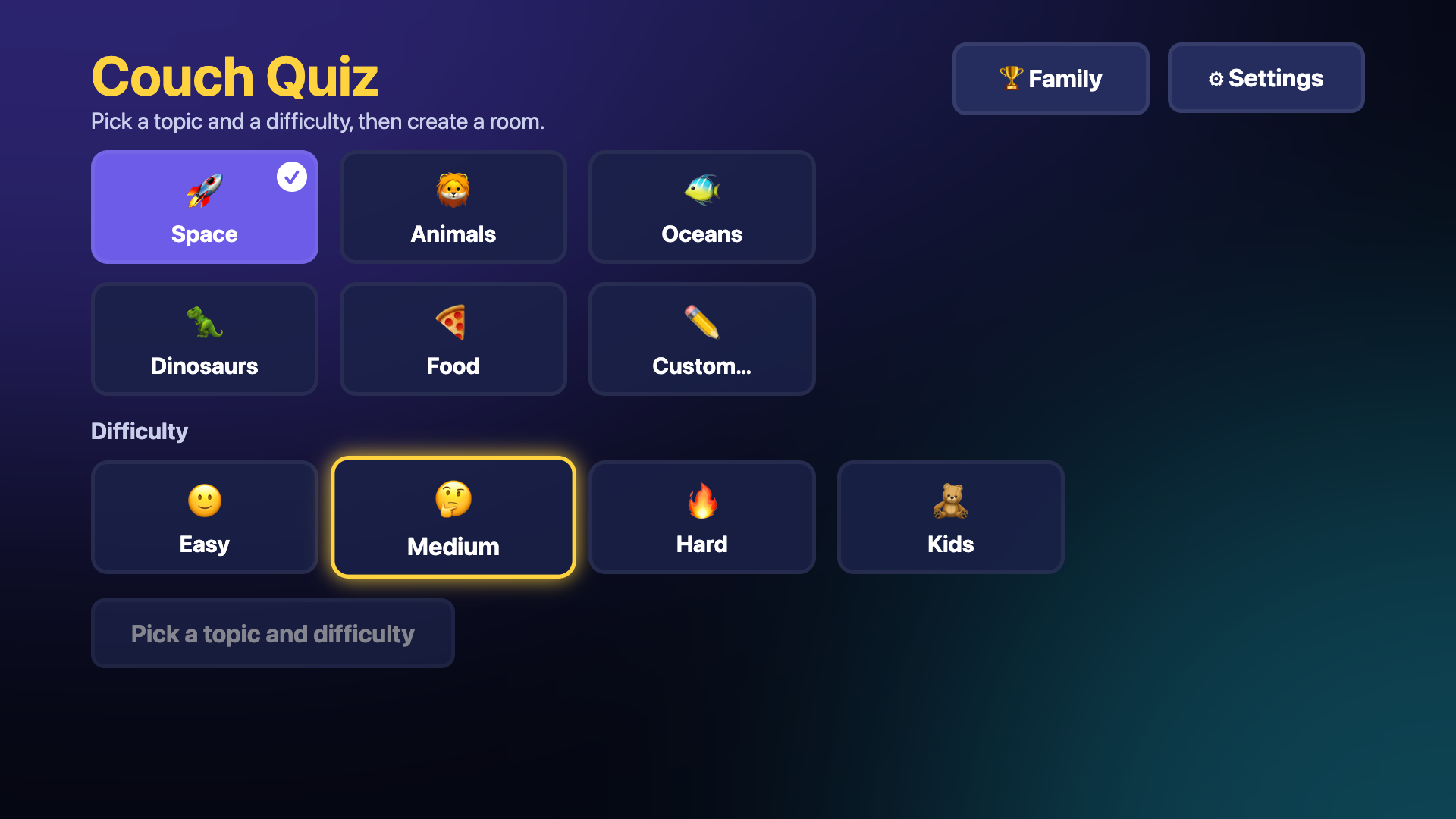
- On the TV (Vega, D-pad only): pick a topic and a difficulty (Easy, Medium, Hard or Kids — simpler questions, no timer), or type your own topic with the TV keyboard. The TV shows a QR code and a room code.
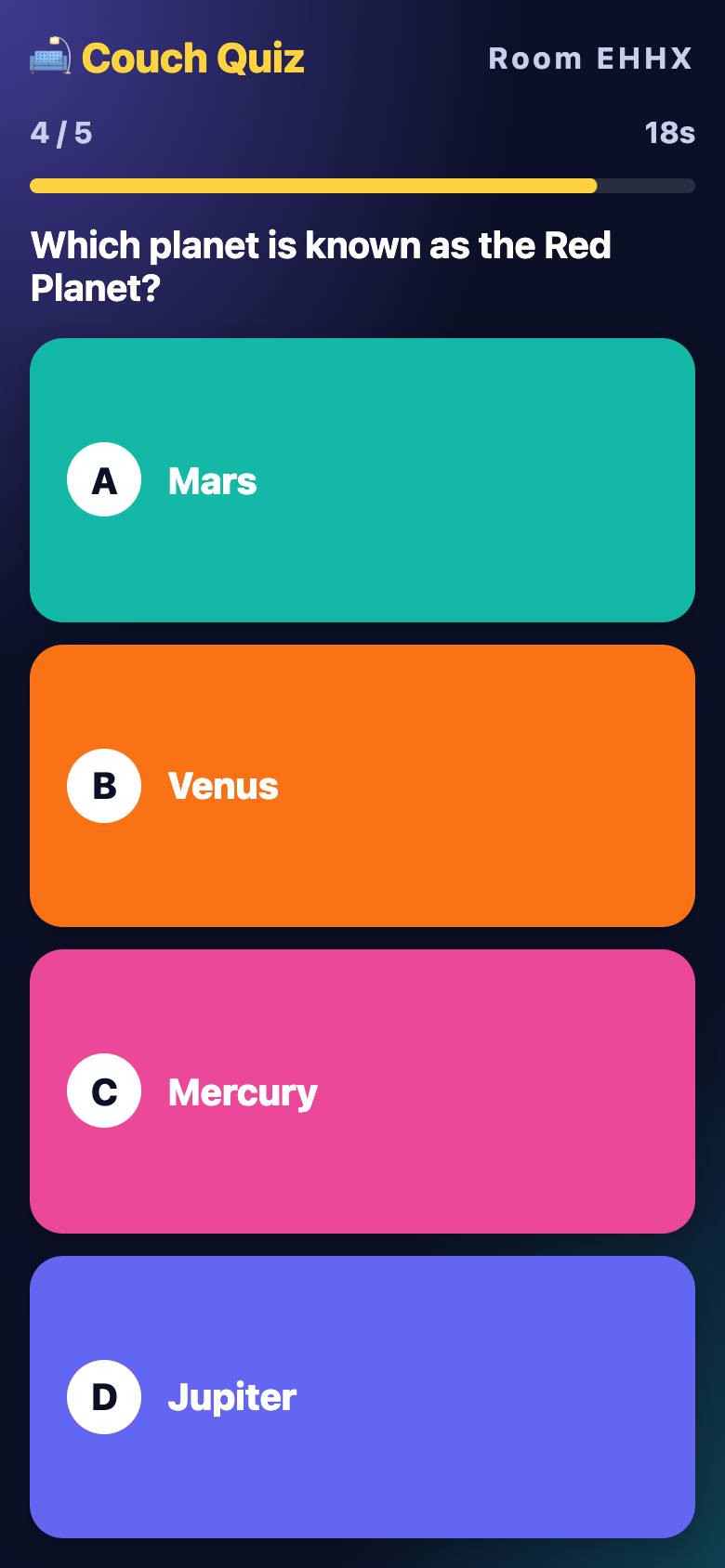
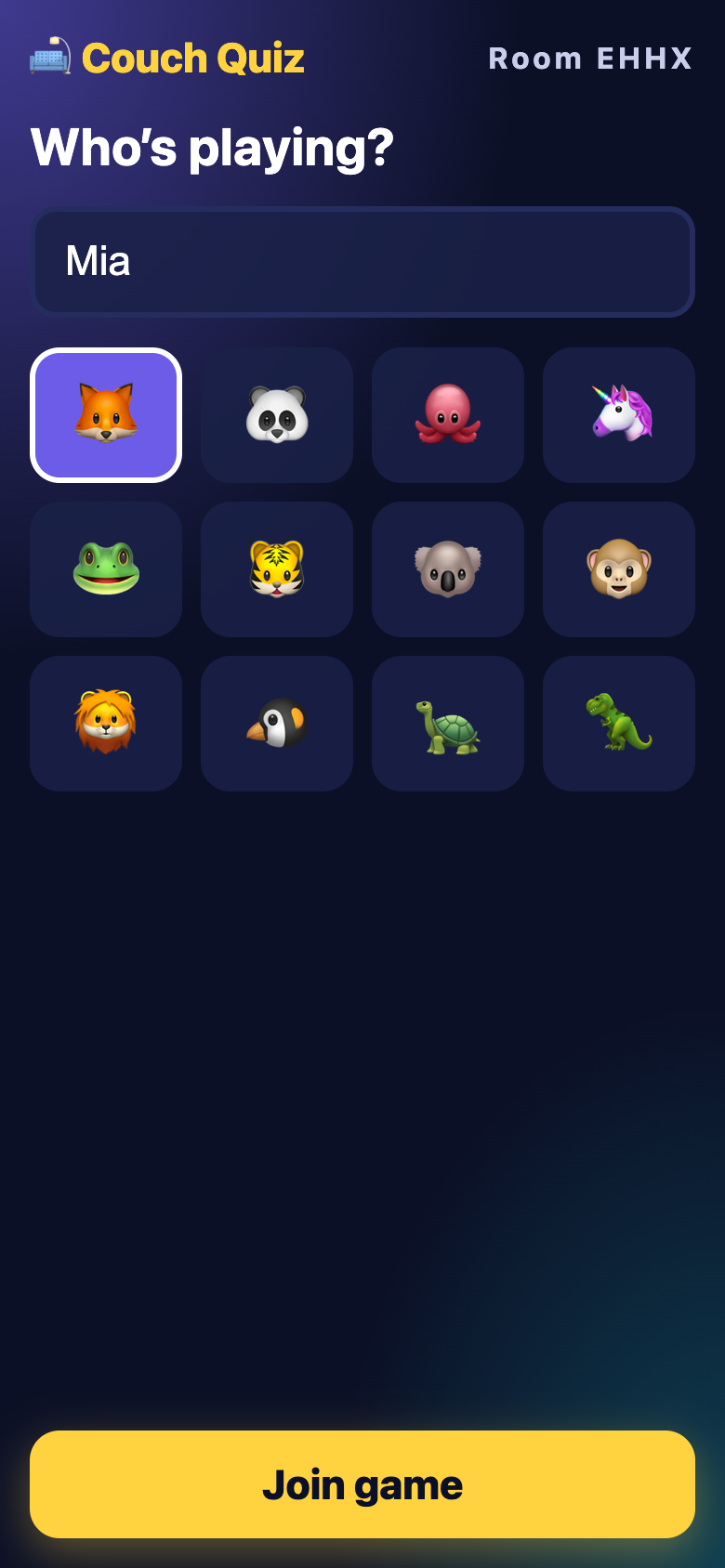
- On the phones (no install): scan, type a name, pick an avatar — you appear on the TV live. Each question shows four big answer buttons.
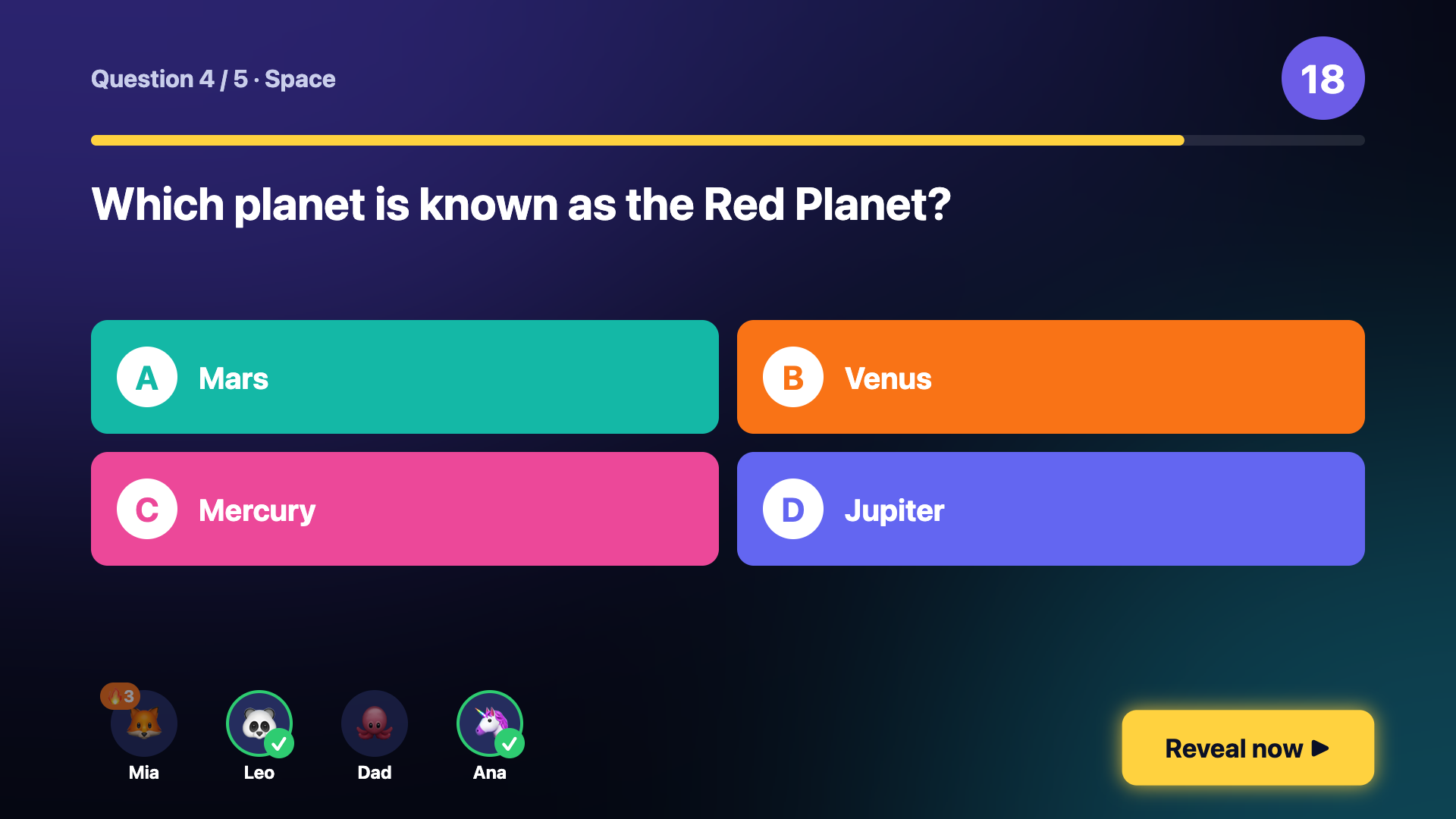
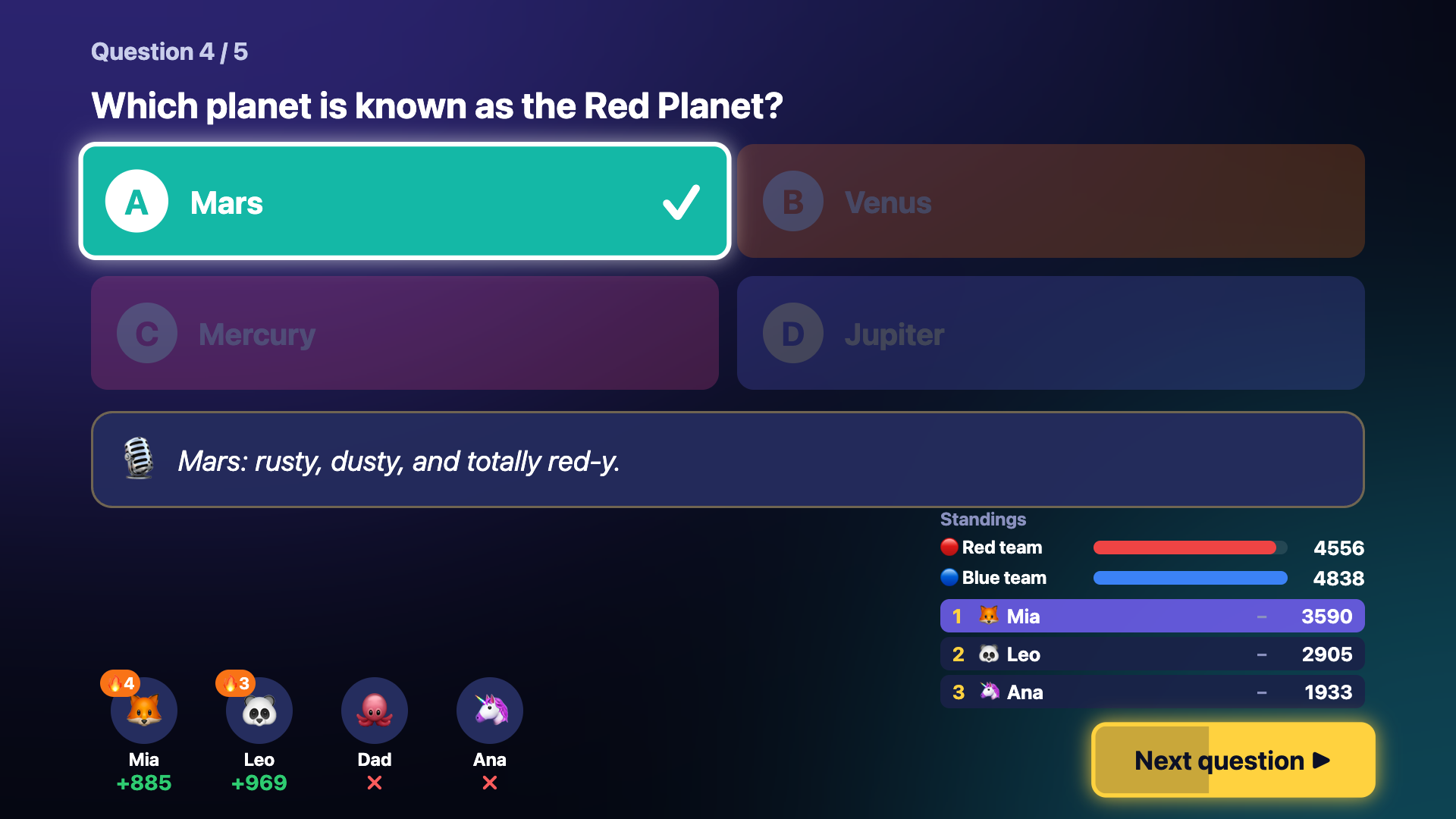
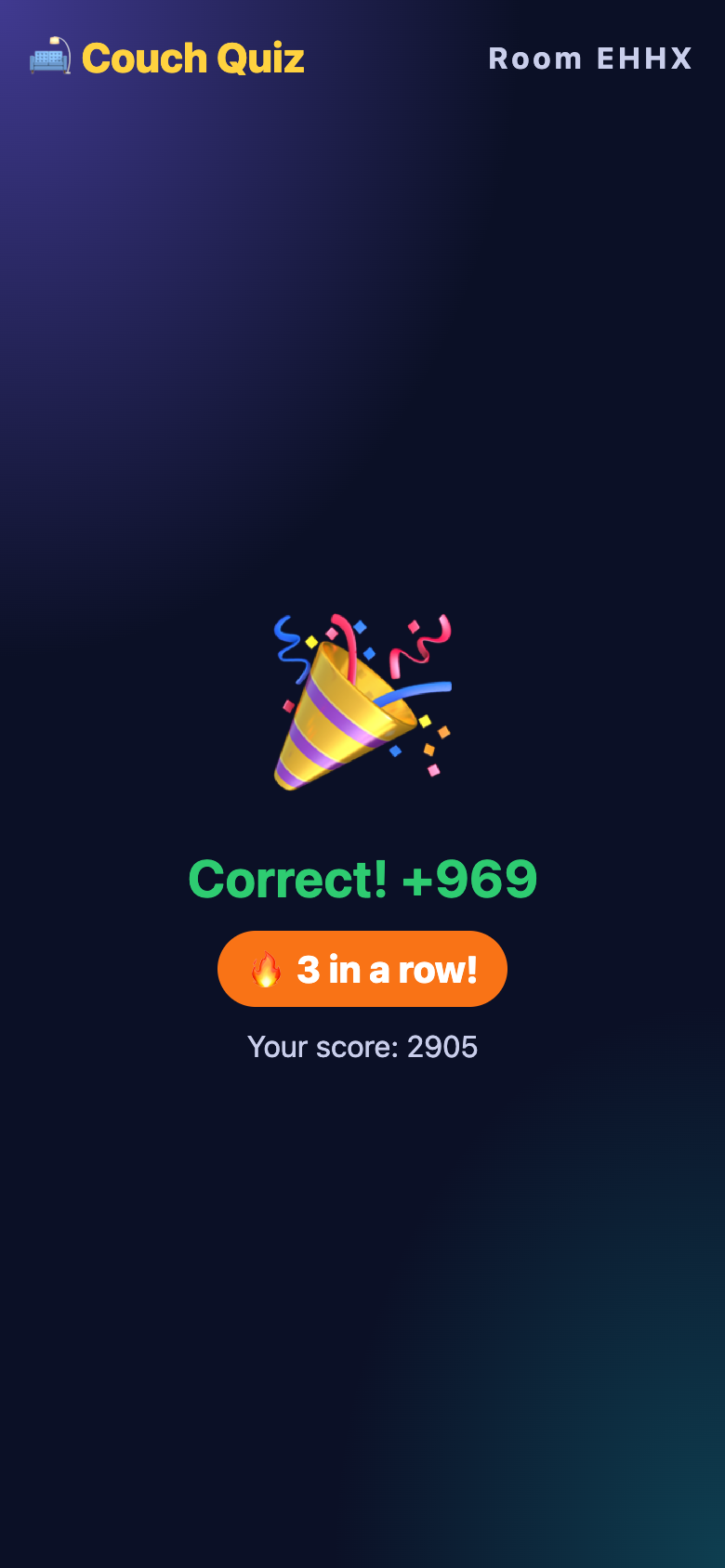
- The game: a "Question N" intro, then the question with a smooth countdown; faster correct answers score more. When everyone has answered (or time runs out), the TV reveals the answer with the host's quip, 🔥 streak badges, and an animated leaderboard where players slide to their new rank. The final question is worth double points. The reveal moves on by itself — or right away with the remote.
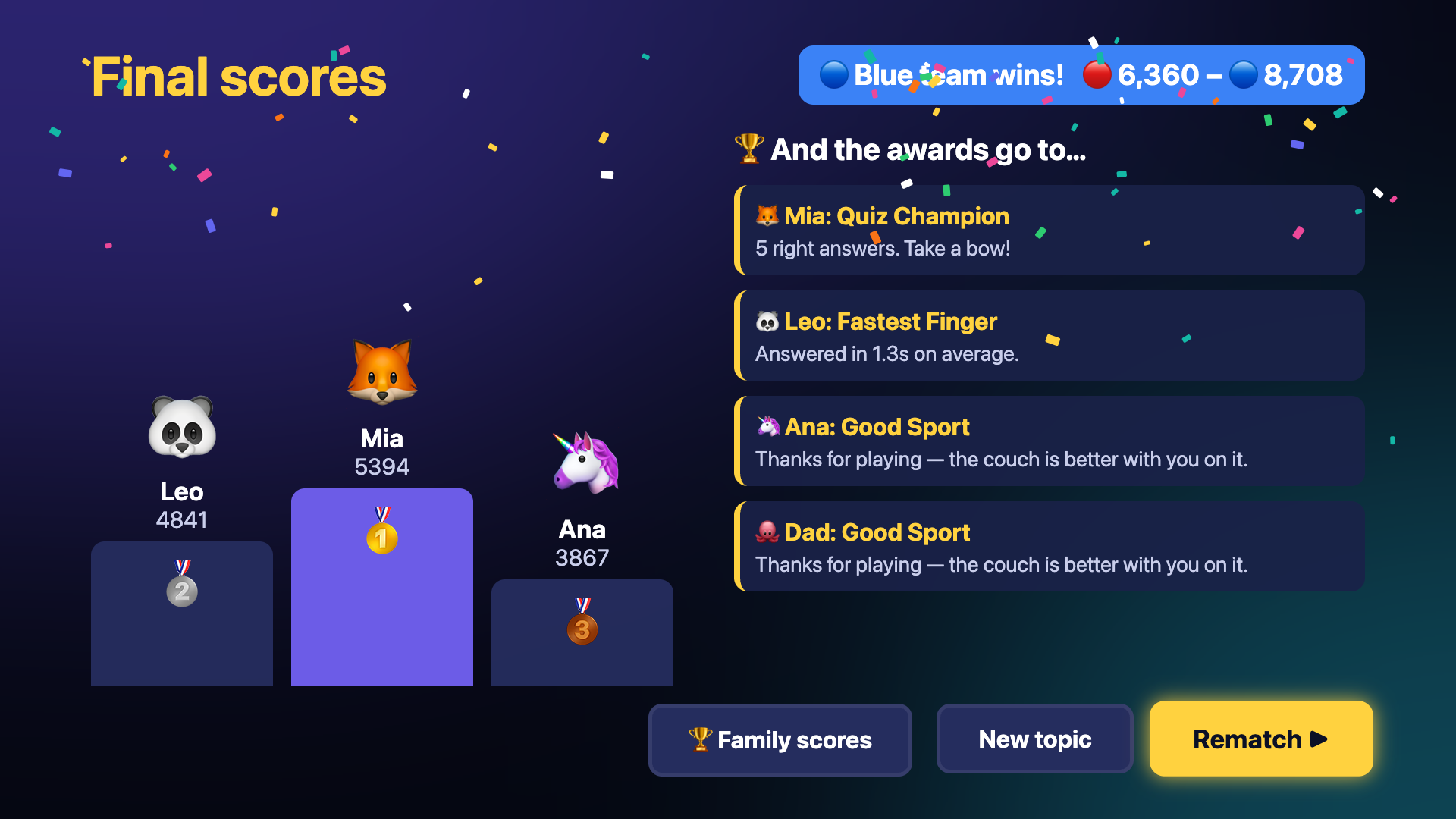
- The finale: a podium with confetti and an award for every player ("Fastest Finger", "Comeback Kid"…), based on real game stats. Rematch keeps everyone in the room for another round on the same topic with fresh questions.
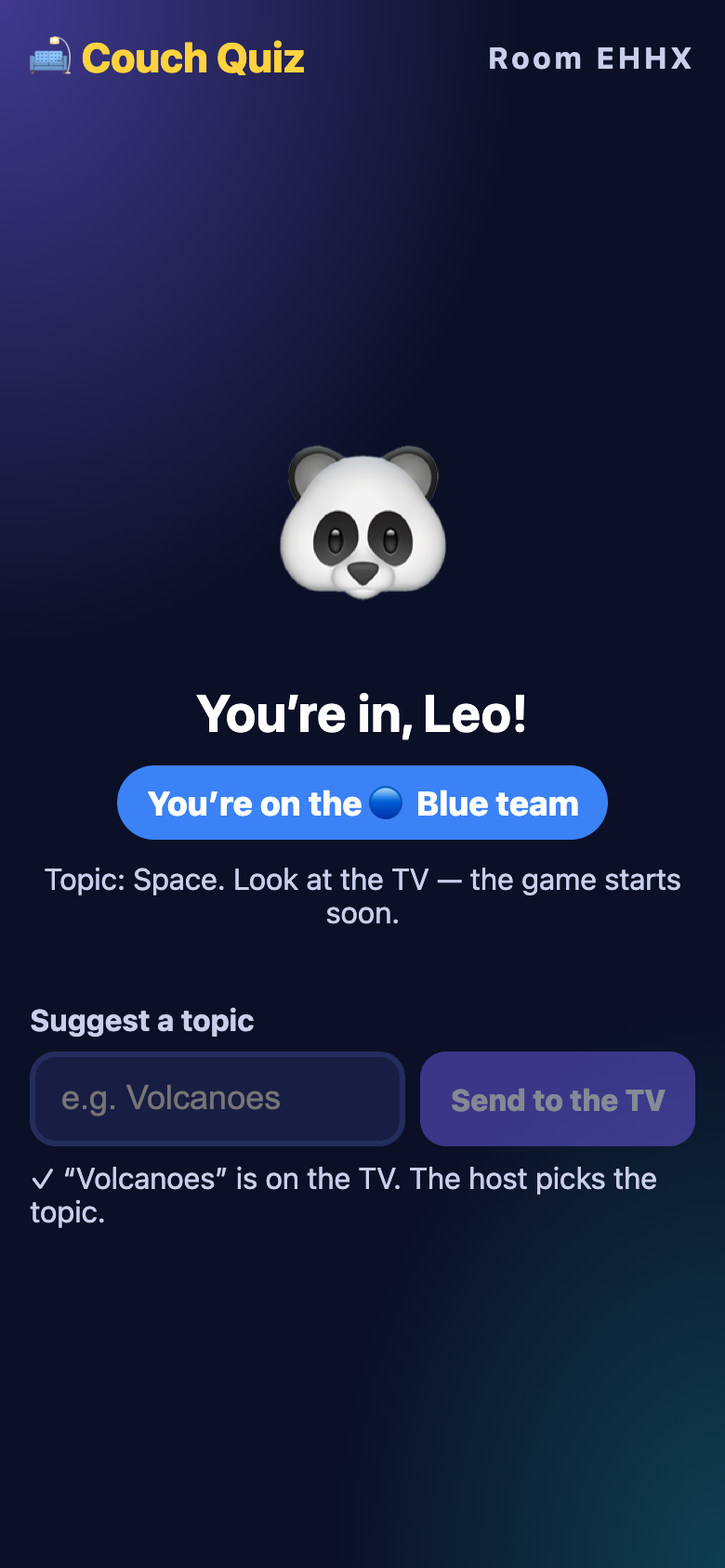
- Families, not just players: play in two teams (red vs. blue, balanced automatically), and every finished game adds to the family scores kept per TV — who has the most wins this month?
- Everyone can pick the topic: players suggest topics from their phones and the TV plays one with a click; or press "Surprise me" for three AI ideas — no typing with the remote.
- The AI host (Amazon Bedrock): writes 10 questions and a one-liner per answer for any custom topic, and the end-of-game awards. A second model fact-checks every AI game before it is played and swaps out anything wrong or ambiguous. Preset topics play instantly from a built-in bank of about 1,450 questions in English and Spanish that doesn't repeat games you already finished — 300 written by hand, the rest written by AI and kept only after two fact-checking models and a human review agreed.
- Polish: English and Spanish (TV, phones and questions), 5 or 10 questions per game, original synthesized music and sound effects, saved settings, automatic reconnection for phones that drop off Wi-Fi. ## Challenges we ran into
- Audio on Vega:
AudioPlayersilently refusedhttp://sources (an empty "not supported" error, no request ever made) and never replayed a sound once it had ended — so the game "went quiet" after round one. We serve sounds over HTTPS and use a fresh, preloaded player per effect. - Native WebSocket quirks: a URL without a path before the query string never connected on Vega, while browsers accepted it.
- The TV keyboard: Select types the highlighted key instead of confirming, so we redesigned the custom-topic screen around closing the keyboard with Back.
- AI trivia is confidently wrong more often than you'd think: about 1 in 10 generated questions had a wrong answer, a myth ("hippo milk is pink") or two defensible answers. A second model catches many but not all — even questions approved by two different checker models still needed a human pass. Live games use a writer + an independent checker with spare questions; the built-in bank adds a manual review on top.
- Fairness on a shared screen: phones receive each question only after the TV's intro, so nobody answers before seeing it on the TV; answers are timed by the server, not by phone clocks.
- All of these (13 entries) are documented with steps and suggestions in our friction log.
Accomplishments that we're proud of
- A full game can be played on the Vega Virtual Device against the AWS backend without touching the remote after "Start".
- The same engine runs locally and in Lambda, unchanged.
- Everything is original: questions, quips, synthesized sounds and music, the app icon.
What we learned
- Design for the 10-foot UI first: "focused" and "selected" must never look alike, and every screen needs a clear Back.
- Treat LLM output as untrusted input: schemas, validation, retries with feedback, and a fallback that keeps the game going.
- Test on the target device early — most of our Vega surprises only showed up there.
What's next for Couch Quiz
- A spoken AI host with Amazon Polly.
- Custom question packs a family can save and replay.
- Publishing to the Amazon Appstore.
Built With
- amazon-api-gateway(http
- amazon-dynamodb
- bedrock
- lambda
- react
- react-native
- typescript
- vega
- vite

Log in or sign up for Devpost to join the conversation.