-
-
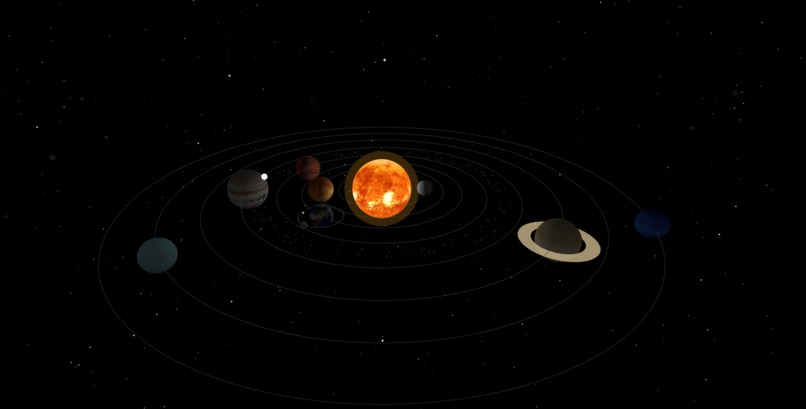
Explore the Cosmos
-
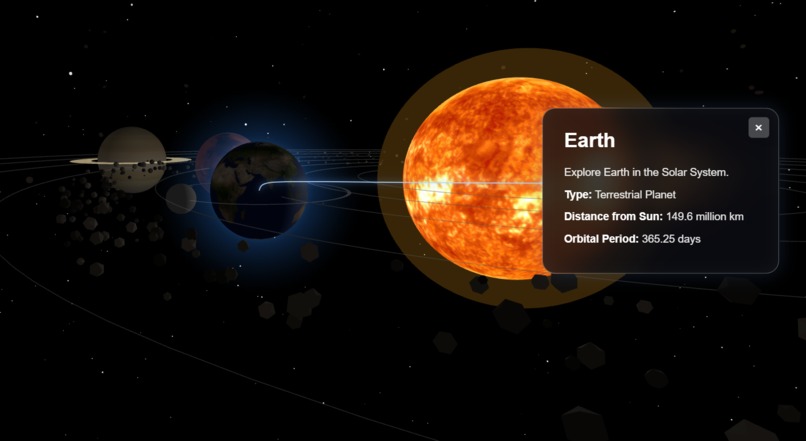
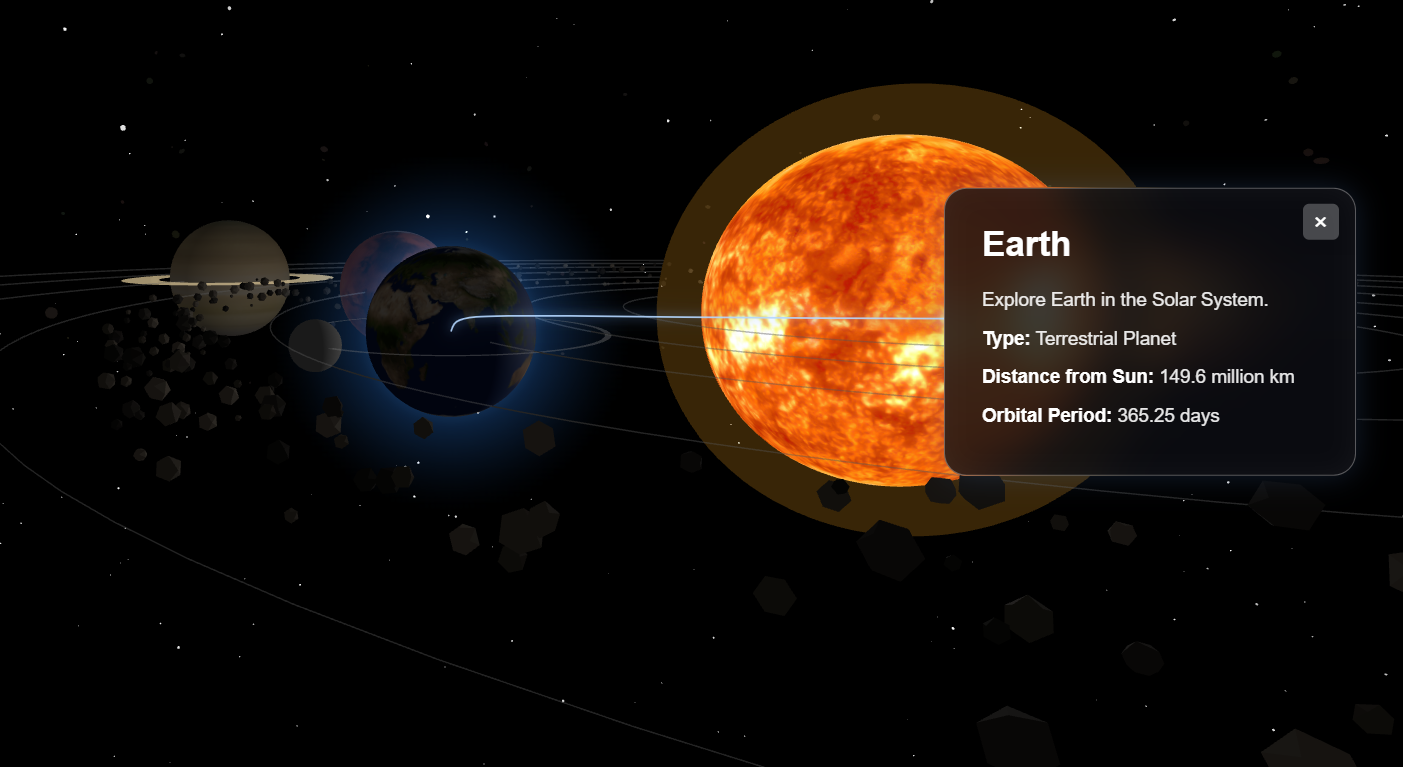
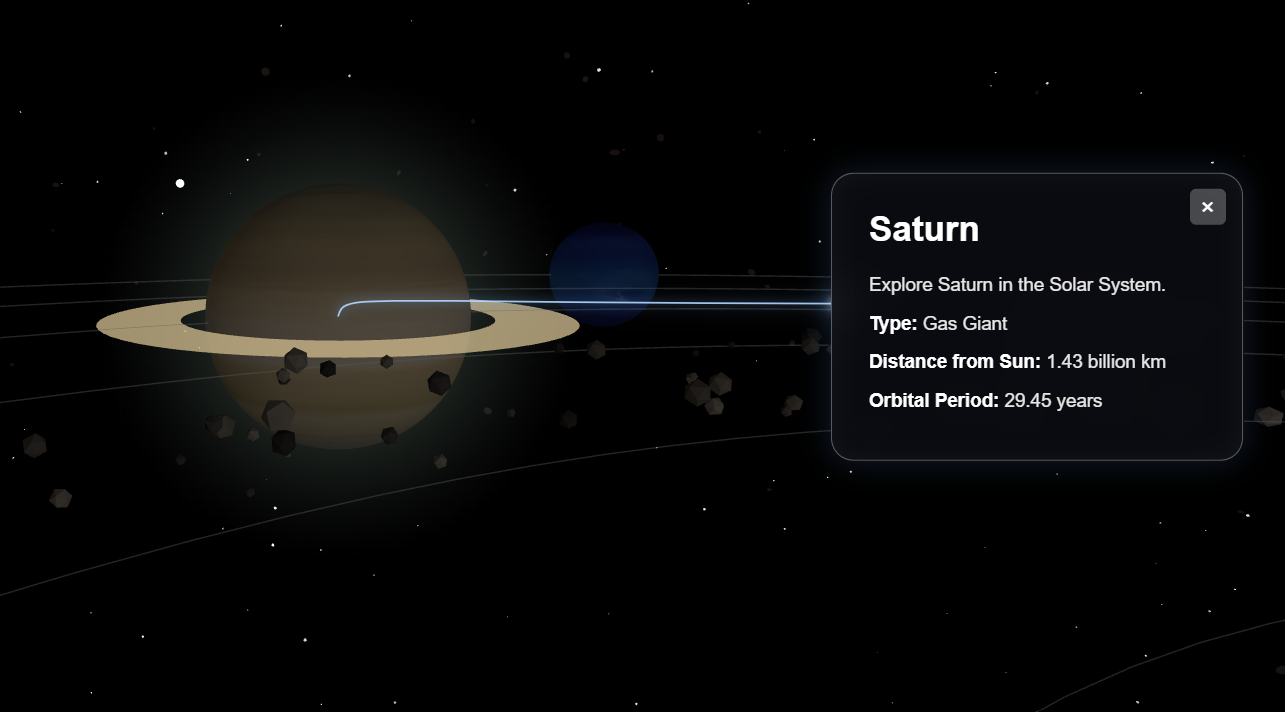
Interactive Planet Info
-
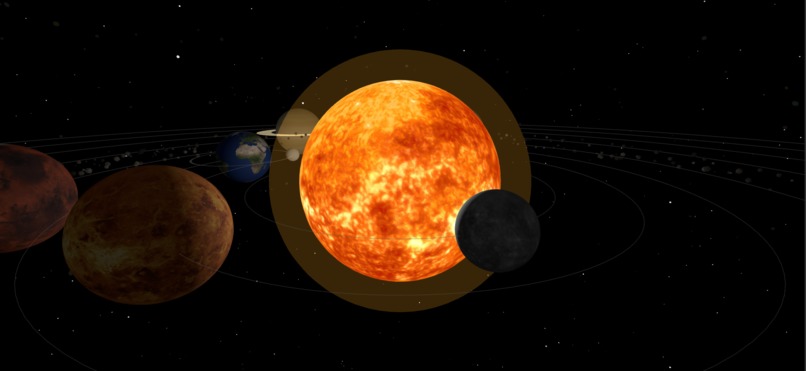
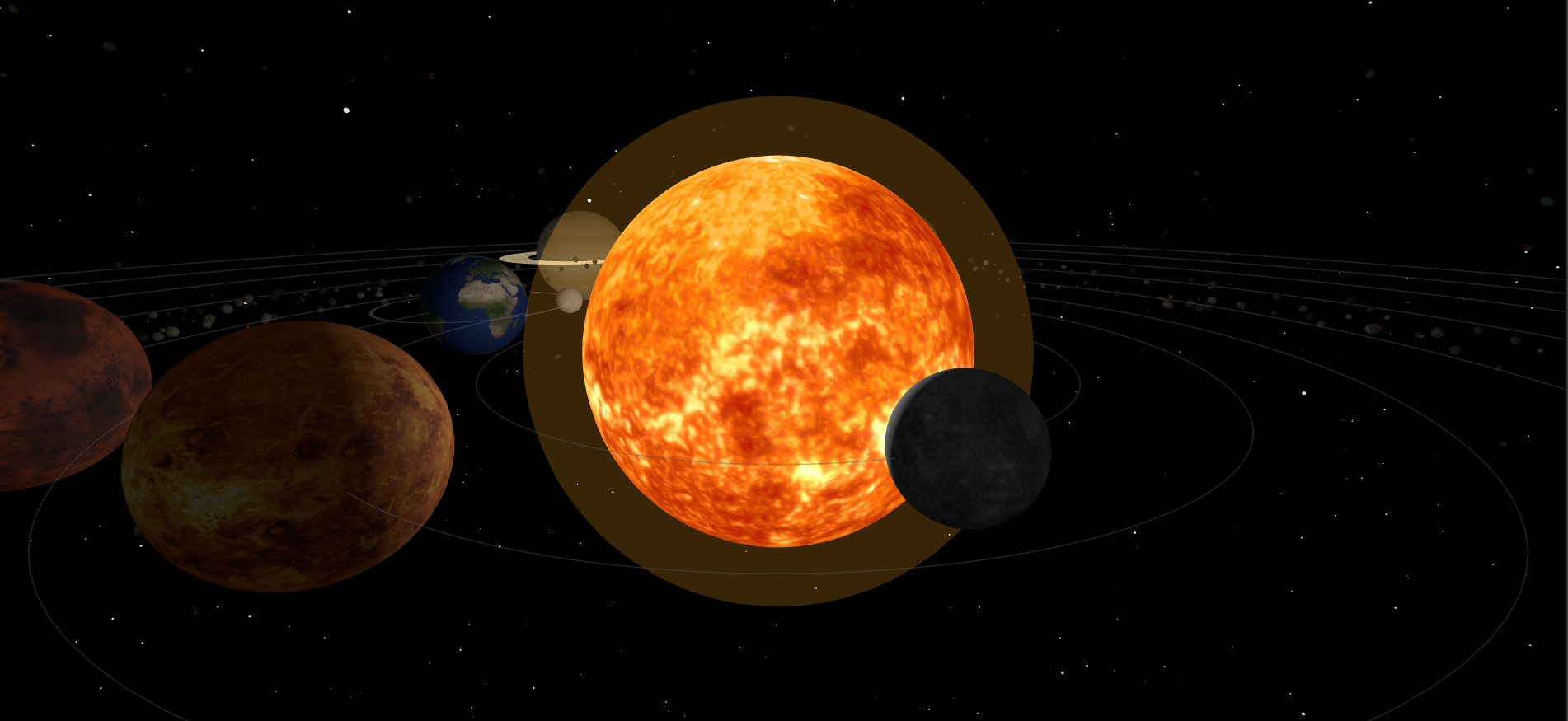
Realistic Solar Texture
-
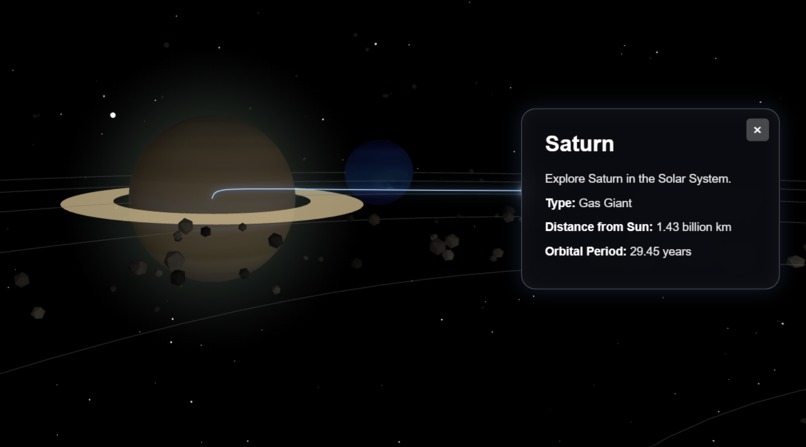
Detailed 3D Planet
-
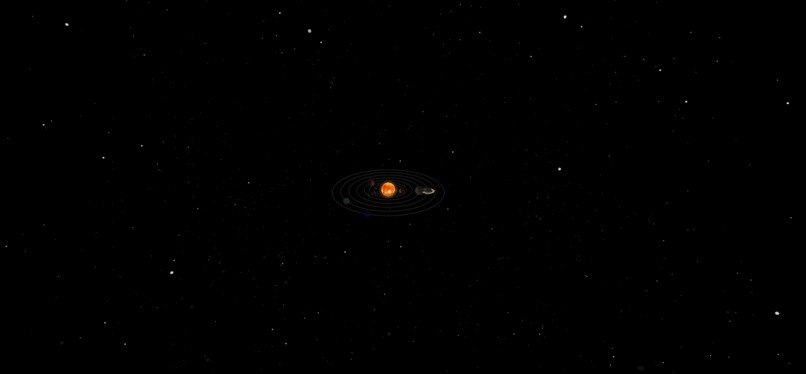
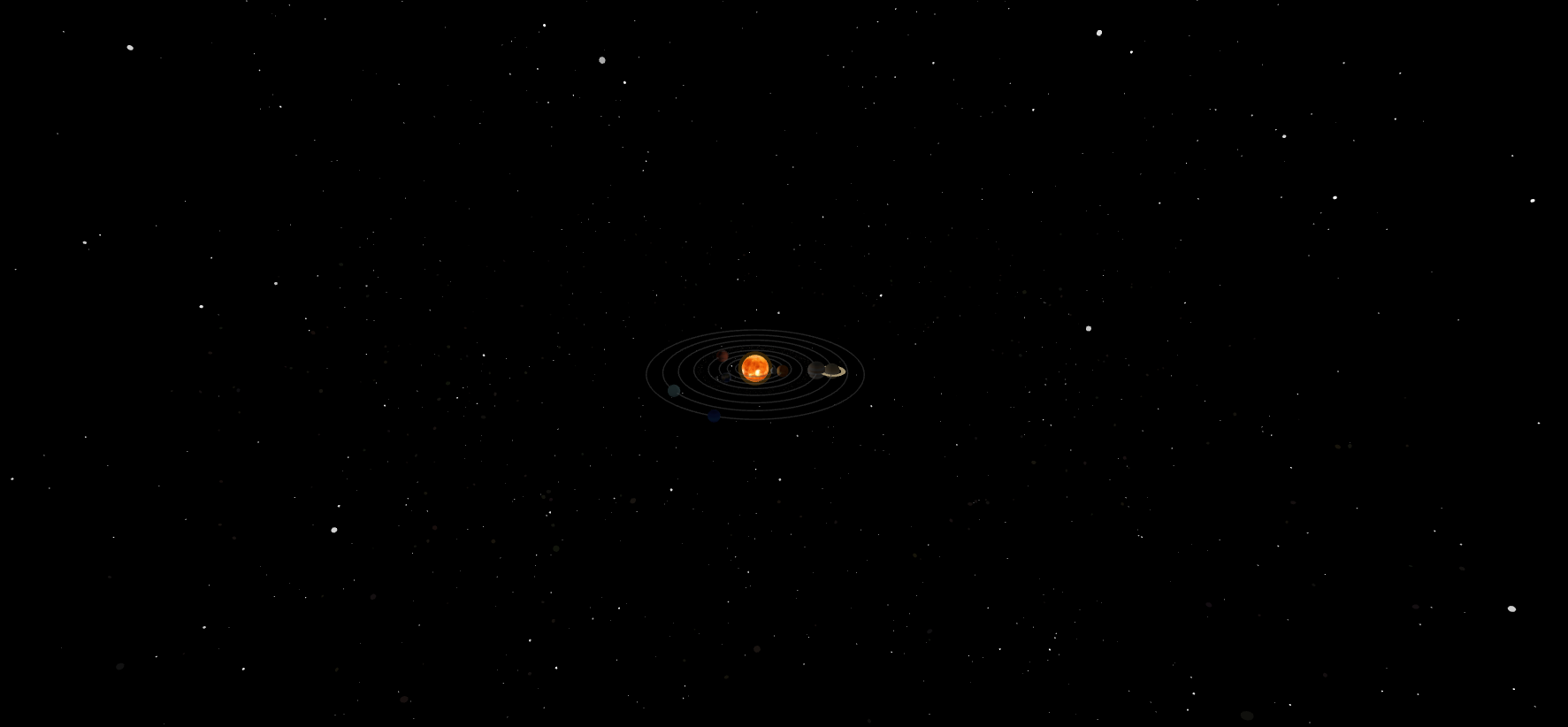
Full Solar System
🌌 CosmoSphere — 3D Solar System Explorer
CosmoSphere is an interactive 3D web experience that transforms the solar system into an immersive space that users can explore directly in their browser.
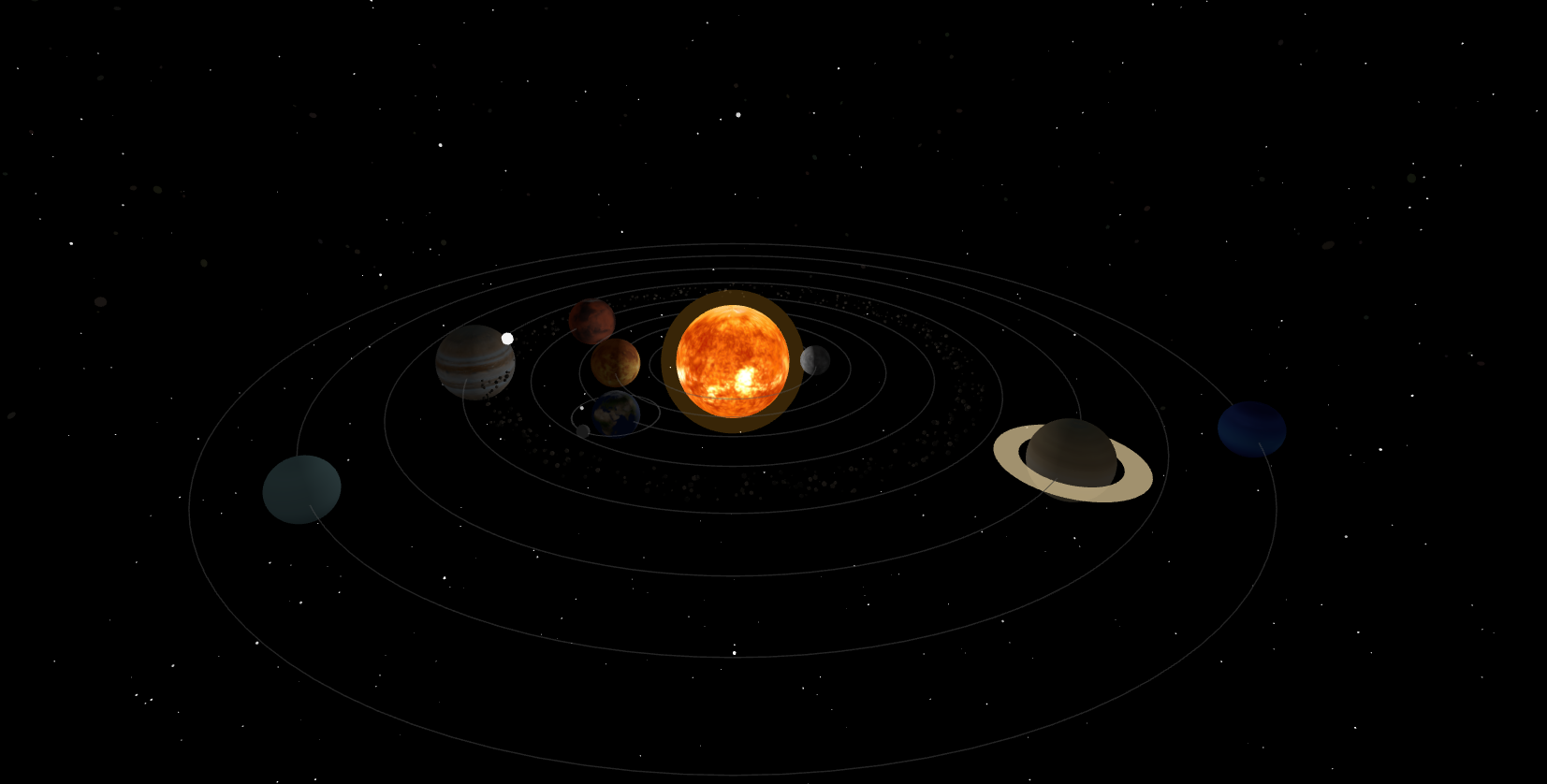
Instead of presenting planets as static images or a traditional 2D diagram, CosmoSphere lets users experience the solar system as a living 3D environment with animated planets, orbital paths, realistic planet textures, and an interactive space background.
💡 Inspiration
Space has always been something that feels both beautiful and mysterious. We wanted to recreate that feeling of exploring the universe inside a web browser. The goal was not simply to build another solar-system model, but to make the experience feel like a journey through space — something users would want to explore rather than just look at. This project was created specifically for the 3D Websites Hackathon, where creativity, visual design, and memorable user experiences matter more than simply adding technical complexity.
✨ What You Can Explore
- 🌞 A detailed 3D Sun and planetary system
- 🪐 Interactive 3D planets
- 🌍 Realistic planet textures
- 🔭 Orbital paths and planetary motion
- 🌌 Immersive deep-space environment
- 🖱️ Interactive camera exploration
- ✨ Animated solar-system elements
- 📱 A web-based experience that runs directly in the browser
🛠️ How We Built It
The experience was developed as a Vite-based web application using JavaScript, HTML, CSS, and Three.js.
Three.js was used to create and render the 3D solar-system environment, including planets, the Sun, orbital paths, lighting, textures, animations, and camera interaction.
Planet textures were added to make each planet visually distinct and create a more realistic space experience.
The application was developed and tested locally in Visual Studio Code, version-controlled using Git and GitHub, and deployed as a publicly accessible website using Vercel.
🧠 What We Learned
This project helped us understand how 3D graphics can be brought to the web and how visual design and interaction can completely change the way users experience information.
We learned more about:
- 3D scene creation and rendering
- Planetary animation and orbital movement
- Textures and lighting
- Camera controls and user interaction
- Organizing a web-based 3D project
- Deploying a frontend application
- Using Git and GitHub for version control
🚧 Challenges
One of the biggest challenges was creating a 3D experience that felt visually impressive while remaining easy to explore. Balancing planet sizes, orbital distances, camera movement, lighting, textures, and animations required experimentation. Another challenge was making sure the experience remained responsive and enjoyable instead of feeling like a static 3D model.
🏆 Accomplishments
- Built a fully interactive 3D solar-system experience from scratch
- Created animated planetary orbits and 3D planetary objects
- Added realistic textures to make planets visually distinct
- Deployed the project as a publicly accessible website
- Turned a traditional educational concept into an immersive web experience
🚀 Future Ideas
CosmoSphere can be expanded into a much larger interactive space experience.
Future versions could include:
- Detailed information panels for every planet
- Planet-to-planet navigation
- More advanced camera controls
- Interactive moons and asteroids
- Space missions and exploration mode
- Educational facts and discoveries
- Sound effects and ambient space audio
- More realistic planetary physics and animations
🌠 The Vision
CosmoSphere is our first step toward creating web experiences that feel less like traditional websites and more like interactive worlds.
We wanted visitors to stop scrolling, enter the experience, and simply think: "Wow, I'm exploring space."


Log in or sign up for Devpost to join the conversation.