-
-
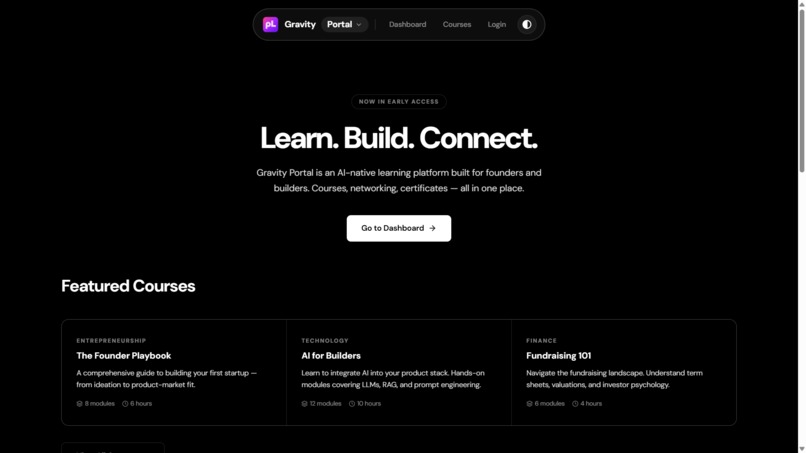
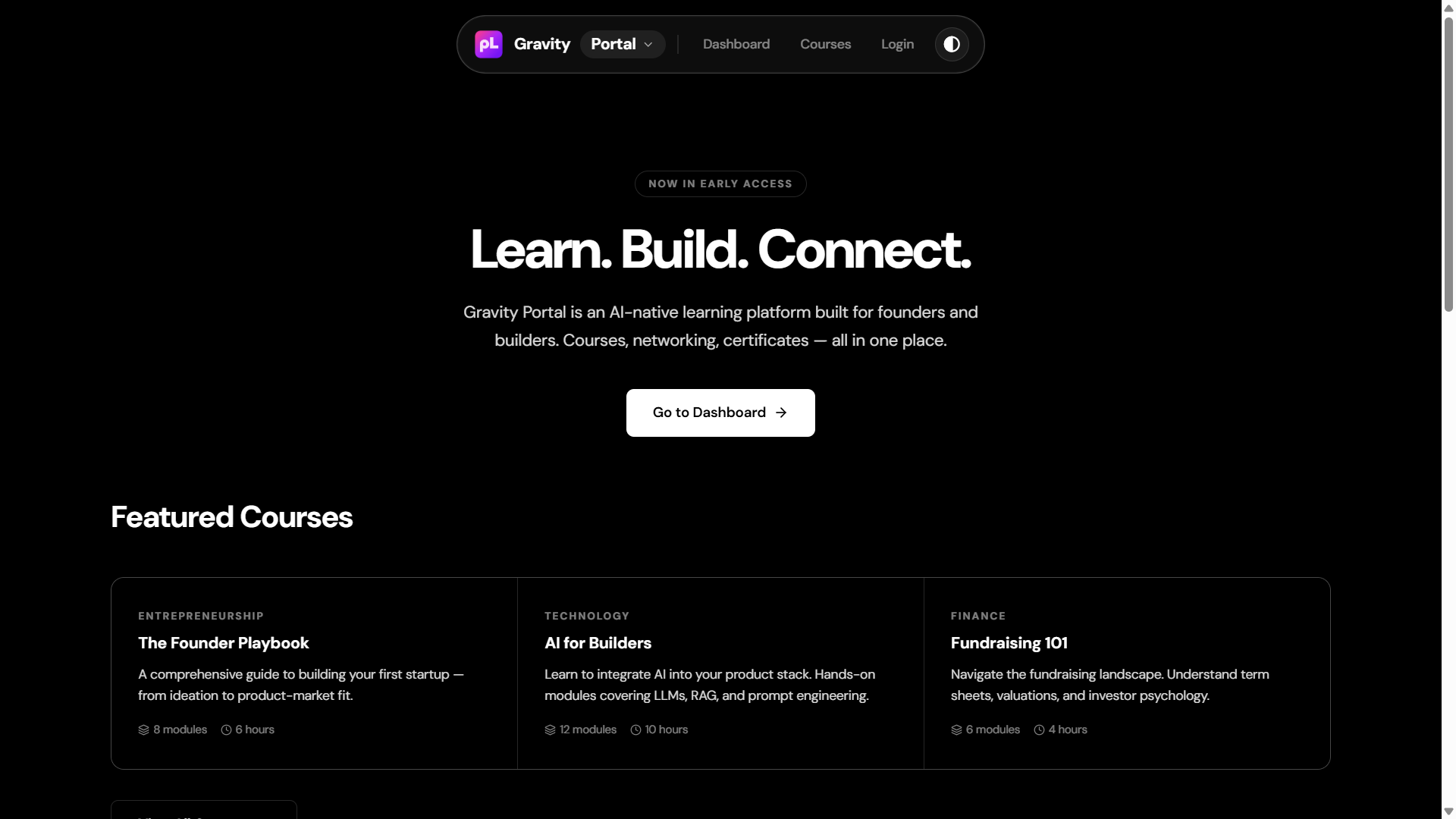
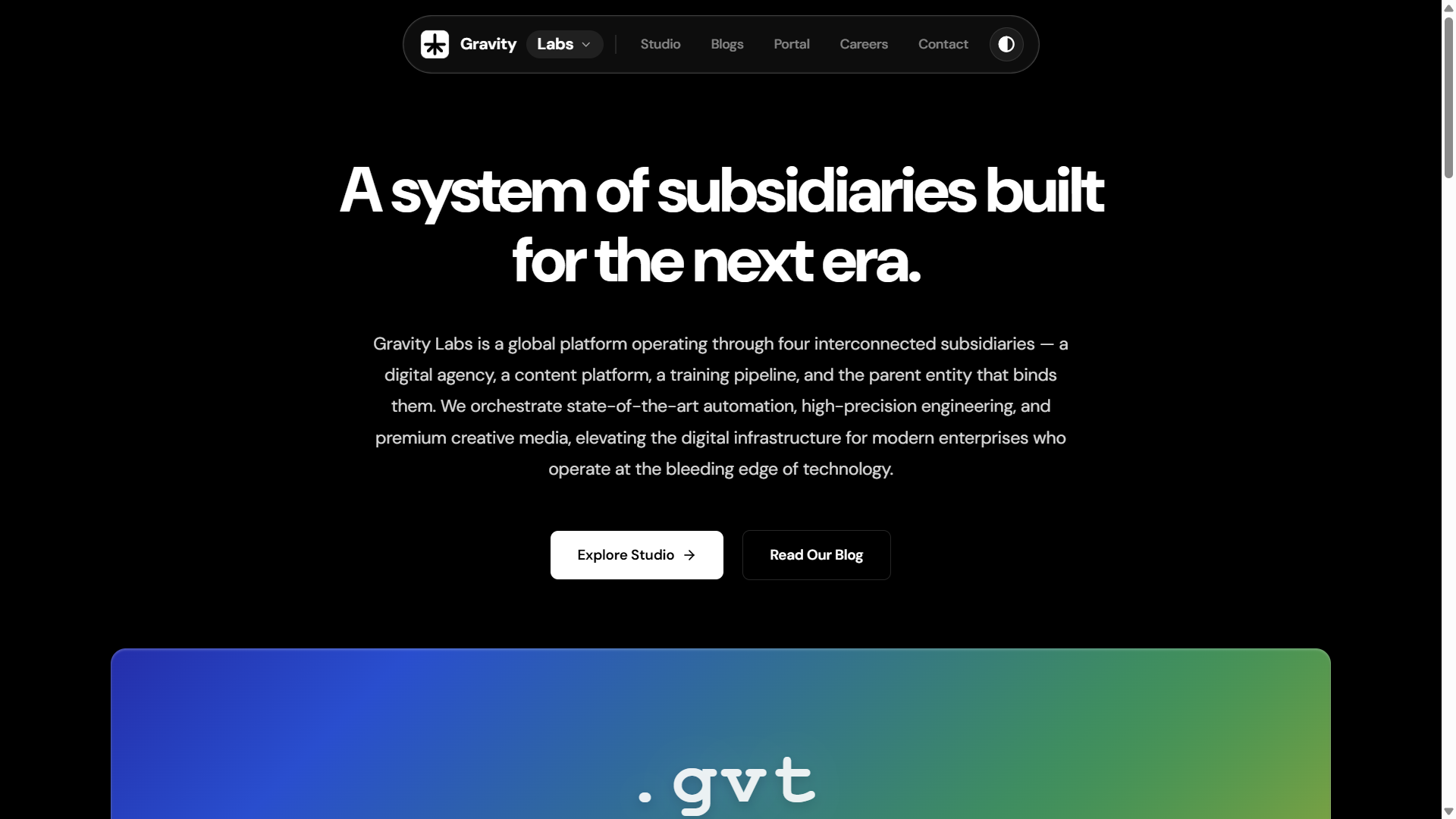
thegravitylabs.in/portal
-
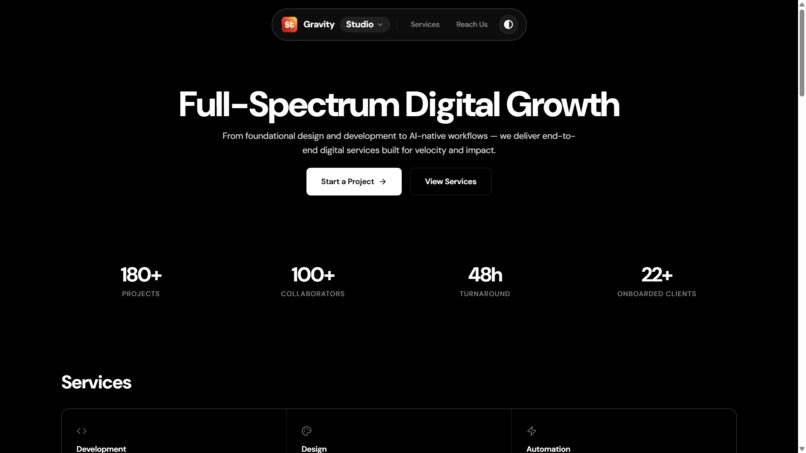
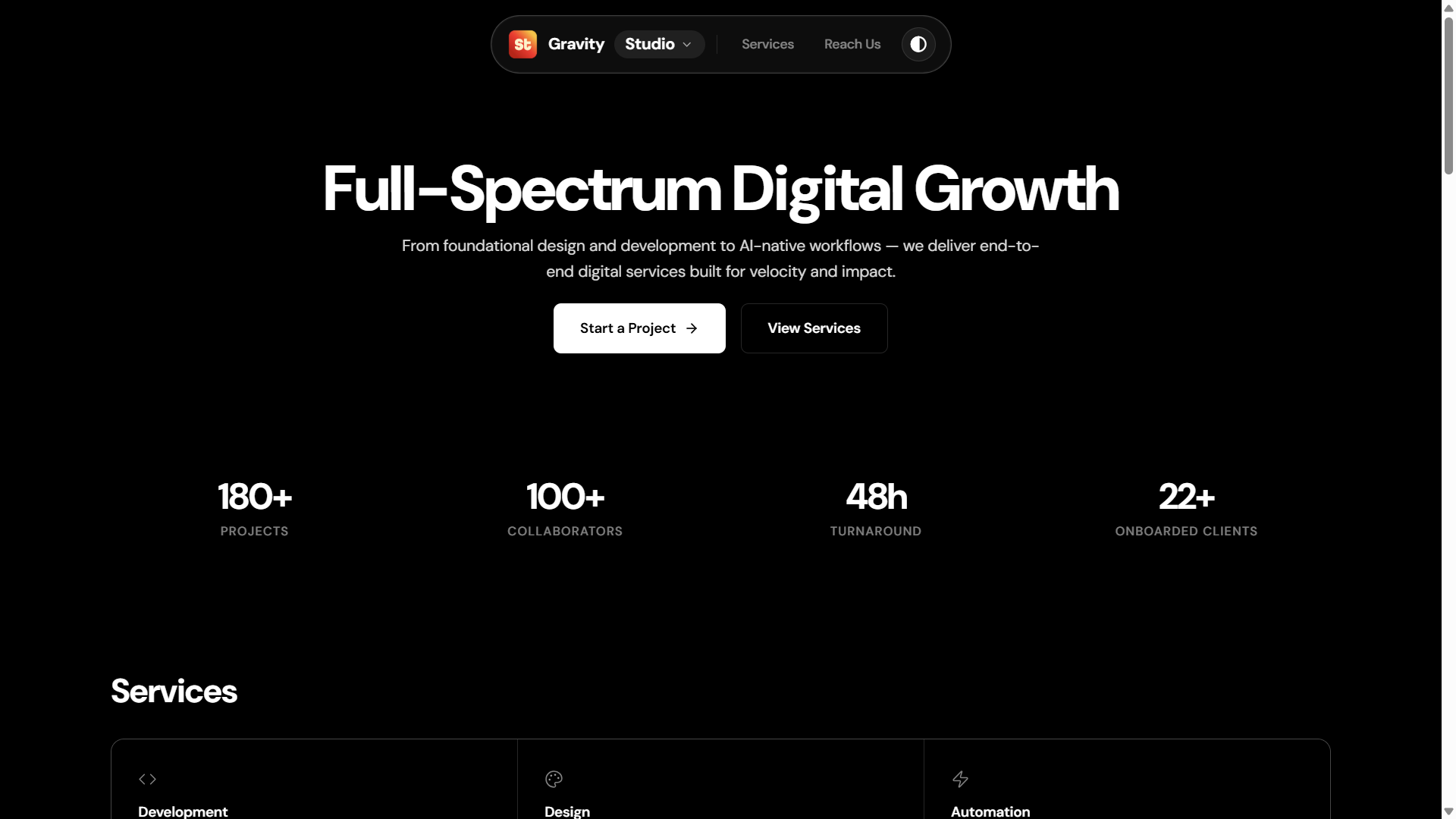
thegravitylabs.in/studio
-
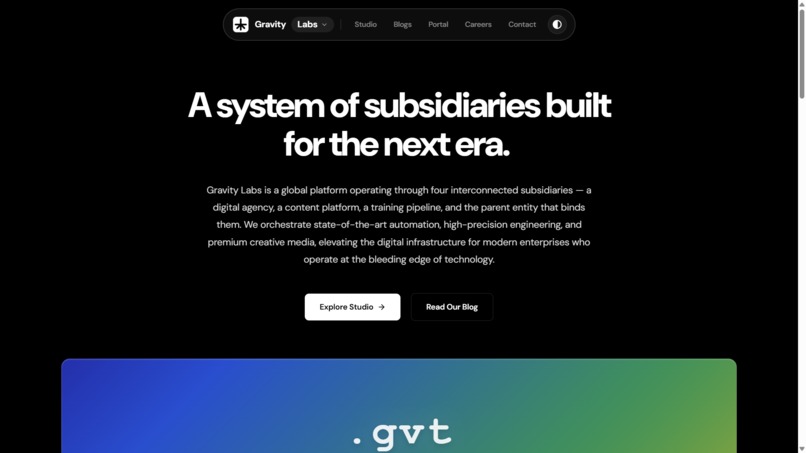
thegravitylabs.in
-
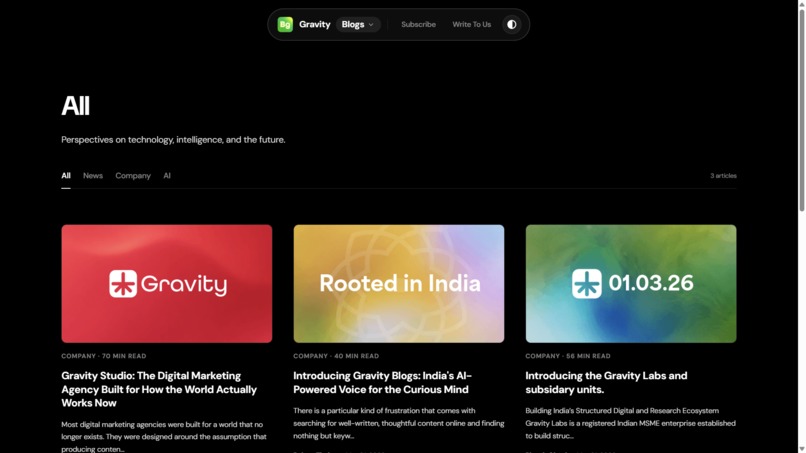
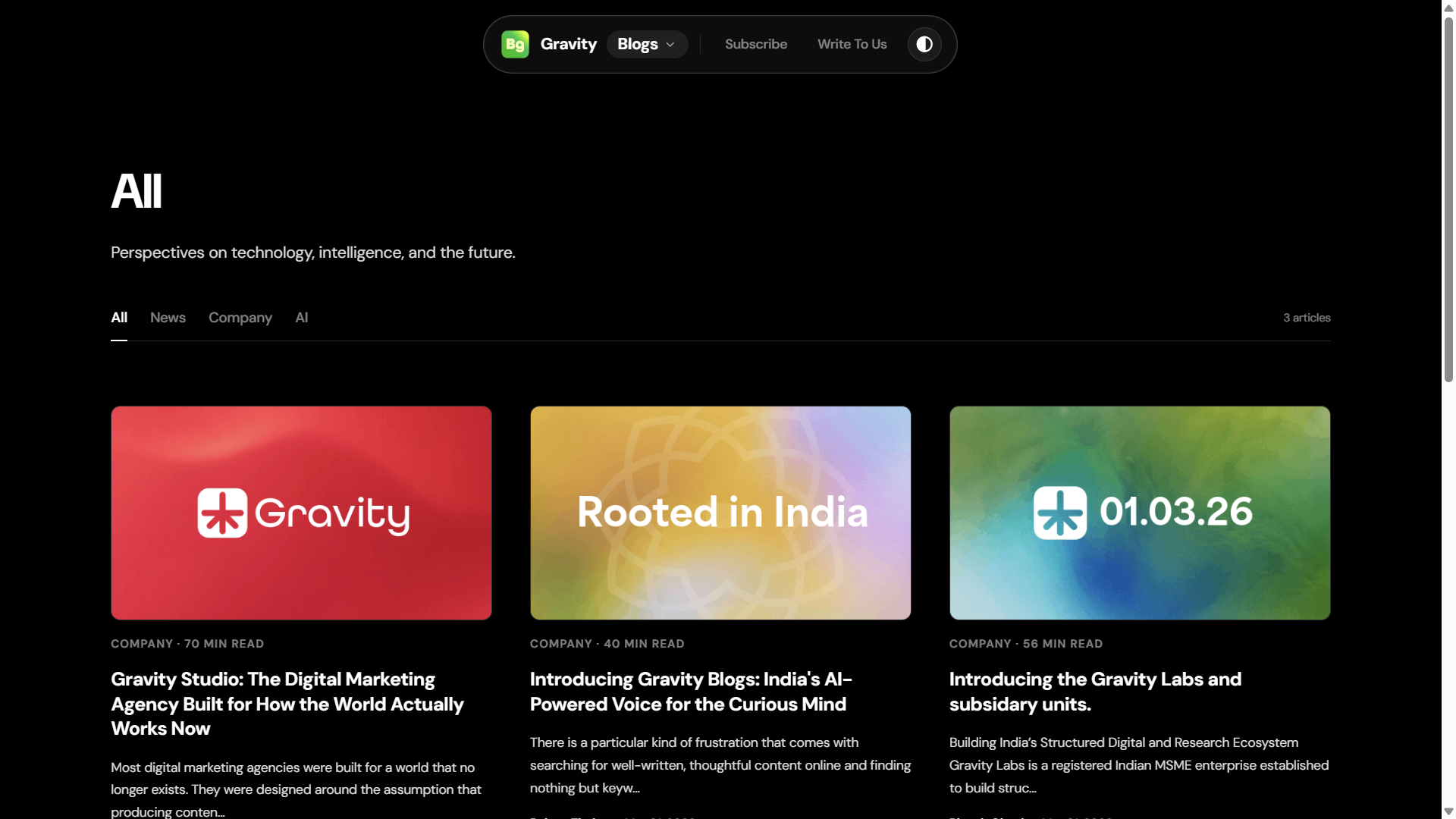
thegravitylabs.in/blogs
-
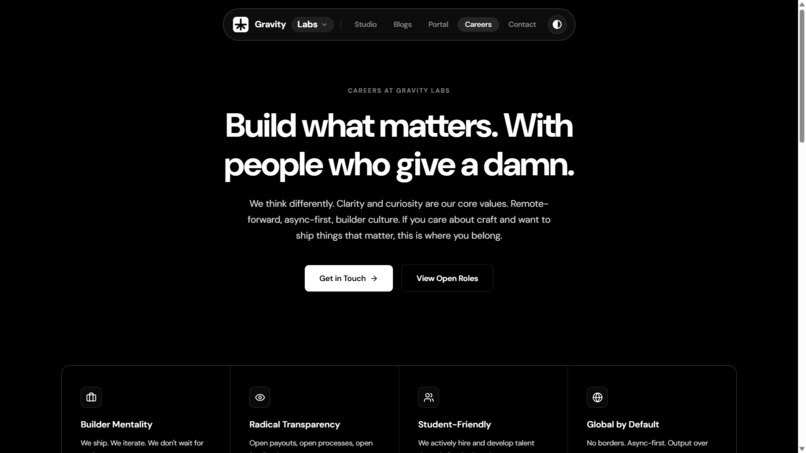
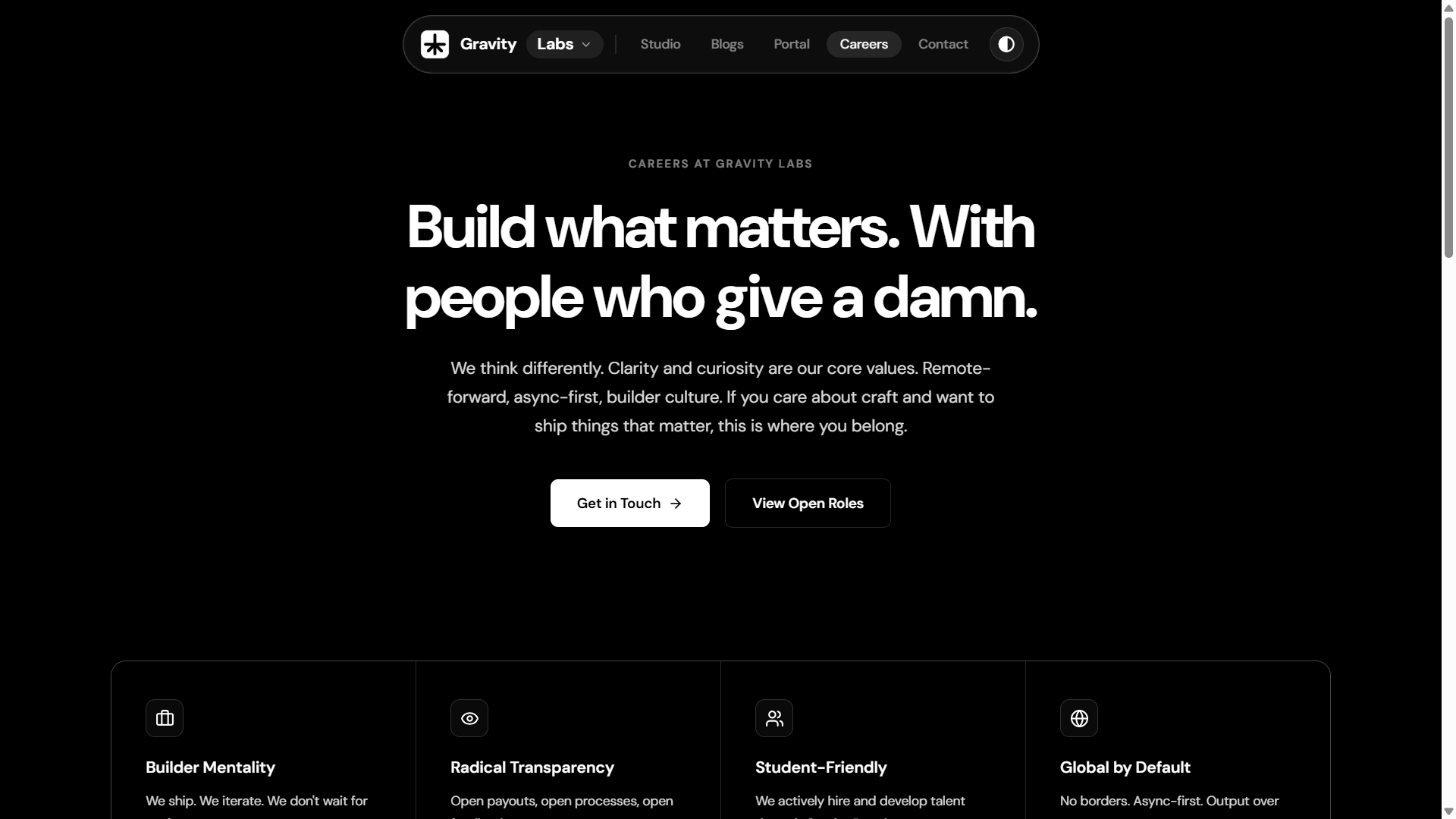
thegravitylabs.in/careers
-
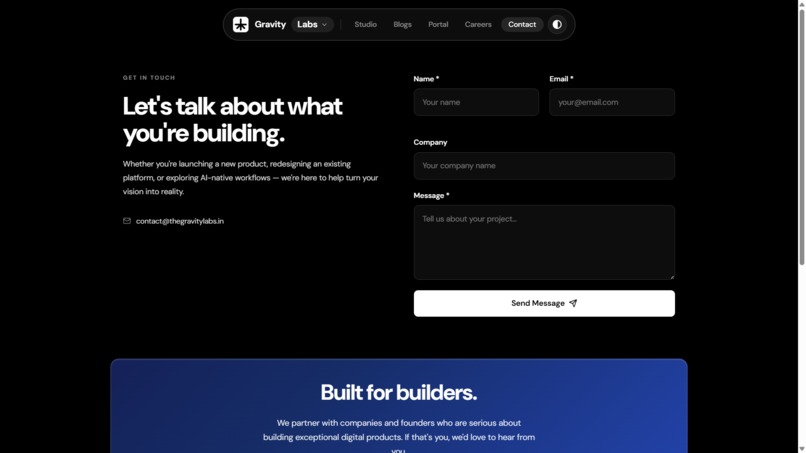
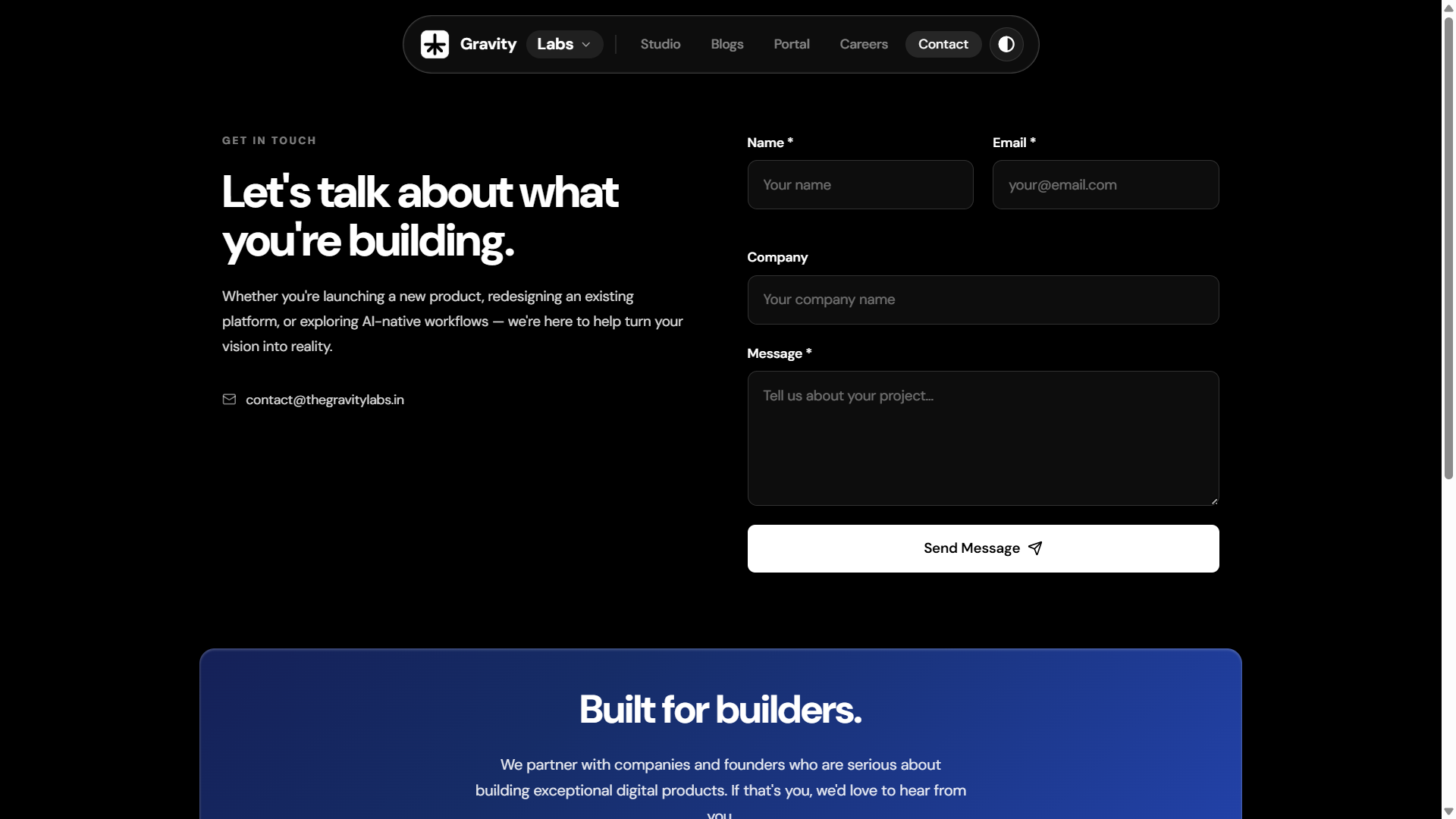
thegravitylabs.in/contact
GRAVITY LABS
Intelligence. Design. Infrastructure.
A multi-subsidiary digital ecosystem built on one thesis: intelligence, design, and infrastructure as the operating system for next-generation businesses.
The Core Idea
Gravity Labs is not a single company — it is a holding ecosystem. The founding thesis is that the three pillars of any high-functioning modern business — intelligence (AI & strategy), design (brand & product), and infrastructure (technology & training) — are most powerful when they operate in a closed loop rather than in isolation.
Where most agencies sell services, and most EdTech platforms sell courses, Gravity Labs is architected differently: every subsidiary feeds and reinforces every other. Studio needs talent → Portal trains it. Portal needs projects → Studio provides them. Both need visibility → Blogs builds it. All three operate under the parent brand umbrella of Gravity Labs.
This is the flywheel model: each subsidiary strengthens the others, compounding value over time.
The Ecosystem at a Glance
| Subsidiary | Role | Route |
|---|---|---|
| Gravity Labs | Parent holding entity. Ecosystem narrative, brand coherence, global positioning | / |
| Gravity Studio | Digital growth agency. Premium services + AI-native delivery workflows | /studio |
| Gravity Portal | Training, certification, and employment-readiness infrastructure | /portal |
| Gravity Blogs | Editorial and content publishing layer | /blogs |
Subsidiary Deep-Dives
1. Gravity Labs — The Parent Entity
The parent entity is not a service business. Its role is:
- Holding the overarching brand identity and narrative
- Positioning the ecosystem globally as a coherent intelligence platform
- Ensuring strategic coherence and brand integrity across all subsidiaries
- Serving as the public face for partnerships, investors, and enterprise relationships
It does not sell services directly — it provides the gravitational centre around which the subsidiaries orbit.
2. Gravity Studio — The Execution Arm
Gravity Studio is a full-spectrum digital growth agency — the revenue-generating core of the ecosystem. It operates across two parallel service tiers, allowing it to serve a wide market without compromising on quality at either end.
Standard Services Tier
Production-grade, premium-quality deliverables for established businesses:
- Full-Stack Web Development
- Product & Brand Design
- AI-Native Automation Workflows
- Digital Marketing & Growth Engineering
- Business Incorporation & Strategy
AI-Native Workflow Tier
Low-cost, AI-assisted delivery for growing startups and budget-constrained teams — without compromising on output quality, speed, or structure. This tier leverages AI tooling to achieve premium-quality results at a fraction of traditional agency cost.
Operational Model — The Contributor Network
Studio's delivery capacity scales through a vetted contributor network operating on a transparent, project-based payout system. This model:
- Enables economic scalability without bloated headcount
- Creates direct employment and freelance income generation
- Maintains client-facing premiumness by sourcing only qualified contributors
- Connects directly to Portal — qualified Portal graduates become Studio contributors
This is the Studio–Portal pipeline: Portal trains the talent, Studio deploys it.
3. Gravity Portal — The Training Infrastructure
Gravity Portal is the employment and freelance-readiness infrastructure of the ecosystem. Its mandate is not to teach theory — it is to produce people who can execute at a professional level from day one.
Mandate & Core Outcomes
- Skill development across Development, Design, Automation, and Marketing
- Real-project-driven curriculum — not theoretical coursework
- Certification tied to demonstrated production capability, not seat-time
- A direct talent pipeline into Gravity Studio for qualified contributors
Why This Matters for the Ecosystem
Portal solves Studio's scaling problem. As Studio grows its client base, it needs more high-quality contributors. Portal is the manufacturing layer for that talent — trained to Gravity's own standards, familiar with Gravity's own workflows.
For learners, Portal offers something most EdTech platforms don't: a credible pathway to real work, not just a certificate.
4. Gravity Blogs — The Publishing Layer
Gravity Blogs is the editorial and content publishing arm of the ecosystem. It publishes long-form, practitioner-level content on:
- Artificial Intelligence and automation
- Technology and engineering
- Design systems and product strategy
- The future of business and work
Its role is strategic, not just informational:
- Builds domain authority for the Gravity Labs brand
- Drives inbound discovery for Studio and Portal
- Positions the ecosystem as a thought leader, not just a service provider
- Creates a public record of the ecosystem's intellectual output
Working Strategy — The Flywheel
         ┌─────────────────────────────┐
         │        GRAVITY LABS         │
         │   (Brand · Strategy · IP)   │
         └────────────┬────────────────┘
                      │
        ┌─────────────┼─────────────┐
        ▼             ▼             ▼
  ┌──────────┐  ┌──────────┐  ┌──────────┐
  │  STUDIO  │◄─│  PORTAL  │  │  BLOGS   │
  │ (Agency) │  │(Training)│  │(Content) │
  └──────────┘  └──────────┘  └──────────┘
       │              ▲              │
       │  Qualified   │   Inbound    │
       └─ talent ────►┘◄─ traffic ──┘
            pipeline      & authority
The loop:
- Blogs publishes practitioner content → drives organic inbound traffic
- Traffic converts into Studio leads (clients) and Portal leads (learners)
- Portal trains learners to Gravity's standards → produces qualified contributors
- Studio deploys contributors on client projects → generates revenue
- Revenue funds ecosystem growth → better content, better curriculum, better tooling
- Cycle repeats and compounds
This closed loop means Gravity Labs is not dependent on any single revenue stream or external talent market. It manufactures its own operating leverage.
Technology Stack
Frontend
| Layer | Technology |
|---|---|
| Framework | Next.js 15 (App Router) |
| Language | TypeScript |
| Styling | Tailwind CSS |
| Animations | Framer Motion |
| UI Components | Custom component library |
| Theme | Dark / Light with route-aware accent system |
| Font System | Unified geometric sans-serif via Google Fonts |
Backend & Data
| Layer | Technology |
|---|---|
| Database | Supabase (PostgreSQL 17) |
| Auth | Supabase Auth |
| Storage | Supabase Storage |
| ORM / Query | Supabase JS Client |
| Row-Level Security | Enabled on all tables |
| API | Next.js Route Handlers + Supabase Edge Functions |
Infrastructure & Deployment
| Layer | Technology |
|---|---|
| Hosting | Vercel |
| Region | ap-northeast-2 (Supabase) |
| CI/CD | Vercel Git Integration |
| Preview Deployments | Per pull request |
| Environment Management | Vercel Environment Variables |
| DNS | Custom domain via Vercel |
Integrations
| Integration | Purpose |
|---|---|
EmailJS (@emailjs/browser) |
Transactional email from contact forms |
| Supabase Realtime | Live data on Portal surfaces |
| Vercel Analytics | Privacy-conscious usage analytics |
Database Architecture
The Supabase project (PostgreSQL 17) contains 15 tables across 5 functional domains, with Row-Level Security enabled on all tables.
Domain                Tables
──────────────────────────────────────────────────────────
Leads & Comms         leads, newsletter_preferences
Content / Blogs       blogs, blog_articles
Studio CRM            studio_samples, studio_customer_queries,
                      studio_contact_queries
AI Arcade             ai_arcade_images
Gravity Portal        portal_users, courses, modules, lessons,
                      enrollments, networking_threads,
                      portal_notifications
Key Relationships
courses        ──(1:N)──► modules
modules        ──(1:N)──► lessons
portal_users   ──(1:N)──► enrollments
courses        ──(1:N)──► enrollments
portal_users   ──(1:N)──► networking_threads
Design System
The design system is enforced ecosystem-wide for brand coherence.
- Background: Pure black (
#000000) in dark mode, pure white (#FFFFFF) in light mode. No textures, gradients, or noise overlays. - Header: Dynamic island glass-effect, preserved across all routes.
- Cards: Flat, solid surfaces. No
backdrop-filteror glass effects on cards. - Typography: Unified geometric sans-serif. No per-route font overrides.
- Accent System: Each subsidiary route retains its individually assigned accent colour, maintaining identity differentiation within a unified system.
- Spacing: Universal spacing tokens for section gaps and footer clearance, applied at layout level.
- Motion: Framer Motion for page transitions, section reveals, and interactive elements.
Security Infrastructure
Secrets & Credentials
- All service credentials live exclusively in environment variables — never committed to the repository.
- Client-side integrations use only safe public keys (
NEXT_PUBLIC_*). - Server-side operations are fully isolated from browser execution.
Data Protection
- Row-Level Security (RLS) enabled on every Supabase table.
- Least-privilege access model for all service roles.
- Form inputs are validated and sanitised before any processing or persistence.
- Error responses never expose internal system details to the client.
Operational Security
- Separate development, preview, and production environments.
- Branch protection on
main— pull request review required for production changes. - Dependency audits on a regular cadence (
npm audit). - Monitoring for broken integrations, failed form submissions, and anomalous traffic.
Environment Variables Reference
# Supabase
NEXT_PUBLIC_SUPABASE_URL
NEXT_PUBLIC_SUPABASE_ANON_KEY

# EmailJS
NEXT_PUBLIC_EMAILJS_SERVICE_ID
NEXT_PUBLIC_EMAILJS_TEMPLATE_ID
NEXT_PUBLIC_EMAILJS_PUBLIC_KEY
Development Workflow
Branching Model
main        → production (protected)
feature/*   → feature development
fix/*       → bug fixes
chore/*     → maintenance and config changes
Code Quality Standards
- No single file exceeds 300 lines — split into subcomponents when needed
- Shared components over page-specific duplication
- Design tokens for spacing, radius, and colour — no magic numbers
- TypeScript strict mode — no
anyunless explicitly justified - Tailwind
classNameover inline styles — no style sprawl - Fix shared issues at the shared component level, never patch the same problem across multiple pages
Local Setup
npm install       # Install dependencies
npm run dev       # Start local dev server
npm run build     # Build for production
npm run start     # Preview production build locally
npm run lint      # Lint
Project Structure
src/
  app/                    # Next.js App Router pages
    (home)/               # Gravity Labs homepage
    studio/               # Gravity Studio
    studio/services/      # Studio services detail
    portal/               # Gravity Portal
    blogs/                # Blog index
    blogs/[slug]/         # Individual blog posts
    contact/              # Contact
    careers/              # Careers
    about/                # About
    privacy-policy/       # Legal
    terms/                # Legal
  components/
    layout/               # Shared layout primitives
    navigation/           # Header, footer, nav
    sections/             # Page-level section components
    ui/                   # Atomic UI components
  lib/
    supabase/             # Supabase client config
    config/               # Site and env config
    utils/                # Shared utilities
    validations/          # Form validation schemas
  styles/
    tokens/               # Design tokens: spacing, radius, colour
    globals.css           # Global stylesheet
Summary
Gravity Labs is a closed-loop business ecosystem, not a single-product company. Its power comes from the compounding relationship between its four subsidiaries:
- Studio generates revenue and deploys talent
- Portal manufactures that talent
- Blogs builds the authority and inbound pipeline
- Labs holds the brand and strategic coherence
The technology stack — Next.js 15, Supabase, Vercel, TypeScript — is chosen for speed, scalability, and developer experience. The design system enforces premium quality at every touchpoint. The security posture is non-negotiable.
The thesis is simple: businesses that own their intelligence, design, and infrastructure don't rent their future from anyone else.
GRAVITY LABS · Intelligence. Design. Infrastructure. thegravitylabs.in · contact@thegravitylabs.in
Built With
- emailjs
- framer-motion
- javascript
- react
- supabase-(postgresql-17)
- supabase-auth
- supabase-realtime
- supabase-storage
- tailwind-css
- typescript
- vercel

Log in or sign up for Devpost to join the conversation.