-
-
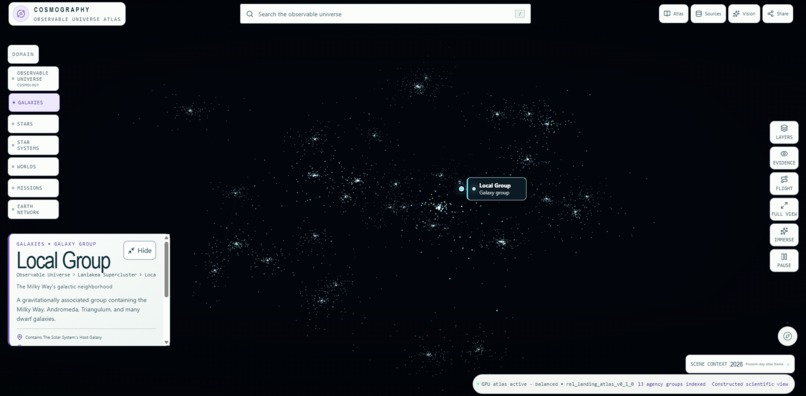
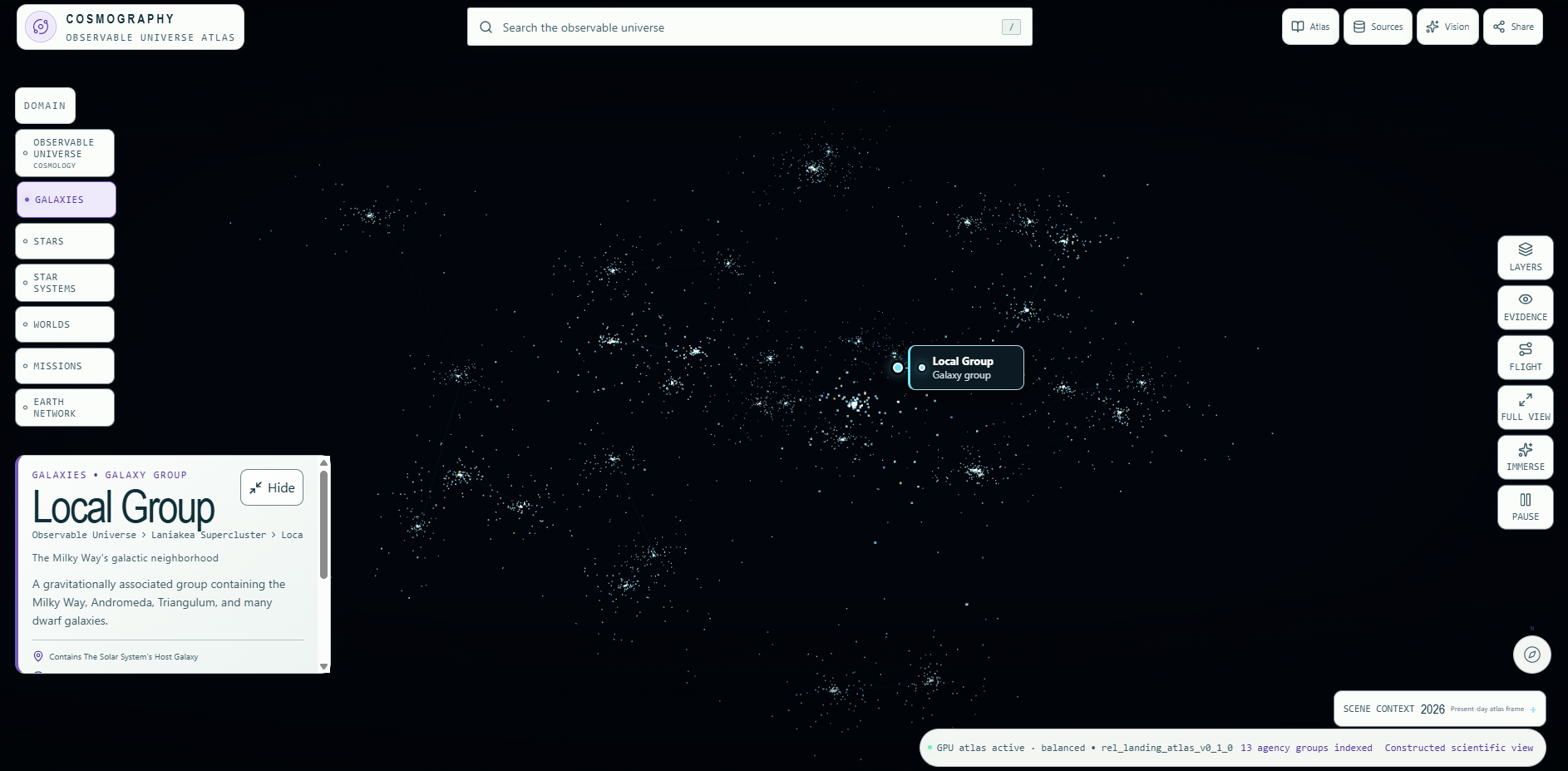
Galaxies - A gravitationally associated group containing the Milky Way, Andromeda, Triangulum, and many dwarf galaxies.
-
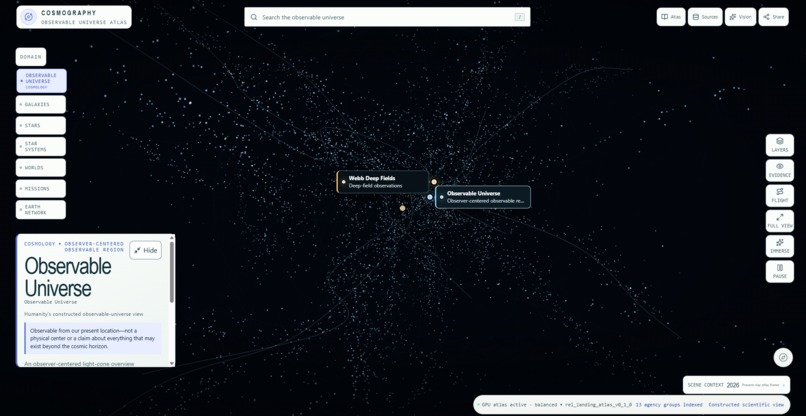
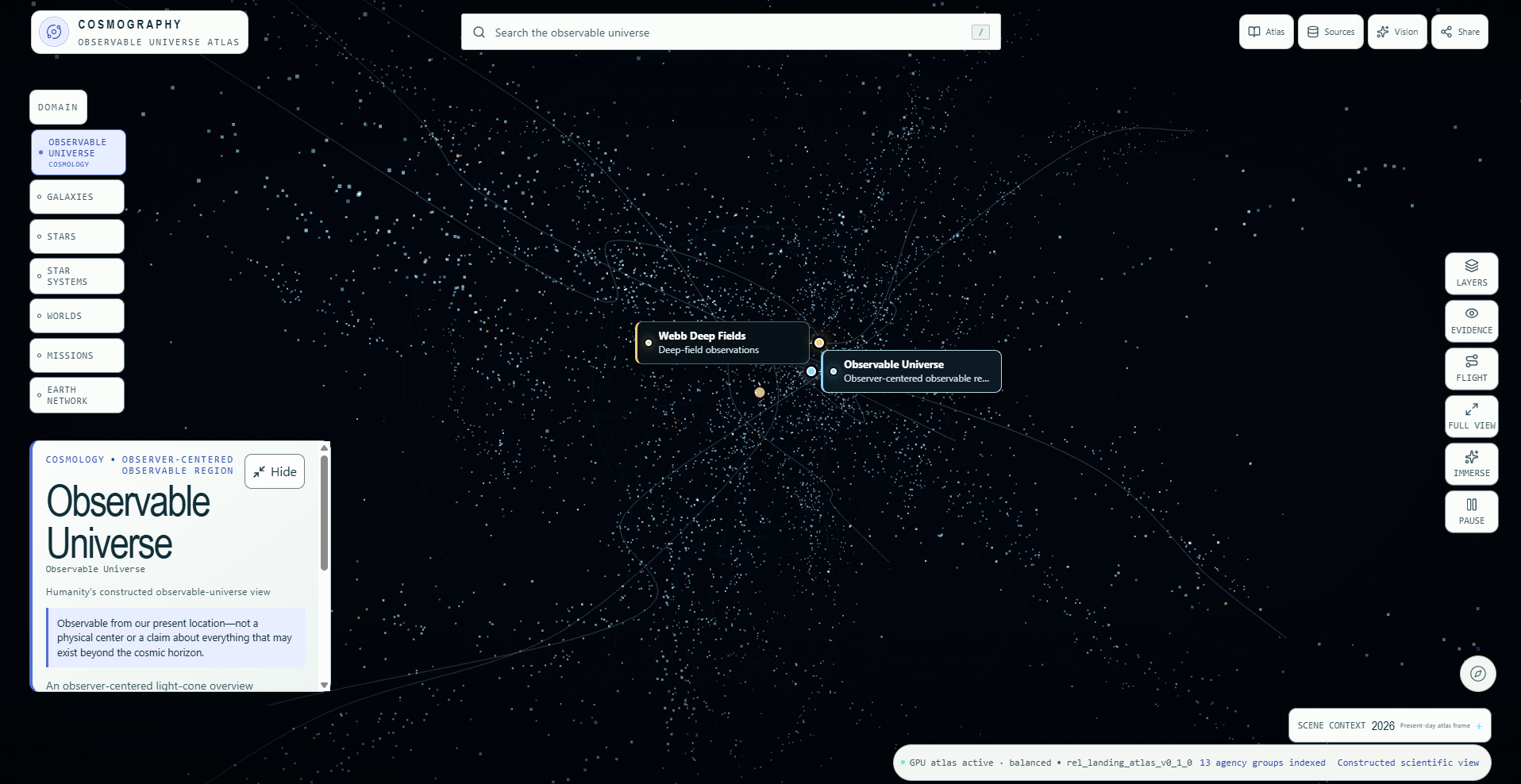
Observable Universe - Humanity's constructed observable-universe view
-
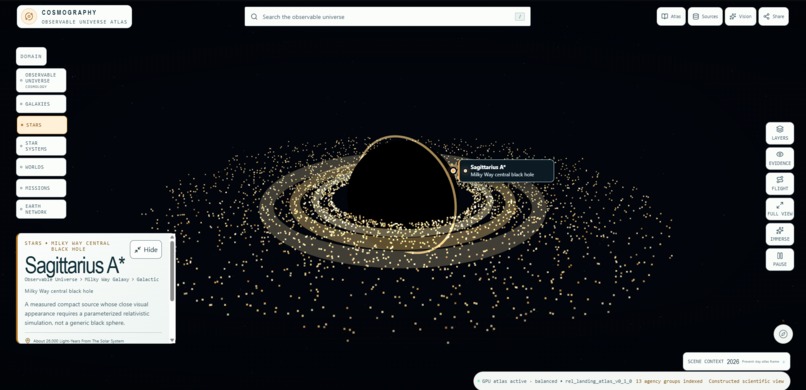
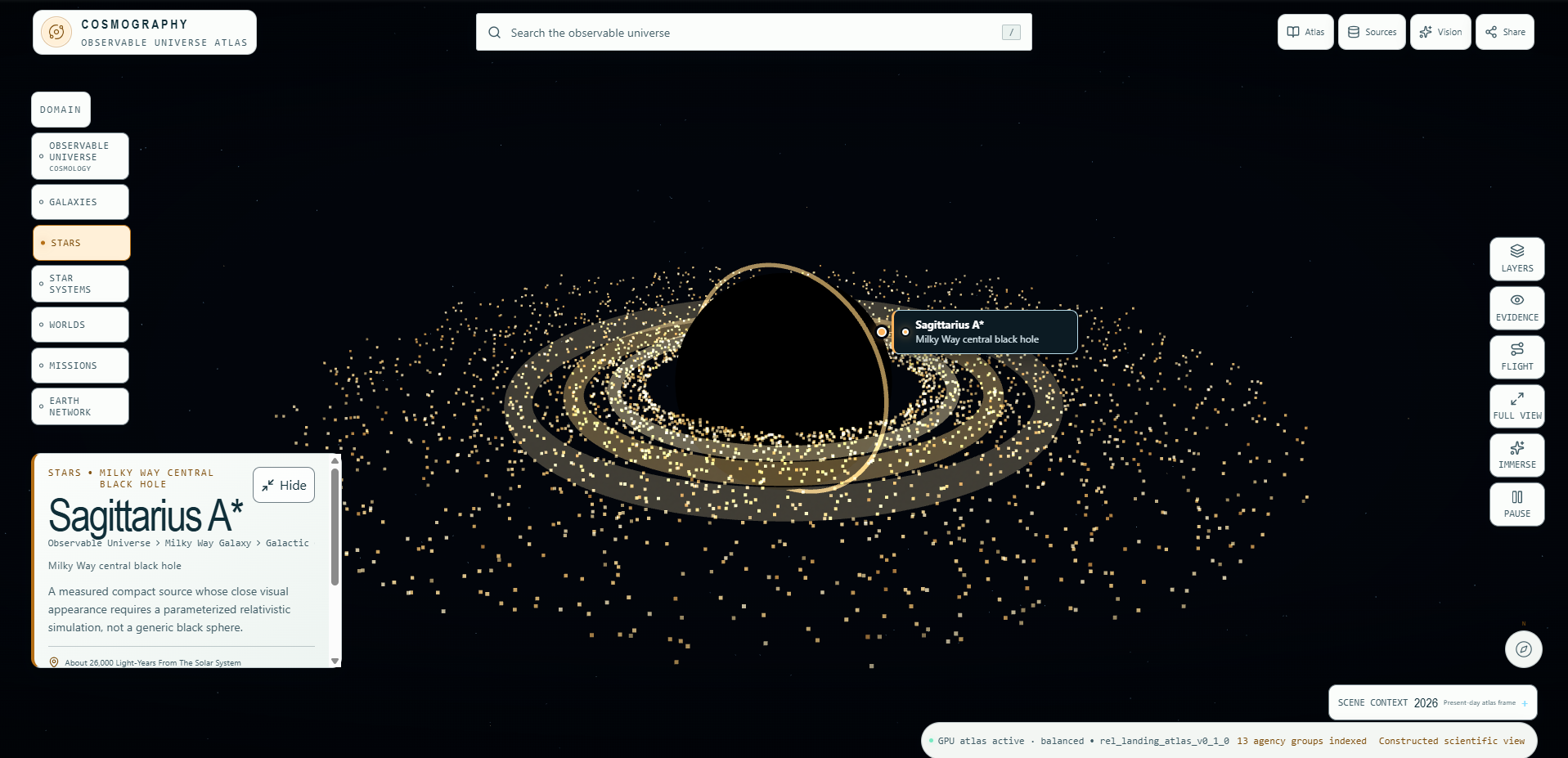
Stars A measured compact source whose close visual appearance requires a parameterized relativistic simulation, not a generic black sphere.
-
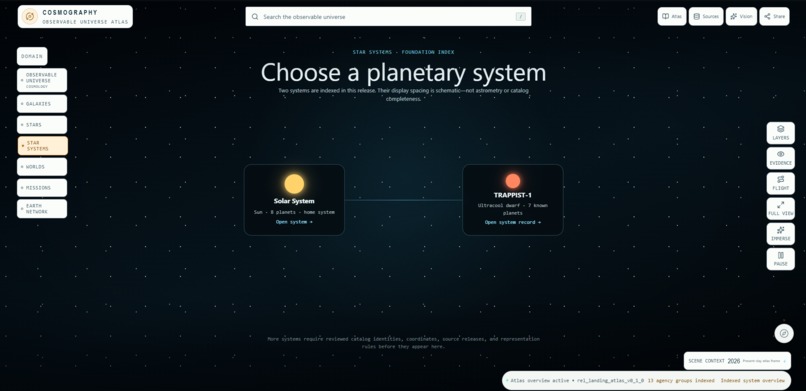
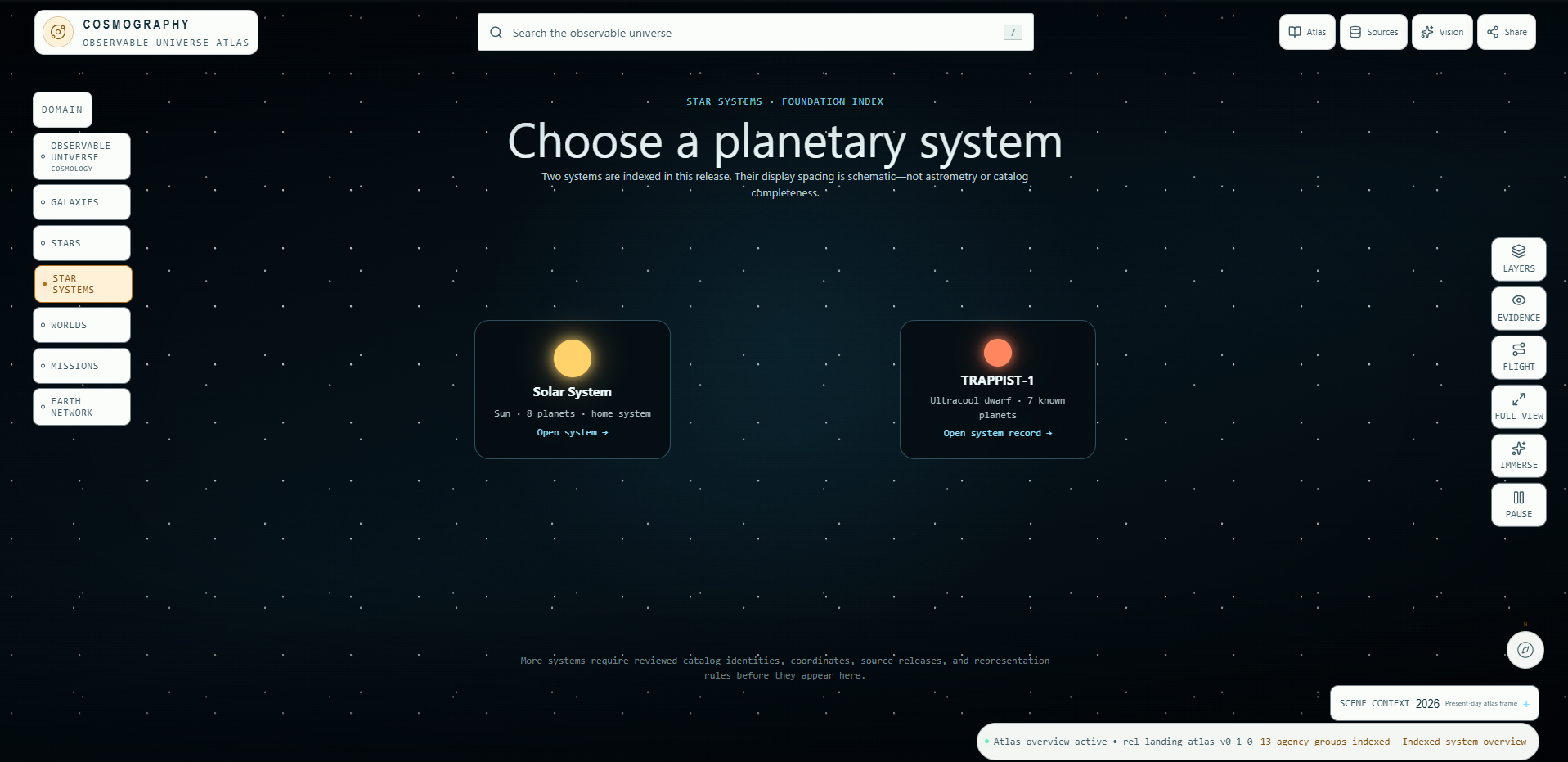
Star System - Foundation Index click to enter a solar system
-
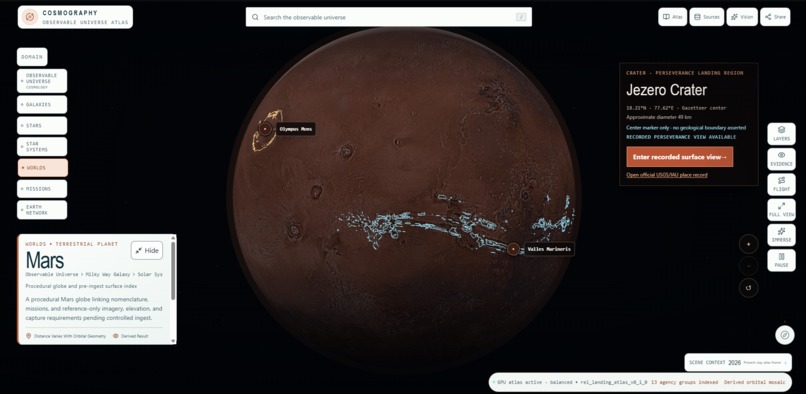
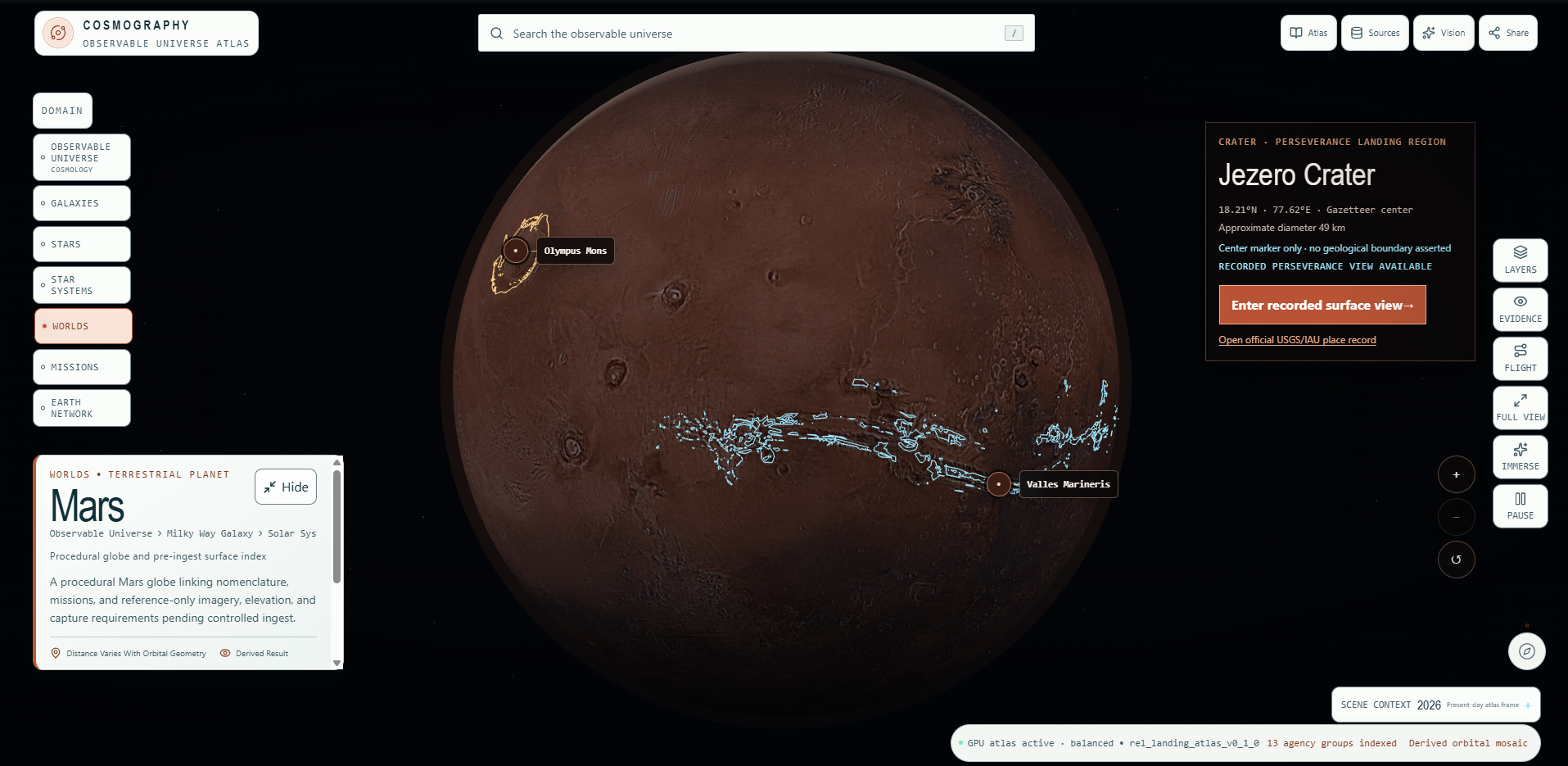
Worlds - Choose from worlds and explore
-
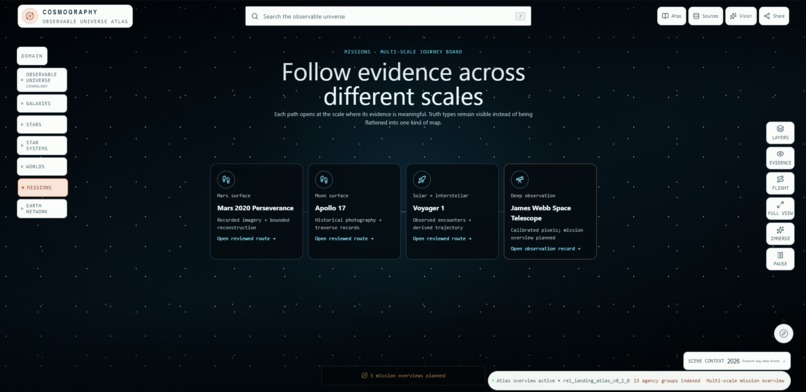
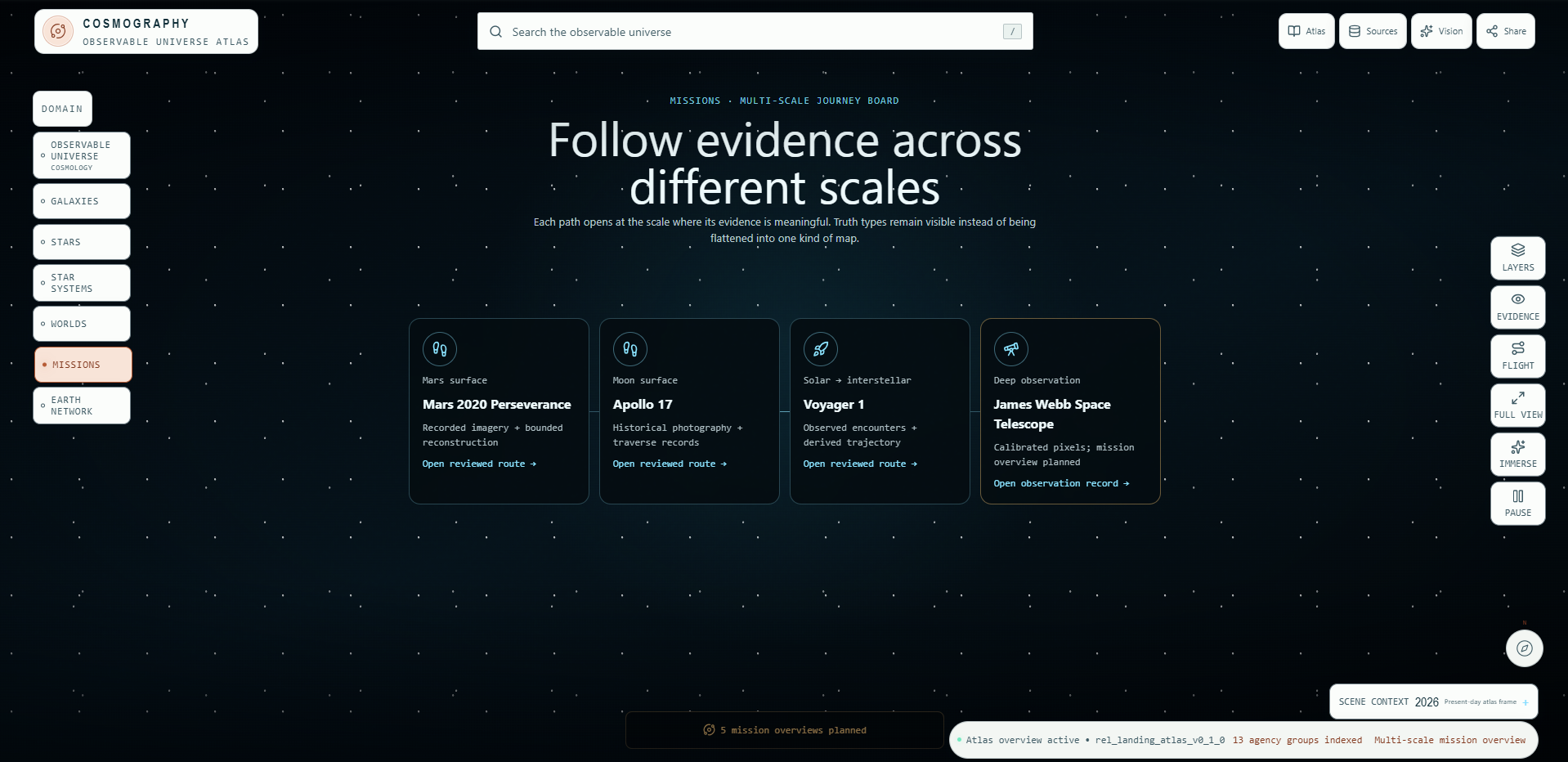
Missions - Missions · multi-scale journey board
-
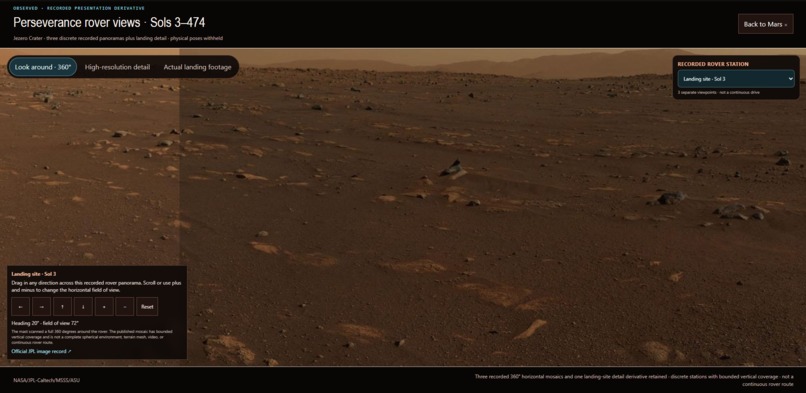
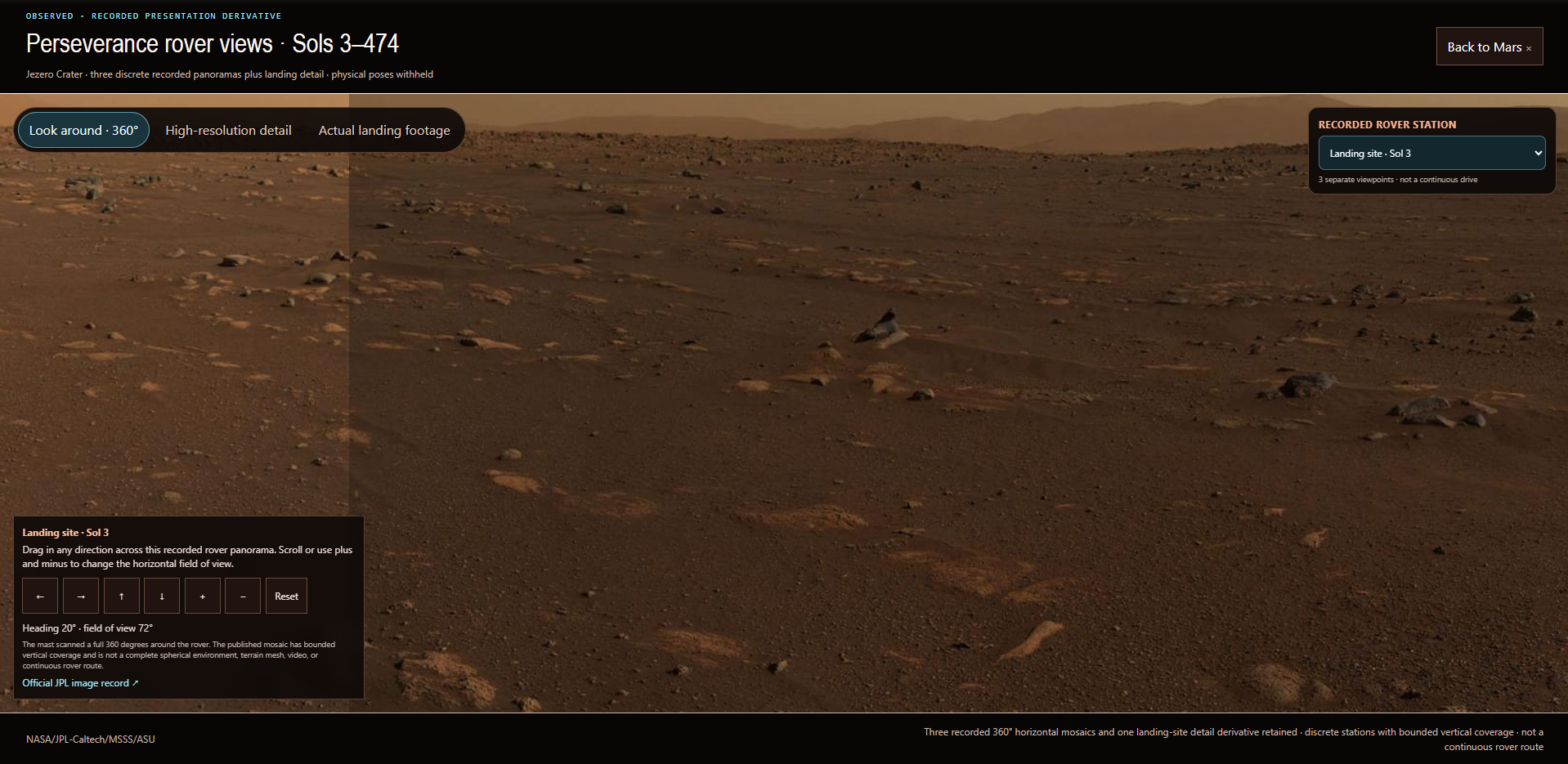
Enter Surface View (Mars) - Jezero Crater · three discrete recorded panoramas plus landing detail · physical poses withheld
-
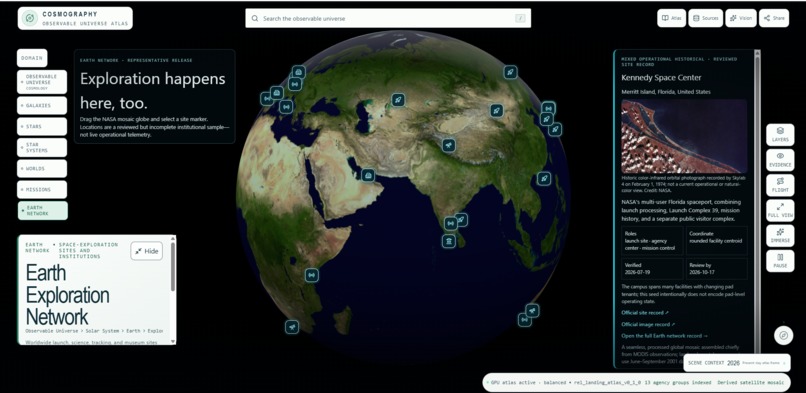
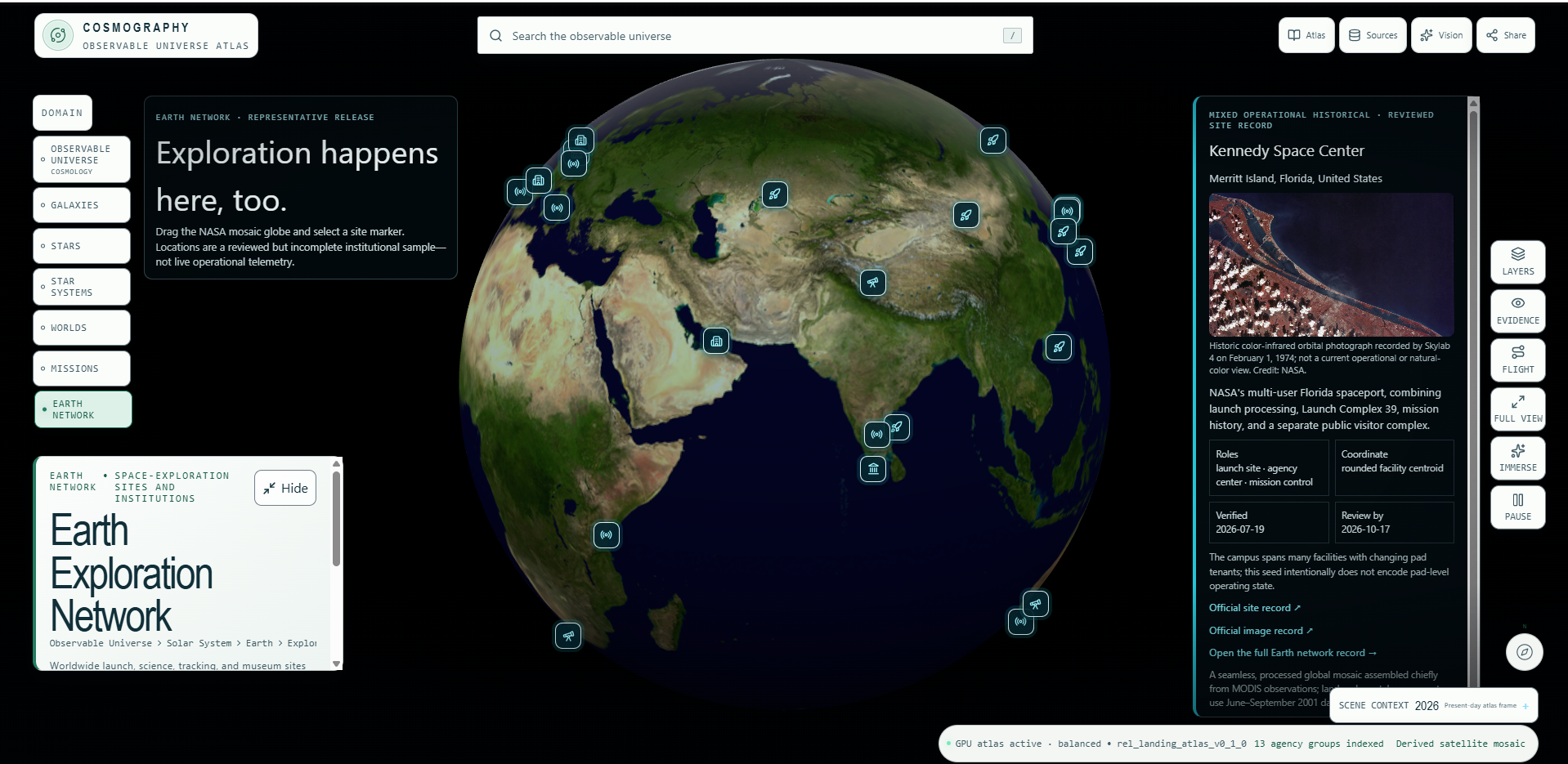
International map of government, university, commercial, historical, and public institutions connected to missions and discoveries.
-
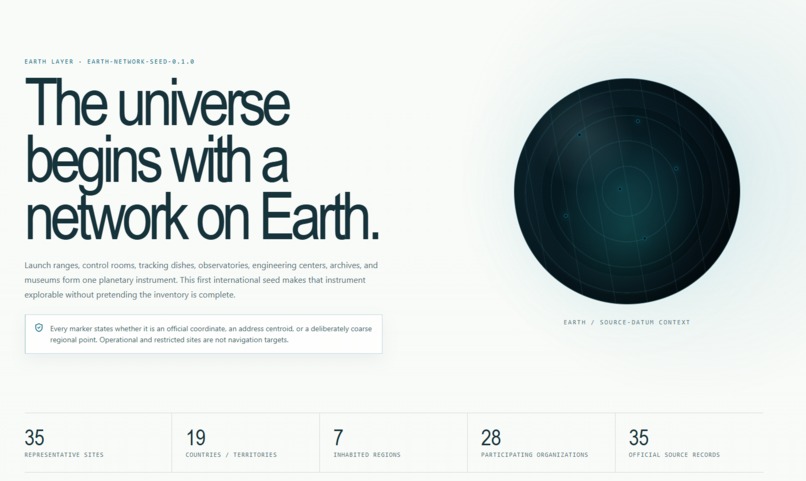
Full Earth Network - Read and get to understand all of the space development knowledge locations on earth from all over the world.
Inspiration
I have always loved reading about space missions, looking at images of the universe, and imagining humanity traveling through space and discovering new places. Military science fiction especially made me wonder what it would feel like to explore the universe as naturally as people explore Earth.
While reading about OpenAI Build Week on July 19, 2026, one question came to me: Why is there not something like Google Maps for the known universe?
Humanity has already collected an extraordinary amount of knowledge, imagery, mapping, and mission history, but it is scattered across agencies, archives, databases, and research institutions. I wanted to bring that knowledge together into one intelligent and interactive place. That idea became Cosmography.
What Cosmography Does Today
Cosmography is an interactive, observer centered atlas of the known universe. The current prototype begins at the Observable Universe and lets people explore cosmic structures, galaxies, the Solar System, planets, missions, and recorded planetary viewpoints.
The main guided experience takes users through seven scales, from the Observable Universe to the Milky Way, Solar System, Mars, Jezero Crater, and three recorded rover panorama stations.
The prototype currently includes:
- An interactive Observable Universe opening view
- A guided journey through seven scales
- A Solar System scene with the Sun and eight planets
- An interactive Mars experience using official imagery
- Three recorded Jezero rover panorama stations
- A ten chapter Voyager 1 mission experience
- Search across the verified foundation catalog
- Evidence panels showing sources, agencies, transformations, and uncertainty
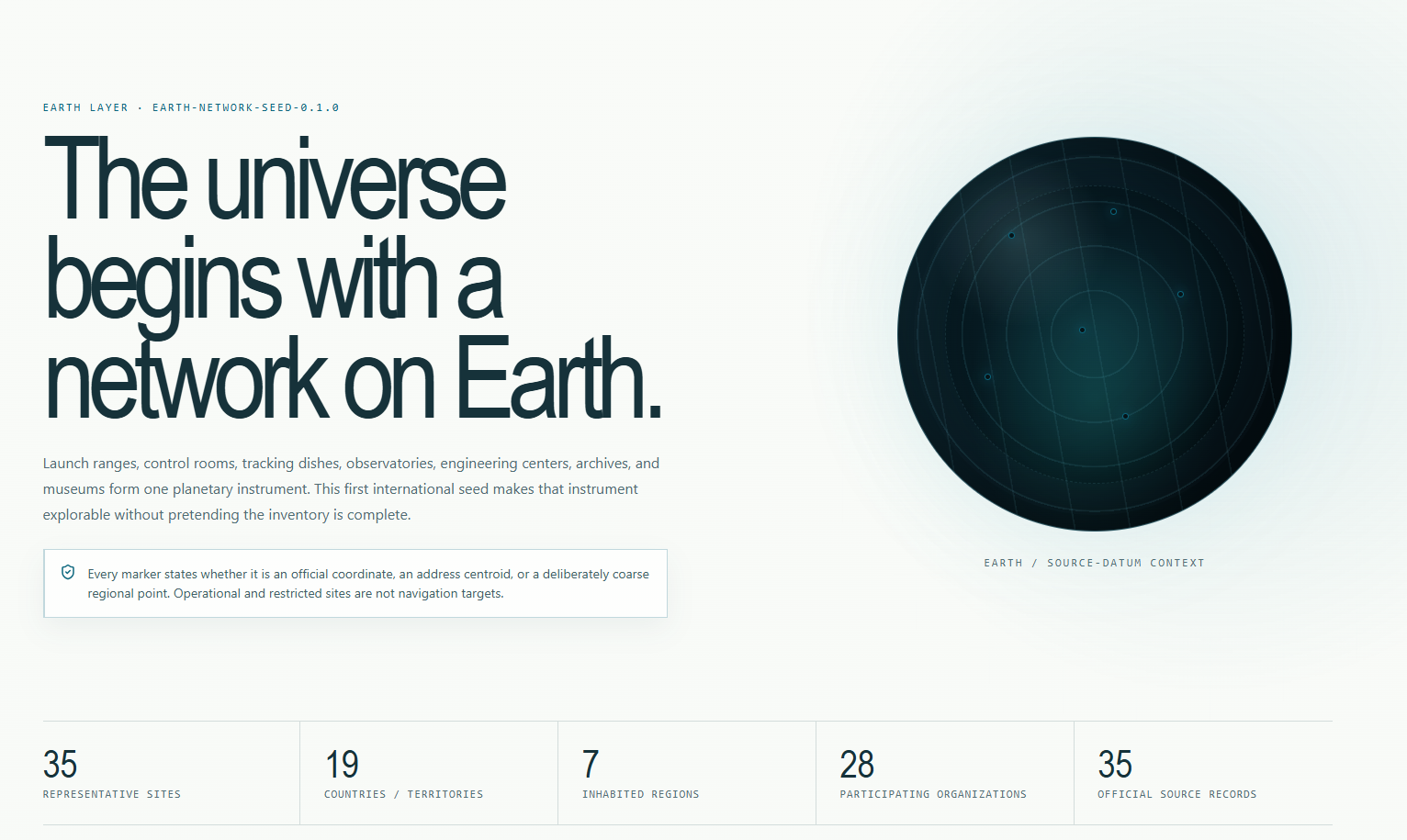
- An Earth exploration network representing 35 sites from 28 organizations
- Reference experiences for Apollo 17, Flight Deck concepts, and the Black Hole Lab
I designed the project to clearly separate recorded imagery, processed data, reconstruction, simulation, and future ideas. I do not claim that the entire universe has already been mapped or that continuous planetary Street View exists today.
The Larger Vision
My long term goal is to create a living map where people can move from a universal view into galaxies, solar systems, planets, moons, landscapes, missions, and recorded locations while keeping scientific evidence and history attached to everything they see.
Instead of reading about a mission on an isolated page, a person should be able to open it on the map, follow its journey, visit recorded stops, view the imagery and discoveries connected to it, and understand how it fits into humanity's larger exploration story.
Future conversational guidance could help people ask questions, compare objects, locate missions, and navigate the atlas. That capability is part of my vision and is not presented as complete in the current prototype.
How I Built It
I built Cosmography as a TypeScript and React web application. Three.js and WebGL2 power the interactive three dimensional atlas and world scenes. Vite, Vinext, Tailwind CSS, Zod, and Drizzle support the application structure, interface, evidence contracts, and data layer.
I designed the application for a Cloudflare Worker compatible environment. Cloudflare D1 supports personal state foundations, while Cloudflare R2 is prepared for governed media. Separate scientific model, relativity, and data connector packages keep data contracts and scientific boundaries distinct from the visual interface.
The atlas uses official and authoritative sources including NASA, JPL, USGS Astrogeology, NAIF SPICE, JPL Horizons, NASA PDS, Gaia DR3, the NASA Exoplanet Archive, MAST, NED, and NASA LAMBDA.
How GPT 5.6 and Codex Supported My Work
I am the sole creator of Cosmography. I used GPT 5.6 and Codex as development tools throughout the project.
GPT 5.6 helped me transform the original idea into clear product requirements. I used it to support planning, interaction design, prioritization, and decisions about how to distinguish factual recorded viewpoints from reconstructed movement.
I used Codex for implementation and verification inside the repository. Codex supported me in building and testing the application, integrating source backed imagery, maintaining scientific evidence contracts, correcting interface issues, running automated checks, preserving recovery checkpoints, and documenting what works and what remains unfinished.
GPT 5.6 and Codex are not presented as human teammates, cofounders, or embedded runtime features in the current prototype. They are the AI tools I used to help turn my idea into a working demonstration.
Challenges
The hardest part was having the patience to let the project develop while constantly wanting to see more detail added to the experience.
I quickly discovered how much information is required to create scientifically responsible visualizations. Producing something as visually convincing as the black hole in Interstellar, for example, requires far more than simply generating an image. It requires scientific models, accurate data, specialized expertise, careful rendering, and a clear explanation of what is observed, simulated, or reconstructed.
I went through all of my available resets during the first three days of building, and I estimate that the current prototype represents only about 30 percent of what I ultimately want Cosmography to become.
Another challenge was learning how to communicate the vision precisely to GPT 5.6 and Codex. AI can accomplish an extraordinary amount, but it still needs clear and specific instructions. When my instructions were too broad, the result did not always match what I imagined. I learned to break ideas into smaller tasks, explain the intended experience more carefully, review the results, and provide additional direction.
I also realized that Cosmography will be a long term project. Building a much larger atlas will require significant development time, token usage, scientific review, data storage, and hosting resources. Those costs will grow as I add more imagery, three dimensional environments, missions, worlds, and interactive experiences while keeping the site responsive and smooth.
What I Learned
I learned that there is an enormous amount of space data available from agencies and research institutions throughout the world. I was surprised by how much information GPT 5.6 and Codex could help me locate, organize, and connect into one experience.
At the same time, collecting information is not enough. I need to work with astronomers, astrophysicists, educators, and other subject matter experts to ensure that the data and visualizations are represented correctly. Scientific accuracy must remain as important as creating an exciting experience.
I also learned that AI works best as an iterative development tool. It can help research, plan, build, and test at an impressive scale, but I still have to provide the direction, make decisions, question the results, and define what the final experience should become.
What I Am Most Proud Of
I am most proud that Cosmography will become my first open source project. I want it to reignite curiosity about space and make humanity's collected knowledge easier for everyone to explore.
I especially want Cosmography to help children and students learn about space in a different way. Instead of only reading isolated facts, they should be able to see where something is, travel through connected scales, explore missions and discoveries, and understand how everything fits together.
The current prototype is only the beginning, but it demonstrates that this larger vision can become real.
What Comes Next
The protected judging demonstration is now live at cosmography.ai, and the sanitized judging repository is available at github.com/Volcara/cosmography.
My next steps are to deepen the verified catalog, add more worlds and missions, improve terrain and camera geometry, expand recorded mission routes, improve the mobile experience, and continue accessibility, performance, rights, security, and scientific review.
Cosmography begins with space, but its purpose is simple: to help people, especially children and students, explore what humanity knows and remain curious about everything still waiting to be discovered.
Built With
- cloudflare-d1
- cloudflare-r2
- cloudflare-workers
- drizzle-orm
- gaia-dr3
- github-actions
- gpt-5.6
- jpl-horizons
- naif-spice
- nasa-jpl
- node.js
- openai-codex
- react
- tailwind-css
- three.js
- typescript
- usgs-astrogeology
- vinext
- vite
- webgl2
- zod

Log in or sign up for Devpost to join the conversation.