Inspiration
The influence of modern telescopic imagery has grown massively since the 90's, with the launch of spacecraft such as JWST/Hubble, and the increasing accessibility of commercially available equipment for amateur astronomers. Nowadays, by internet sharing or observation, it is easier than ever to become awestruck by the vast mystery, and beauty, of the observable universe. However, there have no doubt been times where we, the curious humans we are, wish we knew a little more about what we were observing. That's where CosmicQuery comes in.
What it does
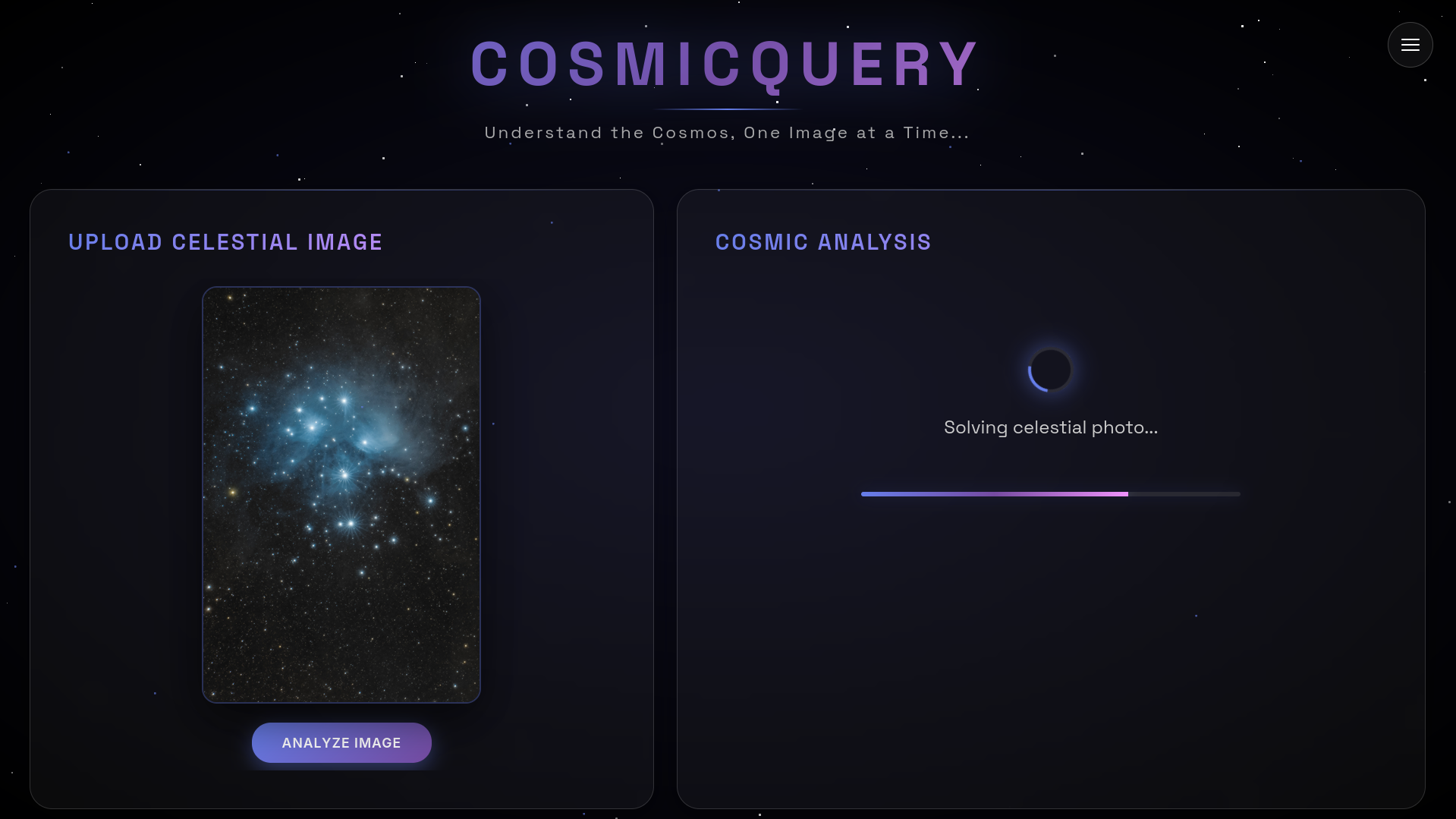
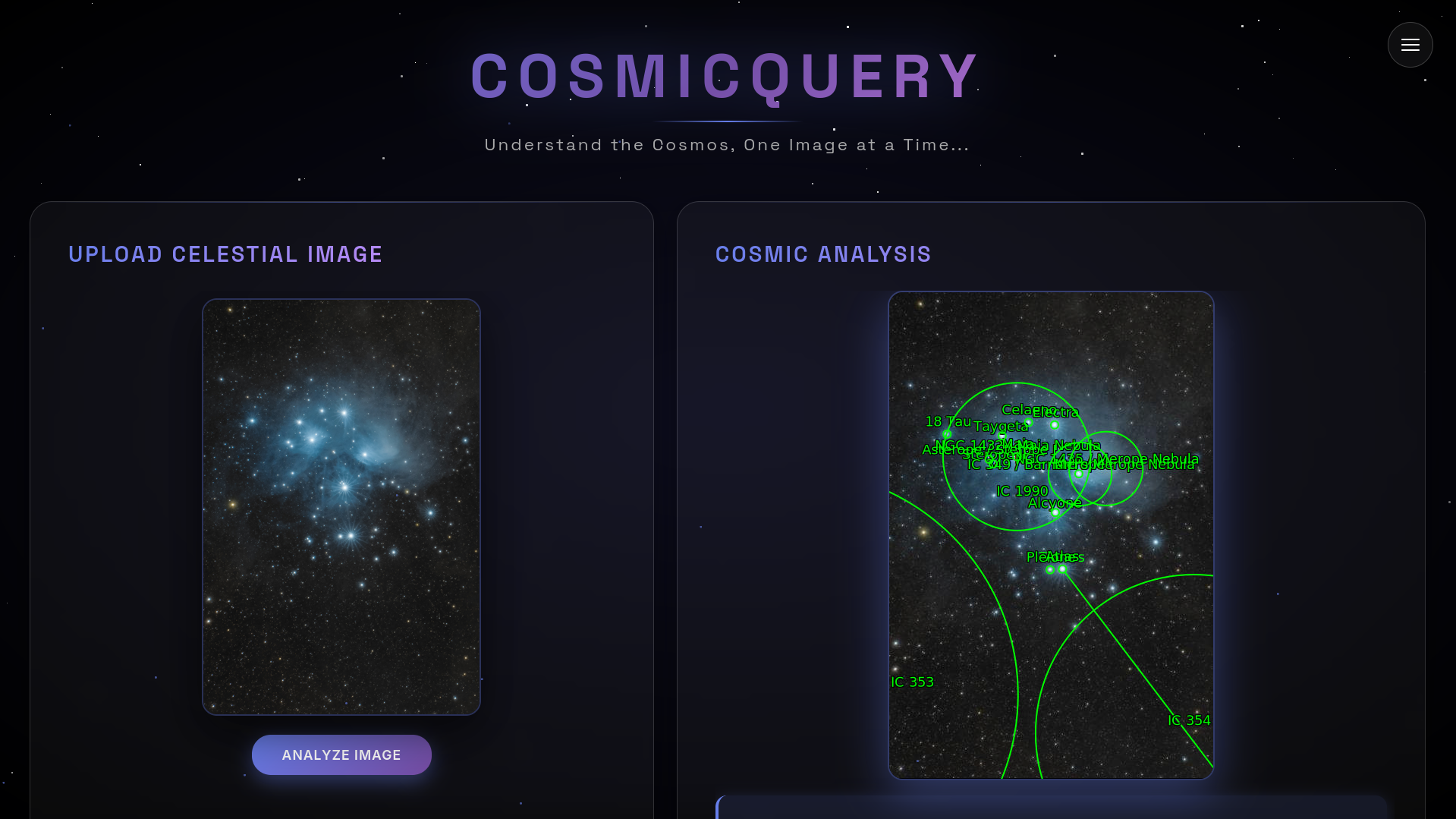
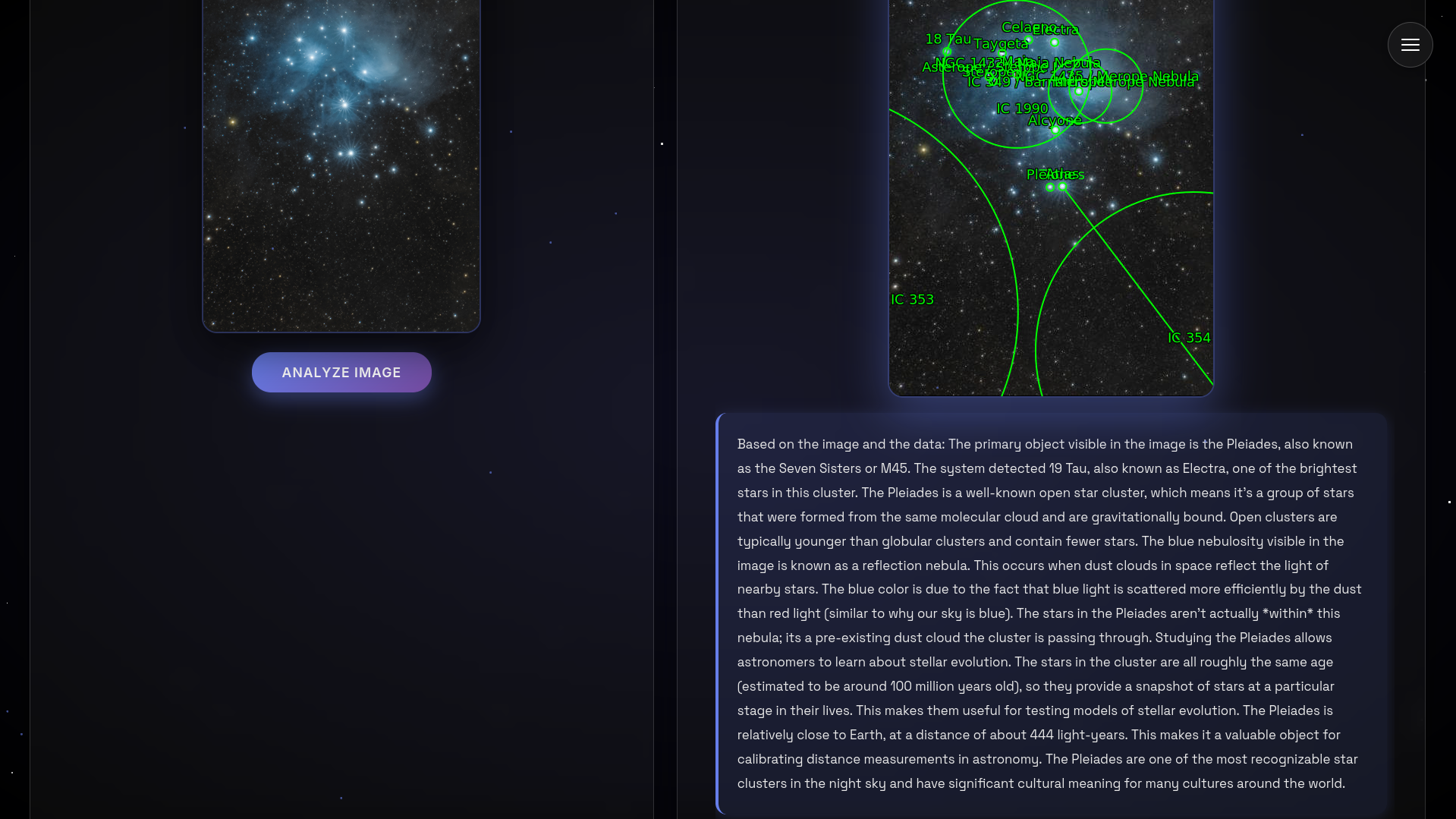
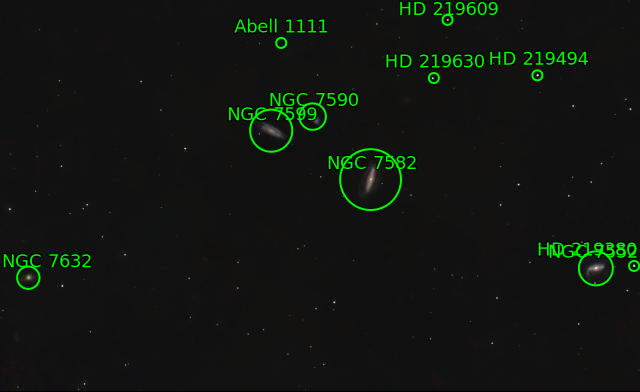
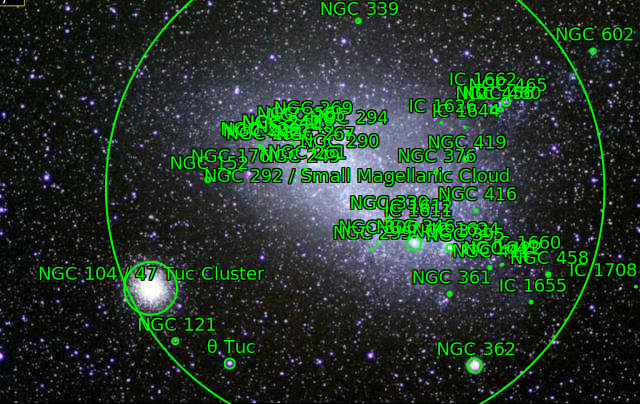
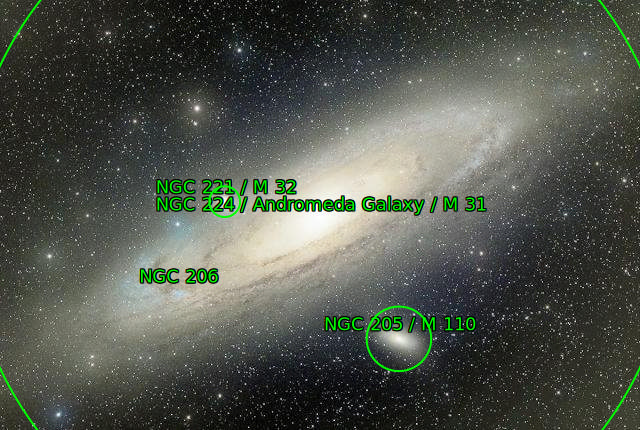
CosmicQuery is a webpage users can go to, whether it be with images taken by their own equipment, or downloaded from those far more grand orbiting the earth, and can learn about exactly what they are seeing. CosmicQuery takes users photos and runs them though plate solving and data acquisition astronomical libraries to determine known objects, features, and information about them from a database of over 20 million unique celestial objects. It then provides the user with the annotated image detailing notable features and, if present, what the central body of the image is. The user then has access to an AI astronomer partner aptly named "Astro" to elaborate further on facts about the contents of the photo, and answer any questions the user has. Rather than take this data from the wide internet immediately like most LLM's would, Astro takes the data directly from the SIMBAD astronomical database first to ensure scientific integrity.
How I built it
The entire back-end is built with Python, and uses the Astrometry API as well as the OpenRouter API to implement the feature annotation and generative AI models respectively. The program currently runs using the Google Gemini 2.0 Flash model for it's balance between being free and still having enough parameters to give meaningful responses. It also implements FastAPI, Dotenv, and Uvicorn, for ease of deployment. The front end is entirely HTML/CSS.
Challenges we ran into
I wanted to expand on the experience I was able to have at HackRice recently, which was my first hackathon. I first learned how to implement HTML during my development of my project, and I wanted to really broaden my stack this time around. Learning all of these new technologies and how to implement them as a solo developer was extremely challenging, especially when much of your development time is spent debugging. This time around, it was really helpful that I had a challenge that aligned with my passions, as I believe that fostering education and passion for space is crucial, which really helped me progress very efficiently.
Accomplishments that I'm proud of
Being able to take on so many more new things this time around, learning alot along the way, and being able to share my passion for space with others. I am very happy with how this turned out, and I hope someone learns a little more as a result.
What I learned
I learned how to implement API calls and how to reference different datasets, organizing them to be able to make a polished final product.
What's next for CosmicQuery
A more advanced AI model would be amazing, as the model Astro is running on at the moment is a tad bit dated. It was chosen for being free, but I think the program would benefit from a beefier model. Additionally, more science documentation and reputable sources to give users suggested research papers if they want to continue to learn more outside of CosmicQuery.


Log in or sign up for Devpost to join the conversation.