-
-
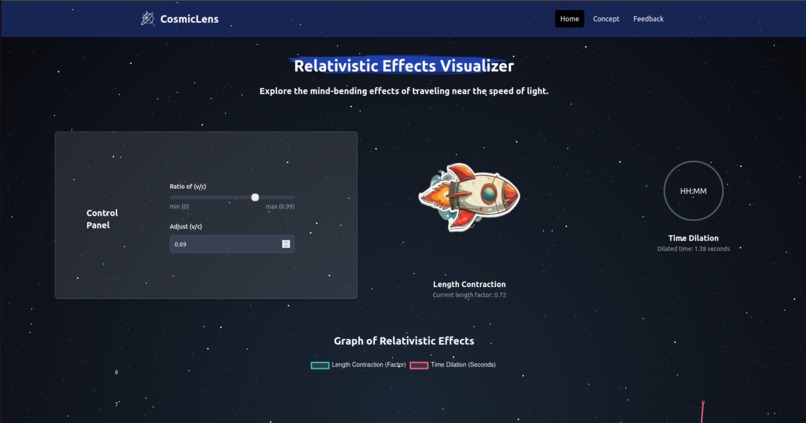
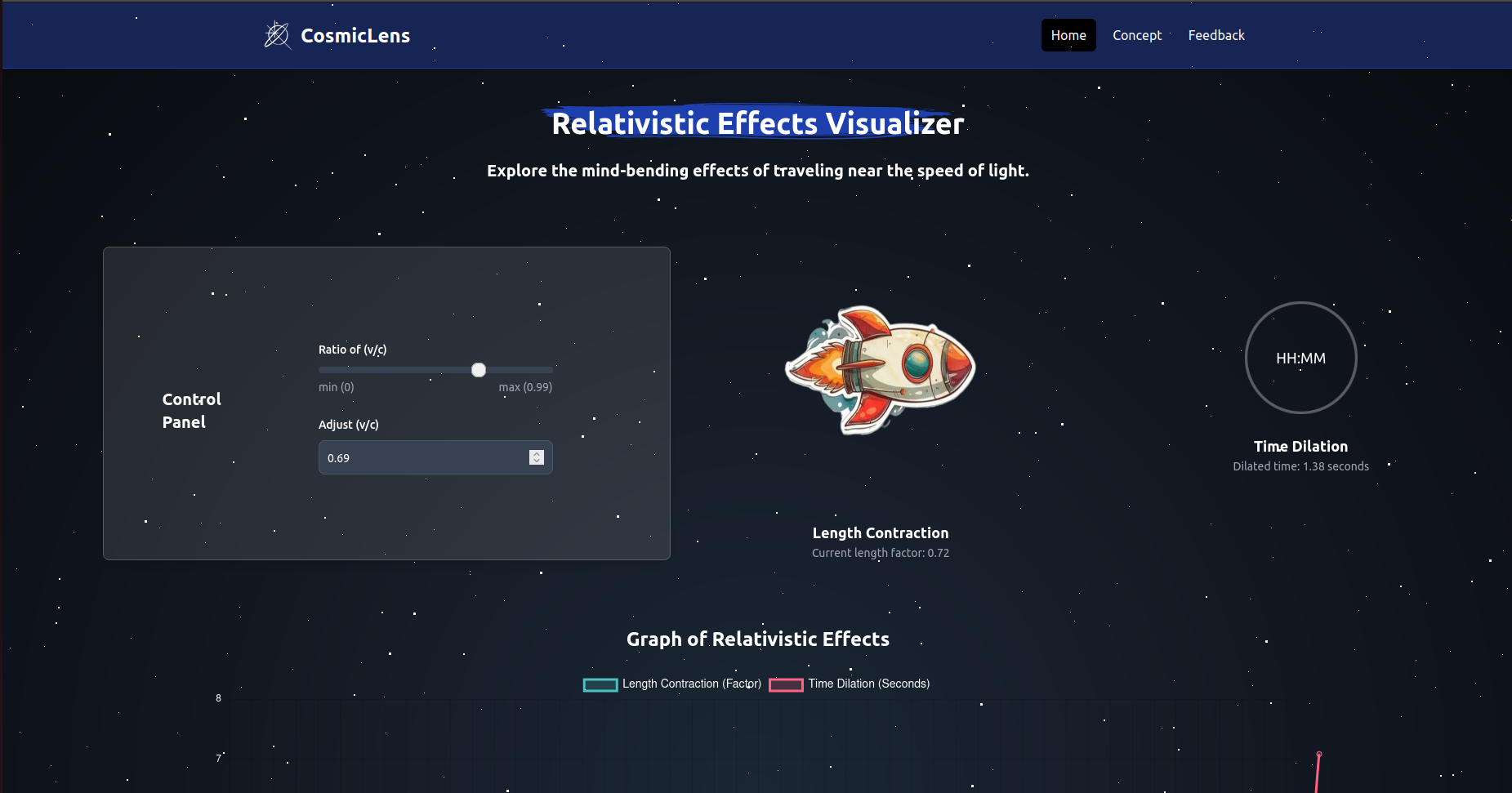
Relatistic visualization
-
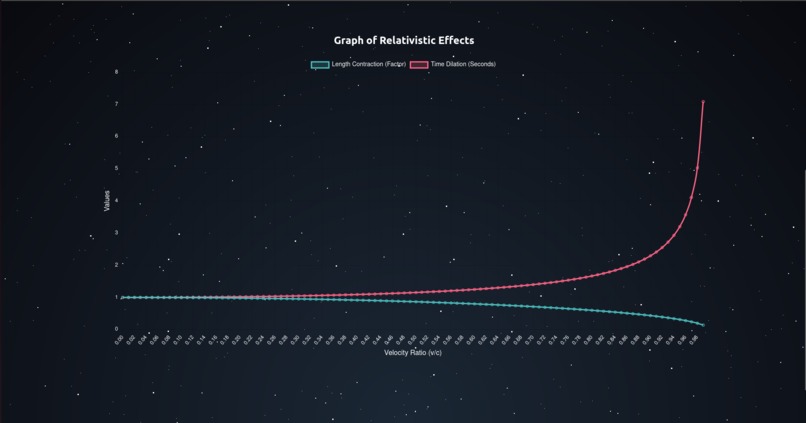
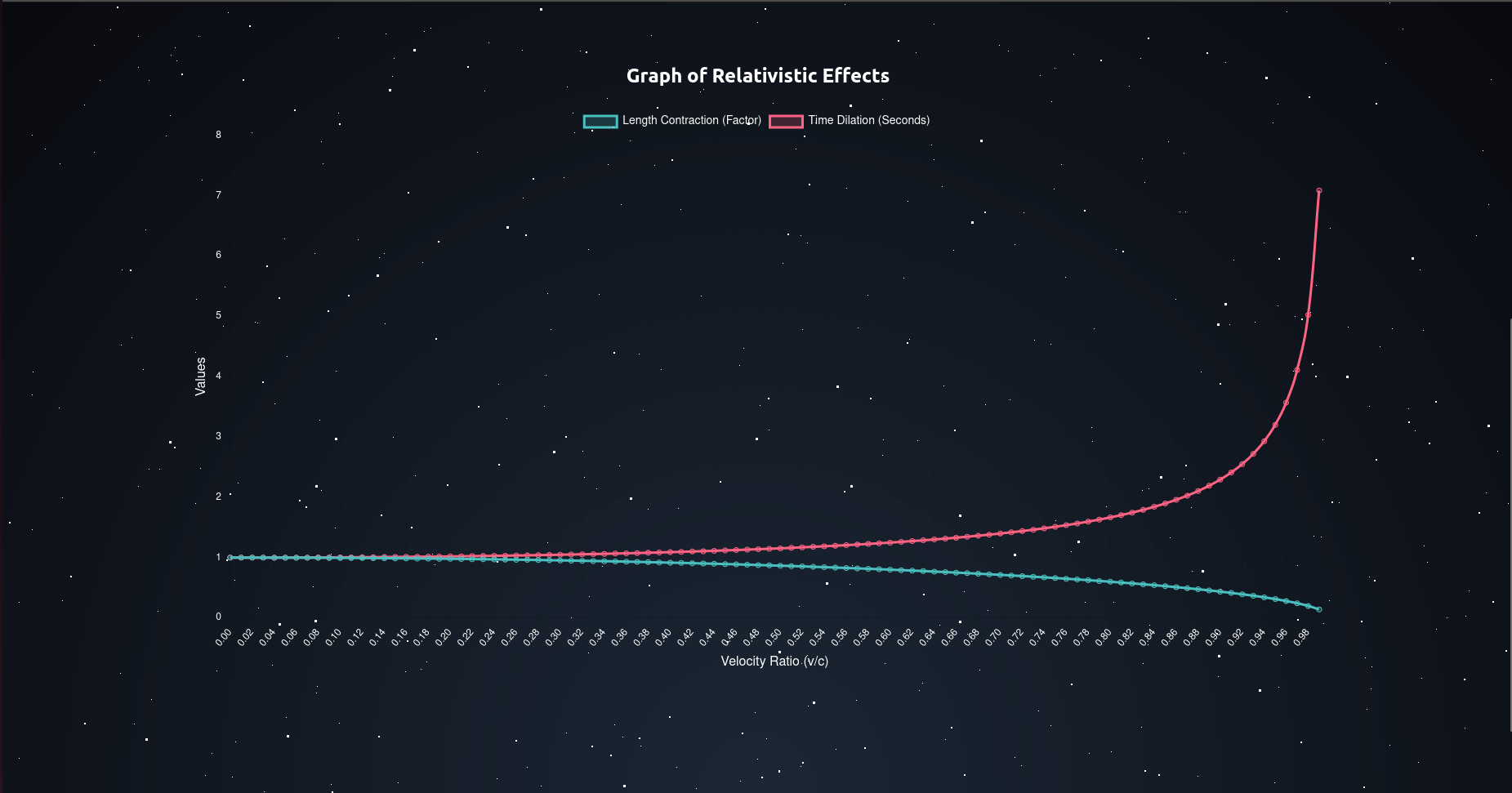
Graph with variation of distance and time with velocity
-
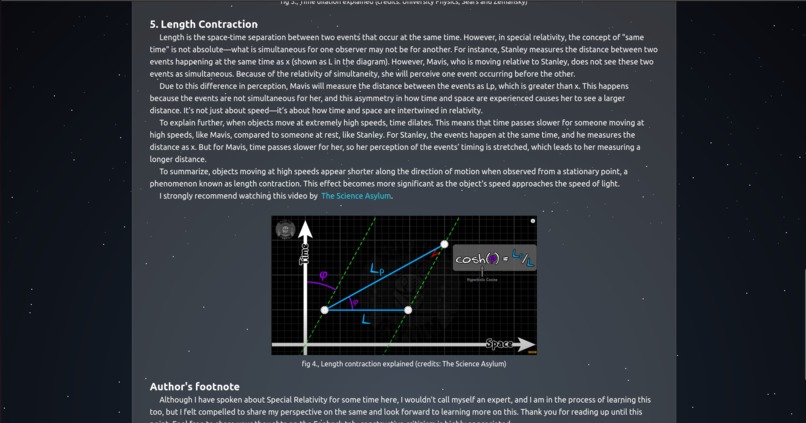
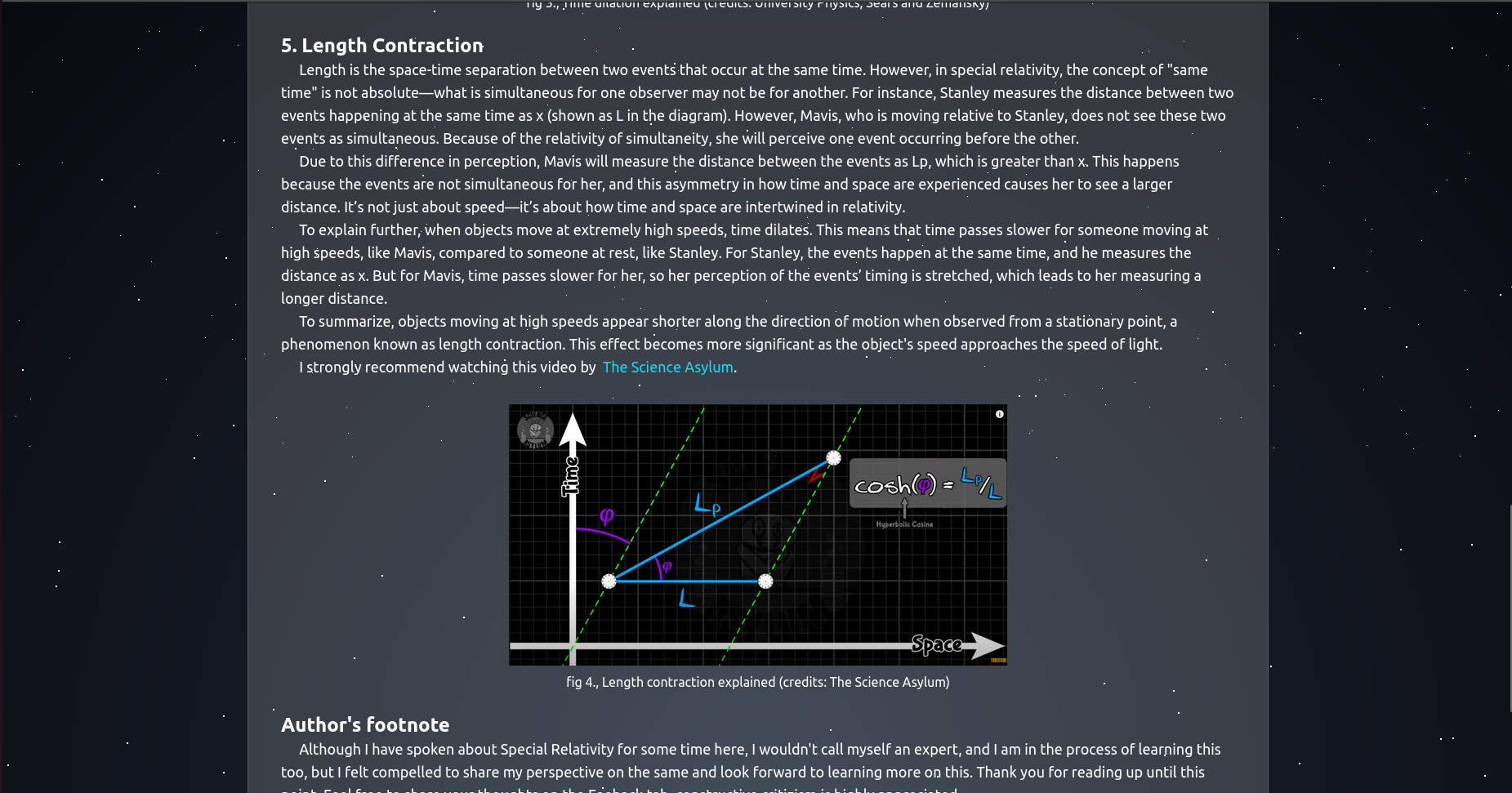
Concepts explained
-
Feedback link
Inspiration
My passion for physics, web development, and machine learning sparked the idea of creating a tool to visualize the fascinating effects of relativity. As someone who is deeply interested in theoretical physics, I wanted to build an interactive and engaging way to demonstrate concepts like time dilation, length contraction, and other relativistic phenomena. That's how CosmicLens came to life—an app designed to help users explore these cosmic effects in real-time.
What it does
CosmicLens allows users to visualize the effects of relativity, such as how time slows down and lengths contract at high speeds. The app provides an interactive platform where users can adjust velocity/speed of light ratio to observe these relativistic phenomena in action. It's a tool designed to make complex physics more accessible and engaging through dynamic visualizations along with easily comprehensible explanations.
How we built it
I started by designing the user interface to make it simple and intuitive for users to interact with different relativistic effects. I used React.js for building the frontend and integrated Chart.js for data visualization. I completed the static pages like concepts and feedback first and then continued with the visualizer part so that I could give my complete attention and dedication to give it my best. To calculate relativistic effects like time dilation and length contraction, I created custom JavaScript functions based on Einstein's equations. Tailwind CSS made the designing part intuitive and quick. The app dynamically visualizes these effects as the user adjusts variables like velocity or distance. Vite was chosen for its fast build and development experience.
Challenges we ran into
One of the biggest challenges was ensuring the visualizations were not only accurate but also engaging. Translating complex theoretical concepts into something visually understandable was tough, but I eventually found a balance between simplicity and scientific accuracy. Another challenge was optimizing the app for performance, especially when simulating extreme relativistic speeds. There were several moments of frustration with debugging, especially with the deployment process as there were some issues with the versions in the dependencies, but it was all part of the learning journey.
Accomplishments that we're proud of
I'm really proud of how the app turned out in terms of its interactive nature and user engagement. Seeing users explore relativistic effects in real-time was incredibly rewarding. I’m also proud of the way I managed to strike a balance between scientific accuracy and an approachable user experience, making these complex physics concepts more digestible for anyone curious about them.
What we learned
Through building CosmicLens, I deepened my understanding of special relativity and improved my skills in React, Vite, and data visualization. It was also a great exercise in turning abstract physics concepts into something more tangible and interactive, which involved a lot of problem-solving and experimentation. Debugging, deployment challenges, and optimizations taught me a lot about resilience and refining code for performance.
What's next for CosmicLens
I want to expand into tutorials on other areas of physics, potentially incorporating machine learning for particle physics visualizations or simulations. This would naturally require a backend for user authentication and progress tracking, which would be easy to implement using pre-existing solutions, especially in Django. I'm also exploring ways to make the app more accessible by introducing educational content and expanding it to cover more advanced topics.

Log in or sign up for Devpost to join the conversation.