-
-
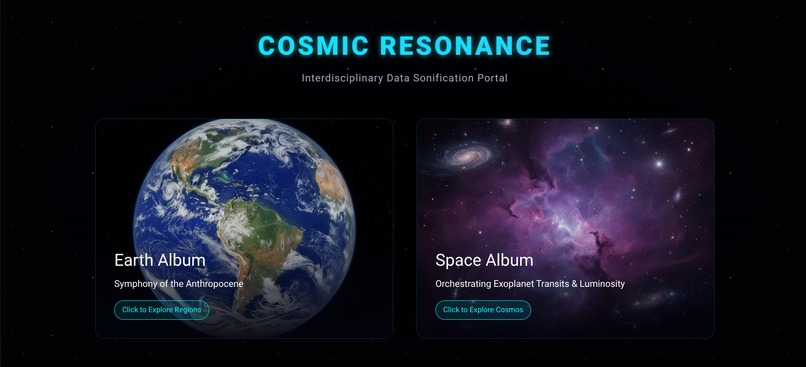
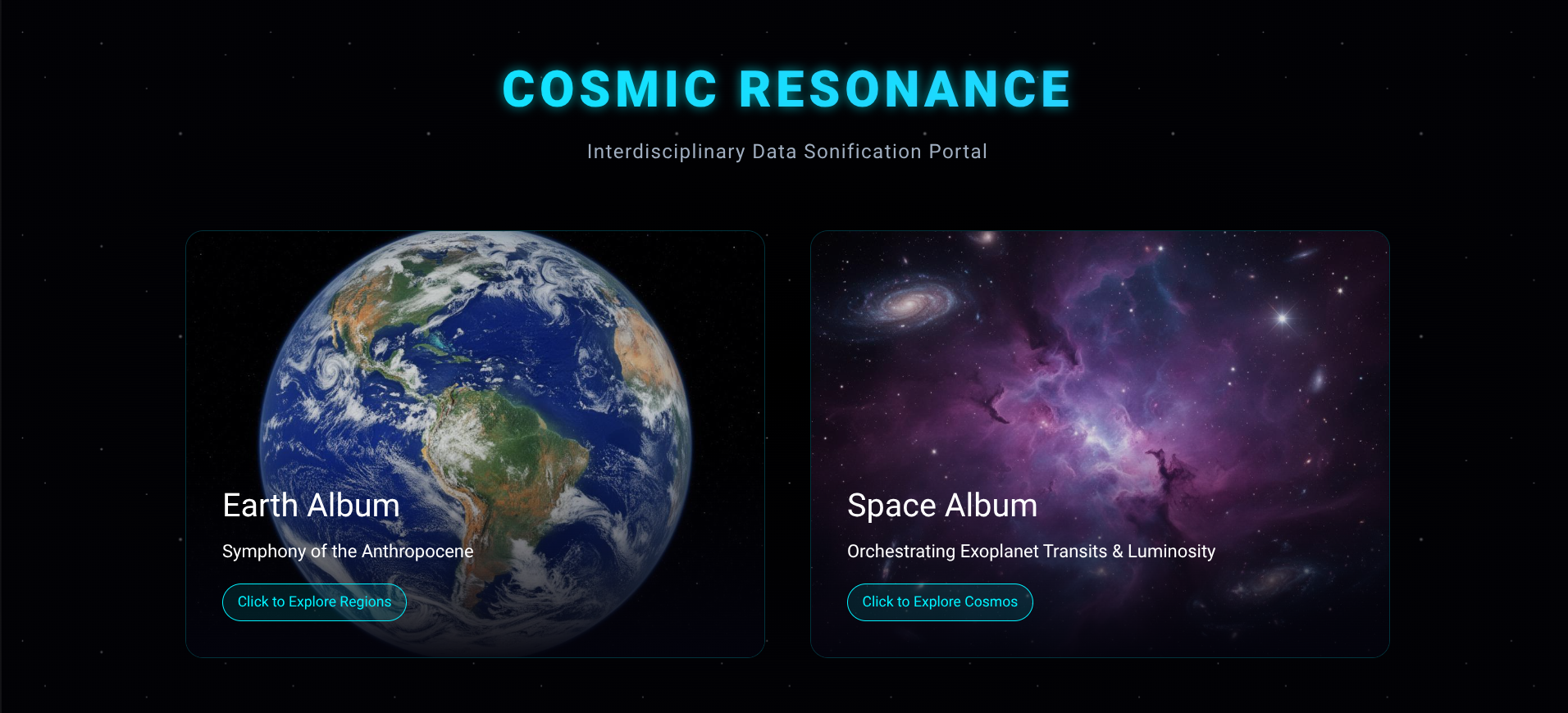
Homepage - Browse Earth and Space albums to begin exploring astronomical objects through interactive visualizations and sonified data.
-
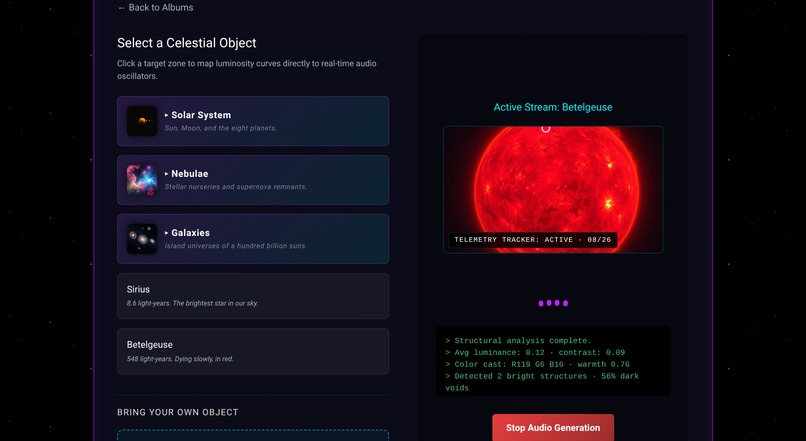
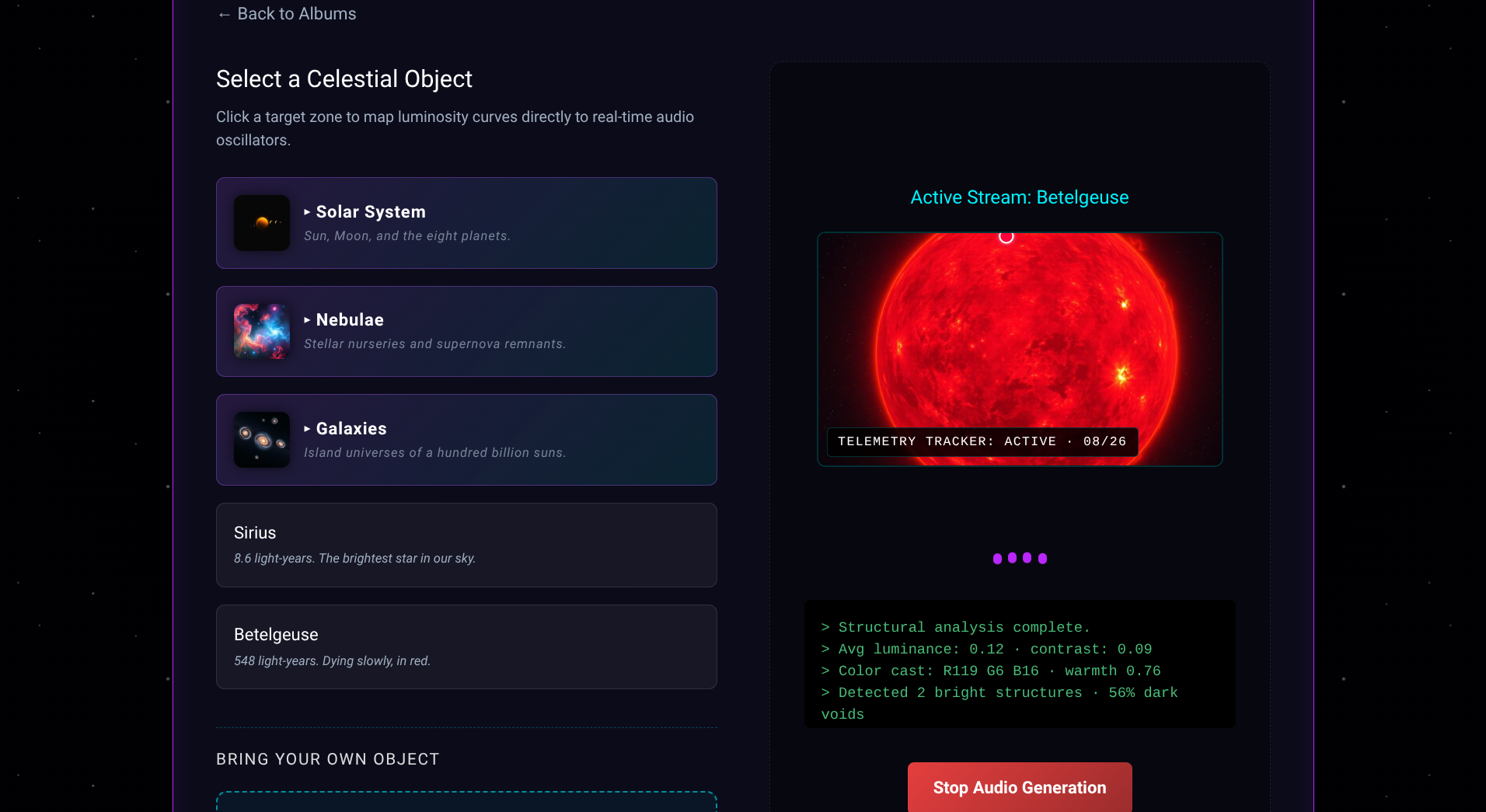
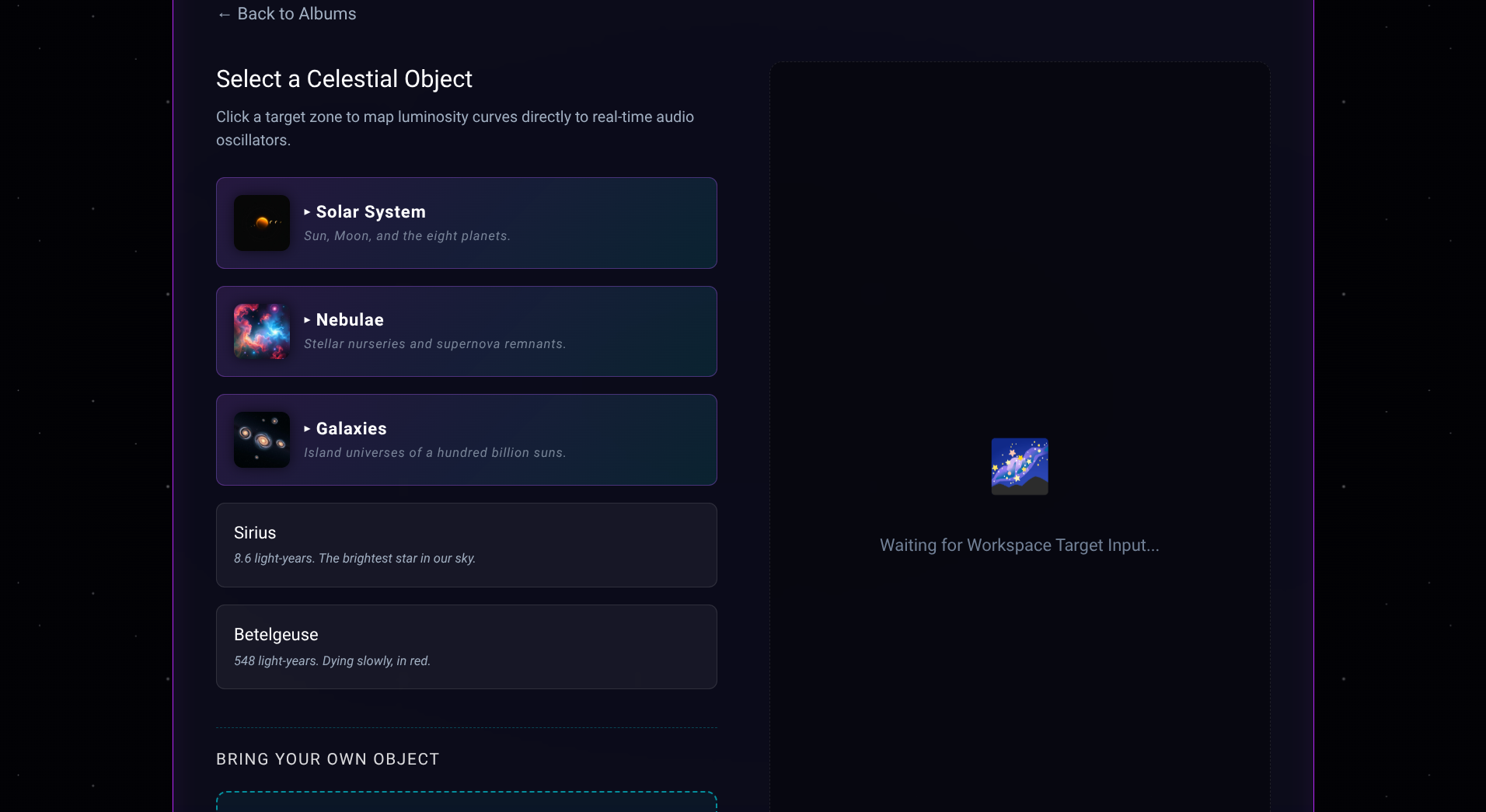
Celestial Object Selection - View detailed information about an astronomical object and hear its unique sonification.
-
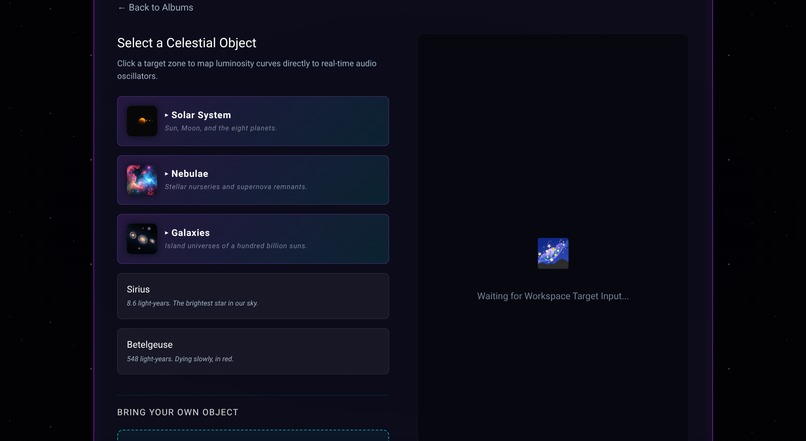
Space Explorer - Explore planets, stars, galaxies, and nebulae while listening to sonifications generated from real astronomical data.
-
-
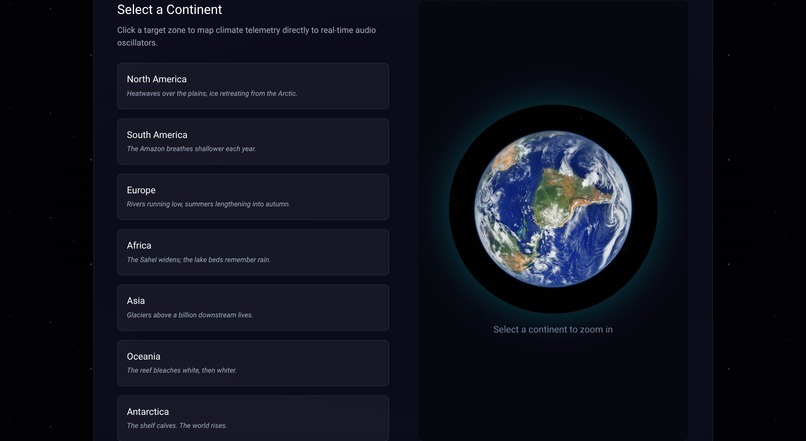
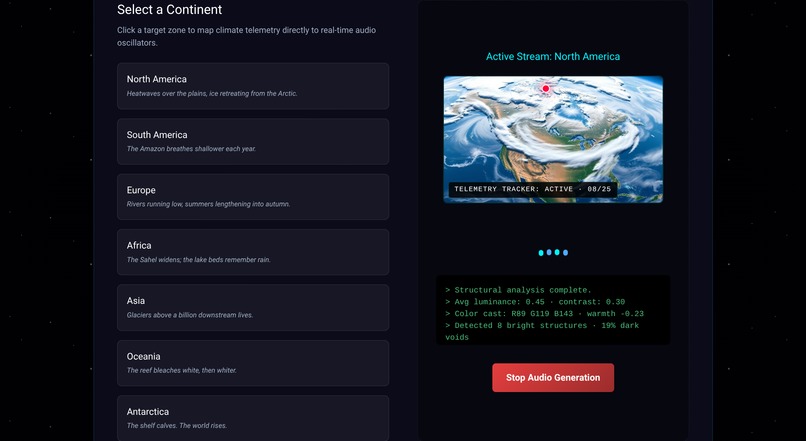
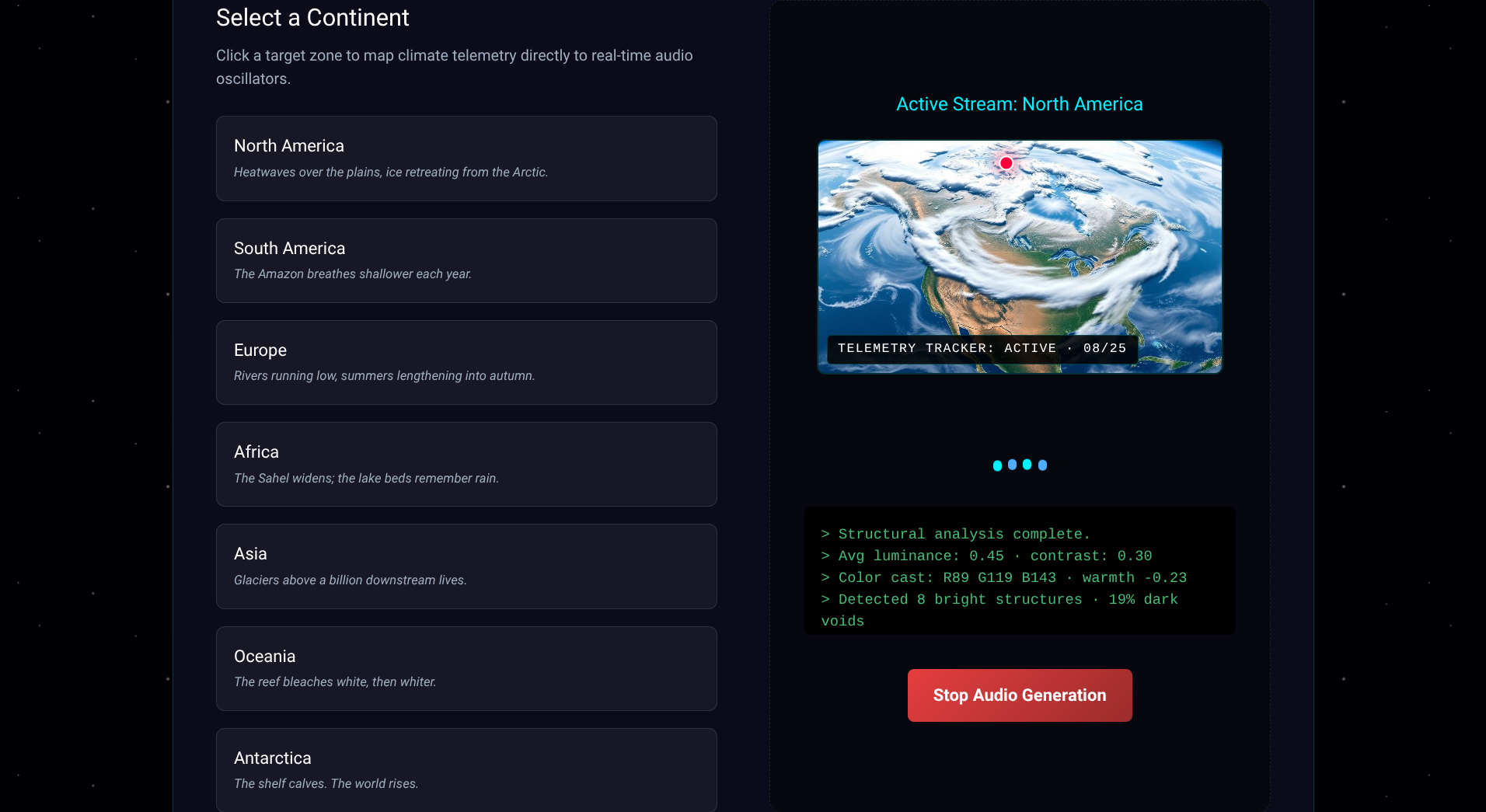
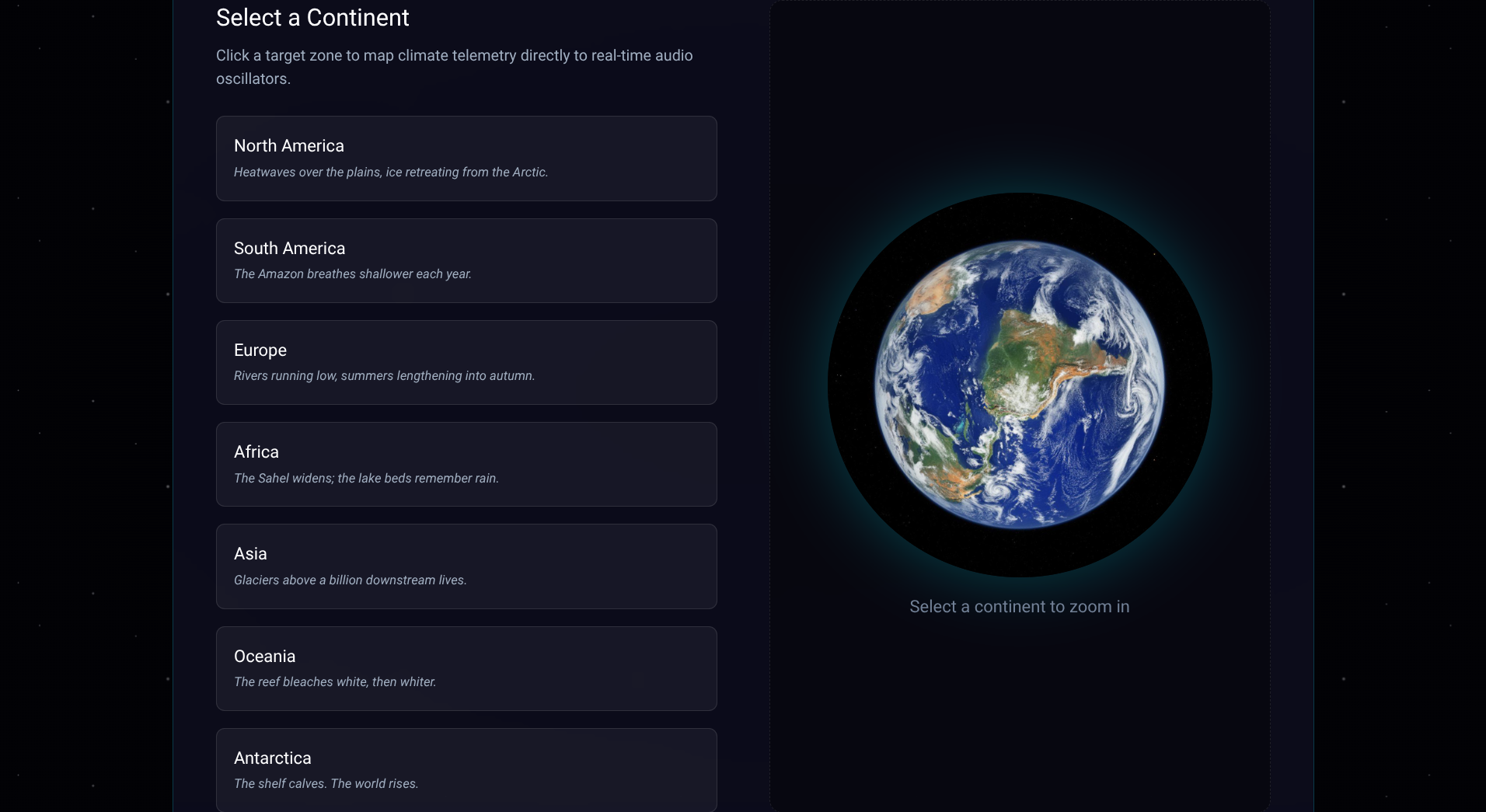
Earth Explorer - Discover Earth-related datasets and learn about climate change in various regions through sound.
Inspiration
Astronomy has always fascinated me, but I realized that much of the information is presented visually, making it difficult for people with visual impairments to experience the beauty and patterns of the universe. At the same time, I have a strong background in music through years of violin performance, which made me wonder if there was another way to experience astronomical data.
What it does
That idea became Cosmic Sonification: a platform that transforms real celestial data into music. Instead of simply displaying information about stars, planets, and galaxies, the project allows users to hear differences in astronomical objects through sound. My goal was to make astronomy more accessible while also encouraging everyone to experience space from a new perspective where science and music intersect.
How we built it
I built Cosmic Sonification as a modern web application using TanStack Start, TypeScript, and Tailwind CSS. The site organizes astronomical objects into categories and converts real astronomical data into musical representations that users can explore interactively.
Challenges we ran into
One of the biggest challenges wasn't writing the interface itself, it was deploying the application. During development, my initial deployments consistently returned 404 errors despite successful builds. To solve the problem, I analyzed build logs, inspected the generated build artifacts, compared the client and server outputs, and realized the issue was caused by treating the application as a static website instead of an SSR application. After understanding how the deployment pipeline worked, I migrated the project to Vercel, where it deployed successfully.
Accomplishments that we're proud of
I'm proud that the project combines two fields that are personally meaningful to me: astronomy and music. Rather than creating another educational website, I built something that presents scientific data in a different way and aims to make astronomy more accessible through sound. Seeing the application successfully deployed and publicly accessible made the project feel like a real product instead of just a coding exercise.
What we learned
Through this project, I learned far more than just front-end development. I gained experience reading deployment logs, debugging framework migrations, understanding server-side rendering, and configuring modern hosting platforms. Most importantly, I learned that software engineering is often about diagnosing systems and understanding how different technologies work together, not just writing code.
What's next for Cosmic Sonification
I plan to continue expanding Cosmic Sonification by adding more astronomical datasets, improving the accuracy and expressiveness of the sonification algorithms, and creating additional interactive visualizations that complement the audio experience. I also want to introduce more educational features, such as guided explorations, explanations of how each sound relates to the underlying data, and comparisons between different celestial objects.
Built With
- css
- javascript
- tanstackstart
- typescript

Log in or sign up for Devpost to join the conversation.