-
-
App Icon
-
-
-
-
-
-
-
-
-
Inspiration
Cosmic Merge started with a game I enjoyed and I wished a few things were different. I was playing Fruit Merge and I liked the simplicity of combining small objects into bigger ones. Of just turning off my brain for a few minutes but after a day or two, ads kept interrupting my sessions, every minute or so but I was so hooked I could even spend sometimes up to 1h playing this simple game.
I've always loved gaming, from mobile to console and pc games and my dad always messed with me like "All you do is game! The future is making the game not playing it" and yeah 28 years later and only now did I try making it. And it all started from the constant ad frustration that fruit merge caused (now I could have bought no ads but there's no fun in that!)
Then around mid may I started and that's we I started people sharing their AI assisted games, and that for a second made me doubt about submitting cosmic merge but after seeing reviews from Fruit merge I knew I had to! Everyone complained about that constant ads.
What it does
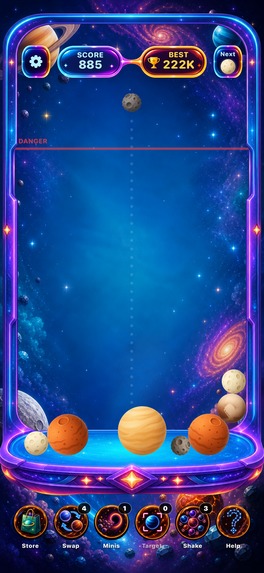
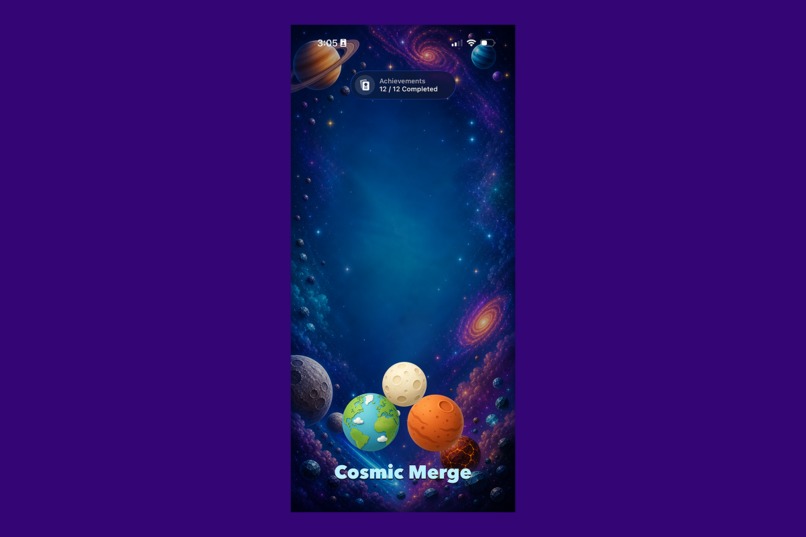
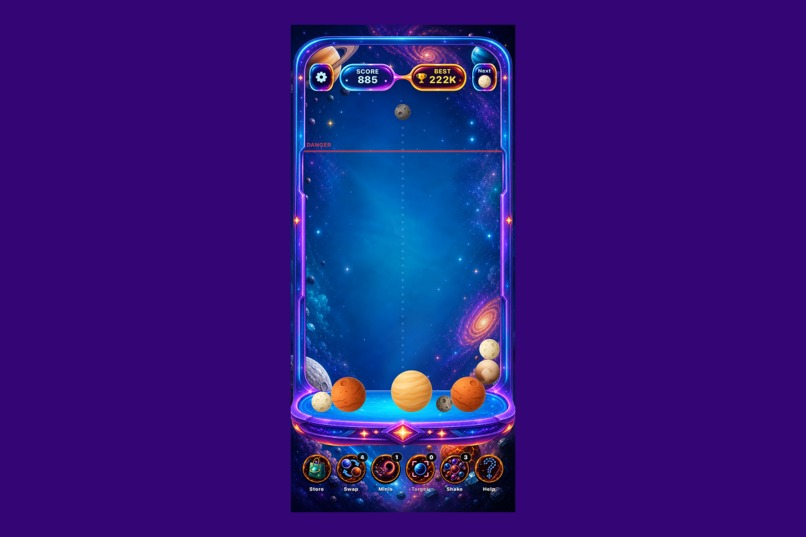
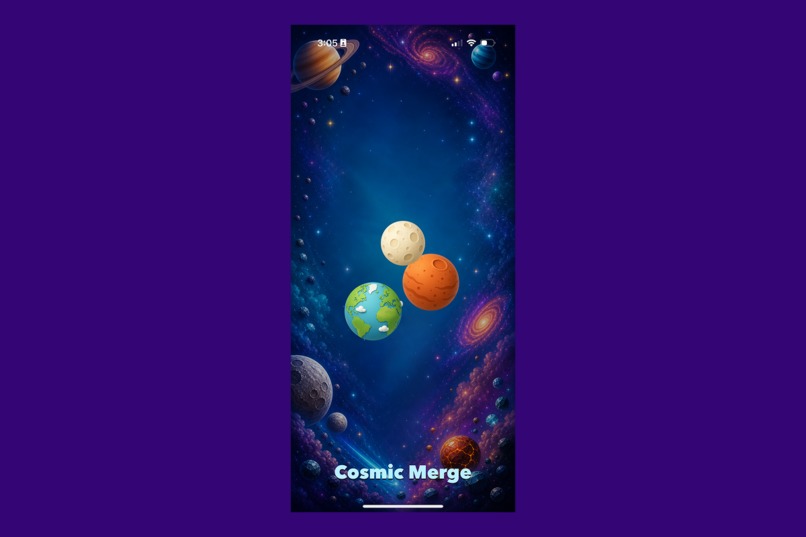
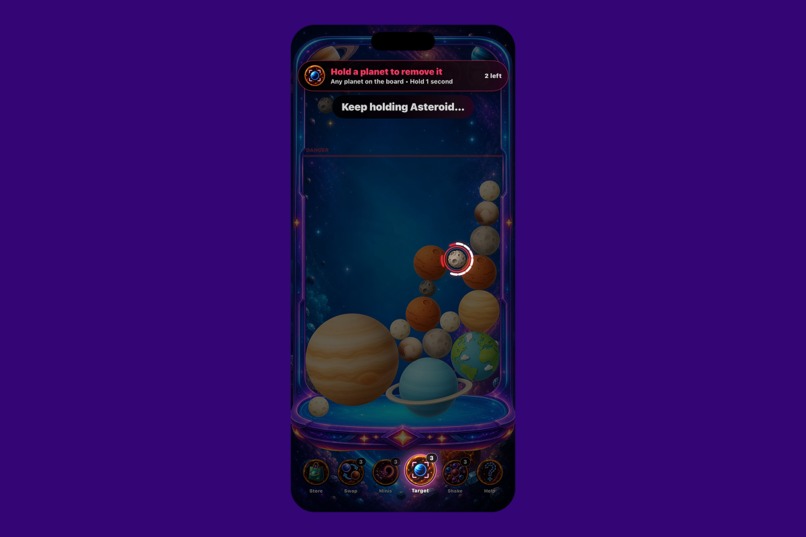
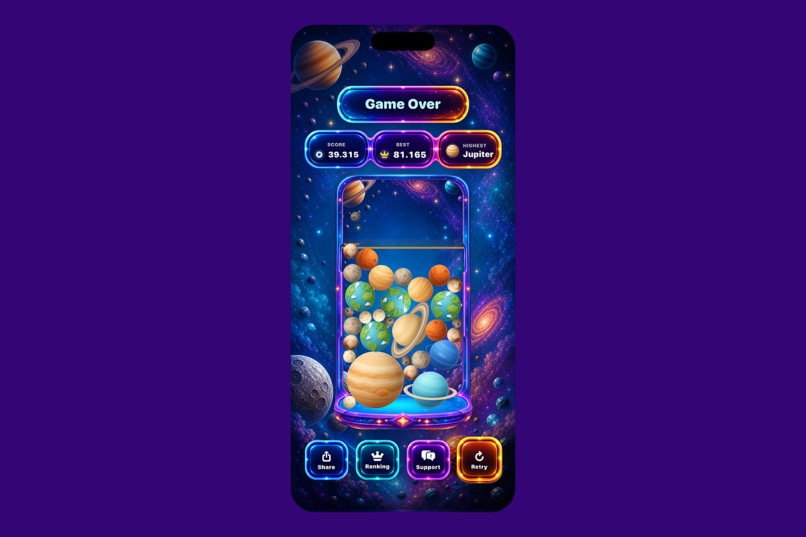
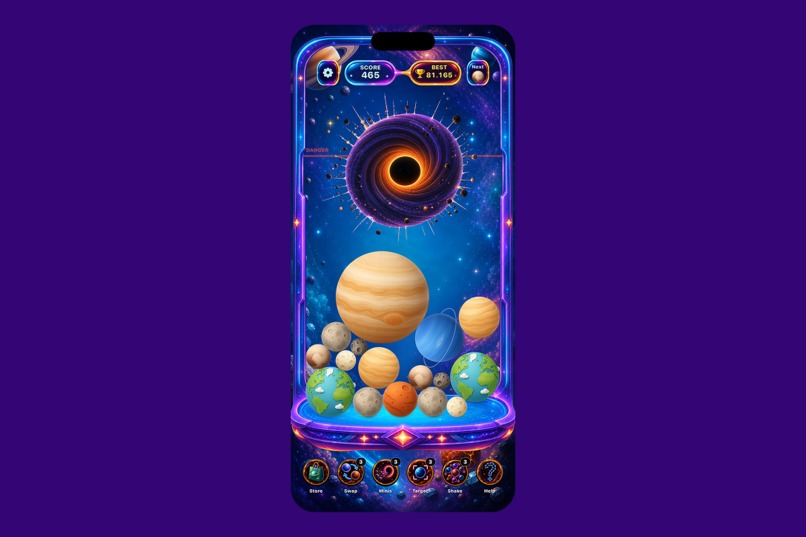
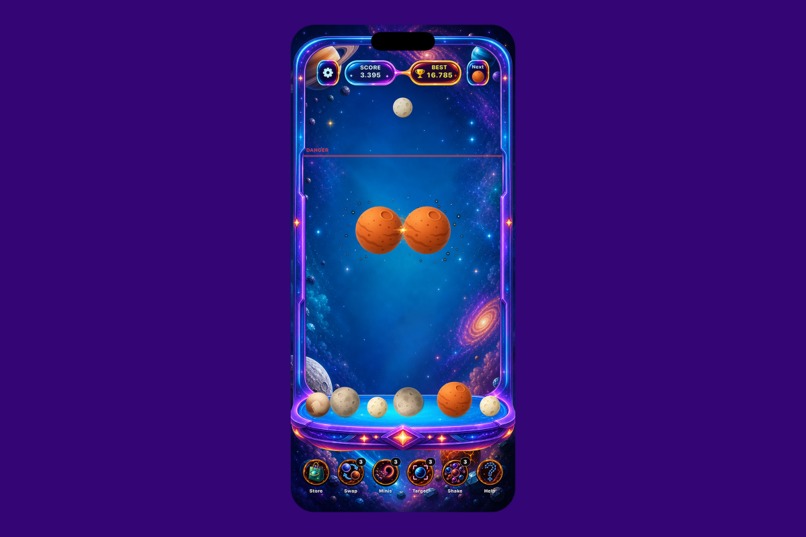
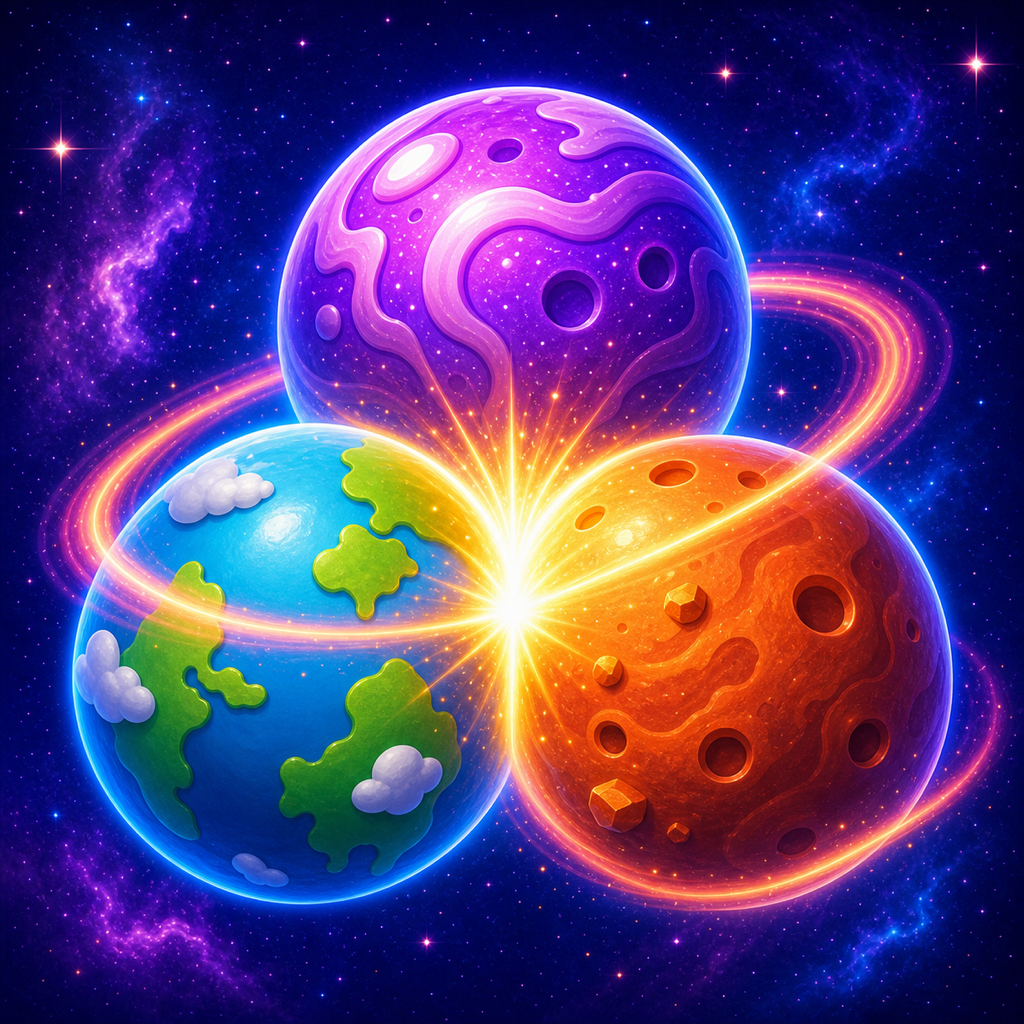
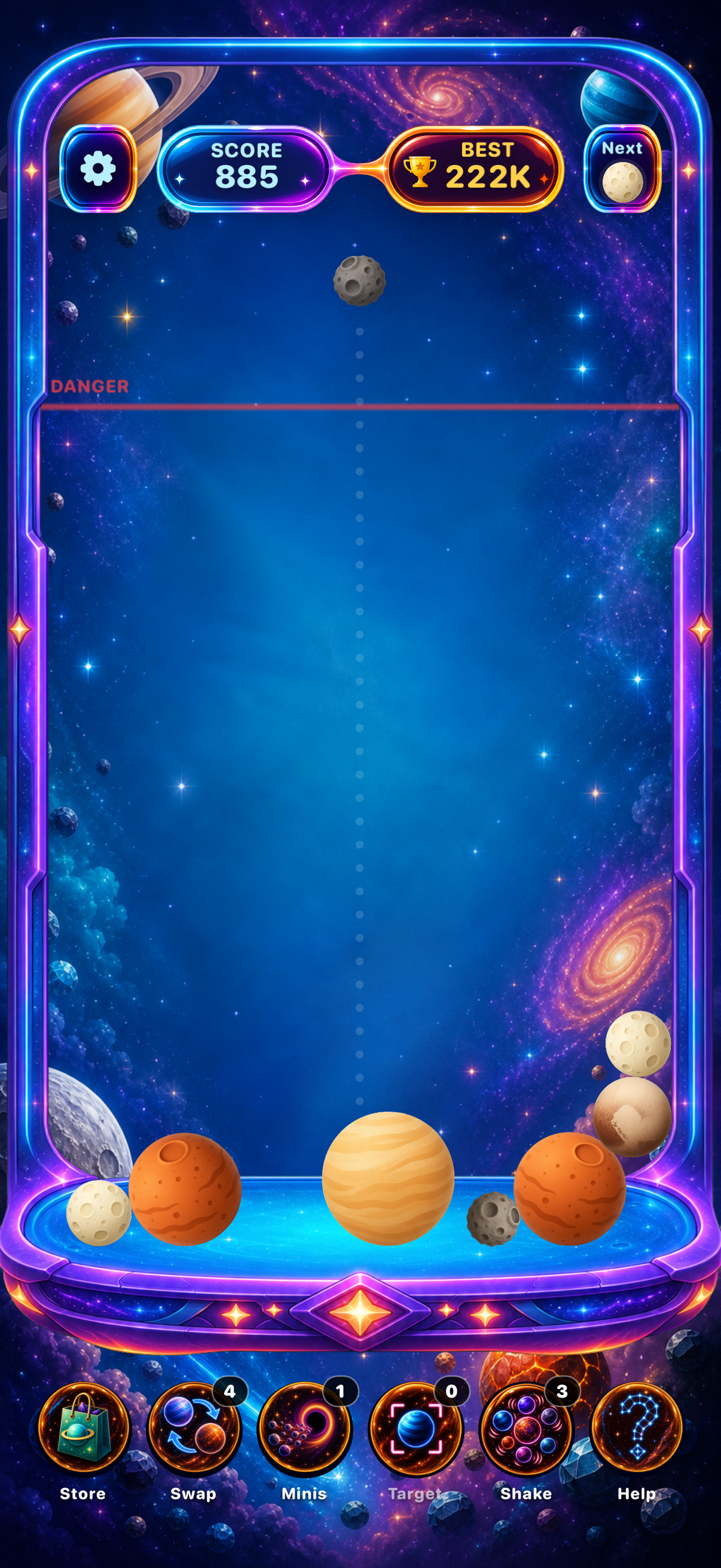
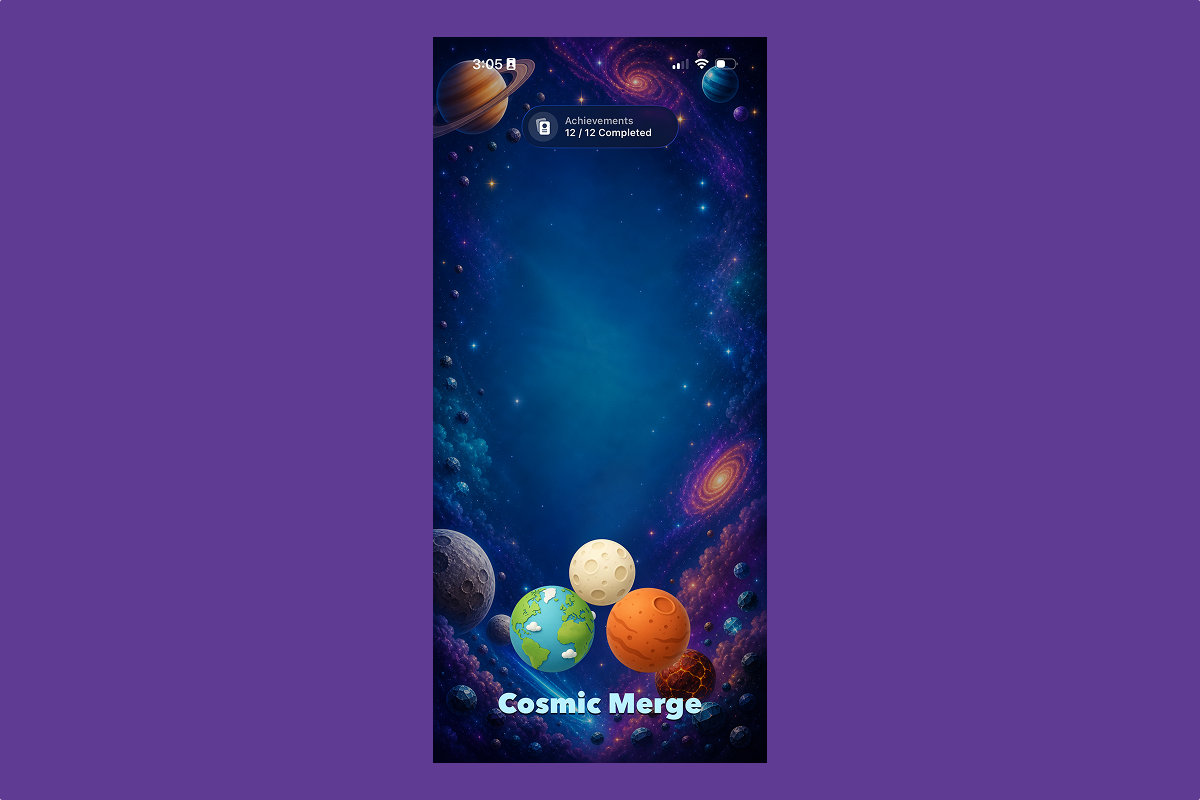
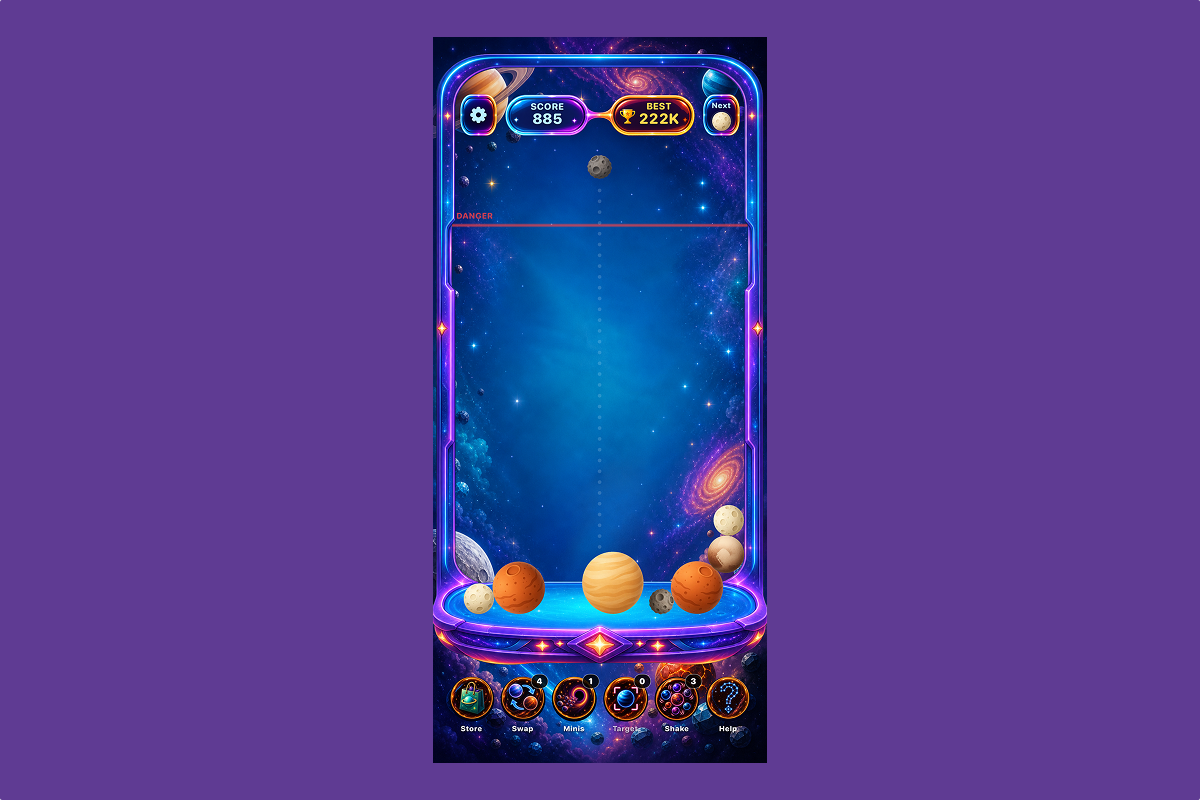
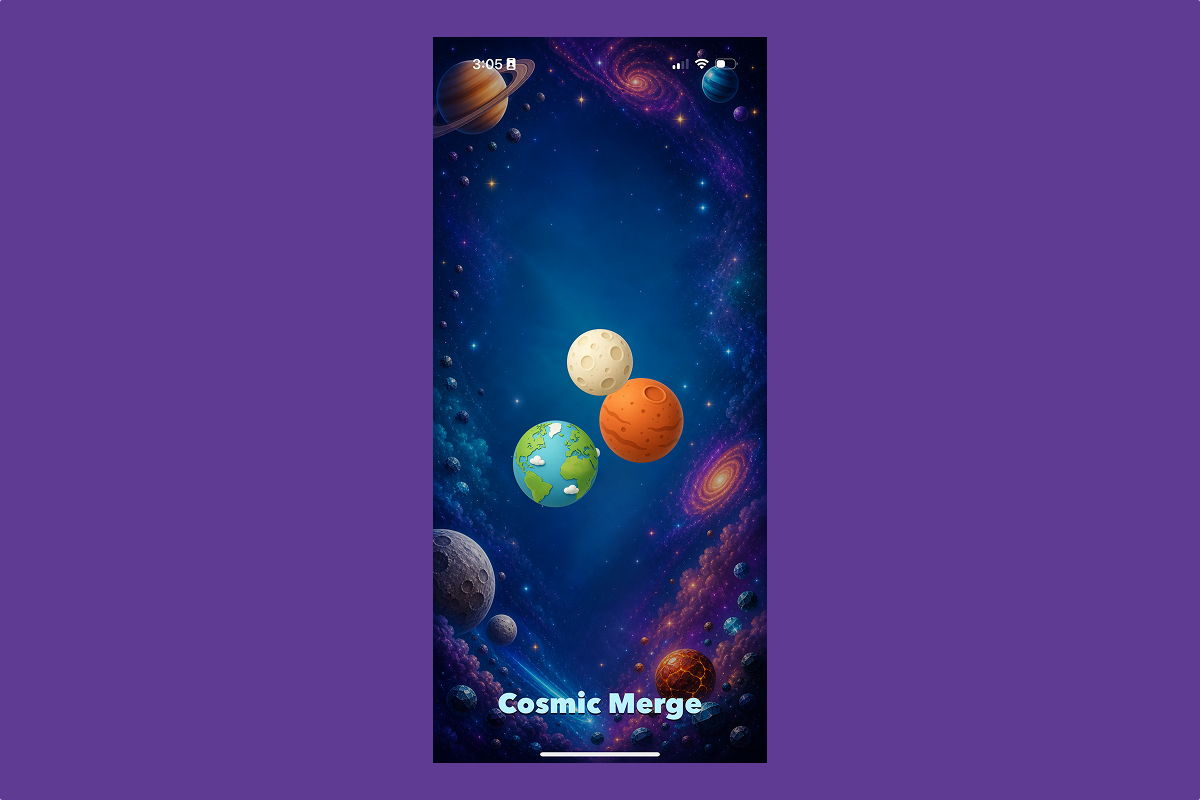
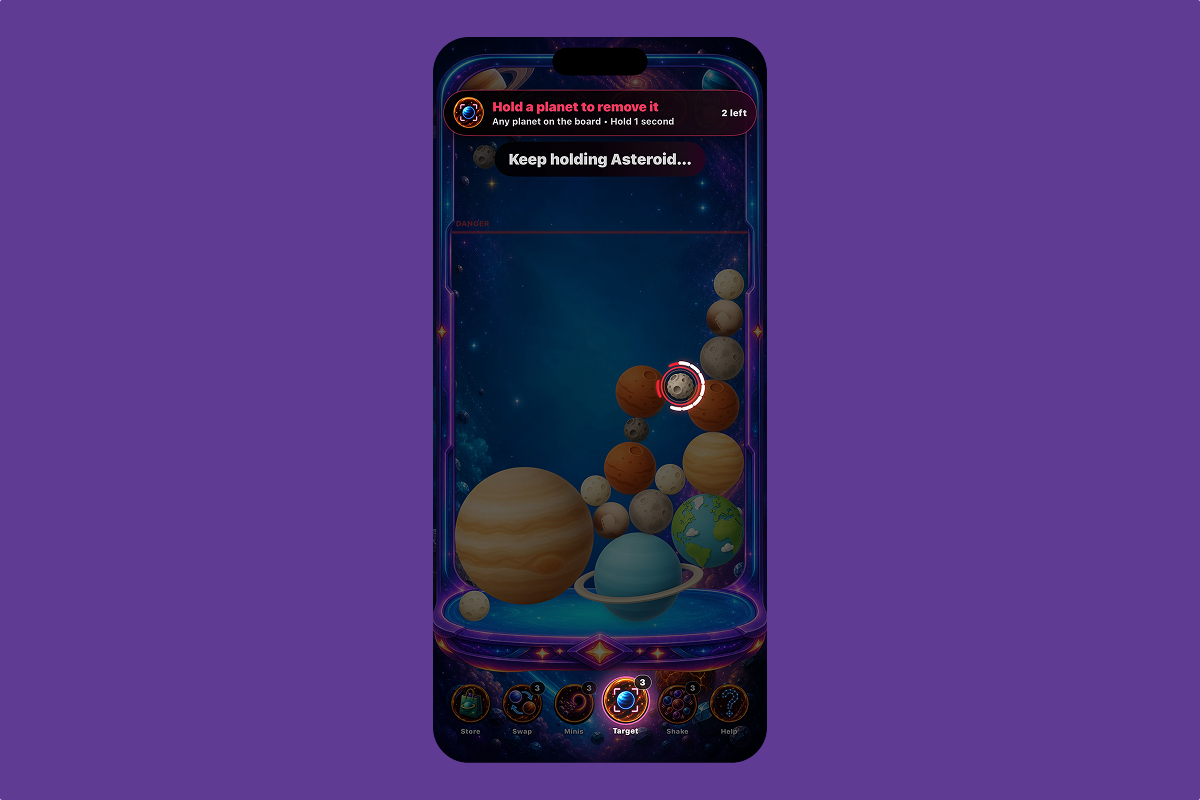
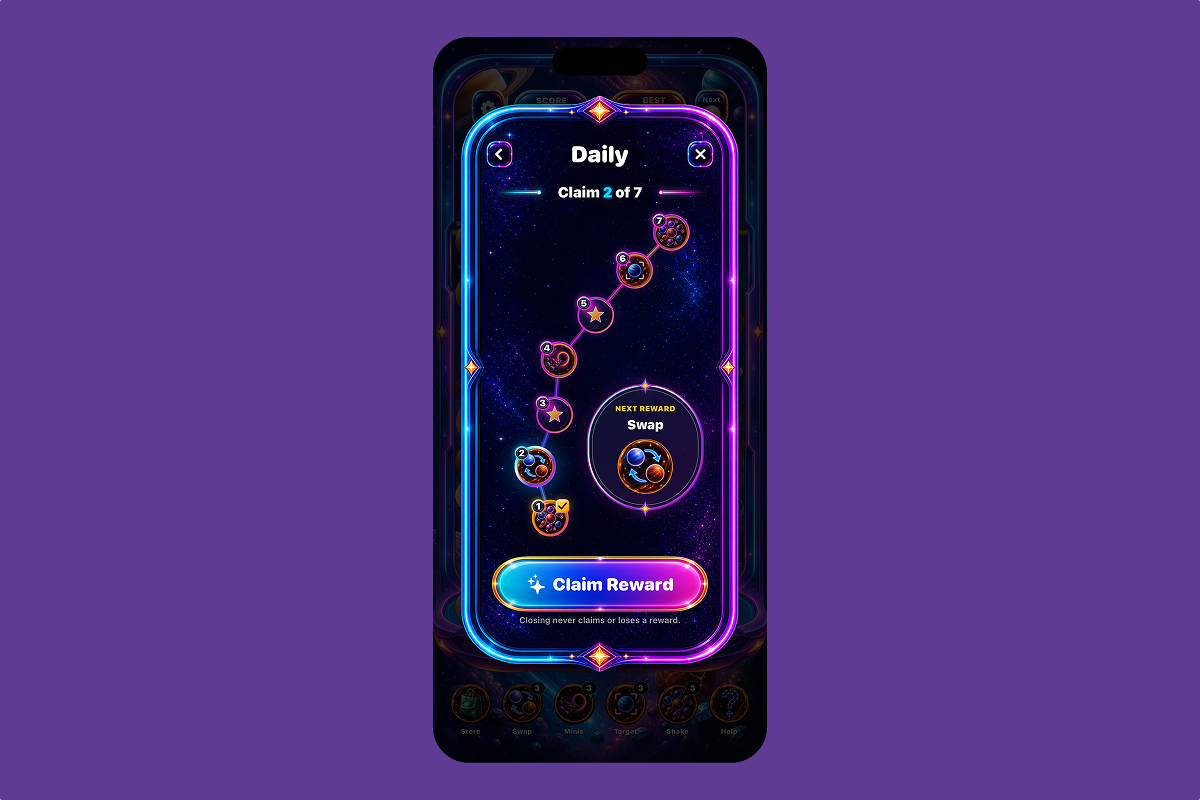
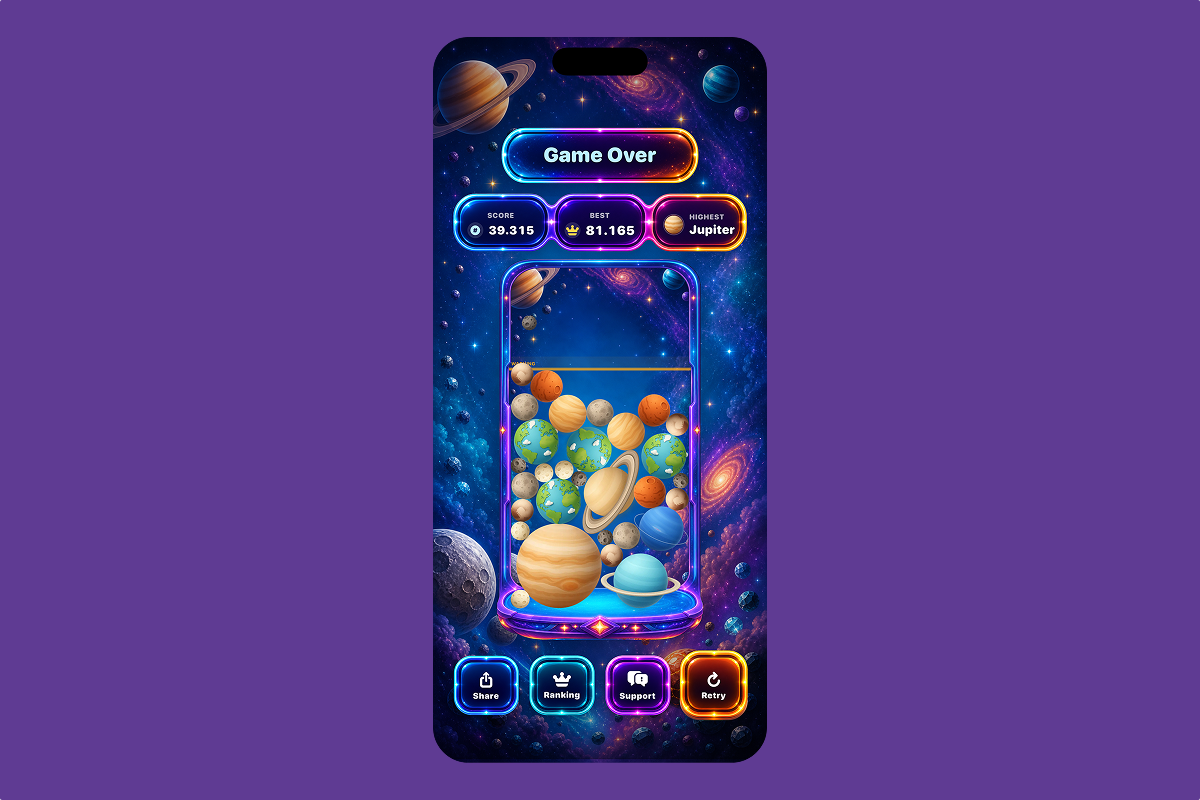
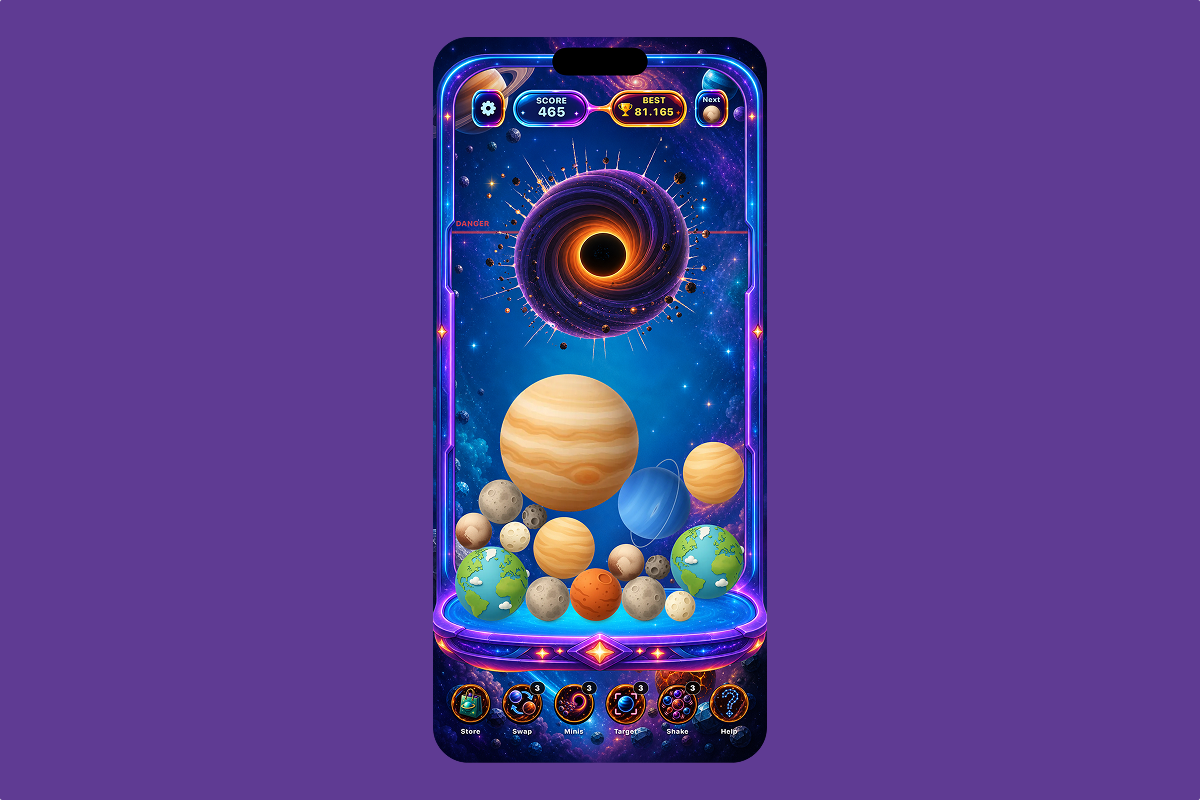
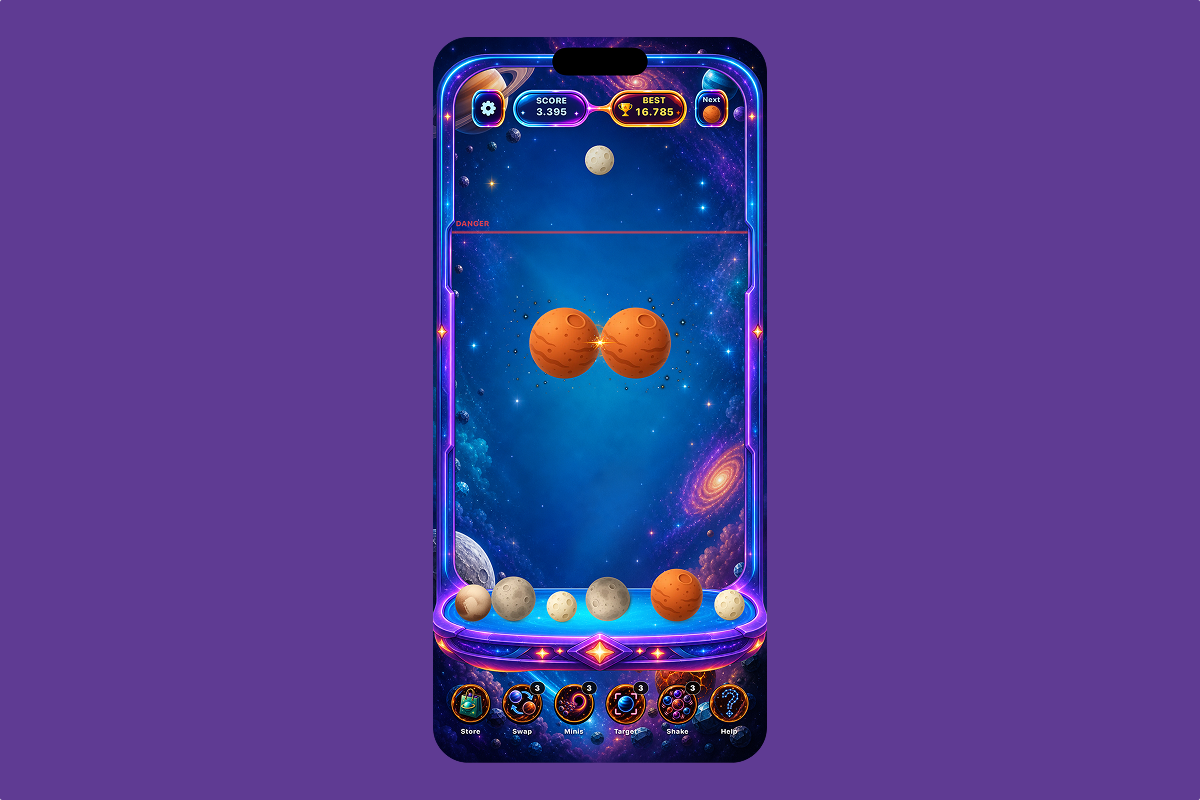
Cosmic Merge is a physics-based puzzle game where players drop planets and merge matching ones into larger planets. The central idea is simple, the real work is how it feels. The speed of a falling planet, reaction when they touch or merge and the dopamine you get from quick merges. Competitors don't really tap into that, they don't notice that their games run super slow (visually) when most modern devices now have a beautify, high refresh rate display and here's were I wanted to shine. I wanted the game to have fluid high fps movements, response interactions and animations that give each merge life!
How I built it & Challenges we ran into
I developed Cosmic Merge in about 4 months, using AI as a developer partner while I tested the look, feel and physics. Much of this process involved playing and making sure that physics felt right, finding a way to describe it to AI since I couldn't get it to see videos. It's not just a prompt saying "Make physics better" you have to be very detail oriented when typing out your physics prompts, a what velocity you want it to move, air friction, planet friction, How a bounce feels off the walls, floor or even another planet! How to describe what should happen when a planet touches another and is ready to merge but the board is so packed it could explode! All these details matter and most importantly it matters how you tell them in your prompt!.
So just increasing my vocabulary to match makings games was a challenge in of it's self. Other very challenging parts would be when testers reported bugs, like planet disappeared, push other off the board where even harder because I don't collect images!! So if was AI + me and the gameplay logs trying to recreate these scenarios onto my phone (unless we were blessed with an image from the tester it took a while!)
And visual assets where another challenge, a game needs movement, feedback and being by first time working with PNG assets was a pain, trying to get merge animations right, making the actual planet bounds fit the PNG.
The game isn't perfect but doing so much of this by hand taught me how much the small details contribute to the overall experience.
Accomplishments that we're proud of
Shipping my first game! and in native (which I know even less about) Beyond that I'm also very proud of how much attention went into making it feel good. Falling objects, collisions, merges and animations are easy to overlook when they "work" but any minor detail and the gameplay just feels off.
What we learned
I learned that game development requires a whole different kind of attention from building a productivity app (ironically my first app is a screen time blocker lol) A bounce can be correct but have a terrible feel and the game is off.
I also learned that working effectively with AI requires clear observation, reproducible tests, judgment and very GOOD vocabulary on the topic you're talking about. I still had to decide what felt good, analyze what my testers though and recognize when my train of thought wasn't right and correct.
most of all, this project make game development seem possible to me now with AI. something I had only experienced as a player became something I could finally try to make!
What's next for Cosmic Merge: Planet Evolution
I'd like to explore additional modes that use the same merging idea in different ways.
One possibility is sliding planets into position instead of dropping them. Another is placing a gravitational body at the center and launching planets around it, trying to create merges without losing the planets.
I also would love to preserve the directness of the current experience, adding more ways to play should require some complicated home screen or put more steps between opening and playing (less friction is always better!)
Cosmic merge has also given me the confidence to bring back a game from the 2000s (one of the first mobile games I played).
Built With
- admob
- revenuecat
- sprite-kit
- swift
- unity


Log in or sign up for Devpost to join the conversation.