-
-
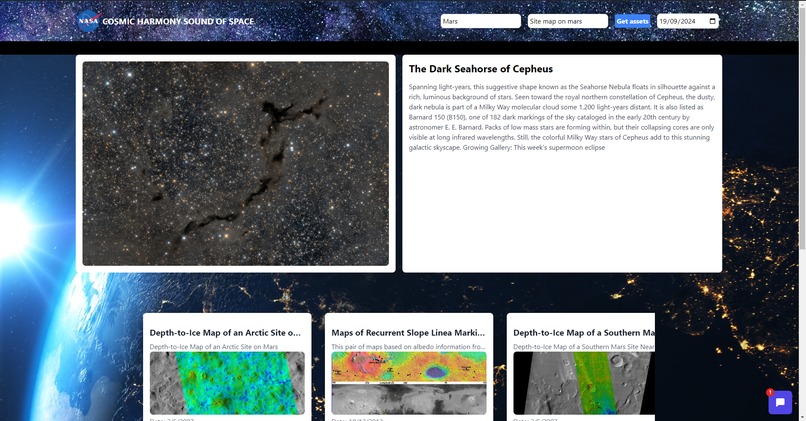
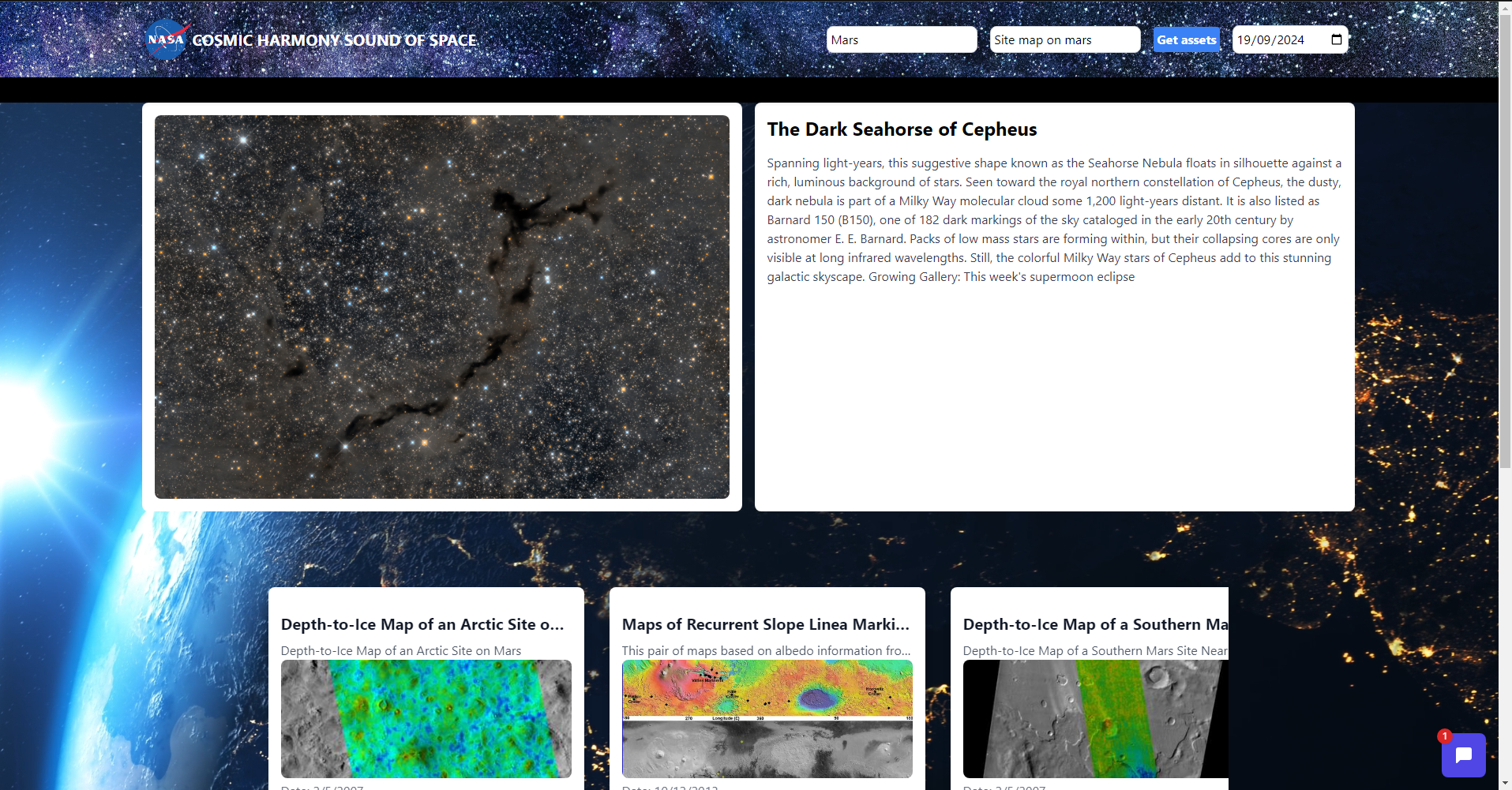
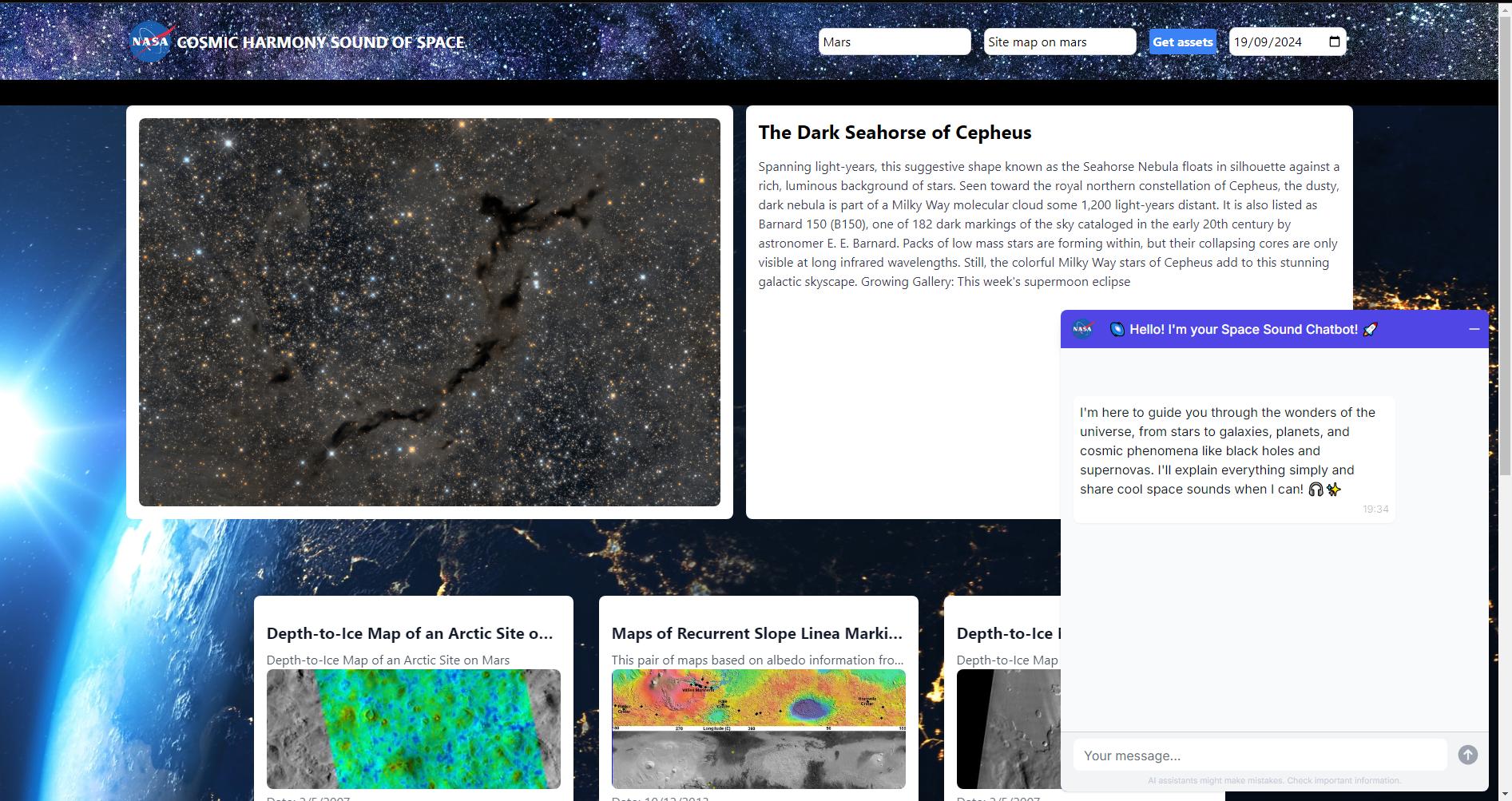
Web Page Section 1
-
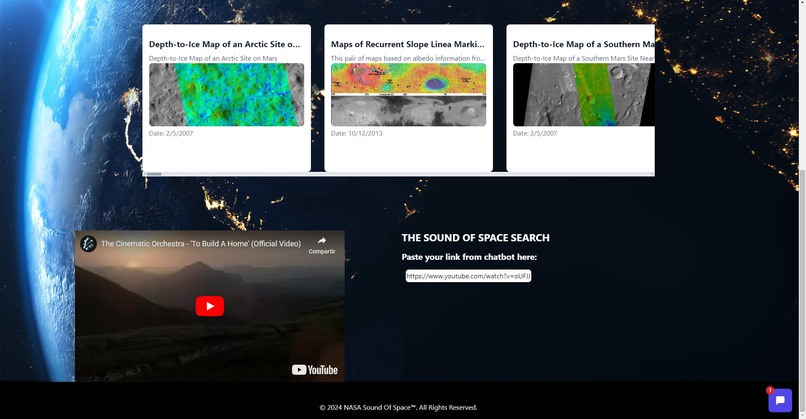
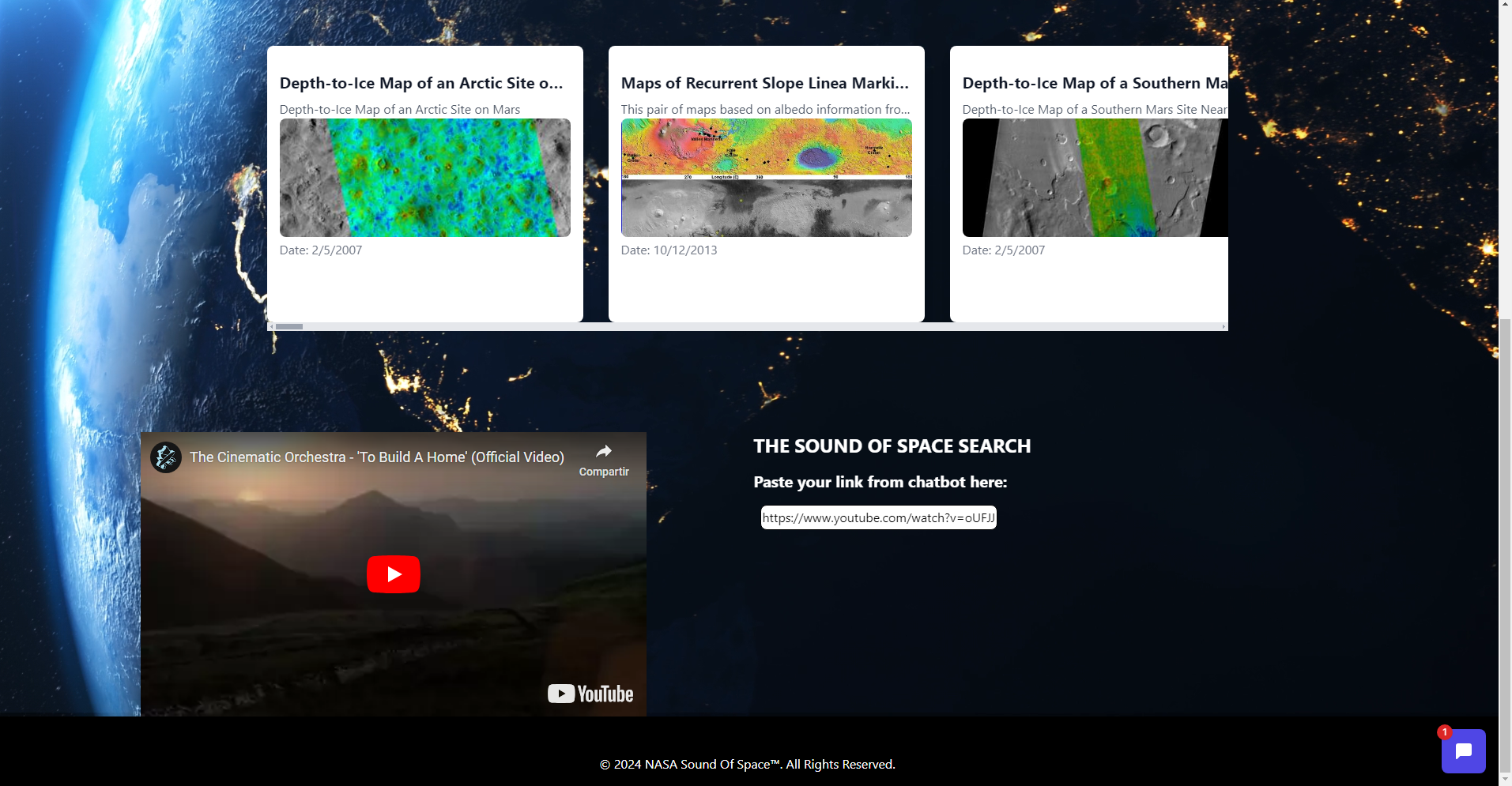
Web Page Section 2
-
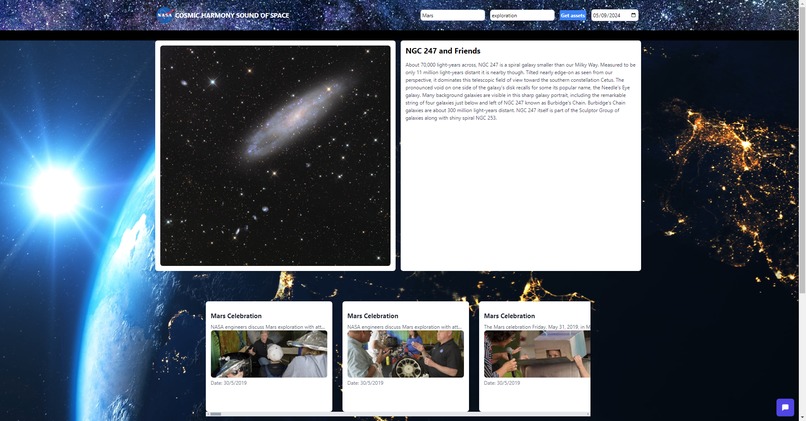
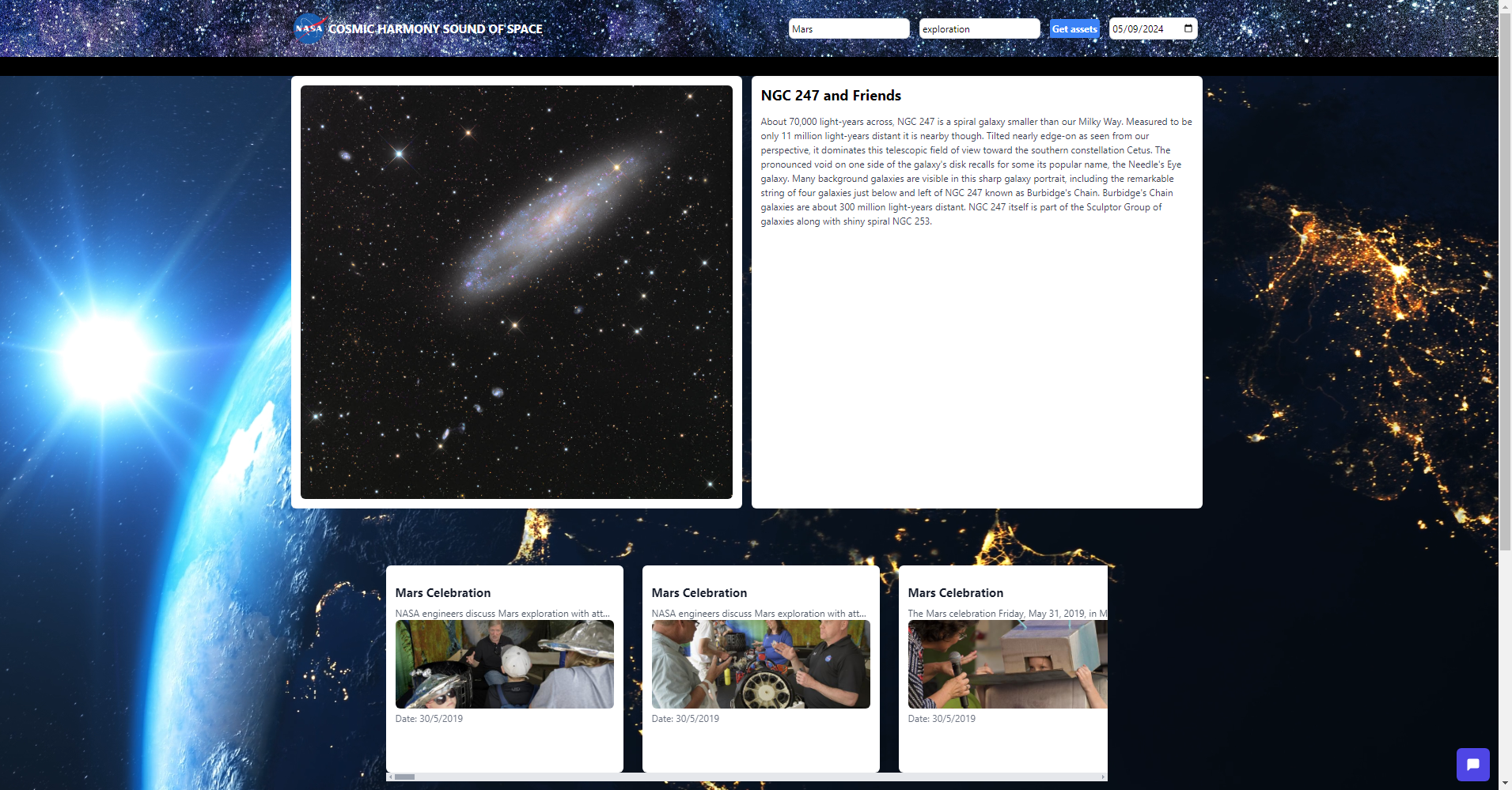
Change of the assets
-
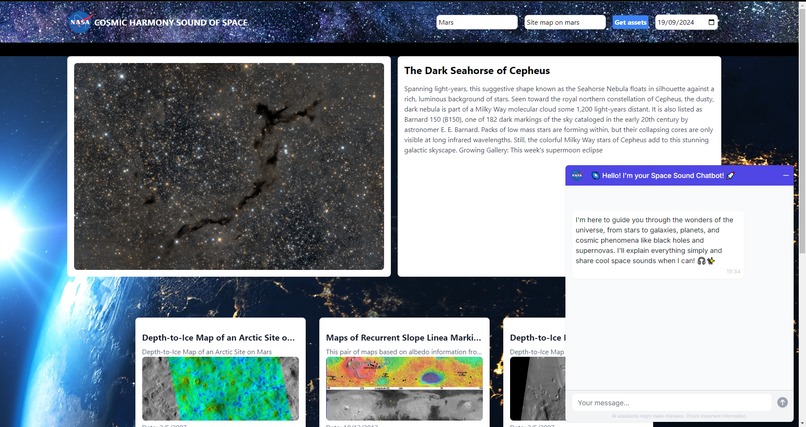
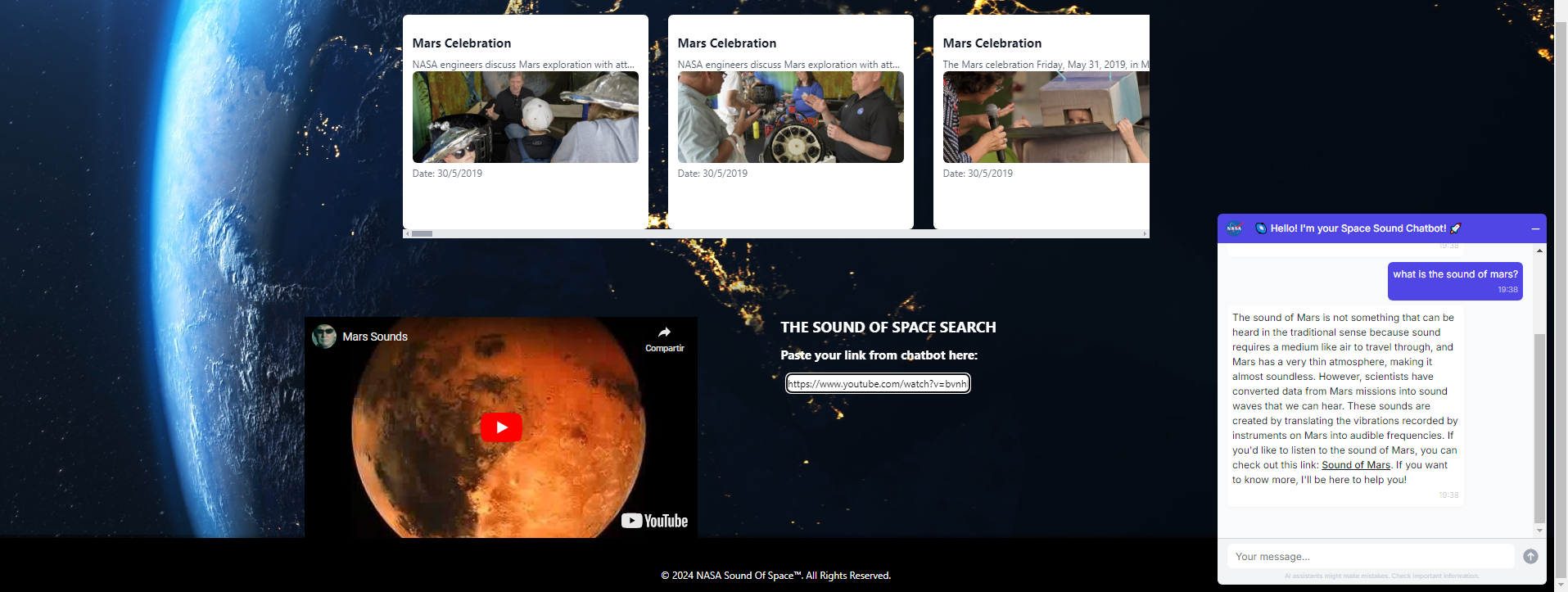
Web Page with the open chatbot
-
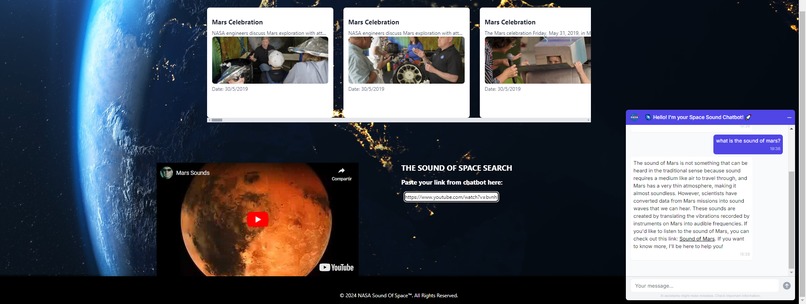
Chatbot responding and reproduction of the sound
Cosmic Harmony: The Sound of Space
Inspiration
Our project was inspired by the vastness and mystery of space. As we explored NASA’s open-source data, we recognized the potential to create an engaging educational tool that transforms complex astronomical phenomena into accessible auditory experiences. We aimed to evoke a sense of wonder and curiosity in students, sparking their interest in space science and technology.
Learning Outcomes
Throughout the development process, we learned about:
- Data Integration: Effectively utilizing APIs, particularly NASA’s, to retrieve real-time space data.
- Artificial Intelligence: Implementing AI to interpret complex datasets and generate meaningful responses for users.
- User Experience Design: Crafting an intuitive interface using React and Tailwind to ensure a seamless and engaging experience for students.
- Sound Design: Understanding how to transform data into soundscapes that accurately represent the characteristics of astronomical phenomena.
Building the Project
Our project was built using a combination of technologies:
- React: For building the user interface and ensuring a responsive design.
- Tailwind CSS: For styling, enabling us to create a visually appealing and user-friendly layout.
- Html/CSS: For styling, enabling us to create a visually appealing and user-friendly layout.
- NASA API: To access a wide range of space data, which serves as the backbone of our
- Stack AI: SAAS for AI solution implemented.
- Vercel: Deployed to cloud.
- AI Chatbot: Developed to assist users in navigating the data, answering questions, and providing explanations about the astronomical phenomena they explore.
Development Process
- Research: We started by researching NASA's API and identifying the types of data we wanted to utilize.
- Design: We created wireframes and prototypes of the user interface, focusing on usability and engagement.
- Implementation: We built the frontend with React and integrated the NASA API to fetch real-time data.
- AI Development: The AI chatbot was trained to interact with users, provide explanations, and transform data into auditory representations.
- Testing: We conducted thorough testing to ensure the functionality and reliability of the project.
Challenges Faced
Data Complexity: Navigating the complexity of astronomical data and ensuring it was presented in a way that was understandable for students.
- Solution: We simplified the data using AI algorithms to create meaningful audio representations.
Integration Issues: Combining different technologies (API, AI, UI) posed challenges in ensuring smooth functionality.
- Solution: We adopted a modular approach to isolate components and facilitate easier integration.
User Engagement: Keeping users engaged and ensuring they found the tool both educational and fun was a priority.
- Solution: We focused on creating an interactive and visually appealing user experience, enhancing engagement through soundscapes and dynamic content.
Conclusion
This project has not only deepened our understanding of space science and technology but also allowed us to create a tool that has the potential to inspire and educate the next generation of scientists. We look forward to further refining our project and exploring new ways to enhance the learning experience for students around the world.


Log in or sign up for Devpost to join the conversation.