Inspiration
We were inspired by the mystery of space and the question, “Could life exist on other planets?” Since we can’t travel to every planet, we wanted to create a simulator that helps us imagine and test what kinds of worlds might support life. And also the theme was space and cowboys so we wanted to combine them.
What it does:
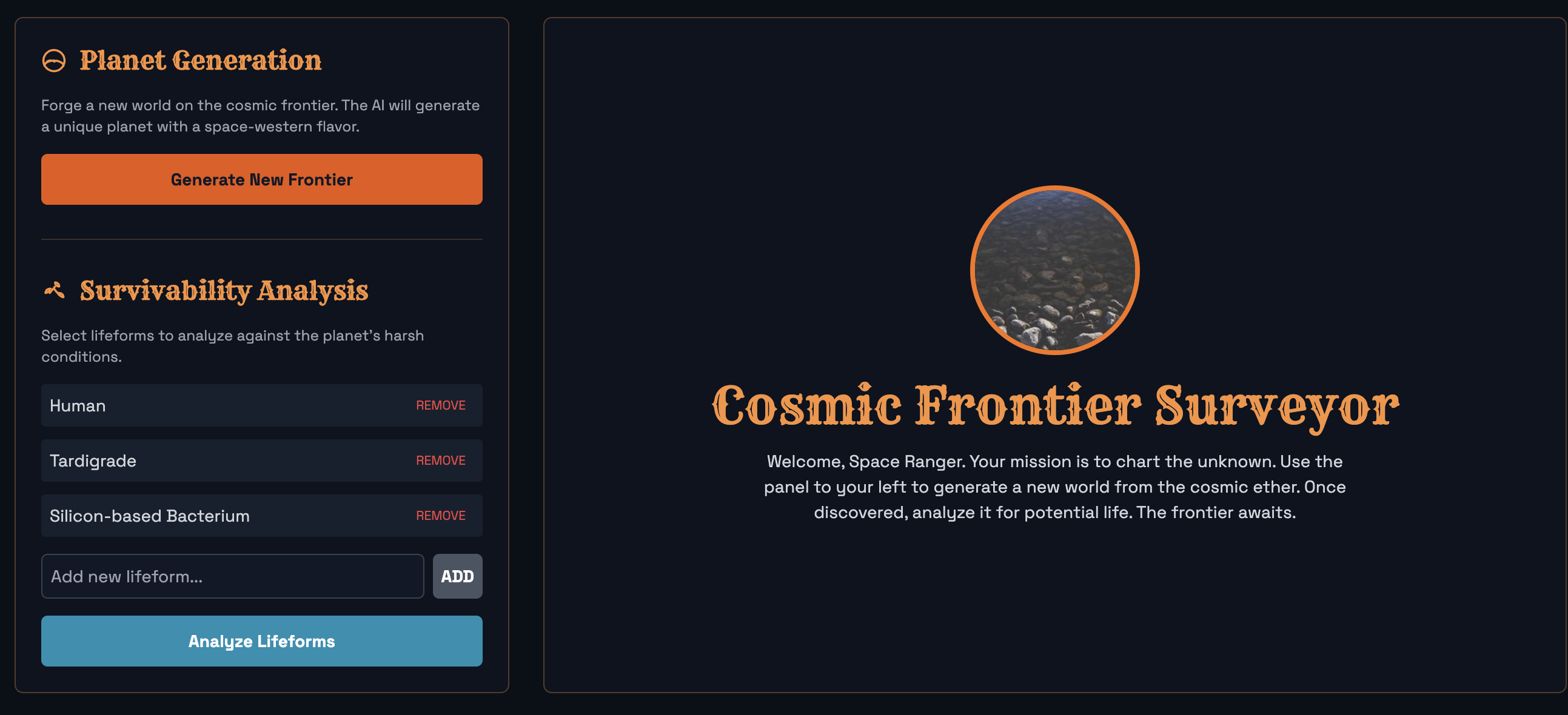
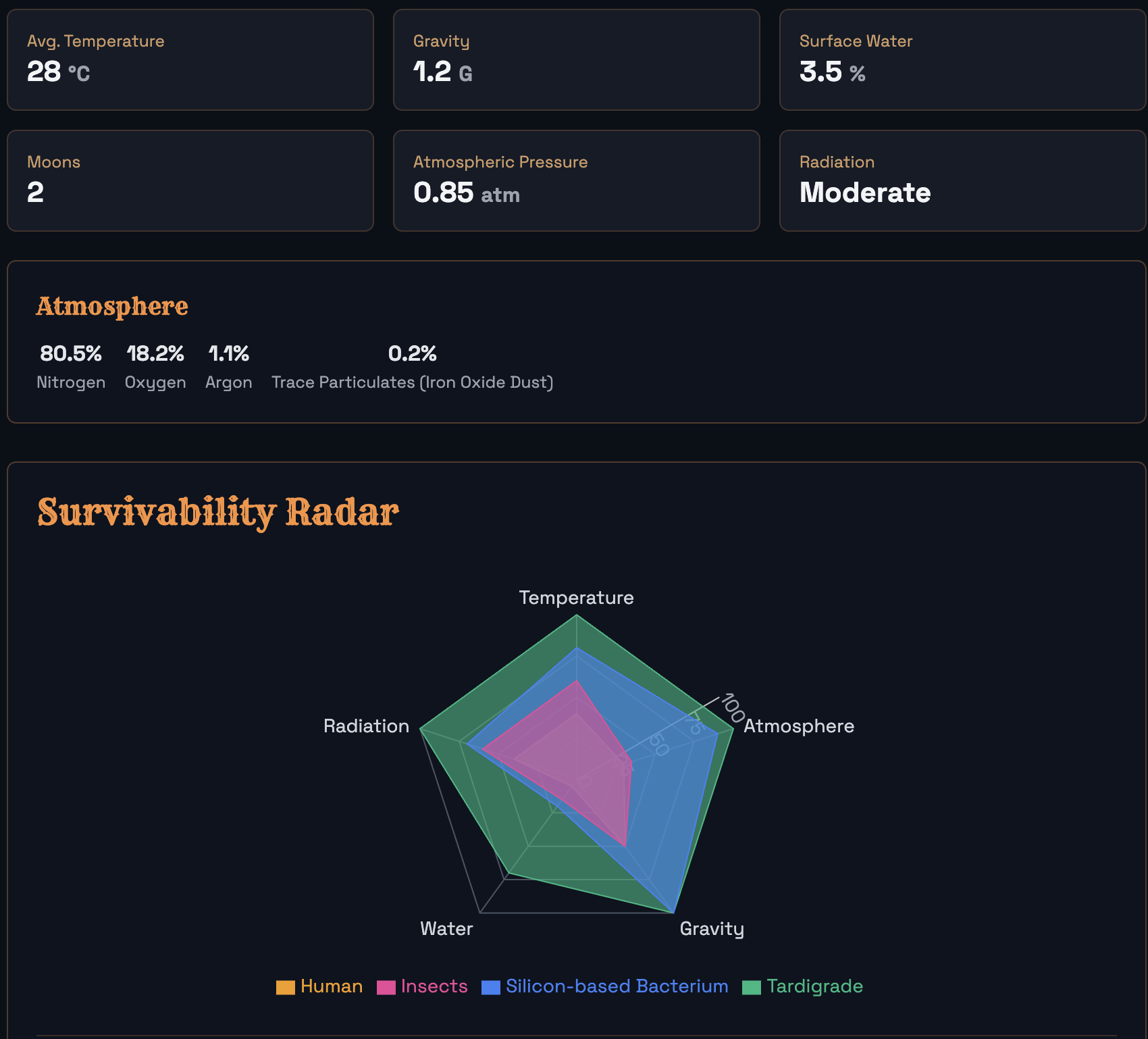
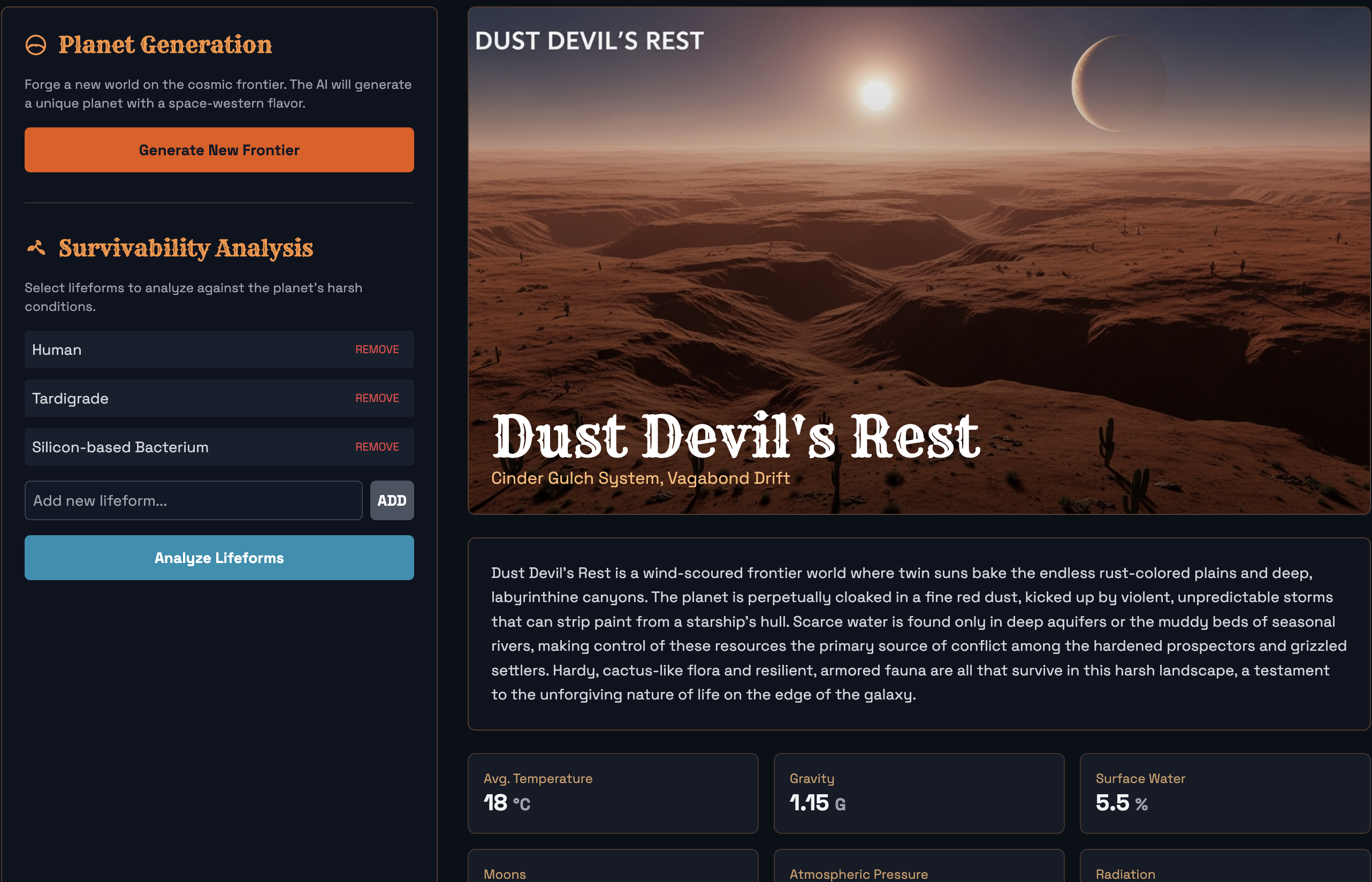
Cosmic Frontier: Planetary Survey creates random virtual planets with different conditions like temperature, gravity, and atmosphere. It then tests how different species might survive in those worlds and shows the results through simple visuals.
How we built it
We used HTML for layout, Python for creating planets and testing survival, CSV/JSON to store data, and React for visualizing everything. The project combines coding, data, and visuals to make the simulation easy to understand.
Challenges we ran into
It was hard to make the planets feel realistic while keeping the program fast. We also struggled with showing the results clearly and handling large sets of data.
Accomplishments that we're proud of
We’re proud that we made an interactive system that can generate unique planets and simulate survival conditions. The visual part worked well and helped us explain complex data simply.
What we learned
We learned how to balance creativity with logic, how to work with data in Python, and how to use React for visualization. We also understood how even small changes in environment can affect survival.
What's next for Cosmic Frontier Planetary Survey
Next, we plan to add more realistic planet physics, new ecosystems, and allow users to export data for science and education. We also want to make it a full web app where anyone can explore alien worlds.


Log in or sign up for Devpost to join the conversation.