-
-
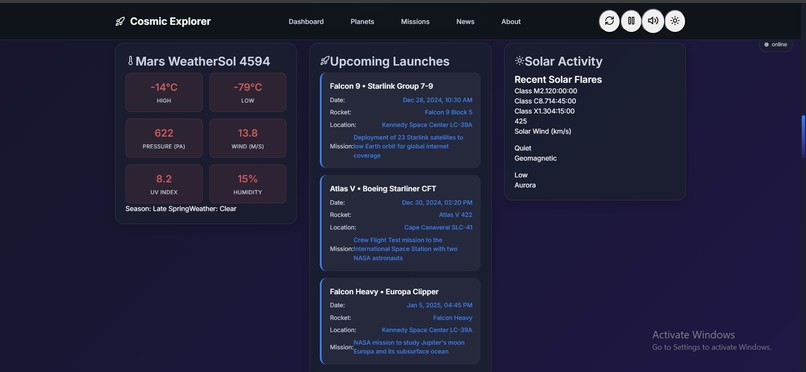
Mars WeatherSol 4594 and data
-
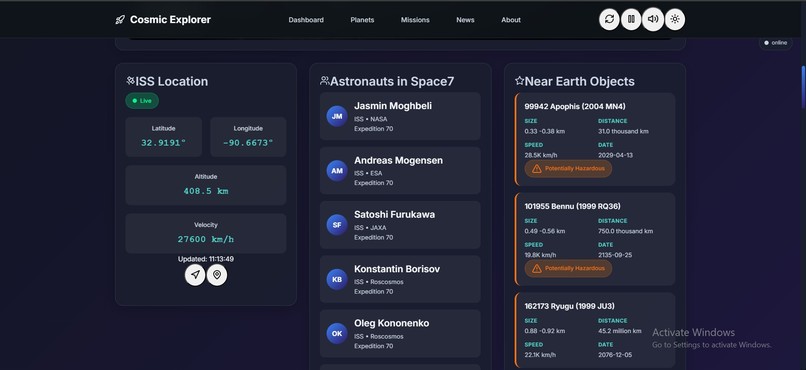
ISS Location and data
-
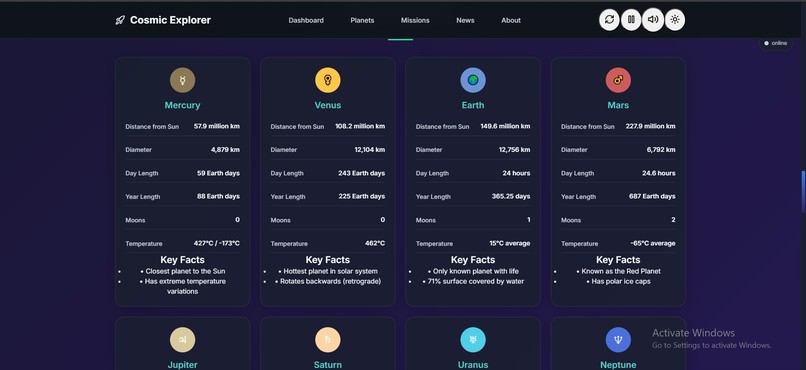
Solar System data
-
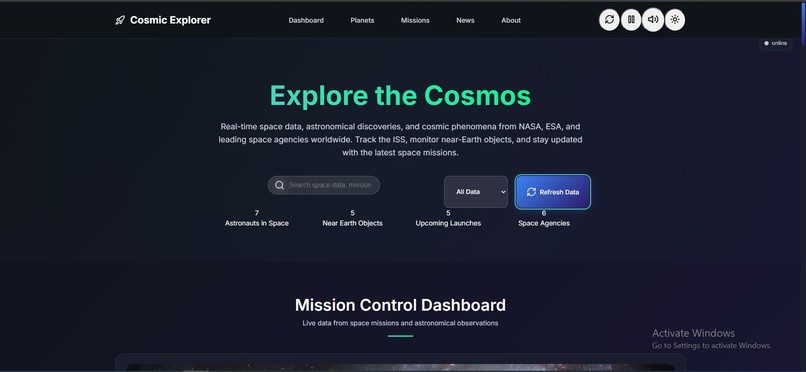
Dashboard
-
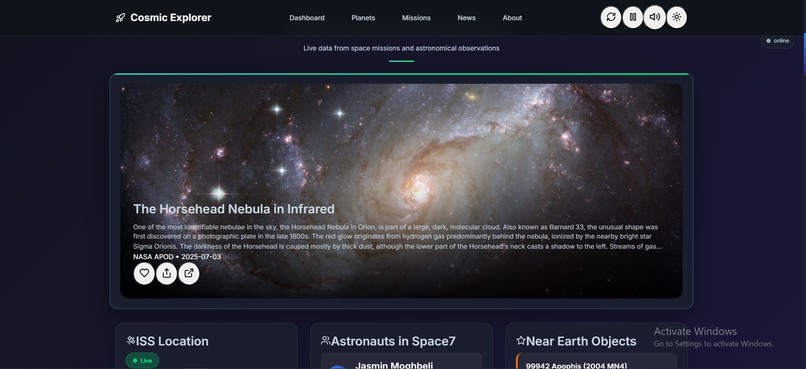
Dashboard


Inspiration
As space enthusiasts, we noticed a lack of a centralized, fast, and beautifully designed dashboard for real-time space data. We wanted to build a system that makes cosmic information fun, interactive, and useful to everyone—from students to scientists.
What it does
Shows live space system statuses
Tracks current missions (like Artemis, Mars Sample Return, Europa Clipper)
Displays planetary data with scientific accuracy
Shows solar weather monitoring (flares, winds, geomagnetic data)
Offers advanced filtering & search
User features like theme switch, favorite systems, play/pause live updates
Enhanced notifications with sound and mobile optimization
How I built it
I used modern frontend and backend technologies to create a responsive, fast-loading, and visually appealing dashboard. APIs were integrated for real-time data, and caching was implemented to reduce API load.
Challenges I ran into
Handling real-time updates with multiple APIs while reducing API load
Designing an intuitive UX for both space enthusiasts and casual users
Implementing fast theme switching and mobile responsiveness
Accomplishments that I'm proud of
Reduced load time from 15s to just ~3s using caching and optimization
Integrated multiple APIs with error handling and fallback support
Created a seamless, responsive, and immersive UI
What I learned
API rate limiting strategies and smart caching
Handling complex UI states like live updates, theme switching, and status indicators
Importance of accessibility and responsiveness in public-facing apps
What's next for Cosmic Explorer
Add user accounts for saving preferences and bookmarks
Integrate AI-based recommendations for missions or news
Enable offline viewing of cached data
Add Augmented Reality (AR) mode for planetary visualization
Built With
- apod-(astronomy-picture-of-the-day)
- css3
- donki
- html5
- javascript
- mars-rover
- nasaapi
- react
- tailwind
- vite


Log in or sign up for Devpost to join the conversation.