Inspiration
We took inspiration form a variety of things, including the egg-drop challenge, the human brain, and the 3D printer motion mechanism, as it uses the x and y axis to find a coordinate to move to.
What it does
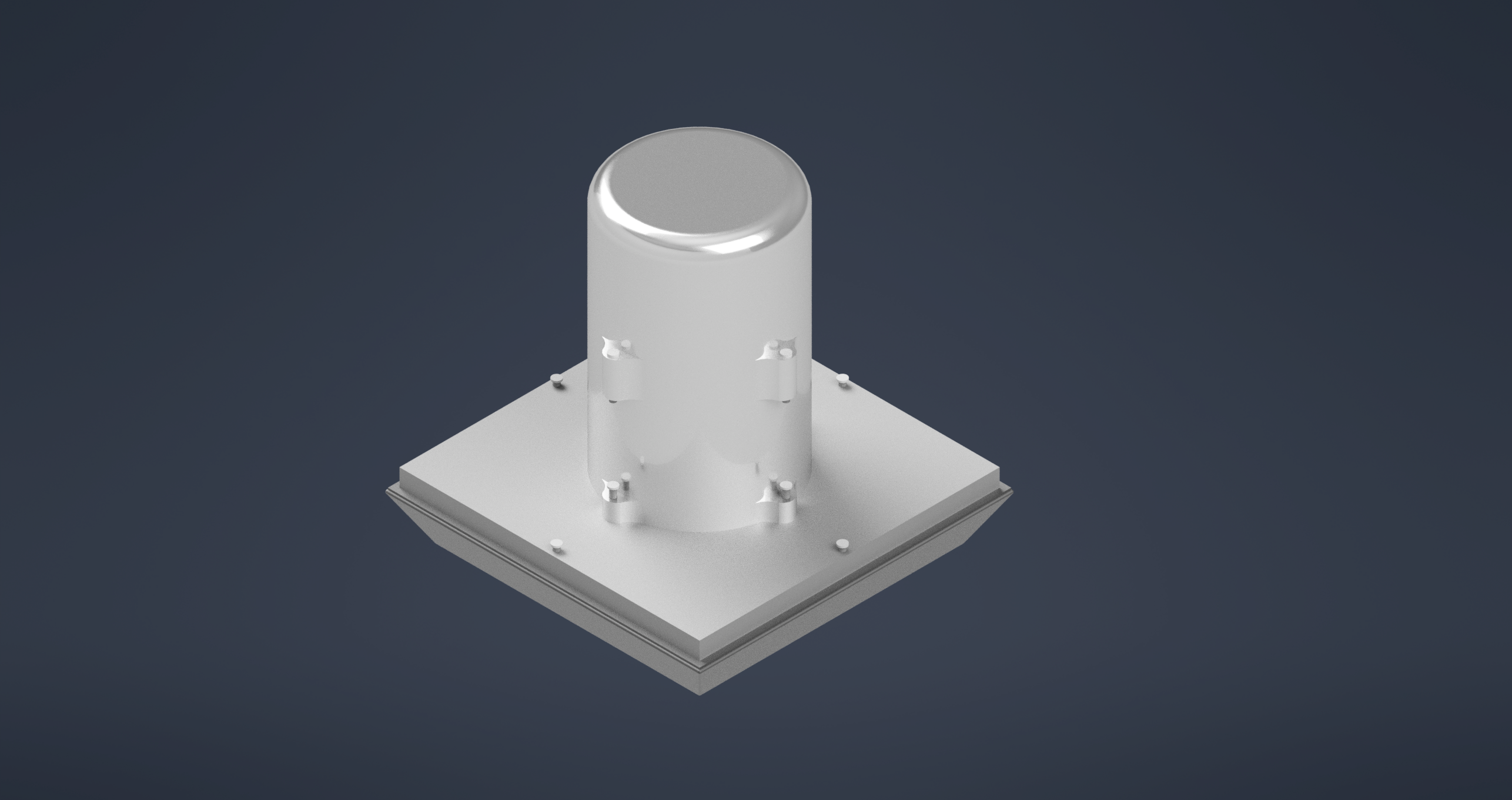
At the heart of this mechanism, it houses a test-tube-sample from space, which contains special rocks and materials that need to be delivered to earth safely. This is a onetime-use capsule, which guarantees the safety of the test-tube-sample inside. Upon impact, the lattice structure in the bottom half of this mechanism, crunches, and the top half of this mechanism oscillates back and forth on stiff springs, to absorb energy.
How we built it
The design was built in Autodesk Inventor, as well as Solidworks. The overall design was split into two main components, the top half, and the bottom half. The top half, contains the capsule, which is filled with a viscous liquid silicone oil, to dissipate energy, and protect the sample. We took inspiration form the human brain, as it it contains a liquid around the brain to protect it as well. The outside of the capsule, contains an outer layer, where the springs are attached to the top and bottom of the capsule. These springs are attached to the top and bottom parts of the top half, which are assembled with bolts. The bottom half contains a lattice structure, which is placed within a heatshield, and sealed with the top cover being made out of steel. This acts as a mechanism which deforms upon impact to absorb energy.
Challenges we ran into
Challenges we ran into were designing a spring mechanism, with the elastic component to it, which would absorb the energy upon impact. This energy would be dissipated into spring, and kinetic energy, while the spring oscillated back and forth. The troubles with designing this were figuring out how to design the springs, with the correct lengths and diameter.
Accomplishments that we're proud of
We are proud of how our ideas came to life, combing all of the brilliant ideas of each team member into one final design that can help bring test tubes back home.
What we learned
We learned a lot about different materials that go into engineering a capsule that can withstand reentry into Earth's atmosphere and a crash landing onto the ground. We learned about crumple zones and what makes cars safe, as well as different types of lattice structures.
What's next for Cosmic Capsule
Whats next is that we can make a design that accounts for side forces, which we did not have enough time to design for. We could also do more research into the optimal materials for each part of the design, which we did not have enough time to look into outside the surface level.
Built With
- inventor
- powerpoint
- solidworks


Log in or sign up for Devpost to join the conversation.