Inspiration
Hi, I'm Cefri. I've been making videos since I was 12 — starting with After Effects and Photoshop for small businesses, then wedding photography, and by 14 I was already working professionally in advertising agencies and video production.
For about five years I've worked with influencers, celebrities, and brands in Istanbul, creating vertical VFX content for YouTube and Instagram. Over the last two years I've produced high-end VFX commercials for brands like Montoon, İşbank, and Tencent.
In the past year, AI became a core part of my pipeline. But tools like Flora were expensive — some months I spent around $10,000 just on margins. I wanted to build my own app, cut those costs, and solve problems nobody else was solving for professional AI video production.
What it does
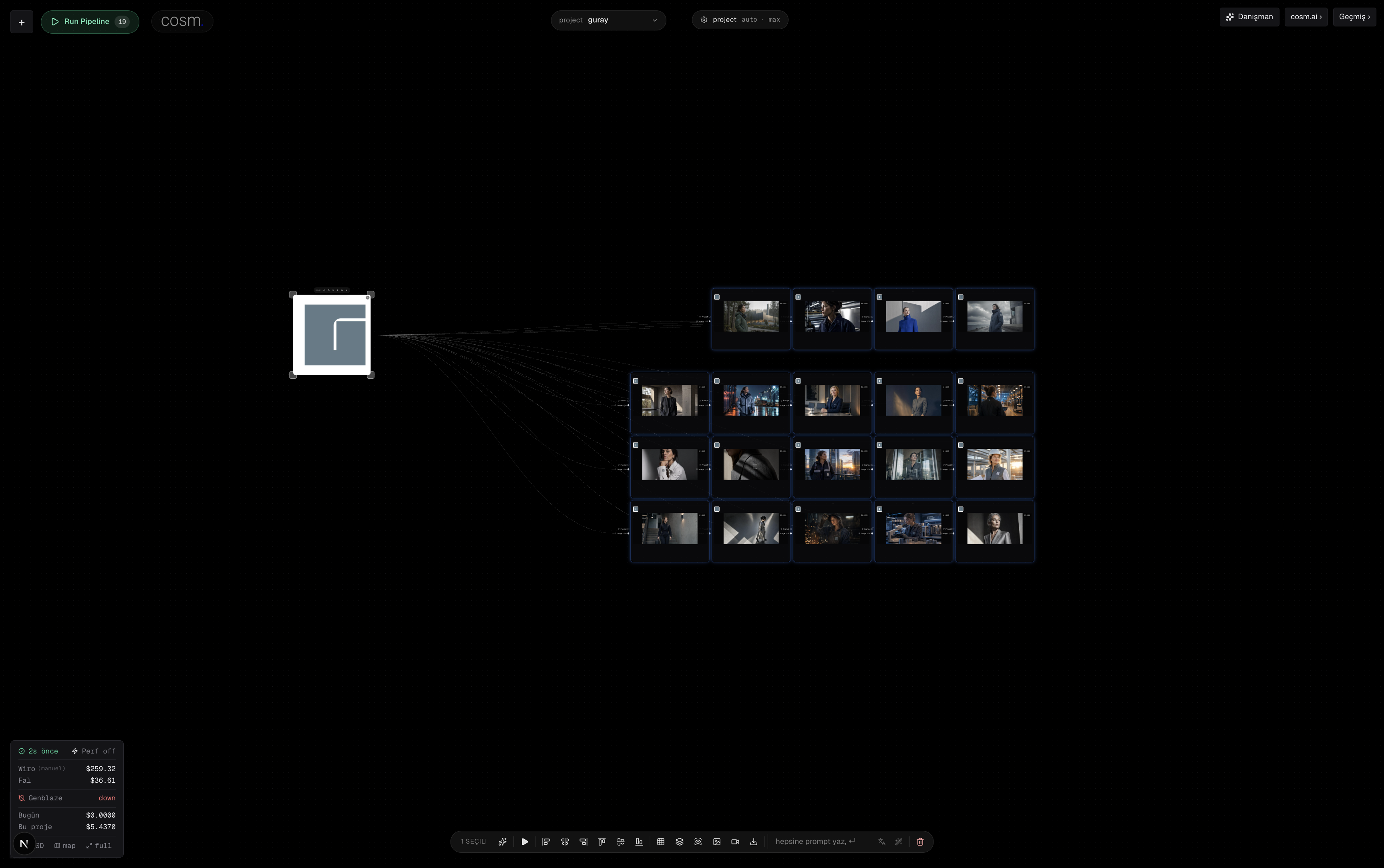
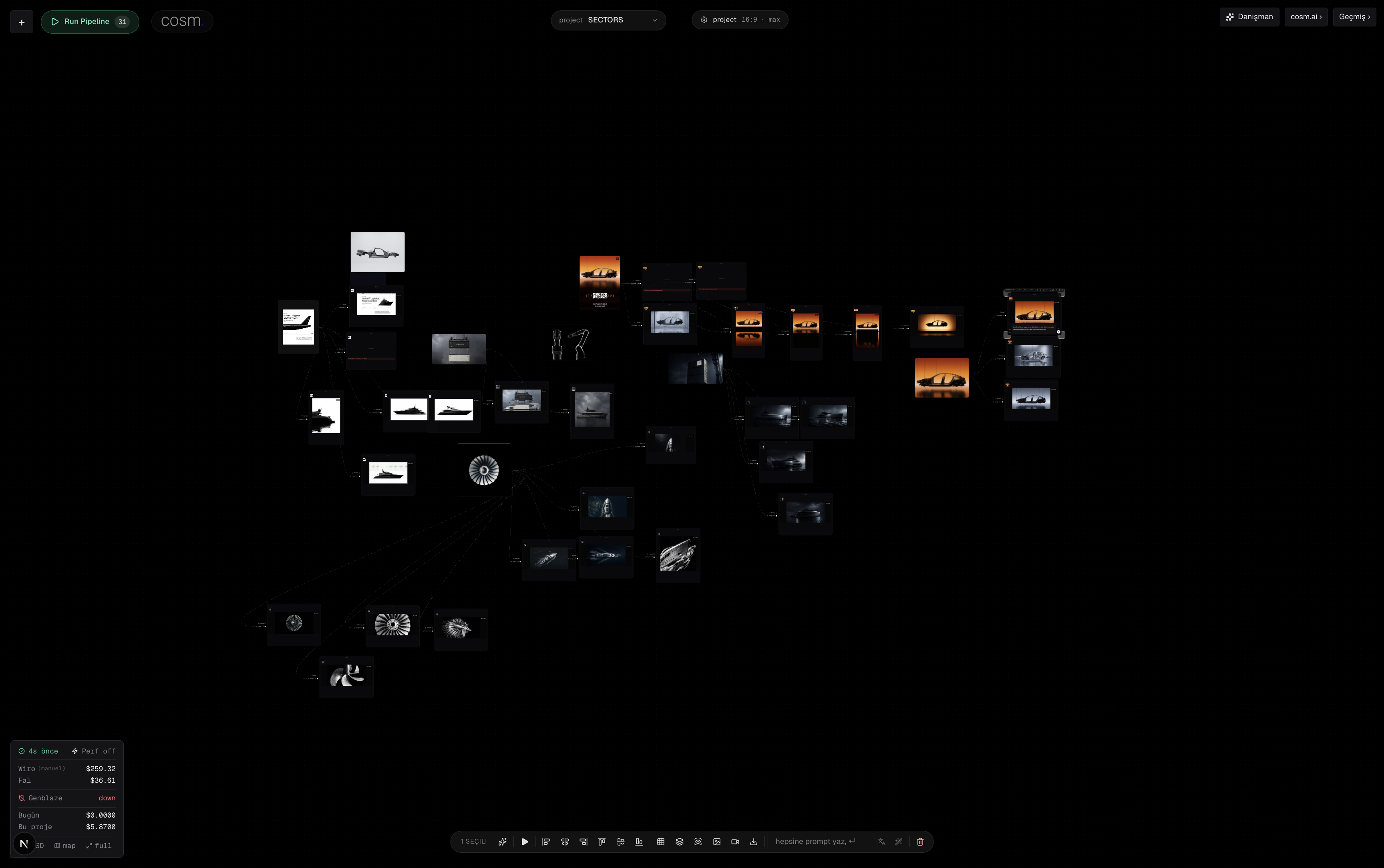
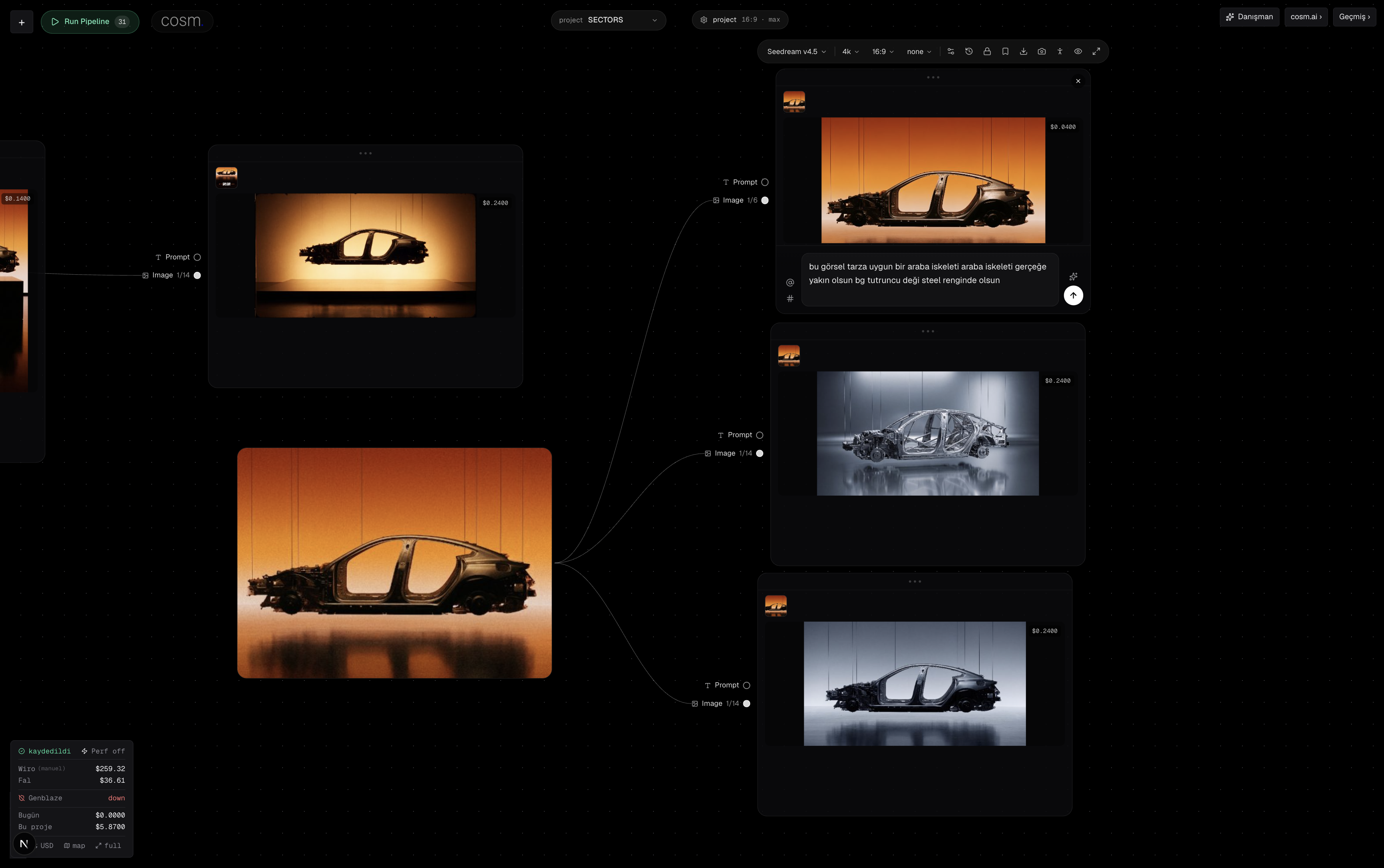
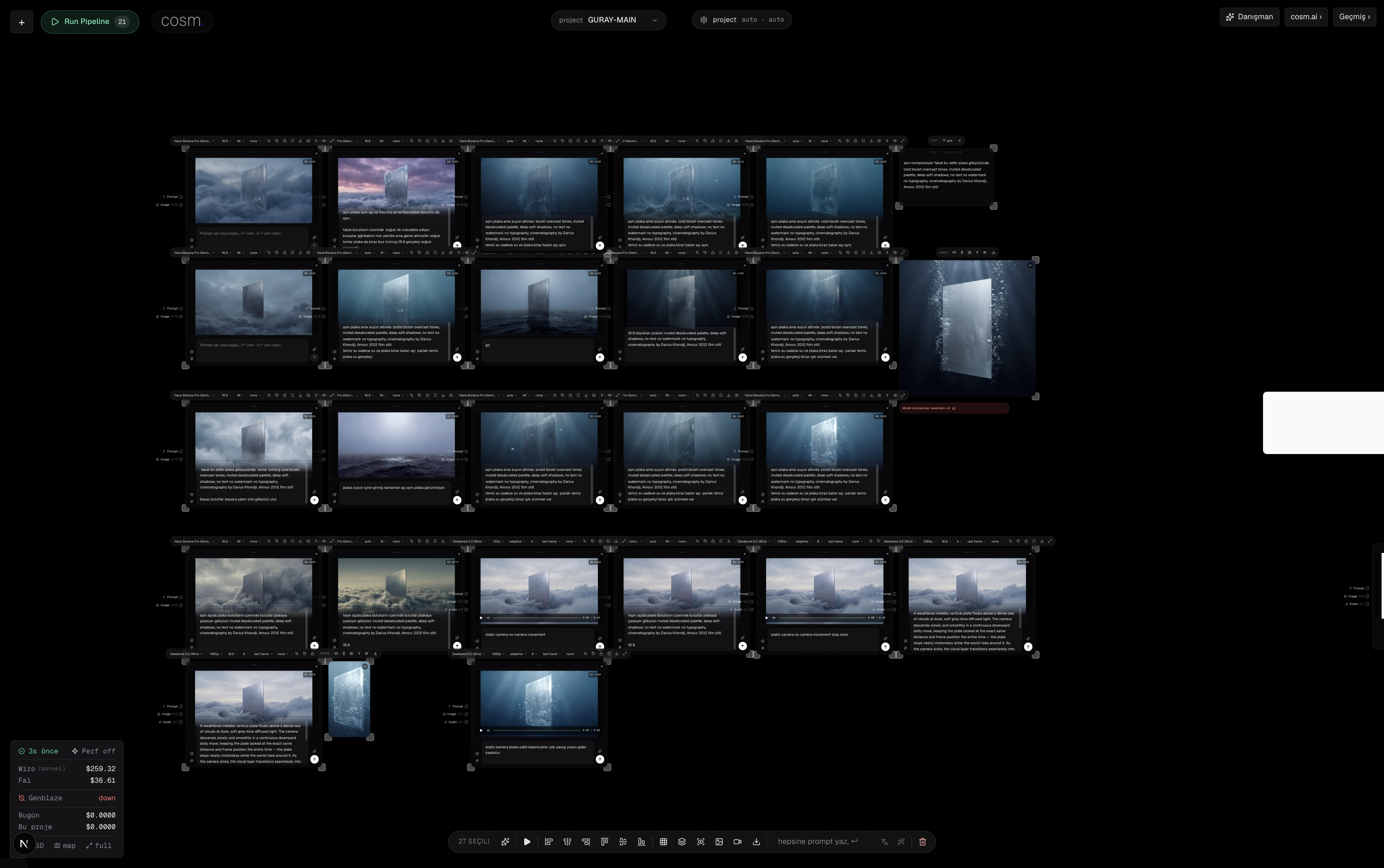
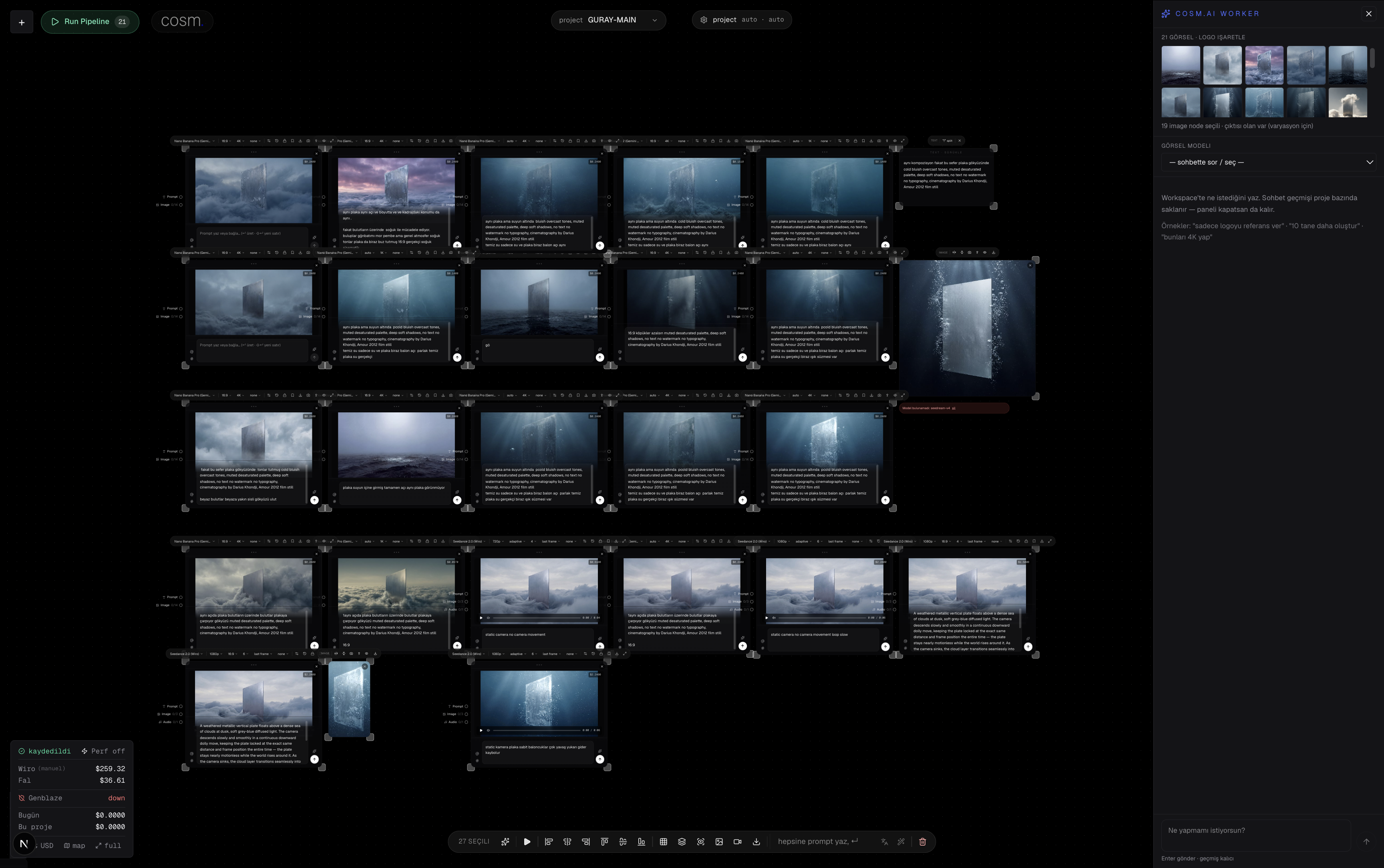
cosm.ai is an AI video production pipeline built as a professional node-based studio.
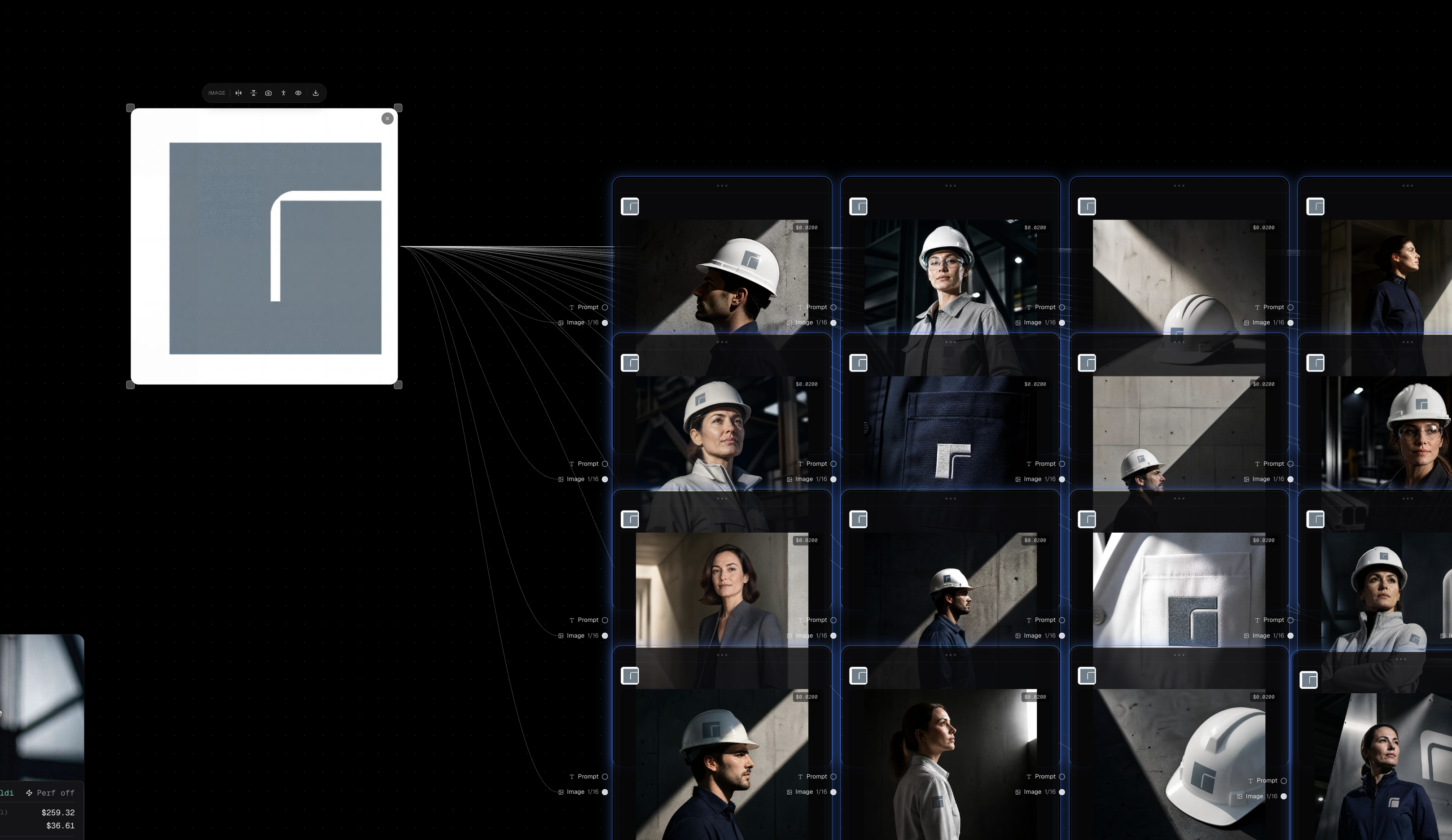
It brings together the video, image, and audio tools needed for AI VFX and commercial production in one place: dozens of high-quality AI models, a node graph designed for real workflows, and a built-in AI assistant.
It also focuses on production problems that usually waste time — things like split-node evaluation, specialized AI assistance, and extra-angle generation — inside a single professional interface for visual, video, and sound work.
How we built it
I started by building with Claude, then developed cosm.ai into my own node-based application from scratch — without relying on a ready-made repo.
The first version took roughly a month and a half to two months. I'm still iterating with Codex and Cursor, refining the interface and expanding the system.
cosm.ai uses its own API credits under the hood, which makes production significantly cheaper than stacking multiple third-party node platforms.
Challenges we ran into
I didn't know how to code at the beginning. My first designs were basically blind — I was inventing the product while learning how to build it.
I made a lot of mistakes along the way: interface decisions, architecture choices, and optimization issues. I also learned the hard way that you can't run everything the way you imagine without a proper server and performance planning.
Working inside other tools was painful too — missing features, slow workflows, and friction that broke creative momentum. Building cosm.ai meant facing all of that directly.
Accomplishments that we're proud of
The biggest win is cost and control. On a commercial film where I would previously have spent around $10,000, I spent under $1,200 in cosm.ai credits.
I'm proud that cosm.ai already works as a real production tool — not just a demo. I can run professional AI video workflows in a fluid node interface without paying someone else's platform margins.
And I'm proud that I kept building it, even without a traditional coding background.
What we learned
I learned that you don't need to write every part of the frontend from scratch — some pieces can come from existing UI systems and still feel cohesive.
I also learned how hard optimization really is: local assumptions break at scale, and a serious production app needs proper server infrastructure.
Most importantly, I learned to design by studying real systems — Cursor, Claude Code, and professional tools like DaVinci Resolve — instead of guessing.
What's next for cosm.ai
Next, cosm.ai moves beyond a browser-only experience toward a native Mac and Windows application.
The goal is a complete desktop production suite — closer to DaVinci Resolve — with separate workspaces for writing, editing, finishing, and the rest of the pipeline, including a stronger color system and more professional tooling built in.
I want cosm.ai to become a full computer application for AI-native filmmaking, not just a web tool.
Built With
- amazon-web-services
- backblaze-b2
- docker
- fal.ai
- fastapi
- genblaze
- next.js
- node.js
- python
- react
- react-flow
- sqlite
- tailwind
- typescript
- vercel
- wiro
- zustand

Log in or sign up for Devpost to join the conversation.